Fanconi Anemia Market
Key Highlights
- The Fanconi Anemia market achieved a value of close to USD 51 million in 2023, according to DelveInsight's analysis. The market growth is attributed to increased awareness of the disease and the introduction of novel therapies. As a result, significant market expansion is expected by the conclusion of 2034, with a noteworthy Compound Annual Growth Rate (CAGR) projected for the forecast period (2024–2034).
- Approximately 43% of Fanconi Anemia cases in the 7MM were reported in the United States, as per DelveInsight's findings. In 2023, it's approximated that the EU4 and the UK collectively represented about 3 thousand cases of Fanconi Anemia.
- In the United States, the prevailing market primarily consists of Androgen Therapy and Maintenance Therapies. Among these, Androgen Therapy dominated the market, generating approximately USD 20 million in market revenue in 2023.
- The total market size of the Fanconi Anemia treatment market is anticipated to experience growth during the forecast period due to the emergence of new and effective treatments, namely, LV RP-L102, FP-045, and others.
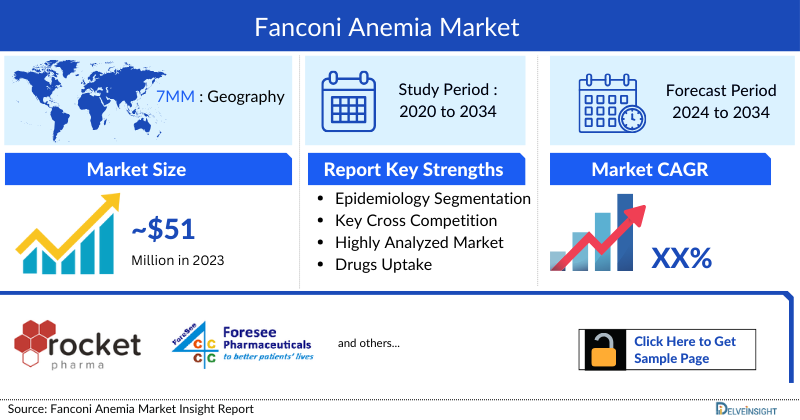
DelveInsight’s “Fanconi Anemia – Market Insights, Epidemiology, and Market Forecast – 2034” report delivers an in-depth understanding of the Fanconi Anemia, historical and forecasted epidemiology and the Fanconi Anemia market trends in the United States, EU4 (Germany, France, Italy, and Spain) and the United Kingdom, and Japan.
The Fanconi Anemia market report provides current treatment practices, emerging drugs, market share of individual therapies, and current and forecasted 7MM Fanconi Anemia market size from 2020 to 2034. The report also covers current Fanconi Anemia treatment practices/algorithms and unmet medical needs to curate the best of the opportunities and assesses the underlying potential of the market.
Geography Covered
- The United States
- EU4 (Germany, France, Italy, and Spain) and the United Kingdom
- Japan
Study Period: 2020–2034
Fanconi Anemia Overview
Fanconi anemia is a rare inherited disorder in which the bone marrow does not make enough blood cells, including red blood cells, white blood cells, and platelets. It is usually diagnosed before the age of 15 years. Symptoms include frequent infections, a tendency to bleed easily, and extreme tiredness. People with FA may also have brown spots on the skin, short height, malformed thumbs or forearms, small heads or eyes, hearing loss, and abnormalities of the kidneys, gastrointestinal tract, heart, genitals, brain, and spinal cord. They also have an increased risk of developing certain types of cancer, including leukemia and cancers of the skin, head, neck, gastrointestinal system, and genitals. FA is caused by mutations (changes) in certain genes involved in DNA repair.
Fanconi Anemia Diagnosis
Diagnosing Fanconi anemia early and accurately poses challenges due to its genetic variability and diverse clinical presentations. Often, Fanconi anemia remains undiagnosed or misdiagnosed until it manifests as leukemia, solid tumors, or during stem cell transplants. Some cases exhibit somatic hematopoietic mosaicism, masking diagnosis severity. Diagnostic methods include history, examination, genetic analysis, skin biopsy, bone marrow examination, and imaging. Fanconi anemia is a complex disorder with varied manifestations, necessitating a thorough history and examination to identify relevant clinical features. A comprehensive approach, including neonatal and developmental history, is crucial. Patients may seek care across different pediatric and adult specialties due to the multi-system nature of Fanconi anemia.
Further details related to diagnosis are provided in the report…
Fanconi Anemia Treatment
Treatment for Fanconi anemia targets individual symptoms and often necessitates a multidisciplinary approach involving various specialists such as pediatricians, surgeons, cardiologists, and others. Blood transfusions, particularly packed RBCs and platelets, are crucial supportive therapies, though caution is advised regarding RBC transfusions from family members due to risks of alloimmunization and graft-versus-host disease. Granulocyte-colony-stimulating factor may address leukopenia in select cases, while bone marrow, peripheral blood cells, or cord blood transplantation offer potential cures for aplastic anemia and prevention of myelodysplastic syndrome, with bone marrow transplantation being preferred in HLA-matched sibling donors following chromosome breakage testing.
Surgery is reserved for managing structural abnormalities like hand anomalies or congenital heart defects, as well as for addressing cancerous conditions. Androgens such as oxymetholone are commonly used to stimulate hematopoietic stem cell proliferation, albeit without curative effects, while gene therapy holds promise in replacing abnormal genes with normal ones, particularly in correcting CD34+ cells in affected individuals.
Further details related to treatment are provided in the report…
Fanconi Anemia Epidemiology
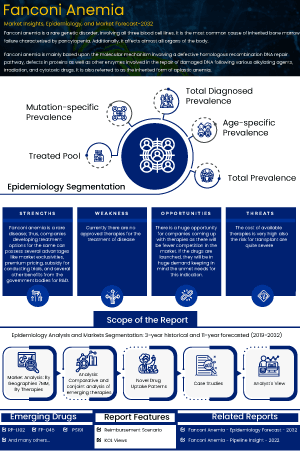
As the market is derived using the patient-based model, the Fanconi Anemia epidemiology chapter in the report provides historical as well as forecasted epidemiology segmented by Diagnosed Prevalent Cases of Fanconi Anemia, Mutation-specific Cases of Fanconi Anemia, Comorbidity associated with Fanconi Anemia in the 7MM covering the United States, EU4 countries (Germany, France, Italy, and Spain) and the United Kingdom, and Japan, from 2020 to 2034.
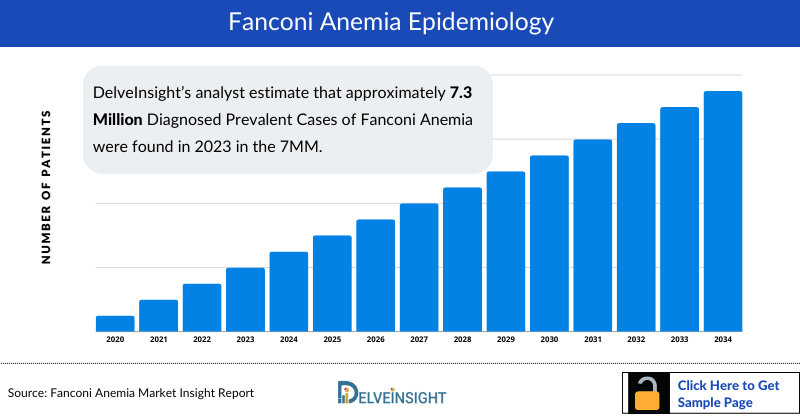
DelveInsight’s analyst estimate that approximately 7.3 thousand Diagnosed Prevalent Cases of Fanconi Anemia were found in 2023 in the 7MM.
In comparison to other 7MM countries, the United States had the largest diagnosed prevalent population of Fanconi Anemia. DelveInsight's assessments indicate that the total diagnosed prevalent cases of Fanconi Anemia in the US were approximately 3.1 thousand in 2023 and are expected to rise in the forecast period due to growing awareness among patients and the introduction of new treatments.
- In 2023, the combined diagnosed prevalent cases of Fanconi Anemia in the EU4 countries and the UK amounted to approximately 3 thousand. Over the study duration, a significant rise in cases is expected across all participating nations. Among the EU4 countries, Germany recorded the highest proportion of Fanconi Anemia cases, whereas Spain reported the fewest cases.
- The estimates show the Total Diagnosed Prevalent Cases of Fanconi Anemia in Japan was found to be around 1.1 thousand in 2023, which is estimated to increase by 2034.
- Based on DelveInsight's analysis, experts categorized the Mutation-specific Cases of Fanconi Anemia according to specific mutations, including FANCA, FANCC+FANCG, FANCE+FANCF, and others. In 2023, the FANCA category accounted for the highest number of cases, approximately 2 thousand, in the United States.
- In 2023, cases of Comorbidity associated with Fanconi Anemia were categorized into Hematological disease, Hematological malignancy, and Solid tumors. The highest number of cases, totaling 2.8 thousand, were attributed to Hematological disease in the US.
Fanconi Anemia Drug Chapters
The drug chapter segment of the Fanconi Anemia report encloses a detailed analysis of Fanconi Anemia marketed drugs and late-stage (Phase III and Phase II) pipeline drugs. It also understands Fanconi Anemia clinical trial details, expressive pharmacological action, agreements and collaborations, approval, and patent details, advantages and disadvantages of each included drug, and the latest news and press releases.
Emerging Drugs
RP-L102 (lentiviral gene therapy): Rocket Pharmaceuticals
RP-L102 is a gene therapy under development for treating Fanconi Anemia, utilizing a lentiviral vector (LVV). This therapy carries the FANC-A gene within the PGK-FANCA-WPRE expression cassette, incorporating a phosphoglycerate kinase (PKG) promoter and an optimized woodchuck hepatitis virus post-transcriptional regulatory element (WPRE). Through an ex vivo process, hematopoietic stem cells are extracted and enriched using CD34+ selection. These genetically modified CD34+ enriched hematopoietic cells, either fresh or cryopreserved, are then reintroduced into patients to restore function. RP-L102 has received various designations, including ODD, RPDD, FTD, and RMAT designation in the United States, as well as ODD and PRIME status in Europe. Moreover, the EMA has classified this therapy as an ATMP.
FP-045: Foresee Pharmaceuticals
FP-045 is a potent and specifically targeted activator of aldehyde dehydrogenase 2 (ALDH2), characterized by high solubility and oral availability. ALDH2 serves as a crucial mitochondrial regulator involved in metabolizing harmful aldehydes, particularly those generated during ethanol metabolism and oxidative stress. Moreover, FP-045 has demonstrated the ability to enhance ALDH2 activity in vitro within FANCA-deficient cells, offering protection against damage caused by exposure to reactive aldehydes.
Note: Detailed emerging therapies assessment will be provided in the final report of Fanconi Anemia.
Fanconi Anemia Market Outlook
Fanconi Anemia treatment encompasses various classifications within the disease spectrum. The primary focus of managing Fanconi Anemia involves the use of Androgen Therapy and Maintenance Therapies as required, with Androgen Therapy serving as the principal revenue source in the current treatment framework.
The market for Fanconi Anemia is expected to experience positive growth with the approval of potential drugs like LV RP-L102, FP-045, and others.
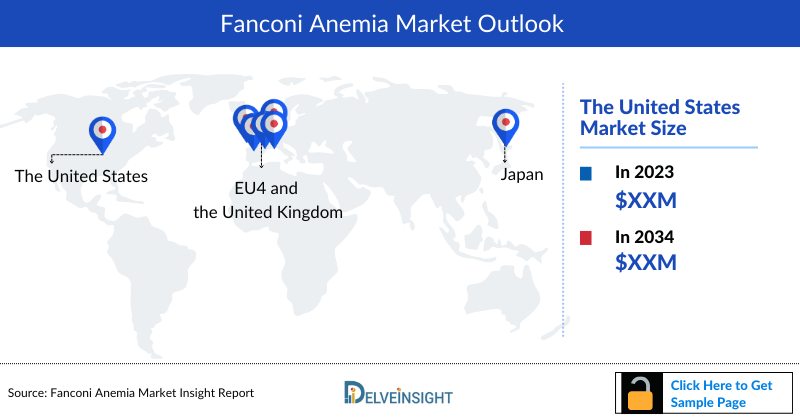
In 2023, the overall market value of Fanconi Anemia across the 7MM was approximately USD 51 million. Forecasts suggest significant expansion in the market size throughout the projected period.
Among the 7MM countries, the United States dominated the market in 2023, representing the largest share at nearly 54%.
In 2023, EU4 and the UK captured an estimated USD 17.3 million, which is anticipated to increase at a substantial CAGR. Among the European countries, Germany covered the largest market share in 2023, followed by France and the UK, and Italy. Spain accounted for the least market in the same year.
Japan alone represented approximately 13% of the total Fanconi Anemia market in 2023, projected to increase at a substantial CAGR during the study period.
The total market size of the Fanconi Anemia treatment market is anticipated to experience growth during the forecast period due to the emergence of new and effective treatments.
Fanconi Anemia Drugs Uptake
This section focuses on the uptake rate of potential drugs expected to launch in the market during 2020–2034. For example, RP-L102 in the EU4 and the UK is expected to be launched by 2025 with a peak shared of 10%. RP-L102 is anticipated to take 8 years to peak with a medium uptake.
Further detailed analysis of emerging therapies drug uptake in the report…
Fanconi Anemia Pipeline Development Activities
The report provides insights into different therapeutic candidates in Phase III, Phase II, and Phase I stage. It also analyzes key players involved in developing targeted therapeutics.
Pipeline Development Activities
The report covers information on collaborations, acquisitions and mergers, licensing, and patent details for Fanconi Anemia emerging therapies.
KOL Views
To keep up with current market trends, we take KOLs and SMEs’ opinions working in the domain through primary research to fill the data gaps and validate the secondary research. Industry Experts were contacted for insights on Fanconi Anemia evolving treatment landscape, patient reliance on conventional therapies, patient therapy switching acceptability, and drug uptake along with challenges related to accessibility, including KOL from Division of Bone Marrow Transplantation and Immune Deficiency, US, Yale University, Georgetown University, US, Pediatric Hematology Oncology, License, State of Ohio, US, Research Institute Hospital de Sant Pau, Spain, Greenwich University, UK, Fanconi Anemia Research Fund, US, and others.
Delveinsight’s analysts connected with 40+ KOLs to gather insights; however, interviews were conducted with 15+ KOLs in the 7MM. Their opinion helps understand and validate current and emerging therapies, treatment patterns, or Fanconi Anemia market trends. This will support the clients in potential upcoming novel treatments by identifying the overall scenario of the market and the unmet needs.
Qualitative Analysis
We perform Qualitative and market Intelligence analysis using various approaches, such as SWOT and Conjoint Analysis. In the SWOT analysis, strengths, weaknesses, opportunities, and threats in terms of disease diagnosis, patient awareness, patient burden, competitive landscape, cost-effectiveness, and geographical accessibility of therapies are provided. These pointers are based on the Analyst’s discretion and assessment of the patient burden, cost analysis, and existing and evolving treatment landscape.
Conjoint Analysis analyzes multiple approved and emerging therapies based on relevant attributes such as safety, efficacy, frequency of administration, route of administration, and order of entry. Scoring is given based on these parameters to analyze the effectiveness of therapy.
Further, the therapies’ safety is evaluated wherein the acceptability, tolerability, and adverse events are majorly observed, and it sets a clear understanding of the side effects posed by the drug in the trials. In addition, the scoring is also based on the route of administration, order of entry and designation, probability of success, and the addressable patient pool for each therapy. According to these parameters, the final weightage score and the ranking of the emerging therapies are decided.
Market Access and Reimbursement
The high cost of therapies for the treatment is a major factor restraining the growth of the global drug market. Because of the high cost, the economic burden is increasing, leading the patient to escape from proper treatment.
The report further provides detailed insights on the country-wise accessibility and reimbursement scenarios, cost-effectiveness scenario of approved therapies, programs making accessibility easier and out-of-pocket costs more affordable, insights on patients insured under federal or state government prescription drug programs, etc.
Scope of the Report
- The report covers a segment of key events, an executive summary, descriptive overview of Fanconi Anemia, explaining its causes, signs and symptoms, and currently available therapies.
- Comprehensive insight has been provided into the epidemiology segments and forecasts, the future growth potential of diagnosis rate, disease progression, and treatment guidelines.
- Additionally, an all-inclusive account of the current and emerging therapies and the elaborative profiles of late-stage and prominent therapies will impact the current treatment landscape.
- A detailed review of the Fanconi Anemia market, historical and forecasted market size, market share by therapies, detailed assumptions, and rationale behind the approach is included in the report covering the 7MM drug outreach.
- The report provides an edge while developing business strategies, by understanding trends, through SWOT analysis and expert insights/KOL views, patient journey, and treatment preferences that help shape and drive the 7MM Fanconi Anemia market.
Fanconi Anemia Report Insights
- Patient Population
- Therapeutic Approaches
- Fanconi Anemia Pipeline Analysis
- Fanconi Anemia Market Size and Trends
- Existing and Future Market Opportunity
Fanconi Anemia Report Key Strengths
- 11 years Forecast
- The 7MM Coverage
- Fanconi Anemia Epidemiology Segmentation
- Key Cross Competition
- Conjoint Analysis
- Drugs Uptake and Key Market Forecast Assumptions
Fanconi Anemia Report Assessment
- Current Treatment Practices
- Unmet Needs
- Pipeline Product Profiles
- Market Attractiveness
- Qualitative Analysis (SWOT and Conjoint Analysis)
Key Questions
Market Insights
- What was the Fanconi Anemia total market size, the market size by therapies, and market share (%) distribution in 2020, and how would it all look in 2034? What are the contributing factors for this growth?
- What unmet needs are associated with the current treatment market of Fanconi Anemia?
- What are the patents of emerging therapies for Fanconi Anemia?
- Which drug is going to be the largest contributor by 2034?
- What are the pricing variations among different geographies for approved and off-label therapies?
- How would the market drivers, barriers, and future opportunities affect the market dynamics and subsequent analysis of the associated trends?
Epidemiology Insights
- What are the disease risks, burdens, and unmet needs of Fanconi Anemia? What will be the growth opportunities across the 7MM concerning the patient population of Fanconi Anemia?
- What is the historical and forecasted Fanconi Anemia patient pool in the United States, EU4 (Germany, France, Italy, and Spain), the United Kingdom, and Japan?
- Why do only limited patients appear for diagnosis?
- Which country is more prevalent for Fanconi Anemia and why?
- What factors are affecting the diagnosis of the indication?
Current Treatment Scenario, Marketed Drugs, and Emerging Therapies
- What are the current options for treating Fanconi Anemia? What are the current guidelines for treating Fanconi Anemia in the US and Europe?
- How many companies are developing therapies for treating Fanconi Anemia?
- How many emerging therapies are in the mid-stage and late stage of development for treating Fanconi Anemia?
- What are the recent novel therapies, targets, mechanisms of action, and technologies developed to overcome the limitations of existing therapies?
- What are the key designations that have been granted for the emerging therapies for Fanconi Anemia?
- Patient acceptability in terms of preferred treatment options as per real-world scenarios?
- What are the country-specific accessibility issues of expensive, recently approved therapies? Focus on reimbursement policies.
- What are the 7MM historical and forecasted markets of Fanconi Anemia?
Reasons to Buy
- The report will help develop business strategies by understanding the latest trends and changing treatment dynamics driving the Fanconi Anemia Market.
- Insights on patient burden/disease prevalence, evolution in diagnosis, and factors contributing to the change in the epidemiology of the disease during the forecast years.
- To understand the existing market opportunity in varying geographies and the growth potential over the coming years.
- Distribution of historical and current patient share based on real-world prescription data along with reported sales of approved products in the US, EU4 (Germany, France, Italy, and Spain), the United Kingdom, and Japan.
- Identifying strong upcoming players in the market will help devise strategies that will help get ahead of competitors.
- Detailed analysis and ranking of potential current and emerging therapies under the conjoint analysis section to provide visibility around leading classes.
- Highlights of Access and Reimbursement policies of approved therapies, barriers to accessibility of off-label expensive therapies, and patient assistance programs.
- To understand the perspective of Key Opinion Leaders around the accessibility, acceptability, and compliance-related challenges of existing treatment to overcome barriers in the future.
- Detailed insights on the unmet needs of the existing market so that the upcoming players can strengthen their development and launch strategy.
-pipeline.png&w=256&q=75)