Fetal Monitoring Devices Market Summary
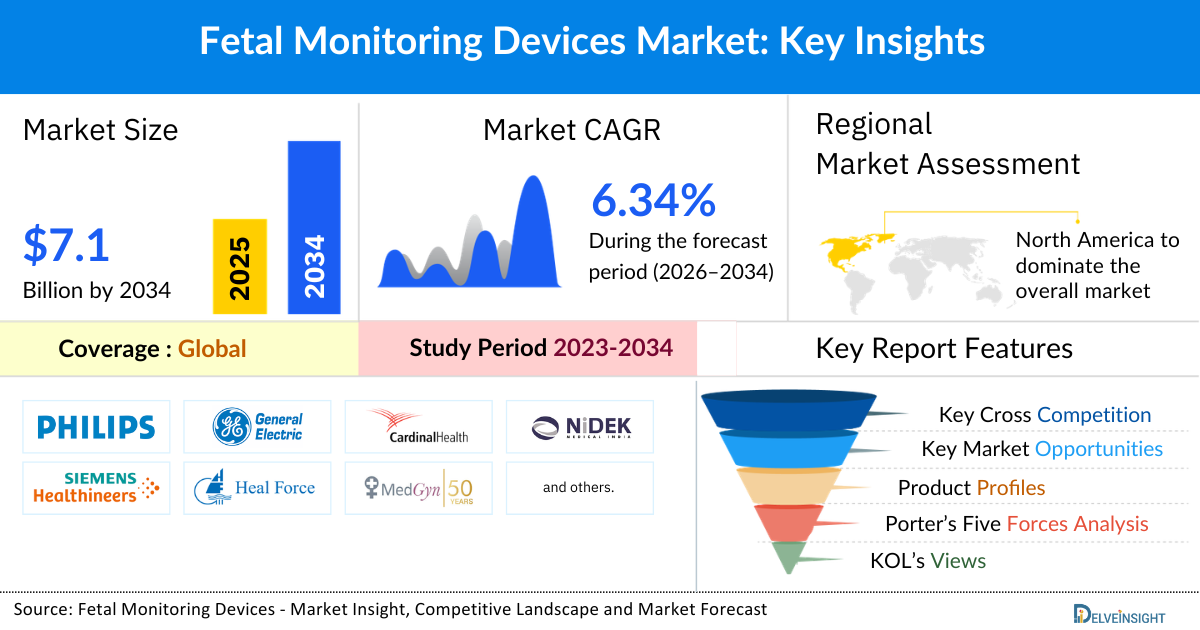
- The global fetal monitoring devices market is expected to increase from USD 4,148.39 million in 2025 to USD 7,176.97 million by 2034, reflecting strong and sustained growth.
- The global fetal monitoring devices market is growing at a CAGR of 6.34% during the forecast period from 2026 to 2034.
- The market for fetal monitoring devices is primarily driven by the rising incidence of high-risk pregnancies, increasing maternal age, and the growing prevalence of pregnancy-related complications such as hypertension, gestational diabetes, and obesity. As more women delay childbirth and the rate of preterm births continues to rise, healthcare providers are emphasizing continuous monitoring of fetal heart rate and uterine activity to prevent adverse neonatal outcomes. Technological advancements, including wireless and portable monitors, AI-assisted interpretation systems, and integration with electronic medical records, are further enhancing clinical efficiency and accuracy, thereby accelerating adoption. Additionally, increasing awareness of maternal and fetal health, expanding healthcare infrastructure in emerging economies, government initiatives aimed at reducing maternal and neonatal mortality, and the growing use of telemedicine and home-based monitoring solutions collectively contribute to sustained market growth.
- The leading companies operating in the fetal monitoring devices market include Koninklijke Philips N.V., General Electric Company, Cardinal Health, Nidek Medical, Siemens Healthcare GmbH, Heal Force, Medgyn Products, Inc., Promed Technology Co., Limited, Shenzhen Comen Medical Instruments Co., Ltd., Narang Medical Limited, Trivitron Healthcare, Neoventa Medical AB, Huntleigh Healthcare Ltd., EDAN Instruments, Inc., Shenzhen Bestman Instrument Co., Ltd., Natus Medical Incorporated, CooperSurgical Inc., Contec Medical Systems Co., Ltd., Life Plus Healthcare (P) Ltd., Bionet, and others.
- North America is expected to dominate the fetal monitoring devices market because of its well-established healthcare infrastructure, high adoption of advanced medical technologies, and strong focus on maternal and neonatal care. The region has a higher prevalence of high-risk pregnancies due to advanced maternal age and lifestyle-related conditions, which increases the demand for continuous fetal monitoring. Additionally, favorable reimbursement policies, strong presence of leading medical device manufacturers, and growing integration of AI-enabled and wireless monitoring systems further support market growth in the region.
- In the product type segment of the fetal monitoring devices market, the ultrasound category is estimated to account for the largest market share in 2025.
Request for unlocking the report of the @ Fetal Monitoring Devices Market
Fetal Monitoring Devices Market Size and Forecasts
|
Report Metrics |
Details |
|
2025 Market Size |
USD 4,148.39 million |
|
2034 Projected Market Size |
USD 7,176.97 million |
|
Growth Rate (2026-2034) |
6.34% CAGR |
|
Largest Market |
North America |
|
Fastest Growing Market |
Asia-Pacific |
|
Market Structure |
Moderately Concentrated |
Factors Contributing to the Growth of the Fetal Monitoring Devices Market
- Increased need for monitoring fetuses for various birth defects and prevalence of preterm births, post-term pregnancy, among others, leading to a surge in fetal monitoring devices: The increased need to monitor fetuses for birth defects, along with the rising prevalence of preterm and post-term pregnancies, is significantly driving the demand for fetal monitoring devices. Conditions such as congenital abnormalities, fetal growth restrictions, and complications associated with premature or prolonged pregnancies require continuous assessment of fetal heart rate and uterine activity to ensure timely medical intervention. As healthcare providers focus more on early detection and prevention of adverse outcomes, the adoption of advanced electronic and portable fetal monitoring systems continues to rise across hospitals and maternity care settings.
- Increasing awareness of maternal & fetal health escalating the market of fetal monitoring devices: Increasing awareness of maternal and fetal health is significantly escalating the market for fetal monitoring devices, as more women are prioritizing regular antenatal check-ups and institutional deliveries. Government health programs, educational campaigns, and improved access to prenatal care have encouraged early detection and continuous monitoring of potential pregnancy complications. As expectant mothers and healthcare providers become more proactive about preventing fetal distress and birth-related complications, the demand for advanced fetal monitoring systems in hospitals, clinics, and even homecare settings continues to grow.
- Increase in product development activities among the key market players: The increase in product development activities among key market players is significantly driving the growth of the fetal monitoring devices market. Companies are focusing on launching advanced technologies such as wireless and portable monitors, AI-enabled fetal heart rate analysis systems, and integrated monitoring solutions that enhance accuracy and ease of use. Continuous innovation aimed at improving patient comfort, data connectivity, and clinical efficiency is encouraging healthcare facilities to upgrade their existing systems, thereby accelerating overall market expansion.
Fetal Monitoring Devices Market Report Segmentation
This fetal monitoring market report offers a comprehensive overview of the global fetal monitoring devices market, highlighting key trends, growth drivers, challenges, and opportunities. It covers detailed market segmentation by Product (Ultrasound Devices [2D Ultrasound and 3D & 4D Ultrasound], Electronic Maternal/Fetal Monitors, Fetal Doppler Devices, Telemetry Devices, and Others), Method (Invasive and Non-Invasive), Portability (Portable and Non-Portable), End-User (Hospitals, Obstetrics & Gynecology Clinics, and Others), and geography. The report provides valuable insights into the competitive landscape, regulatory environment, and market dynamics across major markets, including North America, Europe, and Asia-Pacific. Featuring in-depth profiles of leading industry players and recent product innovations, this report equips businesses with essential data to identify market potential, develop strategic plans, and capitalize on emerging opportunities in the rapidly growing fetal monitoring devices market.
Fetal and neonatal monitoring market,are medical instruments used to assess and track a baby’s heart rate, movement, and uterine contractions during pregnancy and labor to ensure the health and safety of both the fetus and the mother.
The market for fetal monitoring devices is primarily driven by the rising incidence of high-risk pregnancies, increasing maternal age, and the growing prevalence of pregnancy-related complications such as hypertension, gestational diabetes, and obesity. As more women delay childbirth and the rate of preterm births continues to rise, healthcare providers are emphasizing continuous monitoring of fetal heart rate and uterine activity to prevent adverse neonatal outcomes. Technological advancements, including wireless and portable monitors, AI-assisted interpretation systems, and integration with electronic medical records, are further enhancing clinical efficiency and accuracy, thereby accelerating adoption. Additionally, increasing awareness of maternal and fetal health, expanding healthcare infrastructure in emerging economies, government initiatives aimed at reducing maternal and neonatal mortality, and the growing use of telemedicine and home-based monitoring solutions collectively contribute to sustained market growth.
Get More Insights into the Report @ Fetal Monitoring Devices Market
What are the latest fetal monitoring devices market dynamics and trends?
The increasing cases of birth defects, along with the rising prevalence of preterm and post-term pregnancies, are significantly driving the demand for fetal monitoring devices.
According to the stats provided by the World Health Organization (2024), globally, an estimated 8 million children are born with birth defects every year.
Additionally asper the same source (2023), an estimated 13.4 million babies were born preterm. The rising incidence of birth defects and preterm births is significantly boosting the overall market of fetal monitoring devices, as these conditions require continuous and precise surveillance throughout pregnancy and labor. Birth defects such as congenital heart abnormalities, neural tube defects, and genetic disorders increase the need for close fetal assessment to detect irregular heart rate patterns, growth restrictions, or signs of fetal distress at an early stage. Similarly, preterm births are often associated with complications like maternal infections, hypertension, multiple pregnancies, or lifestyle-related factors necessitate frequent monitoring to evaluate fetal well-being and determine timely medical intervention. Continuous electronic fetal monitoring helps clinicians assess oxygen supply, uterine contractions, and fetal heart rate variability, reducing the risk of neonatal morbidity and mortality.
Furthermore, as per the data provided by the World Health Organization (2024), every day in 2023, over 700 women died from preventable causes related to pregnancy and childbirth. The fact that in 2023 over 700 women died every day from preventable causes related to pregnancy and childbirth highlights critical gaps in maternal healthcare and significantly drives the demand for improved monitoring solutions, including fetal monitoring devices. High maternal mortality rates often stem from complications such as hemorrhage, preeclampsia, infections, and obstructed labor conditions that can be better managed through early detection and continuous surveillance of both maternal and fetal health. This alarming statistic has prompted governments, global health organizations, and healthcare providers to strengthen antenatal care programs, expand institutional deliveries, and invest in advanced monitoring technologies. As a result, hospitals and maternity centers are increasingly adopting electronic fetal monitoring systems to identify signs of fetal distress and maternal complications in real time, enabling timely medical intervention.
Furthermore, the presence of key market players is further escalating the overall market of fetal monitoring devices. For instance, in February 2024, GE HealthCare announced that it had received 510(k) clearance from the United States Food and Drug Administration (FDA) for Novii™+ Wireless Patch Solution. The antepartum and intrapartum maternal and fetal monitor noninvasively measures and displays fetal heart rate, maternal heart rate, and uterine activity, so care teams can have a real-time view of patient data.
Thus, the factors mentioned above are expected to boost the overall market of fetal monitoring devices during the forecast period from 2026 to 2034.
However, the risks associated with invasive fetal monitoring procedures and the stringent regulatory approval process can significantly limit the growth of the fetal monitoring devices market. Invasive techniques, such as fetal scalp electrode monitoring, carry potential risks including infection, fetal injury, and maternal discomfort, which may discourage their widespread use and encourage preference for non-invasive alternatives. Concerns about safety and medicolegal implications can also make healthcare providers cautious in adopting certain advanced systems. Additionally, the regulatory approval process for fetal heart rate monitoring device market is highly stringent, requiring extensive clinical validation, safety testing, and compliance with quality standards. This increases development costs, prolongs product launch timelines, and creates barriers for new entrants, thereby restraining overall market expansion.
Fetal Monitoring Devices Market Segment Analysis
Fetal Monitoring Devices Market by Product (Ultrasound Devices [2D Ultrasound and 3D & 4D Ultrasound], Electronic Maternal/Fetal Monitors, Fetal Doppler Devices, Telemetry Devices, and Others), Method (Invasive and Non-Invasive), Portability (Portable and Non-Portable), End-User (Hospitals, Obstetrics & Gynecology Clinics, and Others), and Geography (North America, Europe, Asia-Pacific, and Rest of the World)
By Product Type: Ultrasound Devices Category Dominates the Market
In the product type segment of the fetal monitoring devices market, the electronic maternal/fetal monitors category is estimated to account for the largest market share of 53% in 2025. The electronic maternal/fetal monitors category is boosting the overall ultrasound devices market by complementing obstetric imaging and increasing the overall volume of prenatal diagnostic procedures. While ultrasound systems are primarily used for anatomical visualization and fetal growth assessment, electronic maternal and fetal monitors such as Doppler-based fetal heart rate monitors and cardiotocography (CTG) systems are frequently integrated with ultrasound technology for comprehensive pregnancy evaluation. The growing demand for continuous fetal heart rate monitoring during high-risk pregnancies, labor, and delivery increases the need for compatible ultrasound platforms that support Doppler functionality and real-time data analysis. In many healthcare settings, ultrasound machines are upgraded or newly procured alongside electronic monitoring systems to create integrated maternal-fetal care units, thereby driving overall equipment sales. Furthermore, the increase in product development activites are further boosting the overall market of fetal monitoring devices. For instance, in January 2024, the U.S. FDA cleared Bloomlife’s MFM-Pro wearable, a prescription-based maternal and fetal monitor designed for noninvasive maternal and fetal heart rate tracking in home or clinic settings.
Additionally, the rising prevalence of preterm births, pregnancy-related complications, and institutional deliveries has led to higher adoption of both diagnostic ultrasound imaging and electronic monitoring devices as part of standard prenatal care protocols. Technological advancements such as portable and handheld Doppler ultrasound devices, wireless connectivity, and EMR integration further strengthen this synergy, encouraging healthcare providers to invest in advanced ultrasound systems that can seamlessly work with electronic maternal/fetal monitors. Consequently, the interdependence between imaging and continuous monitoring solutions significantly contributes to revenue growth and expansion of the broader ultrasound devices market.
By Method: Non-Invasive Category Dominates the Market
In the method segment of the fetal monitoring devices market, the non-invasive category is estimated to account for the largest market share of 75% in 2025. The non-invasive category is significantly boosting the overall fetal monitoring devices market due to its enhanced safety profile, greater patient comfort, and broader clinical acceptance. Non-invasive methods such as external Doppler ultrasound and cardiotocography (CTG) allow continuous monitoring of fetal heart rate and uterine contractions without penetrating the skin or entering the uterus, thereby eliminating risks of infection, fetal injury, or maternal complications associated with invasive techniques. This makes them highly preferred in routine antenatal care, high-risk pregnancies, and intrapartum monitoring. Additionally, technological advancements have led to the development of wireless, portable, and wearable non-invasive monitors that support remote monitoring and improved maternal mobility during labor. Their ease of use, minimal training requirements, and suitability for both hospital and homecare settings have expanded adoption across developed and emerging markets. As healthcare providers increasingly prioritize patient safety and preventive care, the demand for non-invasive fetal monitoring solutions continues to rise, driving overall market growth.
By Portability: Portable Category is expected to grow at a Healthy CAGR
In the portability segment of the fetal monitoring devices market, the portable category is estimated to grow at a healthy CAGR during the forecast period from 2026 to 2034. The portable category is significantly boosting the overall fetal monitoring devices market by increasing accessibility, flexibility, and point-of-care usage across diverse healthcare settings. Portable fetal monitors, including handheld portable fetal doppler devices and compact cardiotocography (CTG) systems, enable clinicians to perform real-time fetal heart rate assessments in outpatient clinics, rural health centers, ambulances, and even homecare environments. Their lightweight design, battery-operated functionality, and ease of use reduce dependence on large, stationary hospital equipment, expanding adoption beyond tertiary care facilities. Portable systems are particularly valuable in emerging markets and remote areas where infrastructure limitations restrict access to advanced maternal care. Additionally, the growing demand for telemedicine and remote pregnancy monitoring has accelerated the use of portable devices that can transmit data digitally to healthcare providers. By broadening the scope of prenatal monitoring and increasing procedural volumes, the portable segment plays a crucial role in driving revenue growth and expanding the overall fetal monitoring devices market.
By End-Users: Hospitals Category Dominates the Market
In the end-user segment of the fetal monitoring devices market, the hospitals category is estimated to account for the largest market share in 2025. The hospitals category is significantly boosting the overall fetal monitoring devices market as hospitals remain the primary point of care for antenatal check-ups, high-risk pregnancy management, labor, and delivery. The increasing rate of institutional deliveries, rising cesarean sections, and growing prevalence of pregnancy-related complications have led hospitals to invest heavily in advanced electronic fetal monitoring systems, including cardiotocography (CTG) and Doppler ultrasound devices. Tertiary and specialty hospitals, in particular, require continuous and real-time fetal monitoring to manage complex cases such as preeclampsia, gestational diabetes, and preterm labor, driving higher procurement volumes. Additionally, hospitals are adopting integrated monitoring systems with EMR connectivity, wireless capabilities, and AI-assisted interpretation to improve clinical efficiency and patient outcomes. As healthcare infrastructure expands and governments promote safe childbirth initiatives, hospitals continue to serve as the largest end-user segment, substantially contributing to overall market growth.
Fetal Monitoring Devices Market Regional Analysis
North America Fetal Monitoring Devices Market Trends
North America is poised to secure the largest share of 41% in the global fetal monitoring devices market in 2025 due to its advanced healthcare infrastructure, high adoption of technologically sophisticated monitoring systems, and strong focus on maternal and neonatal safety. The region has a higher prevalence of high-risk pregnancies associated with advanced maternal age, obesity, and lifestyle-related conditions, which increases the demand for continuous fetal monitoring. Additionally, favorable reimbursement policies, strong presence of leading medical device manufacturers, increasing integration of AI-enabled and wireless monitoring solutions, and ongoing investments in hospital upgrades further strengthen market dominance. Government initiatives aimed at reducing maternal and infant mortality also contribute to sustained demand across the region.
Supporting this trend are compelling statistics. According to data from the Centre for Disease Control and Prevention (2026), approximately 1 in 33 babies in the United States is born with a birth defect.
Additionally, according to the data provided by the March of Dimes (2025), in 2024, there were 377,204 preterm births in the United States. In the United States, the continued clinical focus on managing preterm births and detecting birth defects is contributing to the growth of the fetal monitoring devices market. Even when overall preterm birth rates show stabilization or gradual improvement in certain regions, healthcare providers maintain strict surveillance protocols to prevent recurrence and ensure early identification of complications. Routine use of electronic fetal monitoring, Doppler ultrasound, and cardiotocography during high-risk and standard pregnancies supports early detection of fetal distress and congenital abnormalities. This sustained emphasis on preventive care, early diagnosis, and improved neonatal outcomes drives consistent demand for advanced fetal monitoring systems across hospitals and maternity centers in the country.
However, the increasing awareness programs in the United States are playing a crucial role in boosting the overall market for fetal monitoring devices by emphasizing the importance of early detection and maternal-fetal health surveillance. Federal initiatives like the White House Blueprint for Addressing the Maternal Health Crisis have led to substantial funding of over $558 million awarded in 2024 to improve maternal health and support prenatal care programs, which encourage routine monitoring and strengthen healthcare infrastructure for pregnancy care. Complementing this, the Health Resources and Services Administration’s Enhancing Maternal Health Initiative, launched in early 2024 and continued with additional awards and reports in 2025, supports state-level strategies to improve maternal outcomes and expand access to quality care, thereby raising the demand for effective fetal monitoring technologies. Other awareness efforts, such as the resolution to designate January 23 as Maternal Health Awareness Day, aimed at educating the public and clinicians about maternal health risks and outcomes, further reinforce the priority of prenatal and fetal care. These programs collectively increase patient engagement, clinical vigilance, and policy focus on preventing adverse pregnancy outcomes, which in turn elevates the adoption of fetal monitoring devices across care settings.
Thus, the factors mentioned above are expected to boost the overall market of fetal monitoring devices in North America during the forecasted period.
Europe Fetal Monitoring Devices Market Trends
Europe is driving the growth of the fetal monitoring devices market size due to its strong public healthcare systems, high standards of prenatal care, and increasing focus on reducing maternal and neonatal mortality rates. The region benefits from widespread access to institutional deliveries, advanced hospital infrastructure, and early adoption of technologically advanced monitoring solutions, including wireless and AI-integrated systems. Additionally, supportive government policies, growing maternal age, and rising awareness regarding early detection of pregnancy complications further contribute to the steady demand for fetal monitoring devices across European countries.
According to recent studies (2025), across European countries, a median 6.9% of babies were born preterm. Pregnancies at risk of preterm labor require frequent and continuous monitoring of fetal heart rate, uterine contractions, and overall fetal well-being to enable timely medical intervention. Healthcare providers rely heavily on electronic fetal monitoring systems, Doppler ultrasound devices, and cardiotocography (CTG) to detect early signs of distress or abnormal patterns that may indicate the need for hospitalization or early delivery, thereby boosting the overall market of fetal monitoring devices across Europe.
Thus, the factors mentioned above are expected to boost the overall market of fetal and neonatal monitoring devices market in Europe.
Asia-Pacific Fetal Monitoring Devices Market Trends
The Asia-Pacific region is emerging as a key growth driver in the fetal monitoring devices market due to its rapidly expanding healthcare infrastructure, rising number of hospital births, increasing maternal awareness, and growing prevalence of high-risk pregnancies. Additionally, improving access to advanced monitoring technologies, government initiatives to reduce maternal and neonatal mortality, and rising healthcare expenditure are boosting the adoption of fetal monitoring devices across both urban and rural areas.
According to recent studies (2025), India witnessed around 12.34% preterm births, and the prevalence of preterm births had dramatically increased over the years. Preterm births are driving the growth of the fetal monitoring devices market, as premature deliveries carry higher risks of fetal distress, respiratory issues, and long-term complications. High-risk pregnancies require frequent monitoring of fetal heart rate and uterine activity using electronic fetal monitors, Doppler devices, and cardiotocography (CTG) to enable timely intervention. The rising global incidence of preterm labor, due to factors like advanced maternal age, multiple pregnancies, and maternal health conditions, is increasing demand for advanced and portable fetal monitoring technologies, boosting overall market adoption.
Thus, the factors mentioned are expected to boost the overall market of fetal monitoring devices in the Asia-Pacific region during the forecast period.
Who are the major players in the fetal monitoring devices market?
The following are the leading companies in the fetal monitoring devices market. These companies collectively hold the largest market share and dictate industry trends.
- Koninklijke Philips N.V.
- General Electric Company
- Cardinal Health
- Nidek Medical
- Siemens Healthcare GmbH
- Heal Force
- Medgyn Products, Inc.
- Promed Technology Co., Limited
- Shenzhen Comen Medical Instruments Co., Ltd.
- Narang Medical Limited
- Trivitron Healthcare
- Neoventa Medical AB
- Huntleigh Healthcare Ltd.
- EDAN Instruments, Inc.
- Shenzhen Bestman Instrument Co., Ltd.
- Natus Medical Incorporated
- CooperSurgical Inc.
- Contec Medical Systems Co., Ltd.
- Life Plus Healthcare (P) Ltd.
- Bionet
- Others
How is the competitive landscape shaping the fetal monitoring devices market?
The competitive landscape of the fetal monitoring devices market is characterized by the presence of several well-established multinational players alongside emerging innovative companies, resulting in a moderately concentrated market. Key global players, such as GE HealthCare, Philips Healthcare, Mindray, and Hill-Rom, dominate the market with comprehensive portfolios of electronic fetal monitors, cardiotocography (CTG) systems, Doppler devices, and integrated maternal-fetal monitoring solutions. These companies leverage continuous product innovation, strategic partnerships, mergers and acquisitions, and geographic expansion to maintain market leadership. At the same time, smaller and mid-sized firms, particularly in the wearable and portable fetal monitoring segment, are gaining traction through technologically advanced, cost-effective, and AI-enabled solutions targeting homecare and remote monitoring. The market concentration remains moderate because while top players hold significant shares in developed regions like North America and Europe, growing demand in emerging markets provides opportunities for new entrants, encouraging competition and driving innovation across product categories. This competitive dynamic is shaping the market by promoting technological advancements, improving device accessibility, and expanding global adoption of fetal monitoring solutions.
Recent Developmental Activities in the Fetal Monitoring Devices Market
- In October 2025, Huntleigh Healthcare Ltd. announced that Sonicaid® Team3 and OBIX BeCA® triplet fetal monitors have received FDA 510(k) clearance, marking a significant advancement in the care of high-risk and multi-fetal pregnancies in the United States.
- In February 2025, PeriGen, the global leader in AI-powered perinatal software solutions, received FDA clearance for Patterns 3.0, expanding the use of its proprietary fetal heart rate pattern recognition technology from 36 weeks of gestational age to 32 weeks.
- In June 2024, Clarius Health Corp received FDA 510(k) clearance for its AI-based handheld ultrasound device (OB AI) trained on fetal images to automate biometric measurements and integrate results with electronic medical records, enhancing obstetric imaging workflows.
- In February 2024, GE HealthCare announced that it had received 510(k) clearance from the United States Food and Drug Administration (FDA) for Novii™+ Wireless Patch Solution.
- In January 2024, the FDA approved Bloomlife’s MFM-Pro, which is the maternal health company’s first maternal and fetal monitoring device.
|
Report Metrics |
Details |
|
Study Period |
2023 to 2034 |
|
Base Year |
2025 |
|
Forecast Period |
2026 to 2034 |
|
Fetal Monitoring Devices Market CAGR (2026-2034) |
6.34% |
|
Key Companies in the Fetal Monitoring Devices Market |
Koninklijke Philips N.V., General Electric Company, Cardinal Health, Nidek Medical, Siemens Healthcare GmbH, Heal Force, Medgyn Products, Inc., Promed Technology Co., Limited, Shenzhen Comen Medical Instruments Co., Ltd., Narang Medical Limited, Trivitron Healthcare, Neoventa Medical AB, Huntleigh Healthcare Ltd, EDAN Instruments, Inc., Shenzhen Bestman Instrument Co., Ltd., Natus Medical Incorporated, CooperSurgical Inc., Contec Medical Systems Co., Ltd, Life Plus Healthcare (P) Ltd., Bionet, and others. |
|
Fetal Monitoring Devices Market Segments |
by Product, by Method, by Portability, by End-Users, and by Geography |
|
Fetal Monitoring Devices Regional Scope |
North America, Europe, Asia Pacific, the Middle East, Africa, and South America |
|
Fetal Monitoring Devices Country Scope |
U.S., Canada, Mexico, Germany, United Kingdom, France, Italy, Spain, China, Japan, India, Australia, South Korea, and key Countries |
Fetal Monitoring Devices Market Segmentation
- Fetal Monitoring Devices by Product Exposure
- Ultrasound Devices
- 2D Ultrasound
- 3D & 4D Ultrasound
- Electronic Maternal/Fetal Monitors
- Fetal Doppler Devices
- Telemetry Devices
- Other
- Ultrasound Devices
- Fetal Monitoring Devices Method Exposure
- Invasive
- Non-invasive
- Fetal Monitoring Devices Portability Exposure
- Portable
- Non-portable
- Fetal Monitoring Devices End-Users Exposure
- Hospitals
- Obstetrics & Gynecology Clinics
- Others
- Fetal Monitoring Devices Geography Exposure
- North America Fetal Monitoring Devices Market
- United States Fetal Monitoring Devices Market
- Canada Fetal Monitoring Devices Market
- Mexico Fetal Monitoring Devices Market
- Europe Fetal Monitoring Devices Market
- United Kingdom Fetal Monitoring Devices Market
- Germany Fetal Monitoring Devices Market
- France Fetal Monitoring Devices Market
- Italy Fetal Monitoring Devices Market
- Spain Fetal Monitoring Devices Market
- Rest of Europe Fetal Monitoring Devices Market
- Asia-Pacific Fetal Monitoring Devices Market
- China Fetal Monitoring Devices Market
- Japan Fetal Monitoring Devices Market
- India Fetal Monitoring Devices Market
- Australia Fetal Monitoring Devices Market
- South Korea Fetal Monitoring Devices Market
- Rest of Asia-Pacific Fetal Monitoring Devices Market
- Rest of the World Fetal Monitoring Devices Market
- South America Fetal Monitoring Devices Market
- Middle East Fetal Monitoring Devices Market
- Africa Fetal Monitoring Devices Market
- North America Fetal Monitoring Devices Market
Fetal Monitoring Devices Market Recent Industry Trends and Milestones (2022-2026)
|
Category |
Key Developments |
|
Fetal Monitoring Devices Regulatory Approvals |
Huntleigh Healthcare Ltd. - Sonicaid® Team3 and OBIX BeCA® triplet fetal monitors (FDA), GE HealthCare - Novii™+ Wireless Patch Solution (FDA) |
|
Company Strategy |
GE HealthCare has focused on advancing its fetal monitoring portfolio through AI‑enabled technologies. Philips Healthcare is strengthening its market position by expanding wireless and cloud‑based monitoring solutions and forging strategic collaborations. Bloomlife, a maternal health technology specialist, successfully raised USD 12.2 million in funding to expand its connected prenatal care offerings following FDA clearance of its MFM‑Pro wearable fetal and maternal monitor, and is entering remote monitoring collaborations to support high‑risk pregnancies outside traditional clinical settings. |
|
Emerging Technology |
Wireless and wearable monitors, AI-enabled fetal monitoring, remote and telehealth integration, portable and handheld ultrasound systems, and others. |
Impact Analysis
AI-Powered Innovations and Applications:
AI-powered innovations in fetal monitoring devices are transforming prenatal and intrapartum care by enhancing the accuracy, efficiency, and predictive capabilities of fetal surveillance. Advanced algorithms now analyze fetal heart rate patterns, uterine contractions, and maternal vital signs in real time, enabling early detection of fetal distress, hypoxia, or abnormal growth trends. These AI systems reduce reliance on subjective interpretation by clinicians, minimizing human error and improving decision-making during labor and high-risk pregnancies. Applications include automated cardiotocography (CTG) analysis, predictive risk stratification for preterm labor or fetal complications, and integration with electronic medical records (EMRs) to track longitudinal fetal health data. Additionally, AI-driven wearable and wireless fetal monitors support remote monitoring and telehealth, allowing healthcare providers to assess fetal well-being outside hospital settings. Overall, AI integration is enhancing patient safety, optimizing clinical workflows, and expanding access to advanced fetal monitoring across both hospital and homecare environments.
U.S. Tariff Impact Analysis on Fetal Monitoring Devices Market:
U.S. tariffs on imported medical devices, including fetal monitoring equipment, can impact the market by increasing the overall cost of devices for hospitals, clinics, and end-users. Many fetal monitoring systems, particularly advanced electronic monitors, Doppler devices, and portable ultrasound units, are partially or fully manufactured overseas, so tariffs on imports raise procurement costs and may slow adoption in cost-sensitive healthcare facilities. Higher device prices can also affect the purchasing decisions of smaller clinics and rural healthcare centers, potentially limiting market growth in certain segments. On the other hand, tariffs may encourage domestic manufacturing and local assembly of fetal monitoring devices, prompting companies to invest in U.S.-based production to mitigate additional costs. Overall, while tariffs may temporarily constrain adoption due to higher prices, they can also drive strategic shifts in supply chains and manufacturing localization within the fetal monitoring devices market.
How This Analysis Helps Clients
- Cost Management: By understanding the tariff landscape, clients can anticipate cost increases and adjust pricing strategies accordingly, ensuring profitability.
- Supply Chain Optimization: Clients can identify alternative sourcing options and diversify their supply chains to reduce dependency on high-tariff regions, enhancing resilience.
- Regulatory Navigation: Expert guidance on navigating the evolving regulatory environment helps clients maintain compliance and avoid potential legal challenges.
- Strategic Planning: Insights into tariff impacts enable clients to make informed decisions about manufacturing locations, partnerships, and market entry strategies.
Startup Funding & Investment Trends
|
Company Name |
Total Funding |
Main Products |
Stage of Development |
Core Technology |
|
Bloomlife |
USD 12.2 million |
MFM‑Pro wearable fetal and maternal monitor |
Series A |
To enter remote monitoring collaborations to support high‑risk pregnancies outside traditional clinical settings. |
Key takeaways from the Fetal Monitoring Devices market report study
- Market size analysis for the current fetal monitoring devices market size (2025), and market forecast for 8 years (2026 to 2034)
- Top key product/technology developments, mergers, acquisitions, partnerships, and joint ventures happened over the last 3 years.
- Key companies dominating the Fetal Monitoring Devices market.
- Various opportunities available for the other competitors in the fetal monitoring devices market space.
- What are the top-performing segments in 2025? How these segments will perform in 2034?
- Which are the top-performing regions and countries in the current fetal monitoring devices market scenario?
- Which are the regions and countries where companies should have concentrated on opportunities for the fetal monitoring devices market growth in the future?

