
Food Allergy Epidemiology Summary
Food Allergy Insights and Trends
- According to DelveInsight’s analysis, the total diagnosed prevalent cases of Food Allergy were ~61,000,000 in the 7MM (the United States, the EU4 (Germany, France, Italy, and Spain), the United Kingdom, and Japan) in 2025.
- Food allergy is more prevalent in Asian countries such as Japan due to changing dietary habits, increased urbanization, environmental exposures, genetic susceptibility, and improved awareness and diagnosis of allergic conditions.
- Mild-to-moderate food allergy was more prevalent, affecting about 31 million individuals across the 7MM in 2025, with trends indicating a steady increase in cases over the 2022–2036 period.
- Adults face a higher risk of developing food allergies compared to children in the US, with factors such as changing dietary patterns, cumulative environmental exposures, underlying comorbidities, and increased awareness and diagnosis contributing to the rising incidence in this population.
- Increasing prevalence, lifestyle changes, growing consumption of processed foods, and heightened environmental risk factors are expected to sustain the global burden of food allergy over the next decade. Improving early diagnosis, enhancing patient education, and expanding access to emerging immunotherapies will be key factors shaping future management trends.
Food Allergy Epidemiology Forecast
- 2025 Diagnosed Prevalent Cases: ~61,000,000
- 2036 Projected Diagnosed Prevalent Cases: XXXX
- Growth Rate (2026–2036): XX% CAGR
DelveInsight's ‘Food Allergy Epidemiology Forecast 2036’ report delivers an in-depth understanding of the Food Allergy, historical and forecasted epidemiology in the United States, EU4 (Germany, Spain, Italy, and France) and the United Kingdom, and Japan.
|
Study Period |
2022–2036 |
|
Historical Year |
2022–2025 |
|
Forecast Period |
2026–2036 |
|
Base Year |
2026 |
|
Geographies Covered |
|
|
Food Allergy Epidemiology CAGR (Study period/Forecast period) |
XX (2026-2036) |
|
Food Allergy Epidemiology Segmentation Analysis |
Patient Burden Assessment
|
Food Allergy Understanding and Diagnosis Algorithm
Food Allergy Overview
Food allergy is an immune-mediated condition that occurs when the body mistakenly identifies certain food proteins as harmful, triggering an abnormal immune response. It can range from mild to severe, with symptoms such as itching, hives, swelling, abdominal pain, vomiting, and diarrhea, and in severe cases, anaphylaxis, which may involve difficulty breathing, a drop in blood pressure, and can be life-threatening. Food allergy is primarily caused by exposure to common allergens such as peanuts, tree nuts, milk, eggs, wheat, soy, fish, and shellfish. It typically develops due to a combination of genetic and environmental factors.
Food Allergy Diagnosis
Food allergy is diagnosed primarily through clinical evaluation and detailed patient history, focusing on reproducible symptoms such as urticaria, gastrointestinal distress, respiratory difficulty, or anaphylaxis following food exposure. Diagnostic tests, including skin prick testing and serum-specific immunoglobulin E (IgE) measurements, help confirm sensitization, while oral food challenge remains the gold standard for definitive diagnosis.
Further details are provided in the report........
Food Allergy Epidemiology
Key Findings
- According to DelveInsight’s estimates, the total diagnosed prevalent cases of Food Allergy in the 7MM were approximately 61,000,000 in 2025.
- Among the EU4 and the UK, Spain accounted for the highest number of diagnosed prevalent cases of Food Allergy, followed by Germany, whereas France accounted for the lowest number of cases in 2025.
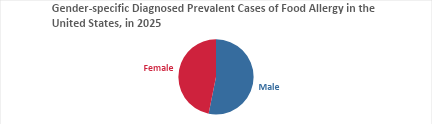
- In 2025, among gender-specific cases of food allergy in 7 million individuals, males accounted for 53% while females made up 47%.
- In Japan in 2025, egg allergy had the highest diagnosed prevalence among food allergens, followed by milk allergy, while fish allergy had the lowest prevalence.
Scope of the Report
- The report covers a segment of an executive summary, a descriptive overview of Food Allergy, explaining its causes, signs and symptoms, and pathogenesis.
- Comprehensive insight has been provided into the epidemiology segments and forecasts, the future growth potential of the diagnosis rate, and disease progression.
Report Insights
Food Allergy Patient Population Forecast
Report Key Strengths
- Epidemiology‑based (epi‑based) Bottom‑up Forecasting
- 11-year Forecast
- Patient Burden Trends (by geography)
Key Strengths
- Epidemiology-based bottom-up forecasting
- 11-year forecast horizon
- Patient burden trends across geographies
Gain comprehensive Food Allergy market insights covering patient population, pipeline advancements, regional trends, and anticipated therapeutic developments across major markets.
FAQs
- What are the disease risks, burdens, and unmet needs of Food Allergy? What will be the growth opportunities across the 7MM concerning the patient population with Food Allergy?
- What is the historical and forecasted Food Allergy patient pool in the US, EU4 (Germany, France, Italy, and Spain), the UK, and Japan?
Reasons to Buy
- Insights on patient burden/disease prevalence, evolution in diagnosis, and factors contributing to the change in the epidemiology of the disease during the forecast years.
- To understand key opinion leaders’ perspectives on the diagnostic challenges to overcome barriers in the future.
- Detailed insights into various factors hampering disease diagnosis and other existing diagnostic challenges.