
Gastroenteropancreatic Neuroendocrine Tumors Market Summary
- The GEP-NET Market Size is anticipate to grow with a significant CAGR during the forecast period (2026-2036).
- The leading GEP-NET companies developing therapies in the treatment market include - Novartis, Pfizer, Exelixis, Ipsen Biopharmaceuticals, ITM Isotope Technologies Munich, Camurus AB, Bristol Myers Squibb, RayzeBio, and others.
Gastroenteropancreatic Neuroendocrine Tumors (GEP-NET) Insights and Trends
- GEP-NET are heterogeneous tumors arising from neuroendocrine cells in the gastrointestinal tract and pancreas, with incidence increasing over recent decades, partly due to enhanced detection and imaging practices while exact rates vary by region and subtype, their rising recognition underscores unmet clinical needs.
- A significant proportion of GEP‑NET express somatostatin receptors, particularly in well and moderately differentiated tumors, which underpins the use of somatostatin analogs and peptide receptor radionuclide therapies.
- GEP NETs represent the most common NET subtype, comprising 50–70% of all NETs.
- Surgery, the only curative treatment for GEP-NET, is generally considered a first-line treatment for localized NETs. However, despite advances in diagnostics, GEP-NET are often not identified for up to 5–7 years after clinical symptoms appear, as the symptoms are not specific.
- Radiomedix and Orano Med are developing AlphaMedix, the first radioligand therapy to receive BTD. AlphaMedix has demonstrated a response rate of 62.5% in GEP-NET patients who had not previously undergone peptide receptor radionuclide therapy (PRRT) with LUTATHERA.
- The development of innovative therapies, particularly radioligand treatments and alpha emitter-based therapies, is driving growth in the GEP-NET market. On the other hand, the complex nature of GEP-NET, combined with challenges in drug manufacturing and administration, poses significant barriers to market entry and growth. Additionally, the impact of generic competition impacts the sales of approved drugs.
- Radioligand therapies continue to advance as LUTATHERA has demonstrated meaningful progression-free survival benefits and is approved for somatostatin receptor–positive GEP-NET in adults.
- Ongoing clinical research into targeted therapies and combination regimens continues to expand the therapeutic landscape like RYZ101 is an emerging radioligand therapy designed to deliver targeted alpha radiation to somatostatin receptor–expressing tumors.
Download the Sample PDF to Get More Insight @ GEP-NET Market Forecast
Key Factors Driving the Gastroenteropancreatic Neuroendocrine Tumors (GEP-NET) Market
- Increasing Incidence and Improved Diagnosis: Rising prevalence of Gastroenteropancreatic Neuroendocrine Tumors and advancements in imaging and biomarker-based diagnostics are supporting market expansion.
- Advancements in Targeted and Radioligand Therapies: Growing adoption of peptide receptor radionuclide therapy (PRRT) and targeted treatments is improving patient outcomes and driving therapeutic demand.
- Expanding Research and Clinical Pipeline: Pharmaceutical companies are actively investing in innovative therapies, immunotherapies, and combination treatment strategies for GEP-NET management.
- Rising Awareness and Early Detection Programs: Increased awareness among healthcare professionals and patients is leading to earlier diagnosis and improved treatment accessibility.
- Favorable Regulatory Support for Rare Cancers: Orphan drug incentives, accelerated approvals, and supportive reimbursement policies are encouraging the development of novel GEP-NET therapies.
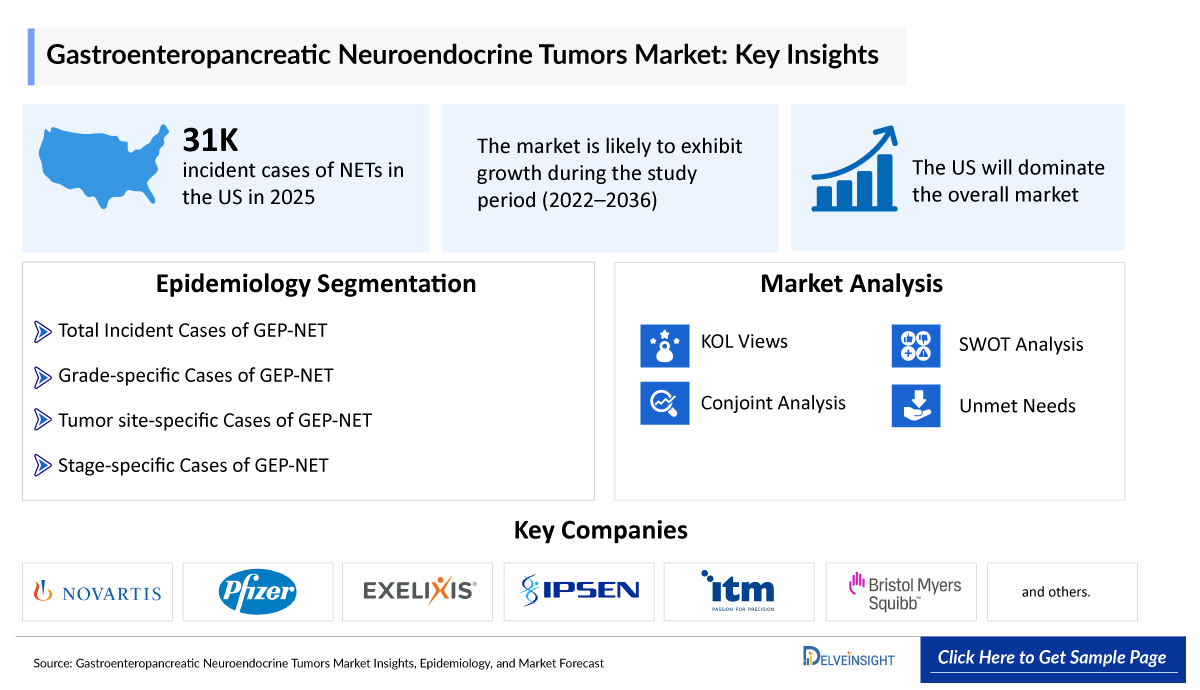
DelveInsight's ‘Gastroenteropancreatic Neuroendocrine Tumors (GEP-NET) Market Insights, Epidemiology and Market Forecast – 2036’ report delivers an in-depth understanding of the GEP-NET, historical and forecasted epidemiology, as well as the GEP-NET market trends in the United States, EU4 (Germany, Spain, Italy, and France) and the United Kingdom, and Japan.
The Gastroenteropancreatic Neuroendocrine Tumors (GEP-NET) market report delivers a comprehensive analysis of the current treatment landscape, including standards of care, clinical practices, and evolving therapeutic algorithms. It evaluates, GEP-NET patient burden trends, revenue & market share dynamics, peak patient share & therapy uptake analysis, and provides an in-depth market size assessment, and growth rate projections (Historical & Forecast 2022–2036) across global regions. The report highlights key unmet medical needs in GEP-NET and maps the competitive and clinical landscape to uncover high‑value opportunities, providing a clear outlook on future market growth potential.
Scope of the Gastroenteropancreatic Neuroendocrine Tumors Market Report | |
|
Study Period |
2022–2036 |
|
Historical Year |
2022–2025 |
|
Forecast Period |
2026–2036 |
|
Base Year |
2026 |
|
Geographies Covered |
|
|
GEP-NET Epidemiology Segmentation Analysis |
Patient Burden Assessment
|
|
GEP-NET Companies |
|
|
GEP-NET Therapies |
|
|
GEP-NET Market |
Segmented by
|
|
Analysis |
|
Gastroenteropancreatic Neuroendocrine Tumors (GEP-NET) Disease Understanding
Gastroenteropancreatic Neuroendocrine Tumors (GEP-NET) Overview and Diagnosis
GEP-NET are rare, heterogeneous cancers of the pancreas and gastrointestinal tract. Their complexity and late-stage presentation require individualized treatment based on tumor grade, location, hormone activity, and patient symptoms, with management primarily focused on advanced and metastatic disease. Despite advances in diagnostics, GEP-NET are often not identified for up to 5–7 years after clinical symptoms appear, as the symptoms are not specific.
Diagnosis of GEP-NET relies on a combination of biochemical testing, imaging, and sometimes genetic evaluation. Common biochemical markers include chromogranin A, pancreatic hormones (insulin, gastrin, glucagon), and serotonin metabolites such as 5-HIAA in urine, depending on tumor functionality. Imaging studies such as contrast-enhanced CT and MRI are used to localize primary tumors and assess metastatic spread.
Further details are provided in the report...
Current Gastroenteropancreatic Neuroendocrine Tumors (GEP-NET) Treatment Landscape
Surgery, the only curative treatment for GEP-NET, is generally considered a first-line treatment for localized NETs. For advanced, metastatic, or unresectable disease, treatment options include peptide receptor radionuclide therapy (PRRT) with LUTATHERA, somatostatin analogs such as octreotide and lanreotide to control hormone-related symptoms and tumor growth, targeted therapies like everolimus and sunitinib for pancreatic NETs, and cytotoxic chemotherapy (temozolomide or capecitabine-based regimens) for high-grade tumors.
Further details related to country-based variations are provided in the report...
Gastroenteropancreatic Neuroendocrine Tumors (GEP-NET) Unmet Needs
The section “unmet needs of Gastroenteropancreatic Neuroendocrine Tumors (GEP-NET)” outlines the critical gaps between the current state of patient care, diagnosis, and the ideal & effective management of the disease. It highlights the obstacles experienced by patients, clinicians, and researchers and identifies potential solutions for future progress.
- Diagnostic delays and disease presentation
- Treatment resistance & disease progression
- Resistance to standard therapies
- Gaps in long-term disease management, and others…..
Note: Comprehensive unmet needs insights in GEP-NET and their strategic implications are provided in the full report...
Gastroenteropancreatic Neuroendocrine Tumors (GEP-NET) Epidemiology
The GEP-NET epidemiology section provides insights about the historical and current GEP-NET patient pool and forecasted trends for individual seven major countries. It helps to recognize the causes of current and forecasted trends by exploring numerous studies and views of key opinion leaders. This part of the GEP-NET market report also provides the diagnosed patient pool and their trends along with assumptions undertaken.
Key Findings from GEP-NET Epidemiological Analysis and Forecast
- The US contributed to the highest incident cases of NETs. The total incident cases of NETs in the United States in 2025 were 31,000.
- According to the secondary search, net project, the incidence of malignant GEP-NET during 2000–2007 was 1.7 per 100,000 population per year in Europe, corresponding to an estimated 26,000 new cases.
- As per the secondary sesrch, the annual incidence of the disease was 6.47 cases per 100,000 population, with an adjusted prevalence of 0.052%. The mean age at diagnosis was 58 ± 15 years, and the sex distribution was nearly equal, with 51% men and 49% women in Spain.
- Surgical resection of the primary tumor was performed in 66% of patients. Histopathological grading showed that most tumors were well differentiated, with 73% classified as Grade 1 (G1), 22% as Grade 2 (G2), and 5% as Grade 3 (G3).
- The most common primary tumor site was the pancreas (52%), followed by the jejunum–ileum (23%). At the time of diagnosis, 24% of patients presented with distant metastases, most frequently involving the liver (44%), peritoneum (25%), or multiple organs (22%). The majority of tumors were sporadic and non-functional.
Gastroenteropancreatic Neuroendocrine Tumors Epidemiology Segmentation
- Total Incident Cases of NET
- Total Incident Cases of GEP-NET
- Grade-specific Incident Cases of GEP-NET
- Functional status Incident Cases of GEP-NET
- Stage-specific Incident Cases of GEP-NET
- SSR Positive Incident Cases of GEP-NET
- Total Treated Cases of GEP-NET
Recent Developments in the Gastroenteropancreatic Neuroendocrine Tumors Treatment Landscape
- According to the Camurus AB’s 2026 presentation, results from the Phase III (SORENTO) trial are expected to be presented in 2026.
- In March 2025, US FDA approved cabozantinib (CABOMETYX, RayzeBio, Inc.) for adult and pediatric patients 12 years of age and older with previously treated, unresectable, locally advanced or metastatic, well-differentiated pancreatic neuroendocrine tumors (pNET) and well-differentiated extra-pancreatic neuroendocrine tumors (epNET).
- In November 2025, ITM Isotope Technologies Munich announced that the FDA completed its filing review and accepted the company’s New Drug Application for 177Lu-edotreotide (also known as ITM-11 or 177Lu-edotreotide). 177Lu-edotreotide is ITM’s proprietary, synthetic, targeted radiotherapeutic investigational agent for the treatment of GEP-NET. The FDA has set a Prescription Drug User Fee Act (PDUFA) goal date of August 28, 2026.
Gastroenteropancreatic Neuroendocrine Tumors (GEP-NET) Drug Analysis & Competitive Landscape
The GEP-NET drug chapter provides a detailed, market-focused review of approved therapies and the emerging pipeline across Phase III-I GEP-NET clinical trials. It covers mechanism of action, clinical trial data, regulatory approvals, patents, collaborations, strategic partnerships upcoming Key catalyst for each therapy, along with their advantages, limitations, and recent developments. This section offers critical insights into the GEP-NET treatment landscape, supporting market assessment, competitive analysis, and growth forecasting for the GEP-NET therapeutics market.
Approved Therapies for Gastroenteropancreatic Neuroendocrine Tumors (GEP-NET)
LUTATHERA (lutetium Lu 177 DOTATATE): Novartis
LUTATHERA, is indicated for adult patients with somatostatin receptor-positive GEP-NET. Peptide receptor radionuclide therapy (PRRT), either with 90-Yttrium-labeled compounds or with LUTATHERA (lutetium-177 oxodotreotide) is approved for supply in Australia and is listed on the Australian Register of Therapeutic Goods (ARTG) under ARTG number 455452, with a registration date of November 2025. In September 2017, the EMA approved LUTATHERA for the treatment of GEP-NET. This is the first time a radioactive drug, or radiopharmaceutical, has been approved for the treatment of GEP-NET.
SOMATULINE DEPOT (lanreotide): Ipsen Biopharmaceuticals
SOMATULINE DEPOT is a SSA indicated for the treatment of adult patients with unresectable well or moderately differentiated, locally advanced, or metastatic GEP-NET to improve progression-free survival. The drug is also approved for the treatment of adults with carcinoid syndrome by reducing the frequency of short-acting SSA rescue therapy. The drug is administered subcutaneously.
Note: Detailed marketed therapies assessment will be provided in the final report...
Gastroenteropancreatic Neuroendocrine Tumors (GEP-NET) Marketed/Approved Therapies | ||||||
|
Drug/Therapy |
Company |
Indication |
Molecule Type |
MoA |
RoA |
Marketed Region |
|
LUTATHERA (lutetium Lu 177 DOTATATE) |
Novartis |
GEP-NET, GEP-NET 1L G2/G3, SSTR+ GEP-NET |
Peptide-radioisotope conjugate |
SSA |
IV infusion |
US: 2018; 2024 |
|
SOMATULINE DEPOT (Lanreotide) |
Ipsen Biopharmaceuticals |
GEP-NET |
Somatostatin |
SSA |
SC |
US: 2014 |
|
ZANOSAR (Streptozocin) |
Pfizer |
PNET/GEP-NET |
Small molecule |
Alkylating anti-tumor antibiotic |
IV infusion |
US: 1982 (PNET) JP: 2014 (GEP-NET) |
Gastroenteropancreatic Neuroendocrine Tumors (GEP-NET) Pipeline Analysis
ITM-11 (n.c.a. 177Lu-edotreotide): ITM Isotope Technologies Munich
ITM-11 (n.c.a. 177Lu-edotreotide), being developed by ITM Isotope Technologies Munich, is an innovative targeted radionuclide therapy agent consisting of two components: firstly, Edotreotide (DOTATOC). It is currently being investigated in two Phase III clinical trials, COMPETE (GEP-NET G1/G2) and COMPOSE (GEP-NET G3/G4). While COMPETE is evaluating ITM-11 for the treatment of patients with Grade 1 and Grade 2 GEP-NET, the radiopharmaceutical candidate is also being investigated in COMPOSE, for patients with well-differentiated high Grade 2 and Grade 3 GEP-NET. ITM Isotope Technologies Munich announced that the FDA completed its filing review and accepted the company’s New Drug Application for 177Lu-edotreotide.
CAM2029: Camurus AB
CAM2029, being developed by Camurus AB, is a ready-to-use, long-acting, subcutaneous depot of octreotide under development to treat rare diseases, acromegaly, GEP-NET, and polycystic liver disease (PLD). Studies completed to date demonstrate that CAM2029 has the potential to provide significantly higher octreotide bioavailability and octreotide exposure with the potential for improved treatment efficacy, compared to current market leading products. CAM2029 is designed to enable easy self-administration, including the option of a pre-filled pen device. The drug is currently being evaluated in a Phase III SORENTO study (Subcutaneous Octreotide Randomized Efficacy in Neuroendocrine Tumors) in patients with GEP-NET. According to the company’s presentation, they anticipated to present PFS readout data of Phase III (SORENTO) clinical trial in mid to late 2026.
Competitive Landscape of GEP-NET Pipeline Drugs | ||||||
|
Drug Name |
Company |
Highest Phase |
Indication |
RoA |
MoA |
Anticipated Launch in the US |
|
ITM-11 (n.c.a. 177Lu-edotreotide) |
ITM Isotope Technologies Munich |
Registrational phase |
GEP-NET |
IV |
SSTR agonist |
Information is available in the full report |
|
CAM2029 |
Camurus AB |
III |
Advanced well-differentiated GEP-NET |
SC |
SSTR agonists |
Information is available in the full report |
|
RYZ101 |
RayzeBio |
III |
SSTR+ GEP-NET |
IV |
Targeted radioligand therapy |
Information is available in the full report |
|
Note: Launch insights are provisional and may change with future report updates or the occurrence of major key catalysts. | ||||||
Note: Detailed emerging therapies assessment will be provided in the final report....
Gastroenteropancreatic Neuroendocrine Tumors (GEP-NET) Key Players, Market Leaders and Emerging Companies
- Novartis
- Pfizer
- Exelixis
- Ipsen Biopharmaceuticals
- ITM Isotope Technologies Munich
- Camurus AB
- Bristol Myers Squibb
- RayzeBio, and others
Gastroenteropancreatic Neuroendocrine Tumors (GEP-NET) Market Outlook
The GEP-NET market is undergoing a steady shift as deeper insights into tumor biology and receptor expression patterns reshape treatment approaches. Historically characterized by slow-growing but complex disease behavior, GEP-NET management is now benefiting from advances in targeted pathways, including mTOR inhibition and somatostatin receptor directed strategies. These developments are improving disease stabilization and delaying progression, particularly in patients with well-differentiated tumors.
At the same time, radioligand-based therapies continue to evolve, with ongoing refinements in peptide receptor targeting and radionuclide design aimed at enhancing therapeutic precision, as seen with agents such as LUTATHERA and Iodine-131 metaiodobenzylguanidine (131I-MIBG). The clinical pipeline is expanding with novel agents, including next-generation receptor-targeted compounds, angiogenesis inhibitors such as sunitinib, and combination regimens designed to address resistance and tumor heterogeneity. Improvements in functional imaging, including Ga-68 DOTATATE PET/CT, and biomarker research are also enabling more accurate disease monitoring and treatment selection.
Overall, growing clinical interest, increasing diagnosis rates, and continued innovation in targeted and radioligand therapies are expected to support sustained growth in the GEP-NET market across major regions.
- Radioligand therapies and targeted agents are expected to remain key drivers of market expansion.
- Emerging pipeline candidates focusing on receptor targeting, angiogenesis, and combination approaches such as surufatinib, and 177Lu-edotreotide are anticipated to increase competition and shape future treatment strategies.
Further details will be provided in the report….
Drug Class/Insights into Leading Emerging and Marketed Therapies in GEP-NET (2022–2036 Forecast)
The GEP-NET market comprises radioligand therapies, and small molecules, each targeting different aspects of GEP-NET.
- Radioligand therapies: LUTATHERA and emerging agents such as 177Lu-edotreotide and [212Pb]VMT-α-NET represent targeted radiopharmaceutical approaches for somatostatin receptor–positive neuroendocrine tumors, delivering cytotoxic radiation directly to tumor cells through peptide receptor radionuclide therapy (PRRT) or next-generation alpha-emitting platforms.
- Small molecules: Approved therapy such as sunitinib (SUTENT) along with pipeline candidates including surufatinib and cabozantinib target key pathways like mTOR signaling, angiogenesis, and somatostatin receptor modulation to inhibit tumor growth and progression.
Small molecules define a major area of ongoing innovation, while radioligand therapies remain clinically established, together driving both current treatment paradigms and future pipeline expansion.
Gastroenteropancreatic Neuroendocrine Tumors Drug Uptake
This section focuses on the uptake rate of potential GEP-NET drugs expected to be launched in the market during the forecast period (2026–2036). The analysis covers the GEP-NET drug’s uptake, performance at peak, factors affecting performance during prime years of growth, patient uptake by therapy, and anticipated sales generated by each drug.
The uptake of therapies in GEP-NET is expected to vary based on clinical positioning, mechanism of action, and stage of development. Approved targeted therapy such as LUTATHERA (lutetium Lu 177 DOTATATE) is projected to demonstrate steady uptake, driven established efficacy and physician familiarity in advanced disease settings.
In contrast, pipeline candidates surufatinib is expected to follow a moderate uptake trajectory, reflecting its investigational status and gradual adoption as clinical evidence emerges.
Detailed insights of emerging therapies' drug uptake is included in the report...
Gastroenteropancreatic Neuroendocrine Tumors Market Access and Reimbursement of Approved therapies
The report further provides detailed insights on the country-wise accessibility and reimbursement scenarios, cost-effectiveness scenario of approved therapies, programs making accessibility easier and out-of-pocket costs more affordable, insights on patients insured under federal or state government prescription drug programs, etc.
The United States
US Reimbursement of Therapies Approved for GEP-NET | |
|
Drug/Therapy |
Access Program |
|
LUTATHERA |
Novartis Patient Support |
Reimbursement is a crucial factor that affects the drug’s access to the market. Often, the decision to reimburse comes down to the price of the drug relative to the benefit it produces in treated patients. To reduce the healthcare burden of these high-cost therapies, many payment models are being considered by payers and other industry insiders.
NOTE: Further Details are provided in the final report….
Gastroenteropancreatic Neuroendocrine Tumors (GEP-NET) Therapies Price Scenario & Trends
Pricing and analogue assessment of GEP-NET therapies highlights evolving price dynamics structures. This section summarizes the cost of approved treatments, closest and most appropriate analogue selection for emerging therapies, and understanding of how pricing influences market access, adherence, and long-term uptake.
-
Pricing of Gastroenteropancreatic Neuroendocrine Tumors (GEP-NET) Approved Drugs
If the patient has private insurance, they could be eligible for Co-Pay Plus and pay as little as USD 25 for their LUTATHERA treatment. Limitations apply - Up to USD 15,000 throughout the treatment. Offer not valid under Medicare, Medicaid, or any other federal or state programs. Novartis reserves the right to rescind, revoke, or amend this program without notice.
Industry Experts and Physician Views for Gastroenteropancreatic Neuroendocrine Tumors
To keep up with GEP-NET market trends, we take Key Opinion Leaders (KOLs) and Subject Matter Experts (SMEs) opinions working in the domain through primary research to fill the data gaps and validate our secondary research. Industry experts were contacted for insights on the GEP-NET emerging therapies, evolving treatment landscape, patient adherence to conventional therapies, therapy switching trends, drug adoption and uptake, accessibility challenges, and epidemiology and real-world prescription patterns in GEP-NET, including MD, PhD, Instructor, Postdoctoral Researcher, Professor, Researcher, and others.
DelveInsight’s analysts connected with 15+ KOLs to gather insights at country level. Centers such as the Center for Gastrointestinal Cancers at Smilow Cancer Hospital and Yale Cancer Center, National Institutes of Health in the USA, and MD Anderson Cancer Center Madrid, etc. were contacted.Their opinion helps understand and validate current and emerging GEP-NET therapies, highlight unmet medical needs, provide epidemiological context, and support strategic decisions for market access, therapy adoption, and pipeline prioritization in GEP-NET.
|
Region |
Key Opinion Leaders (KOLs) and Subject Matter Experts (SMEs) |
|
United States |
“Despite advances in diagnostics, GEP-NET are often not identified for up to 5 to 7 years after clinical symptoms appear, as the symptoms are not specific. Approximately 21% of well-differentiated NETs, 30% of moderately differentiated NETs, and 50% of poorly differentiated or undifferentiated NETs are diagnosed in the metastatic stage.” |
|
Germany |
“Resection of the disease continues to be a treatment for patients with well-differentiated GEP- NETs and is still conducted in more than 70% of patients with these tumors. However, the recurrence rate for patients who received a resection is 100% at 10 years, changing the treatment paradigm as this was previously considered a curative therapy.” |
Gastroenteropancreatic Neuroendocrine Tumors Report Qualitative Analysis: SWOT and Conjoint Analysis
We perform qualitative and market Intelligence analysis using various approaches, such as SWOT analysis and conjoint analysis.
In the SWOT analysis of GEP-NET, strengths, weaknesses, opportunities, and threats in terms of disease diagnosis, patient awareness, patient burden, competitive landscape, cost-effectiveness, and geographical accessibility of therapies are provided.
Conjoint analysis analyzes emerging therapies based on relevant attributes such as safety, efficacy, frequency of administration, route of administration, and order of entry. Scoring is given based on these parameters to analyze the effectiveness of therapy.
The team of analysts analyzes promising emerging therapies based on relevant attributes such as safety, efficacy, frequency of administration, route of administration, and order of entry. In efficacy, the trial’s primary and secondary outcome measures are evaluated, whereas the therapies’ safety is evaluated, wherein the acceptability, tolerability, and adverse events are majorly observed. In addition, the scoring is also based on the route of administration, order of entry, probability of success, and the addressable patient pool for each therapy. According to these parameters, the final weightage score and the ranking of the emerging therapies are decided.
Scope of the Gastroenteropancreatic Neuroendocrine Tumors Market Report
- The report covers a segment of key events, an executive summary, a descriptive overview of GEP-NET, explaining their causes, signs and symptoms, pathogenesis, and currently available treatments.
- Comprehensive insight has been provided into the epidemiology segments and forecasts, the future growth potential of the diagnosis rate, and disease progression along treatment guidelines.
- Additionally, an all-inclusive account of both the current and emerging treatments, along with the elaborative profiles of late-stage and prominent therapies, will have an impact on the current treatment landscape.
- A detailed review of the GEP-NET market, historical and forecasted market size, market share by therapies, detailed assumptions, and rationale behind our approach is included in the report, covering the 7MM drug outreach.
- The report provides an edge while developing business strategies by understanding trends through SWOT analysis and expert insights/KOL views, patient journey, and treatment preferences that help in shaping and driving the 7MM GEP-NET market.
Gastroenteropancreatic Neuroendocrine Tumors Market Report Insights
- GEP-NET Patient Population Forecast
- GEP-NET Therapeutics Market Size
- GEP-NET Pipeline Analysis
- GEP-NET Market Size and Trends
- GEP-NET Market Opportunity (Current and forecasted)
Gastroenteropancreatic Neuroendocrine Tumors Market Report Key Strengths
- GEP-NET Epidemiology‑based (Epi‑based) Bottom‑up Forecasting
- Artificial Intelligence (AI)-Enabled Market Research Report
- 11-Year Forecast
- GEP-NET Market Outlook (North America, Europe, Asia-Pacific)
- Patient Burden Trends (By Geography)
- GEP-NET Treatment Addressable Market (TAM)
- GEP-NET Competitve Landscape
- GEP-NET Major Companies Insights
- GEP-NET Price Trends and Analogue Assessment
- GEP-NET Therapies Drug Adoption/Uptake
- GEP-NET Therapies Peak Patient Share Analysis
Gastroenteropancreatic Neuroendocrine Tumors Market Report Assessment
- GEP-NET Current Treatment Practices
- GEP-NET Unmet Needs
- GEP-NET Clinical Development Analysis
- GEP-NET Emerging Drugs Product Profiles
- GEP-NET Market attractiveness
- GEP-NET Qualitative Analysis (SWOT and conjoint analysis)
- GEP-NET Market Drivers
- GEP-NET Market Barriers
FAQs Realated to Gastroenteropancreatic Neuroendocrine Tumors Market Report:
Gastroenteropancreatic Neuroendocrine Tumors Market Insights
- What was the GEP-NET market size, the market size by therapies, market share (%) distribution in 2025, and what would it look like by 2036? What are the contributing factors for this growth?
- What are the anticipated pricing variations among different geographies for the emerging therapies in the future?
- What can be the future treatment paradigm of GEP-NET?
- What are the disease risks, burdens, and unmet needs of GEP-NET? What will be the growth opportunities across the 7MM concerning the GEP-NET patient population?
- Who is the major future competitor in the market, and how will the competitors affect their market share?
- What are the current options for the treatment of GEP-NET? What are the current guidelines for treating GEP-NET in the US, Europe, and Japan?
Reasons to Buy Gastroenteropancreatic Neuroendocrine Tumors Market Forecast Report
- The report will help in developing business strategies by understanding the latest trends and changing treatment dynamics driving the GEP-NET market.
- Bottom-up forecasting builds from the affected population to product forecasts, delivering a robust, data-driven approach ideal for new therapies and novel classes.
- Insights on patient burden/disease incidence, evolution in diagnosis, and factors contributing to the change in the epidemiology of the disease during the forecast years.
- Understand the existing market opportunities in varying geographies and the growth potential over the coming years.
- Identifying strong upcoming players in the market will help devise strategies to help get ahead of competitors.
- Detailed analysis and ranking of class-wise potential current and emerging therapies under the conjoint analysis section to provide visibility around leading classes.
- To understand KOLs’ perspectives on the accessibility, acceptability, and compliance-related challenges of existing treatment to overcome barriers in the future.
- Detailed insights on the unmet needs of the existing market so that the upcoming players can strengthen their development and launch strategy.
- This Artificial Intelligence (AI)-enabled report summarize and simplify complex datasets with in the report into clear, actionable insights for stakeholders, investors, and healthcare providers, enabling faster, data-driven decisions.
.png&w=256&q=75)
-pipeline.png&w=256&q=75)