Gene and Cell Therapies targeting CNS Disorders Market Summary
- CNS therapies were historically limited to small molecules due to the poor ability of large molecules to penetrate the brain, and early attempts with monoclonal antibodies in neurological diseases showed limited success, underscoring persistent delivery challenges.
- These constraints, combined with a broader reliance on symptomatic management, drove advances in molecular biology that enabled the identification of genetic drivers, laying the foundation for more targeted therapeutic approaches.
- This shift prompted the exploration of gene therapy as an alternative strategy to address CNS diseases at a molecular level, although efficient delivery to specific brain regions remained a key obstacle.
- Early gene therapy setbacks related to safety concerns and vector limitations provided critical learnings, leading to the development of improved AAV-based delivery systems with enhanced efficacy and tolerability. In parallel, progress in stem cell research introduced regenerative potential, while clinical success in rare monogenic disorders validated the feasibility of one-time, disease-modifying treatments.
- Gene and cell therapies for CNS disorders are advancing rapidly, driven by the rising prevalence of conditions such as Alzheimer’s disease, Parkinson’s disease, Spinal Muscular Atrophy (SMA), Huntington’s disease, Amyotrophic Lateral Sclerosis (ALS), multiple sclerosis, Cerebral Adrenoleukodystrophy (CALD), and others. The growing patient burden and limited effectiveness of current treatments are increasing demand for innovative, disease-modifying therapies.
- The cell and gene therapies approved for CNS disorders include onasemnogene abeparvovec (ZOLGENSMA; spinal muscular atrophy), intrathecal onasemnogene abeparvovec (ITVISMA; spinal muscular atrophy), elivaldogene autotemcel (SKYSONA; cerebral adrenoleukodystrophy), atidarsagene autotemcel (LENMELDY; metachromatic leukodystrophy), eladocagene exuparvovec (KEBILIDI; aromatic L-amino acid decarboxylase deficiency), and tividonofusp alfa-eknm (AVLAYAH; Hunter syndrome with neurological manifestations).
- Gene therapy also comes with risks. Ongoing clinical trials are being conducted in people across many categories to determine the potential risks of treatment with gene therapy. The risk depends on the type of gene therapy, type of vector, and administration method, and some risks can be serious.
Cell and Gene Therapies Targeting CNS Disorders Market Size and Forecast in the 7MM
- 2025 Cell and Gene Therapies Targeting CNS Disorders Market Size: ~USD XXX million
- 2036 Projected Cell and Gene Therapies Targeting CNS Disorders Market Size: ~USD XXX million
- Cell and Gene Therapies Targeting CNS Disorders Growth Rate (2026–2036): ~XX% CAGR
Numbers are subject to change with report updation, clinical information updates, etc....
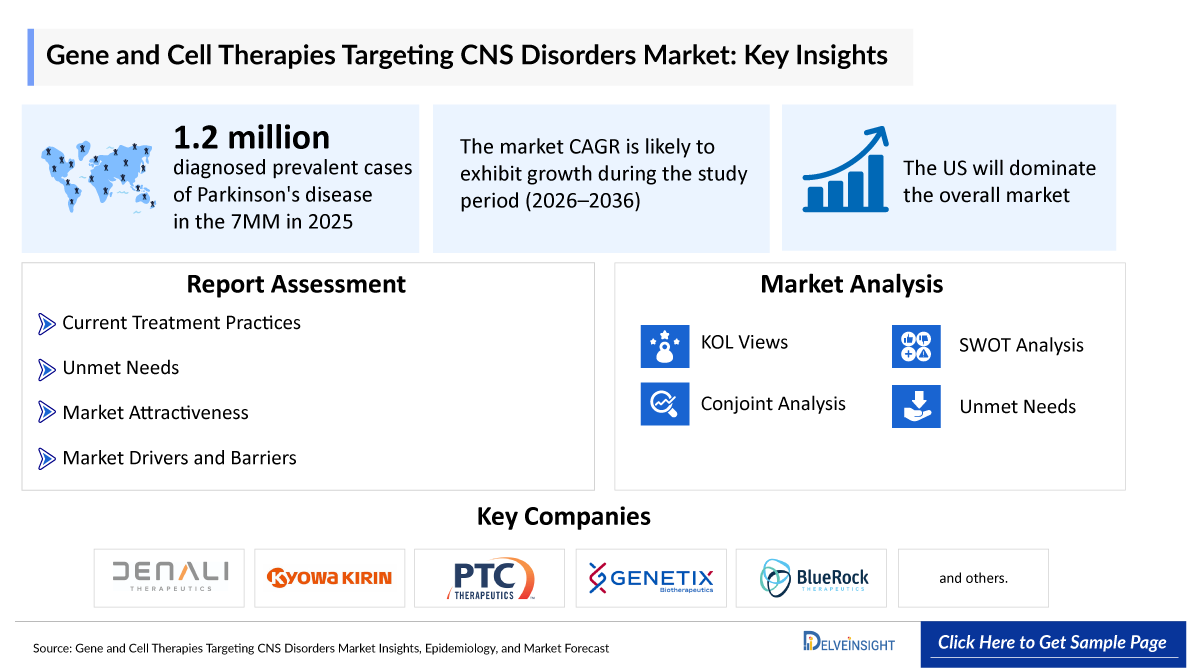
DelveInsight's ‘Cell and Gene Therapies Targeting CNS Disorders Market Insights, Epidemiology and Market Forecast – 2036’ report delivers an in-depth understanding of the cell and gene therapies targeting CNS Disorders, historical and forecasted epidemiology, as well as the cell and gene therapies targeting CNS Disorders market trends in the United States, EU4 (Germany, Spain, Italy, and France) and the United Kingdom, and Japan.
The Cell and Gene Therapies Targeting CNS Disorders market report delivers a comprehensive analysis of the current treatment landscape, including standards of care, clinical practices, and evolving therapeutic algorithms. It evaluates cell and gene therapies targeting CNS Disorders patient burden trends, revenue & market share dynamics, peak patient share & therapy uptake analysis, and provides an in-depth market size assessment, and growth rate projections (Historical & Forecast 2022–2036) across global regions. The report highlights key unmet medical needs in cell and gene therapies targeting CNS Disorders and maps the competitive and clinical landscape to uncover high‑value opportunities, providing a clear outlook on future market growth potential.
|
Study Period |
2022–2036 |
|
Historical Year |
2022–2025 |
|
Forecast Period |
2026–2036 |
|
Base Year |
2026 |
|
Geographies Covered |
|
|
Cell and Gene Therapies Targeting CNS Disorders Market CAGR (Study period/Forecast period) |
~XX% (2026 ̶ 2036) |
|
Cell and Gene Therapies Targeting CNS Disorders Epidemiology Segmentation Analysis |
Patient Burden Assessment
|
|
Cell and Gene Therapies Targeting CNS Disorders Companies |
|
|
Cell and Gene Therapies Targeting CNS Disorders Therapies |
|
|
Cell and Gene Therapies Targeting CNS Disorders Market |
Segmented by
|
|
Analysis |
|
Key Factors Driving the Cell and Gene Therapies Targeting CNS Disorders Market
- Rising Prevalence of Central Nervous System (CNS): The prevalence of CNS disorders is rising globally due to aging populations, lifestyle risk factors, improved diagnosis, and increased survival, making them a leading cause of disability and disease burden.
- Rising Opportunities in Cell and Gene Therapies Targeting CNS Disorders: Rising opportunities in CNS are being driven by advances in cell and gene therapies that target the root causes of neurological disorders. These therapies offer potential one-time, disease-modifying treatments rather than symptomatic management. Improvements in delivery technologies, such as viral vectors and intrathecal administration, are enhancing effectiveness in the brain. Increasing clinical success and regulatory approvals are further accelerating investment and development in this space.
- Emerging Cell and Gene Therapies Cell and Gene Therapies Targeting CNS Disorders Competitive Landscape: Emerging CNS cell and gene therapies such as bemdaneprocel (BRT-DA01), AB-1005, LX1001, and AMT-130 are driving the market due to their potential to provide disease-modifying or curative treatments for high-burden neurodegenerative disorders like Parkinson’s, Alzheimer’s, and Huntington’s disease. Their growth is supported by advances in gene delivery, neuronal replacement, and gene silencing technologies, along with rising clinical and investment momentum.
Cell and Gene Therapies Targeting CNS Disorders Disease Understanding
Cell and Gene Therapies Targeting CNS Disorders Overview
Cell and gene therapies targeting CNS disorders represent a rapidly evolving field focused on addressing the underlying genetic and cellular causes of neurological diseases. These approaches include gene replacement, gene silencing, and cell-based regenerative strategies to restore or modify neuronal function. Advances in viral vectors (e.g., AAV) and improved delivery methods such as intrathecal and intracerebral administration have enhanced access to the brain. Several therapies have already achieved regulatory approval, particularly for rare genetic disorders, demonstrating strong clinical potential. Overall, this field is shifting CNS treatment from symptomatic management to long-term, potentially curative solutions.
CNS Disorders Diagnosis
Diagnosis of central nervous system (CNS) disorders involves a combination of clinical evaluation, neurological examination, and advanced diagnostic tools. Key methods include neuroimaging techniques such as MRI and CT scans to assess brain structure, along with electrophysiological tests like EEG to evaluate brain activity. Laboratory tests, including cerebrospinal fluid (CSF) analysis and genetic testing, help identify infections, inflammation, or inherited conditions. Increasing use of biomarkers and molecular diagnostics is improving early detection and disease characterization.
Further details are provided in the report.
Cell and Gene Therapies Targeting CNS Disorders as Treatment
Cell and gene therapies targeting CNS disorders are emerging as transformative treatment approaches that address the root cause of disease rather than just symptoms. These therapies utilize gene replacement, gene editing, and cell-based regeneration to restore or modify neuronal function. Advances in AAV-based vectors and targeted delivery methods (e.g., intrathecal or intracerebral administration) have improved their ability to reach the brain. Several therapies have shown durable clinical benefits with potential one-time treatment effects, particularly in rare genetic disorders. Overall, they are shifting CNS treatment toward long-term, disease-modifying, and potentially curative outcomes.
Further details related to country-based variations are provided in the report...
Cell and Gene Therapies Targeting CNS Disorders Unmet Needs
The section “unmet needs of Cell and Gene Therapies Targeting CNS Disorders” outlines the critical gaps between the current state of patient care, diagnosis, and the ideal & effective management of the disease. It highlights the obstacles experienced by patients, clinicians, and researchers and identifies potential solutions for future progress.
-
Limited delivery across the blood–brain barrier, reducing treatment effectiveness
-
High treatment costs, restricting patient access, and reimbursement
-
Safety concerns, including immune responses and long-term effects
-
Durability uncertainty of therapeutic benefit in some conditions
-
Limited clinical data for common and complex CNS disorders, and others…..
Comprehensive unmet needs insights in cell and gene therapies targeting CNS Disorders and their strategic implications are provided in the full report.
Cell and Gene Therapies Targeting CNS Disorders Epidemiology
Key Findings from Cell and Gene Therapies Targeting CNS Disorders Epidemiological Analysis and Forecast
- According to DelveInsight analysis, in 2025, there were 1,290,000 diagnosed prevalent cases of Parkinson’s disease in the US, and the cases are expected to increase at a CAGR of ~3%.
- In 2025, the number of Amyotrophic Lateral Sclerosis (ALS) cases in the United States was ~30,000.
- In the United States, the total number of diagnosed prevalent cases of Huntington’s disease was 25,000 in 2025, which is expected to increase during the forecast period, i.e., 2026–2036.
- In 2025, the total number of diagnosed prevalent cases of Alzheimer’s disease in the 7MM was 17,000,000. Among the 7MM countries, the US accounted for the highest number of diagnosed prevalent cases of Alzheimer’s disease, contributing around 45%, while the UK reported the lowest number of cases in 2025.
|
Sr. No. |
Indications |
Estimated Cases in 2025 in the US (Diagnosed Prevalence) |
|
1 |
Parkinson’s Disease |
~1,290,000 |
|
2 |
Huntington’s Disease |
~25,000 |
|
3 |
Alzheimer’s Disease |
~7,600,000 |
|
4 |
Amyotrophic Lateral Sclerosis |
~30,000 |
|
5 |
Spinal Muscular Atrophy |
~13,000 |
|
6 |
Multiple Sclerosis |
~86,000 |
*The list is not exhaustive and will be provided in the final report. Also, numbers are subject to change as per report updation....
Cell and Gene Therapies Targeting CNS Disorders: Drug Chapters & Competitive Analysis
The CNS disorders drug chapter provides a detailed, market-focused review of approved therapies and the emerging pipeline across Phase I–III clinical trials. It covers the mechanism of action, clinical trial data, regulatory approvals, patents, collaborations, and strategic partnerships for each therapy, along with their advantages, limitations, and recent developments. This section offers critical insights into the CNS disorders treatment landscape, supporting market assessment, competitive analysis, and growth forecasting for the CNS disorders therapeutics market.
Approved Therapies for Cell and Gene Therapies Targeting CNS Disorders
Tividenofusp alfa-eknm (AVLAYAH): Denali Therapeutics
AVLAYAH is a hydrolytic lysosomal glycosaminoglycan (GAG)-specific enzyme indicated for the treatment of neurologic manifestations of Hunter syndrome (Mucopolysaccharidosis type II, MPS II) when initiated in presymptomatic or symptomatic pediatric patients weighing at least 5 kg prior to advanced neurologic impairment. This indication is approved under accelerated approval based on the reduction of CSF heparan sulfate observed in patients treated with AVLAYAH. Continued approval for this indication may be contingent upon verification of clinical benefit in a confirmatory trial.
Elivaldogene autotemcel (SKYSONA): Kyowa Kirin
SKYSONA is an autologous hematopoietic stem cell-based gene therapy indicated to slow the progression of neurologic dysfunction in boys 4–17 years of age with early, active cerebral adrenoleukodystrophy (CALD) without an available human leukocyte antigen (HLA)-matched donor for allogeneic hematopoietic stem cell transplant. Early, active CALD refers to asymptomatic or mildly symptomatic (neurologic function score, NFS ≤ 1) boys who have gadolinium enhancement on brain magnetic resonance imaging (MRI) and Loes scores of 0.5-9.
|
Marketed/Approved Therapies | ||||||
|
Drug/Therapy |
Company |
Indication |
Molecule Type |
RoA |
MoA |
Marketed Region |
|
Tividenofusp alfa-eknm (AVLAYAH) |
Denali Therapeutics |
Hunter syndrome |
Gene therapy |
IV infusion |
Replace the missing iduronate 2-sulfatase (IDS) enzyme to reduce heparan sulfate (HS) accumulation |
US: 2026 |
|
Atidarsagene autotemcel (LENMELDY/ LIBMELDY) |
Kyowa Kirin |
Metachromatic leukodystrophy (MLD) |
Gene therapy |
IV infusion |
Restore functional ARSA enzyme production |
US: 2024 EU: 2020 |
|
Eladocagene exuparvovec-tneq (KEBILIDI/ UPSTAZA) |
PTC Therapeutics |
L-amino acid decarboxylase (AADC) deficiency |
Gene therapy |
Intraputaminal infusion |
Delivers a functional copy of the human DDC gene directly into the putamen region of the brain |
US: 2024 EU: 2022 |
|
Elivaldogene autotemcel (SKYSONA) |
Genetix Biotherapeutics |
CALD |
Gene therapy |
IV infusion |
ABCD1 genes into a patient’s own stem cells ex vivo, which then produce the adrenoleukodystrophy protein (ALDP) to stop nerve demyelination |
US: 2022 EU: 2021 |
Note: Detailed marketed therapies assessment of therapies will be provided in the final report....
Cell and Gene Therapies Targeting CNS Disorders Pipeline Analysis
Bemdaneprocel (BRT-DA01): BlueRock Therapeutics (Bayer subsidiary)
Bemdaneprocel (BRT-DA01) is an investigational cell therapy designed to replace the dopamine-producing neurons that are lost in Parkinson’s disease. These dopaminergic neuron precursors are derived from human embryonic pluripotent stem cells that continue developing into mature dopamine neurons after implantation. In a surgical procedure, these neuron precursors are implanted into the brain of a person with Parkinson’s disease. When transplanted, they have the potential to re-form neural networks that have been severely affected by Parkinson’s disease and to potentially restore motor and non-motor function to patients. In 2021, bemdaneprocel received Fast Track Designation and in 2024 a Regenerative Medicine Advanced Therapy (RMAT) designation from the FDA. A pivotal Phase III clinical trial (exPDite-2) to assess the efficacy, safety, and overall impact of bemdaneprocel compared to sham surgery control is currently enrolling participants.
AB-1005: Bayer and AskBio
AB-1005, currently being evaluated in the Phase II REGENERATE-PD trial, is an investigational gene therapy with adeno-associated viral (AAV) vector-mediated delivery of the glial cell line-derived neurotrophic factor (GDNF) gene for participants with moderate-stage PD. The therapy aims to restore neuronal function and potentially slow disease progression for people with limited treatment options. AB-1005 previously received US FDA RMAT, FDA FTD, and UK Medicines and Healthcare products Regulatory Agency (MHRA) Innovation Passport designations, underscoring its global significance and potential for participants.
Comparison of Emerging Drugs Under Development | |||||||
|
Drug Name |
Company |
Highest Phase |
Indication |
RoA |
MoA |
Molecule Type |
Anticipated Launch in the US |
|
Bemdaneprocel (BRT-DA01) |
BlueRock Therapeutics (Bayer subsidiary) |
III |
Parkinson’s disease |
Stereotactic transplantation directly into the brain's post-commissural putamen |
Replacing lost dopamine-producing neurons |
Dopaminergic neuron progenitors (Cell therapy) |
Information is available in the full report |
|
AB-1005 |
Bayer and AskBio |
II |
Parkinson’s disease |
Intraputaminal infusion |
Transfer glial cell line-derived neurotrophic factor (GDNF) |
Gene therapy |
Information is available in the full report |
|
LX1001 |
Lexeo Therapeutics |
I/II |
Alzheimer disease |
Intracisterna |
Express the protective APOE2 protein in the CNS of APOE4 homozygous patients |
Gene therapy |
Information is available in the full report |
|
AMT-130 |
uniQure |
I/II |
Huntington’s Disease |
Stereotaxic infusion of rAAV5-miHTT into the brain |
Silences the huntingtin gene by targeting and suppressing messenger RNA |
Gene therapy |
Information is available in the full report |
|
Note: Launch insights are provisional and may change with future report updates or the occurrence of major key catalysts. | |||||||
Note: A detailed emerging therapies assessment will be provided in the final report...
Cell and Gene Therapies Targeting CNS Disorders Key Players, Market Leaders, and Emerging Companies
- Denali Therapeutics
- Kyowa Kirin
- PTC Therapeutics
- Genetix Biotherapeutics
- BlueRock Therapeutics
- Bayer
- AskBio
- Lexeo Therapeutics
- uniQure, and others
Cell and Gene Therapies Targeting CNS Disorders Drug Updates
- In March 2026, Denali Therapeutics announced the US Food and Drug Administration (FDA) had granted accelerated approval for AVLAYAH (tividenofusp alfa-eknm), the first FDA-approved biologic specifically designed to cross the blood-brain barrier and reach the whole body, including the brain, for the treatment of neurologic manifestations of Hunter syndrome.
- In March 2026, uniQure announced that the company received final meeting minutes from the US FDA regarding a Type A meeting held on January 30, 2026, to discuss AMT-130, an investigational gene therapy for Huntington’s disease. uniQure intends to continue engaging with the FDA regarding Phase III development considerations and plans to request a Type B meeting in the second quarter of 2026 to further discuss potential study design approaches.
- In December 2025, AskBio announced that Japan’s Ministry of Health, Labour and Welfare (MHLW) had granted the Pioneering Regenerative Medical Product designation (SAKIGAKE) for two of AskBio’s investigational gene therapy programs: AB-1005, for the treatment of Parkinson’s disease.
- In December 2025, Bayer and its wholly owned, independently operated subsidiary BlueRock Therapeutics announced that the investigative cell therapy bemdaneprocel had received Pioneering Regenerative Medical Product designation (SAKIGAKE) from Japan’s MHLW.
- In August 2025, the FDA approved new safety labeling changes for SKYSONA due to the increased risk of hematologic malignancy.
Drug Class Insights
Cell and Gene Therapies Targeting CNS Disorders Market Outlook
The market for cell and gene therapies targeting CNS disorders is poised for significant growth, driven by the rising prevalence of neurological conditions and the increasing need for disease-modifying treatments. As traditional therapies largely provide symptomatic relief, the shift toward innovative approaches such as gene replacement, gene editing, and cell-based regeneration is gaining strong momentum.
Advancements in vector technologies, improved understanding of disease biology, and expanding clinical pipelines are supporting the transition of these therapies from experimental stages to commercialization. Increased investment, strategic collaborations, and supportive regulatory pathways are further accelerating development, while the market is also witnessing strong momentum due to a robust pipeline of emerging therapies alongside a limited number of approved treatments.
Emerging therapies are playing a critical role in shaping this market, with candidates such as bemdaneprocel (BRT-DA01), AB-1005, LX1001, and AMT-130 highlighting the growing focus on gene and cell-based interventions. These therapies leverage advanced technologies such as AAV-mediated gene delivery and stem cell-derived neuronal replacement, targeting complex conditions like Parkinson’s disease, Alzheimer’s disease, and Huntington’s disease.
At the same time, ongoing advancements in vector design, gene editing, and regenerative medicine are strengthening the pipeline and improving therapeutic precision. However, several limitations continue to impact market adoption, including delivery across the blood–brain barrier, high treatment costs, manufacturing complexity, and long-term safety considerations. In addition, manufacturing and quality (CMC) issues have emerged as a major bottleneck, with multiple regulatory delays and FDA Complete Response Letters (CRLs) in 2025 linked to gaps in chemistry, manufacturing, and controls data. Clinical trial safety concerns, including patient deaths in gene therapy studies, have further raised scrutiny around AAV-based neurotherapies. Moreover, while success has been achieved in rare genetic disorders, major neurodegenerative diseases such as Alzheimer’s and Parkinson’s continue to show high failure rates due to complex disease biology and late-stage intervention challenges.
Despite these limitations, the outlook remains positive, with cell and gene therapies expected to play a transformative role in redefining the treatment landscape for CNS disorders, driven by continuous innovation and a diverse emerging pipeline.
-
According to the estimates, the largest market size of Cell and Gene Therapies Targeting CNS Disorders was captured by the United States in 2025.
-
In 2025, the CNS cell and gene therapy market will be driven by key indications such as SMA, CALD, MLD, and AADC deficiency, supported by high unmet need and availability of disease-modifying therapies.
-
The entry of mid- to late-stage therapies is expected to increase competition and approvals, with expanding pipelines in Parkinson’s, Alzheimer’s, and Huntington’s diseases driving future market growth and adoption.
Numbers are subject to change with report updation, clinical information updates, etc. Further details will be provided in the report….
Drug Class/Insights into Leading Emerging and Marketed Therapies in Cell and Gene Therapies Targeting CNS Disorders (2022–2036 Forecast)
The cell and gene therapies targeting CNS disorders market is driven by diverse MoA, including gene replacement, gene editing, and cell-based regeneration. Marketed CNS therapies such as AAV-based gene therapies (e.g., ZOLGENSMA, UPSTAZA) and ex vivo lentiviral gene therapies (e.g., LIBMELDY, SKYSONA) function by delivering or restoring functional genes to address underlying genetic defects and halt disease progression.
Emerging therapies are increasingly focused on next-generation AAV vectors, CNS-optimized delivery systems, and cell-based neuronal replacement approaches. Additionally, gene editing technologies such as CRISPR are being explored to enable precise and long-lasting correction of genetic abnormalities in neurological disorders. Key pipeline candidates, including BRT-DA01, AB-1005, LX1001, and AMT-130, highlight the growing emphasis on targeting complex neurodegenerative conditions such as Parkinson’s disease, Alzheimer’s disease, and Huntington’s disease.
Overall, the field is evolving toward one-time, disease-modifying or potentially curative treatments, with a strong focus on improved CNS targeting, durability of response, and long-term therapeutic efficacy.
Further details will be provided in the report….
Cell and Gene Therapies Targeting CNS Disorders Drug Uptake
This section focuses on the uptake rate of emerging and marketed CNS-targeted cell and gene therapies expected to be launched during the forecast period (2026–2036), including drug-wise adoption, patient uptake, and sales potential.
The CNS cell and gene therapy landscape is expected to witness a gradual-to-moderate uptake trajectory, with acceleration over time, driven by the increasing number of approvals for one-time, disease-modifying therapies targeting underlying genetic and neurodegenerative mechanisms. Marketed therapies such as tividenofusp alfa-eknm (AVLAYAH) for Hunter syndrome, atidarsagene autotemcel (LENMELDY/LIBMELDY) for metachromatic leukodystrophy, eladocagene exuparvovec (KEBILIDI/UPSTAZA) for AADC deficiency, and elivaldogene autotemcel (SKYSONA) for CALD are expected to demonstrate steady uptake, particularly in rare, high-unmet-need CNS indications, supported by strong clinical efficacy and long-term benefit potential.
Emerging therapies such as bemdaneprocel (BRT-DA01) for Parkinson’s disease, AB-1005 for Parkinson’s disease, LX1001 for Alzheimer’s disease, and AMT-130 for Huntington’s disease are anticipated to show initially slow to moderate uptake, followed by accelerated adoption as clinical evidence matures, regulatory approvals expand, and physician confidence increases. These therapies utilize advanced approaches, including dopaminergic neuron replacement, AAV-mediated gene delivery, and gene silencing technologies, targeting complex neurodegenerative disorders.
Uptake in the CNS space will be supported by advancements in vector design, improved CNS-targeted delivery (e.g., intraputaminal, intracisternal, stereotactic administration), and growing real-world evidence for durability of response. However, adoption may be moderated by high treatment costs, complex administration procedures, manufacturing constraints, and safety considerations, particularly in invasive brain-targeted therapies.
Further detailed analysis of emerging therapies' drug uptake in the report…
Market Access and Reimbursement of Cell and Gene Therapies Targeting CNS Disorders
-
The United States
|
The US Reimbursement for Cell and Gene Therapies Targeting CNS Disorders | |
|
Drug |
Access Program |
|
Elivaldogene autotemcel (SKYSONA) |
Genetix Patient Support Program |
Reimbursement is a crucial factor that affects the drug’s access to the market. Often, the decision to reimburse comes down to the price of the drug relative to the benefit it produces in treated patients. To reduce the healthcare burden of these high-cost therapies, many payment models are being considered by payers and other industry insiders.
Further details are provided in the final report….
Cell and Gene Therapies Targeting CNS Disorders Therapies Price Scenario & Trends
Pricing and analogue assessment of cell and gene therapies targeting CNS disorders highlights evolving price dynamics structures. This section summarizes the cost of approved treatments, the closest and most appropriate analogue selection for emerging therapies, and the understanding of how pricing influences market access, adherence, and long-term uptake.
Further details are provided in the final report….
Industry Experts and Physician Views for Cell and Gene Therapies Targeting CNS Disorders
To keep up with cell and gene therapies in the CNS disorders market trends, we take Key Opinion Leaders (KOLs) and Subject Matter Experts (SMEs) opinions working in the domain through primary research to fill the data gaps and validate our secondary research. Industry experts were contacted for insights on the cell and gene therapies targeting CNS disorders, evolving treatment landscape, patient adherence to conventional therapies, therapy switching trends, drug adoption and uptake, accessibility challenges, and epidemiology and real-world prescription patterns in cell and gene therapies targeting CNS disorders, including MD, PhD, Instructor, Postdoctoral Researcher, Professor, Researcher, and others.
DelveInsight’s analysts connected with 10+ KOLs to gather insights; however, interviews were conducted with 6+ KOLs in the 7MM. Centres such as the University of North Carolina at Chapel Hill, the Berlin Institute of Health at Charité, and the University of Nottingham, etc. were contacted. Their opinion helps understand and validate current and emerging cell and gene therapies targeting CNS disorders, highlight unmet medical needs, provide epidemiological context, and support strategic decisions for market access, therapy adoption, and pipeline prioritisation in cell and gene therapies targeting CNS disorders.
|
Region |
Key Opinion Leaders (KOLs) and Subject Matter Experts (SMEs) |
|
United States |
“The effectiveness of gene therapy largely depends on the successful delivery of therapeutic agents to the target cells. However, the blood–brain barrier remains a significant obstacle, limiting the entry of these agents into the CNS. Currently, viral vectors such as adeno-associated viruses (AAV) and lentiviruses are widely used due to their high efficiency in delivering genes to specific cells. At the same time, non-viral approaches, including lipid nanoparticles and liposomes, are being explored as promising alternatives. Each delivery method presents its own benefits and limitations, and the selection of an appropriate system plays a crucial role in determining the safety and overall effectiveness of the therapy.” |
|
United Kingdom |
“In recent years, lysosomal storage disorders such as SLD, MPS, and NCL have shown a notable increase in clinical trials, driven by their well-defined monogenic enzyme deficiencies, making them more suitable for gene therapy approaches.” |
Qualitative Analysis: SWOT and Conjoint Analysis
We perform qualitative and market Intelligence analysis using various approaches, such as SWOT analysis and conjoint analysis.
In the SWOT analysis of Cell and Gene Therapies Targeting CNS Disorders, strengths, weaknesses, opportunities, and threats in terms of disease diagnosis, patient awareness, patient burden, competitive landscape, cost-effectiveness, and geographical accessibility of therapies are provided.
Conjoint analysis analyzes emerging therapies based on relevant attributes such as safety, efficacy, frequency of administration, route of administration, and order of entry. Scoring is given based on these parameters to analyze the effectiveness of therapy.
The team of analysts analyzes promising emerging therapies based on relevant attributes such as safety, efficacy, frequency of administration, route of administration, and order of entry. In efficacy, the trial’s primary and secondary outcome measures are evaluated, whereas the therapies’ safety is evaluated, wherein the acceptability, tolerability, and adverse events are mainly observed. In addition, the scoring is also based on the route of administration, order of entry, probability of success, and the addressable patient pool for each therapy. According to these parameters, the final weightage score and the ranking of the emerging therapies are decided.
Scope of the Report
-
The report covers a segment of key events, an executive summary, a descriptive overview of cell and gene therapies targeting CNS disorders, explaining CNS disorders' causes, signs and symptoms, pathogenesis, and currently available treatments.
-
Comprehensive insight has been provided into the epidemiology segments and forecasts, the future growth potential of the diagnosis rate, and disease progression along treatment guidelines.
-
Additionally, an all-inclusive account of both the current and emerging treatments, along with the elaborate profiles of late-stage and prominent therapies, will have an impact on the current treatment landscape.
-
A detailed review of the cell and gene therapies targeting CNS disorders, historical and forecasted market size, market share by therapies, detailed assumptions, and rationale behind our approach is included in the report, covering the 7MM drug outreach.
-
The report provides an edge while developing business strategies by understanding trends through SWOT analysis and expert insights/KOL views, patient journey, and treatment preferences that help in shaping and driving the 7MM cell and gene therapies in the CNS disorders market.
Report Insights
-
Cell and Gene Therapies Targeting CNS Disorders Patient Population Forecast
-
Cell and Gene Therapies Targeting CNS Disorders Therapeutics Market Size
-
Cell and Gene Therapies Targeting CNS Disorders Pipeline Analysis
-
Cell and Gene Therapies Targeting CNS Disorders Market Size and Trends
-
Cell and Gene Therapies Targeting CNS Disorders Market Opportunity (Current and forecasted)
Report Key Strengths
-
Epidemiology‑based (Epi‑based) Bottom‑up Forecasting
-
Artificial Intelligence (AI)-enabled Market Research Report
-
11-year forecast
-
Cell and Gene Therapies Targeting CNS Disorders Market Outlook (North America, Europe, Asia-Pacific)
-
Patient Burden Trends (by geography)
-
Cell and Gene Therapies Targeting CNS Disorders Treatment Addressable Market (TAM)
-
Cell and Gene Therapies Targeting CNS Disorders Competitive Landscape
-
Cell and Gene Therapies Targeting CNS Disorders Major Companies Insights
-
Cell and Gene Therapies Targeting CNS Disorders Price Trends and Analogue Assessment
-
Cell and Gene Therapies Targeting CNS Disorders Therapies Drug Adoption/Uptake
-
Cell and Gene Therapies Targeting CNS Disorders Therapies Peak Patient Share Analysis
Report Assessment
-
Cell and Gene Therapies Targeting CNS Disorders Current Treatment Practices
-
Cell and Gene Therapies Targeting CNS Disorders Unmet Needs
-
Cell and Gene Therapies Targeting CNS Disorders Clinical Development Analysis
-
Cell and Gene Therapies Targeting CNS Disorders Emerging Drugs Product Profiles
-
Cell and Gene Therapies Targeting CNS Disorders Market Attractiveness
-
Cell and Gene Therapies Targeting CNS Disorders Qualitative Analysis (SWOT and Conjoint Analysis)
FAQs
Market Insights
-
What was the cell and gene therapies targeting CNS disorders market size, the market size by therapies, market share (%) distribution in 2025, and what would it look like by 2036? What are the contributing factors for this growth?
-
What are the anticipated pricing variations among different geographies for the emerging therapies in the future?
-
What can be the future treatment paradigm of cell and gene therapies targeting CNS disorders?
-
What are the disease risks, burdens, and unmet needs of cell and gene therapies targeting CNS disorders? What will be the growth opportunities across the 7MM concerning the patient population with cell and gene therapies targeting CNS disorders?
-
Who is the major future competitor in the market, and how will the competitors affect their market share?
-
What are the current options for the treatment of cell and gene therapies targeting CNS disorders? What are the current guidelines for treating cell and gene therapies targeting CNS disorders in the US, Europe, and Japan?
Reasons to Buy
-
The report will help in developing business strategies by understanding the latest trends and changing treatment dynamics driving the cell and gene therapies targeting the CNS disorders market.
-
Bottom-up forecasting builds from the affected population to product forecasts, delivering a robust, data-driven approach ideal for new therapies and novel classes.
-
Insights on patient burden/disease incidence, evolution in diagnosis, and factors contributing to the change in the epidemiology of the disease during the forecast years.
-
Understand the existing market opportunities in varying geographies and the growth potential over the coming years.
-
Identifying strong upcoming players in the market will help devise strategies to help get ahead of competitors.
-
Detailed analysis and ranking of class-wise potential current and emerging therapies under the conjoint analysis section to provide visibility around leading classes.
-
To understand KOLs’ perspectives on the accessibility, acceptability, and compliance-related challenges of existing treatment to overcome barriers in the future.
-
Detailed insights into the unmet needs of the existing market so that the upcoming players can strengthen their development and launch strategy.
-
This Artificial Intelligence (AI)-enabled report summarizes and simplifies complex datasets within the report into clear, actionable insights for stakeholders, investors, and healthcare providers, enabling faster, data-driven decisions.