Generalized Anxiety Disorder Epidemiology
Generalized Anxiety Disorder (GAD) Insights and Trends
- GAD is more prevalent in females than males, with approximately 3.4% of females and 1.9% of males affected in the US.
- In the United States, around 5.7% of adults experience GAD in their lifetime, while approximately 2.7% have diagnosed GAD.
- In Europe, Germany reports ~1.5% prevalence in the general population, rising to ~5.3% in primary care settings, indicating higher detection in clinical environments.
- In the US, among diagnosed patients, 44.6% experience moderate symptoms, followed by 32.3% severe and 23.1% mild cases, reflecting a significant disease burden.
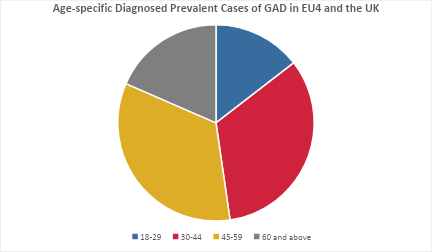
- GAD prevalence is higher in the working-age population (30–59 years), with the highest diagnosed cases observed in the 45–59 age group.
Generalized Anxiety Disorder Epidemiology Forecast in the 7MM
- 2025 Incident Cases of GAD : ~XX
- GAD Growth Rate (2026–2036): XX% CAGR
DelveInsight's ‘Generalized Anxiety Disorder Epidemiology Forecast – 2036’ report delivers an in-depth understanding of the GAD, historical and forecasted epidemiology, in the United States, EU4 (Germany, Spain, Italy, and France) and the United Kingdom, and Japan.
|
Study Period
|
2022–2036
|
|
Historical Year
|
2022–2025
|
|
Forecast Period
|
2026–2036
|
|
Base Year
|
2026
|
|
Geographies Covered
|
|
|
GAD Epidemiology CAGR
(Forecast period)
|
XX% (2026–2036)
|
|
GAD Epidemiology Segmentation Analysis
|
Patient Burden Assessment
-
Total Prevalent Cases of GAD
-
Total Diagnosed Prevalent Cases of GAD
-
Severity-specific Diagnosed Prevalent Cases of GAD
-
Age-specific Diagnosed Prevalent Cases of GAD
-
Gender-specific Diagnosed Prevalent Cases of GAD
-
Total Treated Cases of GAD
|
Generalized Anxiety Disorder Understanding and Diagnosis Algorithm
Generalized Anxiety Disorder Overview and Diagnosis
Generalized Anxiety Disorder is a chronic psychiatric disorder characterized by excessive, persistent, and uncontrollable worry about multiple aspects of daily life for at least six months, leading to significant functional impairment. It is commonly associated with symptoms such as restlessness, fatigue, irritability, muscle tension, poor concentration, and sleep disturbances. GAD is diagnosed clinically based on DSM-5 criteria, with assessment of symptom duration, severity, and exclusion of medical or substance-induced causes. Despite available treatments including SSRIs, SNRIs, and cognitive behavioral therapy (CBT), GAD remains highly prevalent and is often linked with comorbid depression and other anxiety disorders, driven by genetic, neurobiological, and environmental risk factors.
Diagnosis of GAD is primarily clinical and based on DSM-5 criteria, requiring the presence of excessive, uncontrollable worry occurring more days than not for at least six months, along with associated cognitive, emotional, and physical symptoms. Assessment includes evaluation of symptom severity, duration, and functional impairment, alongside screening tools such as standardized anxiety rating scales. It is essential to exclude medical, neurological, or substance-induced causes that may mimic anxiety symptoms through clinical history, physical examination, and relevant laboratory tests when indicated. Early and accurate diagnosis is important to ensure timely initiation of appropriate pharmacological and psychological interventions, improving long-term outcomes and reducing disease burden.
Further details are provided in the report.
Generalized Anxiety Disorder Epidemiology
Key Findings from GAD Epidemiological Analysis and Forecast
- GAD is more prevalent in females than males, with approximately 3.4% of females and 1.9% of males affected in the US.
- In the United States, around 5.7% of adults experience GAD in their lifetime, while approximately 2.7% have diagnosed GAD.
- In Europe, Germany reports ~1.5% prevalence in the general population, rising to ~5.3% in primary care settings, indicating higher detection in clinical environments.
- In the US, among diagnosed patients, 44.6% experience moderate symptoms, followed by 32.3% severe and 23.1% mild cases, reflecting a significant disease burden.
- GAD prevalence is higher in the working-age population (30–59 years), with the highest diagnosed cases observed in the 45–59 age group.
- In Japan, GAD is more common in younger adults, with prevalence declining with age to ≤7% in individuals aged ≥60 years, and slightly higher rates in females.
- In the UK, approximately two-thirds of diagnosed GAD patients are female, highlighting a strong gender disparity.
- The diagnosed prevalent and treated population of GAD is expected to increase over the forecast period, driven by rising mental health awareness, improved diagnosis rates, reduced stigma, expanded healthcare access, and greater adoption of both pharmacological and behavioral therapies, including telemedicine enabled care delivery.
Scope of the Report
- The report covers a segment of a descriptive overview of GAD, explaining their causes, signs and symptoms, and pathogenesis.
- Comprehensive insight has been provided into the epidemiology segments and forecasts, the future growth potential of the diagnosis rate, and disease progression.
Report Insights
GAD Patient Population Forecast
Report Key Strengths
- Epidemiology‑based (Epi‑based) Bottom‑up Forecasting
- 11-year Forecast
- Patient Burden Trends (by geography)
FAQs
- What are the disease risks, burdens, and unmet needs of GAD? What will be the growth opportunities across the 7MM concerning the patient population with GAD?
- What is the historical and forecasted GAD patient pool in the US, EU4 (Germany, France, Italy, and Spain), the UK, and Japan?
Reasons to Buy
- Insights on patient burden/disease prevalence, evolution in diagnosis, and factors contributing to the change in the epidemiology of the disease during the forecast years.
- To understand key opinion leaders’ perspectives around the diagnostic challenges to overcome barriers in the future.
- Detailed insights on various factors hampering disease diagnosis and other existing diagnostic challenges.
1 Key Insights
2 Report Introduction
3 Executive Summary
4 Epidemiology Forecast Methodology of GAD
5 GAD Epidemiology Overview at a Glance
5.1 Patient Share (%) Distribution by Country in 2025 in the 7MM
5.2 Patient Share (%) Distribution by Country in 2036 in the 7MM
6 Disease Background And Overview of GAD
6.1 Introduction
6.2 Signs and Symptoms
6.3 Causes
6.4 Related Conditions
6.5 Etiology
6.6 Risk Factors
6.7 Pathophysiology
6.8 Complications
6.9 Diagnosis
6.9.1 Diagnostic Algorithm
6.9.2 Diagnostic Guidelines
7 Epidemiology and Patient Population of GAD
7.1 Key Findings
7.2 Assumption and Rationale
7.3 Total Diagnosed Prevalent Cases of GAD in the 7MM
7.4 The United States
7.4.1 Total Prevalent Cases of GAD in the US
7.4.2 Total Diagnosed Prevalent Cases of GAD in the US
7.4.3 Age-specific Diagnosed Prevalent Cases of GAD in the US
7.4.4 Gender-specific Diagnosed Prevalent Cases of GAD in the US
7.4.5 Severity-specific Diagnosed Prevalent Cases of GAD in the US
7.4.6 Total Treated Cases of GAD in the US
7.5 EU4 and the UK
7.5.1 Total Prevalent Cases of GAD in EU4 and the UK
7.5.2 Total Diagnosed Prevalent Cases of GAD in EU4 and the UK
7.5.3 Age-specific Diagnosed Prevalent Cases of GAD in EU4 and the UK
7.5.4 Gender-specific Diagnosed Prevalent Cases of GAD in EU4 and the UK
7.5.5 Severity-specific Diagnosed Prevalent Cases of GAD in EU4 and the UK
7.5.6 Total Treated Cases of GAD in EU4 and the UK
7.6 Japan
7.6.1 Total Prevalent Cases of GAD in Japan
7.6.2 Total Diagnosed Prevalent Cases of GAD in Japan
7.6.3 Age-specific Diagnosed Prevalent Cases of GAD in Japan
7.6.4 Gender-specific Diagnosed Prevalent Cases of GAD in Japan
7.6.5 Severity-specific Diagnosed Prevalent Cases of GAD in Japan
7.6.6 Total Treated Cases of GAD in Japan
8 Patient Journey
9 KOL views
10 Appendix
10.1 Bibliography
10.2 Report Methodology
11 DelveInsight Capabilities
12 Disclaimer
13 About DelveInsight
List of Tables:
List of Tables
Table 1: “Normal” Worry Versus Generalized Anxiety Disorder
Table 2: Characteristics to Define GAD in DSM-V
Table 3: Evolution of the Definition of GAD in Succeeding Editions Of the DSM and ICD
Table 4: Treatment Approach to GAD
Table 5: The Stepped-care model
Table 6: Treatment Recommendations Summary
Table 7: Total 12-month Diagnosed Prevalent Cases of GAD in 7MM (2021-2034)
Table 8: Total 12-month Diagnosed Prevalent Cases of GAD in the United States (2021-2034)
Table 9: Gender-specific cases of GAD in the United States (2021-2034)
Table 10: Age-specific cases of GAD in the United States (2021-2034)
Table 11: Severity-specific cases of GAD in the United States (2021-2034)
Table 12: Total 12-month Diagnosed Prevalent Cases of GAD in EU-5 (2021-2034)
Table 13: Gender-specific cases of GAD in Germany (2021-2034)
Table 14: Age-specific cases of GAD in Germany (2021-2034)
Table 15: Severity-specific cases of GAD in Germany (2021-2034)
Table 16: Gender-specific cases of GAD in France (2021-2034)
Table 17: Age-specific cases of GAD in France (2021-2034)
Table 18: Severity-specific cases of GAD in France (2021-2034)
Table 19: Gender-specific cases of GAD in Italy (2021-2034)
Table 20: Age-specific cases of GAD in Italy (2021-2034)
Table 21: Severity-specific cases of GAD in Italy (2021-2034)
Table 22: Gender-specific cases of GAD in Spain (2021-2034)
Table 23: Age-specific cases of GAD in Spain (2021-2034)
Table 24: Severity-specific cases of GAD in Spain (2021-2034)
Table 25: Gender-specific cases of GAD in the United Kingdom (2021-2034)
Table 26: Age-specific cases of GAD in the United Kingdom (2021-2034)
Table 27: Severity-specific cases of GAD in the United Kingdom (2021-2034)
Table 28: Total 12-month Diagnosed Prevalent Cases in Japan (2021-2034)
Table 29: Gender-specific cases of GAD in Japan (2021-2034)
Table 30: Age-specific cases of GAD in Japan (2021-2034)
Table 31: Severity-specific cases of GAD in Japan (2021-2034)
List of Figures:
List of Figures
Figure 1: Overview of GAD
Figure 2: Etiology of GAD
Figure 3: Risk factors for GAD
Figure 4: Symptoms and Behaviors Associated With Generalized Anxiety Disorder
Figure 5: Anxiety Triggers
Figure 6: Mental Disorders Screening – General Anxiety Disorder Assessment (GAD-7)
Figure 7: Mental Disorders Screening – Generalized Anxiety Disorder 2-item (GAD-2)
Figure 8: GAD Treatment Flow chart
Figure 9: Cognitive Behavioral Therapy
Figure 10: Pharmacotherapy for GAD
Figure 11: GAD Management Overview
Figure 12: Total 12-month Diagnosed Prevalent Cases of GAD in 7MM (2021-2034)
Figure 13: Total 12-month Diagnosed Prevalent Cases of GAD in the United States (2021-2034)
Figure 14: Gender-specific cases of GAD in the United States (2021-2034)
Figure 15: Age-specific cases of GAD in the United States (2021-2034)
Figure 16: Severity-specific cases of GAD in the United States (2021-2034)
Figure 17: Total 12-month Diagnosed Prevalent Cases of GAD in EU-5 (2021-2034)
Figure 18: Gender-specific cases of GAD in Germany (2021-2034)
Figure 19: Age-specific cases of GAD in Germany (2021-2034)
Figure 20: Severity-specific cases of GAD in Germany (2021-2034)
Figure 21: Gender-specific cases of GAD in France (2021-2034)
Figure 22: Age-specific cases of GAD in France (2021-2034)
Figure 23: Severity-specific cases of GAD in France (2021-2034)
Figure 24: Gender-specific cases of GAD in Italy (2021-2034)
Figure 25: Age-specific cases of GAD in Italy (2021-2034)
Figure 26: Severity-specific cases of GAD in Italy (2021-2034)
Figure 27: Gender-specific cases of GAD in Spain (2021-2034)
Figure 28: Age-specific cases of GAD in Spain (2021-2034)
Figure 29: Severity-specific cases of GAD in Spain (2021-2034)
Figure 30: Gender-specific cases of GAD in the United Kingdom (2021-2034)
Figure 31: Age-specific cases of GAD in the United Kingdom (2021-2034)
Figure 32: Severity-specific cases of GAD in the United Kingdom (2021-2034)
Figure 33: Total 12-month Diagnosed Prevalent Cases in Japan (2021-2034)
Figure 34: Gender-specific cases of GAD in Japan (2021-2034)
Figure 35: Age-specific cases of GAD in Japan (2021-2034)
Figure 36: Severity-specific cases of GAD in Japan (2021-2034)