
Generalized Anxiety Disorder Market Summary
Generalized Anxiety Disorder (GAD) Insights and Trends
- The global burden of GAD remains substantial, with high comorbidity rates (e.g., depression, other anxiety disorders), contributing to reduced quality of life, impaired productivity, and increased healthcare utilization.
- First-line pharmacological treatment includes Selective Serotonin Reuptake Inhibitors (SSRIs) and Serotonin–Norepinephrine Reuptake Inhibitors (SNRIs), such as Escitalopram, Sertraline, Paroxetine, and Duloxetine, which act by modulating serotonin and/or norepinephrine pathways to reduce anxiety symptoms.
- Adjunct and second-line therapies include antiepileptics (e.g., Pregabalin), benzodiazepines, tricyclic antidepressants, antihistamines, and atypical antipsychotics, although their use is often limited by tolerability issues and safety concerns such as sedation or dependence.
- Cognitive Behavioral Therapy (CBT) remains a cornerstone non-pharmacological intervention, either alone in mild cases or combined with medication in moderate-to-severe disease.
- Despite multiple available therapies, treatment limitations persist, including delayed onset of action, partial response, relapse risk, and adverse effects, highlighting the need for novel mechanisms.
- The emerging GAD pipeline remains relatively limited, with a few differentiated assets targeting novel pathways beyond traditional monoaminergic systems.
- DT120 ODT (Definium Therapeutics) is an investigational orally disintegrating lysergide D-tartrate formulation acting as a serotonin receptor partial agonist for generalized anxiety disorder (GAD). It is Breakthrough Therapy Designated by the US FDA (2024) and is in late-stage development (Phase IIb completed; Phase III Voyage and Panorama studies expected in 2026).
- Ulotaront (Sumitomo Pharma/Otsuka) and SPT-320 (Seaport Therapeutics) are emerging CNS pipeline assets for anxiety-related disorders, with Ulotaront (a TAAR1 and 5-HT1A agonist) in Phase II/III development globally for GAD, and SPT-320 in Phase I clinical trials.
- Overall, while the GAD treatment landscape is well-established, innovation is increasingly focused on novel receptor targets and rapid-acting therapies, though the pipeline remains comparatively sparse versus other CNS disorders.
GAD Market Size and Forecast in the 7MM
- 2025 GAD Market Size: ~USD XX million
- 2036 Projected GAD Market Size: ~USD XX million
- GAD Growth Rate (2026–2036): XX% CAGR
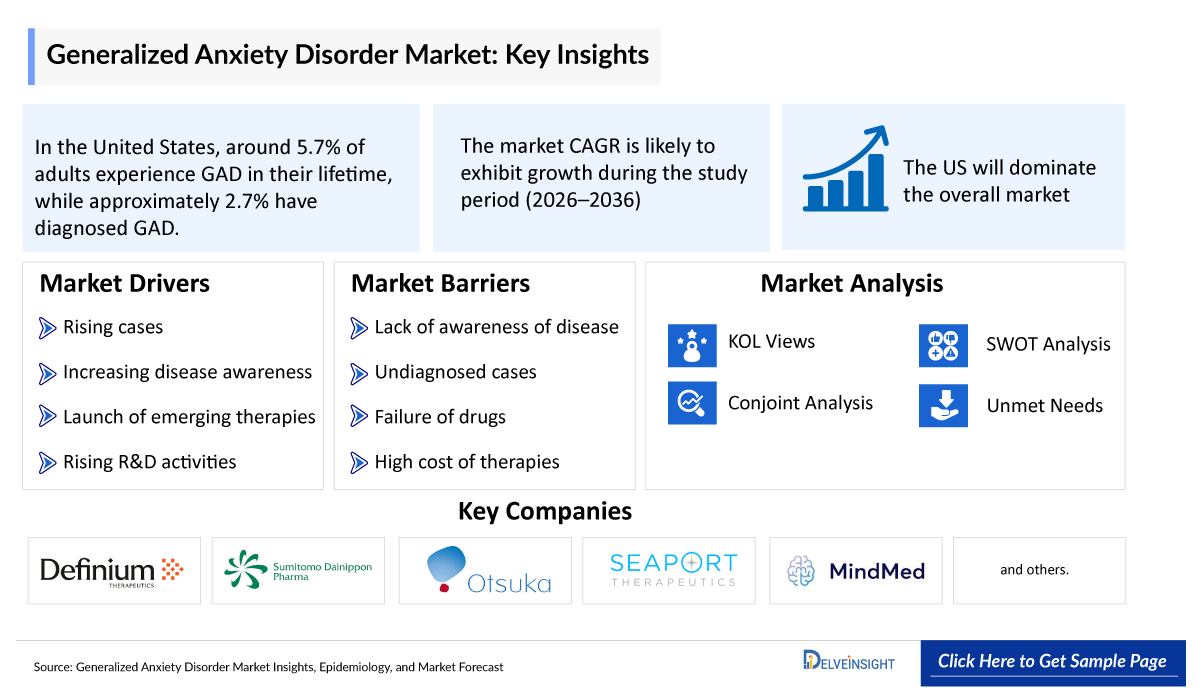
DelveInsight's ‘Generalized Anxiety Disorder (GAD) Market Insights, Epidemiology and Market Forecast – 2036’ report delivers an in-depth understanding of the GAD, historical and forecasted epidemiology, as well as the GAD market trends in the United States, EU4 (Germany, Spain, Italy, and France) and the United Kingdom, and Japan.
The Generalized Anxiety Disorder (GAD) market report delivers a comprehensive analysis of the current treatment landscape, including standards of care, clinical practices, and evolving therapeutic algorithms. It evaluates, GAD patient burden trends, revenue & market share dynamics, peak patient share & therapy uptake analysis, and provides an in-depth market size assessment, and growth rate projections (Historical & Forecast 2022–2036) across global regions. The report highlights key unmet medical needs in GAD and maps the competitive and clinical landscape to uncover high‑value opportunities, providing a clear outlook on future market growth potential.
|
Study Period |
2022–2036 |
|
Historical Year |
2022–2025 |
|
Forecast Period |
2026–2036 |
|
Base Year |
2026 |
|
Geographies Covered |
|
|
GAD Market CAGR (Forecast period) |
XX% (2026–2036) |
|
GAD Epidemiology Segmentation Analysis |
Patient Burden Assessment
|
|
GAD Companies |
|
|
GAD Therapies |
|
|
GAD Market |
Segmented by
|
|
Analysis |
|
|
|
Key Factors Driving the GAD Market
-
Increasing prevalence of the disease
The increasing prevalence of GAD, driven by rising psychosocial stressors, urbanization, and growing mental health awareness, is a key factor shaping the treatment landscape. Higher diagnosis rates and expanding recognition of anxiety disorders are contributing to a larger patient pool, thereby increasing demand for effective therapies and supporting market growth.
-
Advancements in diagnostic tools
Advancements in diagnostic tools and screening practices, including standardized criteria such as DSM-5 and the increasing use of validated assessment scales, are improving the early and accurate identification of GAD. These developments, along with growing integration of digital health tools and telepsychiatry, are enhancing diagnosis rates and enabling timely initiation of appropriate treatment.
-
Heightened patient awareness, growing investments in innovative therapies, and supportive regulatory frameworks
Heightened patient awareness of mental health disorders, coupled with growing investments in innovative therapies and supportive regulatory frameworks, is accelerating the development and adoption of new treatments for GAD. Increased advocacy, reduced stigma, and funding for CNS research are fostering innovation, while regulatory support for novel mechanisms is expected to facilitate faster clinical development and market entry of emerging therapies.
GAD Understanding and Treatment Algorithm
GAD Overview and Diagnosis
GAD is a chronic psychiatric disorder characterized by excessive, persistent, and uncontrollable worry about multiple aspects of daily life for at least six months, leading to significant functional impairment. It is commonly associated with symptoms such as restlessness, fatigue, irritability, muscle tension, poor concentration, and sleep disturbances. GAD is diagnosed clinically based on DSM-5 criteria, with assessment of symptom duration, severity, and exclusion of medical or substance-induced causes. Despite available treatments including SSRIs, SNRIs, and cognitive behavioral therapy (CBT), GAD remains highly prevalent and is often linked with comorbid depression and other anxiety disorders, driven by genetic, neurobiological, and environmental risk factors.
Diagnosis of GAD is primarily clinical and based on DSM-5 criteria, requiring the presence of excessive, uncontrollable worry occurring more days than not for at least six months, along with associated cognitive, emotional, and physical symptoms. Assessment includes evaluation of symptom severity, duration, and functional impairment, alongside screening tools such as standardized anxiety rating scales. It is essential to exclude medical, neurological, or substance-induced causes that may mimic anxiety symptoms through clinical history, physical examination, and relevant laboratory tests when indicated. Early and accurate diagnosis is important to ensure timely initiation of appropriate pharmacological and psychological interventions, improving long-term outcomes and reducing disease burden.
Further details are provided in the report.
GAD Diagnosis Treatment
The treatment of GAD aims to reduce excessive worry, improve functioning, and prevent relapse using a combination of pharmacological and psychological approaches. First-line therapies include SSRIs (e.g., escitalopram, sertraline) and SNRIs (e.g., venlafaxine, duloxetine), which regulate serotonergic and noradrenergic signaling to alleviate anxiety symptoms.
Second-line options include pregabalin, short-term benzodiazepines, and TCAs, while buspirone may be used as an adjunct in select patients. Cognitive behavioral therapy (CBT) remains the cornerstone non-pharmacological treatment, supported by mindfulness-based and relaxation therapies. Despite these options, delayed onset, partial response, and relapse remain key challenges, highlighting an unmet need for faster and more effective treatments
Further details related to country-based variations are provided in the report.
GAD Unmet Needs
The section “unmet needs of GAD” outlines the critical gaps between the current state of patient care, diagnosis, and the ideal & effective management of the disease. It highlights the obstacles experienced by patients, clinicians, and researchers and identifies potential solutions for future progress.
- Delayed onset of current pharmacological therapies
- High rates of partial or inadequate treatment response
- Limited options for treatment-resistant GAD
- Safety and dependence concerns with benzodiazepine use
- High relapse rates and chronic disease burden, and others…..
Note: Comprehensive unmet needs insights in Generalized Anxiety Disorder (GAD) and their strategic implications are provided in the full report.
GAD Epidemiology
Key Findings from GAD Epidemiological Analysis and Forecast
- GAD is more prevalent in females than males, with approximately 3.4% of females and 1.9% of males affected in the US.
- In the United States, around 5.7% of adults experience GAD in their lifetime, while approximately 2.7% have diagnosed GAD.
- In Europe, Germany reports ~1.5% prevalence in the general population, rising to ~5.3% in primary care settings, indicating higher detection in clinical environments.
- In the US, among diagnosed patients, 44.6% experience moderate symptoms, followed by 32.3% severe and 23.1% mild cases, reflecting a significant disease burden.
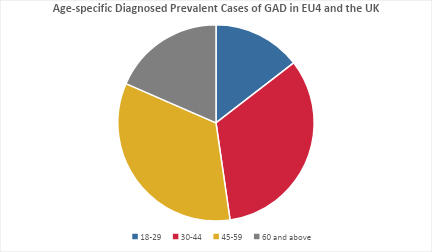
- GAD prevalence is higher in the working-age population (30–59 years), with the highest diagnosed cases observed in the 45–59 age group.
- In Japan, GAD is more common in younger adults, with prevalence declining with age to ≤7% in individuals aged ≥60 years, and slightly higher rates in females.
- In the UK, approximately two-thirds of diagnosed GAD patients are female, highlighting a strong gender disparity.
- The diagnosed prevalent and treated population of GAD is expected to increase over the forecast period, driven by rising mental health awareness, improved diagnosis rates, reduced stigma, expanded healthcare access, and greater adoption of both pharmacological and behavioral therapies, including telemedicine-enabled care delivery.
GAD Drug Analysis & Competitive Landscape
The GAD drug chapter provides a detailed, market-focused review of approved therapies and the emerging pipeline across Phase I/II–III clinical trials. It covers the mechanism of action, clinical trial data, regulatory approvals, patents, collaborations, and strategic partnerships for each therapy, along with their advantages, limitations, and recent developments. This section offers critical insights into the GAD treatment landscape, supporting market assessment, competitive analysis, and growth forecasting for the GAD therapeutics market.
Approved Therapies for GAD
Duloxetine (CYMBALTA): Eli Lilly
Duloxetine (Cymbalta), developed by Eli Lilly and Company, is a serotonin–norepinephrine reuptake inhibitor (SNRI) that increases serotonin and norepinephrine activity in the central nervous system. It is approved for the treatment of Generalized Anxiety Disorder (GAD) in multiple regions: United States (2007), European Union (2008), and Japan (2010). It is positioned as a first-line therapy, helping reduce anxiety symptoms through modulation of key monoaminergic neurotransmitter pathways.
Paroxetine (PAXIL): GlaxoSmithKline
Paroxetine (PAXIL), developed by GlaxoSmithKline, is a selective serotonin reuptake inhibitor (SSRI) approved by the US FDA in 2001 for the treatment of generalized anxiety disorder (GAD). It is also approved in the European Union (2001) and in Japan (2009) for anxiety-related indications. The approval was based on placebo-controlled clinical studies demonstrating efficacy in reducing core anxiety symptoms and improving patient functioning.
Note: Detailed marketed therapies assessment will be provided in the final report.
Table 1: Competitive Landscape of GAD Marketed/Approved Therapies | ||||||
|
Drug/Therapy |
Company |
Indication |
Molecule Type |
MoA |
RoA |
Marketed Region |
|
Duloxetine (CYMBALTA) |
Eli Lilly |
GAD |
Small molecule |
SNRI |
Oral |
US: 2007 EU: 2008 Japan: 2010 |
|
Paroxetine (PAXIL) |
GlaxoSmithKline |
GAD |
Small molecule |
SSRI |
Oral |
US: 2001 EU: 2001 Japan: 2009 |
GAD Pipeline Analysis
LSD D-Tartrate (DT120 ODT): Definium Therapeutics
DT120 orally disintegrating tablet is Definium Therapeutics’ optimized lysergide D-tartrate (LSD) formulation, developed using Zydis fast-dissolve technology to enable rapid absorption, improved bioavailability, and reduced gastrointestinal side effects. It acts as a serotonin receptor partial agonist, potentially enhancing brain connectivity and neural network function, thereby addressing underlying neurobiological dysregulation in GAD. The asset has also received FDA Breakthrough Therapy Designation (2024) for generalized anxiety disorder, underscoring its potential as a novel, fast-acting therapeutic approach in this indication.Supporting its clinical relevance, a JAMA-published Phase IIb study of MM120 (lysergide D-tartrate, LSD) in 198 adults with moderate-to-severe GAD demonstrated dose-dependent, statistically significant improvements in HAM-A scores versus placebo, establishing proof-of-concept for this mechanism in anxiety disorders.
A recent study published in the Journal of Mood and Anxiety Disorders further highlights the increasing prevalence and rising burden of GAD in the US, reinforcing the need for novel, fast-acting therapeutic options such as DT120 ODT.
Ulotaront (SEP-363856): Sumitomo Pharma/Otsuka
Ulotaront is an investigational trace amine-associated receptor 1 (TAAR1) and serotonin 5-HT1A receptor agonist being developed as a novel oral treatment for GAD. By targeting these receptors, ulotaront aims to modulate neurotransmitter activity differently from traditional anxiolytics, potentially offering a new mechanism of action for managing GAD. The drug is currently undergoing Phase II/III clinical trials in the US and Japan to evaluate its efficacy and safety in treating GAD.
Table 2: Competitive Landscape of Pipeline Drugs | ||||||
|
Drug Name |
Company |
Highest Phase |
Indication |
RoA |
MoA |
Anticipated Launch in the US |
|
DT120 ODT (LSD D-Tartrate) |
Definium Therapeutics |
III |
GAD |
Oral |
5-HT2A partial agonist |
Information is available in the full report |
|
Ulotaront (SEP-363856) |
Sumitomo Pharma/Otsuka |
II/III |
GAD |
Oral |
TAAR1 agonist |
Information is available in the full report |
|
GlyphAgo (SPT-320) |
Seaport Therapeutics |
I |
GAD |
Oral |
Melatonergic agonist |
Information is available in the full report |
|
Note: Launch insights are provisional and may change with future report updates or the occurrence of major key catalysts. | ||||||
Note: Detailed emerging therapies assessment will be provided in the final report.
GAD Key Players, Market Leaders and Emerging Companies
- Definium Therapeutics
- Sumitomo Pharma/Otsuka
- Seaport Therapeutics
- MindMed
- Novo Nordisk
- OWP Pharmaceuticals/ Eli Lilly, and others
GAD Drug Updates
- In February 2026, Definium Therapeutics announced in its corporate presentation that topline results for the Phase III VOYAGE study of DT120 ODT are anticipated in early Q3 2026, while topline results from the PANORAMA study are expected in the second half of 2026, marking key upcoming milestones for the asset’s late-stage development.
- In April 2026, Seaport Therapeutics announced positive topline data from its single-ascending dose (SAD) and crossover Phase I proof-of-concept trial evaluating GlyphAgo™ (SPT-320™ / Glyph Agomelatine), a novel glyphed oral prodrug of agomelatine in development for generalized anxiety disorder (GAD).
- In March 2024, Sumitomo Pharma and Otsuka Pharmaceutical amended their collaboration agreement to grant Otsuka exclusive worldwide rights to develop, manufacture, and commercialize ulotaront (SEP-363856), supporting its continued advancement across indications including GAD.
Drug Class Insights
GAD Market Outlook
The GAD market is characterized by a mature and well-established treatment landscape, largely dominated by SSRIs and SNRIs, with adjunctive use of agents such as pregabalin, benzodiazepines, and tricyclic antidepressants. While these therapies remain the cornerstone of treatment, their delayed onset of action, safety concerns, and high rates of partial response highlight persistent gaps in effective disease management. As a result, the market is gradually shifting toward novel, mechanism-driven therapies that aim to provide faster onset and improved tolerability.
The current GAD treatment paradigm reflects a balance between efficacy and tolerability, with cognitive behavioral therapy (CBT) complementing pharmacological approaches. However, limited therapeutic innovation over the past decade has resulted in continued reliance on older antidepressant classes, underscoring the need for differentiated treatment options. Emerging pipeline therapies such as DT120 ODT and Ulotaront are expected to address these unmet needs by targeting novel neurobiological pathways and offering the potential for rapid and sustained symptom relief.
The United States represents the largest GAD market, driven by high disease prevalence, strong awareness of mental health disorders, and broad access to pharmacological and psychological treatments, followed by Europe and Japan. Increasing mental health awareness, reduced stigma, improved diagnosis rates, and expansion of telehealth services are contributing to higher treatment uptake across major markets.
- The GAD treatment landscape remains largely dependent on SSRIs and SNRIs, with limited recent innovation, highlighting a significant opportunity for novel therapies.
- The market is shifting toward rapid-acting and mechanism-driven treatments, aiming to overcome delayed onset and partial response associated with current options.
- The United States is expected to dominate the GAD market, supported by high diagnosis rates, strong healthcare infrastructure, and increasing treatment uptake.
- Rising disease burden and awareness of mental health disorders are key drivers, contributing to growth in diagnosed and treated patient populations.
- The entry of mid- to late-stage pipeline assets such as DT120 ODT and Ulotaront is expected to enhance competition and expand future treatment options in the GAD landscape.
Further details will be provided in the report….
Drug Class/Insights into Leading Emerging and Marketed Therapies in GAD (2022–2036 Forecast)
The GAD treatment landscape comprises antidepressants, anxiolytics, adjunctive agents, and emerging novel therapies, each targeting different aspects of neurotransmitter imbalance and symptom control.
- Antidepressants (first-line therapies): Include SSRIs (e.g., escitalopram, paroxetine, sertraline) and SNRIs (e.g., duloxetine, venlafaxine), which form the backbone of GAD management by modulating serotonin and norepinephrine pathways to reduce anxiety symptoms and improve functioning.
- Anxiolytics and adjunctive therapies: Include pregabalin, benzodiazepines (short-term use), and tricyclic antidepressants, which are used in patients with inadequate response or for rapid symptom relief, though their use is often limited by safety and tolerability concerns such as sedation and dependence.
- Non-pharmacological therapies: Cognitive behavioral therapy (CBT) remains a cornerstone intervention, either as monotherapy in mild cases or in combination with medications in moderate-to-severe GAD, addressing maladaptive thought patterns and improving coping mechanisms.
- Emerging therapies: Pipeline agents such as DT120 ODT and Ulotaront are being developed to target novel neurobiological pathways, with the aim of providing faster onset of action and improved efficacy compared to traditional therapies.
Overall, SSRIs and SNRIs define the current standard of care, while novel mechanism-driven therapies are expected to drive future innovation and address persistent unmet needs in the GAD treatment landscape.
GAD Drug Uptake
This section focuses on the uptake rate of potential drugs expected to be launched in the market during the forecast period (2026–2036). The analysis covers the GAD drug’s uptake, performance at peak, factors affecting performance during prime years of growth, patient uptake by therapy, and anticipated sales generated by each drug.
The uptake of therapies in GAD is expected to vary across established antidepressants, adjunctive agents, and emerging novel therapies. SSRIs and SNRIs are anticipated to maintain high and consistent uptake due to their position as first-line treatments and strong clinical familiarity. In contrast, adjunctive therapies such as pregabalin and benzodiazepines are expected to show moderate use, limited by safety concerns and restricted long-term use.
Emerging therapies are expected to see gradual adoption, driven by novel mechanisms of action and potential benefits in addressing unmet needs such as delayed onset of response and partial efficacy. Their uptake will depend on clinical efficacy, safety profile, and differentiation from existing standards of care. Overall, while established antidepressants will continue to dominate the treatment landscape, next-generation therapies are expected to progressively gain traction over time.
Detailed insights of emerging therapies' drug uptake is included in the report.
Market Access and Reimbursement of GAD
Reimbursement is a crucial factor that affects the drug’s access to the market. Often, the decision to reimburse comes down to the price of the drug relative to the benefit it produces in treated patients. To reduce the healthcare burden of these high-cost therapies, many payment models are being considered by payers and other industry insiders.
The report further provides detailed insights on the country-wise accessibility and reimbursement scenarios, cost-effectiveness scenario of approved therapies, programs making accessibility easier and out-of-pocket costs more affordable, insights on patients insured under federal or state government prescription drug programs, etc.
NOTE: Further Details are provided in the final report….
GAD Therapies Price Scenario & Trends
Pricing and analogue assessment of GAD therapies highlights evolving price dynamics structures. This section summarizes the cost of approved treatments, closest and most appropriate analogue selection for emerging therapies, and understanding of how pricing influences market access, adherence, and long-term uptake.
Further details are provided in the final report….
Industry Experts and Physician Views for GAD
To keep up with GAD market trends, we take Key Opinion Leaders (KOLs) and Subject Matter Experts (SMEs) opinions working in the domain through primary research to fill the data gaps and validate our secondary research. Industry experts were contacted for insights on the GAD emerging therapies, evolving treatment landscape, patient adherence to conventional therapies, therapy switching trends, drug adoption and uptake, accessibility challenges, and epidemiology and real-world prescription patterns in GAD, including MD, PhD, Instructor, Postdoctoral Researcher, Professor, Researcher, and others.
DelveInsight’s analysts connected with 10+ KOLs to gather insights at country level. Centers such as the Baylor Scott and White Research Institute in Dallas, Women’s Hospital and Harvard Medical School, and Uppsala University, etc. were contacted.Their opinion helps understand and validate current and emerging GAD therapies, highlight unmet medical needs, provide epidemiological context, and support strategic decisions for market access, therapy adoption, and pipeline prioritization in GAD.
Region |
Key Opinion Leaders (KOLs) and Subject Matter Experts (SMEs) |
|
United States |
"Effective GAD management requires a multifaceted approach, combining pharmacological and psychotherapeutic interventions. While SSRIs and SNRIs remain the cornerstone, emerging therapies offer hope for non-responders. Emphasizing early diagnosis and personalized strategies is key to improving long-term outcomes." |
|
Japan |
"Research into GAD in Japan highlights the influence of cultural factors on symptom presentation and help-seeking behaviors. Social expectations and stigma often lead individuals to internalize anxiety, delaying diagnosis and intervention. Greater awareness and tailored support systems are needed to address these challenges and improve patient outcomes." |
Qualitative Analysis: SWOT and Conjoint Analysis
We perform qualitative and market Intelligence analysis using various approaches, such as SWOT analysis and conjoint analysis.
In the SWOT analysis of GAD, strengths, weaknesses, opportunities, and threats in terms of disease diagnosis, patient awareness, patient burden, competitive landscape, cost-effectiveness, and geographical accessibility of therapies are provided.
Conjoint analysis analyzes emerging therapies based on relevant attributes such as safety, efficacy, frequency of administration, route of administration, and order of entry. Scoring is given based on these parameters to analyze the effectiveness of therapy.
The team of analysts analyzes promising emerging therapies based on relevant attributes such as safety, efficacy, frequency of administration, route of administration, and order of entry. In efficacy, the trial’s primary and secondary outcome measures are evaluated, whereas the therapies’ safety is evaluated, wherein the acceptability, tolerability, and adverse events are majorly observed. In addition, the scoring is also based on the route of administration, order of entry, probability of success, and the addressable patient pool for each therapy. According to these parameters, the final weightage score and the ranking of the emerging therapies are decided.
Scope of the Report
- The report covers a segment of key events, an executive summary, a descriptive overview of GAD, explaining their causes, signs and symptoms, pathogenesis, and currently available treatments.
- Comprehensive insight has been provided into the epidemiology segments and forecasts, the future growth potential of the diagnosis rate, and disease progression along treatment guidelines.
- Additionally, an all-inclusive account of both the current and emerging treatments, along with the elaborative profiles of late-stage and prominent therapies, will have an impact on the current treatment landscape.
- A detailed review of the GAD market, historical and forecasted market size, market share by therapies, detailed assumptions, and rationale behind our approach is included in the report, covering the 7MM drug outreach.
- The report provides an edge while developing business strategies by understanding trends through SWOT analysis and expert insights/KOL views, patient journey, and treatment preferences that help in shaping and driving the 7MM GAD market.
Report Insights
- Generalized Anxiety Disorder (GAD) Patient Population Forecast
- Generalized Anxiety Disorder (GAD) Therapeutics Market Size
- Generalized Anxiety Disorder (GAD) Pipeline Analysis
- Generalized Anxiety Disorder (GAD) Market Size and Trends
- Generalized Anxiety Disorder (GAD) Market Opportunity (Current and forecasted)
Report Key Strengths
- Epidemiology‑based (Epi‑based) Bottom‑up Forecasting
- Artificial Intelligence (AI)-Enabled Market Research Report
- 11-Year Forecast
- Generalized Anxiety Disorder (GAD) Market Outlook (North America, Europe, Asia-Pacific)
- Patient Burden Trends (By Geography)
- Generalized Anxiety Disorder (GAD) Treatment Addressable Market (TAM)
- Generalized Anxiety Disorder (GAD) Competitve Landscape
- Generalized Anxiety Disorder (GAD) Major Companies Insights
- Generalized Anxiety Disorder (GAD) Price Trends and Analogue Assessment
- Generalized Anxiety Disorder (GAD) Therapies Drug Adoption/Uptake
- Generalized Anxiety Disorder (GAD) Therapies Peak Patient Share Analysis
Report Assessment
- Generalized Anxiety Disorder (GAD) Current Treatment Practices
- Generalized Anxiety Disorder (GAD) Unmet Needs
- Generalized Anxiety Disorder (GAD) Clinical Development Analysis
- Generalized Anxiety Disorder (GAD) Emerging Drugs Product Profiles
- Generalized Anxiety Disorder (GAD) Market attractiveness
- Generalized Anxiety Disorder (GAD) Qualitative Analysis (SWOT and conjoint analysis)
FAQs
Market Insights
- What was the GAD market size, the market size by therapies, market share (%) distribution in 2025, and what would it look like by 2036? What are the contributing factors for this growth?
- What are the anticipated pricing variations among different geographies for the emerging therapies in the future?
- What can be the future treatment paradigm of GAD?
- What are the disease risks, burdens, and unmet needs of GAD? What will be the growth opportunities across the 7MM concerning the patient population with GAD?
- Who is the major future competitor in the market, and how will the competitors affect their market share?
- What are the current options for the treatment of GAD? What are the current guidelines for treating GAD in the US, Europe, and Japan?
Reasons to Buy
- The report will help in developing business strategies by understanding the latest trends and changing treatment dynamics driving the GAD market.
- Bottom-up forecasting builds from the affected population to product forecasts, delivering a robust, data-driven approach ideal for new therapies and novel classes.
- Insights on patient burden/disease incidence, evolution in diagnosis, and factors contributing to the change in the epidemiology of the disease during the forecast years.
- Understand the existing market opportunities in varying geographies and the growth potential over the coming years.
- Identifying strong upcoming players in the market will help devise strategies to help get ahead of competitors.
- Detailed analysis and ranking of class-wise potential current and emerging therapies under the conjoint analysis section to provide visibility around leading classes.
- To understand KOLs’ perspectives on the accessibility, acceptability, and compliance-related challenges of existing treatment to overcome barriers in the future.
- Detailed insights on the unmet needs of the existing market so that the upcoming players can strengthen their development and launch strategy.
- This Artificial Intelligence (AI)-enabled report summarize and simplify complex datasets with in the report into clear, actionable insights for stakeholders, investors, and healthcare providers, enabling faster, data-driven decisions.