Giant-Cell Arteritis Market
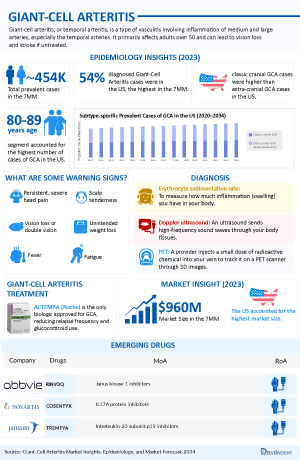
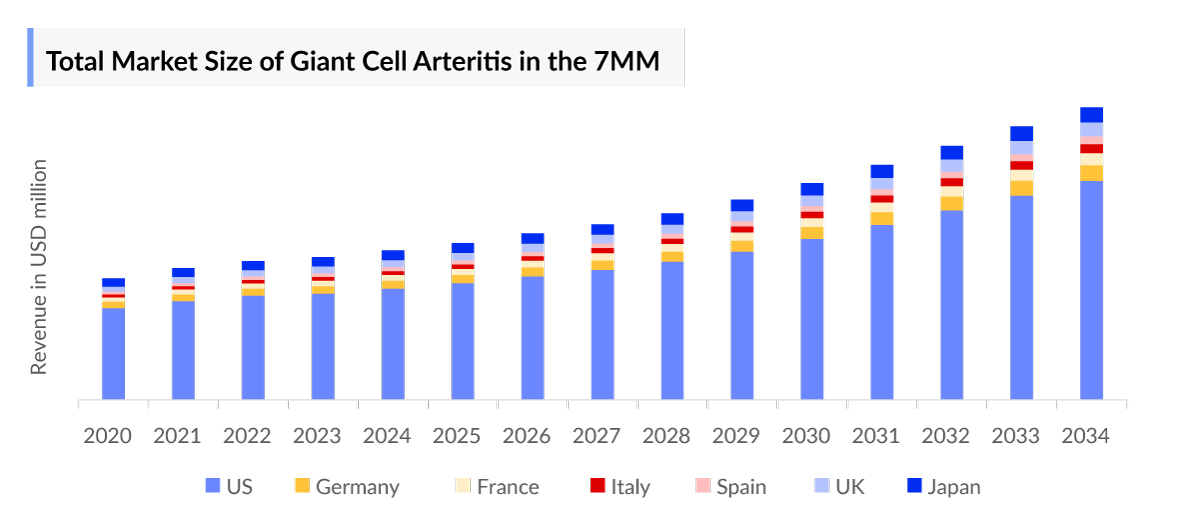
- As per the latest assessment by DelveInsight, in the 7MM, the United States accounted for the highest Giant-Cell Arteritis Market, with nearly 65% of the market share as compared to EU4, the UK, and Japan in 2023.
- In 2023, among EU4 and the UK, the UK accounted for the largest Giant-Cell Arteritis Market, while Spain accounted for the smallest share.
- In 2023, the United States accounted for the highest number of diagnosed incident cases of Giant-Cell Arteritis in the 7MM.
- In the United States, Giant-Cell Arteritis primarily affects individuals aged 80–89 years, constituting approximately ~42% of the total cases.
- Among the EU4 and the UK, out of all clinical manifestation-specific cases, scalp tenderness accounted for the highest number of cases, followed by myalgia and fever of unknown origin in 2023.
- Steroids are the first line of treatment to get Giant-Cell Arteritis under control and prevent any serious complications, and currently, there is no alternative first line of treatment available. Steroid tablets slow down the activity of the immune system and reduce the inflammation in blood vessels. Alternative treatments may also include conventional disease-modifying anti-rheumatic drugs (DMARDs).
- There are also some newer drugs available called biological therapies; these drugs target key cells within the immune system to stop them from causing inflammation. The US FDA has recently approved one such biological treatment, ACTEMRA (tocilizumab), for the treatment of people with Giant-Cell Arteritis. It can also be prescribed if other treatments have not worked.
- Emerging therapies in the giant-cell arteritis pipeline, including RINVOQ and COSENTYX, are expected to bring a positive shift in the Giant-Cell Arteritis treatment market during the forecast period (2024–2034).
- Key companies such as Novartis, AbbVie, and J&J/MorphoSys AG are expected to transform the treatment landscape for Giant-Cell Arteritis patients.
- The growth of the Giant-Cell Arteritis market is expected to be mainly driven by the growing geriatric population, the rise in the prevalence of cardiovascular disorders, technological advancements in the healthcare industry, etc.
- Delays in diagnosis, serious complications of Giant-Cell Arteritis, economic burden, and lack of proper understanding of the disease will be going to hit the Giant-Cell Arteritis market.
Download the Sample PDF to Get More Insight @ Giant-Cell Arteritis Market
Key Factors Driving Giant Cell Arteritis Market
Giant-Cell Arteritis Patient Pool
In 2023, the United States reported the highest number of diagnosed incident cases of giant-cell arteritis (GCA) across the 7MM, with individuals aged 80–89 years making up nearly 42% of all cases. Within EU4 and the UK, the UK accounted for the largest share of the patient pool, while Spain represented the smallest. Symptom-specific segmentation revealed that scalp tenderness was the most frequently reported manifestation, followed by myalgia and fever of unknown origin, reflecting the clinical heterogeneity of the disease.
Current Giant Cell Arteritis Treatment Landscape
Steroids remain the first-line therapy for managing GCA, working by suppressing immune activity and reducing vessel inflammation. Despite their effectiveness, prolonged use of steroids is associated with significant side effects, highlighting the unmet need for alternative options. Among available biologics, ACTEMRA (tocilizumab) from Chugai/Roche stands as the only therapy approved across the 7MM, offering an option for patients who fail or relapse on corticosteroids. In April 2025, AbbVie’s RINVOQ (upadacitinib) became the first oral JAK inhibitor approved by the FDA for GCA, adding a new dimension to treatment strategies beyond injectable biologics.
Emerging Therapies and Market Outlook
The pipeline for GCA includes promising biologics and novel agents designed to provide long-term disease control with fewer side effects than steroids. Key emerging drugs include Novartis’s COSENTYX (secukinumab), AbbVie’s RINVOQ (upadacitinib), J&J/MorphoSys’s TREMFYA (guselkumab), and CSL/Kiniksa’s mavrilimumab. These candidates are expected to shift the treatment paradigm toward targeted immune modulation. Market growth from 2024–2034 will be driven by the rising geriatric population, increasing prevalence of cardiovascular comorbidities, and the launch of novel therapies.
Giant-Cell Arteritis Overview, Diagnosis, Treatment
Giant-Cell Arteritis, or “Temporal Arteritis,” is an inflammation of the lining of the arteries (blood vessels). Giant-Cell Arteritis most commonly affects arteries in the head, especially those in the temples. For this reason, Giant-Cell Arteritis is sometimes also called temporal arteritis. In Giant-Cell Arteritis, the temporal arteries, which course along the sides of the head just in front of the ears (to the temples), can become inflamed. The inflammation causes the arteries to narrow down, resulting in poor blood flow.
Giant-Cell Arteritis is classified as a large-vessel vasculitis but also involves medium and small arteritis, particularly the superficial temporal arteritis- hence it is termed temporal arteritis. Along with this, Giant-Cell Arteritis most commonly affects the ophthalmic, occipital, vertebral, posterior ciliary, and proximal vertebral arteries. Medium- and large-sized vessels that may be involved include the aorta and the carotid, subclavian, and iliac arteries.
The etiology of Giant-Cell Arteritis is a bit complex and is still being widely researched. Genetic and environmental factors (such as infections) are thought to play important roles. Because it is rare in people under age 50, its development could be linked to the aging process also.
Among genetic factors, certain genes with Human Leukocyte Antigen (HLA) class I and class II regions, specifically HLA-DRB1*04, DRW6, and DR3, are associated with susceptibility to Giant-Cell Arteritis. In environmental factors, a variety of different infectious stimuli have also been implicated, including Chlamydia pneumoniae, varicella virus, and parvovirus B19.
After the initial trigger, a dual immune response begins. One involves a systemic inflammatory reaction, and the other is a maladaptive, antigen-specific immune response. The systemic inflammatory reaction results from the over-activation of the innate acute phase response: a non-antigen-driven, non-adaptive defense mechanism to overall stress and injury. This response is mediated by IL-6, produced by circulating macrophages, neutrophils, and monocytes. IL-6 levels are correlated with the intensity of the immune response and other acute-phase reactants such as C-reactive proteins, haptoglobin, fibrinogen, and complement.
The combination of these reactants under the systemic inflammatory reaction leads to the general signs of inflammation seen in Giant-Cell Arteritis, such as fevers, chills, sweats, myalgias, anorexia, and weight loss. The antigen-specific immune response damages the arterial walls and results in the focal ischemic complications seen in Giant-Cell Arteritis. The combination of these two processes results in systemic inflammatory syndrome and arteritis, respectively.
Further details are provided in the report…
Giant-Cell Arteritis Diagnosis
Since 1990, the mainstay of Giant-Cell Arteritis diagnosis was predicated on fulfilling 3/5 of the America College of Rheumatology’s criteria, namely: age of onset =50 years, new onset of localized headache, temporal artery tenderness or decreased pulse, elevated ESR = 50 mm/h and predominance of mononuclear cell infiltrates or a granulomatous inflammation with multinucleate giant cells on TAB.
While a clinical presentation of headache, jaw claudication, scalp tenderness, fever, and other systemic symptoms and serum markers are together highly suggestive of the disease, diagnosis can be challenging in those cases in which classic symptoms are lacking.
No test can confirm the presence of Giant-Cell Arteritis. To help the doctor reach a diagnosis, the doctor will observe the symptoms and note down the medical history of the patient. The doctors can also conduct a physical examination, partly focusing on the arteries in the temples, and if the patient has Giant-Cell Arteritis, the arteries may feel hard or tender.
Then, the patients are required to go through some testing procedures. Typically, if a doctor suspects the Giant-Cell Arteritis, the first tests ordered are blood tests looking for inflammation. These may include Erythrocyte sedimentation rate (ESR) and C-reactive protein (CRP) blood tests; high levels of either signify inflammation suggesting Giant-Cell Arteritis.
Imaging tests may also help pinpoint Giant-Cell Arteritis as well. A specialized ultrasound can be performed in some medical centers to evaluate for inflammation of the temporal arteries and the large arteries in the upper chest. Other types of imaging studies may also be performed if the doctor suspects inflammation in the aorta (in the chest) or its branches in the chest and upper extremities.
While blood tests and imaging are helpful, there is one test often prized above all others. The gold-standard test for Giant-Cell Arteritis has traditionally been a temporal artery biopsy showing active inflammation of the temporal artery. If a doctor recommends a patient that they should have a temporal artery biopsy, this generally means they have a high level of suspicion for Giant-Cell Arteritis.
Further details related to country-based variations are provided in the report…
Giant-Cell Arteritis Treatment
The main goal of the treatment of Giant-Cell Arteritis is to prevent the patients from getting exposed to severe consequences of the disease, such as blindness. The main treatment for Giant-Cell Arteritis consists of a high dose of a corticosteroid drug such as prednisone, and immediate treatment is necessary to prevent the patient from vision loss or a stroke. The doctor is most likely to start the medication even before confirming the diagnosis with a biopsy.
Alternative treatments may also include conventional disease-modifying anti-rheumatic drugs (DMARDs), including:
- Methotrexate
- Leflunomide
- Azathioprine
- Mycophenolate mofetil
These drugs can slow down the immune system, which can be misfiring in people who have autoimmune diseases.
Some newer drugs are also available called biological therapies; these drugs target key cells within the immune system to stop them from causing inflammation. The FDA has recently approved one such biological treatment, ACTEMRA (tocilizumab), for the treatment of people with Giant-Cell Arteritis. It can also be prescribed if other treatments have not worked.
Further details related to treatment and management are provided in the report…
Giant-Cell Arteritis Epidemiology
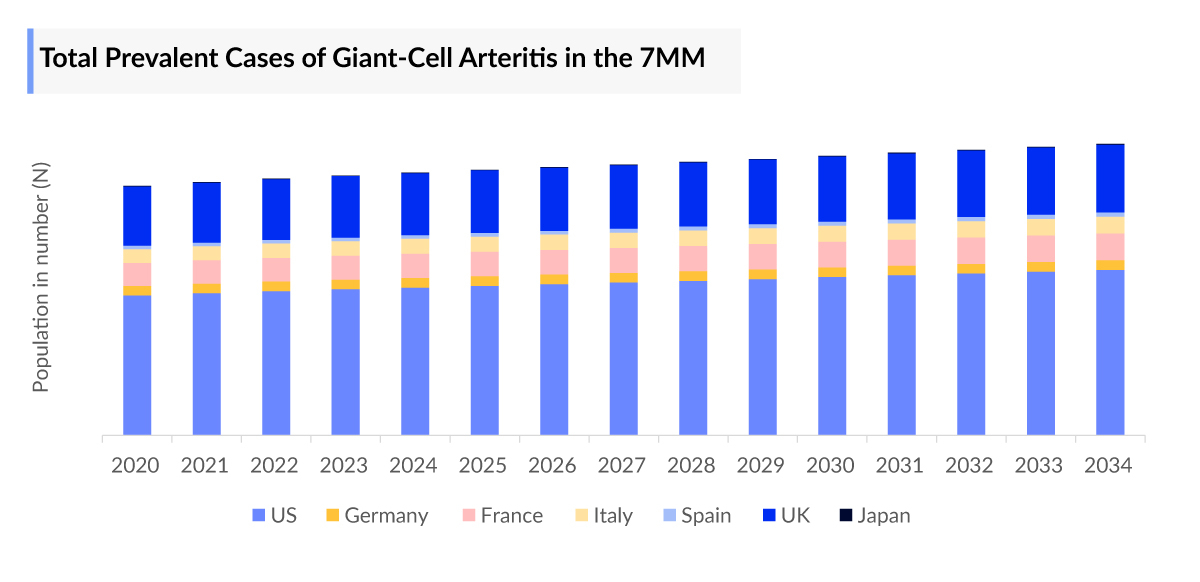
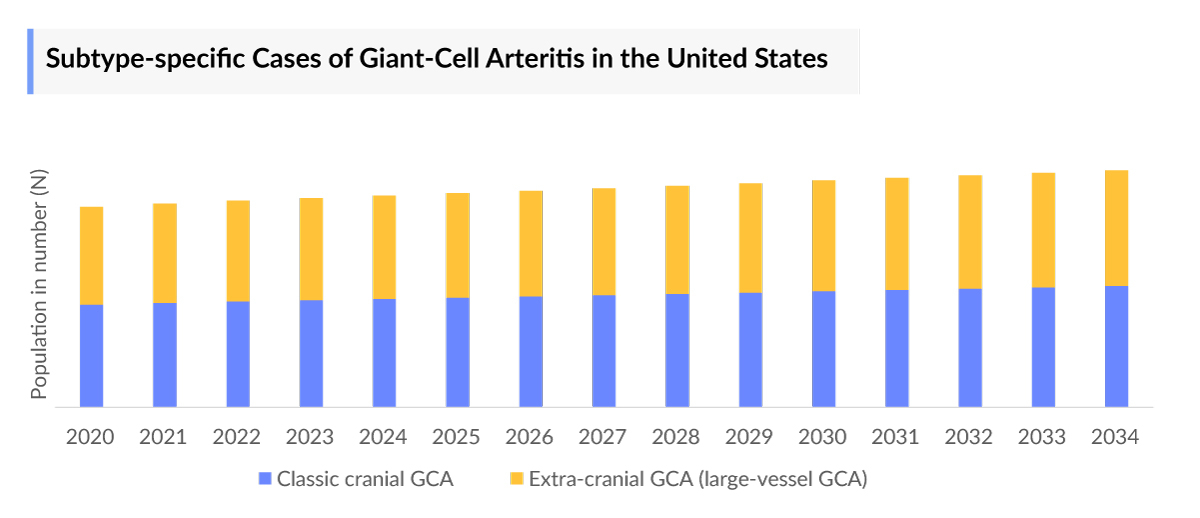
The Giant-Cell Arteritis epidemiology chapter in the report provides historical as well as forecasted epidemiology segmented by diagnosed prevalent cases, subtype-specific cases, gender-specific cases, age-specific cases, clinical manifestation-specific and treated cases in the United States, EU4 countries (Germany, France, Italy, Spain) and the United Kingdom, and Japan from 2020 to 2034.
- In 7MM, the United States accounted for the highest number of diagnosed prevalent cases of Giant-Cell Arteritis, which is 54.0% of the diagnosed prevalent cases of Giant-Cell Arteritis in 2023.
- In the US, among the subtype-specific cases of Giant-Cell Arteritis, classic cranial Giant-Cell Arteritis cases were highest, followed by extracranial Giant-Cell Arteritis (large-vessel Giant-Cell Arteritis) cases in 2023.
- Among the EU4 and the UK, the United Kingdom accounted for the highest number of Giant-Cell Arteritis cases, followed by France, whereas Spain accounted for the lowest number of Giant-Cell Arteritis cases.
- In 2023, as far as clinical manifestation-specific cases are concerned, scalp tenderness accounted for the highest number of cases in Japan. These cases are anticipated to increase by 2034.
Get detailed insights into the historical as well as forecasted epidemiology trends in the 7MM, at: Giant-Cell Arteritis Epidemiology Forecast
Recent Developments in the Giant-Cell Arteritis Market:
- In April 2025, AbbVie announced that the U.S. Food and Drug Administration (FDA) approved RINVOQ® (upadacitinib) as the first oral Janus Kinase (JAK) inhibitor for the treatment of giant cell arteritis (GCA) in adults. This approval marks RINVOQ’s ninth indication in the U.S., further extending its therapeutic reach across various fields such as rheumatology, gastroenterology, and dermatology.
- In January 2025, Celltrion, a leading South Korean biopharmaceutical company, announced on Friday that its new biosimilar, Avtozma, has received approval from the U.S. FDA. A biosimilar to Actemra, Avtozma is approved for both intravenous and subcutaneous formulations. It is indicated for treating various autoimmune diseases, including rheumatoid arthritis and giant cell arteritis, as well as Covid-19.
Giant-Cell Arteritis Drug Chapters
The section dedicated to giant-cell arteritis drugs in the Giant-Cell Arteritis report provides an in-depth evaluation of pipeline drugs (Phase III and Phase II) related to Giant-Cell Arteritis.
The drug chapters section provides valuable information on various aspects related to clinical trials of Giant-Cell Arteritis, such as the pharmacological mechanisms of the drugs involved, designations, approval status, patent information, and a comprehensive analysis of the pros and cons associated with each drug. Furthermore, it presents the most recent news updates and press releases on drugs targeting Giant-Cell Arteritis.
Giant-Cell Arteritis Marketed Therapies
ACTEMRA/ROACTEMRA (tocilizumab): Roche
ACTEMRA/ROACTEMRA (tocilizumab) is a first-in-class anti-IL-6 receptor (aIL-6R) therapy. IL-6 is believed to play a key role in activating the inflammatory pathway that contributes to the signs and symptoms of RA and other inflammatory autoimmune conditions. ACTEMRA/ROACTEMRA binds to the IL-6 receptor and blocks the inflammatory protein IL-6. This improves joint pain and swelling from arthritis and other symptoms caused by inflammation. It is also approved for the treatment of pediatric juvenile idiopathic arthritis (pJIA), systemic juvenile idiopathic arthritis (sJIA), Giant-Cell Arteritis, and CAR-T cell-induced cytokine release syndrome (CRS).
In September 2017, Roche announced that the European Commission (EC) approved ACTEMRA/ROACTEMRA (tocilizumab) for the treatment of Giant-Cell Arteritis. ACTEMRA/ROACTEMRA is the first therapy approved for the treatment of Giant-Cell Arteritis in Europe. The European approval was based on the outcome of the Phase III GiACTA study, which showed that a weekly dose of ACTEMRA/ROACTEMRA, initially combined with a 6-month steroid taper, significantly increased the proportion of patients achieving sustained remission at one year compared to a six-month steroid taper given alone.
In November 2018, Roche announced that the US FDA approved ACTPen 162 mg/0.9 mL, a single-dose prefilled autoinjector for ACTEMRA (tocilizumab), as an additional formulation for adult patients with Giant-Cell Arteritis.
Note: Detailed assessment will be provided in the final report of Giant-Cell Arteritis…
Giant-Cell Arteritis Emerging Therapies
RINVOQ (upadacitinib): AbbVie
RINVOQ (upadacitinib) is an orally administered selective and reversible Janus kinase (JAK) inhibitor; proinflammatory cytokines use immune signaling networks, such as the JAK-STAT pathway, to communicate with the cell nucleus. When dysregulated, these signals increase the inflammatory response, leading to cycles of chronic inflammation, presenting as pain, swelling, and progressive joint destruction. It is approved in the United States, Japan, and the European Union. RINVOQ is indicated for the treatment of moderate to severe active rheumatoid arthritis in adult patients who have responded inadequately to or who are intolerant to one or more disease-modifying anti-rheumatic drugs (DMARDs), is being developed by Abbvie.
JAKs are intracellular enzymes that transmit signals arising from cytokine or growth factor-receptor interactions on the cellular membrane to influence cellular processes of hematopoiesis and immune cell function. Within the signaling pathway, JAKs phosphorylate and activate Signal Transducers and Activators of Transcription (STATs), which modulate intracellular activity, including gene expression. RINVOQ modulates the signaling pathway at the point of JAKs, preventing the phosphorylation and activation of STATs. Currently, RINVOQ is in the Phase III stage of clinical development for Giant-Cell Arteritis.
COSENTYX (secukinumab): Novartis Pharmaceuticals
COSENTYX (secukinumab) is an injectable fully human monoclonal antibody that specifically inhibits interleukin-17A (IL-17A), a cytokine involved in several immunological diseases, and is being developed by Novartis Pharmaceuticals. It is approved in the US and EU to treat patients with moderate-to-severe plaque psoriasis, adults with active ankylosing spondylitis (AS), adults with active non-radiographic axial spondyloarthritis (nr-axSpA), and adults with active psoriatic arthritis (PsA).
Secukinumab is a human IgG1 monoclonal antibody that selectively binds to the interleukin-17A (IL-17A) cytokine and inhibits its interaction with the IL-17 receptor. IL-17A is a naturally occurring cytokine that is involved in normal inflammatory and immune responses. Secukinumab inhibits the release of proinflammatory cytokines and chemokines.
The company has completed one Phase II study, and it is currently in the Phase III stage of clinical development for the treatment of Giant-Cell Arteritis. The study (NCT04930094) has been initiated and started recruiting participants.
Giant-Cell Arteritis Market Outlook
The term “Giant Cell” is used for the disease because when one looks at the biopsies of the inflamed temporal arteries under a microscope, it often appear as large or “giant” cells. The etiological factors of Giant-Cell Arteritis are a bit complex and still being widely researched, but yet it is not very well understood. Several factors that are understood till now may include genetic factors (HLA family), infectious or environmental factors, immune responses, and T-cell activation.
The main goal of the treatment of Giant-Cell Arteritis is to prevent the patients from getting exposed to severe consequences of the disease, such as blindness. To treat Giant-Cell Arteritis, doctors may prescribe a high dose of corticosteroids, between 40 mg and 60 mg every day, which is continued for around 3–4 weeks. If the patient’s condition starts to improve after that, the doctor will start reducing the dose. Although, there has always been a continuous discussion on the safety profile of corticosteroids. Other than corticosteroids, disease-modifying anti-rheumatic drugs (DMARDs) are also used sometimes to treat Giant-Cell Arteritis. DMARDs that are commonly used are methotrexate, leflunomide, and azathioprine.
Currently, there is just one therapy that is approved in the 7MM for the treatment of Giant-Cell Arteritis, which includes Chugai Pharmaceuticals/Roche’s ACTEMRA/ROACTEMRA (tocilizumab).
Productive pharmacologic options for managing the most prevalent and most disabling phases of Giant-Cell Arteritis are minimal. Treatments that work in this disorder are scarce; therefore, new treatments are desperately needed. Some companies like Novartis (COSENTYX; secukinumab), AbbVie (RINVOQ; upadacitinib), and J&J/MorphoSys AG (TREMFYA; guselkumab) have initiated clinical trials that investigate new treatment options.
In a nutshell, a few potential therapies are being investigated for the management of Giant-Cell Arteritis. Even though it is too soon to comment on the above-mentioned promising candidate to enter the market during the forecast period (2024–2034), it is safe to assume that the future of this market is bright. Eventually, the drug shall create a significant difference in the landscape of Giant-Cell Arteritis in the coming years. The treatment space is expected to experience a positive impact in the coming years owing to the improvement in the rise of healthcare spending across the world.
Further details are provided in the report…
Giant-Cell Arteritis Market Insights:
- In 2023, the total market size of Giant-Cell Arteritis was around USD 960 million, which is expected to increase by 2034 during the study period (2020–2034) in the 7MM.
- Among the 7MM, the United States accounted for the highest market size in 2023, followed by the United Kingdom for Giant-Cell Arteritis.
- Some of the Giant-Cell Arteritis Companies such as Novartis, AbbVie, J&J/MorphoSys AG, and others, are involved in developing therapies. The expected launch of emerging therapies and other treatments will lead to a significant increase in the market size during the forecast period [2024–2034].
- During the forecast period (2024–2034), pipeline candidates such as COSENTYX, RINVOQ and TREMFYA are expected to drive the rise in Giant-Cell Arteritis market size.
- By 2034, RINVOQ (upadacitinib) is expected to garner the largest market share in the 7MM.
KOL Views
To stay abreast of the latest trends in the market, we conduct primary research by seeking the opinions of Key Opinion Leaders (KOLs) and Subject Matter Experts (SMEs) who work in the relevant field. This helps us fill any gaps in data and validate our secondary research.
We have reached out to industry experts to gather insights on various aspects of Giant-Cell Arteritis, including the evolving treatment landscape, patients’ reliance on conventional therapies, their acceptance of therapy switching, drug uptake, and challenges related to accessibility. The experts we contacted included medical/scientific writers, professors, and researchers from prestigious universities in the US, Europe, the UK, and Japan.
Our team of analysts at DelveInsight connected with more than 10 KOLs across the 7MM. By obtaining the opinions of these experts, we gained a better understanding of the current and emerging treatment patterns in the Giant-Cell Arteritis market, which will assist our clients in analyzing the overall epidemiology and market scenario.
Qualitative Analysis
We perform Qualitative and Market Intelligence analysis using various approaches, such as SWOT analysis and Conjoint Analysis. In the SWOT analysis, strengths, weaknesses, opportunities, and threats in terms of disease diagnosis, patient awareness, patient burden, competitive landscape, cost-effectiveness, and geographical accessibility of therapies are provided. These pointers are based on the Analyst’s discretion and assessment of the patient burden, cost analysis, and existing and evolving treatment landscape.
Conjoint analysis analyzes multiple approved and emerging therapies based on relevant attributes such as safety, efficacy, frequency of administration, designation, route of administration, and order of entry. Scoring is given based on these parameters to analyze the effectiveness of therapy. In efficacy, the trial’s primary and secondary outcome measures are evaluated. Based on these, the overall efficacy is evaluated.
Further, the therapies’ safety is evaluated wherein the acceptability, tolerability, and adverse events are majorly observed, and it sets a clear understanding of the side effects posed by the drug in the trials. In addition, the scoring is also based on the route of administration, order of entry and designation, probability of success, and the addressable patient pool for each therapy. According to these parameters, the final weightage score and the ranking of the emerging therapies are decided.
Market Access and Reimbursement
Because newly authorized drugs are often expensive, some patients escape receiving proper treatment or use off-label, less expensive prescriptions. Reimbursement plays a critical role in how innovative treatments can enter the market. The cost of the medicine, compared to the benefit it provides to patients who are being treated, sometimes determines whether or not it will be reimbursed. Regulatory status, target population size, the setting of treatment, unmet needs, the number of incremental benefit claims, and prices can all affect market access and reimbursement possibilities
The report further provides detailed insights on the country-wise accessibility and reimbursement scenarios, cost-effectiveness scenario of approved therapies, programs making accessibility easier and out-of-pocket costs more affordable, insights on patients insured under federal or state government prescription drug programs, etc.
Giant-Cell Arteritis Market Report Summary
- The report offers extensive knowledge regarding the epidemiology segments (by region, diagnosed prevalent cases of Giant-Cell Arteritis, subtype-specific cases, gender-specific cases, age-specific cases, clinical manifestation-specific cases, and total treated cases) and predictions, presenting a deep understanding of the potential future growth in diagnosis rates, disease progression, and treatment guidelines. It provides comprehensive insights into these aspects, enabling a thorough assessment of the subject matter.
- Additionally, an all-inclusive account of the current management techniques and emerging therapies such as RINVOQ, COSENTYX and the elaborative profiles of late and mid-stage (Phase III and Phase II) and prominent therapies that would impact the current treatment landscape and result in an overall market shift has been provided in the report.
- The report also encompasses a comprehensive analysis of the Giant-Cell Arteritis market, providing an in-depth examination of its historical and projected market size (2020–2034). It also includes the market share of therapies, detailed assumptions, and the underlying rationale for our methodology. The report also includes drug outreach coverage in the 7MM region.
- The report includes qualitative insights that provide an edge while developing business strategies by understanding trends through SWOT analysis and expert insights/KOL views, including experts from various hospitals and prominent universities, patient journey, and treatment preferences that help shape and drive the 7MM Giant-Cell Arteritis market.
Giant-Cell Arteritis Market Report Insights
- Giant-Cell Arteritis Patient Population
- Giant-Cell Arteritis Therapeutic Market
- Giant-Cell Arteritis Market Size and Trends
- Existing Giant-Cell Arteritis Market Opportunity
Giant-Cell Arteritis Market Report Key Strengths
- Eleven-year Forecast
- The 7MM Coverage
- Giant-Cell Arteritis Epidemiology Segmentation
- Key Cross Competition in the Giant-Cell Arteritis Market
Giant-Cell Arteritis Market Report Assessment
- Current Giant-Cell Arteritis Treatment Practices
- Reimbursements Scenario
- Giant-Cell Arteritis Market Attractiveness
- Qualitative Analysis (SWOT, Conjoint Analysis, Unmet needs)
- Giant-Cell Arteritis Market Drivers
- Giant-Cell Arteritis Market Barriers
Key Questions Giant-Cell Arteritis In The Market Report:
- Would there be any changes observed in the current Giant-Cell Arteritis treatment approach?
- Will there be any improvements in Giant-Cell Arteritis management recommendations?
- Would research and development advances pave the way for future tests and Giant-Cell Arteritis therapies?
- Would the diagnostic testing space experience a significant impact and lead to a positive shift in the treatment landscape of Giant-Cell Arteritis?
- What kind of uptake will the new therapies witness in the coming years in Giant-Cell Arteritis patients?
Read our blog on "Giant-Cell Arteritis Treatment Beyond Glucocorticoids: Exploring Horizons".