Human Papillomavirus 16-positive Cancers Market
HPV16+ Cancers Insights and Trends
- HPV 16 remains the predominant oncogenic type (≥60% in anogenital cancer sites and 44–91% in head and neck cancers). The inclusion of additional markers increases the attributable fraction of HPV 16 in vulvar, penile, oral cavity, and oropharyngeal cancers, and also confirms the causal role of other, less common mucosal HPV types.
- HPV16 status is primarily confirmed via molecular or immunohistochemical testing. p16 overexpression is widely used as a practical screening tool, especially in oropharyngeal cancers, but requires confirmation with HPV-specific assays.
- According to the Centre for Disease Control and Prevention, among all the cases of anal cancer in the United States, about 91% are thought to be attributable to be caused by HPV infection.
- Most cases of cervical cancer occur as a result of infection with HPV16 and 18. Type 16 is the cause of approximately 50% of cervical cancers worldwide.
- Approximately 90% of head and neck cancers are accounted for by HNSCC, and its incidence is steadily increasing, largely due to the growing burden of HPV-positive OPSCC in developed countries. At the same time, in developing regions, continued tobacco and lifestyle exposures remain the main cause.
- According to WHO (2025), there are 8 licensed HPV vaccines, five of which have received WHO pre-qualification and are available globally. All these protect against the high-risk HPV types 16 and 18, which cause ~76% of cervical cancers.
- Two vaccines, GARDASIL and CERVARIX, provide protection against high-risk HPV strains associated with cervical cancer, particularly HPV16 and 18.
- KEYTRUDA and OPDIVO are the primary PD-1 inhibitors approved for treating recurrent or metastatic (R/M) HNSCC.
- The landscape is highly competitive, with key players like PDS Biotechnology, Merus, BioNTech, Nykode Therapeutics, Roche, Cue Biopharma,Transgene, and others driving innovative strategies to improve efficacy and broaden treatment options for HPV16+ HNSCC, offering new hope for patients with limited current alternatives.
HPV16+ Cancers Market Size and Forecast in the 7MM
- 2025 HPV16+ Cancers Market Size: XXX million
- 2036 Projected HPV16+ Cancers Market Size: XXX million
- HPV16+ Cancers Growth Rate (2026–2036): XX% CAGR
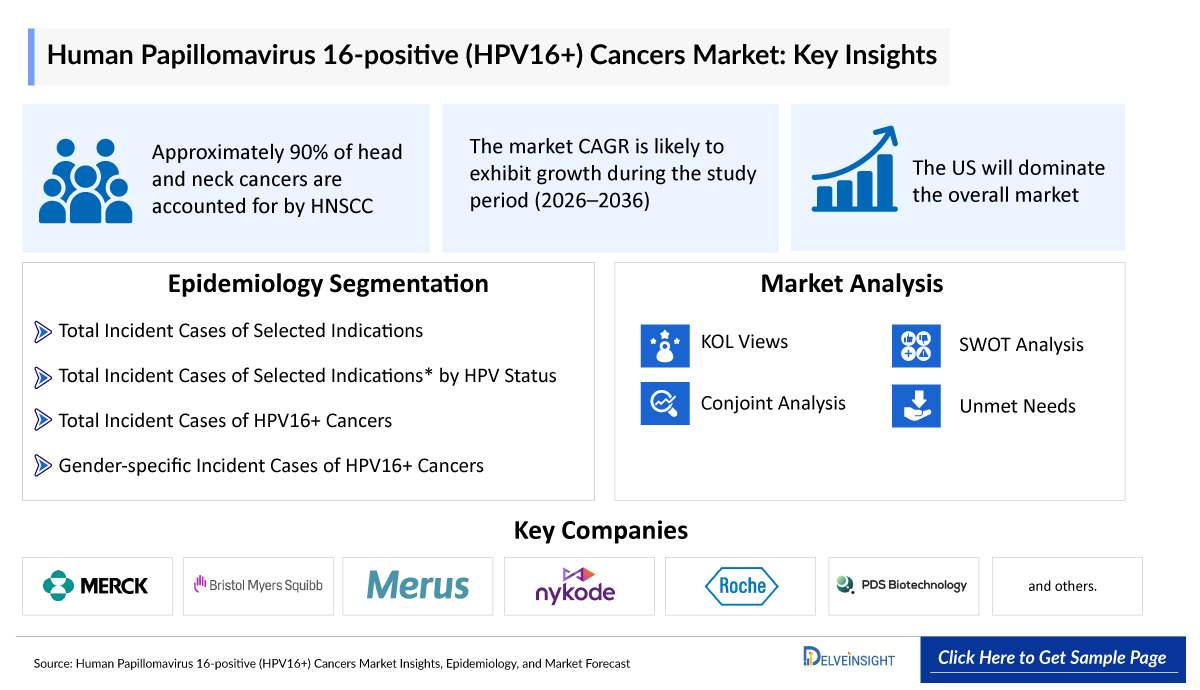
DelveInsight's ‘HPV16+ Cancers – Market Insights, Epidemiology and Market Forecast – 2036’ report delivers an in-depth understanding of the HPV16+ Cancers, historical and forecasted epidemiology, as well as the HPV16+ Cancers market trends in the United States, EU4 (Germany, Spain, Italy, and France) and the United Kingdom, and Japan.
The HPV16+ Cancers market report delivers a comprehensive analysis of the current treatment landscape, including standards of care, clinical practices, and evolving therapeutic algorithms. It evaluates HPV16+ Cancers patient burden trends, revenue & market share dynamics, peak patient share & therapy uptake analysis, and provides an in-depth market size assessment, and growth rate projections (Historical & Forecast 2022–2036) across global regions. The report highlights key unmet medical needs in HPV16+ Cancers and maps the competitive and clinical landscape to uncover high‑value opportunities, providing a clear outlook on future market growth potential.
|
Study Period |
2022–2036 |
|
Historical Year |
2022–2025 |
|
Forecast Period |
2026–2036 |
|
Base Year |
2026 |
|
Geographies Covered |
|
|
HPV16+ Cancers Market CAGR (Forecast period) |
XX% (2026–2036) |
|
HPV16+ Cancers Epidemiology Segmentation Analysis |
Patient Burden Assessment
*(Selected indications Cervical Cancer, Anal Cancer, Oropharyngeal Cancer, Vaginal Cancer, Vulvar Cancer, Penile Cancer, and others…) |
|
HPV16+ Cancers Companies |
|
|
HPV16+ Cancers Therapies |
|
|
HPV16+ Cancers Market |
Segmented by
|
|
Analysis |
|
Key Factors Driving the HPV16+ Cancers Market
Rising Incidence of HPV-related Cancers
Rising incidence of HPV related cancers is driven by suboptimal vaccination coverage and inadequate screening uptake, allowing persistent high risk HPV infections to progress. This is reflected in increasing cases of cervical cancer and oropharyngeal head and neck cancers, with HNSCC rising particularly among males aged 40 to 65. Approximately 70% of oropharyngeal cancers are HPV positive, with HPV16 as the dominant strain.
Advancements in Immunotherapy and Targeted Treatments
Candidates like BNT113 (BioNTech), Abipapogene suvaplasmid (Nykode Therapeutics/Roche), ISA101b (ISA Pharmaceuticals/Regeneron), PDS0101 (PDS Biotechnology), and TG4001 (Transgene) are in clinical trials, offering potential new standards of care. In addition, promising data from trials are accelerating development.
Shifting Treatment Paradigms in HPV+ HNSCC
While chemotherapy and radiation remain standard, there is a push towards neoadjuvant immunotherapy and de-escalation strategies in HPV+ HNSCC to reduce toxicity and improve long-term outcomes.
HPV16+ Cancers Understanding and Treatment Algorithm
HPV16+ Cancers Overview and Diagnosis
HPV16+ Cancers are virus-driven epithelial malignancies primarily caused by persistent infection with human papillomavirus type 16, one of the most oncogenic HPV strains responsible for a significant proportion of cervical cancers and head & neck squamous cell carcinomas, particularly oropharyngeal tumors. These cancers arise when viral oncoproteins E6 and E7 disrupt key tumor suppressor pathways, leading to uncontrolled cellular proliferation, genomic instability, and malignant transformation of epithelial cells.
Diagnosis begins with clinical suspicion based on symptoms or screening findings, followed by confirmation through biopsy and histopathological examination of the suspected lesion, which typically reveals squamous cell carcinoma. Once malignancy is established, HPV16 status is determined using molecular and immunohistochemical methods, most commonly HPV DNA genotyping to directly detect viral genetic material and p16 immunohistochemistry. In some settings, HPV E6/E7 mRNA testing may also be used for more definitive evidence of active viral oncogene expression.
Further details are provided in the report.
Current HPV16+ Cancers Treatment Landscape
The treatment of HPV16+ Cancers is primarily guided by tumor type (most commonly cervical cancer and head & neck squamous cell carcinoma), disease stage, and HPV status, with a growing shift toward immunotherapy-based and precision oncology approaches. For recurrent, metastatic, or unresectable disease, the treatment landscape is now driven by immunotherapy. Approved agents such as Pembrolizumab and Nivolumab are widely used PD-1 inhibitors that restore anti-tumor immune responses. The emerging pipeline is focused on HPV16-targeted immunotherapies, including therapeutic vaccines and immune modulators such as BNT113, PDS0101, TG4001 and CUE-101, often evaluated in combination with checkpoint inhibitors.
Further details related to country-based variations are provided in the report.
HPV16+ Cancers Unmet Needs
The section “unmet needs of HPV16+ Cancers” outlines the critical gaps between the current state of patient care, diagnosis, and the ideal & effective management of the disease. It highlights the obstacles experienced by patients, clinicians, and researchers and identifies potential solutions for future progress.
- Lack of HPV16-specific targeted therapies
- Immunotherapy response is inconsistent and poorly predicted
- Limited progress in therapeutic vaccines
- Lack of robust biomarkers, and others…..
Note: Comprehensive unmet needs insights in HPV16+ Cancers and their strategic implications are provided in the full report.
HPV16+ Cancers Epidemiology
Key Findings from HPV16+ Cancers Epidemiological Analysis and Forecast
- An estimated 26 million Americans have an oral HPV infection at any given time, of whom approximately 2,600 are infected with HPV16.
- The total incident cases of HPV16+ Oropharyngeal Squamous Cell Carcinoma (OPSCC) in Japan were nearly 3,900 in 2025.
- High-risk HPV types account for nearly 5% of cancers worldwide and are predominantly associated with cervical, anogenital, and oropharyngeal malignancies. Outside these regions, HPV-associated tumors, largely driven by HPV16, remain rare and are typically reported at acral sites such as the hands and feet.
- Most cases of cervical cancer occur as a result of infection with HPV16 and 18. High-risk types, especially HPV16, are found to be highly prevalent in human populations. Type 16 is the cause of approximately 50% of cervical cancers worldwide. The infection is usually transmitted by sexual contact, causing squamous intraepithelial lesions.
HPV16+ Cancers Drug Analysis & Competitive Landscape
The HPV16+ Cancers drug chapter provides a detailed, market-focused review of approved therapies and the emerging pipeline across Phase III–I/II clinical trials. It covers the mechanism of action, clinical trial data, regulatory approvals, patents, collaborations, strategic partnerships upcoming Key catalyst for each therapy, along with their advantages, limitations, and recent developments. This section offers critical insights into the HPV16+ Cancers treatment landscape, supporting market assessment, competitive analysis, and growth forecasting for the HPV16+ Cancers therapeutics market.
Approved Therapies for HPV16+ Cancers
Pembrolizumab (KEYTRUDA): Merck
KEYTRUDA is an anti-PD-1 therapy that works by increasing the ability of the body’s immune system to help detect and fight tumor cells. KEYTRUDA is a humanized monoclonal antibody that blocks the interaction between PD-1 and its ligands, PD-L1 and PD-L2, thereby activating T lymphocytes, which may affect both tumor cells and healthy cells. In October 2025, Merck announced that the European Commission approved KEYTRUDA as monotherapy for the treatment of resectable locally advanced head and neck squamous cell carcinoma (LA-HNSCC) as neoadjuvant treatment.
Note: Detailed marketed therapies assessment will be provided in the final report.
|
HPV16+ Cancers Marketed/Approved Therapies | ||||||
|
Drug/Therapy |
Company |
Indication |
Molecule Type |
MoA |
RoA |
Marketed Region |
|
Pembrolizumab (KEYTRUDA) |
Merck |
HNSCC |
Monoclonal antibody |
PD-1 inhibitor |
IV |
US: 2016 |
|
Nivolumab (OPDIVO) |
Bristol Myers Squibb |
HNSCC |
(IgG4) antibody |
PD-1 inhibitor |
IV |
US: 2016 |
HPV16+ Cancers Pipeline Analysis
Versamune HPV (PDS0101): PDS Biotechnology
PDS0101 is a novel investigational Human Papilloma Virus (HPV) targeted immunotherapy that stimulates a potent targeted T-cell attack against HPV-positive cancers. PDS0101 is given by a simple SC injection in combination with other immunotherapies and cancer treatments. Interim data suggest PDS0101 generates clinically effective immune responses, and the combination of PDS0101 with other treatments demonstrates significant disease control by shrinking tumors, delaying disease progression and/or prolonging survival. It is currently in Phase III clinical development (VERSATILE-003) for HPV16-positive recurrent/metastatic head and neck cancer, having received FDA Fast Track Designation (FTD) for this indication. It has also completed another Phase II study for HPV16+ cancers in collaboration with National Cancer Institute. According to company, the Intellectual property rights are exclusive until 2042/2043.
BNT113: BioNTech
BNT113 is an mRNA cancer vaccine candidate encoding two oncoproteins, E6 and E7 that are frequently found in HPV16+ solid cancers. The candidate aims to trigger a strong and precise immune response in patients with HPV16+ HNSCC.
|
Competitive Landscape of Pipeline Drugs | ||||||
|
Drug Name |
Company |
Highest Phase |
Indication |
RoA |
MoA |
Anticipated Launch in the US |
|
Versamune HPV (PDS0101) |
PDS Biotechnology |
III |
R/M HSNCC |
SC |
Stimulates a potent targeted T cell attack against HPV-positive cancers; T cell activator |
Information is available in the full report |
|
Petosemtamab (MCLA-158) |
Merus |
III |
HNSCC |
IV |
Targets EGFR X LGR5 |
Information is available in the full report |
|
BNT113 |
BioNTech |
II/III |
R/M HPV16+ HNSCC |
IV |
Immune system activation against E6/E7-expressing cells |
Information is available in the full report |
|
Abipapogene suvaplasmid (VB10.16) |
Nykode Therapeutics/Roche |
II |
HNSCC |
IM |
Antigen-presenting cell (APC) modulator |
Information is available in the full report |
|
CUE-101 |
Cue Biopharma |
II |
HLA-A*0201 Positive Patients With Locally Advanced, HPV16+ Oropharyngeal Squamous-Cell Carcinoma |
IV |
HPV16 E7-specific immune activator |
Information is available in the full report |
|
TG4001 |
Transgene |
I/II |
HPV16+ R/M Cancers |
SC |
HPV16 E6 and E7 immune activator |
Information is available in the full report |
|
Note: Launch insights are provisional and may change with future report updates or the occurrence of major key catalysts. | ||||||
Note: Detailed emerging therapies assessment will be provided in the final report.
HPV16+ Cancers Key Players, Market Leaders and Emerging Companies
- Merck
- Bristol Myers Squibb
- Merus
- Nykode Therapeutics
- Roche
- PDS Biotechnology
- BioNTech
- Cue Biopharma
- Transgene, and others
HPV16+ Cancers Drug Updates
- In July 2026, INOVIO Pharmaceuticals, Inc. announced plans to conduct an underwritten public offering of its common stock and accompanying warrants. All securities in the transaction will be offered by the company, which also intends to grant underwriters a 30-day option to purchase up to an additional 15% of the shares and warrants. Completion, pricing, and final size of the public offering remain subject to market conditions, with proceeds intended to support ongoing DNA medicine commercialization and clinical development.
- In May 2026, ApolloBio, the development partner of INOVIO Pharmaceuticals in Greater China, announced positive topline results from its pivotal Phase 3 clinical trial of VGX-3100. This investigational DNA immunotherapy is being evaluated as a non-surgical treatment for patients with high-grade cervical dysplasia associated with human papillomavirus (HPV) types 16 and 18. The trial successfully met its primary efficacy endpoint, showing clear histopathologic regression of lesions and targeted viral clearance, alongside a favorable safety profile with no new safety signals. ApolloBio plans to utilize this clinical evidence to support an upcoming regulatory submission for marketing approval in China. The successful outcome highlights the potential of INOVIO's proprietary DNA medicine platform to provide a critical, fertility-preserving therapeutic alternative to invasive surgical interventions. Under their agreement, the positive progress positions INOVIO to potentially receive future milestone and royalty payments.
- In March 2026, Nykode announced that randomized clinical trial (Abili-T) in 1L R/M head and neck cancer on track to deliver meaningful interim results by 2027.
- In January 2026, BNT113 received FTD from the US FDA for the treatment of HPV16+ HNSCC expressing PD-L1.
- PDS Biotechnology indicated in its 2026 corporate presentation that Phase II clinical data for PDS0101 in cervical cancer are expected to be reported in the H2 2026.
- In October 2025, PDS Biotechnology Corporation announced that after a recent review of the final VERSATILE-002 data, the Company has requested a meeting with the FDA to explore an expedited approval pathway for PDS0101 in HPV16-positive HNSCC. The FDA meeting request is based on the final results from its VERSATILE-002 trial and a proposed amendment to the VERSATILE-003 Phase III trial to reduce the number of patients and to add PFS as an earlier primary endpoint in addition to median overall survival (mOS).
- In June 2025, Merck announced that the US FDA had approved KEYTRUDA, for the treatment of adult patients with resectable LA-HNSCC whose tumors express PD-L1.
HPV16+ Cancers Market Outlook
The HPV16+ Cancers market (2022–2036) is transitioning from a long-standing reliance on surgery, radiation, and platinum-based chemotherapy toward a more immunotherapy and antigen-targeted treatment paradigm. Preventive vaccination has also reshaped the landscape, with prophylactic HPV vaccines such as GARDASIL, GARDASIL 9, and CERVARIX reducing the incidence of HPV16-related cancers by preventing initial infection, thereby lowering future disease burden.
However, the introduction of immune checkpoint inhibitors such as Pembrolizumab and Nivolumab has significantly improved survival outcomes and established immunotherapy as a cornerstone of care. A major advancement in immuno-oncology came with the clinical adoption of Pembrolizumab for the treatment of HPV16+ cancers, including cervical cancer and HNSCC. As a PD-1 immune checkpoint inhibitor, pembrolizumab enhances anti-tumor immune responses by restoring T-cell activity against HPV-driven malignancies. Its use underscores the expanding role of immune checkpoint blockade in virally driven cancers.
Beyond approved therapies, the pipeline is rapidly expanding with HPV16-specific, mechanism-driven treatments. Emerging candidates such as Petosemtamab (Merus), PDS0101 (PDS Biotechnology), BNT113 (BioNTech), CUE-101 (Cue Biopharma), and TG4001 (Transgene) are advancing through clinical development. These therapies primarily focus on targeting HPV16 E6/E7 oncoproteins, either by directly enhancing antigen-specific immune responses or by improving tumor recognition and killing through combination immunotherapy strategies.
Overall, the advancements in immunotherapy and targeted treatments are expected to drive steady growth in the 7MM HPV16+ Cancers market from 2022–2036, with strong commercial implications for both marketed products and emerging pipelines.
- Among approved therapies, Pembrolizumab is expected to remain a key revenue driver due to its broad use across cervical and head and neck cancers.
- Nykode Therapeutics announced that the Abili-T protocol was submitted to UK regulatory authorities in November 2025 and to relevant EU regulatory authorities in December, and was approved by the UK regulatory authorities in December 2025.
- The entry of mid to late stage candidates such as BNT113, PDS0101, and CUE-101 is anticipated to intensify competition and accelerate the shift toward HPV16-targeted immunotherapies in the later stages of the forecast period.
- Immune checkpoint inhibitors and adoptive cell therapies offer promising results, particularly due to the immunogenic nature of HPV16-positive tumors.
Further details will be provided in the report….
Drug Class/Insights into Leading Emerging and Marketed Therapies in HPV16+ Cancers (2022–2036 Forecast)
The HPV16+ Cancers market comprises Immunotherapies, ADCs, and Therapeutic HPV vaccines, each targeting different aspects of HPV16+ Cancers.
- Immunotherapies: Approved therapies such as Pembrolizumab (KEYTRUDA) and Nivolumab (OPDIVO) form the backbone of treatment by blocking PD-1 signaling and restoring anti-tumor immune responses. These therapies are widely used in recurrent or metastatic cervical and head & neck cancers and have significantly improved survival outcomes.
- Therapeutic HPV vaccines and immune-activating biologics: Pipeline candidates such as petosemtamab (MCLA-158), PDS0101, BNT113, CUE-101, and TG4001 are designed to target HPV16 E6/E7 oncoproteins. These therapies work by activating HPV-specific cytotoxic T cells, enhancing tumor antigen recognition, and improving response to checkpoint inhibitors in combination settings.
HPV vaccines and immune-activating biologics define the core innovation landscape, with immunotherapies and ADCs currently commercially validated, driving market growth.
HPV16+ Cancers Drug Uptake
This section focuses on the uptake rate of potential drugs expected to be launched in the market during the forecast period (2026–2036). The analysis covers the HPV16+ Cancers drug’s uptake, performance at peak, factors affecting performance during prime years of growth, patient uptake by therapy, and anticipated sales generated by each drug.
In HPV16-positive HNSCC, approved PD-1 inhibitors such as KEYTRUDA and OPDIVO have achieved strong clinical adoption and entrenched use in the treatment paradigm. Emerging pipeline candidates such as BNT113 and PDS0101 are expected to see more gradual, indication-driven uptake upon approval. Their clinical positioning, primarily in combination with checkpoint inhibitors, leverages direct targeting of HPV16 E6/E7 antigens to enhance tumor-specific immune responses, potentially improving efficacy in both frontline and refractory settings.
Detailed insights of emerging therapies' drug uptake is included in the report
Market Access and Reimbursement of Approved Therapies in HPV16+ Cancers
The report further provides detailed insights on the country-wise accessibility and reimbursement scenarios, cost-effectiveness scenario of approved therapies, programs making accessibility easier and out-of-pocket costs more affordable, insights on patients insured under federal or state government prescription drug programs, etc.
The United States
|
US Reimbursement of Therapies Approved for HPV16+ Cancers | |
|
Drug/Therapy |
Access Program |
|
KEYTRUDA |
Merck Access Program |
Reimbursement is a crucial factor that affects the drug’s access to the market. Often, the decision to reimburse comes down to the price of the drug relative to the benefit it produces in treated patients. To reduce the healthcare burden of these high-cost therapies, many payment models are being considered by payers and other industry insiders.
NOTE: Further Details are provided in the final report….
HPV16+ Cancers Therapies Price Scenario & Trends
Pricing and analogue assessment of HPV16+ Cancers therapies highlights evolving price dynamics structures. This section summarizes the cost of approved treatments, closest and most appropriate analogue selection for emerging therapies, and understanding of how pricing influences market access, adherence, and long-term uptake.
Industry Experts and Physician Views for HPV16+ Cancers
To keep up with HPV16+ Cancers market trends, we take Key Opinion Leaders (KOLs) and Subject Matter Experts (SMEs) opinions working in the domain through primary research to fill the data gaps and validate our secondary research. Industry experts were contacted for insights on the HPV16+ Cancers emerging therapies, evolving treatment landscape, patient adherence to conventional therapies, therapy switching trends, drug adoption and uptake, accessibility challenges, and epidemiology and real-world prescription patterns in HPV16+ Cancers, including MD, PhD, Instructor, Postdoctoral Researcher, Professor, Researcher, and others.
DelveInsight’s analysts connected with 15+ KOLs to gather insights at the country level. Centers such as the Institute of Cancer and Genomic Sciences, Florida International University, and Essen University Hospital, etc. were contacted. Their opinion helps understand and validate current and emerging HPV16+ Cancers therapies, highlight unmet medical needs, provide epidemiological context, and support strategic decisions for market access, therapy adoption, and pipeline prioritization in HPV16+ Cancers.
|
Region |
Key Opinion Leaders (KOLs) and Subject Matter Experts (SMEs) |
|
United States |
“Several other novel therapies are showing promise for HPV-associated head and neck cancers. Many of these therapies, including DNA, RNA, peptide, or protein therapeutic vaccines, are being given with immune checkpoint inhibitors, including pembrolizumab. Newer treatments in the space also include cell-based therapies for HPV-associated cancers like the differentiated HPV-targeted biologic currently being evaluated called CUE-101.” |
|
Germany |
“Cetuximab did not cause less toxicity and resulted in worse overall survival and more cancer recurrence than cisplatin. The assumption was that it would lead to the same survival rates but better toxicity. Patients with throat cancer who are HPV positive should be given cisplatin, and not cetuximab, where possible.” |
Qualitative Analysis: SWOT and Conjoint Analysis
We perform qualitative and market Intelligence analysis using various approaches, such as SWOT analysis and conjoint analysis.
In the SWOT analysis of HPV16+ Cancers, strengths, weaknesses, opportunities, and threats in terms of disease diagnosis, patient awareness, patient burden, competitive landscape, cost-effectiveness, and geographical accessibility of therapies are provided.
Conjoint analysis analyzes emerging therapies based on relevant attributes such as safety, efficacy, frequency of administration, route of administration, and order of entry. Scoring is given based on these parameters to analyze the effectiveness of therapy.
The team of analysts analyzes promising emerging therapies based on relevant attributes such as safety, efficacy, frequency of administration, route of administration, and order of entry. In efficacy, the trial’s primary and secondary outcome measures are evaluated, whereas the therapies’ safety is evaluated, wherein the acceptability, tolerability, and adverse events are majorly observed. In addition, the scoring is also based on the route of administration, order of entry, probability of success, and the addressable patient pool for each therapy. According to these parameters, the final weightage score and the ranking of the emerging therapies are decided.
Scope of the Report
- The report covers a segment of key events, an executive summary, a descriptive overview of HPV16+ cancers, explaining its causes, signs and symptoms, pathogenesis, and currently available treatments.
- Comprehensive insight has been provided into the epidemiology segments and forecasts, the future growth potential of the diagnosis rate, and disease progression along treatment guidelines.
- Additionally, an all-inclusive account of both the current and emerging treatments, along with the elaborative profiles of late-stage and prominent therapies, will have an impact on the current treatment landscape.
- A detailed review of the HPV16+ cancers market, historical and forecasted market size, market share by therapies, detailed assumptions, and rationale behind our approach is included in the report, covering the 7MM drug outreach.
- The report provides an edge while developing business strategies by understanding trends through SWOT analysis and expert insights/KOL views, patient journey, and treatment preferences that help in shaping and driving the 7MM HPV16+ cancers market.
Report Insights
- HPV16+ Cancers Patient Population Forecast
- HPV16+ Cancers Therapeutics Market Size
- HPV16+ Cancers Pipeline Analysis
- HPV16+ Cancers Market Size and Trends
- HPV16+ Cancers Market Opportunity (Current and Forecasted)
Report Key Strengths
- Epidemiology‑based (Epi‑based) Bottom‑up Forecasting
- Artificial Intelligence (AI)-Enabled Market Research Report
- 11-Year Forecast
- HPV16+ Cancers Market Outlook (North America, Europe, Asia-Pacific)
- Patient Burden Trends (By Geography)
- HPV16+ Cancers Treatment Addressable Market (TAM)
- HPV16+ Cancers Competitve Landscape
- HPV16+ Cancers Major Companies Insights
- HPV16+ Cancers Price Trends and Analogue Assessment
- HPV16+ Cancers Therapies Drug Adoption/Uptake
- HPV16+ Cancers Therapies Peak Patient Share Analysis
Report Assessment
- HPV16+ Cancers Current Treatment Practices
- HPV16+ Cancers Unmet Needs
- HPV16+ Cancers Clinical Development Analysis
- HPV16+ Cancers Emerging Drugs Product Profiles
- HPV16+ Cancers Market attractiveness
- HPV16+ Cancers Qualitative Analysis (SWOT and Conjoint Analysis)
FAQs
Market Insights
- What was the HPV16+ cancers market size, the market size by therapies, market share (%) distribution in 2025, and what would it look like by 2036? What are the contributing factors for this growth?
- What are the anticipated pricing variations among different geographies for the emerging therapies in the future?
- What can be the future treatment paradigm of HPV16+ cancers?
- What are the disease risks, burdens, and unmet needs of HPV16+ cancers? What will be the growth opportunities across the 7MM concerning the patient population with HPV16+ cancers?
- Who is the major future competitor in the market, and how will the competitors affect their market share?
- What are the current options for the treatment of HPV16+ cancers? What are the current guidelines for treating HPV16+ cancers in the US, Europe, and Japan?
Reasons to Buy
- The report will help in developing business strategies by understanding the latest trends and changing treatment dynamics driving the HPV16+ cancers market.
- Bottom-up forecasting builds from the affected population to product forecasts, delivering a robust, data-driven approach ideal for new therapies and novel classes.
- Insights on patient burden/disease incidence, evolution in diagnosis, and factors contributing to the change in the epidemiology of the disease during the forecast years.
- Understand the existing market opportunities in varying geographies and the growth potential over the coming years.
- Identifying strong upcoming players in the market will help devise strategies to help get ahead of competitors.
- Detailed analysis and ranking of class-wise potential current and emerging therapies under the conjoint analysis section to provide visibility around leading classes.
- To understand KOLs’ perspectives on the accessibility, acceptability, and compliance-related challenges of existing treatment to overcome barriers in the future.
- Detailed insights on the unmet needs of the existing market so that the upcoming players can strengthen their development and launch strategy.
- This Artificial Intelligence (AI)-enabled report summarize and simplify complex datasets with in the report into clear, actionable insights for stakeholders, investors, and healthcare providers, enabling faster, data-driven decisions

-cancers-pipeline.png&w=256&q=75)