Huntington’s Disease Epidemiology Summary
- Huntington’s Disease is a rare, inherited, progressive neurodegenerative disorder caused by a mutation in the HTT gene, leading to neuronal degeneration in the brain and resulting in motor symptoms (e.g., chorea), cognitive decline, and psychiatric disturbances.
- The disease follows an autosomal dominant inheritance pattern; however, increasing research has enhanced understanding of the molecular mechanisms, particularly the role of mutant huntingtin (mHTT) protein in driving neurotoxicity and disease progression.
- Growing emphasis on biomarkers and genetic testing is enabling earlier diagnosis and identification of at-risk individuals, supporting timely intervention and improved disease management strategies.
- Advances in neuroimaging, molecular diagnostics, and clinical research are improving disease monitoring and expanding the diagnosed patient pool, thereby contributing to growth.
- Huntington’s disease is a rare condition with relatively low prevalence compared to other neurological disorders; however, its significant clinical burden and hereditary nature contribute to increasing focus from research organizations and healthcare systems worldwide.
Huntington’s Disease Epidemiology Forecast in the 7MM
-
2025 Prevalent Cases of Huntington’s Disease: ~ 83,000
-
Huntington’s Disease Growth Rate (2026–2036): 1% CAGR
DelveInsight's ‘Huntington’s Disease Epidemiology Forecast – 2036’ report delivers an in-depth understanding of Huntington’s disease, historical and forecasted epidemiology of the United States, EU4 (Germany, Spain, Italy, and France), and the United Kingdom, and Japan.
Geography Covered
|
Study Period
|
2022–2036
|
|
Historical Year
|
2022–2025
|
|
Forecast Period
|
2026–2036
|
|
Base Year
|
2026
|
|
Geographies Covered
|
-
North America: The US;
-
Europe: Germany, France, Italy, Spain, and the UK;
-
Asia-Pacific: Japan
|
|
Huntington’s Disease Epidemiology CAGR
(Study period/Forecast period)
|
1% (2026–2036)
|
|
Huntington’s Disease Epidemiology Segmentation Analysis
|
Patient Burden Assessment
-
Total Prevalent Cases of Huntington’s Disease
-
Total Diagnosed Prevalent Cases of Huntington’s Disease
-
Age-specific Cases of Huntington’s Disease
-
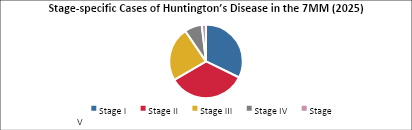
Stage-specific Cases of Huntington’s Disease
-
Total Treated Cases of Huntington’s Disease
|
Huntington’s Disease Understanding
Huntington’s Disease Overview and Diagnosis
Huntington’s disease is a rare, inherited, progressive brain disorder caused by a mutation in the HTT gene on chromosome 4, leading to the production of abnormal huntingtin protein and gradual nerve cell damage. It follows an autosomal dominant pattern, meaning individuals who inherit the faulty gene will develop the disease. Symptoms typically appear in adulthood and include involuntary movements (chorea), cognitive decline, and psychiatric issues such as depression and irritability. Diagnosis is based on clinical evaluation, family history, genetic (blood) testing, and imaging techniques such as CT or MRI scans.
Further details are provided in the report...
Huntington’s Disease Epidemiology
Key Findings from Huntington’s Disease Epidemiological Analysis and Forecast
-
In the United States, the total number of prevalent cases of Huntington’s disease was 44,000 in 2025, which is expected to increase during the forecast period, i.e., 2026–2036.
-
In 2025, the total prevalent cases of Huntington’s disease were 37,000 in EU4 and the UK, which are projected to increase during the forecast period, i.e., 2026–2036.
-
Findings from various secondary studies suggest that Huntington’s disease is more prevalent in the elderly population.
-
In addition, secondary data suggest that fewer people are identified in stage IV and stage V with Huntington's disease. In 2025, 80 Stage IV cases of Huntington’s disease and 20 Stage V cases of Huntington’s disease were estimated for Japan.
Scope of the Report
-
The report covers a segment of a descriptive overview of Huntington’s disease, explaining their causes, signs and symptoms, and pathogenesis.
-
Comprehensive insight has been provided into the epidemiology segments and forecasts, the future growth potential of the diagnosis rate, and disease progression.
Report Insights
Huntington’s Disease Patient Population Forecast
Report Key Strengths
Gain actionable insights into the evolving Huntington's Disease market landscape, emerging therapies, and forecasted opportunities through 2036 with comprehensive analysis.
FAQs
- What are the disease risks, burdens, and unmet needs of Huntington’s disease? What will be the growth opportunities across the 7MM concerning the patient population with Huntington’s disease?
- What is the historical and forecasted Huntington’s disease patient pool in the US, EU4 (Germany, France, Italy, and Spain), the UK, and Japan?
Reasons to Buy
- Insights on patient burden/disease prevalence, evolution in diagnosis, and factors contributing to the change in the epidemiology of the disease during the forecast years.
- To understand key opinion leaders’ perspectives on the diagnostic challenges to overcome barriers in the future.
- Detailed insights into various factors hampering disease diagnosis and other existing diagnostic challenges.
1. Key Insights
2. Report Introduction
3. Executive Summary of Huntington’s Disease
4. Epidemiology Forecast Methodology
5. Disease Background and Overview of Huntington’s Disease
5.1 Introduction
5.2 Causes of Huntington’s Disease
5.3 Risk Factors
5.4 Patient-related Risk Factors
5.5 Signs and Symptoms
5.6 Pathogenesis
5.7 Pathophysiology
5.8 Diagnosis
5.9 Stages
6. Epidemiology and Patient Population of Huntington’s Disease
6.1 Key Findings
6.2 Assumptions and Rationale
6.3 7MM
6.3.1 Total Prevalent Cases
6.3.2 Total Diagnosed Prevalent Cases
6.4 United States
6.4.1 Total Prevalent Cases
6.4.2 Total Diagnosed Prevalent Cases
6.4.3 Age-specific Cases
6.4.4 Stage-specific Cases
6.4.5 Total Treated Cases
6.5 EU4 and the UK
6.5.1 Total Prevalent Cases
6.5.2 Total Diagnosed Prevalent Cases
6.5.3 Age-specific Cases
6.5.4 Stage-specific Cases
6.5.5 Total Treated Cases
6.6 Japan
6.6.1 Total Prevalent Cases
6.6.2 Total Diagnosed Prevalent Cases
6.6.3 Age-specific Cases
6.6.4 Stage-specific Cases
6.6.5 Total Treated Cases
7. Appendix
7.1 Bibliography
7.2 Report Methodology
8. DelveInsight Capabilities
9. Disclaimer
10. About DelveInsight
List of Tables:
List of Tables
Table 1: Summary of Huntington's disease: Market, Epidemiology, and Key Events (2022-2036)
Table 2: Genetic Testing for Huntington’s Disease
Table 3: AAN Summary of Evidence-based Guideline for Clinicians
Table 4: Levels of evidence
Table 5: Grades of Recommendations
Table 6: Total prevalent cases of Huntington’s Disease in the 7MM (2022-2036)
Table 7: Total Diagnosed Prevalent cases of Huntington’s disease in the 7MM (2022-2036)
Table 8: Total Chorea associated cases of Huntington’s disease in the 7MM (2022-2036)
Table 9: Total Diagnosed Prevalent cases of Huntington's disease by age group in the 7MM (2022-2036)
Table 10: Total Diagnosed Prevalent cases of Huntington's disease by Clinical Stage in the 7MM (2022-2036)
Table 11: Total Treated cases of Huntington’s Disease in the 7MM (2022-2036)
Table 12: Total prevalent cases of Huntington’s Disease in the US (2022-2036)
Table 13: Total Diagnosed Prevalent cases of Huntington’s disease in the US (2022-2036)
Table 14: Total Chorea associated cases of Huntington’s disease in the US (2022-2036)
Table 15: Total Diagnosed Prevalent cases of Huntington's disease by age group in the US (2022-2036)
Table 16: Total Diagnosed Prevalent cases of Huntington's disease by Clinical Stage in the US (2019–2032)
Table 17: Total Treated cases of Huntington’s Disease in the US (2022-2036)
Table 18: Total prevalent cases of Huntington’s Disease in the EU5 (2022-2036)
Table 19: Total Diagnosed Prevalent cases of Huntington’s disease in the EU5 (2022-2036)
Table 20: Total Chorea associated cases of Huntington’s disease in the EU5 (2022-2036)
Table 21: Total Diagnosed Prevalent cases of Huntington's disease by age group in the EU5 (2022-2036)
Table 22: Total Diagnosed Prevalent cases of Huntington's disease by Clinical Stage in the EU5 (2022-2036)
Table 23: Total Treated cases of Huntington’s Disease in the EU5 (2022-2036)
Table 24: Total prevalent cases of Huntington’s Disease in Japan (2022-2036)
Table 25: Total Diagnosed Prevalent cases of Huntington’s disease in Japan (2022-2036)
Table 26: Total Chorea associated cases of Huntington’s disease in Japan (2022-2036)
Table 27: Total Diagnosed Prevalent cases of Huntington's disease by age group in Japan (2022-2036)
Table 28: Total Diagnosed Prevalent cases of Huntington's disease by Clinical Stage in Japan (2022-2036)
Table 29: Total Treated cases of Huntington’s Disease in Japan (2022-2036)
List of Figures:
List of Figures
Figure 1: Epidemiology and Market Methodology
Figure 2: Part of brain affected by Huntington’s Disease
Figure 3: Genetic Mutations in Huntington’s Disease
Figure 4: Autosomal Dominant Inheritance
Figure 5: Probability of Inheriting HD
Figure 6: Huntington’s Disease Symptoms Triad
Figure 7: Patient Management for Individuals with Huntington’s Disease Using the Clinical Practice Guideline
Figure 8: Total Prevalent cases of Huntington’s Disease in the 7MM
Figure 9: Total Diagnosed Prevalent cases of Huntington’s Disease in the 7MM (2022-2036)
Figure 10: Total Chorea associated cases of Huntington’s Disease in the 7MM (2022-2036)
Figure 11: Total Diagnosed Prevalent cases of Huntington's disease by age group in the 7MM (2022-2036)
Figure 12: Total Diagnosed Prevalent cases of Huntington's disease by Clinical Stage in the 7MM (2022-2036)
Figure 13: Total treated cases of Huntington’s Disease in the 7MM (2022-2036)
Figure 14: Total Prevalent cases of Huntington’s Disease in the US (2022-2036)
Figure 15: Total Diagnosed Prevalent cases of Huntington’s Disease in the US (2022-2036)
Figure 16: Total Chorea associated cases of Huntington’s Disease in the US (2022-2036)
Figure 17: Total Diagnosed Prevalent cases of Huntington's disease by age group in the US (2022-2036)
Figure 18: Total Diagnosed Prevalent cases of Huntington's disease by Clinical Stage in the US (2022-2036)
Figure 19: Total treated cases of Huntington’s Disease in the US (2022-2036)
Figure 20: Total Prevalent cases of Huntington’s Disease in the EU5 (2022-2036)
Figure 21: Total Diagnosed Prevalent cases of Huntington’s Disease in the EU5 (2022-2036)
Figure 22: Total Chorea associated cases of Huntington’s Disease in the EU5 (2022-2036)
Figure 23: Total Diagnosed Prevalent cases of Huntington's disease by age group in the EU5 (2022-2036)
Figure 24: Total Diagnosed Prevalent cases of Huntington's disease by Clinical Stage in the EU5 (2022-2036)
Figure 25: Total treated cases of Huntington’s Disease in the EU5 (2022-2036)
Figure 26: Total Prevalent cases of Huntington’s Disease in Japan (2022-2036)
Figure 27: Total Diagnosed Prevalent cases of Huntington’s Disease in Japan (2022-2036)
Figure 28: Total Chorea associated cases of Huntington’s Disease in Japan (2022-2036)
Figure 29: Total Diagnosed Prevalent cases of Huntington's disease by age group in Japan (2022-2036)
Figure 30: Total Diagnosed Prevalent cases of Huntington's disease by Clinical Stage in Japan (2022-2036)
Figure 31: Total treated cases of Huntington’s Disease in Japan (2022-2036)