Hypercholesterolemia Market
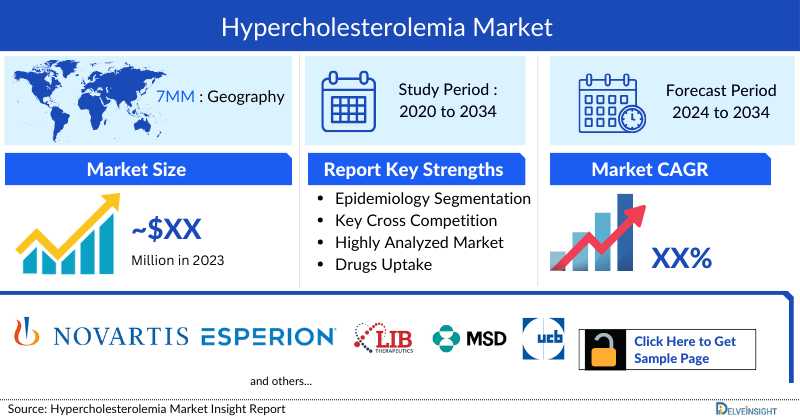
- The hypercholesterolemia market is projected to experience a consistent Compound Annual Growth Rate (CAGR) during the forecast period (2024-2034). The growth in market revenue is primarily driven by the rising awareness of hypercholesterolemia disease and the increasing number of reported cases.
- The hypercholesterolemia cases are increasing primarily due to genetic mutation, unhealthy diet, and smoking, among others. These elements contribute to an environment where cholesterol levels become elevated, posing risks to cardiovascular health.
- The existing hypercholesterolemia market is characterized by high competition with already established key players including Novartis, Esperion Therapeutics, Regeneron Pharmaceuticals, Amgen, and others.
- In emerging economies, the hypercholesterolemia treatment market is anticipated to witness rapid growth primarily due to several approved treatment options available for the disease.
- To drive the hypercholesterolemia market in future years, several companies such as LIB Therapeutics, Merck Sharp & Dohme, UCB Pharmaceuticals, Sanofi, and others are developing their assets in the mid-late stage of development. With the expected approval of these therapies during the forecast period [2024–2034], the overall therapeutic market of Hypercholesterolemia is likely to witness a rise at a significant CAGR.
Request for Sample Page @ Hypercholesterolemia Market Report
DelveInsight’s comprehensive report titled “Hypercholesterolemia Market Insights, Epidemiology, and Market Forecast – 2034” offers a detailed analysis of hypercholesterolemia. The report presents historical and projected epidemiological data covering Total Prevalent Cases and Diagnosed Prevalent Cases of Hypercholesterolemia further segmented by Gender, Age, and Type. In addition to epidemiology, the market report encompasses various aspects related to the patient population. These aspects include the diagnosis process, prescription patterns, physician perspectives, market accessibility, treatment options, and prospective developments in the market across seven major markets: the United States, EU4 (Germany, France, Italy, and Spain), the United Kingdom, and Japan, spanning from 2020 to 2034.
The report analyzes the existing treatment practices and unmet medical requirements in hypercholesterolemia. It evaluates the market potential and identifies potential business prospects for enhancing therapies or interventions. This valuable information enables stakeholders to make well-informed decisions regarding product development and strategic planning for the market.
|
Study Period |
2020 to 2034 |
|
Forecast Period |
2024-2034 |
|
Geographies Covered |
The US, EU4 (Germany, France, Italy, and Spain) and UK, Japan |
|
Hypercholesterolemia Market |
|
|
Hypercholesterolemias Market Size | |
|
Hypercholesterolemia Companies |
Aegerion Pharmaceutical, Esperion Therapeutics, Regeneron Pharmaceuticals, Novartis, Sanofi, Amgen, Esperion Therapeutics, LIB Therapeutics, NeuroBo Pharmaceuticals, Arrowhead Pharmaceuticals, and others. |
|
Hypercholesterolemia Epidemiology Segmentation |
|
Hypercholesterolemia Treatment Market
A diagnosis of hypercholesterolemia is based on routine blood analysis to check levels of “bad” cholesterol, which includes triglycerides and low-density lipoproteins (LDLs). The blood is also checked for the presence of high-density lipoprotein (HDLs) or “good” cholesterol.
Familial hypercholesterolemia can be diagnosed based on clinical, biochemical, and genetic criteria. It should be suspected in individuals with high plasma LDL-C levels, first-degree relatives with hypercholesterolemia, premature coronary disease or sudden death, and certain physical findings.
The treatment paradigm of hypercholesterolemia, which further includes sub-types, such as Homozygous and Heterozygous Familial Hypercholesterolemia holds several options available in the market, i.e., statins, bile-acid-binding resins, cholesterol absorption inhibitors, combination cholesterol absorption inhibitor with statin and Proprotein Convertase Subtilisin/Kexin Type 9 (PCSK9) inhibitors as well as Injectable medications.
There are several FDA approved drugs for treating hypercholesterolemia of which statins are the most commonly used among all either as a monotherapy or in combination. Statins inhibit the enzyme 3-hydroxy-3-methylglutaryl coenzyme A reductase and have beneficial effects on atherosclerosis, including plaque stabilization, reduction of platelet activation, and reduction of plaque proliferation and inflammation. Statins also benefit patients beyond atherosclerotic plaque, including anticoagulation, vasodilatation, antioxidant effects, and reduction of mediators of inflammation.
Hypercholesterolemia Overview
According to the National Institute of Health (NIH), Hypercholesterolemia is a condition characterized by very high levels of cholesterol in the blood. Cholesterol is a waxy, fat-like substance that is produced in the body and obtained from egg yolks, meat, poultry, fish, and dairy products. The body requires cholesterol to build cell membranes, make certain hormones, and produce compounds that aid in fat digestion. High levels of cholesterol increases a person's risk of developing heart disease.
The most common inherited form of high cholesterol is called familial hypercholesterolemia. It occurs when LDL-cholesterol is greater than 190 mg/dL, greater than 160 mg/dL with one major risk factor, or greater than 130 mg/dL with two cardiovascular risk factors.
The underlying cause of hypercholesterolemia include mutations in genes, such as APOB, LDLR, LDLRAP1, and PCSK9. There are several risk factors, such as lifestyle choices, including diet, exercise, and tobacco smoking, which strongly influence the amount of cholesterol in the blood. The additional factors that impact cholesterol levels include a person's gender, age, and health problems, like diabetes and obesity.
The symptoms of Hypercholesterolemia include chest pain, small bumps on the skin, typically on the hands, elbows, and knees or around the eyes, xanthomas, which are waxy cholesterol deposits in the skin or tendons, and small, yellow deposits of cholesterol that build-up under the eyes or around the eyelids.
Hypercholesterolemia Epidemiology
The epidemiology section on the Hypercholesterolemia market report offers information on the patient populations, including historical and projected trends for each of the seven major markets. Examining key opinion leader views from physicians or clinical experts can assist in identifying the reasons behind historical and projected trends. The diagnosed patient pool, their trends, and the underlying assumptions are all included in this section of the report.
This section also presents the data with relevant tables and graphs, offering a clear and concise view of the prevalence of hypercholesterolemia. Additionally, the report discloses the assumptions made during the analysis, ensuring data interpretation and presentation transparency. This epidemiological data is valuable for understanding the disease burden and its impact on the patient population across various regions.
Key Findings
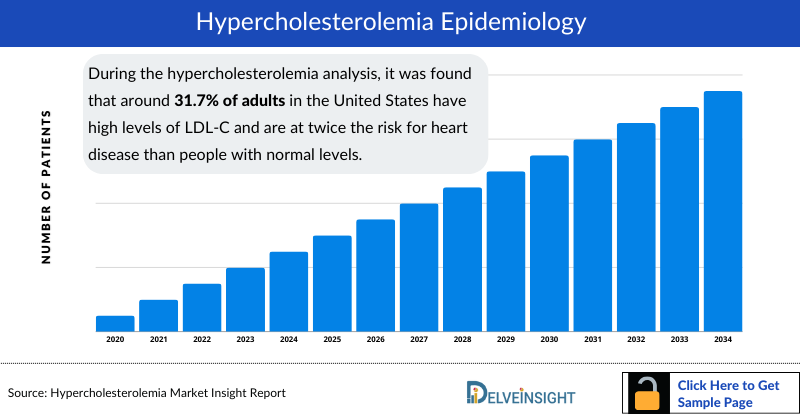
- During the hypercholesterolemia analysis, it was found that around 31.7% of adults in the United States have high levels of LDL-C and are at twice the risk for heart disease than people with normal levels.
- As per the analysis, it was found that the prevalence of hypercholesterolemia, specifically elevated LDL cholesterol levels, stood at 27.0%. This prevalence was observed to increase with age, reaching 48.4% among adults aged 65–74 years.
- In the analysis, it was observed that the prevalence of hypercholesterolemia was higher in men compared to women in France. Specifically, the prevalence among men was found to be 29.7%.
- The overall prevalence of hypercholesterolemia in the Spanish adult population was found to be in between 34% and 50%.
- The epidemiology of hypercholesterolemia is expected to change during the forecast period (2024-2034).
Uncover the latest projections and insights on Hypercholesterolemia Epidemiology Forecast for 2032. Stay informed, explore now!
Hypercholesterolemia Market Outlook
The hypercholesterolemia therapeutics market is further expected to increase by the major drivers, such as the rising prevalent population, technological advancements, and upcoming therapies in the forecast period [2024–2034].
In December 2021, the US FDA approved LEQVIO (inclisiran) injection as a treatment to be used along with diet and maximally tolerated statin therapy for adults with heterozygous familial hypercholesterolemia (HeFH). LEQVIO works to reduce circulating levels of LDL-C, commonly known as “bad cholesterol.”
In February 2020, Esperion Therapeutics’s two drugs, named, NEXLETOL (bempedoic acid) and NEXLIZET (bempedoic acid and ezetimibe) tablets were approved by the US FDA. NEXLIZET and NEXLETOL are indicated as an adjunct to diet and statin therapy for the treatment of primary hyperlipidemia in adults with heterozygous familial hypercholesterolemia (HeFH) or atherosclerotic cardiovascular disease, who require additional lowering of LDL-C.
With ongoing research and continued dedication, the future holds hope for even more effective treatments and, ultimately, a cure for this challenging condition. According to DelveInsight, the Hypercholesterolemia market in the 7MM is expected to change significantly during the study period 2020–2034.
Hypercholesterolemia Drug Chapters
Hypercholesterolemia Marketed Drugs
LEQVIO (inclisiran): Novartis
LEQVIO, developed by Novartis, reduces the amount of LDL-C in the bloodstream by improving the liver’s natural ability to prevent the production of a protein that plays a role in keeping circulating cholesterol levels high. It is a subcutaneous injection given by a healthcare provider with an initial dose, then again at three months, and then every six months. This approach may help those who have trouble sticking to medicines that are self-administered and have greater dosing frequency.
NEXLETOL (bempedoic acid): Esperion Therapeutics
NEXLETOL, developed by Esperion Therapeutics is an adenosine triphosphate-citrate lyase (ACL) inhibitor indicated as an adjunct to diet and maximally tolerated statin therapy for the treatment of adults with heterozygous familial hypercholesterolemia (HeFH).
NEXLIZET (bempedoic acid and ezetimibe): Esperion Therapeutics
NEXLIZET, developed by Esperion Therapeutics contains an adenosine triphosphate-citrate lyase (ACL) inhibitor and a cholesterol absorption inhibitor, is indicated as an adjunct to diet and maximally tolerated statin therapy for the treatment of adults with heterozygous familial hypercholesterolemia (HeFH).
Note: Detailed marketed therapies assessment will be provided in the final report....
Hypercholesterolemia Emerging Drugs
The Hypercholesterolemia market is expected to experience gradual changes, mainly due to the limited availability of emerging therapies in this area. Key market players, including LIB Therapeutics, Merck Sharp & Dohme LLC, and others, have demonstrated a keen interest in this condition and are actively pursuing the development of potential treatments.
Lerodalcibep: LIB Therapeutics
Lerodalcibep, is a novel, third-generation, PCSK9 inhibitor in development to overcome the limitations of current low density lipoprotein-cholesterol (LDL-C) lowering treatments, including statins and ezetimibe, to achieve the lower LDL-C targets in recently updated national and international guidelines to treat and prevent cardiovascular disease (CVD). Lerodalcibep is being developed as a convenient, small-injection volume, once-monthly dose with long-ambient stability. Currently, the drug is in Phase III of clinical development to treat hypercholesterolemia. Biologics License Application (BLA) to the Food and Drug Administration (FDA) is planned in 1H 2024.
MK-0616: Merck Sharp & Dohme /UCB Pharmaceuticals
MK-0616 is an investigational inhibitor of Proprotein convertase subtilisin/kexin type 9 (PCSK9). MK-0616 is being developed under an agreement with UCB Pharmaceuticals. Currently, the drug is being evaluated in a Phase III study to evaluate the efficacy and safety of MK-0616 in adults with hypercholesterolemia.
Note: Detailed emerging therapies assessment will be provided in the final report....
Hypercholesterolemia Market Segmentation
DelveInsight’s ‘Hypercholesterolemia Market Insights, Epidemiology, and Market Forecast – 2034’ report provides a detailed outlook of the current and future Hypercholesterolemia market, segmented within countries, by therapies, and by classes. Further, the market of each region is then segmented by each therapy to provide a detailed view of the current and future market share of all therapies.
Hypercholesterolemia Market Size by Countries
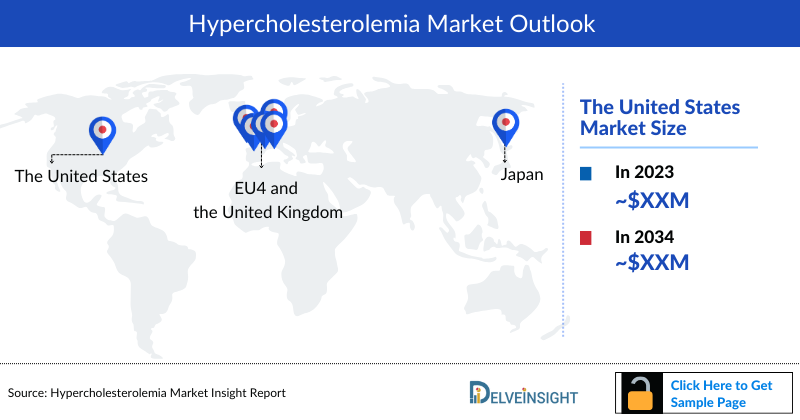
The Hypercholesterolemia market size is assessed separately for various countries, including the United States, EU4 (Germany, France, Italy, and Spain), the UK, and Japan. In 2023, the United States held a significant share of the overall 7MM (Seven Major Markets) Hypercholesterolemia market, primarily attributed to the country's higher prevalence of the condition and the elevated cost of the available treatments. This dominance is projected to persist, especially with the potential early introduction of new products.
Country-wise Market Size Distribution of Hypercholesterolemia
Hypercholesterolemia Market Size by Therapies
Hypercholesterolemia Market Size by Therapies is categorized into current and emerging markets for the study period 2020–2034. One of the emerging drugs anticipated to launch during the forecast period is Lerodalcibep under the developmental pipeline of LIB Therapeutics.
Market Share Distribution of Hypercholesterolemia by Therapies in 2034
Note: Detailed market segment assessment will be provided in the final report....
Hypercholesterolemia Drugs Uptake
This section focuses on the sales uptake of potential Hypercholesterolemia drugs that have recently been launched or are anticipated to be launched in the Hypercholesterolemia market between 2020 and 2034. It estimates the market penetration of Hypercholesterolemia drugs for a given country, examining their impact within and across classes and segments. It also touches upon the financial and regulatory decisions contributing to the probability of success (PoS) of the drugs in the hypercholesterolemia market.
The emerging hypercholesterolemia therapies are analyzed based on various attributes such as safety and efficacy in randomized clinical trials, order of entry and other market dynamics, and the unmet need they fulfill in the Hypercholesterolemia market.
Note: Detailed assessment of drug uptake and attribute analysis will be provided in the full report on hypercholesterolemia....
Hypercholesterolemia Market Access and Reimbursement
DelveInsight’s ‘Hypercholesterolemia – Market Insights, Epidemiology, and Market Forecast – 2034’ report provides a descriptive overview of the market access and reimbursement scenario of hypercholesterolemia.
This section includes a detailed analysis of the country-wise healthcare system for each therapy, enlightening the market access, reimbursement policies, and health technology assessments.
KOL Views
To keep up with current Hypercholesterolemia market trends and fill gaps in secondary findings, we interview KOLs and SMEs’ working in the Hypercholesterolemia domain. Their opinion helps understand and validate current and emerging therapies and treatment patterns or Hypercholesterolemia market trends. This will support the clients in potential upcoming novel treatments by identifying the overall scenario of the market and the Hypercholesterolemia unmet needs.
Hypercholesterolemia: KOL Insights
DelveInsight’s analysts connected with 50+ KOLs to gather insights; however, interviews were conducted with 15+ KOLs in the 7MM. These KOLs were from organizations, institutes, and hospitals, such as the Diagnosis and Therapeutic Center, Hotel Dieu; AP-HP; University Paris Descartes, Paris, Point Medical and Cardiology Department, CHU Dijon-Bourgogne, Dijon, France, American college of cardiology, among others.
“The current market of Hypercholesterolemia lacks potential products that can prove to be effective for patients with Hypercholesterolemia. For example, statins have variable mode of action for every patient.”
Note: Detailed assessment of KOL Views will be provided in the full report on hypercholesterolemia....
Competitive Intelligence Analysis
We conduct a Competitive and Market Intelligence analysis of the Hypercholesterolemia Market, utilizing various Competitive Intelligence tools such as SWOT analysis and Market entry strategies. The inclusion of these analyses is contingent upon data availability, ensuring a comprehensive and well-informed assessment of the market landscape and competitive dynamics.
Hypercholesterolemia Pipeline Development Activities
The report offers an analysis of therapeutic candidates in Phase II and III stages and examines companies involved in developing targeted therapeutics for hypercholesterolemia. It provides valuable insights into the advancements and progress of potential treatments in clinical development for this condition.
Pipeline Development Activities
The report covers information on collaborations, acquisition and merger, licensing, patent details, and other information for emerging Hypercholesterolemia therapies.
Hypercholesterolemia Report Insights
- Hypercholesterolemia Patient Population
- Hypercholesterolemia Therapeutic Approaches
- Hypercholesterolemia Pipeline Analysis
- Hypercholesterolemia Market Size and Trends
- Hypercholesterolemia Market Opportunities
- Impact of Upcoming Hypercholesterolemia Therapies
Hypercholesterolemia Report Key Strengths
- 11 Years Forecast
- The 7MM Coverage
- Hypercholesterolemia Epidemiology Segmentation
- Key Cross Competition
- Highly Analyzed Hypercholesterolemia Market
- Hypercholesterolemia Drugs Uptake
Hypercholesterolemia Report Assessment
- Hypercholesterolemia Current Treatment Practices
- Hypercholesterolemia Unmet Needs
- Hypercholesterolemia Pipeline Product Profiles
- Hypercholesterolemia Market Attractiveness
- Hypercholesterolemia Market Drivers
- Hypercholesterolemia Market Barriers
Key Questions Answered In The Hypercholesterolemia Market Report
- How common is hypercholesterolemia?
- What are the key findings of Hypercholesterolemia epidemiology across the 7MM, and which country will have the highest number of patients during the study period (2020–2034)?
- What are the currently available treatments for hypercholesterolemia?
- What is the disease risk, burden, and unmet needs of hypercholesterolemia?
- At what CAGR is the Hypercholesterolemia market and its epidemiology expected to grow in the 7MM during the forecast period (2024–2034)?
- How would the unmet needs impact the Hypercholesterolemia market dynamics and subsequently influence the analysis of the related trends?
- What would be the forecasted patient pool of hypercholesterolemia in the 7MM covering the United States, EU4 (Germany, France, Italy, and Spain), the UK, and Japan?
- Among EU4 and the UK, which country will have the highest number of patients during the forecast period (2024–2034)?
- How many companies are currently developing therapies for the treatment of hypercholesterolemia?
Frequently Asked Questions
1. What are the treatment goals for Hypercholesterolemia?
The primary treatment goals for hypercholesterolemia involve plaque stabilization, reduction of platelet activation, reduction of plaque proliferation and inflammation, and enhancing overall quality of life for patients.
2. What are the challenges in managing Hypercholesterolemia?
Managing hypercholesterolemia presents several challenges. One of the key challenge is the management of familial hypercholesterolemia in women of childbearing age or during pregnancy.
3. What are the key factors driving the growth of the Hypercholesterolemia market?
The Hypercholesterolemia market is propelled by factors like increasing prevalence, medical advancements, rising awareness, and the introduction of novel therapies by key pharmaceutical players. These elements fuel demand for innovative treatments, addressing unmet medical needs and driving market expansion.
4. How will the Hypercholesterolemia Market and Epidemiology Forecast Report benefit the clients?
The report will provide comprehensive insights into the current hypercholesterolemia market landscape, emerging therapies, competitive dynamics, regulatory requirements, and market access considerations, enabling informed decision-making, strategic planning, and optimization of business strategies to capitalize on market opportunities and drive growth.
-market.png&w=256&q=75)