Hyperphosphatemia Market Summary
- The Hyperphosphatemia Therapeutics Market is expected to expand steadily due to the rising global burden of Chronic Kidney Disease and End-Stage Renal Disease, increasing healthcare expenditure, growing dialysis populations, and improving disease awareness. Ongoing efforts to improve phosphate management and reduce cardiovascular complications are also expected to support market growth.
- The Hyperphosphatemia Pipeline remains active, with several Hyperphosphatemia Companies, including Taisho Pharmaceutical, Unicycive Therapeutics, and Alebund Pharmaceuticals, developing next-generation therapies aimed at improving efficacy, reducing pill burden, and enhancing patient adherence. Emerging approaches continue to focus on novel phosphate binders, optimized formulations, and therapies targeting intestinal phosphate transport mechanisms.
Hyperphosphatemia Market and Epidemiology Insights
- Hyperphosphatemia often remains asymptomatic or underdiagnosed in early stages, delaying timely intervention. Clinical diagnosis is primarily based on serum phosphate measurement alongside assessment of calcium, magnesium, creatinine, blood urea nitrogen, Vitamin D, and parathyroid hormone (PTH) levels to identify underlying metabolic and renal abnormalities.
- Hyperphosphatemia management focuses on reducing phosphate burden and preventing long-term complications through a combination of dietary phosphate restriction, phosphate binders, intestinal phosphate transport inhibitors, dialysis, and management of secondary hyperparathyroidism. In patients with preserved renal function, phosphate excretion may also be enhanced through saline infusion and diuretics, while severe renal impairment often requires hemodialysis.
- Currently approved therapies include phosphate binders such as sevelamer carbonate (RENVELA/RENAGEL), lanthanum carbonate (FOSRENOL), sucroferric oxyhydroxide (VELPHORO), ferric citrate (AURYXIA), calcium-based binders, and the intestinal phosphate absorption inhibitor tenapanor (XPHOZAH). These therapies remain the cornerstone of treatment across both first- and second-line settings.
- Phosphate binders remain widely utilized; however, their use is frequently associated with high pill burden, poor adherence, gastrointestinal tolerability issues, and long-term safety concerns, particularly with aluminum- and calcium-based agents. These challenges continue to limit optimal phosphate control in real-world clinical practice, especially among dialysis-dependent patients receiving multiple concomitant therapies.
- Despite therapeutic advancements, significant unmet needs persist due to delayed diagnosis, limited long-term treatment adherence, persistent cardiovascular risk, high pill burden, dialysis dependence, and the lack of highly effective, convenient, and well-tolerated therapies capable of achieving durable phosphate control across diverse patient populations.
Hyperphosphatemia Market Size and Forecast in the 7MM
| 2025 Hyperphosphatemia Market Size | ~USD XX million |
| 2036 Projected Hyperphosphatemia Market Size | ~USD XX million |
| Hyperphosphatemia Growth Rate (2026–2036) | XX% CAGR |
Key Factors Driving the Hyperphosphatemia Market
-
Growing chronic kidney disease and dialysis population
The growing prevalence of chronic kidney disease and end-stage renal disease, largely driven by diabetes, hypertension, and ageing populations, continues to expand the hyperphosphatemia patient pool.
-
Increasing recognition of phosphate-related complications:
Strong associations between elevated phosphate levels and cardiovascular complications, vascular calcification, and CKD-mineral bone disorder are driving greater emphasis on phosphate control.
-
Limitations of existing therapies
High pill burden, gastrointestinal adverse events, and adherence challenges associated with conventional phosphate binders continue to create unmet clinical needs.
-
Shift toward non-calcium and novel therapies
Increasing adoption of non-calcium and iron-based phosphate binders, along with emerging therapies targeting intestinal phosphate absorption, is supporting market growth.
DelveInsight's ‘Hyperphosphatemia Market Insights, Epidemiology and Market Forecast - 2036’ report delivers an in-depth understanding of hyperphosphatemia, historical and forecasted epidemiology, as well as the Hyperphosphatemia market trends in the United States, EU4 (Germany, Spain, Italy, and France), and the United Kingdom, and Japan.
The Hyperphosphatemia Treatment Market Report delivers a comprehensive analysis of the current treatment landscape, including standards of care, clinical practices, and evolving therapeutic algorithms. It evaluates hyperphosphatemia patient burden trends, revenue & market share dynamics, peak patient share & therapy uptake analysis, and provides an in-depth market size assessment and growth rate projections (Historical & Forecast 2022–2036) across global regions. The report highlights key unmet medical needs in Hyperphosphatemia and maps the competitive and clinical landscape to uncover high‑value opportunities, providing a clear outlook on future market growth potential.
Scope of the Hyperphosphatemia Market Report | |
|
Study Period |
2022–2036 |
|
Historical Year |
2022–2025 |
|
Forecast Period |
2026–2036 |
|
Base Year |
2026 |
|
Geographies Covered |
|
|
Hyperphosphatemia Market CAGR (Forecast period) |
XX% (2026–2036) |
|
Hyperphosphatemia Epidemiology Segmentation Analysis |
Patient Burden Assessment
|
|
Hyperphosphatemia Therapies |
|
|
Hyperphosphatemia Companies |
|
|
Hyperphosphatemia Market |
Segmented by
|
|
Analysis |
|
Hyperphosphatemia Understanding
Hyperphosphatemia Overview
Hyperphosphatemia is a metabolic disorder characterized by elevated serum phosphate levels, most commonly occurring in patients with advanced chronic kidney disease (CKD) and end-stage renal disease (ESRD) due to impaired renal phosphate excretion. The condition is strongly associated with CKD-mineral and bone disorder (CKD-MBD), secondary hyperparathyroidism, vascular calcification, and increased cardiovascular risk.
Persistent hyperphosphatemia contributes significantly to morbidity and mortality in dialysis patients. Current management includes dietary phosphate restriction, dialysis optimization, and phosphate binders; however, long-term phosphate control remains challenging because of high pill burden and tolerability issues. The growing CKD and dialysis population continues to increase the clinical and economic burden of hyperphosphatemia.
Hyperphosphatemia Diagnosis
Hyperphosphatemia is diagnosed primarily through serum phosphate testing, with elevated phosphate levels indicating impaired phosphate regulation, most commonly in patients with advanced CKD and ESRD. Diagnosis is supported by evaluation of kidney function, serum calcium, parathyroid hormone (PTH), and vitamin D levels to assess associated CKD-mineral and bone disorder (CKD-MBD).
Routine phosphate monitoring is recommended in dialysis and advanced CKD patients due to the strong association of persistent hyperphosphatemia with vascular calcification, cardiovascular complications, and increased mortality risk.
Further details are provided in the report.
Hyperphosphatemia Treatment
Hyperphosphatemia treatment primarily focuses on reducing serum phosphate levels through dietary phosphate restriction, optimization of dialysis, and the use of phosphate binders. Commonly used therapies include calcium-based binders (calcium acetate, calcium carbonate) and non-calcium phosphate binders such as sevelamer, lanthanum carbonate, and iron-based binders including ferric citrate and sucroferric oxyhydroxide.
Current clinical guidelines increasingly favor non-calcium binders in many Chronic Kidney Disease Patients to reduce the risk of hypercalcemia and vascular calcification. Emerging therapies targeting intestinal phosphate absorption pathways are also being investigated to improve phosphate control and reduce pill burden in patients with CKD and ESRD.
Further details related to country-based variations are provided in the report.
Hyperphosphatemia Unmet Needs
The section “unmet needs of hyperphosphatemia” outlines the critical gaps between the current state of patient care, diagnosis, and the ideal & effective management of the disease. It highlights the obstacles experienced by patients, clinicians, and researchers and identifies potential solutions for future progress.
- Challenges in Achieving Long-Term Phosphate Control
- High Pill Burden and Poor Patient Adherence
- Safety and Tolerability Limitations of Existing Therapies
- Limited Availability of Novel Mechanism-Based Therapies
- Persistent Cardiovascular and CKD-MBD Risk Despite Treatment, and others…..
Hyperphosphatemia Epidemiology
Key Findings from Hyperphosphatemia Epidemiological Analysis and Forecast
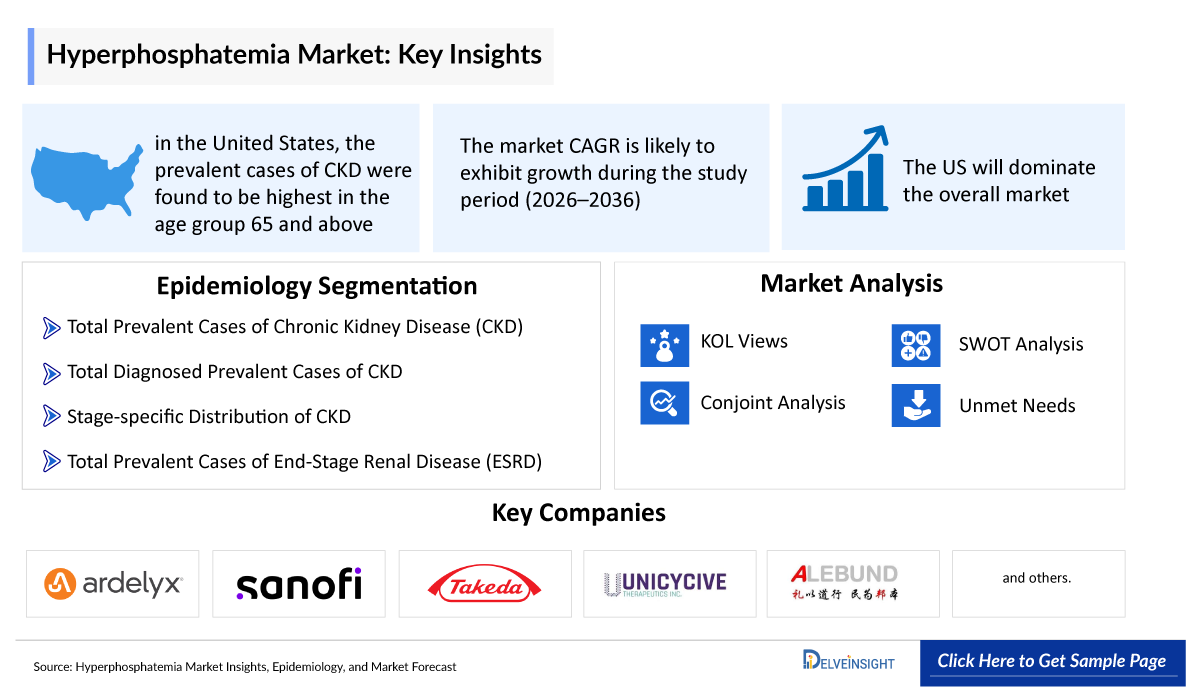
- According to DelveInsight, in 2025, in the United States, the prevalent cases of Chronic Kidney Disease were found to be highest in the age group 65 and above with approximately 1,961,000 cases and followed by age group 45–64 with approximately 1,056,000 cases.
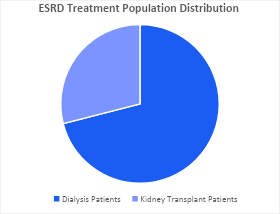
- There are five stages of CKD defined as Stage 1–5. As per the CDC estimates, the prevalence of ESRD doubled between 1990 and 2016. Secondary findings in 2016 suggested a point prevalence of 2,206 per million population for the ESRD treated pool; the prevalence of dialysis treatment was 1,553 per million, whereas the prevalence of functioning kidney transplant was 653 per million. Furthermore, nearly 71% of patients are on dialysis, and 29% live with a kidney transplant.
- In a large community-based cohort study from the QICKD trial, hyperphosphatemia (>1.50 mmol/L) was observed in 4.3% of patients with CKD stages I–II and 22.4% of patients with CKD stages III–V who experienced cardiovascular events, highlighting the increasing burden of hyperphosphatemia with worsening CKD severity.
- Hyperphosphatemia is observed in approximately 1.4% of patients with CKD stages I–II, while its prevalence increases to around 2.3% in patients with CKD stages III–IV
- Elevated serum phosphate levels are associated with increased risks of vascular calcification, cardiovascular disease, all-cause mortality, and hospitalization, particularly among dialysis-dependent CKD populations.
- Hyperphosphatemia is a common laboratory abnormality encountered by nephrologists. In patients with ESRD, the prevalence of hyperphosphatemia varies from 50 to 74%. Among children with oncologic disorders who received liposomal amphotericin, nearly 45% of children developed hyperphosphatemia.
Hyperphosphatemia Epidemiology Segmentation in the 7MM
- Total Chronic Kidney Disease Prevalent Cases
- Total Chronic Kidney Disease Diagnosed Prevalent Cases
- Chronic Kidney Disease Stage-specific Distribution
- Total Prevalent Cases of End-Stage Renal Disease
- Number of ESRD patients undergoing Dialysis
- Total Hyperphosphatemia Prevalent Cases
Hyperphosphatemia Market Recent Breakthroughs and Developments
- On May 12, 2026, Unicycive Therapeutics announced that the FDA review of the Oxylanthanum Carbonate (OLC) NDA resubmission remains on track, with a PDUFA target action date of June 29, 2026.
- On May 6, 2026, Libang Pharmaceuticals announced that the global Phase III pivotal multi-regional clinical trial evaluating AP301 for hyperphosphatemia had completed patient enrollment.
- As per Unicycive Therapeutics' February 2025 corporate presentation, the company anticipates receiving Transitional Drug Add-on Payment Adjustment (TDAPA) designation for oxylanthanum carbonate, which would provide additional reimbursement for certain new renal dialysis drugs and biological products.
Hyperphosphatemia Drug Analysis & Competitive Landscape
The Hyperphosphatemia drug chapter provides a detailed, market-focused review of the emerging Hyperphosphatemia pipeline across Phase I–II clinical trials. It covers the mechanism of action, Hyperphosphatemia clinical trial data, regulatory approvals, patents, collaborations, and strategic partnerships for each therapy, along with their advantages, limitations, and recent developments. This section offers critical insights into the Hyperphosphatemia treatment landscape, supporting market assessment, competitive analysis, and growth forecasting for the Hyperphosphatemia therapeutics market.
Hyperphosphatemia Approved Therapies
-
Tenapanor (XPHOZAH): Ardelyx
Tenapanor (XPHOZAH), developed by Ardelyx, is a first-in-class phosphate absorption inhibitor with a differentiated mechanism of action. In October 2023, the US FDA approved XPHOZAH for the reduction of serum phosphorus in adults with CKD on dialysis. The approval was supported by a clinical development program across three Phase III trials (PHREEDOM, BLOCK, and AMPLIFY), all of which met their primary and key secondary endpoints and demonstrated significant reductions in serum phosphorus levels.
Tenapanor offers a differentiated alternative to traditional phosphate binders such as RENVELA, FOSRENOL, AURYXIA, and VELPHORO. The company reported Tenapanor net product sales of USD 103.6 million in 2025 and expects 2026 revenue to reach USD 110–120 million, driven by increasing clinical conviction and prescribing among target healthcare providers.
-
Sevelamer Carbonate (RENVELA): Sanofi
Sevelamer carbonate (RENVELA), developed by Genzyme and marketed by Sanofi, is a non-calcium phosphate binder approved for the control of serum phosphorus in patients with chronic kidney disease (CKD) on dialysis. The therapy binds dietary phosphate in the gastrointestinal tract, reducing phosphate absorption without increasing calcium burden. Sevelamer carbonate net sales of EUR 411 are declining primarily due to generic competition in the United States.
Note: Detailed marketed therapies assessment of therapies will be provided in the final report.
Table 1: Competitive Landscape of Hyperphosphatemia Marketed/Approved Therapies | ||||||
|
Drug/Therapy |
Company |
Indication |
Molecule Type |
MoA |
RoA |
Marketed Region |
|
Tenapanor (XPHOZAH) |
Ardelyx |
Hyperphosphatemia |
Small molecule |
NHE3 inhibitor |
Oral |
US: 2023; JP: 2023 |
|
Sevelamer Carbonate (RENVELA) |
Sanofi |
Hyperphosphatemia |
Polymer-based phosphate binder |
Phosphate binder |
Oral |
US: 2007; EU: 2009 |
|
Lanthanum carbonate (FOSRENOL) |
Takeda Pharmaceutical |
Hyperphosphatemia |
Small molecule |
Phosphate binder |
Oral |
US: 2004; JP: 2008 |
Hyperphosphatemia Pipeline Analysis
-
TS-172: Taisho Pharmaceutical
Taisho Pharmaceutical is currently conducting a Phase III (NCT06745531) clinical trial, which is a randomized, placebo-controlled, double-blind study of TS-172 in patients with hyperphosphatemia undergoing hemodialysis.
-
Oxylanthanum Carbonate: Unicycive Therapeutics
Oxylanthanum carbonate (OLC) is an Investigational New Drug Application (IND) being developed under FDA’s 505b(2) regulatory procedure. Its potential best-in-class profile may have meaningful patient adherence benefits over currently available treatment options as it requires a lower pill burden for patients in terms of number and size of pills per dose that are swallowed instead of chewed.
-
In January 2026, Unicycive Therapeutics announced that the Oxylanthanum Carbonate Advances Toward Approval as FDA Accepts NDA Resubmission for Hyperphosphatemia.
Table 2: Competitive Landscape of Pipeline Drugs | ||||||
|
Drug Name |
Company |
Highest Phase |
Indication |
RoA |
MoA |
Anticipated Launch in the US |
|
TS-172 |
Taisho Pharmaceutical |
III |
Hyperphosphatemia |
Oral |
Phosphate binding modulators |
Information is available in the full report |
|
AP-301 |
Alebund Pharmaceuticals |
III |
Hyperphosphatemia |
Oral |
Phosphate binding modulators |
Information is available in the full report |
|
Oxylanthanum Carbonate |
Unicycive Therapeutics |
I |
Hyperphosphatemia |
Oral |
Lanthanum Based Phosphate Binding Agent |
Information is available in the full report |
|
Note: Launch insights are provisional and may change with future report updates or the occurrence of major key catalysts. | ||||||
Note: Detailed emerging therapies assessment will be provided in the final report.
Hyperphosphatemia Market Outlook
The Hyperphosphatemia Therapeutics Market is evolving beyond traditional phosphate binder-based management toward therapies with improved efficacy, lower pill burden, and novel mechanisms targeting intestinal phosphate absorption. Current management primarily includes dietary phosphate restriction, dialysis optimization, and phosphate binders such as calcium-based, non-calcium, and iron-based agents.
However, achieving sustained phosphate control remains challenging in many patients with chronic kidney disease (CKD) and end-stage renal disease (ESRD) due to poor adherence and gastrointestinal tolerability issues. Persistent hyperphosphatemia is strongly associated with vascular calcification, cardiovascular morbidity, and CKD-mineral and bone disorder (CKD-MBD), highlighting a significant unmet clinical need.
The Hyperphosphatemia Therapeutics Market is expected to grow steadily owing to the rising global burden of CKD, diabetes, hypertension, and the expanding dialysis population. Current nephrology guidelines increasingly support the use of non-calcium phosphate binders to reduce risks associated with hypercalcemia and vascular calcification. In parallel, emerging therapies targeting intestinal phosphate absorption pathways, including NHE3 inhibition, are expected to reshape the treatment landscape over the forecast period.
Key findings from Hyperphosphatemia Market Forecast Report
- The increasing prevalence of Chronic Kidney Disease and ESRD continues to expand the hyperphosphatemia patient population globally.
- Persistent challenges related to high pill burden, gastrointestinal adverse events, and poor adherence remain major barriers to long-term phosphate control.
- Current guidelines increasingly favor non-calcium phosphate binders because of concerns regarding hypercalcemia and vascular calcification associated with calcium-based therapies.
- Novel therapies targeting intestinal phosphate absorption are expected to drive future therapeutic innovation and improve patient management.
- Growing recognition of the link between uncontrolled phosphate levels and cardiovascular complications is supporting broader monitoring and earlier therapeutic intervention in CKD patients.
Hyperphosphatemia Companies
- Taisho Pharmaceutical
- Alebund Pharmaceuticals
- Unicycive Therapeutics, and others
Hyperphosphatemia Drug Class/Insights into Leading Emerging and Marketed Therapies (2022–2036 Forecast)
The Hyperphosphatemia treatment landscape primarily focuses on reducing intestinal phosphate absorption and controlling serum phosphate levels in patients with chronic kidney disease and end-stage renal disease. Current therapies mainly include phosphate binders, while emerging approaches target intestinal phosphate transport pathways to improve phosphate control and reduce treatment burden.
- Calcium-based phosphate binders: Calcium-based phosphate binders remain an important treatment option for hyperphosphatemia by reducing gastrointestinal phosphate absorption through phosphate binding in the gastrointestinal tract. Marketed therapies such as calcium acetate and calcium carbonate continue to be used, although their long-term use may be limited by concerns regarding calcium loading and vascular calcification. Future development is expected to focus on optimizing phosphate control while minimizing calcium-related complications.
- Non-calcium phosphate binders: Non-calcium phosphate binders continue to play a key role in hyperphosphatemia management by effectively controlling serum phosphate levels while avoiding excess calcium exposure. Marketed therapies including sevelamer carbonate (RENVELA) and lanthanum carbonate (FOSRENOL) remain utilized. Future growth is anticipated through next-generation phosphate binders, such as oxylanthanum carbonate, that aim to reduce pill burden and improve patient adherence.
- Iron-based phosphate binders: Iron-based phosphate binders have emerged as an important treatment option for hyperphosphatemia by combining phosphate-lowering efficacy with the potential to support iron repletion. Approved therapies such as ferric citrate (AURYXIA) and sucroferric oxyhydroxide (VELPHORO) continue to be used, while ongoing development efforts focus on improving adherence and long-term phosphate management.
- Phosphate absorption inhibitors: Phosphate absorption inhibitors have expanded the hyperphosphatemia treatment landscape through mechanisms distinct from conventional phosphate binders. Tenapanor (XPHOZAH), a first-in-class NHE3 inhibitor, reduces phosphate absorption through the paracellular pathway and offers a differentiated approach to serum phosphorus control. Future development may focus on novel intestinal phosphate transport pathways and combination strategies to further improve phosphate management.
Overall, hyperphosphatemia management is primarily driven by phosphate binders, including calcium-based, non-calcium, and iron-based therapies, while newer phosphate absorption inhibitors have introduced innovative mechanisms of action. Future pipeline development remains focused on improving efficacy, gastrointestinal tolerability, pill burden, and patient adherence.
Hyperphosphatemia Drug Uptake
This section focuses on the uptake rate of potential Hyperphosphatemia drugs expected to be launched in the market during the forecast period (2026–2036). The analysis covers the hyperphosphatemia drug’s uptake, performance at peak, factors affecting performance during prime years of growth, patient uptake by therapy, and anticipated sales generated by each drug.
The uptake of Hyperphosphatemia Therapies is expected to remain primarily driven by phosphate binders, alongside increasing adoption of therapies with lower pill burden and novel mechanisms of action. Historically, treatment has relied heavily on calcium-based phosphate binders; however, concerns regarding hypercalcemia and vascular calcification have gradually shifted clinical practice toward non-calcium and iron-based therapies.
Non-calcium phosphate binders such as sevelamer carbonate (RENVELA) and lanthanum carbonate (FOSRENOL) are expected to witness continued uptake due to growing guideline preference and evidence supporting reduced calcium exposure in patients with CKD and ESRD. Similarly, iron-based phosphate binders including ferric citrate and sucroferric oxyhydroxide are gaining adoption because of their phosphate-lowering efficacy and potential iron-related benefits in dialysis patients.
Novel therapies such as tenapanor (XPHOZAH) are expected to see increasing uptake due to their differentiated mechanism targeting intestinal phosphate absorption via NHE3 inhibition and their potential to reduce overall phosphate binder burden. Published clinical studies demonstrating improved phosphate lowering and combination use with phosphate binders are expected to support broader clinical adoption over the forecast period.
Emerging Hyperphosphatemia Pipeline Therapies targeting intestinal phosphate transport and absorption pathways may gain gradual uptake as additional long-term data on efficacy, safety, tolerability, and adherence become available. Future adoption is expected to depend largely on their ability to provide sustained phosphate control with improved convenience and reduced treatment burden compared with conventional phosphate binders.
Detailed insights of emerging therapies' drug uptake is included in the report.
Hyperphosphatemia Market Access and Reimbursement
Reimbursement is a crucial factor that affects the drug’s access to the market. Often, the decision to reimburse comes down to the price of the drug relative to the benefit it produces in treated patients. To reduce the healthcare burden of these high-cost therapies, many payment models are being considered by payers and other industry insiders.
NOTE: Further Details are provided in the final report….
Hyperphosphatemia Therapies Price Scenario & Trends
Pricing and analogue assessment of Hyperphosphatemia therapies highlights evolving price dynamics structures. This section summarizes the cost of approved treatments, the closest and most appropriate analogue selection for emerging therapies, and understanding of how pricing influences market access, adherence, and long-term uptake.
Further details are provided in the final report….
Industry Experts and Physician Views for Hyperphosphatemia
To keep up with Hyperphosphatemia market trends, we take Key Opinion Leaders (KOLs) and Subject Matter Experts (SMEs) opinions working in the domain through primary research to fill the data gaps and validate our secondary research. Industry experts were contacted for insights on the emerging Hyperphosphatemia therapies, evolving treatment landscape, patient adherence to conventional therapies, therapy switching trends, drug adoption and uptake, accessibility challenges, and epidemiology and real-world prescription patterns in hyperphosphatemia, including MD, PhD, Instructor, Postdoctoral Researcher, Professor, Researcher, and others.
DelveInsight’s analysts connected with 10+ KOLs to gather insights at the country level. Centers such as the David Geffen School of Medicine at UCLA, Harvard Medical School, Showa University School of Medicine, Washington University School of Medicine in St. Louis etc., were contacted. Their opinion helps understand and validate current and emerging Hyperphosphatemia therapies, highlight unmet medical needs, provide epidemiological context, and support strategic decisions for market access, therapy adoption, and pipeline prioritization in hyperphosphatemia.
| Region | Key Opinion Leaders (KOLs) and Subject Matter Experts (SMEs) |
|
Japan |
“Current nephrology practice is increasingly shifting toward non-calcium phosphate binders because of concerns regarding calcium loading and progression of vascular calcification with calcium-based therapies.” |
|
United States |
“ Phosphate binders remain the cornerstone of hyperphosphatemia management, but high pill burden and gastrointestinal tolerability continue to limit long-term adherence and phosphate control in dialysis patients.” |
Hyperphosphatemia Report Qualitative Analysis: SWOT and Conjoint Analysis
We perform qualitative and Hyperphosphatemia Therapeutics Market Intelligence analysis using various approaches, such as SWOT analysis and conjoint analysis. In the SWOT analysis of hyperphosphatemia, strengths, weaknesses, opportunities, and threats in terms of disease diagnosis, patient awareness, patient burden, competitive landscape, cost-effectiveness, and geographical accessibility of therapies are provided.
Conjoint analysis analyzes Hyperphosphatemia Emerging Therapies based on relevant attributes such as safety, efficacy, frequency of administration, route of administration, and order of entry. Scoring is given based on these parameters to analyze the effectiveness of therapy.
The team of analysts analyzes promising Hyperphosphatemia Emerging Therapies based on relevant attributes such as safety, efficacy, frequency of administration, route of administration, and order of entry. In efficacy, the trial’s primary and secondary outcome measures are evaluated, whereas the therapies’ safety is evaluated, wherein the acceptability, tolerability, and adverse events are majorly observed.
In addition, the scoring is also based on the route of administration, order of entry, probability of success, and the addressable patient pool for each therapy. According to these parameters, the final weightage score and the ranking of the emerging therapies are decided.
Scope of the Hyperphosphatemia Market Report
- The Hyperphosphatemia Therapeutics Market Report covers a segment of key events, an executive summary, a descriptive overview, explaining their causes, signs and symptoms, pathogenesis, and currently available treatments.
- Comprehensive insight has been provided into the epidemiology segments and forecasts, the future growth potential of the diagnosis rate, and disease progression along treatment guidelines.
- Additionally, an all-inclusive account of both the current and emerging treatments, along with the elaborate profiles of late-stage and prominent therapies, will have an impact on the current treatment landscape.
- A detailed review of the Hyperphosphatemia Therapeutics Market, historical and forecasted Hyperphosphatemia Treatment Market Size, Hyperphosphatemia Drugs Market Share by therapies, detailed assumptions, and rationale behind our approach is included in the report, covering the 7MM drug outreach.
- The Hyperphosphatemia Therapeutics Market Report provides an edge while developing business strategies by understanding trends through SWOT analysis and expert insights/KOL views, patient journey, and treatment preferences that help in shaping and driving the 7MM Hyperphosphatemia Drugs Market.
Hyperphosphatemia Market Report Insights
- Hyperphosphatemia Patient Population Forecast
- Hyperphosphatemia Therapeutics Market Size
- Hyperphosphatemia Pipeline Analysis
- Hyperphosphatemia Market Size and Trends
- Hyperphosphatemia Market Opportunity (Current and Forecasted)
Hyperphosphatemia Market Report Key Strengths
- Epidemiology‑based (Epi‑based) Bottom‑up Forecasting
- Artificial Intelligence (AI)-Enabled Market Research Report
- 11-Year Forecast
- Hyperphosphatemia Market Outlook (North America, Europe, Asia-Pacific)
- Patient Burden Trends (By Geography)
- Hyperphosphatemia Treatment Addressable Market (TAM)
- Hyperphosphatemia Competitive Landscape
- Hyperphosphatemia Major Companies Insights
- Hyperphosphatemia Price Trends and Analogue Assessment
- Hyperphosphatemia Therapies Drug Adoption/Uptake
- Hyperphosphatemia Therapies Peak Patient Share Analysis
Hyperphosphatemia Market Report Assessment
- Current Hyperphosphatemia Treatment Practices
- Hyperphosphatemia Unmet Needs
- Hyperphosphatemia Clinical Development Analysis
- Hyperphosphatemia Emerging Drugs Product Profiles
- Hyperphosphatemia Market Attractiveness
- Hyperphosphatemia Qualitative Analysis (SWOT and Conjoint Analysis)
Key Questions Answered in the Hyperphosphatemia Therapeutics Market Report
Hyperphosphatemia Treatment Market Insights
- What was the Hyperphosphatemia market size, the Hyperphosphatemia treatment market size by therapies, the Hyperphosphatemia drugs market share (%) distribution in 2025, and what would it look like by 2036? What are the contributing factors for this growth?
- What are the anticipated pricing variations among different geographies for the emerging therapies in the future?
- What can be the future treatment paradigm of hyperphosphatemia?
- What are the disease risks, burdens, and unmet needs of hyperphosphatemia?
- What will be the growth opportunities across the 7MM concerning the patient population with hyperphosphatemia?
- Who is the major future competitor in the market, and how will the competitors affect their market share?
- What are the current options for the treatment of hyperphosphatemia?
- What are the current guidelines for treating Hyperphosphatemia in the US, Europe, and Japan?
Reasons to Buy the Hyperphosphatemia Market Report
- The report will help in developing business strategies by understanding the latest trends and changing treatment dynamics driving the Hyperphosphatemia market.
- Bottom-up forecasting builds from the affected population to product forecasts, delivering a robust, data-driven approach ideal for new therapies and novel classes.
- Insights on patient burden/disease Hyperphosphatemia Incidence, evolution in diagnosis, and factors contributing to the change in the epidemiology of the disease during the forecast years.
- Understand the existing Hyperphosphatemia Drugs Market opportunities in varying geographies and the growth potential over the coming years.
- Identifying strong upcoming players in the Hyperphosphatemia Drugs Market will help devise strategies to help get ahead of competitors.
- Detailed analysis and ranking of class-wise potential current and emerging therapies under the conjoint analysis section to provide visibility around leading classes.
- To understand KOLs’ perspectives on the accessibility, acceptability, and compliance-related challenges of existing treatment to overcome barriers in the future.
- Detailed insights into the unmet needs of the existing Hyperphosphatemia Drugs Market so that the upcoming players can strengthen their development and launch strategy.
- This Artificial Intelligence (AI)-enabled report summarizes and simplifies complex datasets within the report into clear, actionable insights for stakeholders, investors, and healthcare providers, enabling faster, data-driven decisions.
Stay updated with us for Recent Articles