Hypertrophic Cardiomyopathy Market Summary
- The Hypertrophic Cardiomyopathy Market is witnessing steady growth, driven by increasing disease awareness, improved diagnosis, and the development of novel therapies offering more targeted treatment options for patients.
- The leading Hypertrophic Cardiomyopathy Companies include Bristol Myers Squibb, Cytokinetics, Novartis, Imbria Pharmaceuticals, Univar Solutions B.V., and others.
Hypertrophic Cardiomyopathy Market and Epidemiology Analysis
- Hypertrophic Cardiomyopathy is the most common inherited cardiac disorder and a major cause of Heart Failure and sudden cardiac death (SCD), particularly among young adults.
- Males are more affected by HCM than females. Also, the cases are projected to increase by 2036 in the United States.
- Obstructive HCM (oHCM) represents the majority of clinically diagnosed cases, while non-oHCM continues to pose significant treatment challenges due to limited targeted therapeutic options and persistent symptom burden.
- The approved therapy landscape in Hypertrophic Cardiomyopathy remains relatively limited, with only a few disease-specific targeted therapies currently available, including mavacamten (CAMZYOS) and aficamten (MYQORZO).
- Mavacamten was the first disease-modifying cardiac myosin inhibitor approved for symptomatic obstructive HCM.
- Aficamten became the second approved cardiac myosin inhibitor for HCM and is widely viewed as the most significant competitive threat to mavacamten. Approval was supported by positive Phase III SEQUOIA-HCM results.
- Although medications do not cure HCM, they can effectively manage symptoms, improve cardiac function, and help prevent the disease from worsening. The latest treatments address the underlying problem of excessive muscle contraction and may slow or reverse disease-related changes over time.
- Pharmacologic Hypertrophic Cardiomyopathy Treatment has traditionally focused on symptom control and complication prevention. In symptomatic patients with preserved ejection fraction, beta blockers, nondihydropyridine calcium channel blockers (verapamil and diltiazem), and disopyramide have been the mainstay of first-line therapy, aimed at improving left ventricular filling and reducing LVOTO.
- The Hypertrophic Cardiomyopathy Pipeline remains robust and commercially attractive, with pharmaceutical and biotechnology companies increasingly investing in targeted cardiac and metabolic therapies. Companies such as Lexicon Pharmaceuticals (Sotagliflozin), Imbria Pharmaceuticals (Ninerafaxstat), and Edgewise Therapeutics (EDG-7500), Tenaya Therapeutics (TN-201), and others are actively expanding the innovation landscape.
Request to unlock the Sample Page of the "Hypertrophic Cardiomyopathy Treatment Market"
Hypertrophic Cardiomyopathy Market Size and Forecast in the 7MM
| 2025 Hypertrophic Cardiomyopathy Market Size | XXX million |
| 2036 Projected Hypertrophic Cardiomyopathy Market Size | XXX million |
| Hypertrophic Cardiomyopathy Growth Rate (2026–2036) | XX% CAGR |
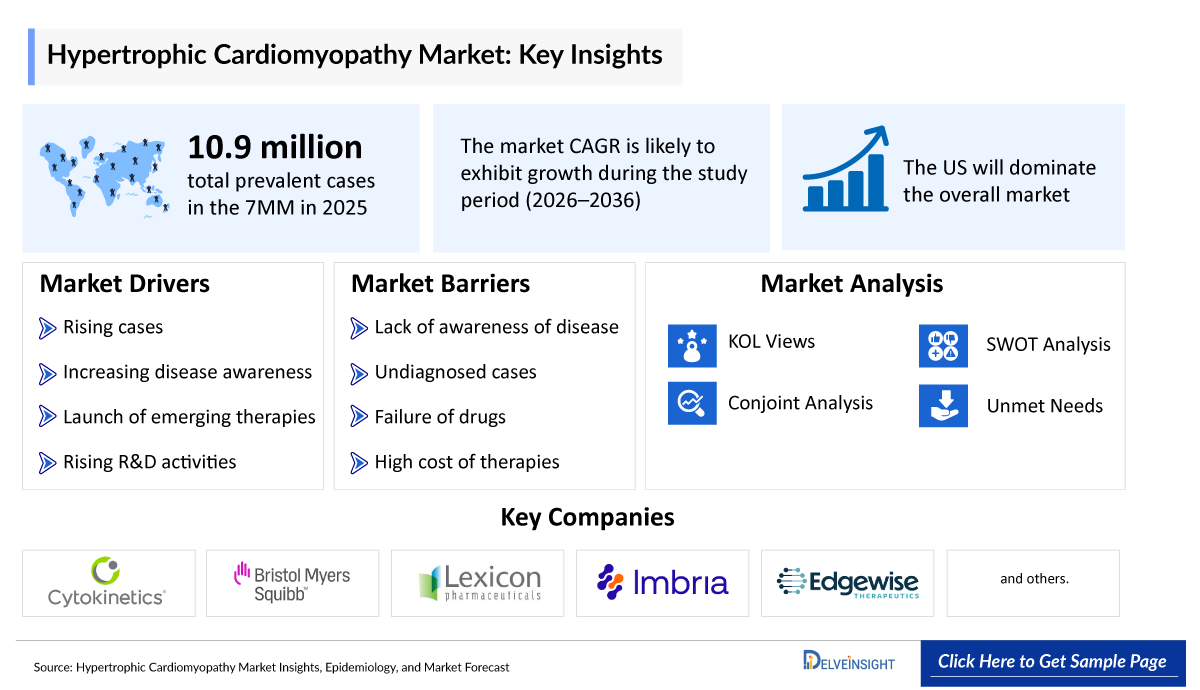
Key Factors Driving the Growth of the Hypertrophic Cardiomyopathy Market
-
Increasing Prevalence and Improved Diagnosis of HCM
Growing awareness of genetic cardiovascular disorders, wider use of echocardiography, cardiac MRI, and genetic testing are contributing to earlier and more accurate diagnosis of HCM. Improved screening among family members and high-risk populations is also expanding the diagnosed patient pool.
-
Emergence of Targeted Cardiac Myosin Inhibitors
The introduction of novel targeted therapies such as Mavacamten (CAMZYOS) has significantly transformed the Hypertrophic Cardiomyopathy Treatment landscape. These Hypertrophic Cardiomyopathy Therapies directly target the underlying hypercontractility associated with HCM, driving strong clinical and commercial interest.
-
Expanding Clinical Research and Pipeline Innovation
Pharmaceutical companies are actively investing in next-generation HCM therapies targeting myocardial energetics, fibrosis, and sarcomere dysfunction. Emerging therapies such as cardiac myosin inhibitors and metabolic modulators are expected to further expand treatment options and market growth.
DelveInsight's ‘Hypertrophic Cardiomyopathy Market Insights, Epidemiology and Market Forecast – 2036’ report delivers an in-depth understanding of the HCM, historical and forecasted epidemiology, as well as the HCM market trends in the United States, EU4 (Germany, Spain, Italy, and France) and the United Kingdom, and Japan.
The Hypertrophic Cardiomyopathy Treatment Market Report delivers a comprehensive analysis of the current treatment landscape, including standards of care, clinical practices, and evolving therapeutic algorithms. It evaluates HCM patient burden trends, revenue & market share dynamics, peak patient share & therapy uptake analysis, and provides an in-depth market size assessment, and growth rate projections (Historical & Forecast 2022–2036) across global regions. The report highlights key unmet medical needs in HCM and maps the competitive and clinical landscape to uncover high‑value opportunities, providing a clear outlook on future market growth potential.
Scope of the Hypertrophic Cardiomyopathy Market Report | |
|
Study Period |
2022–2036 |
|
Historical Year |
2022–2025 |
|
Forecast Period |
2026–2036 |
|
Base Year |
2026 |
|
Geographies Covered |
|
|
Hypertrophic Cardiomyopathy Market CAGR (Forecast period) |
XX% (2026–2036) |
|
Hypertrophic Cardiomyopathy Epidemiology Segmentation Analysis |
Patient Burden Assessment
|
|
Hypertrophic Cardiomyopathy Companies |
|
|
Hypertrophic Cardiomyopathy Therapies |
|
|
Hypertrophic Cardiomyopathy Market |
Segmented by
|
|
Analysis |
|
Hypertrophic Cardiomyopathy Understanding and Treatment Algorithm
Hypertrophic Cardiomyopathy Overview
HCM is a chronic and progressive genetic cardiovascular disorder characterized by abnormal thickening of the heart muscle, particularly the left ventricle and interventricular septum. The disease is commonly associated with mutations in sarcomeric protein genes, leading to impaired cardiac relaxation, increased myocardial stiffness, and in some cases obstruction of blood flow from the left ventricle. HCM can present as obstructive or non-obstructive disease and may cause symptoms such as shortness of breath, chest pain, fatigue, palpitations, dizziness, and syncope. In severe cases, the condition may increase the risk of arrhythmias, heart failure, stroke, and sudden cardiac death, particularly in younger individuals and athletes.
Hypertrophic Cardiomyopathy Diagnosis
Diagnosis of HCM involves a combination of clinical evaluation, family history assessment, imaging studies, and genetic testing. Echocardiography remains the primary diagnostic tool for identifying left ventricular hypertrophy, left ventricular outflow tract (LVOT) obstruction, and diastolic dysfunction. Cardiac Magnetic Resonance Imaging (MRI) is increasingly utilized for detailed structural assessment and fibrosis detection, while electrocardiography (ECG) may help identify arrhythmias and conduction abnormalities. Genetic testing and family screening play an important role in identifying inherited disease patterns and enabling early diagnosis among at-risk relatives. Risk stratification for sudden cardiac death is also a critical component of disease assessment in Hypertrophic Cardiomyopathy Patients.
Further details are provided in the report.
Current Hypertrophic Cardiomyopathy Treatment Landscape
Treatment of HCM is aimed at symptom control, reduction of LVOT obstruction, prevention of complications, and improvement of long-term cardiac outcomes. Conventional pharmacological therapies include beta-blockers, calcium channel blockers, and antiarrhythmic agents. The approval of mavacamten (CAMZYOS) has significantly transformed the treatment landscape by directly targeting cardiac hypercontractility associated with HCM.
In patients with severe symptomatic obstruction unresponsive to medical therapy, septal reduction procedures such as surgical myectomy or alcohol septal ablation may be required. Implantable cardioverter defibrillators (ICDs) are also recommended in high-risk patients to reduce the risk of sudden cardiac death.
Further details related to country-based variations are provided in the report.
Hypertrophic Cardiomyopathy Unmet Needs
The section “unmet needs of Hypertrophic Cardiomyopathy” outlines the critical gaps between the current state of patient care, diagnosis, and the ideal & effective management of the disease. It highlights the obstacles experienced by patients, clinicians, and researchers and identifies potential solutions for future progress.
- Inadequate treatment options for non-obstructive HCM
- Risk of sudden cardiac death and arrhythmias
- High treatment burden and accessibility issues
- Limited predictive biomarkers, and others…..
Note: Comprehensive unmet needs insights in HCM and their strategic implications are provided in the full report.
Hypertrophic Cardiomyopathy Epidemiology
Key Findings from HCM Epidemiological Analysis and Forecast
- According to DelveInsight’s estimate, the total prevalent cases of Hypertrophic Cardiomyopathy in the 7MM were approximately 10,900,000 in 2025.
- In 2025, the US (~50%) accounted for the highest diagnosed prevalent cases of Hypertrophic Cardiomyopathy in the 7MM.
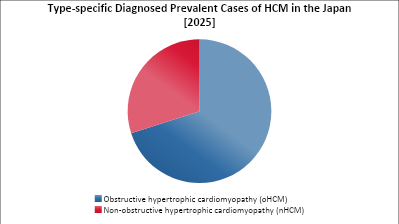
- As per assessments by DelveInsight analysts, there were ~70% diagnosed prevalent cases of HCM, and ~30% diagnosed prevalent cases of nHCM in 2025 in US.
- Among the EU4 and the UK, Germany accounted for the highest diagnosed prevalent cases of HCM in 2025.
Hypertrophic Cardiomyopathy Epidemiology Segmentation in the 7MM
- Total Hypertrophic Cardiomyopathy Prevalent Cases
- Hypertrophic Cardiomyopathy Diagnosed Prevalent Cases
- Hypertrophic Cardiomyopathy Gender-specific Diagnosed Prevalent Cases
- Hypertrophic Cardiomyopathy Type-specific Diagnosed Prevalent Cases
- Total Hypertrophic Cardiomyopathy Treated Cases
Hypertrophic Cardiomyopathy Market Recent Breakthroughs and Developments
- In June 2026, Bristol Myers Squibb announced the US FDA accepted a supplemental New Drug Application (sNDA) for Mavacamten as a potential treatment for adolescents (ages 12 years to <18 years) with symptomatic oHCM. The FDA has granted the application Priority Review and assigned a Prescription Drug User Fee Act (PDUFA) date of September 30, 2026.
- In May 2026, Cytokinetics today announced positive topline results from ACACIA-HCM, the pivotal Phase III clinical trial of aficamten in patients with symptomatic non-obstructive HCM. ACACIA-HCM met both dual primary endpoints, demonstrating statistically significant improvements from baseline to Week 36 compared to placebo in both Kansas City Cardiomyopathy Questionnaire Clinical Summary Score (KCCQ-CSS) and maximal exercise performance (pVO2).
- In May 2026, Cytokinetics today announced the presentation of new data reinforcing the clinical profile of aficamten at the European Society of Cardiology (ESC) Heart Failure 2026 Congress. The presentations include new analyses from SEQUOIA-HCM, the pivotal Phase III clinical trial of aficamten in patients with oHCM.
- In May 2026, Lexicon Pharmaceuticals announced that the SONATA-HCM pivotal Phase III study evaluating sotagliflozin in HCM remains on track with anticipated enrollment completion in mid-2026.
- In Feburary 2026, Cytokinetics announced that the European Commission (EC) has approved aficamten (MYQORZO), 5 mg, 10 mg, 15 mg and 20 mg tablets for the treatment of symptomatic oHCM in adult patients.
- In December 2025, Cytokinetics announced that the US FDA has approved aficamten (MYQORZO), 5 mg, 10 mg, 15 mg, 20 mg tablets for the treatment of adults with symptomatic oHCM to improve functional capacity and symptoms.
- In December 2025, Edgewise Therapeutics announced positive updates from the ongoing (CIRRUS-HCM) Phase II clinical trial of EDG-7500 in HCM.
Hypertrophic Cardiomyopathy Drug Analysis & Competitive Landscape
The HCM drug chapter provides a detailed, market-focused review of the emerging Hypertrophic Cardiomyopathy pipeline across Phase III/II clinical trials. It covers the mechanism of action, clinical trial data, regulatory approvals, patents, collaborations, and strategic partnerships for each therapy, along with their advantages, limitations, and recent developments. This section offers critical insights into the HCM treatment landscape, supporting market assessment, competitive analysis, and growth forecasting for the HCM therapeutics market.
Hypertrophic Cardiomyopathy Approved Therapies
-
Aficamten (MYQORZO): Cytokinetics
It is an allosteric and reversible inhibitor of cardiac myosin motor activity. In patients with oHCM, myosin inhibition with aficamten reduces cardiac contractility and LVOT obstruction. The approval of aficamten is based on the positive results from the pivotal Phase III clinical trial (SEQUOIA-HCM), published in the New England Journal of Medicine, which demonstrated robust efficacy, safety, and clinically meaningful benefits across symptoms, exercise capacity, hemodynamics, and biomarker endpoints.
-
Mavacamten (CAMZYOS): Bristol Myers Squibb
Mavacamten (CAMZYOS) is the first and only FDA-approved allosteric and reversible inhibitor selective for cardiac myosin that targets the underlying pathophysiology of oHCM. The approval is based on data from the Phase III (EXPLORER-HCM) trial. Because of the risk of heart failure due to systolic dysfunction, mavacamten is available only through a restricted program under a Risk Evaluation and Mitigation Strategy (REMS) called the Camzyos REMS PROGRAM.
Competitive Landscape of Hypertrophic Cardiomyopathy Marketed/Approved Therapies | ||||||
|
Drug/Therapy |
Company |
Indication |
Molecule Type |
MoA |
RoA |
Marketed Region |
|
Aficamten (MYQORZO) |
Cytokinetics |
HCM |
Small molecule |
cardiac myosin inhibitor |
Oral |
US: 2025 EU: 2026 |
|
Mavacamten (CAMZYOS) |
Bristol Myers Squibb |
oHCM |
Small molecule |
cardiac myosin inhibitor |
Oral |
US: 2022 |
Note: Detailed marketed therapies assessment will be provided in the final report.
Hypertrophic Cardiomyopathy Pipeline Analysis
-
Sotagliflozin (ZYNQUISTA): Lexicon Pharmaceuticals
Sotagliflozin is an investigational therapy in development for the treatment of both obstructive and non-obstructive HCM. As a dual SGLT1/SGLT2 inhibitor, sotagliflozin may help improve cardiac energy utilization, reduce cardiac stress, and lower the risk of heart failure events in HCM patients, particularly those with preserved ejection fraction or metabolic comorbidities. The topline results of sotagliflozin are anticipated in Q1 2027.
-
Ninerafaxstat: Imbria Pharmaceuticals
Ninerafaxstat, is the Imbria’s lead product candidate, being evaluated in Phase II (FORTITUDE-HCM) clinical trials as a potential treatment for oHCM, a debilitating disease with no currently approved treatments. It is a partial fatty acid oxidation (pFOX) inhibitor designed to improve myocardial energetics and cardiac efficiency in patients with non-obstructive HCM. Ninerafaxstat represents a novel metabolism-focused therapeutic strategy in HCM.
Competitive Landscape of Hypertrophic Cardiomyopathy Emerging Drugs | ||||||
|
Drug Name |
Company |
Highest Phase |
Indication |
RoA |
MoA |
Anticipated Launch in the US |
|
Sotagliflozin (ZYNQUISTA) |
Lexicon Pharmaceuticals |
III |
oHCM |
Oral |
SGLT1/SGLT2 inhibitor |
Information is available in the full report |
|
Ninerafaxstat |
Imbria Pharmaceuticals |
II |
nHCM |
Oral |
pFOX inhibitor |
Information is available in the full report |
|
EDG-7500 |
Edgewise Therapeutics |
II |
HCM |
Oral |
Selective cardiac sarcomere modulator |
Information is available in the full report |
|
Note: Launch insights are provisional and may change with future report updates or the occurrence of major key catalysts. | ||||||
Note: Detailed emerging therapies assessment will be provided in the final report.
Hypertrophic Cardiomyopathy Market Outlook
The Hypertrophic Cardiomyopathy Therapeutics Market is undergoing a major transformation with the emergence of targeted cardiac therapies beyond conventional beta-blockers, calcium channel blockers, and antiarrhythmic agents.
Approved therapies such as mavacamten (CAMZYOS) maintain a strong leadership position as the first approved cardiac myosin inhibitor, benefiting from first-mover advantage, extensive real-world clinical experience, and growing physician familiarity along with established clinical efficacy in reducing LVOT obstruction and improving functional capacity, while aficamten (MYQORZO) introduces direct competition within the cardiac myosin inhibitor class. Compared with mavacamten, aficamten has been designed with a shorter half-life and potentially greater dosing flexibility.
While mavacamten is expected to retain a significant share of the market due to its established presence, aficamten is projected to emerge as a major commercial competitor and achieve blockbuster-level sales potential. These therapies represent a major shift toward disease-targeted management rather than solely symptomatic treatment.
Investigational candidates as sotagliflozin (ZYNQUISTA) is being explored for its potential cardiometabolic and heart failure-related benefits through dual SGLT1/SGLT2 inhibition. Unlike sarcomere-targeted therapies, sotagliflozin may provide a differentiated mechanism of action by improving cardiac energetics and reducing cardiovascular burden. Ninerafaxstat and EDG-7500 are currently in mid-stage clinical development, reflecting growing industry investment in metabolism-focused and sarcomere-targeted therapies for HCM. Their progression through clinical trials is expected to strengthen the forecast HCM pipeline, expand therapeutic diversity beyond cardiac myosin inhibitors, and support long-term market growth through the introduction of differentiated disease-modifying approaches.
Continued innovation in cardiac myosin inhibitors, metabolic modulators, and sarcomere-targeted therapies is projected to drive steady market growth across the 7MM from 2022 to 2036, creating significant commercial opportunities for both approved products and emerging pipeline candidates in the HCM market.
Hypertrophic Cardiomyopathy Companies
- Cytokinetics
- Bristol Myers Squibb
- Lexicon Pharmaceuticals
- Imbria Pharmaceuticals
- Edgewise Therapeutics
- Tenaya Therapeutics, and others
Further details will be provided in the report….
Drug Class/Insights into Leading Emerging and Marketed Therapies in HCM (2022–2036 Forecast)
The HCM market (2022–2036 forecast) is evolving toward mechanism-based and disease-targeted therapies. Key pathways involved include cardiac myosin inhibition, cardiac metabolism modulation, SGLT-mediated cardiometabolic regulation, and selective sarcomere modulation.
- Cardiac Myosin Inhibitors: Approved therapies such as mavacamten (CAMZYOS) and aficamten (MYQORZO) are redefining the HCM treatment landscape by directly targeting excessive cardiac contractility associated with sarcomeric dysfunction. These therapies reduce LVOT obstruction, improve exercise capacity, and provide a more disease-specific treatment approach compared with conventional symptomatic management.
- SGLT1/SGLT2 Inhibitors: Emerging therapy sotagliflozin (ZYNQUISTA) is being explored for its potential cardiometabolic and heart failure-related benefits in HCM patients. Through dual SGLT1/SGLT2 inhibition, the therapy may improve cardiac energy utilization, reduce myocardial stress, and support long-term cardiovascular outcomes.
- Metabolic Modulators: Ninerafaxstat is developed as a metabolism-focused therapy designed to improve myocardial energy efficiency by shifting cardiac metabolism toward more oxygen-efficient glucose utilization. This approach reflects increasing interest in targeting energetic dysfunction as a core contributor to HCM pathology.
Hypertrophic Cardiomyopathy Drug Uptake
This section focuses on the uptake rate of potential drugs expected to be launched in the market during the forecast period (2026–2036). The analysis covers the HCM drug’s uptake, performance at peak, factors affecting performance during prime years of growth, patient uptake by therapy, and anticipated sales generated by each drug.
During the forecast period, uptake of Hypertrophic Cardiomyopathy Therapies is expected to increase steadily, driven by rising diagnosis rates, growing awareness of genetic cardiovascular disorders, and the availability of targeted treatments. Mavacamten (CAMZYOS) is expected to maintain strong uptake due to its ability to reduce LVOT obstruction and improve functional capacity in symptomatic patients. Its potential label expansion into adolescents with symptomatic oHCM, supported by an FDA PDUFA date of September 30, 2026, could further increase adoption and market potential.
Aficamten (MYQORZO) is also anticipated to gain traction owing to its next-generation cardiac myosin inhibition profile, dosing flexibility, and potential advantages in cardiac function management.
Among emerging therapies, sotagliflozin (ZYNQUISTA) is expected to achieve medium uptake, particularly in patients with HCM and cardiometabolic comorbidities or heart failure-related manifestations, reflecting growing interest in SGLT-mediated cardiovascular therapies.
Ninerafaxstat is also anticipated to see medium uptake due to its metabolism-focused approach to improving myocardial energetics and exercise capacity. In contrast, EDG-7500 is projected to experience slow uptake following potential approval, as adoption may be moderated by the need for long-term clinical validation despite its differentiated selective sarcomere-targeting mechanism.
Detailed insights of emerging therapies' drug uptake is included in the report
Hypertrophic Cardiomyopathy Market Access and Reimbursement of Approved Therapies
Reimbursement is a crucial factor that affects the drug’s access to the market. Often, the decision to reimburse comes down to the price of the drug relative to the benefit it produces in treated patients. To reduce the healthcare burden of these high-cost therapies, many payment models are being considered by payers and other industry insiders.
The United States
US Reimbursement of Therapies Approved for Hypertrophic Cardiomyopathy | |
|
Drug/Therapy |
Access Program |
|
CAMZYOS |
|
The report further provides detailed insights on the country-wise accessibility and reimbursement scenarios, cost-effectiveness scenario of approved therapies, programs making accessibility easier and out-of-pocket costs more affordable, insights on patients insured under federal or state government prescription drug programs, etc
NOTE: Further Details are provided in the final report….
Hypertrophic Cardiomyopathy Therapies Price Scenario & Trends
Pricing and analogue assessment of HCM therapies highlights evolving price dynamics structures. This section summarizes the cost of approved treatments, closest and most appropriate analogue selection for emerging therapies, and understanding of how pricing influences market access, adherence, and long-term uptake.
Industry Experts and Physician Views for Hypertrophic Cardiomyopathy
To keep up with HCM market trends, we take Key Opinion Leaders (KOLs) and Subject Matter Experts (SMEs) opinions working in the domain through primary research to fill the data gaps and validate our secondary research. Industry experts were contacted for insights on the HCM emerging therapies, evolving treatment landscape, patient adherence to conventional therapies, therapy switching trends, drug adoption and uptake, accessibility challenges, and epidemiology and real-world prescription patterns in HCM, including MD, PhD, Instructor, Postdoctoral Researcher, Professor, Researcher, and others.
DelveInsight’s analysts connected with 15+ KOLs to gather insights at the country level. Centers such as American Heart Association, Deutsches Zentrum für Herz-Kreislauf-Forschung, and University of California, etc. were contacted.Their opinion helps understand and validate current and emerging HCM therapies, highlight unmet medical needs, provide epidemiological context, and support strategic decisions for market access, therapy adoption, and pipeline prioritization in HCM.
|
Region |
Key Opinion Leaders (KOLs) and Subject Matter Experts (SMEs) |
|
United States |
“HCM diagnosis in the United States involves assessing medical history, family history, physical examination, and diagnostic tests. Healthcare providers inquire about symptoms and gather a comprehensive family history spanning at least three generations. During the physical exam, providers listen to the heart and lungs.” |
|
Germany |
“The challenges in managing HCM often stem from gaps in early detection and prevention. Many cases are diagnosed later when symptoms are more severe, limiting treatment effectiveness. This highlights the need for improved cardiovascular screening and timely intervention. Advances in research and patient care are crucial to addressing these shortcomings and ensuring better outcomes for individuals living with HCM.” |
Hypertrophic Cardiomyopathy Report Qualitative Analysis: SWOT and Conjoint Analysis
We perform qualitative and market Intelligence analysis using various approaches, such as SWOT analysis and conjoint analysis. In the SWOT analysis of HCM, strengths, weaknesses, opportunities, and threats in terms of disease diagnosis, patient awareness, patient burden, competitive landscape, cost-effectiveness, and geographical accessibility of therapies are provided.
Conjoint analysis analyzes emerging Hypertrophic Cardiomyopathy Therapies based on relevant attributes such as safety, efficacy, frequency of administration, route of administration, and order of entry. Scoring is given based on these parameters to analyze the effectiveness of therapy.
The team of analysts analyzes promising emerging therapies based on relevant attributes such as safety, efficacy, frequency of administration, route of administration, and order of entry. In efficacy, the trial’s primary and secondary outcome measures are evaluated, whereas the therapies’ safety is evaluated, wherein the acceptability, tolerability, and adverse events are majorly observed.
In addition, the scoring is also based on the route of administration, order of entry, probability of success, and the addressable patient pool for each therapy. According to these parameters, the final weightage score and the ranking of the emerging therapies are decided.
Scope of the Hypertrophic Cardiomyopathy Market Report
- The Hypertrophic Cardiomyopathy Therapeutics Market Report covers a segment of key events, an executive summary, a descriptive overview, explaining their causes, signs and symptoms, pathogenesis, and currently available treatments.
- Comprehensive insight has been provided into the epidemiology segments and forecasts, the future growth potential of the diagnosis rate, and disease progression along treatment guidelines.
- Additionally, an all-inclusive account of both the current and emerging treatments, along with the elaborative profiles of late-stage and prominent therapies, will have an impact on the current treatment landscape.
- A detailed review of the Hypertrophic Cardiomyopathy Therapeutics Market, historical and forecasted Hypertrophic Cardiomyopathy Treatment Market Size, Hypertrophic Cardiomyopathy Drugs Market Share by therapies, detailed assumptions, and rationale behind our approach is included in the report, covering the 7MM drug outreach.
- The Hypertrophic Cardiomyopathy Therapeutics Market Report provides an edge while developing business strategies by understanding trends through SWOT analysis and expert insights/KOL views, patient journey, and treatment preferences that help in shaping and driving the 7MM Hypertrophic Cardiomyopathy Drugs Market.
Hypertrophic Cardiomyopathy Market Report Insights
- Hypertrophic Cardiomyopathy Patient Population Forecast
- Hypertrophic Cardiomyopathy Therapeutics Market Size
- Hypertrophic Cardiomyopathy Pipeline Drugs Analysis
- Hypertrophic Cardiomyopathy Market Size and Trends
- Hypertrophic Cardiomyopathy Market Opportunity (Current and Forecasted)
Hypertrophic Cardiomyopathy Market Report Key Strengths
- Epidemiology‑based (Epi‑based) Bottom‑up Forecasting
- Artificial Intelligence (AI)-Enabled Market Research Report
- 11-Year Forecast
- Hypertrophic Cardiomyopathy Market Outlook (North America, Europe, Asia-Pacific)
- Patient Burden Trends (By Geography)
- Hypertrophic Cardiomyopathy Treatment Addressable Market (TAM)
- Hypertrophic Cardiomyopathy Competitive Landscape
- Hypertrophic Cardiomyopathy) Major Companies Insights
- Hypertrophic Cardiomyopathy Price Trends and Analogue Assessment
- Hypertrophic Cardiomyopathy Therapies Drug Adoption/Uptake
- Hypertrophic Cardiomyopathy Therapies Peak Patient Share Analysis
Hypertrophic Cardiomyopathy Market Report Assessment
- Current Hypertrophic Cardiomyopathy Treatment Practices
- Hypertrophic Cardiomyopathy Unmet Needs
- Hypertrophic Cardiomyopathy Clinical Development Analysis
- Hypertrophic Cardiomyopathy Emerging Drugs Product Profiles
- Hypertrophic Cardiomyopathy Therapeutics Market Attractiveness
- Hypertrophic Cardiomyopathy Qualitative Analysis (SWOT and Conjoint Analysis)
Key Questions Answered in the Hypertrophic Cardiomyopathy Therapeutics Market Report
Hypertrophic Cardiomyopathy Treatment Market Insights
- What was the Hypertrophic Cardiomyopathy Treatment Market Size, the Hypertrophic Cardiomyopathy Market Size by therapies, Hypertrophic Cardiomyopathy Drugs Market Share (%) distribution in 2025, and what would it look like by 2036? What are the contributing factors for this growth?
- What are the anticipated pricing variations among different geographies for the Hypertrophic Cardiomyopathy emerging therapies in the future?
- What can be the future treatment paradigm of Hypertrophic Cardiomyopathy?
- What are the disease risks, burdens, and unmet needs of Hypertrophic Cardiomyopathy?
- What will be the growth opportunities across the 7MM concerning the patient population with Hypertrophic Cardiomyopathy?
- Who is the major future competitor in the market, and how will the competitors affect their market share?
- What are the current options for the treatment of Hypertrophic Cardiomyopathy?
- What are the current guidelines for treating HCM in the US, Europe, and Japan?
Reasons to Buy the Hypertrophic Cardiomyopathy Market Report
- The Hypertrophic Cardiomyopathy Therapeutics Market Report will help in developing business strategies by understanding the latest trends and changing treatment dynamics driving the Hypertrophic Cardiomyopathy Drugs Market.
- Bottom-up forecasting builds from the affected population to product forecasts, delivering a robust, data-driven approach ideal for new therapies and novel classes.
- Insights on patient burden/disease: Hypertrophic Cardiomyopathy Incidence, evolution in diagnosis, and factors contributing to the change in the epidemiology of the disease during the forecast years.
- Understand the existing Hypertrophic Cardiomyopathy Drugs Market opportunities in varying geographies and the growth potential over the coming years.
- Identifying strong upcoming players in the Hypertrophic Cardiomyopathy Drugs Market will help devise strategies to help get ahead of competitors.
- Detailed analysis and ranking of class-wise potential emerging therapies under the conjoint analysis section to provide visibility around leading classes.
- To understand KOLs’ perspectives on the accessibility, acceptability, and compliance-related challenges of existing treatment to overcome barriers in the future.
- Detailed insights on the unmet needs of the existing Hypertrophic Cardiomyopathy Drugs Market so that the upcoming players can strengthen their development and launch strategy.
- This Artificial Intelligence (AI)-enabled report summarize and simplify complex datasets with in the report into clear, actionable insights for stakeholders, investors, and healthcare providers, enabling faster, data-driven decisions.
Stay updated with us for Recent Articles

-pipeline.png&w=256&q=75)