Hypophosphatasia Epidemiology
Hypophosphatasia Insights and Trends
- Hypophosphatasia is defined as a rare, genetic metabolic disorder characterized by impaired mineralization of bones and teeth, according to the National Organization for Rare Disorders (NORD). Defective mineralization results in bones that are soft and prone to fracture and deformity and it also leads to tooth loss. Depending on the specific form, it can be inherited in an autosomal recessive or dominant manner.
- Hypophosphatasia is caused by loss-of-function mutations in the ALPL gene, leading to deficiency of tissue-nonspecific alkaline phosphatase (TNSALP). The resulting accumulation of inorganic pyrophosphate (PPi) impairs bone and tooth mineralization. Disease severity is strongly influenced by variant type and inheritance pattern, which can be autosomal recessive or autosomal dominant with variable penetrance.
- Based on various manifestations and severity, it is subdivided from the most severe to the mildest forms as perinatal, infantile, childhood-onset, adult, odonto hypophosphatasia, and benign perinatal hypophosphatasia.
- Hypophosphatasia affects males and females equally. The prevalence of hypophosphatasia across its various clinical forms remains uncertain, as milder cases are often underdiagnosed or misdiagnosed, making it difficult to accurately estimate the true disease burden.
- The disease demonstrates a bimodal clinical burden, with severe perinatal and infantile forms often diagnosed early due to life-threatening complications, while adult and odonto-HPP forms are frequently underdiagnosed due to nonspecific symptoms such as fractures, chronic pain, and dental abnormalities.
- Hypophosphatasia presents a broad phenotypic spectrum, ranging from perinatal lethality due to respiratory failure and skeletal hypomineralization to milder adult disease characterized by recurrent fractures, musculoskeletal pain, premature tooth loss, and reduced quality of life. This heterogeneity contributes to delayed diagnosis and significant unmet need in adult populations.
Hypophosphatasia Epidemiology Forecast in the 7MM
- 2025 Diagnosed Prevalent Cases of Hypophosphatasia: ~XX
- 2036 Projected Diagnosed Prevalent Cases of Hypophosphatasia: ~XX
- Hypophosphatasia Growth Rate (2026–2036): XX% CAGR
DelveInsight's ‘Hypophosphatasia Epidemiology Forecast – 2036’ report delivers an in-depth understanding of the hypophosphatasia, historical and forecasted epidemiology, in the United States, EU4 (Germany, Spain, Italy, and France) and the United Kingdom, and Japan.
|
Study Period |
2022–2036 |
|
Historical Year |
2022–2025 |
|
Forecast Period |
2026–2036 |
|
Base Year |
2026 |
|
Geographies Covered |
|
|
Hypophosphatasia Epidemiology CAGR (Forecast period) |
XX% (2026–2036) |
|
Hypophosphatasia Epidemiology Segmentation Analysis |
Patient Burden Assessment
|
Hypophosphatasia Understanding and Diagnosis Algorithm
Hypophosphatasia Overview and Diagnosis
Hypophosphatasia is a rare, inherited metabolic disorder caused by mutations in the ALPL gene, resulting in deficient TNSALP activity and impaired bone mineralization. It presents with a broad clinical spectrum, ranging from severe perinatal forms with high mortality to milder adult forms characterized by recurrent fractures, musculoskeletal pain, and premature tooth loss. Extra-skeletal features such as seizures and nephrocalcinosis may also occur.
Further details are provided in the report.
Hypophosphatasia Diagnosis
Diagnosis is based on clinical features supported by persistently low alkaline phosphatase (ALP) levels, a key biochemical hallmark. Elevated substrates such as pyridoxal-5′-phosphate further support diagnosis, while imaging identifies skeletal abnormalities. Genetic testing (ALPL mutations) provides definitive confirmation. Early diagnosis is critical, as the disease is often underrecognized, particularly in adults.
Further details are provided in the report.
Hypophosphatasia Epidemiology
Key Findings from Hypophosphatasia Epidemiological Analysis and Forecast
- Hypophosphatasia is an ultra-rare disorder, with severe forms estimated to occur in approximately 1 per 100,000 live births, while milder forms are believed to be more common but significantly underdiagnosed.
- The epidemiology of hypophosphatasia is heterogeneous across age groups, with severe cases presenting in perinatal and infantile stages, while a substantial proportion of patients are identified later in adulthood due to milder manifestations.
- In Europe and Japan, the prevalence of severe hypophosphatasia is estimated to range from 1 in 300,000 to 1 in 500,000 live births.
- The carrier frequency of heterozygous pathogenic ALPL variants is estimated to be as high as 1 in 80 to 1 in 100 individuals, suggesting that milder or atypical phenotypes may be significantly underdiagnosed.
- A large proportion of hypophosphatasia cases remain undiagnosed or misdiagnosed, particularly in adults, where symptoms such as fractures and musculoskeletal pain are often attributed to more common conditions like osteoporosis.
- The diagnosed prevalence is increasing, primarily driven by greater clinical awareness and genetic testing, rather than a true rise in disease occurrence.
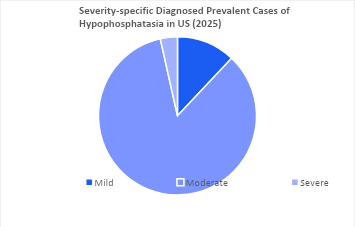
Scope of the Report
- The report covers a segment of a descriptive overview of hypophosphatasia, explaining their causes, signs and symptoms, and pathogenesis.
- Comprehensive insight has been provided into the epidemiology segments and forecasts, the future growth potential of the diagnosis rate, and disease progression.
Report Insights
Hypophosphatasia Patient Population Forecast
Report Key Strengths
- Epidemiology‑based (Epi‑based) Bottom‑up Forecasting
- 11-year Forecast
- Patient Burden Trends (by geography)
FAQs
- What are the disease risks, burdens, and unmet needs of hypophosphatasia? What will be the growth opportunities across the 7MM concerning the patient population with hypophosphatasia?
- What is the historical and forecasted hypophosphatasia patient pool in the US, EU4 (Germany, France, Italy, and Spain), the UK, and Japan?
Reasons to Buy
- Insights on patient burden/disease prevalence, evolution in diagnosis, and factors contributing to the change in the epidemiology of the disease during the forecast years.
- To understand key opinion leaders’ perspectives around the diagnostic challenges to overcome barriers in the future.
- Detailed insights on various factors hampering disease diagnosis and other existing diagnostic challenges.