Hypophosphatasia Market
Hypophosphatasia Insights and Trends
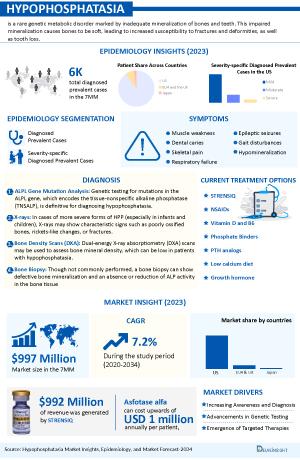
- Hypophosphatasia is defined as a rare, genetic metabolic disorder characterized by impaired mineralization of bones and teeth, according to the National Organization for Rare Disorders (NORD). Defective mineralization results in bones that are soft and prone to fracture and deformity and it also leads to tooth loss. Depending on the specific form, it can be inherited in an autosomal recessive or dominant manner.
- Based on various manifestations and severity, it is subdivided from the most severe to the mildest forms as perinatal, infantile, childhood-onset, adult, odonto hypophosphatasia, and benign perinatal hypophosphatasia.
- Hypophosphatasia affects males and females equally. The prevalence of hypophosphatasia across its various clinical forms remains uncertain, as milder cases are often underdiagnosed or misdiagnosed, making it difficult to accurately estimate the true disease burden.
- Disease burden spans a broad clinical spectrum, ranging from severe perinatal and infantile forms with high morbidity and mortality to milder adult and odonto-HPP phenotypes. While severe cases are diagnosed early, milder forms are often underdiagnosed, contributing to delayed treatment initiation and unmet need in adult populations.
- Despite the availability of asfotase alfa (STRENSIQ), treatment gaps remain due to lifelong injectable administration, high treatment burden, and limited accessibility across mild and adult patients. Management therefore continues to include supportive approaches such as pain control, fracture management, vitamin supplementation, and off-label use of bone-active agents, though these do not address the underlying enzyme deficiency.
- The pipeline is gradually evolving with next-generation Enzyme Replacement Therapies (ERTs) (e.g., efzimfotase alfa, ilofotase alfa) aiming to improve pharmacokinetics and expand patient applicability. In parallel, novel disease-modifying approaches such as small-molecule PPi-targeting therapies (e.g., ALE1), ENPP1 inhibitors, MSC-based regenerative therapies, and gene therapy programs are being developed to address the root metabolic defect and potentially offer longer-term or curative solutions.
Hypophosphatasia Market Size and Forecast in the 7MM
- 2025 Hypophosphatasia Market Size: ~USD XX million
- 2036 Projected Hypophosphatasia Market Size: ~USD XX million
- Hypophosphatasia Growth Rate (2026–2036): XX% CAGR
DelveInsight's ‘Hypophosphatasia Market Insights, Epidemiology and Market Forecast – 2036’ report delivers an in-depth understanding of the hypophosphatasia, historical and forecasted epidemiology, as well as the hypophosphatasia market trends in the United States, EU4 (Germany, Spain, Italy, and France) and the United Kingdom, and Japan.
The hypophosphatasia market report delivers a comprehensive analysis of the current treatment landscape, including standards of care, clinical practices, and evolving therapeutic algorithms. It evaluates, hypophosphatasia patient burden trends, revenue & market share dynamics, peak patient share & therapy uptake analysis, and provides an in-depth market size assessment, and growth rate projections (Historical & Forecast 2022–2036) across global regions. The report highlights key unmet medical needs in hypophosphatasia and maps the competitive and clinical landscape to uncover high‑value opportunities, providing a clear outlook on future market growth potential.
|
Study Period |
2022–2036 |
|
Historical Year |
2022–2025 |
|
Forecast Period |
2026–2036 |
|
Base Year |
2026 |
|
Geographies Covered |
|
|
Hypophosphatasia Market CAGR (Forecast period) |
XX% (2026–2036) |
|
Hypophosphatasia Epidemiology Segmentation Analysis |
Patient Burden Assessment
|
|
Hypophosphatasia Companies |
|
|
Hypophosphatasia Therapies |
|
|
Hypophosphatasia Market |
Segmented by
|
|
Analysis |
|
|
|
Key Factors Driving the Hypophosphatasia Market
Improved Diagnosis Driving Patient Identification
The diagnosed prevalence of hypophosphatasia is increasing, primarily due to enhanced clinical awareness and wider use of genetic testing for ALPL mutations. Historically underdiagnosed especially in adult and milder forms hypophosphatasia is now being more frequently identified as physicians recognize hallmark features such as persistently low ALP levels and atypical fractures. This trend is expected to expand the treatable patient pool across major markets.
Growing Adoption of ERT
The availability of Asfotase alfa has significantly transformed the treatment landscape, particularly for pediatric-onset hypophosphatasia. Clinical evidence demonstrates improvements in bone mineralization, survival, and functional outcomes, supporting strong uptake in diagnosed patients. Continued long-term data generation and expanded access are expected to drive sustained market growth.
Emerging Therapeutic Innovation Beyond ERT
While enzyme replacement remains the standard of care, there is growing interest in next-generation approaches, including gene therapy and targeted metabolic modulation. Several early-stage programs aim to provide durable or curative outcomes, potentially reducing treatment burden associated with lifelong therapy. This innovation is expected to diversify the pipeline and enhance long-term market potential.
Hypophosphatasia Understanding and Treatment Algorithm
Hypophosphatasia Overview and Diagnosis
Hypophosphatasia is a rare, inherited metabolic disorder caused by mutations in the ALPL gene, resulting in deficient tissue-nonspecific alkaline phosphatase (TNSALP) activity and impaired bone mineralization. It presents with a broad clinical spectrum, ranging from severe perinatal forms with high mortality to milder adult forms characterized by recurrent fractures, musculoskeletal pain, and premature tooth loss. Extra-skeletal features such as seizures and nephrocalcinosis may also occur.
Diagnosis is based on clinical features supported by persistently low ALP levels, a key biochemical hallmark. Elevated substrates such as pyridoxal-5′-phosphate further support diagnosis, while imaging identifies skeletal abnormalities. Genetic testing (ALPL mutations) provides definitive confirmation. Early diagnosis is critical, as the disease is often underrecognized, particularly in adults.
Further details are provided in the report.
Current Hypophosphatasia Treatment Landscape
The treatment of hypophosphatasia is primarily driven by enzyme replacement therapy with Asfotase alfa, the only approved disease-modifying therapy, which improves bone mineralization and survival, particularly in pediatric-onset disease. However, it is not curative and requires long-term use. For patients with milder or adult-onset hypophosphatasia, management remains largely supportive and symptomatic, including pain control (e.g., NSAIDs), vitamin B6 supplementation for pyridoxine-responsive seizures, and orthopedic interventions for fractures, deformities, and mobility issues. Bisphosphonates are generally contraindicated because they may worsen skeletal mineralization defects, while teriparatide has been used off-label in selected adult patients with variable outcomes. Overall, the treatment landscape remains limited, highlighting a significant unmet need for additional disease-modifying and potentially curative therapies.
Further details related to country-based variations are provided in the report.
Hypophosphatasia Unmet Needs
The section “unmet needs of hypophosphatasia” outlines the critical gaps between the current state of patient care, diagnosis, and the ideal & effective management of the disease. It highlights the obstacles experienced by patients, clinicians, and researchers and identifies potential solutions for future progress.
- Limited availability of curative treatment options
- Underdiagnosis and delayed diagnosis
- Limited treatment options for adult patients
- High treatment burden and challenges in treatment access, and others…..
Note: Comprehensive unmet needs insights in hypophosphatasia and their strategic implications are provided in the full report.
Hypophosphatasia Epidemiology
Key Findings from Hypophosphatasia Epidemiological Analysis and Forecast
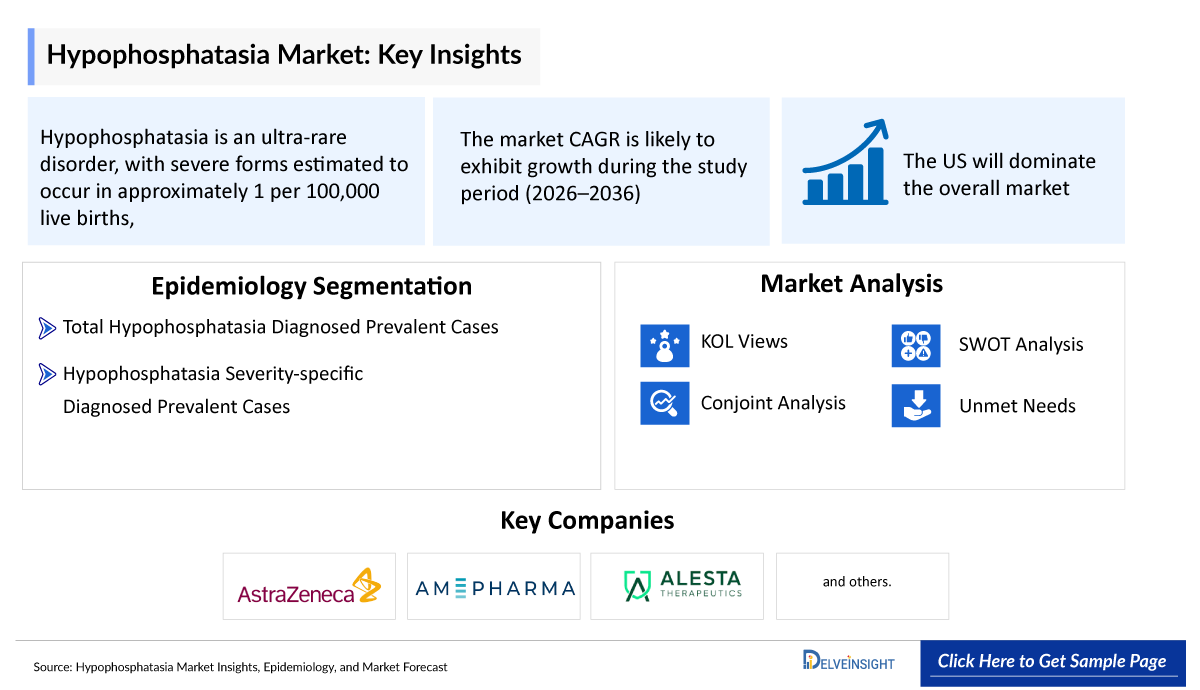
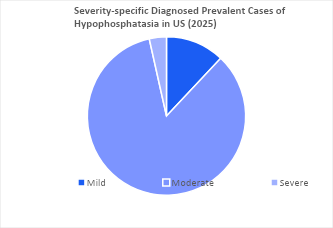
- Hypophosphatasia is an ultra-rare disorder, with severe forms estimated to occur in approximately 1 per 100,000 live births, while milder forms are believed to be more common but significantly underdiagnosed.
- The epidemiology of hypophosphatasia is heterogeneous across age groups, with severe cases presenting in perinatal and infantile stages, while a substantial proportion of patients are identified later in adulthood due to milder manifestations.
- In Europe and Japan, the prevalence of severe hypophosphatasia is estimated to range from 1 in 300,000 to 1 in 500,000 live births.
- The carrier frequency of heterozygous pathogenic ALPL variants is estimated to be as high as 1 in 80 to 1 in 100 individuals, suggesting that milder or atypical phenotypes may be significantly underdiagnosed.
- A large proportion of hypophosphatasia cases remain undiagnosed or misdiagnosed, particularly in adults, where symptoms such as fractures and musculoskeletal pain are often attributed to more common conditions like osteoporosis.
- The diagnosed prevalence is increasing, primarily driven by greater clinical awareness and genetic testing, rather than a true rise in disease occurrence.
Hypophosphatasia Drug Analysis & Competitive Landscape
The hypophosphatasia drug chapter provides a detailed, market-focused review of approved therapies and the emerging pipeline across Phase I/II–II clinical trials. It covers mechanism of action, clinical trial data, regulatory approvals, patents, collaborations, strategic partnerships upcoming Key catalyst for each therapy, along with their advantages, limitations, and recent developments. This section offers critical insights into the hypophosphatasia treatment landscape, supporting market assessment, competitive analysis, and growth forecasting for the hypophosphatasia therapeutics market.
Approved Therapies for Hypophosphatasia
Asfotase alfa (STRENSIQ): AstraZeneca
Asfotase alfa (STRENSIQ), developed by AstraZeneca, is an ERT using bone-targeting recombinant alkaline phosphatase, addressing the main cause for manifestation. It is a human, recombinant TNSALP replacement therapy that replaces deficient TNSALP activity in patients with and reduces the accumulation of extracellular TNSALP substrate. It improves skeletal mineralization, motor capabilities, and respiratory function while reducing mortality compared to historically untreated patients with more severe perinatal, infantile, and childhood forms of hypophosphatasia.
Asfotase alfa (STRENSIQ) continued to demonstrate strong commercial performance, with Q1 2026 revenue increasing 43% at constant exchange rates (CER) to USD 517 million. The growth was primarily driven by sustained global demand from patients with hypophosphatasia, reflecting ongoing treatment uptake, improved diagnosis rates, and continued expansion across key markets.
Note: Detailed marketed therapies assessment will be provided in the final report.
Table 1: Hypophosphatasia Marketed/Approved Therapies | ||||||
|
Drug/Therapy |
Company |
Indication |
Molecule Type |
MoA |
RoA |
Marketed Region |
|
Asfotase alfa (STRENSIQ) |
AstraZeneca |
Hypophosphatasia |
Recombinant protein |
Enzyme-replacement |
SC |
US: 2015 EU: 2015 JP: 2015 |
Hypophosphatasia Pipeline Analysis
Efzimfotase alfa (ALXN1850): AstraZeneca (Alexion Pharmaceuticals)
Efzimfotase alfa is an advanced ERT developed to replace deficient ALP activity for the treatment of hypophosphatasia. This innovative therapy utilizes a next-generation TNSALP enzyme to enhance bone mineralization and address systemic symptoms of the disease more effectively. Compared to STRENSIQ (asfotase alfa), efzimfotase alfa is engineered to offer increased enzymatic activity, greater bioavailability, and an extended half-life.
AstraZeneca's experimental drug efzimfotase alfa (ALXN1850) has received Fast Track designation (FTD) and Orphan Drug Designation (ODD) from the US FDA for the treatment of hypophosphatasia
Ilofotase Alfa: AM-Pharma
Ilofotase alfa is a proprietary recombinant alkaline phosphatase derived from two human isoforms. It has demonstrated good tolerability, stability, and high activity in multiple clinical trials, including those for hypophosphatasia. In hypophosphatasia, ilofotase alfa addresses elevated levels of pyridoxal-5′-phosphate (PLP), inorganic pyrophosphates (PPi), two disease-related biomarkers that are related to, for example, bone mineralization and pain sensation. . The US FDA and the EMA have granted ODD for ilofotase alfa in the treatment of hypophosphatasia.
With Clinical Trial Application (CTA) clearances secured in both the United Kingdom and Germany, Alesta Therapeutics initiated the second part of the ALE1 Phase I/IIa study and planned to begin patient dosing during the first half of 2026. The company also intended to engage with the FDA in 2026 to further refine its global regulatory strategy.
Table 2: Competitive Landscape of Pipeline Drugs | ||||||
|
Drug Name |
Company |
Highest Phase |
Indication |
RoA |
MoA |
Anticipated Launch in the US |
|
efzimfotase alfa (ALXN1850) |
AstraZeneca (Alexion Pharmaceutical) |
III |
Hypophosphatasia |
SC |
ERT |
Information is available in the full report |
|
ALE1 |
Alesta Therapeutics |
I/II |
Hypophosphatasia |
Oral |
Target that regulates levels of PPi |
Information is available in the full report |
|
Ilofotase Alfa |
AM-Pharma |
I |
Hypophosphatasia |
IV/SC |
ERT |
Information is available in the full report |
|
REC-01 |
PuREC |
Phase I/IIa |
Hypophosphatasia |
Cell transplantation |
Mesenchymal stem cells |
Information is available in the full report |
|
Note: Launch insights are provisional and may change with future report updates or the occurrence of major key catalysts. | ||||||
Note: Detailed emerging therapies assessment will be provided in the final report.
Hypophosphatasia Key Players, Market Leaders and Emerging Companies
- AstraZeneca
- AM-Pharma
- PuREC
- Alesta Therapeutics, and others
Hypophosphatasia Drug Updates
- As of March 2026, Astrazeneca announced that efzimfotase alfa demonstrated positive results from global Phase III clinical programme in hypophosphatasia.
- In January 2026, Alesta Therapeutics reported that ALE1, its investigational therapy for hypophosphatasia, advanced into clinical development in 2025. Initial data from the ongoing Phase I/IIa study in patients with hypophosphatasia are anticipated in the second half of 2026.
- In January 2025, Alesta Therapeutics announced the closing of an oversubscribed €65 million Series A financing round, led by Frazier Life Sciences and Droia Ventures with participation from leading global investors. The company will use the funds to advance its pipeline of oral small-molecule therapies for rare diseases.
Hypophosphatasia Market Outlook
The hypophosphatasia market is gradually evolving from a historically supportive-care–driven landscape toward a more disease-modifying treatment paradigm, led by ERT and emerging next-generation modalities. For decades, management of hypophosphatasia remained largely symptomatic, focusing on fracture care, pain management, respiratory support, and supplementation, with limited ability to address the underlying ALPL gene dysfunction and impaired mineralization pathway.
A major inflection point in the market was the approval of asfotase alfa (STRENSIQ), the first and only disease-modifying enzyme replacement therapy, which validated TNSALP replacement as a therapeutic strategy and significantly improved outcomes in severe pediatric-onset disease. However, despite its clinical benefits, asfotase alfa is associated with high treatment burden due to frequent injections and limited effectiveness across adult and mild phenotypes, leaving a substantial unmet need.
In response, the pipeline is increasingly diversifying, with next-generation ERTs (e.g., efzimfotase alfa, ilofotase alfa) aiming to improve enzymatic activity, pharmacokinetics, and dosing convenience. At the same time, novel mechanistic approaches such as ENPP1 inhibition (targeting PPi accumulation), small-molecule oral therapies (e.g., ALE1), regenerative cell therapies (MSC-based approaches such as REC-01), and gene therapy strategies are being explored to move beyond enzyme replacement toward potentially curative or long-acting solutions. These modalities collectively reflect a broader shift toward addressing the root metabolic dysregulation in hypophosphatasia rather than only enzyme substitution.
Overall, increasing diagnostic awareness, expansion of genetic testing, and gradual pipeline diversification are expected to support steady long-term growth of the hypophosphatasia treatment market across the 7MM through 2036, although the market will likely remain concentrated around existing ERT use until late-stage innovations mature.
- Asfotase alfa (STRENSIQ) continues to dominate revenue generation globally, particularly in severe pediatric and perinatal-onset hypophosphatasia segments.
- In the long term, next-generation ERTs and oral disease-modifying therapies are expected to gradually capture share, especially in adult and mild phenotypes where treatment gaps remain significant.
Further details will be provided in the report….
Drug Class/Insights into Leading Emerging and Marketed Therapies in Hypophosphatasia (2022–2036 Forecast)
The hypophosphatasia market comprises enzyme replacement therapies, next-generation biologics, and emerging small molecules/cell-based approaches, each targeting different aspects of disease biology linked to ALPL dysfunction and impaired bone mineralization.
- ERTs: Asfotase alfa (STRENSIQ), the only approved therapy, is a bone-targeted recombinant alkaline phosphatase that replaces deficient TNSALP activity, improving skeletal mineralization and clinical outcomes in severe pediatric-onset hypophosphatasia. Next-generation ERTs such as efzimfotase alfa (ALXN1850) and ilofotase alfa aim to improve enzymatic activity, pharmacokinetics, and dosing convenience while expanding use into adolescent and adult populations.
Overall, ERTs currently define the commercial backbone of the hypophosphatasia market, while next-generation biologics and oral small molecules are driving pipeline innovation, and regenerative/gene-based approaches represent the long-term transformative frontier of the treatment landscape.
Hypophosphatasia Drug Uptake
This section focuses on the uptake rate of potential drugs expected to be launched in the market during the forecast period (2026–2036). The analysis covers the hypophosphatasia drug’s uptake, performance at peak, factors affecting performance during prime years of growth, patient uptake by therapy, and anticipated sales generated by each drug. Asfotase alfa (STRENSIQ) is expected to maintain the highest uptake, driven by its established efficacy in severe pediatric-onset hypophosphatasia, though its use is limited by injectable administration and reduced suitability for adult/mild cases.
The future hypophosphatasia treatment landscape is expected to expand with the emergence of next-generation enzyme replacement therapies, oral small-molecule therapies, and regenerative approaches. Advanced ERTs such as efzimfotase alfa (ALXN1850) and ilofotase alfa may achieve meaningful uptake due to their potential to improve treatment outcomes and address a broader patient population. Meanwhile, ALE1, an oral therapy targeting PPi metabolism, could gain adoption because of its convenient administration and novel mechanism of action, subject to successful clinical validation. In the longer term, regenerative and gene therapies, including REC-01, may offer transformative or potentially curative benefits, although their uptake is likely to be gradual given their early stage of development and the need for further clinical evidence.
Detailed insights of emerging therapies' drug uptake is included in the report
Market Access and Reimbursement of Approved therapies in Hypophosphatasia
Reimbursement is a crucial factor that affects the drug’s access to the market. Often, the decision to reimburse comes down to the price of the drug relative to the benefit it produces in treated patients. To reduce the healthcare burden of these high-cost therapies, many payment models are being considered by payers and other industry insiders.
The US Reimbursement for Hypophosphatasia Therapies | |
|
Drug |
Access Program |
|
Asfotase alfa (STRENSIQ) |
|
The report further provides detailed insights on the country-wise accessibility and reimbursement scenarios, cost-effectiveness scenario of approved therapies, programs making accessibility easier and out-of-pocket costs more affordable, insights on patients insured under federal or state government prescription drug programs, etc.
NOTE: Further Details are provided in the final report….
Hypophosphatasia Therapies Price Scenario & Trends
Pricing and analogue assessment of hypophosphatasia therapies highlights evolving price dynamics structures. This section summarizes the cost of approved treatments, closest and most appropriate analogue selection for emerging therapies, and understanding of how pricing influences market access, adherence, and long-term uptake.
Industry Experts and Physician Views for Hypophosphatasia
To keep up with hypophosphatasia market trends, we take Key Opinion Leaders (KOLs) and Subject Matter Experts (SMEs) opinions working in the domain through primary research to fill the data gaps and validate our secondary research. Industry experts were contacted for insights on the hypophosphatasia emerging therapies, evolving treatment landscape, patient adherence to conventional therapies, therapy switching trends, drug adoption and uptake, accessibility challenges, and epidemiology and real-world prescription patterns in hypophosphatasia, including MD, PhD, Instructor, Postdoctoral Researcher, Professor, Researcher, and others.
DelveInsight’s analysts connected with 15+ KOLs to gather insights at country level. Centers such as the Metabolic Research Unit, Shriners Hospital, University of Liverpool, and Fujita Health University of Medicine, etc. were contacted.Their opinion helps understand and validate current and emerging hypophosphatasia therapies, highlight unmet medical needs, provide epidemiological context, and support strategic decisions for market access, therapy adoption, and pipeline prioritization in hypophosphatasia.
|
Region |
Key Opinion Leaders (KOLs) and Subject Matter Experts (SMEs) |
|
United States |
“The prevalence of severe hypophosphatasia is approximately 1 in every 100,000 live births. Though the exact numbers are unknown, it is believed nearly 1 in every 200 may be carriers of the hypophosphatasia gene in the US.” |
|
United Kingdom |
“Some genetic mutations have been linked to hypophosphatasia, and these mutations disordered bone mineralization in patients, resulting in rickets, osteomalacia, fractures, and other skeletal abnormalities as well as other systemic complications like seizures, respiratory issues, dental issues, nephrocalcinosis, or weakness and chronic pain.” |
Qualitative Analysis: SWOT and Conjoint Analysis
We perform qualitative and market Intelligence analysis using various approaches, such as SWOT analysis and conjoint analysis.
In the SWOT analysis of hypophosphatasia, strengths, weaknesses, opportunities, and threats in terms of disease diagnosis, patient awareness, patient burden, competitive landscape, cost-effectiveness, and geographical accessibility of therapies are provided.
Conjoint analysis analyzes emerging therapies based on relevant attributes such as safety, efficacy, frequency of administration, route of administration, and order of entry. Scoring is given based on these parameters to analyze the effectiveness of therapy.
The team of analysts analyzes promising emerging therapies based on relevant attributes such as safety, efficacy, frequency of administration, route of administration, and order of entry. In efficacy, the trial’s primary and secondary outcome measures are evaluated, whereas the therapies’ safety is evaluated, wherein the acceptability, tolerability, and adverse events are majorly observed. In addition, the scoring is also based on the route of administration, order of entry, probability of success, and the addressable patient pool for each therapy. According to these parameters, the final weightage score and the ranking of the emerging therapies are decided.
Scope of the Report
- The report covers a segment of key events, an executive summary, a descriptive overview of hypophosphatasia, explaining their causes, signs and symptoms, pathogenesis, and currently available treatments.
- Comprehensive insight has been provided into the epidemiology segments and forecasts, the future growth potential of the diagnosis rate, and disease progression along treatment guidelines.
- Additionally, an all-inclusive account of both the current and emerging treatments, along with the elaborative profiles of late-stage and prominent therapies, will have an impact on the current treatment landscape.
- A detailed review of the hypophosphatasia market, historical and forecasted market size, market share by therapies, detailed assumptions, and rationale behind our approach is included in the report, covering the 7MM drug outreach.
- The report provides an edge while developing business strategies by understanding trends through SWOT analysis and expert insights/KOL views, patient journey, and treatment preferences that help in shaping and driving the 7MM hypophosphatasia market.
Report Insights
-
Hypophosphatasia Patient Population Forecast
-
Hypophosphatasia Therapeutics Market Size
-
Hypophosphatasia Pipeline Analysis
-
Hypophosphatasia Market Size and Trends
-
Hypophosphatasia Market Opportunity (Current and forecasted)
Report Key Strengths
- Epidemiology‑based (Epi‑based) Bottom‑up Forecasting
- Artificial Intelligence (AI)-Enabled Market Research Report
- 11-Year Forecast
- Hypophosphatasia Market Outlook (North America, Europe, Asia-Pacific)
- Patient Burden Trends (By Geography)
- Hypophosphatasia Treatment Addressable Market (TAM)
- Hypophosphatasia Competitve Landscape
- Hypophosphatasia) Major Companies Insights
- Hypophosphatasia Price Trends and Analogue Assessment
- Hypophosphatasia Therapies Drug Adoption/Uptake
- Hypophosphatasia Therapies Peak Patient Share Analysis
Report Assessment
- Hypophosphatasia Current Treatment Practices
- Hypophosphatasia Unmet Needs
- Hypophosphatasia Clinical Development Analysis
- Hypophosphatasia Emerging Drugs Product Profiles
- Hypophosphatasia Market attractiveness
- Hypophosphatasia Qualitative Analysis (SWOT and conjoint analysis)
FAQs
Market Insights
- What was the hypophosphatasia market size, the market size by therapies, market share (%) distribution in 2025, and what would it look like by 2036? What are the contributing factors for this growth?
- What are the anticipated pricing variations among different geographies for the emerging therapies in the future?
- What can be the future treatment paradigm of hypophosphatasia?
- What are the disease risks, burdens, and unmet needs of hypophosphatasia? What will be the growth opportunities across the 7MM concerning the patient population with hypophosphatasia?
- Who is the major future competitor in the market, and how will the competitors affect their market share?
- What are the current options for the treatment of Hypophosphatasia? What are the current guidelines for treating hypophosphatasia in the US, Europe, and Japan?
Reasons to Buy
- The report will help in developing business strategies by understanding the latest trends and changing treatment dynamics driving the hypophosphatasia market.
- Bottom-up forecasting builds from the affected population to product forecasts, delivering a robust, data-driven approach ideal for new therapies and novel classes.
- Insights on patient burden/disease incidence, evolution in diagnosis, and factors contributing to the change in the epidemiology of the disease during the forecast years.
- Understand the existing market opportunities in varying geographies and the growth potential over the coming years.
- Identifying strong upcoming players in the market will help devise strategies to help get ahead of competitors.
- Detailed analysis and ranking of class-wise potential current and emerging therapies under the conjoint analysis section to provide visibility around leading classes.
- To understand KOLs’ perspectives on the accessibility, acceptability, and compliance-related challenges of existing treatment to overcome barriers in the future.
- Detailed insights on the unmet needs of the existing market so that the upcoming players can strengthen their development and launch strategy.
- This Artificial Intelligence (AI)-enabled report summarize and simplify complex datasets with in the report into clear, actionable insights for stakeholders, investors, and healthcare providers, enabling faster, data-driven decisions.