Metastatic Prostate Cancer Market
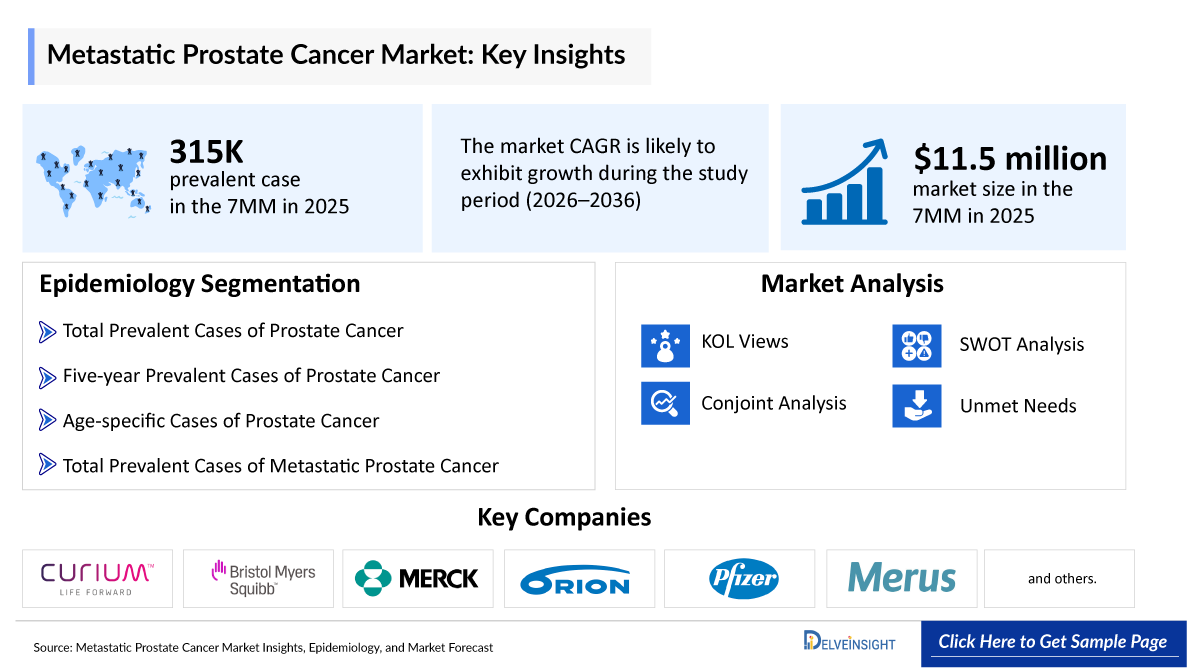
- According to DelveInsight’s analysis, Metastatic Prostate Cancer market size was found to be ~USD 11,500 million in the leading markets (the United States, the EU4 (Germany, France, Italy, and Spain), the United Kingdom, and Japan) in 2025.
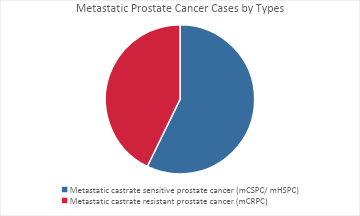
- The disease is broadly categorized into metastatic hormone-sensitive prostate cancer (mHSPC/mCSPC) and metastatic castration-resistant prostate cancer (mCRPC), based on response to androgen-deprivation therapy (ADT).
- Current treatment strategies for metastatic prostate cancer primarily include androgen-deprivation therapy (ADT), androgen receptor pathway inhibitors (ARPIs), chemotherapy, PARP inhibitors, immunotherapy, radiopharmaceuticals, and targeted therapies. ADT using luteinizing hormone-releasing hormone (LHRH) agonists or antagonists remains the backbone of therapy in metastatic hormone-sensitive disease.
- Approved androgen receptor–targeted therapies include enzalutamide (XTANDI), abiraterone acetate (ZYTIGA), apalutamide (ERLEADA), and darolutamide (NUBEQA), which are widely used across metastatic hormone-sensitive and castration-resistant settings. These therapies significantly improve overall survival and delay disease progression when combined with ADT.
- Chemotherapy agents such as docetaxel (TAXOTERE) and cabazitaxel (JEVTANA) remain important treatment options, particularly in patients with high-volume disease or progression following hormonal therapy.
- Enzalutamide and abiraterone acetate are the leading ADTs that have dominated not just in terms of the market but are heavily prescribed in 1st and 2nd lines of mCRPC in real-world prescriptions. In the future, we do not expect the emerging therapies to compete with them instead we expect these therapies to be used in combination with emerging classes for better performance and longer survival.
- Olaparib is the most preferred and leading PARP inhibitor used widely in later lines of treatment as rucaparib had witnessed downfall owing to the class scrutiny in ovarian cancer patients in 2022 and bankruptcy of Clovis oncology in 2023. Additionally, we expect competition among PARP inhibitors in 1st first-line with niraparib and abiraterone acetate, talazoparib and olaparib receiving approval at the same time, however niraparib and abiraterone acetate label has been restricted with a BRCA mutation only as compared to the entire HRR gene mutation for olaparib and talazoparib.
- The prostate cancer market is expected to witness significant growth owing to the rising prevalence of prostate cancer cases due to the rapidly aging population and growing disease awareness among people. In addition, extensive market penetration of approved therapies in prostate cancer due to label expansions and entry of new emerging therapies will be crucial factors facilitating the market growth.
Metastatic Prostate Cancer Market Size and Forecast in the 7MM
- 2025 Metastatic Prostate Cancer Market Size: ~USD 11,500 million
- Metastatic Prostate Cancer Growth Rate (2026–2036): XX % CAGR
DelveInsight's ‘Metastatic Prostate Cancer Market Insights, Epidemiology and Market Forecast 2036’ report delivers an in-depth understanding of the Metastatic Prostate Cancer, historical and forecasted epidemiology, as well as the Metastatic Prostate Cancer market trends in the United States, EU4 (Germany, Spain, Italy, and France), and the United Kingdom, and Japan.
The Metastatic Prostate Cancer market report delivers a comprehensive analysis of the current treatment landscape, including standards of care, clinical practices, and evolving therapeutic algorithms. It evaluates Metastatic Prostate Cancer patient burden trends, revenue & market share dynamics, peak patient share & therapy uptake analysis, and provides an in-depth market size assessment, and growth rate projections (Historical & Forecast 2022–2036) across global regions. The report highlights key unmet medical needs in Metastatic Prostate Cancer and maps the competitive and clinical landscape to uncover high‑value opportunities, providing a clear outlook on future market growth potential.
|
Study Period |
2022–2036 |
|
Historical Year |
2022–2025 |
|
Forecast Period |
2026–2036 |
|
Base Year |
2026 |
|
Geographies Covered |
|
|
Prostate Cancer Market CAGR (Forecast period) |
XX% (2026–2036) |
|
Metastatic Prostate Cancer Epidemiology Segmentation Analysis |
Patient Burden Assessment
|
|
Metastatic Prostate Cancer Companies |
|
|
Metastatic Prostate Cancer Therapies |
|
|
Metastatic Prostate Cancer Market |
Segmented by
|
|
Analysis |
|
Key Factors Driving the Metastatic Prostate Cancer Market
High Disease Burden and Progression to Advanced Stages
A significant proportion of prostate cancer patient’s progress to metastatic hormone-sensitive and castration-resistant disease, with epidemiological data (e.g., GLOBOCAN, SEER) highlighting a growing global burden and substantial unmet need in advanced stages.
Unmet Need in Castration-Resistant Prostate Cancer (CRPC)
Most patients eventually develop mCRPC despite ADT and AR-targeted therapy, where prognosis remains poor and treatment options become limited after ARPI and chemotherapy exposure, sustaining demand for novel therapies.
Emergence of Gene Therapies
The development of gene therapy in prostate cancer is becoming a major market driver due to its potential to deliver targeted and personalized treatment. Increasing clinical research, technological advancements, and growing investment in innovative therapies are expected to accelerate market growth and improve outcomes in advanced prostate cancer.
Metastatic Prostate Cancer Understanding and Treatment Algorithm
Metastatic Prostate Cancer Overview and Diagnosis
Metastatic prostate cancer is an advanced stage of prostate malignancy in which cancer cells spread beyond the prostate gland to distant sites, most commonly the bone, lymph nodes, liver, and lungs. It typically progresses from localized disease to metastatic hormone-sensitive prostate cancer (mHSPC) and eventually to metastatic castration-resistant prostate cancer (mCRPC). Diagnosis is based on a combination of PSA testing, imaging, and histopathology. Elevated prostate-specific antigen (PSA) levels often initiate further evaluation, although PSA alone is not diagnostic of metastatic disease. Imaging modalities such as bone scans, CT/MRI, and PSMA PET/CT are central to detecting and staging metastatic spread, with PSMA PET/CT offering superior sensitivity.
Metastatic Prostate Cancer Diagnosis
Diagnosis is based on a combination of PSA testing, imaging, and histopathology. Elevated prostate-specific antigen (PSA) levels often initiate further evaluation, although PSA alone is not diagnostic of metastatic disease. Imaging modalities such as bone scans, CT/MRI, and PSMA PET/CT are central to detecting and staging metastatic spread, with PSMA PET/CT offering superior sensitivity. Definitive diagnosis is confirmed via prostate biopsy, while metastatic lesions may be biopsied in select cases for further characterization. Disease classification into mHSPC or mCRPC is determined by response to ADT and testosterone suppression levels, which directly guides treatment strategy.
Further details are provided in the report.
Metastatic Prostate Cancer Treatment
The treatment landscape for metastatic hormone-sensitive prostate cancer (mHSPC) and metastatic castration-resistant prostate cancer (mCRPC) has evolved rapidly with the expansion of chemotherapy, androgen receptor axis-targeted therapies (ARATs), radionuclide therapies, targeted agents, and immunotherapy.
Docetaxel and cabazitaxel remain key chemotherapy options in mCRPC, particularly following progression on prior androgen receptor-targeted therapy. Among ARATs, abiraterone acetate and enzalutamide are widely used standards of care, targeting persistent androgen receptor signaling that drives CRPC progression.
Recent advances in theragnostics have established Lu-177–PSMA-617 (PLUVICTO) as an important treatment option for PSMA-positive mCRPC after ARATs and taxane chemotherapy. Radium-223 is also used in symptomatic bone-predominant disease to reduce skeletal complications.
Targeted therapies, particularly PARP inhibitors such as olaparib, are approved for biomarker-selected patients with DNA repair gene alterations, while investigational approaches targeting the PI3K/AKT/mTOR pathway continue to expand precision medicine opportunities. Although immunotherapy has shown limited broad efficacy in prostate cancer, selected patients with MSI-high, dMMR, or CDK12-mutated tumors may benefit from immune checkpoint inhibitor–based approaches.
Overall, treatment is increasingly guided by disease stage, biomarker status, prior therapy exposure, and PSMA expression, supporting a more personalized and sequential management approach in metastatic prostate cancer.
Further details related to country-based variations are provided in the report.
Metastatic Prostate Cancer Unmet Needs
The section “unmet needs of Metastatic Prostate Cancer” outlines the critical gaps between the current state of patient care, diagnosis, and the ideal & effective management of the disease. It highlights the obstacles experienced by patients, clinicians, and researchers and identifies potential solutions for future progress.
- Lack of curative therapy
- Need for early diagnosis
- Lack of consensus on genetic testing and treatment
- Need for novel biomarkers
- Cross-resistance between available androgen receptor pathway inhibitors, and others…..
Note: Comprehensive unmet needs insights in Metastatic Prostate Cancer and their strategic implications are provided in the full report.
Metastatic Prostate Cancer Epidemiology
Key Findings from Metastatic Prostate Cancer Epidemiological Analysis and Forecast
- According to DelveInsight’s estimates, in 2025, the total number of prevalent cases of metastatic prostate cancer in the 7MM were ~315,000.
- Based on DelveInsight's assessment in 2025, the US had ~3,864,000 prevalent cases of prostate cancer. These are expected to rise due to the growing geriatric population and advancements in diagnostic capabilities during the forecast period (2026−2036).
- The five-year prevalent cases of prostate cancer in the US was approximately ~1,157,000 in 2025.
- In 2025, in the US, the total cases of mCSPC were approximately ~72,500.
- According to the SEER, prostate cancer is most frequently diagnosed among men aged 65–74 years; the median age at diagnosis is 66 years. The most number of cases was found in people aged between 65 and 74 years, followed by 55–64 years and 75–84 years.
Metastatic Prostate Cancer Drug Analysis & Competitive Landscape
The Metastatic Prostate Cancer drug chapter provides a detailed, market-focused review of approved therapies and the emerging pipeline across Phase I–III clinical trials. It covers the mechanism of action, clinical trial data, regulatory approvals, patents, collaborations, and strategic partnerships for each therapy, along with their advantages, limitations, and recent developments. This section offers critical insights into the Metastatic Prostate Cancer treatment landscape, supporting market assessment, competitive analysis, and growth forecasting for the Metastatic Prostate Cancer therapeutics market.
Approved Therapies for Metastatic Prostate Cancer
Abiraterone acetate (ZYTIGA): Johnson & Johnson
Abiraterone acetate is approved for the treatment of metastatic castration-resistant prostate cancer (mCRPC) and metastatic high-risk castration-sensitive prostate cancer (mCSPC). ZYTIGA blocks CYP17-mediated androgen production at three sources—the testes, adrenal glands, and prostate tumor tissue—thereby suppressing prostate cancer growth.
In 2011, abiraterone acetate received approval in combination with prednisone for mCRPC patients previously treated with docetaxel-based chemotherapy. In 2012, its label was expanded for use in earlier-line mCRPC before chemotherapy.
However, ZYTIGA has faced significant competition from generic abiraterone acetate since 2018, substantially impacting its sales and market share. Following the launch of generics in Q4 2019, ZYTIGA’s US sales declined by 59% to USD 198 million in the second quarter. Its market share dropped to approximately 14%, while by December 2020, generic abiraterone accounted for nearly 85% of units sold, compared to only 15% for abiraterone acetate.
Enzalutamide ( XTANDI): Astellas Pharma/Pfizer
Enzalutamide is an androgen receptor signaling inhibitor and a widely adopted standard of care for prostate cancer. It has received approvals across multiple countries for the treatment of mHSPC, mCRPC, nmCRPC, and high-risk BCR nmHSPC.
The expanded approval of enzalutamide was supported by results from the Phase III EMBARK trial in men with high-risk biochemical recurrence (BCR) nmHSPC, where PSA levels doubled within nine months or less. In April 2024, the European Association of Urology (EAU) updated its treatment guidelines to recommend enzalutamide, with or without ADT, for men with high-risk BCR nmHSPC following radiation therapy or surgery.
In December 2019, the US FDA approved enzalutamide for metastatic castration-sensitive prostate cancer (mCSPC), adding to its previous approvals in CRPC settings. With this approval, enzalutamide became the first and only oral therapy approved by the FDA for three distinct advanced prostate cancer settings—nonmetastatic CRPC, CRPC, and mCSPC.
Despite being one of the largest revenue-generating therapies in the prostate cancer market, enzalutamide has experienced stable but slower growth since 2021 due to increasing market competition.
Note: Detailed marketed therapies assessment of therapies will be provided in the final report.
|
Metastatic Prostate Cancer Marketed/Approved Therapies | |||||||
|
Drug/Therapy |
Company |
Indication |
Molecule Type |
MoA |
RoA |
Marketed Region | |
|
Abiraterone acetate (ZYTIGA) |
Johnson & Johnson |
mCRPC who had received prior docetaxel chemotherapy |
Small molecule |
CYP17 inhibitor |
Oral |
2L |
US: 2011 EU: 2011 |
|
2L (Chemo naïve) |
US: 2012 EU: 2013 JP: 2014 | ||||||
|
Enzalutamide (XTANDI) |
Astellas Pharma/Pfizer |
Metastatic Hormone-Sensitive Prostate Cancer. |
Small molecule |
Androgen receptor inhibitor |
Oral |
1L |
US: 2014 EU: 2014 |
|
2L |
US: 2012 EU: 2013 JP: 2014 | ||||||
|
Apalutamide (ERLEADA) |
Johnson & Johnson |
mCSPC |
Small molecule |
Androgen Receptor Inhibitor |
Oral |
US: 2019 EU: 2020 JP: 2020 | |
Metastatic Prostate Cancer Pipeline Analysis
177Lu-DOTA-rosopatamab (TLX591): Telix Pharmaceuticals
TLX591 is Telix’s lead radioligand ADC directed at PSMA. The ProstACT series of studies (including the Phase II/III ProstACT GLOBAL study) is evaluating the efficacy and safety profile of TLX591 in prostate cancer, from first recurrence to advanced metastatic disease. Currently, the therapy is being investigated in the Phase III ProstACT Global trial. The Part I interim data of this study is anticipated.
-
In December 2025, Telix announced that the first patient has been dosed in Part 2 (randomized treatment expansion) of its ProstACT Global Phase III study evaluating its lead prostate cancer therapy candidate TLX591 in patients with mCRPC.
Mevrometostat (PF-06821497): Pfizer
Mevrometostat is a potent and selective small-molecule inhibitor of EZH2. Mevrometostat blocks the effects of a protein called enhancer of zeste homolog 2 (EZH2). EZH2 is involved in prostate cancer cell growth. One of the targets involved in this process is a protein called H3K27Me3.
|
Competitive Landscape of Pipeline Drugs | ||||||
|
Drug Name |
Company |
Highest Phase |
Indication |
RoA |
MoA |
Anticipated Launch in the US |
|
177Lu-DOTA-rosopatamab (TLX591) |
Telix Pharmaceuticals |
III |
mCRPC patients who have progressed following treatment with ARAT |
IV |
Anti-PSMA |
Information is available in the full report |
|
Azetukalner (XEN1101) |
Xenon Pharmaceuticals |
III |
Focal onset seizures |
Oral |
Kv7 voltage-gated potassium channel opener |
Information is available in the full report |
|
Mevrometostat (PF-06821497) |
Pfizer |
III |
Post-abiraterone mCRPC; treatment naïve mCRPC |
Oral |
EZH2 inhibitor |
Information is available in the full report |
|
Cabozantinib (CABOMETYX, XL184) |
Exelixis, Ipsen Pharma and Takeda |
III |
mCRPC patients who have previously been treated with one, and only one NHT |
Oral |
Tyrosine kinase inhibitor (TKI) |
Information is available in the full report |
|
PT-112 |
Promontory Therapeutics |
II |
mCRPC |
IV |
Promotes anti cancer immune response |
Information is available in the full report |
|
Vudalimab (XmAb-20717) |
Xencor |
II |
mCRPC |
IV |
Dual blockade of PD-1 and CTLA-4 |
Information is available in the full report |
|
177Lu-rhPSMA-10.1 |
Blue Earth Therapeutics |
I/II |
PSMA-expressing mCRPC (post chemotherapy mCRPC, taxane-naïve mCRPC) |
IV |
PSMA inhibitors (Prostate-specific Membrane Antigen Inhibitors) |
Information is available in the full report |
|
ORIC-944 |
ORIC Pharmaceuticals |
I |
mCRPC (Patients have progressed after at least one line of next generation androgen receptor antagonist and not have received more than 2 chemotherapy regimens in the mCRPC setting) |
Oral |
Polycomb repressive complex 2 (PRC2) inhibitors |
Information is available in the full report |
|
Note: Launch insights are provisional and may change with future report updates or the occurrence of major key catalysts. | ||||||
Note: Detailed emerging therapies assessment will be provided in the final report.
Metastatic Prostate Cancer Key Players, Market Leaders, and Emerging Companies
- Neurelis
- Biocodex
- Aquestive Therapeutics
- Ono Pharmaceutical
- Biohaven Pharmaceuticals
- Xenon Pharmaceuticals
- Meda Pharmaceuticals
- Autifony Therapeutics
- Greenwich Biosciences, and others
Metastatic Prostate Cancer Drug Updates
- In April 2025, Pfizer showcased data across its portfolio of potential breakthrough cancer medicines at the 2025 ASCO Annual Meeting. These updated data further inform the dosing strategy for mevrometostat in a robust registrational program that includes two Phase III trials in mCRPC, and a third trial in mCSPC that is planned to start in 1H 2025.
- According to the company’s February 2024 presentation, Mevrometostat is expected to launch by 2026 for post-abiraterone mCRPC patients.
- In November 2024, Curium announced that its ECLIPSE trial met its primary endpoint. ECLIPSE is a pivotal Phase III clinical trial comparing the safety and efficacy of 177Lu-PSMA-I&T versus hormone therapy in patients with mCRPC.
Metastatic Prostate Cancer Drug Class Insights
Metastatic Prostate Cancer Market Outlook
The metastatic prostate cancer market is undergoing a major transition from conventional androgen deprivation therapy (ADT) toward combination-based, biomarker-driven, and precision-targeted treatment approaches. While AR pathway inhibitors such as enzalutamide (XTANDI), apalutamide (ERLEADA), darolutamide (NUBEQA), and abiraterone acetate (ZYTIGA) continue to dominate across mHSPC and mCRPC settings, the emergence of PARP inhibitors and PSMA-targeted radioligand therapies is significantly reshaping the treatment paradigm.
The increasing adoption of treatment intensification strategies, including ADT + ARPI ± docetaxel, supported by trials such as TITAN, ARCHES, ARASENS, and PEACE-1, is driving improved survival outcomes and expanding the use of combination regimens in earlier disease stages. In parallel Lu-177–PSMA-617 (PLUVICTO) has established theragnostics as a new treatment pillar in PSMA-positive mCRPC, highlighting the growing role of precision oncology in prostate cancer management.
The market is also witnessing rapid growth in genomically targeted therapies, particularly PARP inhibitors such as Olaparib (LYNPARZA), Talazoparib (TALZENNA), and Abiraterone acetate/niraparib (AKEEGA), for patients with HRR/BRCA-mutated mCRPC. Increasing integration of molecular testing and PSMA imaging is expected to improve patient stratification and accelerate uptake of targeted therapies over the forecast period.
The United States remains the largest metastatic prostate cancer market due to high disease prevalence, strong uptake of novel therapies, advanced diagnostic infrastructure, and favorable reimbursement compared with EU4, the United Kingdom, and Japan.
- The treatment landscape is shifting from ADT monotherapy toward earlier combination and biomarker-driven approaches, particularly in mHSPC and mCRPC.
- Despite multiple approved therapies, mCRPC remains associated with poor long-term outcomes, sustaining significant unmet need for novel mechanisms and sequencing strategies.
- The late-stage pipeline, including next-generation PARP inhibitors, AKT inhibitors, PSMA-targeted therapies, and novel AR degraders, is expected to intensify market competition and further expand precision treatment opportunities during the forecast period.
Further details will be provided in the report….
Drug Class/Insights into Leading Emerging and Marketed Therapies in Metastatic Prostate Cancer (2022–2036 Forecast)
The metastatic prostate cancer treatment landscape comprises androgen deprivation therapy (ADT)-based regimens, androgen receptor pathway inhibitors (ARPIs), chemotherapy, radioligand therapies, PARP inhibitors, immunotherapy, and emerging targeted therapies, each addressing different stages and mechanisms of disease progression.
Currently, the market holds a diverse range of therapeutic alternatives for treatment, including PARP inhibitors, androgen receptor inhibitors, CYP17 inhibitors, microtubule inhibitors, radioligand therapies, GnRH receptor antagonists, and others in different lines of treatment.
Androgen receptor pathway inhibitors are a mainstay of treatment for patients with metastatic castration-resistant prostate cancer. There are currently four approved androgen receptor pathway inhibitors in the United States: three anti-androgens — apalutamide, enzalutamide, and darolutamide, as well as an androgen receptor pathway inhibitor, abiraterone acetate.
In men with mCRPC and select HRR pathway alterations, PARPi treatment has been shown to induce objective tumor responses and improve progression-free and overall survival. The FDA has approved four PARP inhibitors (olaparib, niraparib, rucaparib, and talazoparib) for men with metastatic castration-resistant prostate cancer.
FDA-approved targeted radioligand therapy, PLUVICTO, proved to be an important clinical advancement for people with progressing mCRPC, as it can significantly improve survival rates for those who have limited treatment options.
ADCs that target B7-H3 are generating early excitement among investigators in prostate cancer, which has been largely unresponsive to currently approved ICIs. MGC018 and DS-7300 have both displayed encouraging results in clinical trials involving patients with mCRPC.
Metastatic Prostate Cancer Drug Uptake
This section focuses on the uptake rate of potential drugs expected to be launched in the market during the forecast period (2026–2036). The analysis covers the Metastatic Prostate Cancer drug’s uptake, performance at peak, factors affecting performance during prime years of growth, patient uptake by therapy, and anticipated sales generated by each drug.
The uptake of therapies in metastatic prostate cancer is expected to vary across ADT-based regimens, androgen receptor pathway inhibitors (ARPIs), chemotherapy, radioligand therapies, and biomarker-driven targeted treatments. Established ARPIs such as XTANDI, ZYTIGA, ERLEADA, and NUBEQA are anticipated to maintain strong uptake due to their central role in both mHSPC and mCRPC management and their demonstrated survival benefits in pivotal clinical trials.
In parallel, taxane chemotherapies such as docetaxel and cabazitaxel are expected to retain steady utilization, particularly in later-line mCRPC and aggressive disease settings. Radioligand therapies, especially Lu-177–PSMA-617 (PLUVICTO), are expected to witness increasing adoption, driven by growing use of PSMA PET imaging and strong efficacy in PSMA-positive mCRPC following ARPI and chemotherapy exposure.
Targeted therapies such as PARP inhibitors (LYNPARZA, TALZENNA, AKEEGA, and rucaparib) are expected to demonstrate progressive uptake in patients with BRCA or HRR gene mutations, supported by increasing biomarker testing and precision oncology approaches. However, uptake may remain limited to molecularly selected populations.
In comparison, emerging pipeline therapies such as 177Lu-PSMA-I&T, TLX591, mevrometostat, and opevesostat are anticipated to show gradual uptake as late-stage clinical evidence matures. Their future adoption will depend on demonstrated survival benefit, safety profile, biomarker applicability, and differentiation from currently approved AR-targeted and radioligand therapies.
Detailed insights of emerging therapies' drug uptake is included in the report.
Market Access and Reimbursement of Metastatic Prostate Cancer
The United States
|
The US Reimbursement for Metastatic Prostate Cancer | |
|
Drug |
Access Program |
|
Enzalutamide (XTANDI) |
XTANDI Patient Savings Program |
Reimbursement is a crucial factor that affects the drug’s access to the market. Often, the decision to reimburse comes down to the price of the drug relative to the benefit it produces in treated patients. To reduce the healthcare burden of these high-cost therapies, many payment models are being considered by payers and other industry insiders.
NOTE: Further Details are provided in the final report….
Metastatic Prostate Cancer Therapies Price Scenario & Trends
Pricing and analogue assessment of Metastatic Prostate Cancer therapies highlights evolving price dynamics structures. This section summarizes the cost of approved treatments, the closest and most appropriate analogue selection for emerging therapies, and understanding of how pricing influences market access, adherence, and long-term uptake.
Further details are provided in the final report….
Industry Experts and Physician Views for Metastatic Prostate Cancer
To keep up with Metastatic Prostate Cancer market trends, we take Key Opinion Leaders (KOLs) and Subject Matter Experts (SMEs) opinions working in the domain through primary research to fill the data gaps and validate our secondary research. Industry experts were contacted for insights on the emerging Metastatic Prostate Cancer therapies, evolving treatment landscape, patient adherence to conventional therapies, therapy switching trends, drug adoption and uptake, accessibility challenges, and epidemiology and real-world prescription patterns in Metastatic Prostate Cancer , including MD, PhD, Instructor, Postdoctoral Researcher, Professor, Researcher, and others.
DelveInsight’s analysts connected with 10+ KOLs to gather insights at the country level. Centers such as the Metastatic Prostate Cancer Foundation, Italian Society for Uro-Oncology (SIUrO), and Urological Surgeon University College London Hospitals, etc., were contacted. Their opinion helps understand and validate current and emerging Metastatic Prostate Cancer therapies, highlight unmet medical needs, provide epidemiological context, and support strategic decisions for market
|
Region |
Key Opinion Leaders (KOLs) and Subject Matter Experts (SMEs) |
|
Italy |
“Prevention and the availability of increasingly precise diagnostic tools are what make prostate cancer one of the most curable today. The earlier the problem is identified, the higher the chances of recovery, even through minimally invasive therapies. The same increase in incidence is linked to the greater probability of diagnosing this neoplasm through periodic checks of tests such as PSA, which must be carried out with a variable frequency depending on the age group and the patient's personal history after adequate information on the risk of diagnosing even non- aggressive forms of the disease.” |
|
United Kingdom |
“There is an urgent need for better tests to define how aggressive a prostate cancer is from the outset, building on diagnostic tests like MRI scans and new biopsy techniques which help to more accurately define the extent of the prostate cancer. This would enable us to counsel patients with more certainty whether the prostate cancer identified is suitable for active surveillance or requires urgent surgery and treatment.”.” |
access, therapy adoption, and pipeline prioritization in Metastatic Prostate Cancer .
Qualitative Analysis: SWOT and Conjoint Analysis
We perform qualitative and market Intelligence analysis using various approaches, such as SWOT analysis and conjoint analysis.
In the SWOT analysis of Metastatic Prostate Cancer, strengths, weaknesses, opportunities, and threats in terms of disease diagnosis, patient awareness, patient burden, competitive landscape, cost-effectiveness, and geographical accessibility of therapies are provided.
Conjoint analysis analyzes emerging therapies based on relevant attributes such as safety, efficacy, frequency of administration, route of administration, and order of entry. Scoring is given based on these parameters to analyze the effectiveness of therapy.
The team of analysts analyzes promising emerging therapies based on relevant attributes such as safety, efficacy, frequency of administration, route of administration, and order of entry. In efficacy, the trial’s primary and secondary outcome measures are evaluated, whereas the therapies’ safety is evaluated, wherein the acceptability, tolerability, and adverse events are majorly observed. In addition, the scoring is also based on the route of administration, order of entry, probability of success, and the addressable patient pool for each therapy. According to these parameters, the final weightage score and the ranking of the emerging therapies are decided.
Scope of the Metastatic Prostate Cancer Market Report
- The report covers a segment of key events, an executive summary, a descriptive overview of Metastatic Prostate Cancer, explaining their causes, signs and symptoms, pathogenesis, and currently available treatments.
- Comprehensive insight has been provided into the epidemiology segments and forecasts, the future growth potential of the diagnosis rate, and disease progression along treatment guidelines.
- Additionally, an all-inclusive account of both the current and emerging treatments, along with the elaborate profiles of late-stage and prominent therapies, will have an impact on the current treatment landscape.
- A detailed review of the Metastatic Prostate Cancer market, historical and forecasted market size, market share by therapies, detailed assumptions, and rationale behind our approach is included in the report, covering the 7MM drug outreach.
- The report provides an edge while developing business strategies by understanding trends through SWOT analysis and expert insights/KOL views, patient journey, and treatment preferences that help in shaping and driving the 7MM Metastatic Prostate Cancer market.
Metastatic Prostate Cancer Market Report Insights
- Metastatic Prostate Cancer Patient Population Forecast
- Metastatic Prostate Cancer Therapeutics Market Size
- Metastatic Prostate Cancer Pipeline Analysis
- Metastatic Prostate Cancer Market Size and Trends
- Metastatic Prostate Cancer Market Opportunity (Current and forecasted)
Metastatic Prostate Cancer Market Report Key Strengths
- Epidemiology‑based (Epi‑based) Bottom‑up Forecasting
- Artificial Intelligence (AI)-Enabled Market Research Report
- 11-Year Forecast
- Metastatic Prostate Cancer Market Outlook (North America, Europe, Asia-Pacific)
- Patient Burden Trends (By Geography)
- Metastatic Prostate Cancer Treatment Addressable Market (TAM)
- Metastatic Prostate Cancer Competitive Landscape
- Metastatic Prostate Cancer Major Companies Insights
- Metastatic Prostate Cancer Price Trends and Analogue Assessment
- Metastatic Prostate Cancer Therapies Drug Adoption/Uptake
- Metastatic Prostate Cancer Therapies Peak Patient Share Analysis
Metastatic Prostate Cancer Market Report Assessment
- Metastatic Prostate Cancer Current Treatment Practices
- Metastatic Prostate Cancer Unmet Needs
- Metastatic Prostate Cancer Clinical Development Analysis
- Metastatic Prostate Cancer Emerging Drugs Product Profiles
- Metastatic Prostate Cancer Market Attractiveness
- Metastatic Prostate Cancer Qualitative Analysis (SWOT and conjoint analysis)
FAQs
Metastatic Prostate Cancer Market Insights
- What was the Metastatic Prostate Cancer market size, the market size by therapies, the market share (%) distribution in 2025, and what would it look like by 2036? What are the contributing factors for this growth?
- What are the anticipated pricing variations among different geographies for the emerging therapies in the future?
- What can be the future treatment paradigm of Metastatic Prostate Cancer?
- What is the impact of generics on the sales of ZYTIGA?
- Who is the major competitor of NUBEQA in the market?
- How much market share PARP inhibitors will capture by 2036?
- What are the disease risks, burdens, and unmet needs of Metastatic Prostate Cancer? What will be the growth opportunities across the 7MM concerning the patient population with Metastatic Prostate Cancer?
- Who is the major future competitor in the market, and how will the competitors affect their market share?
- What are the current options for the treatment of Metastatic Prostate Cancer? What are the current guidelines for treating Metastatic Prostate Cancer in the US, Europe, and Japan?
Reasons to Buy the Metastatic Prostate Cancer Market Forecast Report
-
The report will help in developing business strategies by understanding the latest trends and changing treatment dynamics driving the Metastatic Prostate Cancer market.
-
Bottom-up forecasting builds from the affected population to product forecasts, delivering a robust, data-driven approach ideal for new therapies and novel classes.
-
Insights on patient burden/disease incidence, evolution in diagnosis, and factors contributing to the change in the epidemiology of the disease during the forecast years.
-
Understand the existing market opportunities in varying geographies and the growth potential over the coming years.
-
Identifying strong upcoming players in the market will help devise strategies to help get ahead of competitors.
-
Detailed analysis and ranking of class-wise potential current and emerging therapies under the conjoint analysis section to provide visibility around leading classes.
-
To understand KOLs’ perspectives on the accessibility, acceptability, and compliance-related challenges of existing treatment to overcome barriers in the future.
-
Detailed insights into the unmet needs of the existing market so that the upcoming players can strengthen their development and launch strategy.
-
This Artificial Intelligence (AI)-enabled report summarizes and simplifies complex datasets within the report into clear, actionable insights for stakeholders, investors, and healthcare providers, enabling faster, data-driven decisions.

-market.png&w=256&q=75)