
Myelodysplastic Syndrome Market Summary
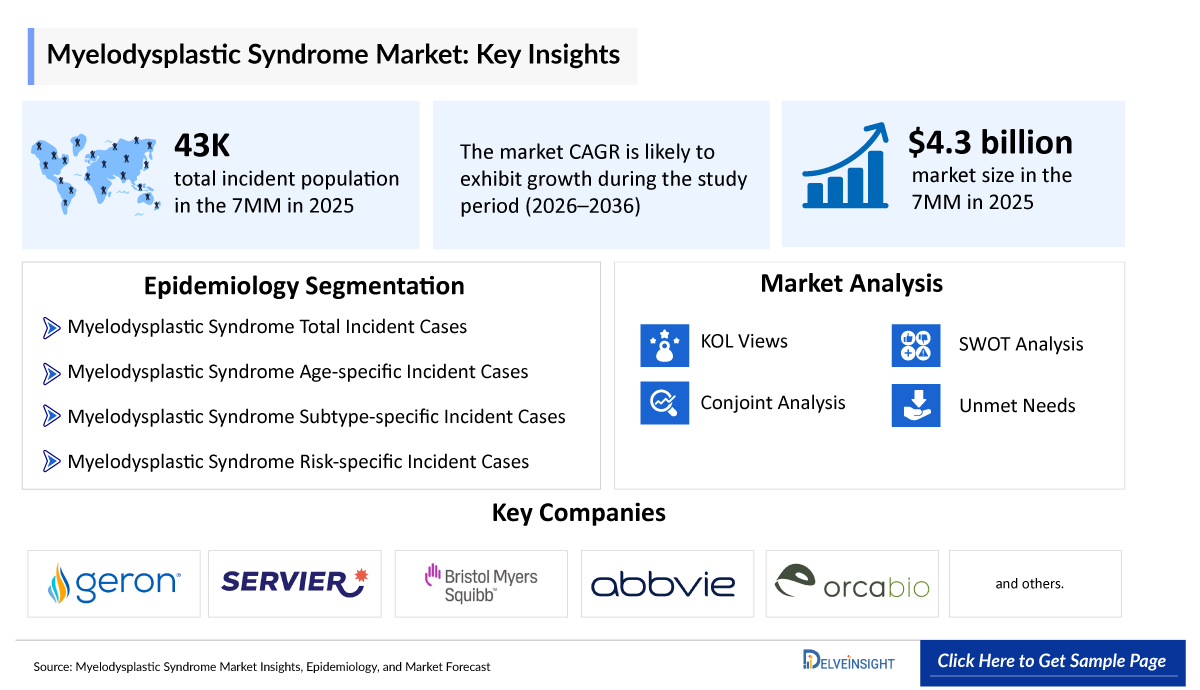
- According to DelveInsight’s analysis, the Myelodysplastic Syndrome Therapeutics Market Size was found to be ~USD 4,300 million in the leading markets (the United States, the EU4 (Germany, France, Italy, and Spain), the United Kingdom, and Japan) in 2025.
- The leading Myelodysplastic Syndrome Companies include Bristol-Myers Squibb, Astex Pharmaceutical, Taiho Oncology, Fibrogen, AbbVie, Gilead Sciences, Novartis, Syros Pharmaceuticals, Takeda, Pfizer, Geron Corporation, Karyopharm Therapeutics, Antengene Corporation, BerGenBio ASA, Jazz Pharmaceuticals, Aprea Therapeutics, Sanofi, Medac, and others.
Myelodysplastic Syndrome Market and Epidemiology Insights
- As per Blood Cancer United, approximately 25–30% of Myelodysplastic Syndrome Patients have high-risk disease. The disease can progress to high-risk MDS and secondary AML in approximately 30% of cases.
- As per MDS UK, Myelodysplastic Syndrome is a rare disease. In the UK, there are about 4 cases per 100,000 population per year. The typical age at which patients develop MDS is around 70 years old. Fewer than 10% of MDS patients are younger than 50 years.
- Myelodysplastic Syndrome primarily affects older adults, with a median age at diagnosis of approximately 71 years. The standardized net survival is estimated to be about 83% at 1 year and 51% at 5 years.
- The pharmaceutical companies active in the Myelodysplastic Syndrome Therapeutics Market include Bristol Myers Squibb (REBLOZYL), Geron (RYTELO), Servier Pharmaceuticals (TIBSOVO), and others.
- Venetoclax is expected to be one of the most influential emerging therapies in HR-MDS. Backed by extensive clinical experience in AML and encouraging combination data with hypomethylating agents.
- Luspatercept-aamt (REBLOZYL) is a standard of care for the first-line treatment of Anemia without previous erythropoiesis-stimulating agent use (ESA-naïve) in adult patients with very low- to intermediate-risk MDS who may require RBC transfusions.
- The Myelodysplastic Syndrome Pipeline is very robust, emerging therapies such as Venetoclax (VENCLEXTA) (AbbVie), Bexmarilimab (Faron Pharmaceuticals), ASTX727 (Taiho Oncology), Orca-T (Orca Bio), R289 (Rigel Pharmaceuticals), lisaftoclax (APG-2575) (Ascentage Pharma), olutasidenib (Rigel Pharmaceuticals), ofirnoflast (HT-6184) (Halia Therapeutics), and others are being developed for safe and efficacious treatments.
- Halia Therapeutics is scheduled to present final Phase II results for ofirnoflast in LR-MDS at EHA 2026. The accepted abstract indicated that the study achieved its primary endpoint of hematological improvement (HI) per IWG 2018 criteria, supporting the therapeutic potential of ofirnoflast in this patient population.
- The introduction of risk-adapted treatment strategies has transformed the Myelodysplastic Syndrome treatment landscape. While hypomethylating agents long served as the cornerstone of therapy, up to 50% of patients derived little or no benefit from these treatments.
Myelodysplastic Syndrome Market Size and Forecast in the 7MM
| 2025 Myelodysplastic Syndrome Market Size | 4,300 million |
| 2036 Projected Myelodysplastic Syndrome Market Size | XX million |
| Myelodysplastic Syndrome Growth Rate (2026–2036) | XX% CAGR |
Key Factors Driving the Growth of the Myelodysplastic Syndrome Market
-
Increasing Aging Population and Disease Burden
MDS predominantly affects older adults, with incidence rising significantly in individuals aged 65 years and above. The growing elderly population across major markets is expected to increase the number of diagnosed and treated MDS cases, thereby expanding the market opportunity.
-
Expanding Use of Combination Therapies
Combination approaches involving hypomethylating agents, B-cell lymphoma BCL-2 Inhibitors, immune-modulating therapies, and novel targeted agents are being increasingly evaluated. Positive clinical outcomes from these strategies are expected to drive treatment adoption and market growth.
-
Growing Clinical Trial Activity and Pipeline Innovation
A robust pipeline featuring cell therapies, immunotherapies, and targeted agents reflects strong industry interest in MDS. Continued clinical development and potential approvals of novel therapies are expected to diversify treatment options and stimulate market expansion.
DelveInsight's ‘Myelodysplastic Syndrome Market Insights, Epidemiology and Market Forecast – 2036’ report delivers an in-depth understanding of MDS, historical and forecasted epidemiology, as well as the MDS market trends in the United States, EU4 (Germany, Spain, Italy, and France) and the United Kingdom, and Japan.
The Myelodysplastic Syndrome Treatment Market Report delivers a comprehensive analysis of the current treatment landscape, including standards of care, clinical practices, and evolving therapeutic algorithms. It evaluates MDS patient burden trends, revenue & market share dynamics, peak patient share & therapy uptake analysis, and provides an in-depth market size assessment and growth rate projections (Historical & Forecast 2022–2036) across global regions. The Myelodysplastic Syndrome Therapeutics Market Report highlights key unmet medical needs in MDS and maps the competitive and clinical landscape to uncover high‑value opportunities, providing a clear outlook on future market growth potential.
Scope of the Myelodysplastic Syndrome Market Report | |
|
Study Period |
2022–2036 |
|
Historical Year |
2022–2025 |
|
Forecast Period |
2026–2036 |
|
Base Year |
2026 |
|
Geographies Covered |
|
|
Myelodysplastic Syndrome Market CAGR (Forecast period) |
XX% (2026–2036) |
|
Myelodysplastic Syndrome Epidemiology Segmentation Analysis |
Patient Burden Assessment
|
|
Myelodysplastic Syndrome Companies |
|
|
Myelodysplastic Syndrome Therapies |
|
|
Myelodysplastic Syndrome Market |
Segmented by
|
|
Analysis |
|
Myelodysplastic Syndrome Understanding
Myelodysplastic Syndrome Overview
MDS is a group of rare, heterogeneous bone marrow disorders characterized by ineffective hematopoiesis, leading to insufficient production of healthy blood cells. The disease arises from genetic and epigenetic abnormalities in hematopoietic stem cells, resulting in persistent cytopenias, bone marrow dysplasia, and an increased risk of progression to acute myeloid leukemia.
MDS primarily affects older adults and presents a substantial clinical burden due to chronic anemia, recurrent infections, bleeding complications, reduced quality of life, and the need for ongoing medical management. The biological and clinical heterogeneity of MDS has led to the development of risk-adapted treatment approaches and continues to drive the need for novel disease-modifying therapies.
Myelodysplastic Syndrome Diagnosis
MDS is diagnosed based on a combination of clinical evaluation, laboratory testing, bone marrow examination, and cytogenetic or molecular analyses. Patients typically present with persistent unexplained cytopenias identified through complete blood counts (CBCs). Bone marrow aspiration and biopsy are essential for assessing dysplasia, blast percentage, and cellularity, while cytogenetic testing and next-generation sequencing (NGS) help identify chromosomal abnormalities and gene mutations that support diagnosis, risk stratification, and treatment selection. Prognosis is commonly assessed using scoring systems such as the IPSS-R and IPSS-M.
Further details are provided in the report.
Current Myelodysplastic Syndrome Treatment Landscape
Treatment strategies for MDS are guided by disease risk, symptom burden, age, and patient fitness. Lower-risk patients are often managed with supportive care, including red blood cell transfusions, erythropoiesis-stimulating agents (ESAs), and luspatercept for anemia. Higher-risk patients generally receive disease-modifying therapies such as hypomethylating agents, including azacitidine and decitabine, while eligible patients may undergo allogeneic hematopoietic stem cell transplantation, the only potentially curative treatment. Emerging therapies such as Bcl-2 inhibitors, immune-targeted agents, and novel cellular therapies are expected to further transform the MDS treatment landscape.
Further details related to country-based variations are provided in the report.
Myelodysplastic Syndrome Unmet Needs
The section “unmet needs of Myelodysplastic Syndrome” outlines the critical gaps between the current state of patient care, diagnosis, and the ideal & effective management of the disease. It highlights the obstacles experienced by patients, clinicians, and researchers and identifies potential solutions for future progress.
- Poor understanding of bone marrow failure mechanisms independent of blast burden
- Lack of effective therapies after hma failure
- Limited therapies addressing disease progression
- Persistent transfusion dependence, and others…..
Note: Comprehensive unmet needs insights in MDS and their strategic implications are provided in the full report.
Myelodysplastic Syndrome Epidemiology
Key Findings from Myelodysplastic Syndrome Epidemiological Analysis and Forecast
- The total incident population of Myelodysplastic Syndrome in the 7MM was ~43,000 in 2025. These numbers are expected to increase by 2036.
- Patients classified as LR-MDS frequently present with symptomatic anemia, occurring in approximately 89% of cases.
- Among the EU4 and the UK, Germany had the highest incidence of Myelodysplastic Syndrome, followed by France. On the other hand, Spain had the lowest incidence of Myelodysplastic Syndrome in 2025.
- In the US, the majority of Myelodysplastic Syndrome cases were of the RAEB/MDS-EB subtype, accounting for nearly 7,000 cases in 2025.
- As per the analysis, mutation-specific cases of SF3B1 mutation accounted for the highest number of cases in MDS, i.e., ~900 cases, in Germany in 2025.
Myelodysplastic Syndrome Epidemiology Segmentation in the 7MM
- Total Myelodysplastic Syndrome Incident Cases
- Myelodysplastic Syndrome Age-specific Incident Cases
- Myelodysplastic Syndrome Subtype-specific Incident Cases
- Myelodysplastic Syndrome Risk-specific Incident Cases
- Myelodysplastic Syndrome Mutation-specific Incident Cases
Myelodysplastic Syndrome Market Recent Breakthroughs and Developments
- Geron in its 2026 corporate presentation mentions that a PTE application is filed in the US and EU for RYTELO patents and the RYTELO MOU (MDS) patent, respectively.
- In May 2026, Halia Therapeutics announced final Phase II results for ofirnoflast (HT-6184) in patients with LR-MDS. The data will be presented in an oral session at the European Hematology Association (EHA) 2026 Hybrid Congress.
- In May 2026, Geron Corporation announced that the first real-world evidence study of imetelstat in patients with LR-MDS will be presented at the European Hematology Association (EHA) 2026 Congress.
- In May 2026, Faron Pharmaceuticals announces that an abstract for its bexmarilimab Phase I/II study has been accepted as a poster presentation at the European Hematology Association (EHA) 2026 Congress. The BEXMAB study investigates bexmarilimab in combination with standard of care (SoC) in MDS.
- In March 2026, Faron Pharmaceuticals announcesd that investigators at City of Hope are in the process of developing a Phase II investigator-initiated clinical trial (IIT) in collaboration with Faron to evaluate bexmarilimab in participants with relapsed or refractory MDS.
- In Feburary 2026, Orca Bio announced new clinical data presented at the 2026 Tandem Meetings of ASTCT and CIBMTR. In Phase III Precision-T study, Orca-T demonstrated superior OS and RFS with reduced non-relapse mortality in patients with myelodysplastic syndromes compared to PTCy-based transplants.
- In Feburary 2026, Orca Bio announced first patients dosed in the Phase II SERENE-T study evaluating Orca-T with RIC in MDS.
- In December 2025, Faron Pharmaceuticals announced that two abstracts featuring data from the Phase I/II bexmarilimab study have been accepted for presentation at the American Society of Hematology (ASH) 2025 Annual Meeting. The Phase I/II BEXMAB study assessed impact of bexmarilimab plus azacitidine in patients with treatment-naive HR-MDS.
- In December 2025, Rigel Pharmaceuticals announced updated data from its ongoing Phase Ib study evaluating R2891 in patients with R/R LR-MDS. R289 continued to be generally well tolerated and at doses of ≥500 mg QD preliminary efficacy was observed in elderly.
Myelodysplastic Syndrome Drug Analysis & Competitive Landscape
The Myelodysplastic Syndrome drug chapter provides a detailed, market-focused review of the emerging pipeline across Phase III/I clinical trials and preclinical trials. It covers the Myelodysplastic Syndrome mechanism of action, clinical trial data, regulatory approvals, patents, collaborations, and strategic partnerships for each therapy, along with their advantages, limitations, and recent developments. This section offers critical insights into the MDS treatment landscape, supporting market assessment, competitive analysis, and growth forecasting for the MDS therapeutics market.
Myelodysplastic Syndrome Approved Therapies
-
Imetelstat (RYTELO): Geron
Imetelstat is a first-in-class treatment that works by inhibiting telomerase enzymatic activity. Imetelstat is the first and only telomerase inhibitor approved by the US FDA and the European Commission. It has US market exclusivity till June 2029 and till March 2035 in EU. It also has orphan drug exclusivity till June 2031 in US and till March 2025 in EU. RYTELO is positioned to lead in second-line Lower-Risk Myelodysplastic Syndrome (LR-MDS).
-
Ivosidenib (TIBSOVO): Servier
Ivosidenib is a oral, targeted, first-in-class precision medicine developed by Servier that blocks the isocitrate dehydrogenase-1 (IDH1) mutation. It is primarily prescribed for adults with relapsed/refractory (r/r) or newly diagnosed MDS. The FDA approval of this indication is supported by a pivotal Phase I, open-label study in IDH1-mutated R/R MDS patients. The therapy has demonstrated clinical benefit in hematologic cancers and targeted oncology settings driven by IDH1 mutations.
Competitive Landscape of Myelodysplastic Syndrome Marketed/Approved Therapies | ||||||
|
Drug/Therapy |
Company |
Indication |
Molecule Type |
MoA |
RoA |
Year of Approval |
|
Imetelstat (RYTELO) |
Geron |
LR-MDS |
Oligonucleotide |
Telomerase inhibitor |
IV |
US: 2024 |
|
Ivosidenib (TIBSOVO) |
Servier |
R/R MDS |
Small molecule |
IDH1 enzyme inhibitor |
Oral |
US: 2023 |
|
Luspatercept-aamt (REBLOZYL) |
Bristol Myers Squibb |
MDS |
Recombinant Fusion Protein |
Erythroid maturation agent |
SC |
US: 2019 |
Note: Detailed marketed therapies assessment will be provided in the final report.
Myelodysplastic Syndrome Pipeline Analysis
-
Venetoclax (VENCLEXTA): AbbVie
Venetoclax is a selective Bcl-2 inhibitor. The US FDA granted a Breakthrough Therapy Designation (BTD) to venetoclax in combination with azacitidine for the treatment of adult patients with previously untreated intermediate-, high- and very high-risk MDS. Venetoclax is a prescription medicine used in chronic lymphocytic leukemia (CLL) or small lymphocytic lymphoma (SLL). Venetoclax is being developed by AbbVie and Roche. It is jointly commercialized by Genentech in the US and by AbbVie outside of the US.
-
Orca-T: OrcaBio
Orca-T is an investigational allogeneic T-cell immunotherapy under evaluation for the treatment MDS. Orca Bio is evaluating Orca-T across multiple clinical trials in MDS, including Phase III, Phase II, and Phase I/Ib studies assessing different donor settings, conditioning regimens, and transplant approaches. By improving transplant outcomes and lowering transplant-related complications, Orca-T has the potential to expand access to curative HSCT for patients with HR-MDS.
Competitive Landscape of Myelodysplastic Syndrome Pipeline Drugs | ||||||
|
Drug Name |
Company |
Highest Phase |
Indication |
RoA |
MoA |
Anticipated Launch in the US |
|
Venetoclax (VENCLEXTA) |
AbbVie |
III |
MDS |
Oral |
Inhibits BCL-2 protein |
Information is available in the full report |
|
Orca-T |
OrcaBio |
III |
MDS |
IV |
Immunologic cytotoxicity |
Information is available in the full report |
|
Lisaftoclax (APG-2575) |
Ascentage Pharma |
III |
MDS |
Oral |
Inhibits BCL-2 protein |
Information is available in the full report |
|
Bexmarilimab (BEXMAB) |
Faron Pharmaceuticals |
II/III |
MDS |
IV |
Clever-1 (Stabilin-1) inhibitor |
Information is available in the full report |
|
ASTX727 |
Taiho Oncology |
II |
LR-MDS |
Oral |
DNA methyltransferase (DNMT) inhibitor |
Information is available in the full report |
|
Ofirnoflast (HT-6184) |
Halia Therapeutics |
II |
LR-MDS |
Oral |
NEK7 inhibitor |
Information is available in the full report |
|
Olutasidenib |
Rigel Pharmaceuticals |
II |
MDS |
Oral |
Mutated isocitrate dehydrogenase-1 (\(mIDH1\)) enzymes inhibitor |
Information is available in the full report |
|
R289 |
Rigel Pharmaceuticals |
I |
LR-MDS |
Oral |
IRAK1/4 inhibitor |
Information is available in the full report |
|
Note: Launch insights are provisional and may change with future report updates or the occurrence of major key catalysts. | ||||||
Note: Detailed emerging therapies assessment will be provided in the final report.
Myelodysplastic Syndrome Market Outlook
The Myelodysplastic Syndrome Treatment Landscape is undergoing a significant transformation from traditional supportive care and hypomethylating agents (HMAs) toward targeted therapies, erythroid maturation agents, and combination regimens designed to address specific molecular abnormalities and disease biology. The Myelodysplastic Syndrome Therapeutics Market is currently anchored by approved therapies such as luspatercept-aamt, imetelstat, and ivosidenib, each occupying distinct patient segments.
Luspatercept has established itself as a preferred option for lower-risk transfusion-dependent anemia, while imetelstat has strengthened competition by offering durable transfusion independence in ESA-refractory patients. ivosidenib, although limited to IDH1-mutated disease, exemplifies the growing role of biomarker-driven treatment approaches in MDS.
Imetelstat generated net revenue of USD 51.8 million in Q1 2026, representing an 8% increase over Q4 2025, indicating strong early commercial uptake. Luspatercept continues to maintain a substantially larger market presence owing to its broader label and earlier market entry.
Among emerging therapies, venetoclax is expected to be one of the most influential pipeline assets in the HR-MDS setting. The drug has already established a strong clinical foundation in AML, and ongoing MDS studies have shown encouraging response rates when combined with azacitidine. If ongoing trials demonstrate a survival benefit and a manageable safety profile. Bexmarilimab has attracted attention due to its encouraging activity in patients with r/r MDS.
Early clinical data have demonstrated durable responses and a favorable tolerability profile, supporting its potential role in a patient population with limited therapeutic options. Another notable emerging asset is lisaftoclax, which has reported promising efficacy signals in combination regimens and is being positioned as a next-generation BCL-2 inhibitor. Its future competitiveness will depend on whether it can demonstrate advantages over venetoclax in terms of safety, dosing flexibility, or durability of response.
Key findings from Myelodysplastic Syndrome Market Forecast
- Rigel Pharmaceuticals is emerging as a strong competitor in the MDS market with olutasidenib and R289 in its pipeline. The company's presence across both targeted and immune-modulating therapies strengthens its competitive position and provides opportunities to address multiple MDS patient subgroups.
- Bexmarilimab has positioned itself as a differentiated immunotherapy candidate targeting patients with r/r disease and limited treatment options. Positive late-stage data could support uptake in a high-unmet-need setting where therapeutic alternatives remain limited.
Further details will be provided in the report….
Myelodysplastic Syndrome Companies
- Geron
- Servier
- Bristol Myers Squibb
- AbbVie
- OrcaBio
- Ascentage Pharma
- Faron Pharmaceuticals
- Taiho Oncology
- Rigel Pharmaceuticals, and others.
Myelodysplastic Syndrome Drug Class/Insights into Leading Emerging and Marketed Therapies (2022–2036 Forecast)
The Myelodysplastic Syndrome Therapeutics Market (2022–2036 forecast) is evolving from a landscape historically dominated by supportive care and hypomethylating agents toward a more targeted and biomarker-driven treatment paradigm. Advances in disease biology have led to the development of therapies addressing ineffective hematopoiesis.
- Telomerase Inhibitors: Imetelstat represents the first telomerase inhibitor approved for LR-MDS patients with transfusion-dependent anemia. This class targets malignant hematopoietic progenitor cells by inhibiting telomerase activity. It’s approval has introduced a novel disease-modifying approach beyond supportive care and erythropoiesis-stimulating agents.
- Bcl-2 Inhibitors: Venetoclax and lisaftoclax belong to the Bcl-2 inhibitor class, which promotes apoptosis of malignant hematopoietic cells. Venetoclax-based combinations have generated considerable interest in HR-MDS, while lisaftoclax is being developed as a next-generation Bcl-2 inhibitor with the potential to offer differentiated efficacy and safety profiles.
- Cell Therapy: Orca-T belongs to the allogeneic cell therapy class and is designed to optimize outcomes following hematopoietic stem cell transplantation. Unlike conventional pharmacological therapies, this approach seeks to improve transplant success while reducing complications such as graft-versus-host disease, representing a highly specialized therapeutic strategy for eligible patients.
Myelodysplastic Syndrome innovation is no longer driven by a single therapeutic mechanism but rather by a convergence of erythroid maturation agents, telomerase inhibitors, targeted molecular therapies, apoptosis-inducing agents, immune modulators, and cellular therapies. This diversification is expected to reshape treatment algorithms, increase patient stratification based on molecular and clinical characteristics, and drive sustained market growth throughout the forecast period.
Myelodysplastic Syndrome Drug Uptake
This section focuses on the uptake rate of potential Myelodysplastic Syndrome drugs expected to be launched in the market during the forecast period (2026–2036). The analysis covers the MDS drug’s uptake, performance at peak, factors affecting performance during prime years of growth, patient uptake by therapy, and anticipated sales generated by each drug.
Among approved therapies, luspatercept is expected to maintain strong uptake in LR-MDS patients with anemia, supported by its established efficacy in reducing transfusion burden and its expanding role in earlier lines of treatment. Imetelstat is anticipated to witness increasing adoption among transfusion-dependent LR-MDS patients following ESA failure, driven by its novel telomerase inhibition mechanism and durable transfusion independence outcomes. Meanwhile, Ivosidenib is expected to experience more selective uptake due to its applicability to the relatively small subset of patients harboring IDH1 mutations, although its precision-medicine approach supports strong value within this niche population.
The Myelodysplastic Syndrome Pipeline is expected to drive increased competition across both lower-risk and higher-risk disease segments. Venetoclax is expected to achieve strong uptake in HR-MDS, supported by its established clinical use in AML and promising combination data with hypomethylating agents. Lisaftoclax (APG-2575) may emerge as a competitive next-generation Bcl-2 inhibitor if it demonstrates advantages in efficacy or tolerability over existing Bcl-2–based regimens. Bexmarilimab is likely to gain traction in R/R MDS, where unmet need remains high, while ofirnoflast and R289 may see selective adoption if their novel immune and inflammatory pathway-targeting approaches translate into meaningful clinical benefit.
Detailed insights of emerging therapies' drug uptake is included in the report
Myelodysplastic Syndrome Market Access and Reimbursement of Approved Therapies
The report further provides detailed insights on the country-wise accessibility and reimbursement scenarios, cost-effectiveness scenario of approved therapies, programs making accessibility easier and out-of-pocket costs more affordable, insights on patients insured under federal or state government prescription drug programs, etc.
The United States
US Reimbursement of Therapies Approved for Myelodysplastic Syndrome | |
|
Drug/Therapy |
Access Program |
|
RYTELO |
|
Reimbursement is a crucial factor that affects the drug’s access to the market. Often, the decision to reimburse comes down to the price of the drug relative to the benefit it produces in treated patients. To reduce the healthcare burden of these high-cost therapies, many payment models are being considered by payers and other industry insiders.
NOTE: Further Details are provided in the final report….
Myelodysplastic Syndrome Therapies Price Scenario & Trends
Pricing and analogue assessment of MDS therapies highlights evolving price dynamics structures. This section summarizes the cost of approved treatments, closest and most appropriate analogue selection for emerging therapies, and understanding of how pricing influences market access, adherence, and long-term uptake.
Myelodysplastic Syndrome Industry Experts and Physician Views
To keep up with Myelodysplastic Syndrome Therapeutics Market Trends, we take Key Opinion Leaders (KOLs) and Subject Matter Experts (SMEs) opinions working in the domain through primary research to fill the data gaps and validate our secondary research. Industry experts were contacted for insights on the MDS emerging therapies, evolving treatment landscape, patient adherence to conventional therapies, therapy switching trends, drug adoption and uptake, accessibility challenges, and epidemiology and real-world prescription patterns in MDS, including MD, PhD, Instructor, Postdoctoral Researcher, Professor, Researcher, and others.
DelveInsight’s analysts connected with 15+ KOLs to gather insights at the country level. Centers such as Stanford MDS Center, Memorial Sloan Kettering Cancer Center, and University Medical Center Mainz etc. were contacted. Their opinion helps understand and validate current and emerging MDS therapies, highlight unmet medical needs, provide epidemiological context, and support strategic decisions for market access, therapy adoption, and pipeline prioritization in MDS.
|
Region |
Key Opinion Leaders (KOLs) and Subject Matter Experts (SMEs) |
|
United States |
“Findings from the COMMANDS trial are confirmatory to the Medalist trial data; however, it will now make it feasible for community oncologists to treat patients with LR-MDS with ring sideroblasts or those with SF3B1 mutation in frontline setting.” |
|
Germany |
“In my opinion, through its novel mechanism of action (telomerase inhibitor), Imetelstat has the potential to alter the course of MDS which distinguishes it from other treatments currently approved or in development.” |
Myelodysplastic Syndrome Report Qualitative Analysis: SWOT and Conjoint Analysis
We perform qualitative and Myelodysplastic Syndrome Therapeutics Market Intelligence analysis using various approaches, such as SWOT analysis and conjoint analysis. In the SWOT analysis of MDS, strengths, weaknesses, opportunities, and threats in terms of disease diagnosis, patient awareness, patient burden, competitive landscape, cost-effectiveness, and geographical accessibility of therapies are provided.
Conjoint analysis analyzes Myelodysplastic Syndrome Emerging Therapies based on relevant attributes such as safety, efficacy, frequency of administration, route of administration, and order of entry. Scoring is given based on these parameters to analyze the effectiveness of therapy.
The team of analysts analyzes promising Myelodysplastic Syndrome emerging therapies based on relevant attributes such as safety, efficacy, frequency of administration, route of administration, and order of entry. In efficacy, the trial’s primary and secondary outcome measures are evaluated, whereas the therapies’ safety is evaluated, wherein the acceptability, tolerability, and adverse events are majorly observed.
In addition, the scoring is also based on the route of administration, order of entry, probability of success, and the addressable patient pool for each therapy. According to these parameters, the final weightage score and the ranking of the emerging therapies are decided.
Scope of the Myelodysplastic Syndrome Market Report
- The Myelodysplastic Syndrome Therapeutics Market Report covers a segment of key events, an executive summary, and a descriptive overview, explaining their causes, signs and symptoms, pathogenesis, and currently available treatments.
- Comprehensive insight has been provided into the epidemiology segments and forecasts, the future growth potential of the diagnosis rate, and disease progression along treatment guidelines.
- Additionally, an all-inclusive account of both the current and emerging treatments, along with the elaborative profiles of late-stage and prominent therapies, will have an impact on the current Myelodysplastic Syndrome Treatment landscape.
- A detailed review of the Myelodysplastic Syndrome Therapeutics Market, historical and forecasted Myelodysplastic Syndrome Treatment Market Size, Myelodysplastic Syndrome Drugs Market Share by therapies, detailed assumptions, and rationale behind our approach is included in the report, covering the 7MM drug outreach.
- The Myelodysplastic Syndrome Therapeutics Market Report provides an edge while developing business strategies by understanding trends through SWOT analysis and expert insights/KOL views, patient journey, and treatment preferences that help in shaping and driving the 7MM Myelodysplastic Syndrome Drugs Market.
Myelodysplastic Syndrome Market Report Insights
- Myelodysplastic Syndrome Patient Population Forecast
- Myelodysplastic Syndrome Therapeutics Market Size
- Myelodysplastic Syndrome Pipeline Analysis
- Myelodysplastic Syndrome Market Size and Trends
- Myelodysplastic Syndrome Market Opportunity (Current and Forecasted)
Myelodysplastic Syndrome Market Report Key Strengths
- Epidemiology‑based (Epi‑based) Bottom‑up Forecasting
- Artificial Intelligence (AI)-Enabled Market Research Report
- 11-Year Forecast
- Myelodysplastic Syndrome Market Outlook (North America, Europe, Asia-Pacific)
- Patient Burden Trends (By Geography)
- Myelodysplastic Syndrome Treatment Addressable Market (TAM)
- Myelodysplastic Syndrome Competitive Landscape
- Myelodysplastic Syndrome) Major Companies Insights
- Myelodysplastic Syndrome Price Trends and Analogue Assessment
- Myelodysplastic Syndrome Therapies Drug Adoption/Uptake
- Myelodysplastic Syndrome Therapies Peak Patient Share Analysis
Myelodysplastic Syndrome Market Report Assessment
- Myelodysplastic Syndrome Current Treatment Practices
- Myelodysplastic Syndrome Unmet Needs
- Myelodysplastic Syndrome Clinical Development Analysis
- Myelodysplastic Syndrome Emerging Drugs Product Profiles
- Myelodysplastic Syndrome Market Attractiveness
- Myelodysplastic Syndrome Qualitative Analysis (SWOT and Conjoint Analysis)
Key Questions Answered in the Myelodysplastic Syndrome Therapeutics Market Report
Myelodysplastic Syndrome Treatment Market Insights
- What was the Myelodysplastic Syndrome Treatment Market Size, the Myelodysplastic Syndrome Market Size by therapies, Myelodysplastic Syndrome Drugs Market Share (%) distribution in 2025, and what would it look like by 2036? What are the contributing factors for this growth?
- What are the anticipated pricing variations among different geographies for the emerging therapies in the future?
- What can be the future treatment paradigm of Myelodysplastic Syndrome?
- What are the disease risks, burdens, and unmet needs of Myelodysplastic Syndrome?
- What will be the growth opportunities across the 7MM concerning the patient population with Myelodysplastic Syndrome?
- Who is the major future competitor in the market, and how will the competitors affect their market share?
- What are the current options for the treatment of MDS? What are the current guidelines for treating MDS in the US, Europe, and Japan?
Reasons to Buy the Myelodysplastic Syndrome Therapeutics Market Report
- The Myelodysplastic Syndrome Therapeutics Market Report will help in developing business strategies by understanding the latest trends and changing treatment dynamics driving the Myelodysplastic Syndrome Drugs market.
- Bottom-up forecasting builds from the affected population to product forecasts, delivering a robust, data-driven approach ideal for new therapies and novel classes.
- Insights on patient burden/disease: Myelodysplastic Syndrome Incidence, evolution in diagnosis, and factors contributing to the change in the epidemiology of the disease during the forecast years.
- Understand the existing market opportunities in varying geographies and the growth potential over the coming years.
- Identifying strong upcoming players in the Myelodysplastic Syndrome Drugs Market will help devise strategies to help get ahead of competitors.
- Detailed analysis and ranking of class-wise potential Myelodysplastic Syndrome emerging therapies under the conjoint analysis section to provide visibility around leading classes.
- To understand KOLs’ perspectives on the accessibility, acceptability, and compliance-related challenges of existing treatments to overcome barriers in the future.
- Detailed insights on the unmet needs of the existing Myelodysplastic Syndrome Drugs Market so that the upcoming players can strengthen their development and launch strategy.
- This Artificial Intelligence (AI)-enabled report summarize and simplify complex datasets with in the report into clear, actionable insights for stakeholders, investors, and healthcare providers, enabling faster, data-driven decisions.
Stay updated with us for Recent Articles
- Servier’s Tibsovo Opens The Door To A New Era In The Battle Against Myelodysplastic Syndromes
- Myelodysplastic Syndrome Treatment Market: Unveiling the Robust Pipeline
- Myelodysplastic Syndromes: Key Pharma Players Unveiling Updated Findings at ASH 2021
- Myelodysplastic Syndrome Market Infographics
- Myelodysplastic Syndrome Market Analysis Newsletter
- New DelveInsight Blogs