Neurotechnology Market Summary
- The Neurotechnology market is estimated at USD 17.20 billion in 2025 and is projected to reach USD 57.10 billion by 2034. Growth is anchored in the rapid clinical and commercial advancement of brain-computer interfaces, expanding adoption of minimally invasive neurostimulation therapies, and rising investment in AI-enabled neuroscience research and diagnostics.
- The global Neurotechnology market is growing at a CAGR of 14.2% during the forecast period from 2026 to 2034.
- By product type, the neurostimulation devices segment dominated the Neurotechnology market with a 58% share in 2025.
- By application, the pain management segment dominated the Neurotechnology market with a 38% share in 2025.
- By end-users, the hospitals segment dominated the Neurotechnology market with a 66% share in 2025.
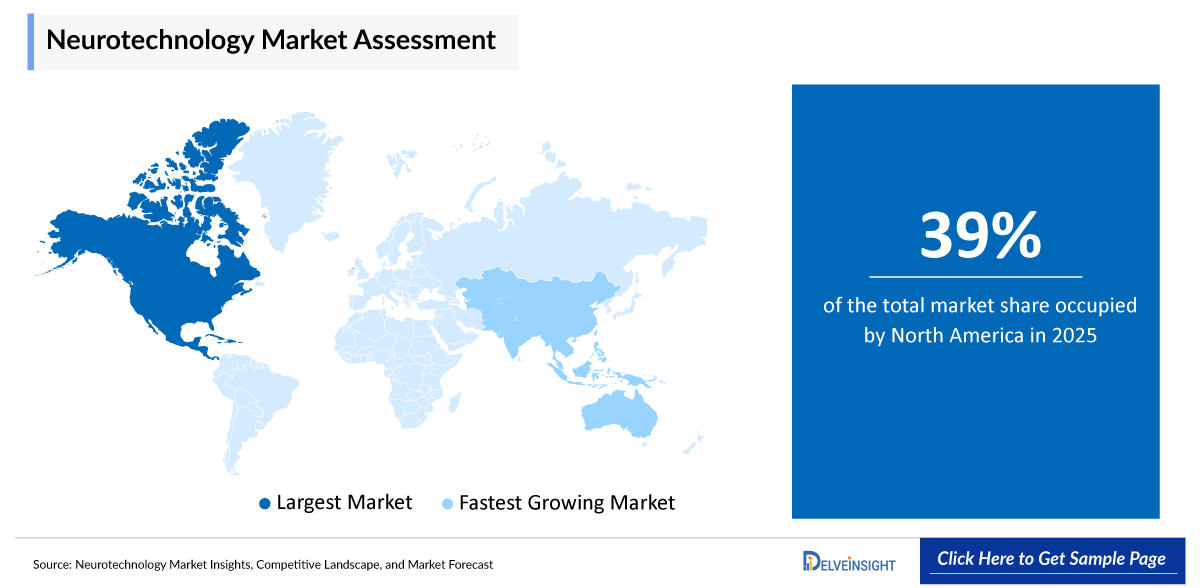
- North America dominated the global Neurotechnology market revenue with a 39% share in 2025, representing the highest regional market share globally.
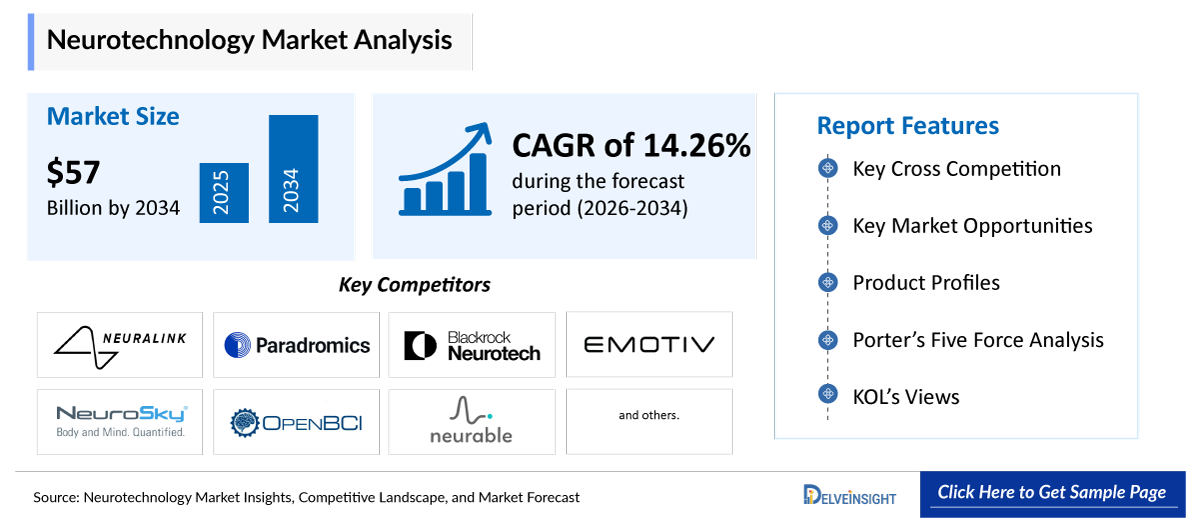
Neurotechnology refers to the convergence of neuroscience, engineering, and artificial intelligence into devices, implants, and software platforms that record, interpret, and modulate activity within the brain and nervous system. Because neurological and psychiatric disorders often require chronic, precisely targeted intervention, and because emerging brain-computer interfaces demand high-fidelity signal acquisition and clinical validation, hospitals, rehabilitation centers, and a growing base of homecare users rely on an expanding ecosystem of neurostimulation, neuroprosthetic, neuro-interface, and neuromonitoring technologies. The market is organized by product type across neurostimulation devices, including spinal cord stimulators, deep brain stimulators, sacral nerve stimulators, vagus nerve stimulators, and others; neuroprosthetics; brain-computer interface (BCI) systems; neuroimaging systems; neurodiagnostic and monitoring systems; and others; by application, led by pain management, Parkinson's disease, epilepsy, and depression and other psychiatric disorders, and others; and by end-user, spanning hospitals, homecare, rehabilitation centers, and others. Driven by the rapid clinical and commercial rise of brain-computer interfaces, the growing global burden of neurological disease, and heavy venture and strategic capital investment in neural-interface infrastructure, neurotechnology has become an essential and fast-scaling pillar of the global precision-medicine and human-machine interface landscape.
Neurotechnology Market Key Growth Drivers
- The rapid clinical and commercial expansion of brain-computer interfaces is driving demand, with Neuralink raising a USD 650 million Series E in April 2026 and Synchron securing a USD 200 million Series D in November 2025.
- The rising global burden of neurological disorders is expanding demand for precision neurotechnology, with epilepsy alone newly diagnosed in an estimated 5 million people annually worldwide and neurodegenerative disease prevalence climbing alongside an aging global population.
- Healthcare providers are increasingly adopting minimally invasive neurostimulation therapies, including deep brain stimulation, spinal cord stimulation, and vagus nerve stimulation, to manage chronic pain and movement disorders with reduced recovery time.
- Accelerating regulatory milestones, including China's March 2026 approval of the world's first commercial brain-computer interface medical device and a growing number of FDA Investigational Device Exemption approvals, are increasing commercial deployment.
- Heavy venture and strategic capital investment in neural-interface infrastructure, including BrainCo's USD 286 million equity round in January 2026 and continued financing across the invasive-BCI cohort, is expanding manufacturing and R&D capacity.
- Growing integration of artificial intelligence into neurodiagnostic and neuroimaging platforms is improving the accuracy and speed of neurological disease detection and enabling more personalized treatment strategies.
- The convergence of BCI commercialization, rising neurological disease burden, and AI-enabled diagnostics is expected to sustain double-digit growth in the market through 2034.
Key Companies in Neurotechnology Market
The competitive landscape is led by the following active device manufacturers:
- Neuralink Corp.
- Synchron Inc.
- Paradromics Inc.
- Blackrock Neurotech LLC
- Kernel Inc.
- Emotiv Inc.
- NeuroSky Inc.
- OpenBCI Inc.
- Neurable Inc.
- BrainCo Inc.
- NextMind (Snap Inc.)
For illustrative purposes, only the top 10 companies are listed in the Table of Contents. The report may include analysis and references to additional companies relevant to the market assessment.
Neurotechnology Market Size
The following snapshot summarizes the principal report metrics for the Neurotechnology market.
|
Report Metrics |
Details |
|
2025 Market Size |
USD 17.20 billion |
|
2034 Projected Market Size |
USD 57.10 billion |
|
Growth Rate (2026-2034) |
14.2% CAGR |
|
Largest Market |
North America |
|
Fastest Growing Market |
Asia-Pacific |
|
Market Structure |
Highly Fragmented |
All market values are expressed in USD and represent DelveInsight estimates synthesized from primary and secondary research.
Factors Contributing to the Growth of the Neurotechnology Market
Market Drivers
Rapid Commercialization of Brain-Computer Interfaces
The most powerful driver of the Neurotechnology market is the rapid clinical and commercial rise of brain-computer interfaces. Invasive platforms from Neuralink, Synchron, Blackrock Neurotech, and Paradromics are moving from early feasibility studies into pivotal trials, and China's March 2026 approval of the world's first commercial BCI medical device signals the field's transition from experimental research to real-world deployment. These systems restore communication, mobility, and digital-device control for patients with paralysis, ALS, and stroke, and a deep pipeline of both invasive and non-invasive candidates is advancing through clinical development. Because each platform must combine high-fidelity neural recording, biocompatible hardware, and robust decoding software, commercial and clinical programs require specialized manufacturing, regulatory expertise, and long-term clinical support that most sponsors build only through dedicated neurotechnology platforms. As BCI systems move into broader indications beyond ALS, including stroke paralysis and multiple sclerosis, demand for neurotechnology capacity expands directly, anchoring market growth through 2034.
Rising Global Burden of Neurological and Psychiatric Disorders
The growing global burden of neurological and psychiatric disease is expanding demand for precision neurotechnology and the diagnostic and therapeutic devices that support it. Epilepsy alone is newly diagnosed in an estimated 5 million people each year worldwide, and the prevalence of Parkinson's disease, depression, and other psychiatric disorders continues to rise alongside an aging global population. Neurotechnology is central to modern neurology and psychiatry, supporting both diagnostic monitoring through EEG and neuroimaging and targeted treatment through neurostimulation and neuroprosthetic devices, and pain management and movement disorders account for the large majority of current neurotechnology demand. As neurological disease prevalence increases and BCI-enabled communication and mobility restoration gain adoption, the volume and complexity of neurotechnology deployment rise in step, translating directly into growing requirements for specialized development, manufacturing, and clinical-support services across the forecast period.
Growing Adoption of Minimally Invasive Neurostimulation Therapies
A structural shift toward minimally invasive neurostimulation is a central growth engine for the market. Healthcare providers are increasingly utilizing deep brain stimulation, spinal cord stimulation, and vagus nerve stimulation to manage chronic pain, Parkinson's disease, and treatment-resistant depression, offering effective symptom management with reduced recovery time relative to traditional surgery. Device makers are pairing implantable neurostimulators with closed-loop sensing, directional leads, and remote-programming software, allowing sponsors to improve therapy titration and patient outcomes without expanding surgical footprint. As reimbursement pathways mature and outpatient and ambulatory-surgical-center adoption grows, the addressable base of eligible patients and the intensity of therapy adoption both rise, directly enlarging the addressable neurotechnology market through the forecast period.
Accelerating Regulatory Approvals and Milestone Clearances
A growing wave of regulatory approvals and milestone clearances is increasing commercial deployment. In March 2026, regulators in China approved the world's first commercial brain-computer interface medical device, and multiple companies, including Motif Neurotech, have secured FDA Investigational Device Exemption approvals to begin pivotal feasibility studies. Neuralink, Synchron, Blackrock Neurotech, and Paradromics continue to expand enrollment under active clinical protocols across the United States, while non-invasive platforms from Emotiv, OpenBCI, and Neurable are already commercially available in consumer and enterprise channels. Each approval and clearance creates durable, recurring demand for compliant manufacturing, clinical support, and reliable supply. Because most sponsors depend on specialized neurotechnology platforms to reach patients, this regulatory momentum flows directly to companies with proven capacity and regulatory track records, reinforcing market growth across the forecast period.
Rising Investment in Neurotechnology Startups and Infrastructure
Heavy venture and strategic capital investment in neural-interface infrastructure is expanding manufacturing capacity and easing critical bottlenecks. Synchron raised a USD 200 million Series D in November 2025, Neuralink closed a USD 650 million Series E in April 2026, and BrainCo raised USD 286 million in equity funding in January 2026 to expand its neuroprosthetic and neurorehabilitation product lines. Early-stage platforms such as Neurosoft Bioelectronics also secured oversubscribed seed financing in 2026 to scale soft, implantable BCI hardware. This investment expands available manufacturing capacity, improves clinical-trial throughput, and supports the scale-up of both invasive and non-invasive neurotechnology platforms through the forecast period.
Expansion of Artificial Intelligence in Neurodiagnostics and Neuroimaging
Artificial intelligence and machine learning are enhancing the accuracy and speed of brain-imaging analysis, neurological-disease detection, and predictive diagnostics. AI-enabled neurotechnology platforms are improving clinical decision-making while enabling more personalized treatment strategies across epilepsy, Parkinson's disease, and psychiatric care. Companies including Kernel are deploying AI-integrated, non-invasive neuroimaging platforms for pharmaceutical and academic research, while decoding software across the BCI cohort increasingly relies on machine learning to translate neural signals into actionable outputs. As AI integration deepens across neurodiagnostic and neuroimaging systems, adoption in both clinical and research settings is expected to accelerate through 2034.
Increasing Demand for Mental Health and Wearable Neurotechnology Solutions
Growing awareness of mental health disorders, including depression, anxiety, and post-traumatic stress disorder, has fueled demand for neurotechnology-based therapies and monitoring tools. Non-invasive brain stimulation and neurofeedback systems are emerging as effective alternatives or complements to traditional treatment, while wearable EEG headsets from Emotiv, NeuroSky, and Neurable are making neurological and cognitive assessment more accessible outside hospital settings. This wearable and portable segment supports remote patient monitoring, home-based care, and continuous data collection, broadening the addressable market for neurotechnology companies beyond traditional clinical channels.
Market Restraints
Despite strong momentum, the Neurotechnology market faces material constraints. The high cost of implantable devices, robotic surgical placement, and long-term clinical support is a significant barrier, excluding smaller health systems and slowing adoption in emerging economies. The invasiveness of leading BCI platforms limits the pool of qualified neurosurgeons and specialized implanting centers, constraining near-term scale-up even as demand grows. Complex and evolving regulatory pathways across the FDA, the European Medicines Agency, and China's National Medical Products Administration lengthen approval timelines and raise development costs, while reimbursement for newer neurostimulation and BCI therapies remains uneven across geographies. Cybersecurity and data-privacy risks associated with connected, cloud-linked neural devices raise additional compliance burdens, and a shortage of skilled neuro-engineering and neurosurgical talent constrains manufacturing and clinical scale-up alike. Ethical and societal questions around cognitive-enhancement and consumer neurotechnology, together with interoperability challenges across proprietary hardware and software platforms, further temper the pace of growth, even as the underlying drivers of BCI commercialization, disease burden, and AI-enabled diagnostics remain firmly intact.
Neurotechnology Market Segment Analysis
The Neurotechnology Market by Product Type (Neurostimulation Devices (Spinal Cord Stimulators, Deep Brain Stimulators, Sacral Nerve Stimulators, Vagus Nerve Stimulators, and Others), Neuroprosthetics, Brain-Computer Interface (BCI) Systems, Neuroimaging Systems, Neurodiagnostic & Monitoring Systems, and Others), Application (Pain Management, Parkinson's, Epilepsy, Depression & Other Psychiatric Disorders, and Others), End-Users (Hospitals, Homecare, Rehabilitation Centers, and Others), and Geography (North America, Europe, Asia-Pacific, and Rest of World).
By Product Type
Dominant Subsegment: Neurostimulation Devices.
The neurostimulation devices segment accounted for 58% of the Neurotechnology market in 2025. Neurostimulation devices are the leading product type because spinal cord stimulators, deep brain stimulators, sacral nerve stimulators, and vagus nerve stimulators together address the largest and most established base of neurological and pain-related indications, and because decades of clinical evidence and reimbursement precedent support their continued use across hospitals and specialty clinics. Spinal cord stimulators remain the leading device type within the category given their widespread use in chronic pain and failed back surgery syndrome, while deep brain stimulators are expanding quickly on the back of growing Parkinson's disease and dystonia indications. The category benefits from closed-loop sensing, directional leads, and remote-programming software that improve outcomes and support recurring device and accessory revenue. While brain-computer interface systems are the fastest-growing product type, propelled by the commercialization push from Neuralink, Synchron, Blackrock Neurotech, and Paradromics, the breadth, clinical maturity, and reimbursement depth of neurostimulation devices secure the segment's leadership across the forecast period.
By Application
Dominant Subsegment: Pain Management.
The pain management segment accounted for 38% of the Neurotechnology market in 2025. Pain management is the leading application because chronic and neuropathic pain, including failed back surgery syndrome and complex regional pain syndrome, affects a very large and growing patient population, and because neurostimulation-based treatments have become a preferred alternative to long-term opioid therapy. The established clinical role of spinal cord stimulation and peripheral nerve stimulation, combined with rising awareness of the risks of opioid dependence, sustains great and dependable demand for neurotechnology devices and associated clinical support. Hospitals and specialty pain clinics increasingly adopt both implantable and non-invasive neurostimulation platforms to manage chronic pain, reinforcing the segment's scale. While epilepsy is expanding rapidly as diagnostic and closed-loop therapeutic devices proliferate, and depression and other psychiatric disorders represent a fast-growing application for non-invasive brain stimulation, the sheer volume and clinical maturity of pain-management deployment secure the segment's leadership across the forecast period.
By End-Users
Dominant Subsegment: Hospitals.
The hospitals segment accounted for 66% of the Neurotechnology market in 2025. Hospitals are the leading end-user because implantable neurostimulation and BCI procedures require specialized neurosurgical infrastructure, advanced imaging for lead and electrode placement, and coordinated postoperative and long-term programming support that only hospitals and major neurosurgical centers can reliably provide. The proliferation of prominent neurosurgical hospitals, rising penetration of deep brain stimulation procedures, and climbing investment in neurological infrastructure reinforce hospitals' central role across diagnosis, implantation, and follow-up care. Rehabilitation centers play a growing role in neuroprosthetic fitting and post-implant therapy, while homecare is the fastest-growing end-user as wearable EEG and non-invasive neurostimulation devices make remote monitoring and home-based therapy increasingly viable. Nonetheless, the procedural complexity and infrastructure requirements of leading neurotechnology therapies secure hospitals' clear leadership across the forecast period.
Neurotechnology Market Region Analysis
Dominant Region: North America
North America accounted for 39% of the global Neurotechnology market revenue in 2025, representing the highest regional market share globally. The region's dominance reflects a well-established healthcare infrastructure, the strong presence of industry leaders such as Neuralink, Synchron, Blackrock Neurotech, and Paradromics, and substantial investment in neuroscience research and development. Early adoption of advanced technologies, including brain-computer interfaces, favorable regulatory frameworks, and the growing prevalence of neurological disorders further contribute to rising demand for innovative neurotechnology solutions across the region. Continuous advancements in brain-monitoring technologies and BCI systems, coupled with rising venture-capital funding for neurotechnology startups, are driving the North American market. Innovations such as high-resolution neural-recording platforms, closed-loop neurostimulation systems, and minimally invasive BCIs are enhancing diagnostic accuracy and enabling real-time treatment of epilepsy, Parkinson's disease, paralysis, and stroke. Robust venture-capital funding and strategic investment from leading healthcare and technology companies continue to accelerate innovation and commercialization across the United States and Canada.
Fastest Growing Region: Asia-Pacific
Asia-Pacific is the fastest-growing region in the Neurotechnology market. The region's elevated CAGR is driven by the rising incidence of neurological disorders, ongoing improvements in healthcare infrastructure, and increasing investment in advanced medical technologies across China, Japan, India, and South Korea. Demand for neurodiagnostic and neurostimulation technologies is growing rapidly given the region's large patient population affected by epilepsy, Parkinson's disease, stroke, and dementia, coupled with greater awareness of the importance of early diagnosis and timely treatment. Market expansion is further fueled by government initiatives to strengthen healthcare systems, the increasing integration of AI-powered brain-monitoring solutions, and the expanding regional presence of global neurotechnology companies. Japan and South Korea continue to lead advancements in neuroimaging and BCI research, while China and India are witnessing substantial growth in neurotechnology adoption within hospitals, reinforced by China's March 2026 approval of the world's first commercial BCI medical device.
Regional Commentary
North America
North America accounted for 39% of the global Neurotechnology market revenue in 2025. The United States dominates on the strength of its healthcare infrastructure, clinical-research base, regulatory clarity, and the concentration of leading BCI and neurostimulation companies, while heavy venture-capital investment and strategic moves by major healthcare and technology companies reinforce its leadership.
Europe
Europe is a large and advancing regional market, supported by growing healthcare expenditure, a supportive regulatory environment, and substantial public investment through initiatives such as Horizon Europe. These programs are driving innovation in brain-computer interfaces, neurodiagnostic technologies, and digital-neurology platforms across Germany, France, the United Kingdom, Italy, and Spain.
Asia-Pacific
Asia-Pacific is the fastest-growing region, propelled by rising neurological-disease incidence, rapid healthcare-infrastructure build-out, and growing investment across China, Japan, India, and South Korea. China's regulatory approval of the world's first commercial BCI device, Japan and South Korea's leadership in neuroimaging and BCI research, and India's expanding clinical-trial activity are accelerating regional adoption.
Rest of World
The Rest of World region, spanning Latin America, the Middle East, and Africa, is an emerging growth frontier. Expanding healthcare infrastructure, rising demand for neurological diagnosis and treatment, and efforts to align regulatory frameworks with global standards are gradually broadening access, while international partnerships support the build-out of regional neurotechnology capacity.
Neurotechnology Market Competitive Landscape
The Neurotechnology market is classified as Highly Fragmented. A group of well-funded, clinical-stage invasive BCI leaders, including Neuralink, Synchron, Blackrock Neurotech, and Paradromics, anchors the highest-profile tier through channel-count innovation, surgical-robotics integration, and pivotal-trial progress, while specialized and fast-scaling non-invasive and consumer-facing providers, including Kernel, Emotiv, NeuroSky, OpenBCI, Neurable, BrainCo, and NextMind (Snap Inc.), compete through wearable hardware, decoding software, and OEM licensing partnerships, increasing competition across both clinical and consumer-facing segments.
The competitive landscape can be evaluated across the following dimensions:
- Market concentration: Highly fragmented, with well-funded invasive-BCI leaders anchoring the clinical tier and a fast-growing field of specialized non-invasive and consumer neurotechnology providers.
- Leading players: Neuralink, Synchron, Blackrock Neurotech, and Paradromics anchor the invasive-BCI tier through channel-count leadership, clinical-trial progress, and vertically integrated manufacturing.
- Geographic reach: Leaders operate clinical and commercial networks concentrated in the United States, with expanding activity across Europe and Asia-Pacific following China's approval of the first commercial BCI device.
- Product portfolio strength: Top players offer end-to-end neural-interface hardware, implantation robotics, decoding software, and long-term clinical support across invasive and non-invasive modalities.
- Technology access: Proprietary electrode arrays, high channel-count recording systems, and closed-loop stimulation platforms, including Neuralink's threaded electrode architecture and Blackrock's Utah-array systems, are a decisive advantage.
- Strategic partnerships: Tie-ups with surgical-navigation and robotics vendors, such as Blackrock Neurotech's joint development agreement with ClearPoint Neuro, and OEM licensing agreements, such as Neurable's platform-licensing model, extend reach.
- Capital activity: Active fundraising, including Neuralink's USD 650 million Series E, Synchron's USD 200 million Series D, and BrainCo's USD 286 million equity round, continues to reshape the competitive landscape.
- Manufacturing capabilities: Custom chip design, implantable-grade electrode fabrication, and surgical-robotics integration are key competitive moats for invasive-BCI leaders.
- Innovation focus: High-channel-count neural recording, closed-loop adaptive stimulation, AI-driven signal decoding, and wearable non-invasive form factors define the next phase of competitive advantage.
Neurotechnology Market Recent Developmental Activities
In April 2026, Neuralink Corp. raised USD 650 million in a Series E funding round to expand clinical trial enrollment and scale manufacturing of its N1 implant. Strategic significance: Extends Neuralink's lead in high-channel-count invasive BCI development and accelerates commercial-stage manufacturing capacity.
In April 2026, Neurable Inc. transitioned to a licensing platform model, enabling global OEM partners to integrate its production-ready brain-computer interface technology into consumer wearable devices. Strategic significance: Broadens Neurable's commercialization pathway beyond direct-to-consumer hardware into scalable OEM licensing.
In January 2026, BrainCo Inc. raised USD 286 million in equity funding to expand its neuroprosthetic and neurorehabilitation product lines. Strategic significance: Strengthens BrainCo's capital position for scaling neuroprosthetic manufacturing and robotics-adjacent applications.
In November 2025, Synchron Inc. secured a USD 200 million Series D funding round led by Double Point Ventures to accelerate commercialization of its Stentrode endovascular BCI platform. Strategic significance: Funds pivotal trial activity and positions Synchron for a premarket approval filing.
In September 2025, Neurable Inc. launched the MW75 Neuro LT, a next-generation brain-computer-interface headphone platform designed to detect mental fatigue and cognitive load in real time. Strategic significance: Extends Neurable's consumer footprint in the wearable neurotechnology segment.
In September 2025, BrainCo Inc. launched the Revo2 prosthetic hand for humanoid-robotics and rehabilitation applications. Strategic significance: Diversifies BrainCo's neuroprosthetics portfolio into the fast-growing robotics-adjacent segment.
In June 2025, Paradromics Inc. completed its first human neural recording during a clinical epilepsy procedure using its Connexus high-channel-count implant. Strategic significance: Validates Paradromics' high-bandwidth recording platform and advances the company toward pivotal clinical trials.
In 2025, Blackrock Neurotech LLC entered a joint development agreement with ClearPoint Neuro to build an automated robotic surgical platform for BCI implantation. Strategic significance: Reduces surgical complexity and expands the pool of qualified implanting centers for Blackrock's Utah-array-based systems.
In 2025, Kernel Inc. expanded deployment of its time-domain functional near-infrared spectroscopy (TD-fNIRS) neuroimaging platform across pharmaceutical and academic research partnerships. Strategic significance: Broadens Kernel's non-invasive neuroimaging footprint in the fast-growing research-services segment.
In 2025, OpenBCI Inc. advanced its Galea platform, integrating EEG, EMG, and eye-tracking sensors for extended-reality (XR) research and enterprise applications. Strategic significance: Positions OpenBCI's open-source hardware ecosystem for growth in consumer and enterprise XR neurotechnology.
In March 2026, regulators in China approved the world's first commercial brain-computer interface medical device. Strategic significance: Marks the transition of neurotechnology from experimental to real-world commercial deployment and signals accelerating regulatory pathways globally.
Neurotechnology Market Segmentation
Neurotechnology Market by Product Type
- Neurostimulation Devices
- Spinal Cord Stimulators
- Deep Brain Stimulators
- Sacral Nerve Stimulators
- Vagus Nerve Stimulators
- Others
- Neuroprosthetics
- Brain-Computer Interface (BCI) Systems
- Neuroimaging Systems
- Neurodiagnostic & Monitoring Systems
- Others
Neurotechnology Market by Application
- Pain Management
- Parkinson's
- Epilepsy
- Depression & Other Psychiatric Disorders
- Others
Neurotechnology Market by End-Users
- Hospitals
- Homecare
- Rehabilitation Centers
- Others
Neurotechnology Market by Geography
- North America Neurotechnology Market
- United States Neurotechnology Market Size in USD million (2023-2034)
- Canada Neurotechnology Market Size in USD million (2023-2034)
- Mexico Neurotechnology Market Size in USD million (2023-2034)
- Europe Neurotechnology Market
- Germany Neurotechnology Market Size in USD million (2023-2034)
- United Kingdom Neurotechnology Market Size in USD million (2023-2034)
- France Neurotechnology Market Size in USD million (2023-2034)
- Italy Neurotechnology Market Size in USD million (2023-2034)
- Spain Neurotechnology Market Size in USD million (2023-2034)
- Rest of Europe Neurotechnology Market Size in USD million (2023-2034)
- Asia-Pacific Neurotechnology Market
- China Neurotechnology Market Size in USD million (2023-2034)
- Japan Neurotechnology Market Size in USD million (2023-2034)
- India Neurotechnology Market Size in USD million (2023-2034)
- Australia Neurotechnology Market Size in USD million (2023-2034)
- South Korea Neurotechnology Market Size in USD million (2023-2034)
- Rest of Asia-Pacific Neurotechnology Market Size in USD million (2023-2034)
- Rest of the World (RoW) Neurotechnology Market
- Middle East Neurotechnology Market Size in USD million (2023-2034)
- Africa Neurotechnology Market Size in USD million (2023-2034)
- South America Neurotechnology Market Size in USD million (2023-2034)
Neurotechnology Market Recent Industry Trends and Milestones (2023-2026)
|
Category |
Key Developments |
|
Neurotechnology Market Product Approval |
Regulatory momentum is expanding commercial deployment. China approved the world's first commercial brain-computer interface medical device in March 2026, and Motif Neurotech received FDA Investigational Device Exemption approval in April 2026 to begin its RESONATE Early Feasibility Study. Neuralink, Synchron, Blackrock Neurotech, and Paradromics continue to expand enrollment under active clinical protocols, while non-invasive platforms from Emotiv, OpenBCI, and Neurable remain commercially available. Each approval and clearance creates durable demand for compliant manufacturing and reliable clinical supply. |
|
Neurotechnology Market Expansion |
Companies broadened capacity and capability across the value chain. Neurable transitioned to an OEM licensing model, BrainCo launched the Revo2 prosthetic hand for humanoid-robotics and rehabilitation applications, and Kernel expanded deployment of its TD-fNIRS neuroimaging platform across pharmaceutical and academic research partnerships. OpenBCI advanced its Galea platform integrating EEG, EMG, and eye-tracking for XR research, while Blackrock Neurotech partnered with ClearPoint Neuro to automate robotic BCI implantation. |
|
Neurotechnology Market Investment |
Capital and consolidation accelerated sharply. Neuralink raised a USD 650 million Series E in April 2026, Synchron secured a USD 200 million Series D in November 2025, and BrainCo raised USD 286 million in equity funding in January 2026. Early-stage platforms including Neurosoft Bioelectronics also closed oversubscribed seed rounds in 2026, while venture and strategic investors continued to move capital toward companies combining clinical validation with scalable manufacturing. |
|
Company Strategy |
Neuralink Corp.: Vertically integrated leadership through custom chip design, surgical robotics, and high-channel-count electrode threads. Synchron Inc.: Catheter-delivered endovascular BCI platform advancing toward premarket approval. Paradromics Inc.: High-throughput implant platform validated through first human clinical recording. Blackrock Neurotech LLC: Longest clinical history in implanted BCI, reinforced by automated surgical partnerships. Kernel Inc., Emotiv Inc., NeuroSky Inc., OpenBCI Inc., Neurable Inc., BrainCo Inc., and NextMind (Snap Inc.): Specialized non-invasive and consumer neurotechnology platforms, wearable hardware, and OEM licensing partnerships. |
|
Emerging Technologies |
Brain-computer interfaces are the leading edge of innovation, with high-channel-count invasive systems scaling clinical enrollment and non-invasive wearable platforms expanding consumer and enterprise adoption. AI-driven signal decoding, closed-loop adaptive neurostimulation, and multimodal sensing that combines EEG, EMG, and eye-tracking are improving accuracy and usability. Automated robotic surgical placement and OEM licensing models are addressing scale-up constraints, while collaborations between neurotechnology companies, academic institutions, and healthcare systems are accelerating earlier clinical translation of new neural-interface technologies. |
Neurotechnology Market Startup Funding and Investment Trends
Investment in the Neurotechnology ecosystem has concentrated on brain-computer interface commercialization, neuroprosthetic scale-up, and non-invasive wearable platforms. The following companies illustrate recent funding and investment activity and technology focus.
|
Company |
Total Funding |
Funding Stage |
Main Offering |
Core Technology |
|
BrainCo Inc. |
USD 286 million |
Growth Equity |
Neuroprosthetics & rehabilitation platform |
AI-enabled myoelectric prosthetics and EEG rehabilitation |
|
Request for unlocking the report of the @ Neurotechnology Market | ||||
Capital is flowing toward companies that combine clinical validation with scalable manufacturing and software. Neuralink's USD 650 million Series E and Synchron's USD 200 million Series D underscore the strategic value of pivotal-trial readiness, while BrainCo's USD 286 million equity round highlights strong investor conviction in neuroprosthetics and rehabilitation platforms. Emerging providers such as Neurosoft Bioelectronics are scaling soft, implantable BCI hardware, while non-invasive specialists including Kernel, Emotiv, OpenBCI, and Neurable expand wearable and OEM-licensed platforms. Collectively, these investments signal conviction that BCI commercialization, neuroprosthetic scale-up, and AI-enabled decoding will define the next phase of competitive advantage in the global Neurotechnology market.
Key Takeaways from the Neurotechnology Market Report Study
- Market size analysis for the current neurotechnology market size (2025), and market forecast for 9 years (2026 to 2034).
- Top key product/technology developments, mergers, acquisitions, partnerships, and joint ventures that happened over the last 3 years.
- Key companies dominating the global neurotechnology market.
- Various opportunities available for competitors in the neurotechnology market space.
- What are the top-performing segments in 2025? How will these segments perform in 2034?
- Which are the top-performing regions and countries in the current neurotechnology market scenario?
- Which are the regions and countries where companies should concentrate their opportunities for neurotechnology market growth in the future?
Target audience who can benefit from this neurotechnology market report study
- Neurotechnology product providers
- Research organizations and consulting companies
- Neurotechnology-related organizations, associations, forums, and other alliances
- Government and corporate offices
- Start-up companies, venture capitalists, and private equity firms
- Distributors and traders dealing in neurotechnology
- Various end-users who want to know more about the neurotechnology market and the latest technological developments in the neurotechnology market.