
Neurotrophic Keratitis Market Summary
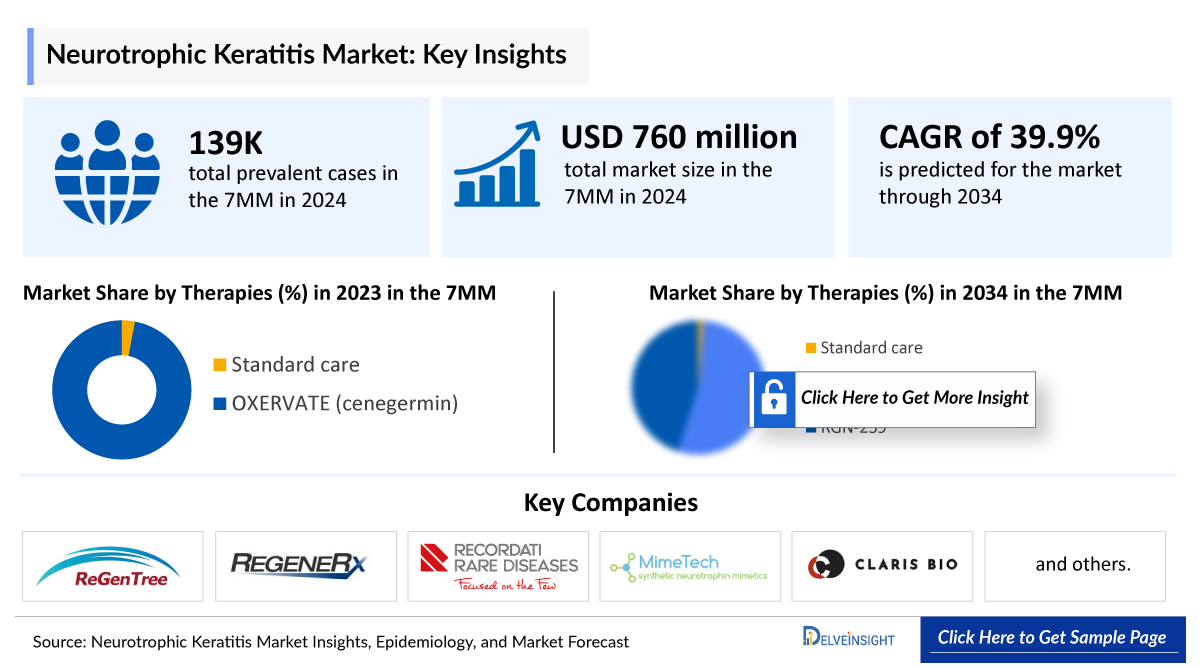
- According to DelveInsight’s analysis, The Neurotrophic Keratitis market size across the 7MM was estimated at around USD 1 billion in 2025 and is expected to expand to approximately USD 2 billion by 2036, registering a CAGR of 2.4% over the forecast period from 2026 to 2036.
- In 2025, the total number of diagnosed prevalent cases of neurotrophic keratitis in the 7MM was approximately 60,000. Among the 7MM countries, the US accounted for the highest number of diagnosed prevalent cases approximately 40,000.
- The current neurotrophic keratitis treatment landscape is centered on OXERVATE (cenegermin-bkbj), the only approved disease-specific therapy that directly promotes corneal nerve regeneration and epithelial healing. OXERVATE is approved in the US and EU, while Japan currently has no approved therapy specifically for neurotrophic keratitis.
- Key market trends include a continued shift from supportive management toward disease-modifying treatment, increasing focus on early diagnosis and disease recognition, and growing attention to treatment access, reimbursement, and dosing burden. OXERVATE's six-times-daily regimen and high treatment cost remain important considerations influencing treatment adoption and market access.
- Unlike ophthalmic markets with broad late-stage pipelines, neurotrophic keratitis relies on a limited number of emerging therapies, primarily KB801, lacripep, and RGN-259. This concentrated development landscape places greater emphasis on the successful advancement of these candidates to expand treatment options and drive long-term market growth and are expected to differentiate through mechanisms focused on epithelial repair, corneal nerve regeneration, treatment durability, and reduced treatment burden.
- An aging population and rising rates of diabetes, herpes simplex virus infections, ocular surgeries, and contact lens use, contributes to a growing neurotrophic keratitis at- risk patient pool. The market is diagnosis-limited, not prevalence-limited - low awareness and symptom overlap with common ocular surface disease routinely delay referral to corneal specialists.
- Market access for emerging regenerative therapies is expected to remain challenging, as the withdrawal of OXERVATE from the Scottish Medicines Consortium assessment highlighted the pricing and reimbursement hurdles faced even by first-in-class orphan therapies. These challenges may become more pronounced for next-generation therapies such as KB801.
Neurotrophic Keratitis Market size and forecast
- 2025 Neurotrophic Keratitis Market Size in the 7MM: ~USD 1 billion
- 2036 Projected Neurotrophic Keratitis Market Size in the 7MM: ~USD 2 billion
- Neurotrophic Keratitis Growth Rate (2026-2036): 2.4% CAGR
DelveInsight’s “Neurotrophic Keratitis Infections Market Insights, Epidemiology, and Market Forecast – 2036” report delivers an in-depth understanding of neurotrophic keratitis, historical and forecasted epidemiology, as well as the neurotrophic keratitis market trends in the United States, EU4 (Germany, France, Italy, and Spain), the United Kingdom, and Japan.
The neurotrophic keratitis market report delivers a comprehensive analysis of the current treatment landscape, including standards of care, clinical practices, and evolving therapeutic algorithms. It evaluates, neurotrophic keratitis patient burden trends, revenue & market share dynamics, peak patient share & therapy uptake analysis, and provides an in-depth market size assessment and growth rate projections (Historical & Forecast 2022–2036) across the 7MM regions. The report highlights key unmet medical needs in neurotrophic keratitis and maps the competitive and clinical landscape to uncover high-value opportunities, providing a clear outlook on future market growth potential.
Scope of the Neurotrophic Keratitis Market Report | |
|
Study Period |
2022–2036 |
|
Historical Year |
2022–2025 |
|
Forecast Period |
2026–2036 |
|
Base Year |
2025 |
|
Geographies Covered |
ü North America : The US ü Europe: Germany, France, Italy, Spain and the UK ü Asia-Pacific: Japan |
|
Neurotrophic Keratitis Market CAGR (Forecast period) |
2.4% (2022-2036) |
|
Neurotrophic Keratitis Epidemiology Segmentation Analysis |
Patient Burden Assessment
|
|
Neurotrophic Keratitis Companies |
|
|
Neurotrophic Keratitis Therapies |
|
|
Neurotrophic Keratitis Market |
Segmented by
|
|
Analysis |
|
Neurotrophic Keratitis Disease Understanding
Neurotrophic Keratitis Overview
Neurotrophic keratitis, also known as neurotrophic keratopathy, is a rare, progressive degenerative corneal disease caused by impairment of trigeminal nerve innervation, resulting in reduced or absent corneal sensation. The main risk factors for neurotrophic keratitis include herpes simplex and herpes zoster infections, trigeminal neuralgia surgery, acoustic neuroma, ocular and orbital surgery, facial trauma, herpetic keratitis, chemical and thermal injuries, LASIK, keratoplasty, cataract surgery, contact lens wear, chronic use of topical ocular medications, and diabetes mellitus.
Neurotrophic Keratitis Diagnosis
Neurotrophic Keratitis is diagnosed based on identifying characteristic symptoms, a detailed patient and family history, a thorough clinical evaluation, and a variety of specialized tests. Individuals with unexplained signs of reduced corneal sensitivity and damage to the cornea are suspected for diagnosis. Neurotrophic keratitis is diagnosed based on assessment of corneal sensitivity together with evaluation of ocular surface abnormalities and associated clinical findings. Corneal sensitivity assessment is essential to confirm diagnosis and assess the severity of corneal nerve impairment. Fluorescein staining is used to identify epithelial abnormalities, while Schirmer testing evaluates tear production. Slit-lamp examination assesses corneal scarring, neovascularization, persistent epithelial defects, and stromal involvement. In vivo confocal microscopy can further support diagnosis by visualizing the sub-basal corneal nerve plexus.
Further details related to country-based variations are provided in the report...
Current Neurotrophic Keratitis Treatment Landscape
Current treatment for neurotrophic keratitis depends on disease stage and aims to protect the ocular surface, promote epithelial healing, and prevent disease progression. Cenegermin-bkbj (OXERVATE) is the first disease-modifying therapy approved for neurotrophic keratitis and remains the current benchmark, promoting corneal healing and nerve regeneration. Other commonly used treatments include preservative-free artificial tears, lubricating gels or ointments, topical antibiotics, autologous serum eye drops, therapeutic contact lenses, and amniotic membrane transplantation (AMT).
In more advanced or non-healing cases, procedural and surgical interventions may be required to protect the ocular surface and preserve globe integrity. These include tarsorrhaphy, conjunctival flap, tissue adhesives, AMT, and corneal transplantation. Corneal neurotization is an emerging surgical approach that aims to restore corneal innervation and has demonstrated improvements in corneal sensation, epithelial integrity, and visual acuity. Treatment options are generally selected according to neurotrophic keratitis stage and severity and may be used in combination.
Further details related to country-based variations are provided in the report...
Neurotrophic Keratitis Unmet Needs
The section “unmet needs of neurotrophic keratitis” outlines the critical gaps between the current state of patient care, diagnosis, and the ideal & effective management of the disease. It highlights the obstacles experienced by patients, clinicians, and researchers and identifies potential solutions for future progress.
1. Under diagnosis and delayed diagnosis
2. Limited availability of durable disease-modifying therapies despite the emergence of regenerative biologics
3. Lack of validated biomarkers for disease monitoring
4. High-cost regenerative therapies, inconsistent reimbursement policies, and others.
Note: Comprehensive unmet needs insights in Neurotrophic Keratitis and their strategic implications are provided in the full report...
Neurotrophic Keratitis Epidemiology
The Neurotrophic Keratitis epidemiology section provides insights about the historical and current Neurotrophic Keratitis patient pool and forecasted trends for individual seven major countries. It helps to recognize the causes of current and forecasted trends by exploring numerous studies and views of key opinion leaders. This part of the Neurotrophic Keratitis market report also provides the diagnosed patient pool and their trends along with assumptions undertaken.
Key Findings from Neurotrophic Keratitis Epidemiological Analysis and Forecast
- In 2025, the total number of diagnosed prevalent cases of neurotrophic keratitis in the 7MM was around 60,000. Among the 7MM countries, the US accounted for the highest number of diagnosed prevalent cases, contributing approximately 40,000 cases.
- According to DelveInsight analysis, more than 20,000 males and 25,000 females were affected with neurotrophic keratitis infections in the US in 2025.
- Across EU4 and the UK, approximately 15,000 diagnosed prevalent cases were reported in 2025. Germany accounted for the largest share, contributing around 4,000 diagnosed prevalent cases, followed by the UK.
- According to DelveInsight’s estimates, Stage I neurotrophic keratitis accounted for the highest number of diagnosed prevalent cases across EU4 and the UK in 2025, with approximately 5,000 cases, followed by Stage II (~4,000 cases) and Stage III (~3,000 cases).
- Japan accounted for nearly 3,000 diagnosed prevalent cases of neurotrophic keratitis in 2025, representing only a small proportion of the total prevalent patient population.
- Across the 7MM, the diagnosis rate of neurotrophic keratitis remains relatively low because of under-recognition and misdiagnosis, particularly in early or mild disease. Although Stage I represents the largest proportion of diagnosed cases, the substantial number of patients diagnosed with Stage II and Stage III disease indicates that delayed diagnosis and disease progression before specialist evaluation remain significant challenges.
Neurotrophic Keratitis Epidemiology Segmentation
- Total Prevalent Cases of Neurotrophic Keratitis
- Total Diagnosed Prevalent Cases of Neurotrophic Keratitis
- Gender-specific Diagnosed Prevalent Cases of Neurotrophic Keratitis
- Severity-specific Diagnosed Prevalent Cases of Neurotrophic Keratitis
- Total Treated Cases of Neurotrophic Keratitis
Recent Developments in the Neurotrophic Keratitis Treatment Landscape:
- In July 2026, Krystal Biotech responded to a United States Patent and Trademark Office (USPTO) Office Action for a KB801 patent application, submitting clinical evidence from a patient in a discontinued study who achieved complete closure of a persistent corneal epithelial defect to support the patentability of the claims.
- In February 2026, Phase II study for Lacripep began enrolling patients with Stage 1 neurotrophic keratitis. The trial is evaluating safety, corneal staining, corneal sensitivity, visual function, and quality of life.
Neurotrophic Keratitis Drug Analysis & Competitive Landscape
The neurotrophic keratitis drug chapter provides a detailed, market-focused review of approved therapies and the emerging pipeline across Phase I-III Neurotrophic Keratitis clinical trials. It covers mechanism of action, clinical trial data, regulatory approvals, patents, collaborations, strategic partnerships upcoming key catalyst for each therapy, along with their advantages, limitations, and recent developments. This section offers critical insights into the neurotrophic keratitis treatment landscape, supporting market assessment, competitive analysis, and growth forecasting for the neurotrophic keratitis therapeutics market.
Approved Therapies Neurotrophic Keratitis
Cenegermin-bkbj (OXERVATE): Dompé Farmaceutici
OXERVATE is the first FDA-approved therapy for neurotrophic keratitis and is the only treatment that addresses the underlying disease by replacing deficient nerve growth factor (NGF). Cenegermin is a recombinant human NGF produced in Escherichia coli and is structurally identical to the endogenous NGF found in the human eye. It is formulated as a sterile, preservative-free ophthalmic solution for topical administration, supporting corneal nerve regeneration and epithelial healing.
- In August 2018, the US FDA approved cenegermin for treating neurotrophic keratitis, a rare disease affecting the cornea (the clear layer covering the colored portion of the front of the eye).
- In July 2017, the EMA recommended cenegermin for marketing authorization to treat moderate or severe neurotrophic keratitis.
Neurotrophic Keratitis Marketed/Approved Therapies | ||||||
|
Drug/Therapy |
Company |
Indication |
Molecule Type |
MoA |
RoA |
Marketed Region |
|
Cenegermin-bkbj (OXERVATE) |
Dompé Farmaceutici |
Neurotrophic Keratitis |
A recombinant form of human NGF |
NGF receptor agonist |
Topical |
US: 2018 EU: 2017
|
Note: Detailed marketed therapies assessment will be provided in the final report…
Neurotrophic Keratitis Pipeline Analysis
RGN-259(Timbetasin): ReGenTree
RGN-259, developed by ReGenTree, is a peptide-based investigational therapy currently in Phase III clinical development for the treatment of neurotrophic keratitis. RGN-259 is an ophthalmic solution formulated as thymosin beta 4 preservative-free eye drops for the treatment of both dry eye syndrome and neurotrophic keratitis. Tß4 is a synthetic copy of the naturally-occurring 43-amino acid peptide that is found in all tissues and in all nucleated cells. In the eye, Tß4 promotes corneal epithelial cell migration, decreases both inflammation and apoptosis, and accelerates both repair and regeneration. RGN-259 have Orphan Drug Designation (ODD) from the US FDA.
- In September 2025, HLB Therapeutics announced the expansion of the global Phase III clinical development program for RGN-259 into Europe following progress in the US trial program.
Lacripep: Tear Solutions
Lacripep, developed by TearSolutions, is a first-in-class regenerative peptide derived from the C-terminal region of lacritin, designed to promote corneal nerve regeneration, tear secretion, and epithelial restoration in neurotrophic keratitis. It is being evaluated in a Phase II trial in patients with Stage 1 neurotrophic keratitis.
- In June 2026, Lacripep received both ODD and Fast Track Designation (FTD) from the US FDA for the treatment of neurotrophic keratitis.
Neurotrophic Keratitis Competitive Landscape of Pipeline Drugs | ||||||
|
Drug Name |
Company |
Highest Phase |
Indication |
RoA |
MoA |
Anticipated Launch in the US |
|
RGN-259 |
ReGenTree |
III |
Neurotrophic Keratitis |
Tropical |
Actin modulators; Amyloid inhibitors; Angiogenesis inducing agents; Cell movement activators; NGF stimulants |
2028 |
|
Lacripep |
Tear Solutions |
II |
Neurotrophic Keratitis |
Topical |
Mimics the active C-terminal fragment of lacritin to promote corneal nerve regeneration |
Information is available in the full report |
|
XX |
XX |
XX |
XX |
XX |
XX |
Information is available in the full report |
|
Note: Launch insights are provisional and may change with future report updates or the occurrence of major key catalysts. | ||||||
Note: Detailed emerging therapies assessment will be provided in the final report…
Neurotrophic Keratitis Key Players, Market Leaders and Emerging Companies
- Dompé Farmaceutici
- ReGenTree
- Tear Solutions
- Claris Bio
- Krystal Biotech, and others
Neurotrophic Keratitis Market Outlook
Treatment practices in neurotrophic keratitis remain influenced by disease stage, delayed diagnosis, limited disease awareness, and variation in access to specialized ophthalmic care. Current management includes supportive ocular surface therapies such as lubricants, topical antibiotics, autologous serum eye drops, therapeutic contact lenses, and amniotic membrane transplantation, while advanced disease may require procedures such as tarsorrhaphy, conjunctival flap, tissue adhesives, amniotic membrane transplantation, or corneal transplantation. Cenegermin-bkbj (OXERVATE) has established a disease-modifying treatment paradigm by promoting corneal nerve regeneration and epithelial healing. However, its six-times-daily dosing regimen, high treatment cost, reimbursement restrictions, and prior authorization requirements can create treatment-access and adherence challenges.
- In 2025, the neurotrophic keratitis market size in the US was around USD 1 billion. This figure is expected to grow significantly with the introduction of emerging therapies.
- The total market size of EU4 and the UK was estimated to be more than USD 25 million in 2025.
- Among EU4 and the UK, Germany accounted for the highest market share with approximately USD 10 million in 2025, followed by the France with approximately USD 5 million in the respective year, and UK capturing the least market with nearly USD 1 million in 2025.
- In 2025, the total market size of neurotrophic keratitis was nearly USD 1 million in Japan, which is anticipated to increase during the forecast period (2026–2036).
Drug Class/Insights into Leading Emerging Therapies in Neurotrophic Keratitis (2022–2036 Forecast)
- Peptides: Peptide-based therapies represent an important emerging approach in neurotrophic keratitis, with candidates such as RGN-259 and Lacripep designed to promote corneal epithelial repair, restore corneal nerve function, and improve ocular surface homeostasis. RGN-259 is a thymosin beta 4 preservative-free ophthalmic solution that promotes corneal epithelial cell migration, decreases inflammation and apoptosis, and accelerates repair and regeneration. Lacripep is a synthetic peptide that mimics the active C-terminal fragment of lacritin and is designed to promote corneal nerve regeneration.
- Gene Therapy: Gene therapy approaches such as KB801 are designed to provide sustained local expression of nerve growth factor (NGF) in the cornea, supporting corneal healing while potentially reducing treatment frequency and burden.
- Small Molecules: Small-molecule approaches are designed to promote regeneration of corneal nerves and epithelium, offering a potential regenerative treatment approach for neurotrophic keratitis.
Neurotrophic Keratitis Drug Uptake
This section focuses on the uptake rate of potential Neurotrophic Keratitis drugs expected to be launched in the market during the forecast period (2026–2036). The analysis covers the neurotrophic keratitis drug’s uptake, performance at peak, factors affecting performance during prime years of growth, patient uptake by therapy, and anticipated sales generated by each drug.
The emerging treatment landscape for neurotrophic keratitis is expected to be shaped by therapies with varying adoption rates based on their clinical efficacy, treatment convenience, and ability to address existing unmet needs. RGN-259, Lacripep, and KB801 are anticipated to achieve medium uptake, supported by their regenerative potential and differentiated mechanisms, while adoption may be moderated by clinical development outcomes, pricing, reimbursement, and the need for additional evidence. Collectively, these therapies are expected to expand treatment options for neurotrophic keratitis, improve corneal healing and nerve regeneration, and gradually evolve the treatment paradigm over the forecast period.
Detailed insights of emerging therapies' drug uptake is included in the report...
Market Access and Reimbursement of therapies in Neurotrophic Keratitis
The report further provides detailed insights on the country-wise accessibility and reimbursement scenarios, cost-effectiveness scenario of therapies, programs making accessibility easier and out-of-pocket costs more affordable, insights on patients insured under federal or state government prescription drug programs, etc.
The United States
| The US Reimbursement of Therapies Approved for Neurotrophic Keratitis | |
|
Drug/Therapy |
Access Program |
|
Cenegermin-bkbj (OXERVATE) |
· Dompé Copay Support · Medicare · Medicaid |
Reimbursement is a crucial factor that affects the drug’s access to the market. Often, the decision to reimburse comes down to the price of the drug relative to the benefit it produces in treated patients. To reduce the healthcare burden of these high-cost therapies, many payment models are being considered by payers and other industry insiders.
NOTE: Further Details are provided in the final report...
Neurotrophic Keratitis Therapies Price Scenario & Trends
Pricing and analogue assessment of neurotrophic keratitis therapies highlights evolving price dynamics structures. This section summarizes the cost of approved treatments, closest and most appropriate analogue selection for emerging therapies, and understanding of how pricing influences market access, adherence, and long-term uptake.
Industry Experts and Physician Views for Neurotrophic Keratitis
To keep up with neurotrophic keratitis market trends, we take Key Opinion Leaders (KOLs) and Subject Matter Experts (SMEs) opinions working in the domain through primary research to fill the data gaps and validate our secondary research. Industry Experts were contacted for insights on the neurotrophic keratitis emerging therapies, evolving treatment landscape, patient adherence to conventional therapies, therapy switching trends, drug adoption and uptake, accessibility challenges, and epidemiology and real-world prescription patterns in neurotrophic keratitis, including MD, PhD, Instructor, Postdoctoral Researcher, Professor, Researcher, and others.
DelveInsight’s analysts connected with 25+ KOLs to gather insights at country level. Centers such as the National Jewish Health, Oregon Health & Science University, Hannover Medical School, University of Sassari, and Barcelona University etc. were contacted.
| Region | Key Opinion Leaders (KOLs) and Subject Matter Experts (SMEs) |
|
United States |
“Neurotrophic Keratitis is frequently underdiagnosed because its presentation overlaps with dry eye disease, making corneal sensitivity assessment essential in patients with persistent ocular surface disease. While supportive ocular surface therapies remain the foundation of care, nerve-regenerative treatments such as OXERVATE (cenegermin-bkbj) have transformed management by promoting corneal healing and nerve regeneration, although long-term follow-up remains essential to reduce recurrence and preserve ocular surface health.” |
|
Germany |
“Pediatric Neurotrophic Keratitis remains an underserved condition, often linked to congenital trigeminal nerve dysfunction and an increased risk of amblyopia. Despite advances with OXERVATE (cenegermin-bkbj), limited clinical evidence and long-term data remain key challenges. Future innovation is expected to focus on next-generation NGF mimetics, corneal neurotization, and gene-targeted therapies to provide more durable treatment outcomes.”
|
Their opinion helps understand and validate current and emerging neurotrophic keratitis therapies, highlight unmet medical needs, provide epidemiological context, and support strategic decisions for market access, therapy adoption, and pipeline prioritization in neurotrophic keratitis.
Neurotrophic Keratitis Market Report Qualitative Analysis: SWOT and Attribute Analysis
We perform qualitative and market Intelligence analysis using various approaches, such as SWOT analysis and attribute analysis.
In the SWOT analysis of neurotrophic keratitis, strengths, weaknesses, opportunities, and threats in terms of disease diagnosis, patient awareness, patient burden, competitive landscape, cost-effectiveness, and geographical accessibility of therapies are provide attribute analysis analyzes emerging therapies based on relevant attributes such as safety, efficacy, frequency of administration, route of administration, and order of entry. Scoring is given based on these parameters to analyze the effectiveness of therapy.
The team of analysts analyzes promising emerging therapies based on relevant attributes such as safety, efficacy, frequency of administration, route of administration, and order of entry. In efficacy, the trial’s primary and secondary outcome measures are evaluated, whereas the therapies’ safety is evaluated, wherein the acceptability, tolerability, and adverse events are majorly observed. In addition, the scoring is also based on the route of administration, order of entry, probability of success, and the addressable patient pool for each therapy. According to these parameters, the final weightage score and the ranking of the emerging therapies are decided.
Scope of the Neurotrophic Keratitis Market Report
- The report covers a segment of key events, an executive summary, a descriptive overview of neurotrophic keratitis, explaining their causes, signs and symptoms, pathogenesis, and currently available treatments.
- Comprehensive insight has been provided into the epidemiology segments and forecasts, the future growth potential of the diagnosis rate, and disease progression along treatment guidelines.
- Additionally, an all-inclusive account of both the current and emerging treatments, along with the elaborative profiles of late-stage and prominent therapies, will have an impact on the current treatment landscape.
- A detailed review of the neurotrophic keratitis market, historical and forecasted market size, market share by therapies, detailed assumptions, and rationale behind our approach is included in the report, covering the 7MM drug outreach.
- The report provides an edge while developing business strategies by understanding trends through SWOT analysis and expert insights/KOL views, patient journey, and treatment preferences that help in shaping and driving the 7MM neurotrophic keratitis market.
Neurotrophic Keratitis Market Report Insights
- Neurotrophic Keratitis Patient Population Forecast
- Neurotrophic Keratitis Therapeutics Market Size
- Neurotrophic Keratitis Pipeline Analysis
- Neurotrophic Keratitis Market Size and Trends
- Neurotrophic Keratitis Market Opportunity (Current and Forecasted)
Neurotrophic Keratitis Market Report Key Strengths
- Neurotrophic Keratitis Epidemiology-based (Epi-based) Bottom-up Forecasting
- Artificial Intelligence (AI) - enabled Market Research Report
- 11-year forecast
- Neurotrophic Keratitis Market Outlook (North America, Europe, Asia-Pacific)
- Neurotrophic Keratitis Patient Burden Trends (by geography)
- Neurotrophic Keratitis Treatment Addressable Market (TAM)
- Neurotrophic Keratitis Competitive Landscape
- Neurotrophic Keratitis Major Companies Insights
- Neurotrophic Keratitis Price Trends and Analogue Assessment
- Neurotrophic Keratitis Therapies Drug Adoption/Uptake
- Neurotrophic Keratitis Therapies Peak Patient Share analysis
Neurotrophic Keratitis Market Report Assessment
- Neurotrophic Keratitis Current Treatment Practices
- Neurotrophic Keratitis Unmet Needs
- Neurotrophic Keratitis Clinical Development Analysis
- Neurotrophic Keratitis Emerging Drugs Product Profiles
- Neurotrophic Keratitis Market Attractiveness
- Neurotrophic Keratitis Qualitative Analysis (SWOT and Attribute analysis)
- Neurotrophic Keratitis Market Drivers
- Neurotrophic Keratitis Market Barriers
FAQs Related to the Neurotrophic Keratitis Market Report:
Neurotrophic Keratitis Market Insights
- What was the neurotrophic keratitis market size, the market size by therapies, market share (%) distribution in 2025, and what would it look like by 2036? What are the contributing factors for this growth?
- What are the anticipated pricing variations among different geographies for the emerging therapies in the future?
- What can be the future treatment paradigm of neurotrophic keratitis?
- What are the disease risks, burdens, and unmet needs of neurotrophic keratitis? What will be the growth opportunities across the 7MM concerning the Neurotrophic Keratitis patient population?
- Who is the major future competitor in the market, and how will the competitors affect their market share?
- What are the current options for the treatment of neurotrophic keratitis? What are the current guidelines for treating neurotrophic keratitis in the US, Europe, and Japan?
Reasons to Buy Neurotrophic Keratitis Market Forecast Report
- The report will help in developing business strategies by understanding the latest trends and changing treatment dynamics driving the neurotrophic keratitis market.
- Bottom up forecasting builds from the affected population to product forecasts, delivering a robust, data driven approach ideal for new therapies and novel classes.
- Insights on patient burden/disease prevalence, evolution in diagnosis, and factors contributing to the change in the epidemiology of the disease during the forecast years.
- Understand the existing market opportunities in varying geographies and the growth potential over the coming years.
- Identifying strong upcoming players in the market will help devise strategies to help get ahead of competitors.
- Detailed analysis, ranking of class-wise potential current, and emerging therapies under the attribute analysis section to provide visibility around leading classes.
- To understand KOLs’ perspectives on the accessibility, acceptability, and compliance-related challenges of existing treatment to overcome barriers in the future.
- Detailed insights on the unmet needs of the existing market so that the upcoming players can strengthen their development and launch strategy.
- This Artificial Intelligence (AI) enabled report summarize and simplify complex datasets with in the report into clear, actionable insights for stakeholders, investors, and healthcare providers, enabling faster, data driven decisions.