Ocular Hypertension Epidemiology Summary
Ocular Hypertension Trends
- According to Delveinsight’s estimates, the total prevalent cases of ocular hypertension were highest in the United States among the 7MM. The number are anticipated to increase further by 2036.
- Since there are no early signs and symptoms for ocular hypertension, the disease often goes unnoticed until it progresses to glaucoma.
- Mean Intraocular Pressure (IOP) slowly rises with increasing age. Age older than 40 years is considered a risk factor for the development of ocular hypertension and primary open-angle glaucoma (POAG).
- In France, the prevalence of glaucoma and ocular hypertension in the population over 40 has been estimated at 4.1% or 1.2 million people.
- Accurate diagnosis frequently requires specialized ophthalmic equipment such as tonometry, pachymetry, optic nerve imaging, and visual field testing. Access to these technologies may be limited in rural or low-resource healthcare settings, contributing to missed or late diagnoses.
Ocular Hypertension Epidemiology Forecast in the 7MM
- 2025 Diagnosed Prevalent Cases of Ocular Hypertension: ~XX Cases
- Ocular Hypertension Growth Rate (2026–2036): ~XX% CAGR
DelveInsight's ‘Ocular Hypertension – Epidemiology Forecast – 2036’ report delivers an in-depth understanding of the ocular hypertension, historical and forecasted epidemiology, in the United States, EU4 (Germany, Spain, Italy, and France) and the United Kingdom, and Japan.
|
Study Period |
2022–2036 |
|
Historical Year |
2022–2025 |
|
Forecast Period |
2026–2036 |
|
Base Year |
2026 |
|
Geographies Covered |
|
|
Ocular Hypertension Epidemiology CAGR (Forecast period) |
~XX% (2026–2036) |
|
Ocular Hypertension Epidemiology Segmentation Analysis |
Patient Burden Assessment
|
Ocular Hypertension Understanding and Diagnosis Algorithm
Ocular Hypertension Overview
Ocular hypertension is a condition characterized by elevated IOP without detectable optic nerve damage or visual field loss associated with glaucoma. It occurs when the aqueous humor inside the eye does not drain properly, leading to increased pressure within the eye. Although ocular hypertension itself may not initially cause symptoms, it is considered a significant risk factor for the development of open-angle glaucoma if left untreated.
Further details are provided in the report.
Ocular Hypertension Diagnosis
Diagnosis of ocular hypertension primarily involves comprehensive ophthalmic evaluation, including tonometry to measure intraocular pressure, pachymetry to assess corneal thickness, gonioscopy to examine the drainage angle, and optic nerve assessment through fundoscopy or optical coherence tomography (OCT). Visual field testing may also be conducted to detect early functional changes and differentiate ocular hypertension from glaucoma. Regular monitoring is essential, as patients with persistently elevated IOP are at increased risk of disease progression.
Further details are provided in the report.
Ocular Hypertension Epidemiology
Key Findings from Ocular Hypertension Epidemiological Analysis and Forecast
- Among EU4 and the UK, Germany accounted for the highest number of cases whereas Spain accounted for the least number of cases in 2025.
- Females are more affected than males with ocular hypertension.
- Japan accounted for approximately 20% of prevalent cases of ocular hypertension among the 7MM.
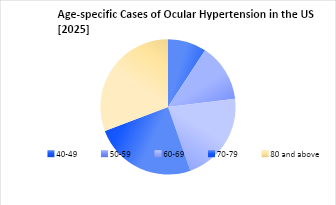
Scope of the Report
- The report covers a segment of a descriptive overview of ocular hypertension, explaining their causes, signs and symptoms, and pathogenesis.
- Comprehensive insight has been provided into the epidemiology segments and forecasts, the future growth potential of the diagnosis rate, and disease progression.
Report Insights
Ocular Hypertension Patient Population Forecast
Report Key Strengths
- Epidemiology‑based (Epi‑based) Bottom‑up Forecasting
- 11-year Forecast
- Patient Burden Trends (by geography)
FAQs
- What are the disease risks, burdens, and unmet needs of ocular hypertension? What will be the growth opportunities across the 7MM concerning the patient population with ocular hypertension?
- What is the historical and forecasted ocular hypertension patient pool in the US, EU4 (Germany, France, Italy, and Spain), the UK, and Japan?
Reasons to Buy
- Insights on patient burden/disease prevalence, evolution in diagnosis, and factors contributing to the change in the epidemiology of the disease during the forecast years.
- To understand key opinion leaders’ perspectives around the diagnostic challenges to overcome barriers in the future.
- Detailed insights on various factors hampering disease diagnosis and other existing diagnostic challenges.