Ocular Hypertension Market Summary
Ocular Hypertension Insights and Trends
- According to Delveinsight’s estimates, the total prevalent cases of ocular hypertension were highest in the United States among the 7MM. The number are anticipated to increase further by 2036.
- Since there are no early signs and symptoms for ocular hypertension, the disease often goes unnoticed until it progresses to glaucoma.
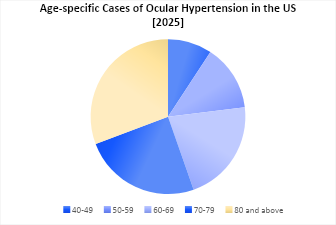
- Mean Intraocular Pressure (IOP) slowly rises with increasing age. Age older than 40 years is considered a risk factor for the development of ocular hypertension and primary open-angle glaucoma (POAG).
- In France, he prevalence of glaucoma and ocular hypertension in the population over 40 has been estimated at 4.1% or 1.2 million people.
- Approved therapies such as travoprost intracameral implant (iDose TR), omidenepag isopropyl ophthalmic solution (OMLONTI), and bimatoprost implant (DURYSTA) are reshaping the treatment landscape through sustained drug delivery systems and differentiated prostaglandin receptor targeting mechanisms aimed at improving intraocular pressure reduction and patient adherence.
- The companies involved in the emerging landscape of ocular hypertension are Nicox Ophthalmics, Sun Pharma Advanced Research Company, Visiox Pharma, Santen, Ono Pharmaceutical, and others.
- The emergence of long-acting implants, novel receptor-targeting therapies, and sustained-release ophthalmic formulations is expected to significantly transform the ocular hypertension market during the forecast period.
Ocular Hypertension Market Size and Forecast in the 7MM
- 2025 Ocular Hypertension Market Size: XX million
- 2036 Projected Ocular Hypertension Market Size: XX million
- Ocular Hypertension Growth Rate (2026–2036): XX% CAGR
DelveInsight's ‘Ocular Hypertension – Market Insights, Epidemiology and Market Forecast – 2036’ report delivers an in-depth understanding of the ocular hypertension, historical and forecasted epidemiology, as well as the ocular hypertension market trends in the United States, EU4 (Germany, Spain, Italy, and France) and the United Kingdom, and Japan.
The ocular hypertension market report delivers a comprehensive analysis of the current treatment landscape, including standards of care, clinical practices, and evolving therapeutic algorithms. It evaluates ocular hypertension patient burden trends, revenue & market share dynamics, peak patient share & therapy uptake analysis, and provides an in-depth market size assessment, and growth rate projections (Historical & Forecast 2022–2036) across global regions. The report highlights key unmet medical needs in ocular hypertension and maps the competitive and clinical landscape to uncover high‑value opportunities, providing a clear outlook on future market growth potential.
|
Study Period |
2022–2036 |
|
Historical Year |
2022–2025 |
|
Forecast Period |
2026–2036 |
|
Base Year |
2026 |
|
Geographies Covered |
|
|
Ocular Hypertension Market CAGR (Forecast period) |
XX% (2026–2036) |
|
Ocular Hypertension Epidemiology Segmentation Analysis |
Patient Burden Assessment
|
|
Ocular Hypertension Companies |
|
|
Ocular Hypertension Therapies |
|
|
Ocular Hypertension Market |
Segmented by
|
|
Analysis |
|
Key Factors Driving the Ocular Hypertension Market
- Rising Prevalence of Ocular Disorders
The increasing prevalence of ocular hypertension and glaucoma, particularly among the elderly population, is driving demand for early diagnosis and long-term treatment. Growing exposure to risk factors such as diabetes, hypertension, and prolonged screen time is further contributing to disease burden.
- Innovation in Therapeutic Development
The ocular hypertension market is witnessing strong innovation with the development of sustained-release therapies, nitric oxide-donating agents, and next-generation prostaglandin analogs. Emerging therapies aim to improve intraocular pressure (IOP) control, reduce dosing frequency, and enhance patient adherence. Increasing pipeline activity from pharmaceutical companies is expected to strengthen future market growth.
- Increasing Awareness and Healthcare Access
Rising awareness regarding routine eye examinations and preventive eye care is contributing to higher diagnosis rates. Expanding healthcare infrastructure and improved access to ophthalmic services in emerging economies are also supporting treatment uptake.
Ocular Hypertension Understanding and Treatment Algorithm
Ocular Hypertension Overview and Diagnosis
Ocular hypertension is a condition characterized by elevated IOP without detectable optic nerve damage or visual field loss associated with glaucoma. It occurs when the aqueous humor inside the eye does not drain properly, leading to increased pressure within the eye. Although ocular hypertension itself may not initially cause symptoms, it is considered a significant risk factor for the development of open-angle glaucoma if left untreated.
Diagnosis of ocular hypertension primarily involves comprehensive ophthalmic evaluation, including tonometry to measure intraocular pressure, pachymetry to assess corneal thickness, gonioscopy to examine the drainage angle, and optic nerve assessment through fundoscopy or optical coherence tomography (OCT). Visual field testing may also be conducted to detect early functional changes and differentiate ocular hypertension from glaucoma. Regular monitoring is essential, as patients with persistently elevated IOP are at increased risk of disease progression.
Note: Further details are provided in the report.
Current Ocular Hypertension Treatment Landscape
Treatment of ocular hypertension focuses on lowering IOP to reduce the risk of glaucoma development. First-line management commonly includes topical medications such as prostaglandin analogs, beta-blockers, alpha agonists, and carbonic anhydrase inhibitors. In patients inadequately controlled with medications, laser procedures such as selective laser trabeculoplasty (SLT) or minimally invasive glaucoma surgeries (MIGS) may be considered. Emerging therapies, including sustained-release implants and nitric oxide-donating agents, are also being developed to improve long-term disease management and patient adherence.
Note: Further details related to country-based variations are provided in the report.
Ocular Hypertension Unmet Needs
The section “unmet needs of ocular hypertension” outlines the critical gaps between the current state of patient care, diagnosis, and the ideal & effective management of the disease. It highlights the obstacles experienced by patients, clinicians, and researchers and identifies potential solutions for future progress.
- Poor long-term treatment adherence
- Limited access to advanced ophthalmic care
- Need for personalized treatment approaches
- Challenges in monitoring disease progression, and others…..
Note: Comprehensive unmet needs insights in Ocular Hypertension and their strategic implications are provided in the full report.
Ocular Hypertension Epidemiology
Key Findings from Ocular Hypertension Epidemiological Analysis and Forecast
- Among EU4 and the UK, Germany accounted for the highest number of cases whereas Spain accounted for the least number of cases in 2025.
- Females are more affected than males with ocular hypertension.
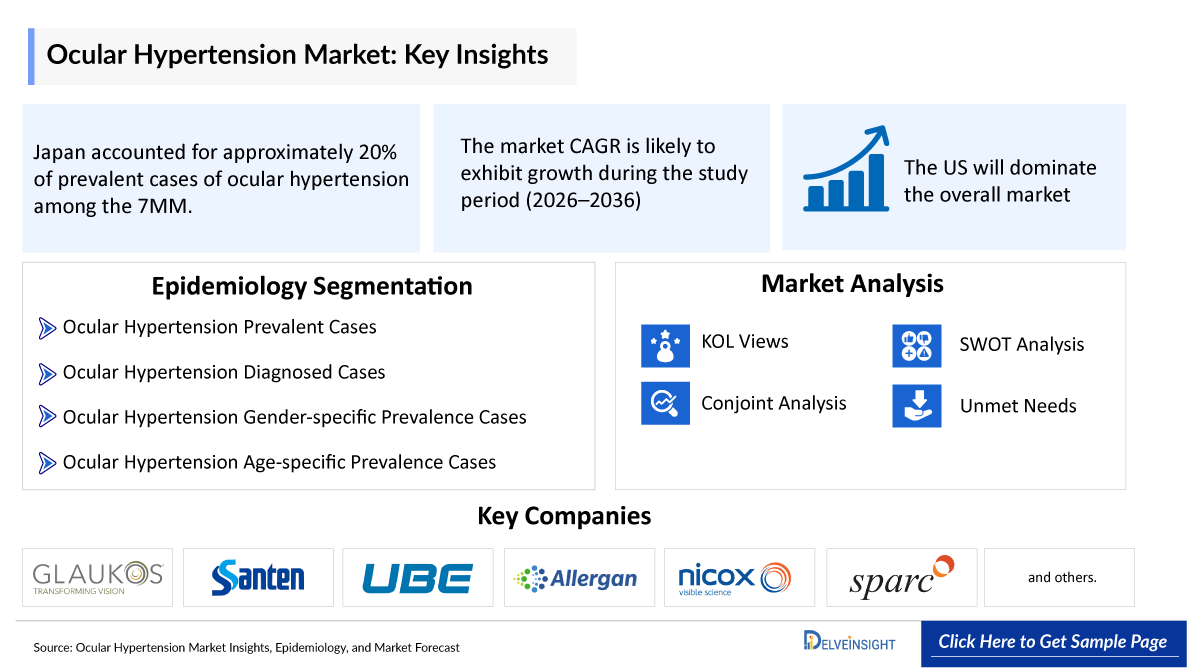
- Japan accounted for approximately 20% of prevalent cases of ocular hypertension among the 7MM.
Ocular Hypertension Drug Analysis & Competitive Landscape
The ocular hypertension drug chapter provides a detailed, market-focused review of the emerging pipeline across Phase III-II clinical trials and preclinical trials. It covers the mechanism of action, clinical trial data, regulatory approvals, patents, collaborations, and strategic partnerships for each therapy, along with their advantages, limitations, and recent developments. This section offers critical insights into the ocular hypertension treatment landscape, supporting market assessment, competitive analysis, and growth forecasting for the ocular hypertension therapeutics market.
Approved Therapies for Ocular Hypertension
Travoprost Intracameral Implant (iDose TR): Glaukos
iDose TR is a first-of-its-kind, long-duration, anchored intracameral procedural pharmaceutical therapy designed to continuously (24/7) deliver therapeutic levels of a proprietary formulation of travoprost inside the eye for extended periods of time. iDose TR is indicated for the reduction of IOP in patients with open-angle glaucoma (OAG) or ocular hypertension. iDose TR is composed of a biocompatible intracameral implant preloaded in a sterile, single-dose inserter.
Omidenepag Isopropyl Ophthalmic Solution (OMLONTI): Santen and UBE Corporation
OMLONTI is a novel ophthalmic therapy approved for the reduction of elevated IOP in patients with OAG and ocular hypertension. It contains omidenepag isopropyl, a selective prostaglandin E2 (EP2) receptor agonist that lowers IOP by enhancing both trabecular and uveoscleral aqueous humor outflow pathways. The FDA approval for OMLONTI was based on data from 12 clinical studies conducted in multiple global locations. Notably, a US Phase III study confirmed OMLONTI to be non-inferior to timolol, the standard of care. Two different Phase III studies conducted in Japan and Asia showed OMLONTI to be non-inferior to latanoprost, another standard of care. It is the first approved therapy with this unique EP2 receptor mechanism of action. OMLONTI is administered as a once-daily ophthalmic solution (0.002%), typically dosed in the evening.
|
Table 1: Marketed Competitive Landscape of Ocular Hypertension | ||||||
|
Drug/Therapy |
Company |
Indication |
Molecule Type |
MoA |
RoA |
Marketed Region |
|
Travoprost intracameral implant (iDose TR) |
Glaukos |
Ocular hypertension |
Small molecule |
Prostaglandin F receptor agonist |
Intracameral implant |
US: 2023 |
|
Omidenepag isopropyl ophthalmic solution (OMLONTI) |
Santen/UBE Corporation |
Ocular hypertension |
Small molecule |
EP2 receptor agonist |
Topical |
US: 2022 |
|
Bimatoprost implant (DURYSTA) |
Allergan |
Ocular hypertension |
Small molecule |
Prostaglandin analog |
Intracameral implant |
US: 2020 |
Note: Detailed marketed therapies assessment will be provided in the final report.
Ocular Hypertension Pipeline Analysis
NCX 470: Nicox Ophthalmics
NCX 470 is considered a next-generation prostaglandin analog and represents Nicox’s lead clinical asset. It is an investigational nitric oxide donating bimatoprost ophthalmic solution being developed for the treatment of OAG and ocular hypertension. The therapy combines bimatoprost with nitric oxide-mediated trabecular meshwork relaxation to enhance aqueous humor outflow and improve IOP reduction versus conventional prostaglandin analogs like latanoprost. In Phase III trials, including Mont Blanc and Denali, NCX 470 demonstrated non-inferior and numerically superior IOP lowering versus latanoprost at multiple timepoints while maintaining a favorable tolerability profile.
The drug successfully completed Phase III clinical trials, with topline results reported in August 2025. The company further anticipates submitting the NDA for NCX 470 in 2026.
PDP-716: Sun Pharma Advanced Research Company (SPARC)/Ocuvex Therapeutics
PDP-716 by Sun Pharma Advanced Research Company is an investigational once-daily ophthalmic suspension of brimonidine tartrate 0.35% being developed for the treatment OAG and ocular hypertension. Developed using SPARC’s proprietary TearAct technology, PDP-716 is designed to provide sustained drug delivery and improved bioavailability, enabling once-daily dosing compared with currently marketed brimonidine formulations that require three-times-daily administration.
In a pivotal Phase III trial, PDP-716 met its primary endpoint by demonstrating intraocular pressure (IOP) reduction comparable to Alphagan P 0.1% dosed three times daily, with a similar safety profile. PDP-716 was licensed by SPARC to Visiox Pharmaceuticals in 2021 for global development and commercialization rights outside India and Greater China; in 2024, Visiox Pharmaceuticals merged with Ocuvex Therapeutics.
|
Table 2: Emerging Competitive Landscape of Ocular Hypertension | ||||||
|
Drug Name |
Company |
Highest Phase |
Indication |
RoA |
MoA |
Anticipated Launch in the US |
|
NCX 470 |
Nicox Ophthalmics |
III |
Ocular hypertension |
Topical |
Prostaglandin analog |
Information is available in the full report |
|
PDP-716 |
SPARC/Ocuvex Therapeutics |
III |
Ocular hypertension |
Topical |
Alpha 2-adrenergic receptor agonist |
Information is available in the full report |
|
Sepetaprost (DE-126/ONO-9054/STN1012600) |
Santen /Ono Pharmaceutical |
II |
Ocular hypertension |
Topical |
EP3 receptor agonists and Prostaglandin F2 alpha agonists |
Information is available in the full report |
|
Note: Launch insights are provisional and may change with future report updates or the occurrence of major key catalysts. | ||||||
Note: Detailed emerging therapies assessment will be provided in the final report.
Ocular Hypertension Key Players, Market Leaders and Emerging Companies
- Glaukos
- Santen
- UBE Corporation
- Allergan
- Nicox Ophthalmics
- Sun Pharma Advanced Research Company
- Visiox Pharma
- Santen
- Ono Pharmaceutical, and others
Ocular Hypertension Drug Updates
- In May 2026, OcuVex Therapeutics, received a Complete Response Letter (CRL) from the US FDA. The CRL pertains to the New Drug Application (NDA) for PDP-716, a novel once-daily ophthalmic suspension intended for the treatment of glaucoma.
- In February 2026, Nicox highlighted positive NCX 470 phase III data confirming therapeutic profile at the 2026 American Glaucoma Society Annual Meeting. The data demonstrated best-inclass IOP lowering efficacy of up to 10mmHg from baseline which has met the efficacy requirements for a New Drug Application (NDA) in the US. and China.
- In February 2026, Nicox announced that it has received positive written feedback from its NCX 470 pre-NDA (New Drug Application) meeting with the US FDA.
- In August 2025, Nicox announced that its partner, Kowa, has initiated a Phase III safety clinical trial of NCX 470 (also known as K-911) in Japan for the treatment of ocular hypertension.
- In August 2025, Santen Pharmaceutical announced that it has obtained manufacturing and marketing approval in Japan for sepetaprost (SETANEO) ophthalmic solution 0.002% for the treatment of glaucoma and ocular hypertension.
- In July 2025, Nicox announced a new agreement of NCX 470 with Kowa. The agreement grants Kowa exclusive rights to develop and commercialize NCX 470 in patients with glaucoma or ocular hypertension in the US and all other territories of the world excluding Japan, China, Korea and Southeast Asia.
Ocular Hypertension Market Outlook
The treatment landscape for ocular hypertension has evolved significantly from conventional topical IOP-lowering therapies toward long-acting implants and novel mechanism-based agents aimed at improving efficacy, durability, and patient adherence. Approved therapies such as travoprost intracameral implant (iDose TR), omidenepag isopropyl ophthalmic solution (OMLONTI), and bimatoprost implant represent important advancements in sustained drug delivery and alternative prostaglandin receptor targeting. These therapies are addressing major unmet needs associated with poor adherence to daily eye drops and fluctuations in IOP control, while also improving long-term disease management in patients at risk of glaucoma progression.
Investigational candidates such as NCX 470, PDP-716, and Sepetaprost (DE-126/ONO-9054/STN1012600) are being developed to provide superior IOP reduction, improved tolerability, and longer duration of action compared with currently available therapies. NCX 470 combines nitric oxide donation with prostaglandin activity to enhance aqueous humor outflow, while PDP-716 utilizes sustained-release brimonidine technology to enable once-daily dosing. However, the regulatory pathway for PDP-716 has encountered setbacks. The US FDA issued a Complete Response Letter (CRL) for the PDP-716 New Drug Application (NDA) in July 2023 due to unresolved facility inspection-related observations at a third-party Active Pharmaceutical Ingredient (API) manufacturing site, rather than concerns regarding the drug’s safety or efficacy. SPARC and Ocuvex Therapeutics subsequently addressed the observations and resubmitted the NDA in late 2025. However, the FDA issued another CRL in May 2026, potentially extending timelines for approval and commercial launch.
Overall, the ocular hypertension market across the 7MM is expected to witness steady growth from 2026 to 2036, driven by increasing disease prevalence, aging populations, improved screening rates, and continued innovation in ophthalmic therapeutics. The growing adoption of sustained-release implants, minimally invasive treatment approaches, and differentiated topical therapies is anticipated to reshape the competitive landscape.
Further details will be provided in the report….
Drug Class/Insights into Leading Emerging and Marketed Therapies in Ocular Hypertension (2022–2036 Forecast)
The ocular hypertension market is evolving toward mechanism-based therapies that target multiple aqueous humor outflow pathways to improve IOP reduction, enhance long-term disease control, and improve patient adherence while minimizing treatment burden and tolerability issues associated with conventional topical therapies.
- Sustained-Release Therapies: This class includes therapies designed to provide prolonged IOP reduction while minimizing the burden of daily eye drop administration and improving patient adherence. Travoprost intracameral implant and bimatoprost implant are sustained-release intracameral implants delivering long-acting prostaglandin analogs directly into the eye, while PDP-716 utilizes sustained-release technology to enable once-daily dosing of brimonidine.
- Prostaglandin and Novel Receptor-Targeting Therapies: This category includes therapies targeting prostaglandin-related pathways to improve aqueous humor outflow and reduce IOP. Omidenepag isopropyl ophthalmic solution is a selective EP2 receptor agonist offering a differentiated mechanism compared with conventional FP receptor agonists, while NCX 470 combines prostaglandin analog activity with nitric oxide donation for dual outflow enhancement. Sepetaprost is being developed for stronger and sustained IOP reduction. These therapies are expected to compete with established prostaglandin analogs such as latanoprost, travoprost, and bimatoprost by offering enhanced efficacy, differentiated mechanisms of action, and improved tolerability profiles in the ocular hypertension market.
Overall, innovation in ocular hypertension is being driven by a growing pipeline of targeted therapies focused on improving IOP reduction, treatment durability, and patient adherence. Emerging therapies are utilizing novel mechanisms such as nitric oxide donation, selective prostaglandin receptor modulation, and sustained-release drug delivery systems to enhance aqueous humor outflow. As these pipeline candidates advance, they are expected to expand the therapeutic landscape beyond conventional topical eye drops, supporting a shift toward longer-acting, more effective, and better-tolerated treatment options in the ocular hypertension market.
Ocular Hypertension Drug Uptake
This section focuses on the uptake rate of potential drugs expected to be launched in the market during the forecast period (2026–2036). The analysis covers the ocular hypertension drug’s uptake, performance at peak, factors affecting performance during prime years of growth, patient uptake by therapy, and anticipated sales generated by each drug.
During the forecast period, approved therapies such as travoprost intracameral implant (iDose TR), and bimatoprost implant are expected to witness steady adoption due to their sustained-release delivery mechanisms, which reduce treatment burden and improve adherence compared with daily topical eye drops. Omidenepag isopropyl ophthalmic solution (OMLONTI) is also anticipated to maintain uptake through its differentiated EP2 receptor-targeting mechanism and competitive IOP lowering efficacy.
Among pipeline therapies, NCX 470 is expected to achieve significant uptake as a next-generation nitric oxide-donating prostaglandin analog with the potential for superior IOP reduction compared with existing prostaglandin therapies. PDP-716 may gain adoption through its once-daily sustained-release formulation designed to improve patient compliance. Overall uptake of emerging therapies will depend on long-term efficacy, safety, durability of IOP control, pricing, reimbursement, and competitive positioning against established glaucoma and ocular hypertension treatments.
Detailed insights of emerging therapies' drug uptake is included in the report
Market Access and Reimbursement of Approved Therapies in Ocular Hypertension
The report further provides detailed insights on the country-wise accessibility and reimbursement scenarios, cost-effectiveness scenario of approved therapies, programs making accessibility easier and out-of-pocket costs more affordable, insights on patients insured under federal or state government prescription drug programs, etc.
The United States
|
Table 3: The US Reimbursement of Therapies Approved for Ocular Hypertension | |
|
Drug/Therapy |
Access Program |
|
DURYSTA |
Durysta Copay Savings Program |
Reimbursement is a crucial factor that affects the drug’s access to the market. Often, the decision to reimburse comes down to the price of the drug relative to the benefit it produces in treated patients. To reduce the healthcare burden of these high-cost therapies, many payment models are being considered by payers and other industry insiders.
NOTE: Further Details are provided in the final report….
Ocular Hypertension Therapies Price Scenario & Trends
Pricing and analogue assessment of ocular hypertension therapies highlights evolving price dynamics structures. This section summarizes the cost of approved treatments, closest and most appropriate analogue selection for emerging therapies, and understanding of how pricing influences market access, adherence, and long-term uptake.
Industry Experts and Physician Views for Ocular Hypertension
To keep up with ocular hypertension market trends, we take Key Opinion Leaders (KOLs) and Subject Matter Experts (SMEs) opinions working in the domain through primary research to fill the data gaps and validate our secondary research. Industry experts were contacted for insights on the ocular hypertension emerging therapies, evolving treatment landscape, patient adherence to conventional therapies, therapy switching trends, drug adoption and uptake, accessibility challenges, and epidemiology and real-world prescription patterns in ocular hypertension, including MD, PhD, Instructor, Postdoctoral Researcher, Professor, Researcher, and others.
DelveInsight’s analysts connected with 15+ KOLs to gather insights at the country level. Centers such as Bascom Palmer Eye Institute, Institut de la Vision, University Hospital Cologne Department of Ophthalmology, etc. were contacted. Their opinion helps understand and validate current and emerging ocular hypertension therapies, highlight unmet medical needs, provide epidemiological context, and support strategic decisions for market access, therapy adoption, and pipeline prioritization in ocular hypertension.
|
Region |
Key Opinion Leaders (KOLs) and Subject Matter Experts (SMEs) |
|
United States |
“Not all people with OHT need to be treated. Many can be followed with observation alone. If treatment is deemed necessary, the usual first choice is a prostaglandin drug.” |
|
Germany |
“A number of experts are now considering the second line treatment as a good first choice. Second-line drugs of choice include alpha-agonists and topical carbonic anhydrase inhibitors.” |
Qualitative Analysis: SWOT and Conjoint Analysis
We perform qualitative and market Intelligence analysis using various approaches, such as SWOT analysis and conjoint analysis.
In the SWOT analysis of ocular hypertension, strengths, weaknesses, opportunities, and threats in terms of disease diagnosis, patient awareness, patient burden, competitive landscape, cost-effectiveness, and geographical accessibility of therapies are provided.
Conjoint analysis analyzes emerging therapies based on relevant attributes such as safety, efficacy, frequency of administration, route of administration, and order of entry. Scoring is given based on these parameters to analyze the effectiveness of therapy.
The team of analysts analyzes promising emerging therapies based on relevant attributes such as safety, efficacy, frequency of administration, route of administration, and order of entry. In efficacy, the trial’s primary and secondary outcome measures are evaluated, whereas the therapies’ safety is evaluated, wherein the acceptability, tolerability, and adverse events are majorly observed. In addition, the scoring is also based on the route of administration, order of entry, probability of success, and the addressable patient pool for each therapy. According to these parameters, the final weightage score and the ranking of the emerging therapies are decided.
Scope of the Report
- The report covers a segment of key events, an executive summary, a descriptive overview of ocular hypertension, explaining their causes, signs and symptoms, pathogenesis, and currently available treatments.
- Comprehensive insight has been provided into the epidemiology segments and forecasts, the future growth potential of the diagnosis rate, and disease progression along treatment guidelines.
- Additionally, an all-inclusive account of both the current and emerging treatments, along with the elaborative profiles of late-stage and prominent therapies, will have an impact on the current treatment landscape.
- A detailed review of the ocular hypertension market, historical and forecasted market size, market share by therapies, detailed assumptions, and rationale behind our approach is included in the report, covering the 7MM drug outreach.
- The report provides an edge while developing business strategies by understanding trends through SWOT analysis and expert insights/KOL views, patient journey, and treatment preferences that help in shaping and driving the 7MM ocular hypertension market.
Report Insights
- Ocular Hypertension Patient Population Forecast
- Ocular Hypertension Therapeutics Market Size
- Ocular Hypertension Pipeline Analysis
- Ocular Hypertension Market Size and Trends
- Ocular Hypertension Market Opportunity (Current and forecasted)
Report Key Strengths
- Epidemiology‑based (Epi‑based) Bottom‑up Forecasting
- Artificial Intelligence (AI)-Enabled Market Research Report
- 11-Year Forecast
- Ocular Hypertension Market Outlook (North America, Europe, Asia-Pacific)
- Patient Burden Trends (By Geography)
- Ocular Hypertension Treatment Addressable Market (TAM)
- Ocular Hypertension Competitve Landscape
- Ocular Hypertension) Major Companies Insights
- Ocular Hypertension Price Trends and Analogue Assessment
- Ocular Hypertension Therapies Drug Adoption/Uptake
- Ocular Hypertension Therapies Peak Patient Share Analysis
Report Assessment
- Ocular Hypertension Current Treatment Practices
- Ocular Hypertension Unmet Needs
- Ocular Hypertension Clinical Development Analysis
- Ocular Hypertension Emerging Drugs Product Profiles
- Ocular Hypertension Market Attractiveness
- Ocular Hypertension Qualitative Analysis (SWOT and Conjoint Analysis)
FAQs
Market Insights
- What was the ocular hypertension market size, the market size by therapies, market share (%) distribution in 2025, and what would it look like by 2036? What are the contributing factors for this growth?
- What are the anticipated pricing variations among different geographies for the emerging therapies in the future?
- What can be the future treatment paradigm of ocular hypertension?
- What are the disease risks, burdens, and unmet needs of ocular hypertension? What will be the growth opportunities across the 7MM concerning the patient population with ocular hypertension?
- Who is the major future competitor in the market, and how will the competitors affect their market share?
- What are the current options for the treatment of ocular hypertension? What are the current guidelines for treating ocular hypertension in the US, Europe, and Japan?
Reasons to Buy
- The report will help in developing business strategies by understanding the latest trends and changing treatment dynamics driving the ocular hypertension market.
- Bottom-up forecasting builds from the affected population to product forecasts, delivering a robust, data-driven approach ideal for new therapies and novel classes.
- Insights on patient burden/disease incidence, evolution in diagnosis, and factors contributing to the change in the epidemiology of the disease during the forecast years.
- Understand the existing market opportunities in varying geographies and the growth potential over the coming years.
- Identifying strong upcoming players in the market will help devise strategies to help get ahead of competitors.
- Detailed analysis and ranking of class-wise potential emerging therapies under the conjoint analysis section to provide visibility around leading classes.
- To understand KOLs’ perspectives on the accessibility, acceptability, and compliance-related challenges of existing treatment to overcome barriers in the future.
- Detailed insights on the unmet needs of the existing market so that the upcoming players can strengthen their development and launch strategy.
- This Artificial Intelligence (AI)-enabled report summarize and simplify complex datasets with in the report into clear, actionable insights for stakeholders, investors, and healthcare providers, enabling faster, data-driven decisions.