Polymyalgia Rheumatica Market
- Polymyalgia rheumatica is an age-associated inflammatory rheumatic condition predominantly affecting adults above 50 years, characterized by proximal musculoskeletal pain and stiffness, elevated ESR and CRP, and a clinically important overlap with giant cell arteritis, contributing significantly to morbidity in elderly populations.
- The disease is driven by immune dysregulation with a central role of IL-6–mediated inflammatory signaling, along with T-cell imbalance (decreased regulatory T cells, increased Th17 activity) and absence of disease-specific autoantibodies, supporting a cytokine-driven inflammatory pathology.
- The treatment paradigm remains highly corticosteroid-dependent, with glucocorticoids (prednisone/prednisolone) providing rapid symptom relief but limited by high relapse rates during tapering and significant long-term toxicity, driving demand for steroid-sparing strategies.
- Among approved therapies, sarilumab (KEVZARA) is the first and only FDA-approved biologic for polymyalgia rheumatica, validating IL-6 receptor inhibition as an effective steroid-sparing mechanism in patients with inadequate response or inability to taper corticosteroids.
- The emerging pipeline extends beyond IL-6 targeting, with secukinumab (COSENTYX) showing positive Phase III results in polymyalgia rheumatica through IL-17A inhibition, indicating diversification of cytokine-targeted strategies.
- Novel approaches such as clofutriben (SPI-62), an 11β-HSD1 inhibitor, aim to reduce intracellular glucocorticoid activation, improving the benefit–risk profile of long-term steroid therapy while maintaining disease control.
- Despite mechanistic advances, the landscape remains highly concentrated and under-penetrated, with a limited number of approved and late-stage therapies, leading to continued reliance on corticosteroids as the backbone of treatment.
- The market is expected to evolve gradually, driven by aging populations, improved diagnosis, and longer treatment duration, with growth increasingly dependent on the adoption of steroid-sparing biologics and steroid-modulating therapies capable of achieving durable remission and improved safety outcomes.
Polymyalgia Rheumatica Market Size and Forecast in the 7MM
- 2022 Total 7MM Market Size: USD 237.58 million 2036 Total 7MM Market Size: USD 2,729.41 million
- USD 2,729.41 million
- Polymyalgia Rheumatica Growth Rate (2026–2036): XX% CAGR
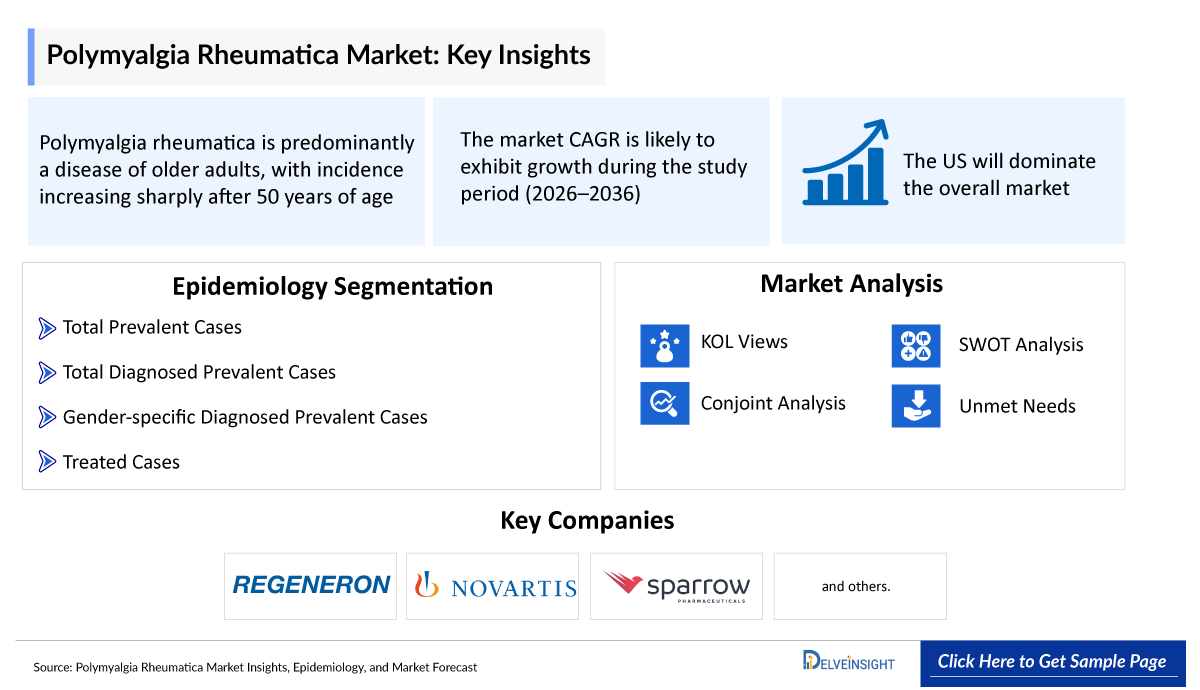
DelveInsight's ‘Polymyalgia Rheumatica– Market Insights, Epidemiology and Market Forecast – 2036’ report delivers an in-depth understanding of the Polymyalgia Rheumatica, historical and forecasted epidemiology, as well as the Polymyalgia Rheumatica market trends in the United States, EU4 (Germany, Spain, Italy, and France), and the United Kingdom, and Japan.
The Polymyalgia Rheumatica market report delivers a comprehensive analysis of the current treatment landscape, including standards of care, clinical practices, and evolving therapeutic algorithms. It evaluates polymyalgia rheumatica patient burden trends, revenue & market share dynamics, peak patient share & therapy uptake analysis, and provides an in-depth market size assessment, and growth rate projections (Historical & Forecast 2022–2036) across global regions. The report highlights key unmet medical needs in polymyalgia rheumatica and maps the competitive and clinical landscape to uncover high‑value opportunities, providing a clear outlook on future market growth potential.
|
Study Period |
2022–2036 |
|
Historical Year |
2022–2025 |
|
Forecast Period |
2026–2036 |
|
Base Year |
2026 |
|
Geographies Covered |
|
|
Polymyalgia Rheumatica Market CAGR (Forecast Period) |
XX% (2026–2036) |
|
Polymyalgia Rheumatica Epidemiology Segmentation Analysis |
Patient Burden Assessment
|
|
Polymyalgia Rheumatica Companies |
|
|
Polymyalgia Rheumatica Therapies |
|
|
Polymyalgia Rheumatica Market |
Segmented by
|
|
Analysis |
|
Key Factors Driving the Polymyalgia Rheumatica Market
Increasing disease burden in the aging population
Polymyalgia rheumatica primarily affects adults over 50, with cases rising sharply with age and peaking in those over 70. The number of prevalent cases is projected to rise steadily during the 2026–2036 forecast period, driven by an aging global population, increased life expectancy, and improved recognition during routine health assessments.
High unmet need due to long-term corticosteroid toxicity and relapse risk
While glucocorticoids remain the standard first-line therapy to control inflammation, long-term use is severely limited by cumulative toxicity and frequent disease relapses during dose tapering. Because conventional options offer modest benefits, a critical unmet need remains for safer, long-acting treatments that provide durable symptom control and reduce steroid reliance.
Expansion of targeted therapies beyond corticosteroids
The market is transforming with targeted biologics like KEVZARA (sarilumab), an IL-6 receptor inhibitor approved for patients failing steroid tapering, which gained a positive EMA extension opinion in November 2024. The pipeline is further advancing with Novartis’ Cosentyx (secukinumab), an IL-17A inhibitor that met its Phase III REPLENISH endpoints in October 2025 by achieving sustained remission and lowering steroid use, with regulatory filings planned for early 2026.
Polymyalgia Rheumatica Understanding and Treatment Algorithm
Polymyalgia Rheumatica Overview
Polymyalgia rheumatica is a chronic inflammatory rheumatic disorder that primarily affects adults aged 50 years and older and is characterized by bilateral shoulder and hip pain, prolonged morning stiffness, and systemic inflammation. The condition can significantly impair mobility and quality of life and is frequently associated with giant cell arteritis, reflecting a shared inflammatory disease spectrum. Owing to its prevalence in older adults, risk of relapse, and dependence on long-term corticosteroid therapy, polymyalgia rheumatica represents a significant clinical burden.
Polymyalgia Rheumatica Diagnosis
The diagnosis of polymyalgia rheumatica is primarily clinical and is based on characteristic symptoms, elevated inflammatory markers, and exclusion of alternative conditions. Patients typically present with bilateral shoulder pain, morning stiffness, and elevated erythrocyte sedimentation rate (ESR) and/or C-reactive protein (CRP) levels. The 2012 EULAR/ACR classification criteria support disease classification and incorporate age ≥50 years, bilateral shoulder aching, and abnormal inflammatory markers as key components. Imaging modalities such as ultrasound, MRI, and PET/CT may be used to identify characteristic inflammatory changes and improve diagnostic confidence, particularly in atypical cases.
Further details are provided in the report.
Polymyalgia Rheumatica Treatment
The treatment of polymyalgia rheumatica is centered on controlling inflammation, relieving symptoms, and preventing disease relapse. Glucocorticoids (prednisone/prednisolone) remain the first-line standard of care and typically provide rapid symptom improvement, followed by gradual dose tapering. However, frequent relapses and the adverse effects associated with long-term corticosteroid use have created a need for steroid-sparing therapies.
For patients with relapsing disease or inadequate response to corticosteroids, KEVZARA, an IL-6 receptor inhibitor, is the only FDA-approved targeted therapy for polymyalgia rheumatica. In selected cases, methotrexate may be used as adjunctive therapy to reduce corticosteroid exposure and support long-term disease management.
Further details related to country-based variations are provided in the report.
Polymyalgia Rheumatica Unmet Needs
The section “Unmet Needs of Polymyalgia Rheumatica” outlines the critical gaps between the current state of patient care, diagnosis, and the ideal & effective management of the disease. It highlights the obstacles experienced by patients, clinicians, and researchers and identifies potential solutions for future progress.
-
Limited steroid-sparing treatment options beyond IL-6 inhibition
-
High rates of relapse and prolonged corticosteroid dependence
-
Lack of validated biomarkers for diagnosis, prognosis, and treatment monitoring
-
Challenges in differentiating polymyalgia rheumatica from mimicking conditions, and others…..
Note: Comprehensive unmet needs insights in Polymyalgia Rheumatica and their strategic implications are provided in the full report.
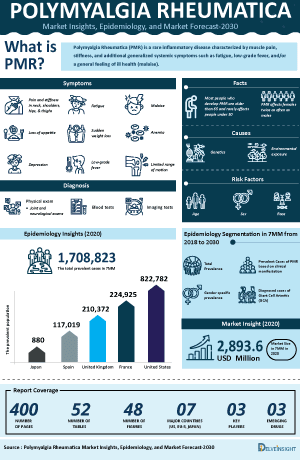
Polymyalgia Rheumatica Epidemiology
The United States
- Age- and sex-adjusted prevalence:
- Approximately 701 cases per 100,000 individuals aged ≥50 years.
- Females: 870 per 100,000.
- Males: 508 per 100,000.
Italy
- Prevalence reported at approximately 621 cases per 100,000 individuals aged >50 years.
The United Kingdom
- Practitioner-diagnosed PMR prevalence:
- 2.27% among individuals aged ≥55 years.
- Overall prevalence: 0.85%.
Japan
- Estimated prevalence:
- Approximately 10 cases per 100,000 individuals aged >50 years.
- Male-to-female ratio approximately 1:1.3.
Germany
- Prevalence:
- Approximately 152.9 per 100,000 individuals aged ≥40 years.
- Females: 196.8 per 100,000.
- Males: 100.7 per 100,000.
- Polymyalgia rheumatica is predominantly a disease of older adults, with incidence increasing sharply after 50 years of age and peak onset typically between 70–80 years, while being rare below 50 years, confirming its strong association with ageing populations.
- The highest disease burden is observed in individuals aged 70–80 years, with both incidence and prevalence rising significantly in older populations.
- Women are affected more frequently than men, with female-to-male ratios typically ranging from 2:1 to 3:1.
- There is strong geographic variability, with significantly higher incidence in Northern European and Scandinavian populations compared to Southern Europe, suggesting a role of genetic and environmental susceptibility factors.
Polymyalgia Rheumatica Drug Analysis & Competitive Landscape
The Polymyalgia Rheumatica drug chapter provides a detailed, market-focused review of approved therapies and the emerging pipeline across Phase I–III clinical trials. It covers the mechanism of action, clinical trial data, regulatory approvals, patents, collaborations, and strategic partnerships for each therapy, along with their advantages, limitations, and recent developments. This section offers critical insights into the polymyalgia rheumatica treatment landscape, supporting market assessment, competitive analysis, and growth forecasting for the polymyalgia rheumatica therapeutics market.
Approved Therapies for Polymyalgia Rheumatica
Sarilumab (KEVZARA): Regeneron
KEVZARA is a human monoclonal antibody targeting the IL-6 receptor, approved by the US FDA in February 2023 as the first and only biologic therapy for polymyalgia rheumatica in adults with an inadequate response to corticosteroids or inability to successfully taper treatment. The approval was supported by the pivotal Phase III SAPHYR trial, which demonstrated significantly higher sustained remission rates with KEVZARA plus a 14-week corticosteroid taper versus placebo plus a 52-week taper. By validating IL-6 inhibition as a targeted treatment approach, KEVZARA established a differentiated steroid-sparing therapy in a disease historically dependent on long-term corticosteroid use. Reflecting its growing commercial uptake, KEVZARA demonstrated strong year-over-year sales growth in 2025, reinforcing its importance within the evolving polymyalgia rheumatica treatment landscape.
Note: Detailed marketed therapies assessment of therapies will be provided in the final report.
|
Table 1: Polymyalgia Rheumatica Marketed/Approved Therapies | ||||||
|
Drug/Therapy |
Company |
Indication |
Molecule Type |
MoA |
RoA |
Marketed Region |
|
Sarilumab (KEVZARA) |
Regeneron |
Polymyalgia Rheumatica |
Monoclonal antibodies |
IL-6 inhibitor |
Subcutaneous |
US: 2023 |
Polymyalgia Rheumatica Pipeline Analysis
Clofutriben (SPI-62): Sparrow Pharmaceuticals
Clofutriben is an oral, selective 11β-HSD1 inhibitor developed by Sparrow Pharmaceuticals that reduces intracellular cortisol activation by blocking the conversion of cortisone to cortisol in peripheral tissues. Designed as a steroid-sparing therapy, it is being evaluated in polymyalgia rheumatica and other corticosteroid-dependent conditions to reduce steroid-related toxicity while maintaining disease control.
Secukinumab (COSENTYX): Novartis
COSENTYX is an IgG1 monoclonal antibody developed by Novartis that inhibits IL-17A, a key driver of inflammatory immune responses. Administered via subcutaneous injection, it is an established therapy across multiple autoimmune diseases and is being explored in polymyalgia rheumatica as a pipeline asset to reduce corticosteroid dependence and improve steroid-sparing disease control.
|
Table 2: Competitive Landscape of Emerging Drugs | ||||||
|
Drug Name |
Company |
Highest Phase |
Indication |
RoA |
MoA |
Anticipated Launch in the US |
|
Secukinumab (COSENTYX) |
Novartis |
III |
Polymyalgia Rheumatica |
SC |
Interleukin-17A inhibitors |
Information is available in the full report |
|
Clofutriben (SPI-62) |
Sparrow Pharmaceuticals |
II |
Polymyalgia Rheumatica |
Oral |
HSD-1 inhibitor |
Information is available in the full report |
|
Note: Launch insights are provisional and may change with future report updates or the occurrence of major key catalysts. | ||||||
Note: Detailed emerging therapies assessment will be provided in the final report.
Polymyalgia Rheumatica Key Players, Market Leaders, and Emerging Companies
- Novartis
- Sparrow Pharmaceuticals
- Regeneron, and others
Polymyalgia Rheumatica Drug Updates
In November 2025, Novartis identified Cosentyx (secukinumab) as one of eight de-risked in-market assets with peak sales potential of USD 3–10 billion. Novartis highlighted ongoing label-expansion opportunities including PMR. Patent protection expected into the 2030s.
In October 2025, Cosentyx met primary and all secondary endpoints in the Phase III REPLENISH trial in adults with PMR. Demonstrated statistically significant sustained remission versus placebo at Week 52. Reduced annual cumulative corticosteroid dose. Safety profile remained consistent with previous indications. Regulatory submissions planned in the first half of 2026.
In September 2025, Novartis announced a direct-to-patient platform for Cosentyx in the US. Selected units offered at approximately 55% discount to list price beginning November 2025.
In November 2024, EMA granted a positive opinion for PMR indication expansion of KEVZARA.
Polymyalgia Rheumatica Market Outlook
- The PMR market is expected to grow steadily during 2026–2036.
- Growth is driven by:
- Aging population.
- Increased disease recognition and diagnosis.
- High prevalence of glucocorticoid dependence.
- Frequent relapse among treated patients.
- Emergence of targeted immunomodulatory therapies.
- Potential disease-modifying therapies.
The polymyalgia rheumatica market is a relatively small but evolving inflammatory disease segment, driven by population aging and increasing recognition of the disease in adults aged ≥50 years. Treatment remains largely dependent on systemic corticosteroids, which provide rapid symptom relief but are associated with frequent relapses during tapering and substantial long-term toxicities, including osteoporosis, diabetes, and cardiovascular complications. As a result, there is a significant unmet need for effective steroid-sparing and disease-modifying therapies that can maintain durable remission with improved safety.
The treatment landscape is beginning to shift with the introduction of targeted biologics, led by KEVZARA, the first approved biologic for polymyalgia rheumatica, which has validated IL-6 inhibition as an effective therapeutic strategy. Despite this milestone, the market remains underpenetrated, with limited advanced treatment options and continued reliance on corticosteroids as first-line therapy. The pipeline is relatively sparse but active, with agents such as COSENTYX showing positive Phase III results and supporting expansion into additional cytokine-targeted mechanisms, while novel approaches such as 11β-HSD1 inhibition (e.g., clofutriben) aim to reduce glucocorticoid-related toxicity.
Growing adoption of targeted therapies has reinforced the commercial and clinical viability of steroid-sparing treatment strategies in polymyalgia rheumatica. Looking ahead, the market is expected to increasingly favor biologics and emerging targeted agents that provide sustained disease control, lower corticosteroid exposure, and improved relapse management, positioning them to gain share over traditional long-term steroid-based regimens.
- According to estimates, the United States accounted for the largest polymyalgia rheumatica market among the 7MM in 2025.
- Regional market dynamics for polymyalgia rheumatica show the United States leading in revenue, while Japan and Europe demonstrate steady growth, driven by rising prevalence, improved diagnostics, and increasing adoption of advanced therapies.
Further details will be provided in the report….
Drug Class/Insights into Leading Emerging and Marketed Therapies in Polymyalgia Rheumatica (2022–2036 Forecast)
The polymyalgia rheumatica treatment landscape is driven by cytokine-mediated inflammation and glucocorticoid-dependent immune suppression, with an increasing shift toward targeted biologics, including IL-6 and IL-17A inhibitors, as well as other steroid-sparing therapeutic approaches.
- IL-6 Receptor Inhibitors: KEVZARA blocks IL-6 receptor signaling, reducing systemic inflammatory response and enabling a targeted steroid-sparing treatment approach in polymyalgia rheumatica.
- IL-17A Inhibitors: COSENTYX inhibits IL-17A–mediated inflammatory signaling, representing an emerging cytokine-targeted mechanism under investigation for improved disease control.
- 11β-HSD1 Inhibitors: Clofutriben reduces intracellular cortisol activation by blocking cortisone-to-cortisol conversion, offering a novel local steroid-sparing strategy to reduce glucocorticoid toxicity.
Polymyalgia Rheumatica Drug Uptake
This section focuses on the uptake rate of potential drugs expected to be launched in the market during the forecast period (2026–2036). The analysis covers the Polymyalgia Rheumatica drug’s uptake, performance at peak, factors affecting performance during prime years of growth, patient uptake by therapy, and anticipated sales generated by each drug.
The polymyalgia rheumatica treatment landscape is largely driven by glucocorticoids (prednisone/prednisolone), which remain first-line therapy due to rapid and robust symptom control. However, long-term use is limited by relapse during tapering and significant cumulative toxicity (osteoporosis, diabetes, cardiovascular risk), creating sustained demand for steroid-sparing options.
KEVZARA is the only FDA-approved biologic, targeting IL-6 receptor signaling and enabling reduced steroid dependence in select relapsing or steroid-taper–intolerant patients, with expected gradual, niche uptake rather than broad use. The pipeline is expanding but remains early. COSENTYX has demonstrated positive Phase III results in polymyalgia rheumatica via IL-17A inhibition but remains unapproved, while clofutriben offers a novel 11β-HSD1–mediated steroid-modulating approach aimed at reducing glucocorticoid toxicity as an adjunct strategy.
Overall, the market remains highly corticosteroid-dependent and concentrated, with limited approved alternatives and gradual movement toward mechanism-based therapies (IL-6, IL-17, steroid metabolism modulation). However, uptake of newer agents is expected to be slow and selective, constrained by clinical practice familiarity and limited late-stage pipeline depth, resulting in a gradual shift toward a steroid-sparing, multi-mechanistic treatment paradigm rather than full replacement of corticosteroids.
Detailed insights of emerging therapies' drug uptake is included in the report.
Market Access and Reimbursement of Polymyalgia Rheumatica
The report further provides detailed insights on the country-wise accessibility and reimbursement scenarios, cost-effectiveness scenario of approved therapies, programs making accessibility easier and out-of-pocket costs more affordable, insights on patients insured under federal or state government prescription drug programs, etc.
|
Table 3: United States Reimbursement | ||
|
Drug |
Company |
Reimbursement Program |
|
Sarilumab (KEVZARA) |
Regeneron/Sanofi |
|
Reimbursement is a crucial factor that affects the drug’s access to the market. Often, the decision to reimburse comes down to the price of the drug relative to the benefit it produces in treated patients. To reduce the healthcare burden of these high-cost therapies, many payment models are being considered by payers and other industry insiders.
NOTE: Further Details are provided in the final report….
Polymyalgia Rheumatica Therapies Price Scenario & Trends
Pricing and analogue assessment of polymyalgia rheumatica therapies highlights evolving price dynamics structures. This section summarizes the cost of approved treatments, the closest and most appropriate analogue selection for emerging therapies, and the understanding of how pricing influences market access, adherence, and long-term uptake.
Further details are provided in the final report….
Industry Experts and Physician Views for Polymyalgia Rheumatica
To keep up with polymyalgia rheumatica market trends, we take Key Opinion Leaders (KOLs) and Subject Matter Experts (SMEs) opinions working in the domain through primary research to fill the data gaps and validate our secondary research. Industry experts were contacted for insights on the emerging polymyalgia rheumatica therapies, evolving treatment landscape, patient adherence to conventional therapies, therapy switching trends, drug adoption and uptake, accessibility challenges, and epidemiology and real-world prescription patterns in polymyalgia rheumatica, including MD, PhD, Instructor, Postdoctoral Researcher, Professor, Researcher, and others.
DelveInsight’s analysts connected with 10+ KOLs to gather insights at the country level. Centers such as the University of Tennessee, United States, and the Institute for General Practice and Interprofessional Care, University Hospital Tübingen, Germany, Asahikawa Medical University Hospital, Japan, etc., were contacted. Their opinion helps understand and validate current and emerging polymyalgia rheumatica therapies, highlight unmet medical needs, provide epidemiological context, and support strategic decisions for market access, therapy adoption, and pipeline prioritization in Polymyalgia Rheumatica.
|
Region |
Key Opinion Leaders (KOLs) and Subject Matter Experts (SMEs) |
|
United States |
“Polymyalgia rheumatica arises from a combination of genetic predisposition—most notably HLA-DR4—and environmental triggers, as suggested by seasonal patterns implicating pathogens such as parvovirus B19, Mycoplasma pneumonia, and Chlamydia pneumonia. Epigenetic modifications and dysregulated expression of cytokine-regulating genes further shape individual inflammatory phenotypes.” |
|
Japan |
“Polymyalgia rheumatica primarily affects older adults and shows a higher frequency in women. Commonly associated conditions include hypertension, diabetes mellitus, rheumatoid arthritis, and osteoporosis, while giant cell arteritis occurs infrequently. Broader analysis of diagnostic data highlights the need for continued investigation into the underlying clinical patterns and burden of disease.” |
Qualitative Analysis: SWOT and Conjoint Analysis
We perform qualitative and market Intelligence analysis using various approaches, such as SWOT analysis and conjoint analysis.
In the SWOT analysis of Polymyalgia Rheumatica, strengths, weaknesses, opportunities, and threats in terms of disease diagnosis, patient awareness, patient burden, competitive landscape, cost-effectiveness, and geographical accessibility of therapies are provided.
Conjoint analysis analyzes emerging therapies based on relevant attributes such as safety, efficacy, frequency of administration, route of administration, and order of entry. Scoring is given based on these parameters to analyze the effectiveness of therapy.
The team of analysts analyzes promising emerging therapies based on relevant attributes such as safety, efficacy, frequency of administration, route of administration, and order of entry. In efficacy, the trial’s primary and secondary outcome measures are evaluated, whereas the therapies’ safety is evaluated, wherein the acceptability, tolerability, and adverse events are mainly observed. In addition, the scoring is also based on the route of administration, order of entry, probability of success, and the addressable patient pool for each therapy. According to these parameters, the final weightage score and the ranking of the emerging therapies are decided.
Scope of the Report
- The report covers a segment of key events, an executive summary, a descriptive overview of Polymyalgia Rheumatica, explaining its causes, signs and symptoms, pathogenesis, and currently available treatments.
- Comprehensive insight has been provided into the epidemiology segments and forecasts, the future growth potential of the diagnosis rate, and disease progression along treatment guidelines.
- Additionally, an all-inclusive account of both the current and emerging treatments, along with the elaborate profiles of late-stage and prominent therapies, will have an impact on the current treatment landscape.
- A detailed review of the polymyalgia rheumatica market, historical and forecasted market size, market share by therapies, detailed assumptions, and rationale behind our approach is included in the report, covering the 7MM drug outreach.
- The report provides an edge while developing business strategies by understanding trends through SWOT analysis and expert insights/KOL views, patient journey, and treatment preferences that help in shaping and driving the 7MM polymyalgia rheumatica market.
Report Insights
- Polymyalgia Rheumatica Patient Population Forecast
- Polymyalgia Rheumatica Therapeutics Market Size
- Polymyalgia Rheumatica Pipeline Analysis
- Polymyalgia Rheumatica Market Size and Trends
- Polymyalgia Rheumatica Market Opportunity (Current and Forecasted)
Report Key Strengths
- Epidemiology‑based (Epi‑based) Bottom‑up Forecasting
- Artificial Intelligence (AI)-Enabled Market Research Report
- 11-Year Forecast
- Polymyalgia Rheumatica Market Outlook (North America, Europe, Asia-Pacific)
- Patient Burden Trends (By Geography)
- Polymyalgia Rheumatica Treatment Addressable Market (TAM)
- Polymyalgia Rheumatica Competitive Landscape
- Polymyalgia Rheumatica Major Companies Insights
- Polymyalgia Rheumatica Price Trends and Analogue Assessment
- Polymyalgia Rheumatica Therapies Drug Adoption/Uptake
- Polymyalgia Rheumatica Therapies Peak Patient Share Analysis
Report Assessment
- Polymyalgia Rheumatica Current Treatment Practices
- Polymyalgia Rheumatica Unmet Needs
- Polymyalgia Rheumatica in Clinical Development Analysis
- Polymyalgia Rheumatica Emerging Drugs Product Profiles
- Polymyalgia Rheumatica Market Attractiveness
- Polymyalgia Rheumatica Qualitative Analysis (SWOT and Conjoint Analysis)
FAQs
Market Insights
- What was the Polymyalgia Rheumatica market size, the market size by therapies, the market share (%) distribution in 2025, and what would it look like by 2036? What are the contributing factors for this growth?
- What are the anticipated pricing variations among different geographies for the emerging therapies in the future?
- What can be the future treatment paradigm of Polymyalgia Rheumatica?
- What are the disease risks, burdens, and unmet needs of Polymyalgia Rheumatica? What will be the growth opportunities across the 7MM concerning the patient population with Polymyalgia Rheumatica?
- Who is the major future competitor in the market, and how will the competitors affect their market share?
- What are the current options for the treatment of Polymyalgia Rheumatica? What are the current guidelines for treating Polymyalgia Rheumatica in the US, Europe, and Japan?
Reasons to Buy
- The report will help in developing business strategies by understanding the latest trends and changing treatment dynamics driving the Polymyalgia Rheumatica market.
- Bottom-up forecasting builds from the affected population to product forecasts, delivering a robust, data-driven approach ideal for new therapies and novel classes.
- Insights on patient burden/disease incidence, evolution in diagnosis, and factors contributing to the change in the epidemiology of the disease during the forecast years.
- Understand the existing market opportunities in varying geographies and the growth potential over the coming years.
- Identifying strong upcoming players in the market will help devise strategies to help get ahead of competitors.
- Detailed analysis and ranking of class-wise potential current and emerging therapies under the conjoint analysis section to provide visibility around leading classes.
- To understand KOLs’ perspectives on the accessibility, acceptability, and compliance-related challenges of existing treatment to overcome barriers in the future.
- Detailed insights into the unmet needs of the existing market so that the upcoming players can strengthen their development and launch strategy.
- This Artificial Intelligence (AI)-enabled report summarizes and simplifies complex datasets within the report into clear, actionable insights for stakeholders, investors, and healthcare providers, enabling faster, data-driven decisions.