Postpartum Depression Pipeline Summary
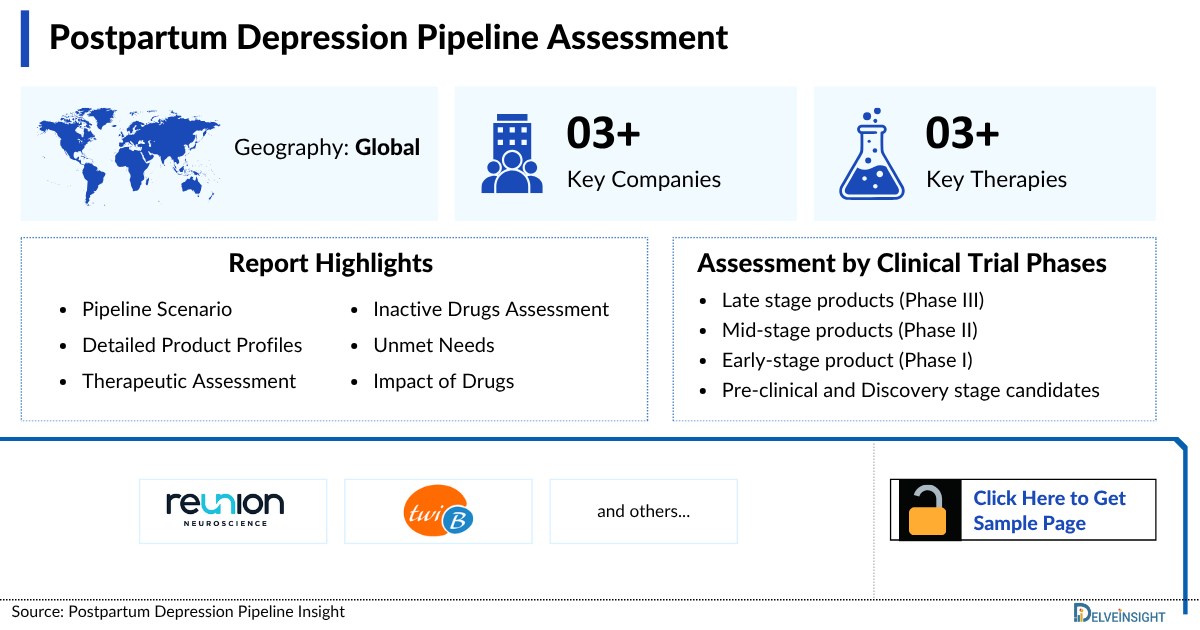
DelveInsight’s, “Postpartum Depression Pipeline Insight, 2026” report provides comprehensive insights about 3+ companies and 3+ pipeline drugs in Postpartum Depression pipeline landscape. It covers the pipeline drug profiles, including clinical and nonclinical stage products. It also covers the therapeutics assessment by product type, stage, route of administration, and molecule type. It further highlights the inactive pipeline products in this space.
Geography Covered
- Global coverage
Postpartum Depression: Understanding
Postpartum Depression: Overview
Postpartum depression (PPD) is a common and serious mood disorder that develops during pregnancy or after childbirth, typically within the first four weeks postpartum according to DSM-5 criteria, although symptoms may emerge several months after delivery. It is characterized by persistent sadness, loss of interest, anxiety, fatigue, feelings of worthlessness, and impaired maternal functioning that can interfere with infant care and mother–child bonding. PPD affects not only the mother's physical and psychological well-being but is also associated with adverse developmental, behavioral, and emotional outcomes in children if left untreated. Given its growing prevalence and substantial public health burden, early recognition and intervention are essential for improving outcomes for both mother and infant.
The development of postpartum depression is multifactorial, resulting from an interaction of biological, psychological, obstetric, and social factors. Major risk factors include a personal or family history of depression or anxiety, depressive symptoms during pregnancy, exposure to stressful life events, poor marital relationships, inadequate social support, low self-esteem, and socioeconomic challenges. Obstetric factors such as high-risk pregnancy, cesarean delivery, pregnancy complications, multiparity, breastfeeding difficulties, and unplanned pregnancy may further increase susceptibility.
The pathophysiology of postpartum depression is complex and involves dysregulation of multiple neurobiological systems. Following delivery, the abrupt decline in reproductive hormones, particularly estrogen, progesterone, and the neuroactive steroid allopregnanolone, may disrupt neurotransmitter systems such as serotonin and gamma-aminobutyric acid (GABA), impairing mood regulation. Alterations in the hypothalamic–pituitary–adrenal (HPA) axis, including abnormal cortisol, corticotropin-releasing hormone (CRH), and adrenocorticotropic hormone (ACTH) responses, contribute to impaired stress adaptation. In addition, immune activation, inflammatory cytokine imbalance, altered oxytocin signaling, fatty acid metabolism, and genetic susceptibility especially variants involving the serotonin transporter (SERT) gene have been implicated in disease development.
The diagnosis of postpartum depression is primarily based on clinical evaluation using DSM-5 diagnostic criteria combined with validated screening tools. The Edinburgh Postnatal Depression Scale (EPDS) is the most widely used screening questionnaire for identifying women at risk during pregnancy and the postpartum period. Healthcare providers also perform comprehensive psychiatric interviews to evaluate symptom severity, duration, functional impairment, and suicide risk while distinguishing PPD from transient "baby blues" or other psychiatric disorders. Although diagnosis remains largely clinical, ongoing research has explored objective biomarkers, including alterations in HPA-axis hormones such as cortisol, CRH, and ACTH, to improve diagnostic accuracy when used alongside traditional assessments.
Treatment of postpartum depression depends on symptom severity and typically combines psychological and pharmacological approaches. For mild-to-moderate cases, psychotherapy particularly cognitive behavioral therapy (CBT) and interpersonal psychotherapy (IPT) is considered first-line treatment and has demonstrated significant clinical benefit. Moderate-to-severe PPD may require antidepressant therapy, most commonly selective serotonin reuptake inhibitors (SSRIs), with careful consideration of breastfeeding safety. Recently approved neuroactive steroid therapies, including brexanolone and zuranolone, target GABA-A receptor modulation and offer rapid symptom relief in selected patients.
"Postpartum Depression- Pipeline Insight, 2026" report by DelveInsight outlays comprehensive insights of present scenario and growth prospects across the indication. A detailed picture of the Postpartum Depression pipeline landscape is provided which includes the disease overview and Postpartum Depression treatment guidelines. The assessment part of the report embraces, in depth Postpartum Depression commercial assessment and clinical assessment of the pipeline products under development. In the report, detailed description of the drug is given which includes mechanism of action of the drug, clinical studies, NDA approvals (if any), and product development activities
comprising the technology, Postpartum Depression collaborations, licensing, mergers and acquisition, funding, designations and other product related details.
Report Highlights
- The companies and academics are working to assess challenges and seek opportunities that could influence Postpartum Depression R&D. The therapies under development are focused on novel approaches to treat/improve Postpartum Depression.
Postpartum Depression Emerging Drugs Chapters
This segment of the Postpartum Depression report encloses its detailed analysis of various drugs in different stages of clinical development, including phase II, I, preclinical and Discovery. It also helps to understand clinical trial details, expressive pharmacological action, agreements and collaborations, and the latest news and press releases.
Postpartum Depression Emerging Drugs
- RE-104: Reunion Neuroscience
RE104 is a proprietary, potential best-in-class, serotonergic neuroplastogen. RE-104 is designed as a single-dose psychedelic that offers a fast onset and shorter treatment duration, as well as reproducible pharmacokinetics. It has potential across a variety of neuropsychiatric indications, including in PPD and AjD, where Reunion is focusing its initial clinical development efforts. Currently, the drug is in Phase II stage of its clinical trial for the treatment of Postpartum Depression.
Further product details are provided in the report……..
Postpartum Depression: Therapeutic Assessment
This segment of the report provides insights about the different Postpartum Depression drugs segregated based on following parameters that define the scope of the report, such as:
- Major Players in Postpartum Depression
There are approx. 3+ key companies which are developing the therapies Postpartum Depression. The companies which have their Postpartum Depression drug candidates in the most advanced stage, i.e. Phase III include, Reunion Neuroscience and others.
- Phases
DelveInsight’s report covers around 3+ products under different phases of clinical development like
- Late stage products (Phase III)
- Mid-stage products (Phase II)
- Early-stage product (Phase I) along with the details of
- Pre-clinical and Discovery stage candidates
- Discontinued & Inactive candidates
- Route of Administration
Postpartum Depression pipeline report provides the therapeutic assessment of the pipeline drugs by the Route of Administration. Products have been categorized under various ROAs such as
- Intra-articular
- Intraocular
- Intrathecal
- Intravenous
- Ophthalmic
- Oral
- Parenteral
- Subcutaneous
- Topical
- Transdermal
- Molecule Type
Products have been categorized under various Molecule types such as
- Oligonucleotide
- Peptide
- Small molecule
- Product Type
Drugs have been categorized under various product types like Mono, Combination and Mono/Combination.
Postpartum Depression: Pipeline Development Activities
The report provides insights into different therapeutic candidates in phase II, I, preclinical and discovery stage. It also analyses Postpartum Depression therapeutic drugs key players involved in developing key drugs.
Pipeline Development Activities
The report covers the detailed information of collaborations, acquisition and merger, licensing along with a thorough therapeutic assessment of emerging Postpartum Depression drugs.
Postpartum Depression Report Insights
- Postpartum Depression Pipeline Analysis
- Therapeutic Assessment
- Unmet Needs
- Impact of Drugs
Postpartum Depression Report Assessment
- Pipeline Product Profiles
- Therapeutic Assessment
- Pipeline Assessment
- Inactive drugs assessment
- Unmet Needs
Key Questions
Current Treatment Scenario and Emerging Therapies:
- How many companies are developing Postpartum Depression drugs?
- How many Postpartum Depression drugs are developed by each company?
- How many emerging drugs are in mid-stage, and late-stage of development for the treatment of Postpartum Depression?
- What are the key collaborations (Industry–Industry, Industry–Academia), Mergers and acquisitions, licensing activities related to the Postpartum Depression therapeutics?
- What are the recent trends, drug types and novel technologies developed to overcome the limitation of existing therapies?
- What are the clinical studies going on for Postpartum Depression and their status?
- What are the key designations that have been granted to the emerging drugs?
Key Players
- Reunion Neuroscience
- TWi Biotechnology, Inc.
Key Products
- RE-104
- NORA520