
Postpartum Depression Market Summary
- The Postpartum Depression Market is witnessing increasing attention due to the growing recognition of maternal mental health and the need for timely diagnosis and effective treatment. The Postpartum Depression Market is also benefiting from the development of novel antidepressants and rapid-acting therapies designed to address postpartum depressive symptoms more effectively and improve treatment outcomes.
- The leading Postpartum Depression Companies include Sage Therapeutics, Biogen, Marinus Pharmaceuticals, Lipocine, Brii Biosciences Limited, and others.
Postpartum Depression Market and Epidemiology Insights
- Postpartum Depression, a major form of depression occurring after childbirth, affects about 15% of all mothers of newborns. While many women experience the transient “baby blues” following the delivery, up to 1 in 7 develop more severe mood disorder known as PPD.
- Approximately 1 in 8 women experience Postpartum Depression in the United States, corresponding to more than 460,000 affected women annually based on an estimated 3.7 million live births each year.
- In the UK, PPD affects a significant proportion of women, with more than 1 in 10 having electronic health records indicating depression diagnoses or depressive symptoms within a year after delivery.
- Psychosocial and psychological therapies are first-line for mild to moderate PPD. Selective serotonin reuptake inhibitors (SSRIs) are the preferred initial antidepressants, particularly those with prior favorable response and minimal breastfeeding risk. A combination of antidepressants and therapy is recommended for moderate-to-severe cases.
- The approved therapies for postpartum depression are limited with only one approved therapy i.e, zuranolone developed by Sage Therapeutics and Biogen, offering targeted approaches through modulation of GABA-A receptors.
- In April 2025, the FDA officially withdrew approval for brexanolone (Zulresso) for PPD. Sage Therapeutics requested the withdrawal, citing commercial reasons as they shifted their resources toward commercializing zuranolone.
- Key Postpartum Depression Companies advancing the emerging Postpartum Depression pipeline include Reunion Neuroscience (Luvesilocin [RE104]), Lipocine (LPCN 1154), Neurocrine Biosciences (NORA520), and others, all of which are developing differentiated therapies aimed at delivering rapid symptom relief, improved durability of response, and enhanced patient convenience compared with conventional antidepressant approaches.
- Other Postpartum Depression Therapies include psychosocial, psychological, pharmacological, and somatic interventions. These treatment options might not address the severity of PDD’s clinical presentation. Thus, there is massive room for the research and development of novel therapies.
Request for unlocking the sample page of the “Postpartum Depression Treatment Market”
Postpartum Depression Market Size and Forecast in the 7MM
| 2025 Postpartum Depression Market Size | USD XX million |
| 2036 Projected Postpartum Depression Market Size | USD XX million |
| Postpartum Depression Growth Rate (2026–2036) | XX% CAGR |
DelveInsight's ‘Postpartum Depression Market Insights, Epidemiology and Market Forecast – 2036’ report delivers an in-depth understanding of the Postpartum Depression, historical and forecasted epidemiology, as well as the Postpartum Depression market trends in the United States, EU4 (Germany, Spain, Italy, and France) and the United Kingdom, and Japan.
The Postpartum Depression Treatment Market Report delivers a comprehensive analysis of the current treatment landscape, including standards of care, clinical practices, and evolving therapeutic algorithms. It evaluates Postpartum Depression Patient burden trends, revenue & market share dynamics, peak patient share & therapy uptake analysis, and provides an in-depth market size assessment, and growth rate projections (Historical & Forecast 2022–2036) across global regions. The report highlights key unmet medical needs in Postpartum Depression and maps the competitive and clinical landscape to uncover high‑value opportunities, providing a clear outlook on future market growth potential.
Scope of the Postpartum Depression Market Report | |
|
Study Period |
2022–2036 |
|
Historical Year |
2022–2025 |
|
Forecast Period |
2026–2036 |
|
Base Year |
2026 |
|
Geographies Covered |
|
|
Postpartum Depression Market CAGR (Forecast period) |
XX% (2026–2036) |
|
Postpartum Depression Epidemiology Segmentation Analysis |
Patient Burden Assessment
|
|
Postpartum Depression Companies |
|
|
Postpartum Depression Therapies |
|
|
Postpartum Depression Market |
Segmented by
|
|
Analysis |
|
Key Factors Driving the Growth of the Postpartum Depression Market
-
Expansion of Maternal Mental Health Screening Programs
Implementation of routine depression screening during pregnancy and the postpartum period is facilitating earlier identification and intervention, supporting treatment uptake.
-
Advancement of Novel Pipeline Therapies
Continued clinical development of neuroactive steroids and other innovative therapeutic approaches is expected to expand treatment options and intensify competition within the PPD market.
-
Demand for Rapid Symptom Relief
Unlike traditional antidepressants that may require several weeks to achieve clinical benefit, newer neuroactive steroid therapies offer faster onset of action, addressing a critical unmet need in postpartum care.
Postpartum Depression Understanding
Postpartum Depression Overview
PPD is a serious mood disorder that occurs during pregnancy or, more commonly, within the weeks to months following childbirth. It is characterized by persistent feelings of sadness, anxiety, hopelessness, irritability, fatigue, sleep disturbances, impaired concentration, and difficulty bonding with the infant. Unlike the transient “baby blues,” which typically resolve within a few days to two weeks after delivery, PPD is more severe and can significantly impair a mother's ability to care for herself and her child. The condition is believed to result from a complex interplay of hormonal fluctuations, genetic predisposition, psychosocial stressors, prior psychiatric history, and environmental factors.
Postpartum Depression Diagnosis
Postpartum Depression Diagnosis is primarily clinical and is based on patient history, symptom assessment, and standardized screening tools. Healthcare providers commonly utilize the Edinburgh Postnatal Depression Scale (EPDS), the Patient Health Questionnaire-9 (PHQ-9), and diagnostic criteria outlined in the Diagnostic and Statistical Manual of Mental Disorders, Fifth Edition (DSM-5). Screening is increasingly being incorporated into routine prenatal and postpartum care to facilitate early identification of affected individuals. Accurate diagnosis is essential, as symptoms can overlap with other postpartum conditions, including anxiety disorders, bipolar disorder, and postpartum psychosis, each requiring distinct management approaches.
Further details are provided in the report.
Current Postpartum Depression Treatment Landscape
The treatment of Postpartum Depression depends on symptom severity and patient-specific factors. Mild-to-moderate cases are often managed with psychotherapy, including cognitive behavioral therapy and interpersonal therapy, while moderate-to-severe cases may require pharmacologic intervention. Conventional treatment has historically relied on antidepressants such as SSRIs. However, the treatment landscape has evolved with the approval of PPD-specific neuroactive steroid therapies, which provide more rapid symptom improvement than traditional antidepressants. Supportive care, patient education, family involvement, and ongoing mental health monitoring remain important components of comprehensive postpartum depression management.
Further details related to country-based variations are provided in the report.
Postpartum Depression Unmet Needs
The section “unmet needs of Postpartum Depression” outlines the critical gaps between the current state of patient care, diagnosis, and the ideal & effective management of the disease. It highlights the obstacles experienced by patients, clinicians, and researchers and identifies potential solutions for future progress.
- Substantial proportion of women with PPD remain undiagnosed or untreated
- Lack of universally effective therapies
- Limited biomarkers and objective diagnostic tools
- Disparities in access and treatment utilization, and others…..
Note: Comprehensive unmet needs insights in PPD and their strategic implications are provided in the full report.
Postpartum Depression Epidemiology
Key Findings from Postpartum Depression Epidemiological Analysis and Forecast
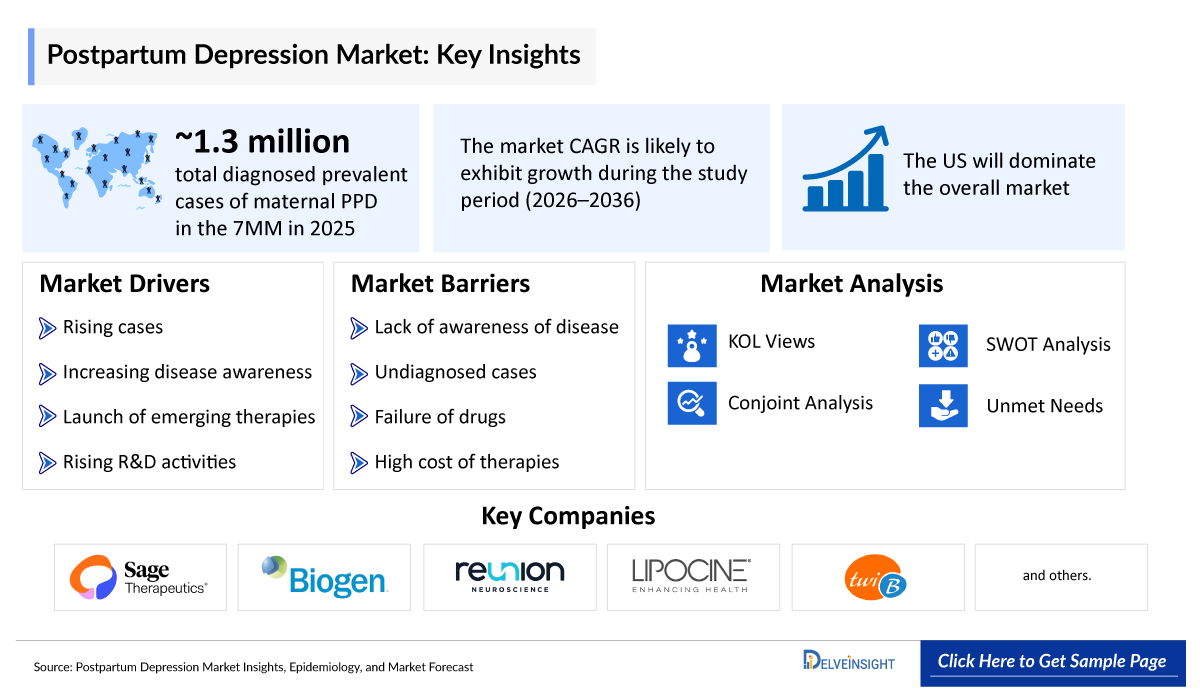
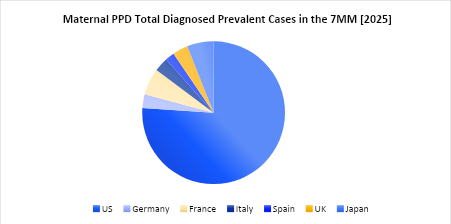
- In 2025, the total diagnosed prevalent cases of Postpartum Depression in the 7MM were ~1.3 million, and this number is expected to rise during the forecast period.
- Among the 7MM, the US accounted for the largest share of diagnosed prevalent cases of maternal PPD in 2025, with ~700,000 cases.
- Among EU4 and the UK, the UK accounted for the largest share of maternal PPD cases in 2025, contributing over 30% of the total cases.
- In 2025, Japan reported ~100,000 diagnosed prevalent cases of maternal PPD.
Postpartum Depression Epidemiology Segmentation in the 7MM
- Maternal Postpartum Depression Total Diagnosed Prevalent Cases
Postpartum Depression Market Recent Breakthroughs and Developments
- In May 2026, Lipocine announced that its Phase III clinical data for LPCN 1154 have been selected for oral and poster presentation at the 2026 American Society of Clinical Psychopharmacology (ASCP) Annual Meeting.
- In May 2026, Reunion Neuroscience presented the full results of the RECONNECT, a Phase II trial evaluating luvesilocin in adult female patients with moderate-to-severe PPD, in an oral presentation at the ASCP Annual Meeting 2026.
- In April 2026, Lipocine announced topline results from its Phase III trial evaluating LPCN 1154 for the treatment of PPD. LPCN 1154 did not show a statistically significant reduction from baseline in Hamilton Depression Rating Scale (HAM-D) 17-item total score compared with placebo at hour 60 in the full analysis set, thus failing to meet the primary endpoint. In the overall population, LPCN 1154 was well tolerated and demonstrated a differentiated safety profile with no reported adverse events.
- In November 2025, TWi Biotechnology reported results from a Phase II clinical trial of NORA520 for PPD, reporting that the combined treatment groups did not achieve a statistically significant difference compared with placebo, highlighting limited efficacy in this study.
- In July 2025, Supernus Pharmaceuticals announced that it has successfully completed its previously announced acquisition of Sage Therapeutics.
Postpartum Depression Drug Analysis & Competitive Landscape
The Postpartum Depression drug chapter provides a detailed, market-focused review of the emerging Postpartum Depression Pipeline across Phase II-III clinical trials and preclinical trials. It covers the Postpartum Depression mechanism of action, clinical trial data, regulatory approvals, patents, collaborations, and strategic partnerships for each therapy, along with their advantages, limitations, and recent developments. This section offers critical insights into the PPD treatment landscape, supporting market assessment, competitive analysis, and growth forecasting for the PPD therapeutics market.
Postpartum Depression Approved Therapies
-
Zuranolone (ZURZUVAE): Sage Therapeutics and Biogen
Zuranolone (ZURZUVAE) is an oral neuroactive steroid and positive allosteric modulator of GABA-A receptors and the first and only FDA-approved oral medicine for the treatment of adults with Postpartum Depression. Developed by Sage Therapeutics and commercialized in partnership with Biogen, the therapy received FDA approval in August 2023 and became commercially available in December 2023. Unlike conventional antidepressants that may require several weeks to demonstrate clinical benefit, zuranolone is administered as a 14-day oral course and has demonstrated rapid improvement in depressive symptoms, with benefits observed as early as day 3 in clinical studies.
Competitive Landscape of Postpartum Depression Marketed/Approved Therapies | ||||||
|
Drug/Therapy |
Company |
Indication |
Molecule Type |
MoA |
RoA |
Marketed Region |
|
Zuranolone (ZURZUVAE) |
Sage Therapeutics and Biogen |
PPD |
Neuroactive steroid |
GABA A receptor positive allosteric modulators |
Oral |
US: 2023 |
Note: Detailed marketed therapies assessment will be provided in the final report.
Postpartum Depression Pipeline Analysis
-
Luvesilocin (RE104): Reunion Neuroscience
Luvesilocin is a proprietary, potential best-in-class, patented prodrug of 4-OH-DiPT, which is administered via a SC injection. The Company expects to initiate a pivotal Phase III clinical trial in Postpartum Depression in 2026 which, if successful, could support potential registration of luvesilocin. The US FDA has granted Breakthrough Therapy Designation (BTD) to luvesilocin for the treatment of PPD. In the RECONNECT Phase II clinical trial in adult female patients with moderate-to-severe PPD, luvesilocin demonstrated a robust decrease in depression symptoms and was generally well-tolerated.
-
LPCN 1154: Lipocine
LPCN 1154, oral brexanolone, a non-SSRI, is chemically identical to the endogenous human hormone allopregnanolone. LPCN 1154 has the potential for rescue therapy for PPD with acute stabilization of symptoms in hours and no intensive monitoring requirement. LPCN 1154 has demonstrated clinically meaningful improved tolerability including low CNS depressant side effects, without the risks of disassociation or hallucination of psychedelics, thus potentially enabling a safe, at-home intervention, preserving the maternal-infant bond. Lipocine has applied for BTD and Fast Track Designations with FDA and has submitted Phase III validation study protocol asits next regulatory steps.
Competitive Landscape of Postpartum Depression Emerging Drugs | ||||||
|
Drug Name |
Company |
Highest Phase |
Indication |
RoA |
MoA |
Anticipated Launch in the US |
|
Luvesilocin (RE104) |
Reunion Neuroscience |
III |
PPD |
SC |
Serotonin 5-HT2A receptor agonists |
Information is available in the full report |
|
LPCN 1154 |
Lipocine |
III |
PDD |
Oral |
GABA A receptor modulators |
Information is available in the full report |
|
NORA520 |
TWi Biotechnology |
II |
PPD |
Oral |
GABA A receptor modulators |
Information is available in the full report |
|
Note: Launch insights are provisional and may change with future report updates or the occurrence of major key catalysts. | ||||||
Note: Detailed emerging therapies assessment will be provided in the final report.
Postpartum Depression Market Outlook
The Postpartum Depression Treatment landscape has shown transformation, driven by the emergence of rapid-acting neuropsychiatric therapies designed to address the limitations of conventional antidepressants, which often require several weeks to achieve clinical benefit.
Zuranolone has established a new treatment paradigm as the first FDA-approved oral therapy specifically indicated for Postpartum Depression. Administered as a 14-day oral course, zuranolone demonstrated rapid and clinically meaningful improvements in depressive symptoms, with treatment effects observed within days rather than weeks. Its differentiated profile, ease of administration, and increasing physician familiarity are expected to drive continued uptake, positioning the therapy as a foundational treatment in the Postpartum Depression Therapeutics Market.
Luvesilocin is being developed to provide rapid and potentially durable antidepressant effects following a single administration, potentially reducing the need for prolonged treatment courses. LPCN 1154 aims to offer convenient administration while leveraging GABA-A receptor modulation to rapidly alleviate depressive symptoms.
Similarly, NORA520, another investigational neuroactive steroid, is designed to target neurobiological pathways implicated in PPD and may expand the growing class of GABAergic therapies. Collectively, these emerging candidates have the potential to enhance treatment efficacy, improve patient convenience, and broaden therapeutic options for women with postpartum depression, thereby contributing to future market growth and competition beyond the current zuranolone-dominated landscape.
Overall, the Postpartum Depression Therapeutics Market is expected to be driven by increasing adoption of rapid-acting oral therapies, growing awareness and diagnosis of postpartum depression, broader payer coverage, and continued innovation in neuroactive steroid and novel antidepressant mechanisms.
Further details will be provided in the report….
Postpartum Depression Companies
- Sage Therapeutics
- Biogen
- Reunion Neuroscience
- Lipocine
- TWi Biotechnology, and others.
Postpartum Depression Drug Class/Insights into Leading Emerging and Marketed Therapies (2022–2036 Forecast)
The Postpartum Depression Therapeutics Market (2022–2036 forecast) is transitioning from a treatment paradigm largely dominated by conventional antidepressants, particularly SSRIs, toward a more specialized landscape featuring neuroactive steroids, GABA-A receptor modulators, and other rapidly acting antidepressant therapies.
- Neuroactive Steroids/GABA-A Receptor Positive Allosteric Modulators: Zuranolone, LPCN 1154, and NORA520 belong to the neuroactive steroid class and exert their therapeutic effects through positive modulation of GABA-A receptors. These agents are designed to restore inhibitory neurotransmission disrupted during the postpartum period, resulting in rapid improvement of depressive symptoms. ZURZUVAE has established this class as a promising therapeutic approach by becoming the first FDA-approved oral treatment specifically indicated for PPD.
- Serotonergic Neuroplastogens: Luvesilocin represents a novel serotonergic psychedelic-based therapeutic approach. By activating serotonin receptors and promoting neuroplasticity, luvesilocin aims to produce rapid and durable antidepressant effects following a limited number of administrations.
Postpartum Depression innovation is being driven by rapid-acting neuroactive steroids and novel antidepressant therapies that offer faster symptom relief and improved patient outcomes. As these therapies advance through development and commercialization, they are expected to expand treatment options, increase competition, and drive growth in the Postpartum Depression Therapeutics Market throughout the forecast period.
Postpartum Depression Drug Uptake
This section focuses on the uptake rate of potential Postpartum Depression drugs expected to be launched in the market during the forecast period (2026–2036). The analysis covers the PPD drug’s uptake, performance at peak, factors affecting performance during prime years of growth, patient uptake by therapy, and anticipated sales generated by each drug.
Among currently available therapies, zuranolone is expected to maintain a leading position in the Postpartum Depression Therapeutics Market due to its first-mover advantage as the only FDA-approved oral treatment specifically indicated for PPD. Commercial uptake has accelerated since launch, supported by expanded sales-force investments, increasing physician awareness, and broader payer coverage. Importantly, OBGYNs account for approximately 80% of prescriptions, highlighting successful penetration into frontline women's health practices and reinforcing the drug's integration into routine postpartum care.
Among Postpartum Depression Emerging Therapies, luvesilocin represents one of the most differentiated pipeline assets due to its novel serotonergic neuroplastogen mechanism and potential to deliver rapid and durable antidepressant effects following a single administration.
Results from the RECONNECT study demonstrated rapid achievement of discharge readiness, consistent with luvesilocin's differentiated pharmacology, leading to the FDA granting BTD for PPD. Meanwhile, LPCN 1154 and NORA520 are expanding the neuroactive steroid class with both candidates aiming to optimize GABA-A receptor modulation and provide rapid symptom improvement.
The uptake in the Postpartum Depression Therapeutics Market is expected to be increasingly driven by therapies capable of delivering rapid symptom resolution, durable clinical benefit, and simplified treatment regimens. Competition is likely to shift beyond traditional efficacy endpoints toward factors such as speed of response, remission durability, healthcare resource utilization, patient convenience, and integration into postpartum care pathways.
Detailed insights of emerging therapies' drug uptake is included in the report
Postpartum Depression Market Access and Reimbursement of Approved Therapies
Reimbursement is a crucial factor that affects the drug’s access to the market. Often, the decision to reimburse comes down to the price of the drug relative to the benefit it produces in treated patients. To reduce the healthcare burden of these high-cost therapies, many payment models are being considered by payers and other industry insiders.
The United States
US Reimbursement of Therapies Approved for Postpartum Depression | |
|
Drug/Therapy |
Access Program |
|
ZURZUVAE |
ZURZUVAE Savings Card Program |
The report further provides detailed insights on the country-wise accessibility and reimbursement scenarios, cost-effectiveness scenario of approved therapies, programs making accessibility easier and out-of-pocket costs more affordable, insights on patients insured under federal or state government prescription drug programs, etc.
NOTE: Further Details are provided in the final report….
Postpartum Depression Therapies Price Scenario & Trends
Pricing and analogue assessment of Postpartum Depression Therapies highlights evolving price dynamics structures. This section summarizes the cost of approved treatments, closest and most appropriate analogue selection for emerging therapies, and understanding of how pricing influences market access, adherence, and long-term uptake.
Postpartum Depression Industry Experts and Physician Views
To keep up with Postpartum Depression Therapeutics Market Trends, we take Key Opinion Leaders (KOLs) and Subject Matter Experts (SMEs) opinions working in the domain through primary research to fill the data gaps and validate our secondary research. Industry experts were contacted for insights on the Postpartum Depression Emerging Therapies, evolving Postpartum Depression Treatment landscape, patient adherence to conventional therapies, therapy switching trends, drug adoption and uptake, accessibility challenges, and epidemiology and real-world prescription patterns in PPD, including MD, PhD, Instructor, Postdoctoral Researcher, Professor, Researcher, and others.
DelveInsight’s analysts connected with 15+ KOLs to gather insights at the country level. Centers such as University of Washington, University of Córdoba, and Saitama Medical University etc. were contacted. Their opinion helps understand and validate current and emerging PPD therapies, highlight unmet medical needs, provide epidemiological context, and support strategic decisions for market access, therapy adoption, and pipeline prioritization in PPD.
Region |
Key Opinion Leaders (KOLs) and Subject Matter Experts (SMEs) |
|
United States |
“PPD presents a complex clinical profile influenced by neurobiological, hormonal, and environmental factors, making its management multifaceted. Current approaches, including antidepressants and psychotherapy, may not adequately address all patient needs, particularly in cases requiring rapid symptom control. Emerging therapies focusing on GABA-A receptor modulation and novel pathways hold promise for improved outcomes.” |
|
Germany |
“The clinical management of PPD is often hindered by underdiagnosis, stigma, and limited rapidly acting options. Conventional therapies may be associated with delayed efficacy and adherence challenges, impacting maternal well-being and infant care. Advancements in targeted neuroactive treatments are anticipated to address these gaps and improve overall disease outcomes.” |
Postpartum Depression Report Qualitative Analysis: SWOT and Conjoint Analysis
We perform qualitative and Postpartum Depression Therapeutics Market Intelligence analysis using various approaches, such as SWOT analysis and conjoint analysis. In the SWOT analysis of PPD, strengths, weaknesses, opportunities, and threats in terms of disease diagnosis, patient awareness, patient burden, competitive landscape, cost-effectiveness, and geographical accessibility of therapies are provided.
Conjoint analysis analyzes Postpartum Depression Emerging Therapies based on relevant attributes such as safety, efficacy, frequency of administration, route of administration, and order of entry. Scoring is given based on these parameters to analyze the effectiveness of therapy.
The team of analysts analyzes promising Postpartum Depression emerging therapies based on relevant attributes such as safety, efficacy, frequency of administration, route of administration, and order of entry. In efficacy, the trial’s primary and secondary outcome measures are evaluated, whereas the therapies’ safety is evaluated, wherein the acceptability, tolerability, and adverse events are majorly observed. In addition, the scoring is also based on the route of administration, order of entry, probability of success, and the addressable patient pool for each therapy. According to these parameters, the final weightage score and the ranking of the emerging therapies are decided.
Scope of the Postpartum Depression Market Report
- The Postpartum Depression Therapeutics Market Report covers a segment of key events, an executive summary, a descriptive overview explaining their causes, signs and symptoms, pathogenesis, and currently available treatments.
- Comprehensive insight has been provided into the epidemiology segments and forecasts, the future growth potential of the diagnosis rate, and disease progression along treatment guidelines.
- Additionally, an all-inclusive account of both the current and emerging treatments, along with the elaborative profiles of late-stage and prominent therapies, will have an impact on the current treatment landscape.
- A detailed review of the Postpartum Depression Therapeutics Market, historical and forecasted Postpartum Depression Treatment Market Size, Postpartum Depression Drugs Market Share by therapies, detailed assumptions, and rationale behind our approach is included in the report, covering the 7MM drug outreach.
- The Postpartum Depression Therapeutics Market Report provides an edge while developing business strategies by understanding trends through SWOT analysis and expert insights/KOL views, patient journey, and treatment preferences that help in shaping and driving the 7MM Postpartum Depression Therapeutics Market.
Postpartum Depression Market Report Insights
- Postpartum Depression Patient Population Forecast
- Postpartum Depression Therapeutics Market Size
- Postpartum Depression Pipeline Analysis
- Postpartum Depression Market Size and Trends
- Postpartum Depression Market Opportunity (Current and Forecasted)
Postpartum Depression Market Report Key Strengths
- Epidemiology‑based (Epi‑based) Bottom‑up Forecasting
- Artificial Intelligence (AI)-Enabled Market Research Report
- 11-Year Forecast
- Postpartum Depression Market Outlook (North America, Europe, Asia-Pacific)
- Patient Burden Trends (By Geography)
- Postpartum Depression Treatment Addressable Market (TAM)
- Postpartum Depression Competitive Landscape
- Postpartum Depression) Major Companies Insights
- Postpartum Depression Price Trends and Analogue Assessment
- Postpartum Depression Therapies Drug Adoption/Uptake
- Postpartum Depression Therapies Peak Patient Share Analysis
Postpartum Depression Market Report Assessment
- Current Postpartum Depression Treatment Practices
- Postpartum Depression Unmet Needs
- Postpartum Depression Clinical Development Analysis
- Postpartum Depression Emerging Drugs Product Profiles
- Postpartum Depression Market Attractiveness
- Postpartum Depression Qualitative Analysis (SWOT and Conjoint Analysis)
Key Questions Answered in the Postpartum Depression Market Report
Postpartum Depression Market Insights
- What was the Postpartum Depression Treatment Market Size, the Postpartum Depression Market Size by therapies, Postpartum Depression Drugs Market Share (%) distribution in 2025, and what would it look like by 2036? What are the contributing factors for this growth?
- What are the anticipated pricing variations among different geographies for the emerging therapies in the future?
- What can be the future treatment paradigm of Postpartum Depression?
- What are the disease risks, burdens, and unmet needs of Postpartum Depression?
- What will be the growth opportunities across the 7MM concerning the patient population with Postpartum Depression?
- Who is the major future competitor in the market, and how will the competitors affect their market share?
- What are the current options for the treatment of PPD? What are the current guidelines for treating PPD in the US, Europe, and Japan?
Reasons to Buy the Postpartum Depression Market Report
- The Postpartum Depression Therapeutics Market Report will help in developing business strategies by understanding the latest trends and changing treatment dynamics driving the Postpartum Depression Drugs Market.
- Bottom-up forecasting builds from the affected population to product forecasts, delivering a robust, data-driven approach ideal for new therapies and novel classes.
- Insights on patient burden/disease: Postpartum Depression Incidence, evolution in diagnosis, and factors contributing to the change in the epidemiology of the disease during the forecast years.
- Understand the existing Postpartum Depression Drugs Market opportunities in varying geographies and the growth potential over the coming years.
- Identifying strong upcoming players in the Postpartum Depression Drugs Market will help devise strategies to help get ahead of competitors.
- Detailed analysis and ranking of class-wise potential Postpartum Depression Emerging Therapies under the conjoint analysis section to provide visibility around leading classes.
- To understand KOLs’ perspectives on the accessibility, acceptability, and compliance-related challenges of existing treatment to overcome barriers in the future.
- Detailed insights on the unmet needs of the existing Postpartum Depression Drugs Market so that the upcoming players can strengthen their development and launch strategy.
- This Artificial Intelligence (AI)-enabled report summarize and simplify complex datasets with in the report into clear, actionable insights for stakeholders, investors, and healthcare providers, enabling faster, data-driven decisions.
Stay Updated with us:-
- Mixed Fortunes for Biogen and Sage’ Zuranolone: Approval Under the Cloud of Rejection
- FDA Approves ZURZUVAE for Postpartum Depression; Astellas Drug Acquired in $5.9B Deal Wins FDA Approval; FDA Clearance to Phase III Study of Lisaftoclax; FDA Issues CRL to BLA Resubmission for Remestemcel-L; Bavarian Nordic Updated on its Chikungunya Virus Vaccine; FDA Orphan Drug Designation to ABM-1310
- Sage’s drug meets phase 3; Blocking 2 key pathways help in tackling TNBC; FDA clears Paragonix; FDA gives a nod
- Postpartum Depression Market: Infographics
- New DelveInsight Blogs