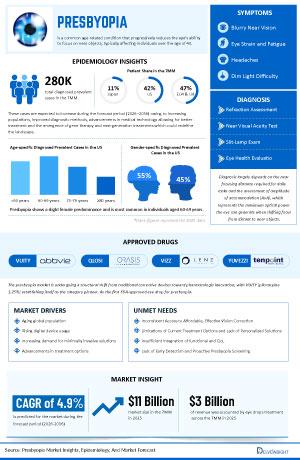
Presbyopia Market Summary
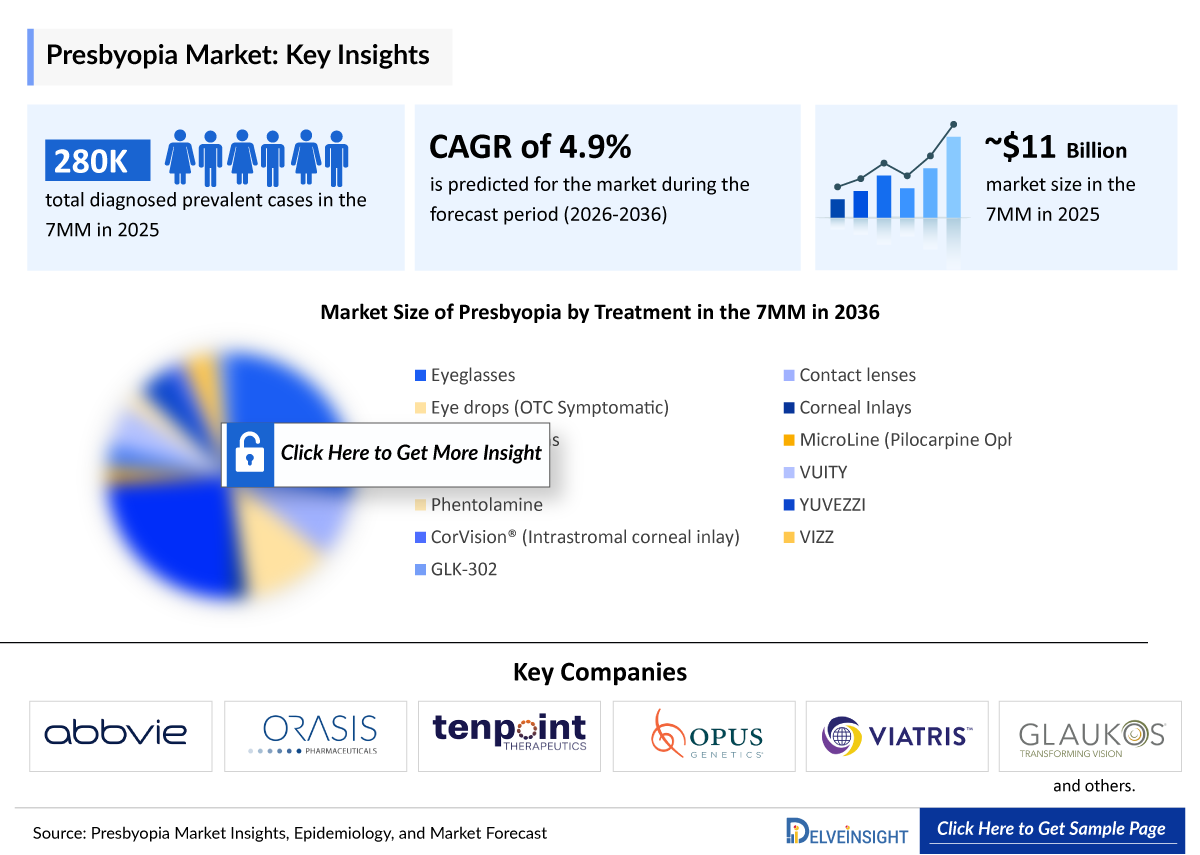
- The Presbyopia Market Size was found to be ~USD 11,000 Million in the leading markets (the United States, the EU4 (Germany, France, Italy, and Spain), the United Kingdom, and Japan) in 2025.
- The Presbyopia Market is undergoing a structural shift from traditional corrective devices toward pharmacologic innovation, with VUITY (pilocarpine 1.25%) establishing itself as the category pioneer. As the first FDA-approved eye drop for presbyopia, VUITY leveraged strong Phase III data, once-daily dosing convenience, and aggressive early market education to secure leadership in the mild-to-moderate segment.
Presbyopia Insights and Trends
- The majority (~3/4th cases) of the Presbyopia Patients are using the eyeglasses for correction of close-up vision problems. In terms of revenue as well, eyeglasses are contributing around 50% of the USA market in 2022.
- Two companies are currently evaluating the role of their products in the late stage (i.e. Pre-registration and Phase III) of development for the treatment of presbyopia. Opus Genetics/Viatris with Phentolamine, Eyenovia with MicroLine (Pilocarpine). Glaukos Corporation is also in the race with GLK-302 which is currently in Phase II.
- Building on the validation created by VUITY, YUVEZZI is positioned to emerge as a key follow-on competitor, capitalizing on growing awareness of pharmacologic correction. With differentiation in formulation and comparable efficacy expectations, it is anticipated to capture meaningful share within the expanding miotic segment.
- VIZZ is expected to benefit from overall class expansion dynamics as more patients and physicians adopt eye drops as a viable alternative to reading glasses. However, its later entry may moderately limit peak penetration relative to earlier branded therapies.
- In the 7MM, the Presbyopia Age-Specific Cases were 66,880,000, 76,000,000, 55,650,000, and 35,000,000 for the age group less than 60 years, 60–69 years, 70–79 years, and =80 years respectively, in the year 2022.
- In the 7MM, the Presbyopia Gender-Specific Cases were 99,700,000 and 114,000,000 for males and females, respectively in the year 2022.
Presbyopia Market Size and Forecast
- 2025 Presbyopia Market Size: ~USD 11,000 million
- 2036 Projected Presbyopia Market Size: ~USD 18,000 million
- Presbyopia Growth Rate (2026–2036): 4.9% CAGR
Request for Unlocking the Sample Page of the "Presbyopia Treatment Market"
Factors Contributing to the Growth of the Presbyopia Market by DelveInsight
-
Rising Aging Population
Presbyopia is an age-related vision condition that typically affects individuals over 40. With the global population aging rapidly, the patient pool is expanding significantly, driving market demand.
-
Increasing Awareness and Diagnosis Rates
Growing awareness about eye health and routine vision screening has led to higher diagnosis rates, enabling more patients to seek timely treatment.
-
Advancements in Treatment Options
The development of innovative therapies, including pharmacological eye drops, advanced contact lenses, and surgical procedures, is enhancing treatment outcomes and boosting market growth.
-
Growing Demand for Non-Invasive Treatments
Patients are increasingly opting for non-surgical solutions such as presbyopia-correcting eye drops and multifocal lenses, contributing to market expansion.
-
Technological Innovations in Ophthalmology
Continuous advancements in ophthalmic devices, laser technologies, and intraocular lenses (IOLs) are improving precision and effectiveness, thereby increasing adoption rates.
-
Improved Healthcare Infrastructure
Expansion of healthcare facilities and better access to ophthalmic care, particularly in developing regions, are facilitating early diagnosis and treatment.
-
Rising Disposable Income and Lifestyle Changes
Increased spending capacity and a growing focus on quality of life are encouraging individuals to seek corrective treatments for presbyopia.
-
Strong Pipeline of Emerging Therapies
Ongoing research and clinical trials focused on novel drug candidates and innovative treatment approaches are expected to introduce new growth opportunities in the market.
DelveInsight's ‘Presbyopia Market Insights, Epidemiology and Market Forecast – 2036’ report delivers an in-depth understanding of the PRESBYOPIA, historical and forecasted epidemiology, as well as the PRESBYOPIA market trends in the United States, EU4 (Germany, Spain, Italy, and France) and the United Kingdom, and Japan.
The Presbyopia Treatment Market Report delivers a comprehensive analysis of the current treatment landscape, including standards of care, clinical practices, and evolving therapeutic algorithms. It evaluates, PRESBYOPIA patient burden trends, revenue & market share dynamics, peak patient share & therapy uptake analysis, and provides an in-depth market size assessment, and growth rate projections (Historical & Forecast 2022–2036) across global regions. The report highlights key unmet medical needs in PRESBYOPIA and maps the competitive and clinical landscape to uncover high-value opportunities, providing a clear outlook on future market growth potential.
Scope of the Presbyopia Market Report | |
|
Study Period |
2022–2036 |
|
Historical Year |
2022–2025 |
|
Forecast Period |
2026–2036 |
|
Base Year |
2026 |
|
Geographies Covered |
|
|
Presbyopia Market CAGR (Forecast period) | |
|
Presbyopia Epidemiology Segmentation Analysis |
|
|
Presbyopia Companies |
|
|
Presbyopia Therapies |
|
|
Presbyopia Market |
Segmented by
|
|
Analysis |
|
Presbyopia Understanding
Presbyopia is a common age-related condition that progressively reduces the eye’s ability to focus on near objects, typically affecting individuals over the age of 40. It results from structural and physiological changes in the eye, particularly the stiffening of the crystalline lens and reduced efficiency of the accommodative mechanism involving the ciliary body and zonular fibers. The onset and progression of presbyopia may vary based on factors such as refractive status, environmental exposure (e.g., UV light), and systemic conditions like diabetes, with hyperopic individuals often experiencing symptoms earlier than myopic individuals. As the global population ages, presbyopia has become an increasingly significant public health concern, affecting over one billion people worldwide and driving the need for effective diagnostic approaches and both nonsurgical and surgical treatment strategies.
Presbyopia Overview and Diagnosis
Diagnosis largely depends on the near focusing distance required for daily tasks and the assessment of amplitude of accommodation (AoA), which represents the maximum optical power the eye can generate when shifting focus from distant to near objects. AoA is commonly measured using clinical methods such as the push-up and push-down techniques, where a near target is moved closer to or farther from the eye until blur or clear vision is reported, as well as the minus lens technique, which increases accommodative demand using incremental negative lenses while viewing a distant chart. Retinoscopy may also be used as an objective method to evaluate accommodative changes without relying on patient responses, although it requires significant clinical expertise.
Presbyopia Treatment
Treatment options include non-surgical and surgical strategies tailored to a patient’s visual needs, refractive status, ocular health, and lifestyle. Non-surgical management involves spectacles (single-vision, bifocal, and progressive lenses), contact lenses (monovision or multifocal designs), and pharmacological therapies that improve depth of focus through miosis or lens modifications using agents such as pilocarpine, carbachol, aceclidine, and phentolamine. Surgical options include corneal procedures such as LASIK or PRK-based monovision, presbyLASIK for corneal multifocality, and intracorneal inlays that enhance near vision via a pinhole effect.
Lens-based approaches include refractive lens exchange or cataract surgery with intraocular lens (IOL) implantation, such as monofocal, extended depth-of-focus (EDOF), accommodating, or phakic IOLs, while scleral expansion procedures aim to restore accommodative amplitude but have limited clinical adoption. Emerging technologies, including small incision lenticule extraction (SMILE) and noninvasive laser procedures such as Opti-K, are also being explored as potential alternatives for presbyopia management.
Presbyopia Unmet Needs
The section “Presbyopia Unmet Needs” outlines the critical gaps between the current state of patient care, diagnosis, and the ideal & effective management of the disease. It highlights the obstacles experienced by patients, clinicians, and researchers and identifies potential solutions for future progress.
- Inconsistent Access to Affordable, Effective Vision Correction
- Limitations of Current Treatment Options and Lack of Personalized Solutions
- Insufficient Integration of functional and QoL
- Lack of Early Detection and Proactive Presbyopia Screening, and others…..
Presbyopia Epidemiology Insights in the 7MM
Key Findings from PRESBYOPIA Epidemiological Analysis and Forecast
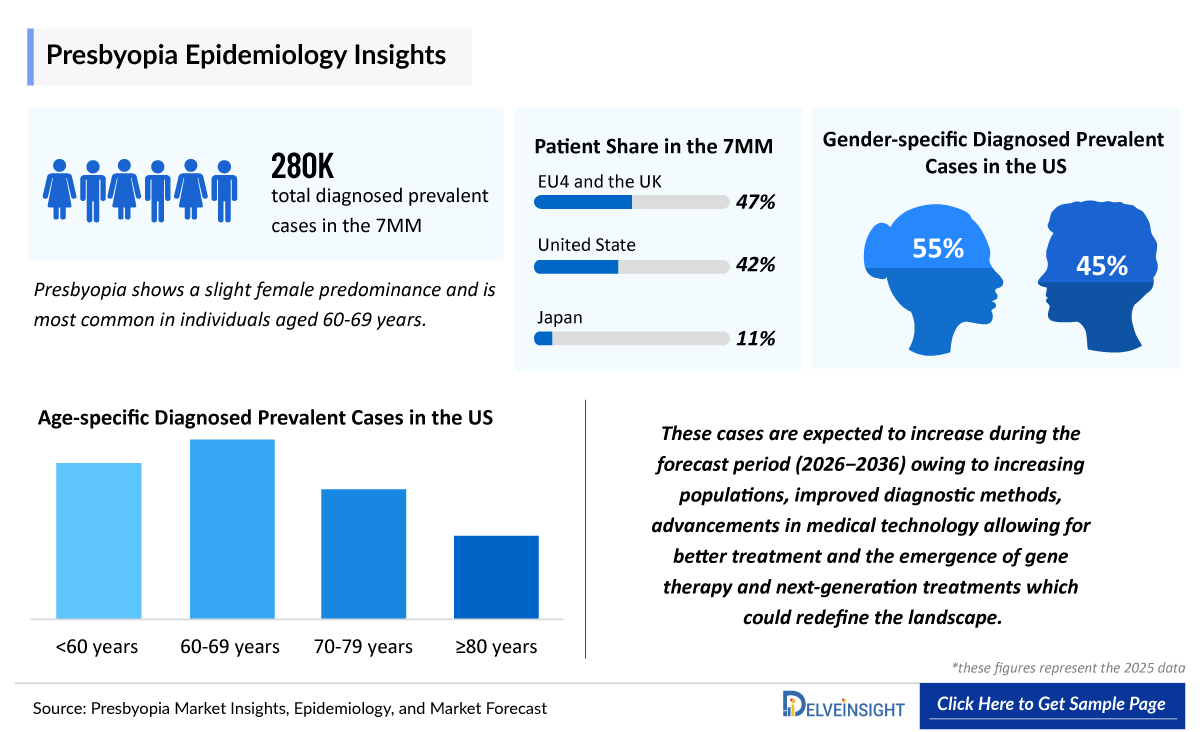
- According to DelveInsight’s estimates, the total number of Presbyopia Prevalent Cases in the 7MM was nearly 290,000 cases in 2025 and is projected to increase during the forecasted period.
- The total number of Presbyopia Prevalent Cases in the United States was nearly 120,000 in 2025.
- Presbyopia shows a slight female predominance and is most common in individuals aged 60-69 years.
Presbyopia Epidemiology Segmentation in the 7MM
- Total Presbyopia Prevalent Cases
- Total Presbyopia Diagnosed Cases
- Presbyopia Age-specific Cases
- Presbyopia Gender-specific Cases
- Presbyopia Severity-specific Cases
- Total Presbyopia Treated Cases
Presbyopia Drug Analysis & Competitive Landscape
The Presbyopia drugs chapter provides a detailed, market-focused review of approved therapies and the emerging Presbyopia Pipeline across Phase I/II–II clinical trials. It covers Presbyopia Mechanism of Action, clinical trial data, regulatory approvals, patents, collaborations, strategic partnerships upcoming Key catalyst for each therapy, along with their advantages, limitations, and recent developments. This section offers critical insights into the Presbyopia Treatment landscape, supporting market assessment, competitive analysis, and growth forecasting for the Presbyopia Therapeutics Market.
Presbyopia Approved Therapies
-
VUITY (Pilocarpine HCI): AbbVie
VUITY® (pilocarpine HCl ophthalmic solution) 1.25%, developed by Allergan, an AbbVie company, is a once-daily prescription eye drop approved by the US FDA for the treatment of presbyopia (age-related near vision impairment) in adults. It is an optimized formulation of pilocarpine designed to enhance near and intermediate vision without compromising distance vision by leveraging the eye’s natural mechanism of pupil constriction. The formulation incorporates proprietary pHast™ technology, which enables rapid adjustment to the physiological pH of the tear film, facilitating efficient drug delivery. Approval of VUITY was supported by results from the Phase III GEMINI 1 and GEMINI 2 clinical trials, which demonstrated significant improvement in near vision with favorable tolerability. As the first eye drop of its kind for presbyopia, VUITY offers a non-invasive therapeutic alternative to traditional reading glasses.
PRESBYOPIA Marketed/Approved Therapies | ||||||
|
Drug/Therapy |
Company |
Indication |
Molecule Type |
MoA |
RoA |
Marketed Region (First approval) |
|
VUITY (Pilocarpine HCI) |
AbbVie |
Adults with Presbyopia |
Small molecule |
Cholinergic Muscarinic receptor agonist |
Topical |
US: 2021 |
|
QLOSI (Pilocarpine hydrochloride) |
Orasis Pharmaceuticals |
Adults with Presbyopia |
Small molecule |
Cholinergic Muscarinic receptor agonist |
Topical |
US: 2023 |
Presbyopia Pipeline Analysis
-
MicroLine (Pilocarpine Ophthalmic): Eyenovia
MicroLine is MicroLine, a patented pilocarpine-based therapy developed by Eyenovia for the treatment of presbyopia. Pilocarpine is a well-established ophthalmic agent known to enhance depth of focus, thereby helping counteract age-related loss of accommodation and improving near vision. However, conventional pilocarpine eye drops may be limited by dose-related side effects and variability associated with traditional eyedropper administration. To address these challenges, MicroLine is delivered using the Optejet dispenser, which administers a precise microdose, approximately one-fifth the volume of a standard eye drop, allowing more accurate, consistent, and convenient drug delivery. MicroLine (pilocarpine ophthalmic) has been evaluated in Phase III clinical trials for the treatment of presbyopia.
Competitive Landscape of Pipeline Drugs | ||||||
|
Drug Name |
Company |
Highest Phase |
Indication |
RoA |
MoA |
Anticipated Launch in the US |
|
MicroLine (Pilocarpine Ophthalmic) |
Eyenovia |
III |
Presbyopia |
Topical |
Cholinergic Muscarinic receptor agonists |
2027 |
|
GLK-302 |
Glaukos Corporation |
II |
Presbyopia |
Topical |
Cholinergic Muscarinic receptor agonists |
Information is available in the full report |
|
Note: Launch insights are provisional and may change with future report updates or the occurrence of major key catalysts. | ||||||
Major Presbyopia Companies
- Abbvie
- Orasis pharmaceuticals
- Tentpoint Therapeutics
- Opus Genetics/Viatris
- Glaukos Corporation Akeso Biopharma
- Summit Therapeutics and others.
Presbyopia Drug Updates
- In June 2026, LENZ Therapeutics expanded its global regulatory footprint by submitting a Marketing Authorization Application (MAA) to the European Medicines Agency (EMA) for VIZZ. This marks the company's fifth major regulatory filing outside of the United States. The submission aims to bring the once-daily aceclidine eye drop to the European market, building on its previous clinical trial momentum and providing a new, non-invasive alternative for millions of adults experiencing age-related near-vision loss.
- In June 2026, Everest Medicines secured an exclusive licensing agreement to develop and commercialize LENZ Therapeutics’ VIZZ (aceclidine 1.44%) eye drops in Greater China. VIZZ is a pupil-selective, once-daily drop designed to restore near vision. This strategic move allows Everest to introduce a highly anticipated non-surgical treatment to a massive, aging demographic in China, capitalizing on strong Phase 3 data that showed the drop treats presbyopia effectively without sacrificing distance sight.
- In June 2026, the FDA accepted Viatris’s supplemental New Drug Application (sNDA) for MR-141 (phentolamine ophthalmic solution, 0.75%), setting a target action date for October 17, 2026. This submission is supported by the Phase 3 VEGA-2 and VEGA-3 trials. Clinical reports show the drop durably improves near vision by relaxing the iris dilator muscle to create a pinhole effect, offering presbyopia patients enhanced close-up focus without compromising their distance vision or night driving.
- In June 2026, Tenpoint Therapeutics announced the FDA approval and subsequent US commercial launch of YUVEZZI (carbachol and brimonidine tartrate). It is the first and only once-daily, dual-agent combination eye drop approved for presbyopia. The therapy works by constricting the pupil to improve near vision for up to 10 hours. Data from the Phase 3 BRIO I and II trials demonstrated excellent efficacy, a rapid onset of action, and low rates of typical side effects like eye redness.
- Tenpoint Therapeutics announced that the US Food and Drug Administration (FDA) approved YUVEZZ (carbachol and brimonidine tartrate ophthalmic solution) 2.75%/0.1%, previously known as BRIMOCHOL™ PF, the first and only dual-agent eye drop for the treatment of presbyopia in adults in January 2026.
- In January 2026, Tenpoint Therapeutics announced it has secured USD 235 million through the successful close of its Series B preferred stock financing and a credit facility. The financing will help in the commercialization of YUVEZZ.
- In February 2025, Opus Genetics announced completion of enrollment in the VEGA-3 Phase III clinical trial evaluating Phentolamine Ophthalmic Solution 0.75% for presbyopia.
Presbyopia Market Outlook
Presbyopia is an age-related condition characterized by the gradual loss of flexibility of the eye’s natural lens, leading to a reduced ability to focus on near objects. It commonly becomes noticeable between the ages of 40 and 50 and represents a normal part of the aging process. Without appropriate correction, presbyopia can result in significant visual impairment, affecting daily tasks, workplace productivity, and overall quality of life. Management focuses on compensating for the eye’s diminished near-focusing ability rather than curing the condition.
While presbyopia cannot be reversed, appropriately prescribed glasses or contact lenses can significantly improve near vision and enhance visual comfort during close-range activities. Current treatment options for presbyopia include surgical options like refractive surgery, lens implant, corneal inlays, non-surgical options like optical correction spectacles and contact lenses etc. and the use of pharmacological treatment.
In October 2021, the US FDA approved the VUITY (pilocarpine HCl ophthalmic solution) 1.25% for the treatment of presbyopia, commonly known as age-related blurry near vision, in adults. VUITY is a once-daily prescription eye drop and the first FDA-approved pharmacological treatment specifically indicated for presbyopia. It is an optimized formulation of pilocarpine designed to improve near and intermediate vision without compromising distance vision by utilizing the eye’s natural ability to reduce pupil size, thereby increasing depth of focus and enhancing visual clarity for near tasks.
In October 2023, the US FDA approved QLOSI™ (pilocarpine hydrochloride ophthalmic solution) 0.4% for the treatment of presbyopia in adults. QLOSI is an innovative, low-dose, preservative-free pilocarpine eye drop developed to improve near vision by modulating pupil size and creating a pinhole effect that increases depth of focus. This mechanism enhances near visual acuity and supports clearer vision for close-range tasks while maintaining comfort, efficacy, and safety through its specially designed formulation. As a non-invasive pharmacological option, QLOSI provides an alternative approach for the management of age-related loss of near vision in adults.
The leading Presbyopia Companies such as Eyenovia, Glaukos Corporation, and others, are investigating potential drug candidates that can significantly change the Presbyopia Therapeutics Market landscape during the forecast period. Approaches include Cholinergic Muscarinic receptor agonists (Microline and GLK-302) and others.
- In 2025, the United States held the largest Presbyopia Market Share among the 7MM, accounting for approximately 50% of the total market.
- In 2025, Non-Surgical treatment particularly the eye glasses led the US Presbyopia treatment market and is projected to retain its position as the dominant market leader through 2036.
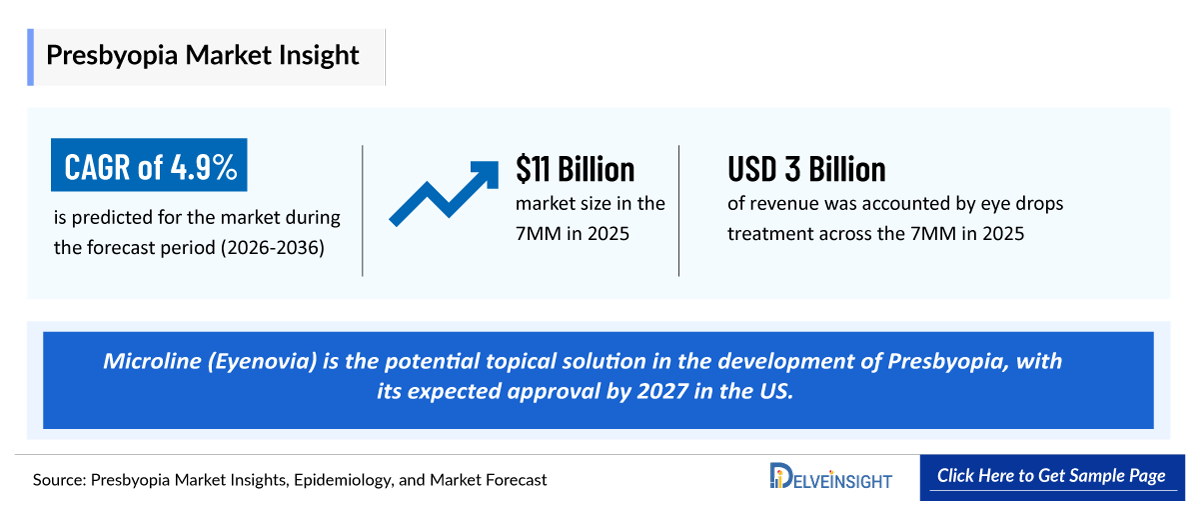
- In 2025, Eye drops treatment for Presbyopia generated approximately USD 3,000 million in revenue across the 7MM countries.
PRESBYOPIA Drug Class Insights
The Presbyopia market comprises of different mechanism class, including Cholinergic Muscarinic receptor agonist and Alpha 1 and Alpha 2 adrenergic receptor antagonists, each designed to target distinct inflammatory pathways underlying disease pathophysiology.
Cholinergic Muscarinic receptor agonist: Pilocarpine hydrochloride is a cholinergic muscarinic agonist that stimulates muscarinic receptors in smooth muscles, particularly the iris sphincter and ciliary muscles of the eye. By activating these receptors, it induces contraction of the iris sphincter muscle, resulting in pupil constriction that enhances near and intermediate visual acuity while preserving some responsiveness to light. Additionally, contraction of the ciliary muscle may shift the eye toward a slightly myopic state, further supporting improved near vision. Some approved drugs with this mechanism of action for presbyopia are VUITY (Abbvie), QLOSI (Orasis Pharmaceuticals) and more.
Alpha 1 and Alpha 2 adrenergic receptor antagonists: Pupil dilation is primarily regulated by the radial iris dilator muscles that surround the pupil, which are activated through a1-adrenergic receptors. Phentolamine acts by reversibly binding to these receptors on the iris dilator muscle, leading to a reduction in pupil diameter. It directly counteracts the mydriatic effects of a1-adrenergic agonists and indirectly reverses mydriasis caused by muscarinic antagonists acting on the iris sphincter muscle.
Presbyopia Drug Uptake
This section focuses on the uptake rate of potential Presbyopia drugs expected to be launched in the market during the forecast period (2026–2036). The analysis covers the PRESBYOPIA drug’s uptake, performance at peak, factors affecting performance during prime years of growth, patient uptake by therapy, and anticipated sales generated by each drug. The Presbyopia Therapeutics Market shows a clear uptake split between established therapies and newer targeted agents. Cholinergic muscarinic receptor agonists have demonstrated moderate adoption due to their non-invasive mechanism that enhances near vision by inducing pupillary constriction and increasing depth of focus.
However, uptake remains gradual owing to the temporary nature of their efficacy and tolerability concerns associated with pilocarpine-based miotics. In contrast, alpha-1 and alpha-2 adrenergic receptor antagonists are expected to support future uptake by reducing pupil diameter through adrenergic blockade rather than direct ciliary muscle stimulation, potentially improving tolerability and expanding the pharmacological treatment options for presbyopia. Emerging pipeline agents are expected to experience more gradual adoption as clinical evidence matures and guideline integration evolves.
Presbyopia Market Access and Reimbursement of Approved Therapies
The Presbyopia Therapeutics Market Report further provides detailed insights on the country-wise accessibility and reimbursement scenarios, cost-effectiveness scenario of approved therapies, programs making accessibility easier and out-of-pocket costs more affordable, insights on patients insured under federal or state government prescription drug programs, etc.
The United States
VUITY
The My VUITY® Points (MVP) program is a manufacturer-sponsored patient support initiative designed to improve affordability and encourage continued use of VUITY® (pilocarpine HCl ophthalmic solution 1.25%) among eligible patients in the United States. The program allows patients to earn reward points with eligible prescription fills, which can later be redeemed for discounts or free product supplies, helping to reduce out-of-pocket expenses. It is intended to support patient access in a treatment category where insurance reimbursement may be limited or variable, particularly as pharmacological therapies for presbyopia continue to emerge.
The program primarily targets commercially insured or cash-paying patients and is not available to individuals enrolled in federal, state, or other government-funded insurance programs, including Medicare, Medicare Advantage, Medigap, Medicaid, TRICARE, Department of Defense, or Veterans Affairs programs, or where prohibited by law or by the patient’s health insurance provider. By lowering financial barriers and promoting adherence, the MVP program supports early market adoption and sustained therapy use.
It functions as a market access support mechanism rather than a formal reimbursement program, as it operates independently of payer coverage decisions. The program also includes specific eligibility criteria and may be modified or discontinued by the manufacturer at its discretion. Reimbursement is a crucial factor that affects the drug’s access to the market. Often, the decision to reimburse comes down to the price of the drug relative to the benefit it produces in treated patients. To reduce the healthcare burden of these high-cost therapies, many payment models are being considered by payers and other industry insiders.
Presbyopia Therapies Price Scenario & Trends
Pricing and analogue assessment of Presbyopia therapies highlights evolving price dynamics structures. This section summarizes the cost of approved treatments, closest and most approproiate analogue selection for emerging therapies, and understanding of how pricing influences market access, adherence, and long-term uptake.
Pricing of Presbyopia treatment options
Non-surgical optical correction remains the primary approach for managing presbyopia, with eyeglasses being the most accessible and widely used option at an average annual cost of around USD 100. Contact lenses, costing approximately USD 200 per year, involve recurring expenses for supplies, maintenance, and routine eye care. Over-the-counter eye drops, priced at about USD 80 annually, provide only symptomatic relief and serve as adjuncts rather than effective corrective treatments.
Presbyopia Industry Experts and Physician Views
To keep up with Presbyopia market trends, we take Key Opinion Leaders (KOLs) and Subject Matter Experts (SMEs) opinions working in the domain through primary research to fill the data gaps and validate our secondary research. Industry Experts were contacted for insights on the Presbyopia emerging therapies, evolving treatment landscape, patient adherence to conventional therapies, therapy switching trends, drug adoption and uptake, accessibility challenges, and epidemiology and real-world prescription patterns in PRESBYOPIA, including MD, Ph.D, Instructor, Postdoctoral Researcher, Professor, Researcher, and others.
DelveInsight’s analysts connected with 15+ KOLs to gather insights at country level. Centers such as the Clinical Professor of Ophthalmology, New York University Medicine, Ophthalmologist, Harvard Eye Associates and Associate Professor, University of Pikeville,etc. were contacted. Their opinion helps understand and validate current and emerging Presbyopia therapies, highlight unmet medical needs, provide epidemiological context, and support strategic decisions for market access, therapy adoption, and pipeline prioritization in Presbyopia.
Region |
Key Opinion Leaders (KOLs) and Subject Matter Experts (SMEs) |
|
United States |
“Topical drops for treating presbyopia are a whole new class of therapeutics that will explode over the next few years. Ophthalmologists need to embrace these medications, which look very promising in clinical trials.” |
|
United States |
“Many patients are surprised to learn that presbyopia can be treated with an eye drop. Qlosi has transformed these conversations, offering a flexible, comfortable option to improve near vision in appropriate patients.” |
Presbyopia Qualitative Analysis: SWOT and Conjoint Analysis
We perform qualitative and market Intelligence analysis using various approaches, such as SWOT analysis and conjoint analysis. In the SWOT analysis of PRESBYOPIA, strengths, weaknesses, opportunities, and threats in terms of disease diagnosis, patient awareness, patient burden, competitive landscape, cost-effectiveness, and geographical accessibility of therapies are provided.
Conjoint analysis analyzes emerging therapies based on relevant attributes such as safety, efficacy, frequency of administration, route of administration, and order of entry. Scoring is given based on these parameters to analyze the effectiveness of therapy.
The team of analysts analyzes promising emerging therapies based on relevant attributes such as safety, efficacy, frequency of administration, route of administration, and order of entry. In efficacy, the trial’s primary and secondary outcome measures are evaluated, whereas the therapies’ safety is evaluated, wherein the acceptability, tolerability, and adverse events are majorly observed. In addition, the scoring is also based on the route of administration, order of entry, probability of success, and the addressable patient pool for each therapy. According to these parameters, the final weightage score and the ranking of the emerging therapies are decided.
Scope of the Presbyopia Market Report
- The Presbyopia Market Report covers a segment of key events, an executive summary, a descriptive overview, explaining their causes, signs and symptoms, pathogenesis, and currently available treatments.
- Comprehensive insight has been provided into the epidemiology segments and forecasts, the future growth potential of the diagnosis rate, and disease progression along treatment guidelines.
- Additionally, an all-inclusive account of both the current and emerging treatments, along with the elaborative profiles of late-stage and prominent therapies, will have an impact on the current Presbyopia Treatment Market Landscape.
- A detailed review of the Presbyopia Market, historical and forecasted Presbyopia Treatment Market Size, Presbyopia Drugs Market Share by therapies, detailed assumptions, and rationale behind our approach is included in the report, covering the 7MM drug outreach.
- The Presbyopia Therapeutics Market Report provides an edge while developing business strategies by understanding trends through SWOT analysis and expert insights/KOL views, patient journey, and treatment preferences that help in shaping and driving the 7MM Presbyopia Drugs Market.
Presbyopia Market Report Insights
- Presbyopia Patient Population Forecast
- Presbyopia Market Size
- Presbyopia Pipeline Analysis
- Presbyopia Market Size and Trends
- Presbyopia Drugs Market Opportunity (Current and forecasted)
Presbyopia Market Report Key Strengths
- Epidemiology-based (Epi-based) Bottom-up Forecasting
- Artificial Intelligence (AI)-enabled Market Research Report
- 11-year forecast
- Presbyopia Market Outlook (North America, Europe, Asia-Pacific)
- Patient Burden Trends (by geography)
- Presbyopia Treatment Addressable Market (TAM)
- Presbyopia Competitive Landscape
- Presbyopia Major Companies Insights
- Presbyopia Price Trends and Analogue Assessment
- Presbyopia Therapies Drug Adoption/Uptake
- Presbyopia Therapies Peak Patient Share Analysis
Presbyopia Market Report Assessment
- Current Presbyopia Treatment Practices
- Presbyopia Unmet Needs
- Presbyopia Clinical Development Analysis
- Presbyopia Emerging Drugs Product Profiles
- Presbyopia Drugs Market Attractiveness
- Presbyopia Qualitative Analysis (SWOT and conjoint analysis)
Key Questions Answered in the Presbyopia Market Report
Presbyopia Market Insights
- What was the Presbyopia Market Size, the Presbyopia Treatment Market Size by therapies, Presbyopia Drugs Market Share (%) distribution in 2025, and what would it look like by 2036? What are the contributing factors for this growth?
- What are the anticipated pricing variations among different geographies for the emerging therapies in the future?
- What can be the future treatment paradigm of Presbyopia?
- What impact will patent expiry have on the Presbyopia therapy market?
- What are the disease risks, burdens, and unmet needs of Presbyopia? What will be the growth opportunities across the 7MM concerning the patient population with Presbyopia?
- Who is the major future competitor in the market, and how will the competitors affect their market share?
- What are the current options for the treatment of Presbyopia? What are the current guidelines for treating Presbyopia in the US, Europe, and Japan?
Reasons to Buy the Presbyopia Market Report
- The Presbyopia Therapeutics Market Report will help in developing business strategies by understanding the latest trends and changing treatment dynamics driving the Presbyopia Drugs Market.
- Bottom up forecasting builds from the affected population to product forecasts, delivering a robust, data driven approach ideal for new therapies and novel classes.
- Insights on patient burden/disease Presbyopia Incidence, evolution in diagnosis, and factors contributing to the change in the epidemiology of the disease during the forecast years.
- Understand the existing market opportunities in varying geographies and the growth potential over the coming years.
- Identifying strong upcoming players in the Presbyopia Drugs Market will help devise strategies to help get ahead of competitors.
- Detailed analysis and ranking of class-wise potential current and emerging therapies under the conjoint analysis section to provide visibility around leading classes.
- To understand KOLs’ perspectives on the accessibility, acceptability, and compliance-related challenges of existing treatment to overcome barriers in the future.
- Detailed insights on the unmet needs of the existing Presbyopia Drugs Market so that the upcoming players can strengthen their development and launch strategy.
- This Artificial Intelligence (AI) enabled report summarize and simplify complex datasets within the report into clear, actionable insights for stakeholders, investors, and healthcare providers, enabling faster, data driven decisions.
Stay updated with us for Recent Articles:-