Radiotherapy induced Oral Mucositis Epidemiology
Radiotherapy induced Oral Mucositis Insights and Trends
- According to DelveInsight’s estimates, RIOM cases were distributed across the 7MM in 2025, with the United States accounting for the largest share of the total prevalent cases during the study period.
- The burden of RIOM is particularly high in countries with a greater prevalence of head and neck cancers, extensive use of radiotherapy and chemoradiotherapy, and well-established cancer diagnosis and treatment infrastructure.
- Males experience a higher burden of RIOM than females, primarily reflecting the higher incidence of head and neck cancers and greater exposure to established risk factors, such as tobacco and alcohol use, which increase the likelihood of receiving radiotherapy.
- The risk and severity of RIOM may vary across age groups. Younger patients may be more susceptible to mucosal injury due to higher epithelial cell turnover, while older patients often exhibit delayed tissue repair and reduced regenerative capacity, increasing their vulnerability to prolonged or severe mucositis.
- RIOM can result in substantial clinical and healthcare burden, including hospitalization or prolonged hospital stays for nutritional support, pain management, and infection control. Severe cases may significantly impair oral intake, necessitating feeding tube placement and intensive supportive care.
- The growing incidence of head and neck cancers, expanding utilization of radiotherapy and chemoradiotherapy, and increasing recognition of treatment-related toxicities are expected to sustain the RIOM burden over the forecast period.
Radiotherapy induced Oral Mucositis (RIOM) Epidemiology Forecast in 7MM
- 2025 Prevalent Cases of RIOM: ~ XXXX
- 2036 Prevalent Cases of RIOM: ~ XXXX
- RIOM Growth Rate (2026–2036): ~XX%CAGR
DelveInsight's ‘Radiotherapy induced Oral Mucositis (RIOM) – Epidemiology Forecast – 2036’ report delivers an in-depth understanding of the APS, historical and forecasted epidemiology in the United States, EU4 (Germany, Spain, Italy, and France) and the United Kingdom, and Japan.
|
Study Period |
2022–2036 |
|
Historical Year |
2022–2025 |
|
Forecast Period |
2026–2036 |
|
Base Year |
2026 |
|
Geographies Covered |
|
|
RIOM Epidemiology CAGR (Study period/Forecast period) |
~ XX% (2026-2036) |
|
RIOM Epidemiology Segmentation Analysis |
Patient Burden Assesment
|
Radiotherapy induced Oral Mucositis (RIOM) Understanding and Diagnosis Algorithm
RIOM Overview and Diagnosis
RIOM is a common adverse effect of radiation therapy, particularly in patients with head and neck cancers. It is characterized by inflammation and ulceration of the oral mucosa caused by radiation-induced damage to epithelial tissues, leading to pain, difficulty swallowing, and impaired oral function. RIOM primarily affects patients receiving high-dose radiotherapy to the head and neck region, with the risk further increased by concurrent chemotherapy, poor oral health, and nutritional deficiencies.
RIOM is diagnosed through clinical evaluation and assessment of oral mucosal changes in patients undergoing radiotherapy, particularly for head and neck cancers. Diagnosis is based on the presence of erythema, ulceration, pain, and functional impairment, with severity commonly graded using standardized tools such as the WHO Oral Toxicity Scale, NCI-CTCAE, and RTOG criteria. Additional assessments may be performed to evaluate nutritional status, swallowing function, pain severity, and secondary infections.
Further details are provided in the report.
Radiotherapy induced Oral Mucositis (RIOM) Epidemiology
Key Findings from RIOM Epidemiological Analysis and Forecast
- According to DelveInsight’s estimates, the prevalent cases of RIOM are expected to increase during the forecast period, driven by the growing use of radiotherapy in cancer treatment, rising incidence of head and neck cancers, an aging population, and improved access to oncologic care.
- Among the EU4 &UK, Germany accounted for the highest number of incident cases of RIOM, followed by France, whereas Spain accounted for the lowest number of cases in 2025.
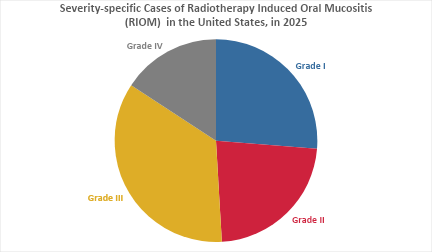
- In the United States, Grade III RIOM accounted for the highest number of cases in 2025, with, whereas Grade IV RIOM represented the lowest burden.
- Among cancer-specific prevalent RIOM cases, head and neck cancers represented the largest patient population. Oral cavity, oropharyngeal, and nasopharyngeal cancers contributed the majority of cases due to the close proximity of treatment fields to the oral mucosa, making RIOM one of the most common toxicities associated with radiotherapy in these patients.
- The observed male predominance and higher burden of RIOM among relatively younger patient populations highlight the need for early risk assessment, proactive oral care interventions, and timely supportive management to minimize treatment-related complications and optimize patient outcomes.
Scope of the Report
- The report covers a segment of an executive summary, a descriptive overview of RIOM, explaining its causes, signs and symptoms, and pathogenesis.
- Comprehensive insight has been provided into the epidemiology segments and forecasts, the future growth potential of the diagnosis rate, and disease progression.
Report Insights
Radiotherapy induced Oral Mucositis (RIOM) Patient Population Forecast
Report Key Strengths
- Epidemiology‑based (epi‑based) Bottom‑up Forecasting
- 11-year Forecast
- Patient Burden Trends (by geography)
FAQs
- What are the disease risks, burdens, and unmet needs of RIOM? What will be the growth opportunities across the 7MM concerning the patient population with RIOM?
- What is the historical and forecasted APSpatient pool in the US, EU4 (Germany, France, Italy, and Spain), the UK, and Japan?
Reasons to Buy
- Insights on patient burden/disease prevalence, evolution in diagnosis, and factors contributing to the change in the epidemiology of the disease during the forecast years.
- To understand key opinion leaders’ perspectives around the diagnostic challenges to overcome barriers in the future.
- Detailed insights on various factors hampering disease diagnosis and other existing diagnostic challenges.