Radiotherapy Induced Oral Mucositis Market Summary
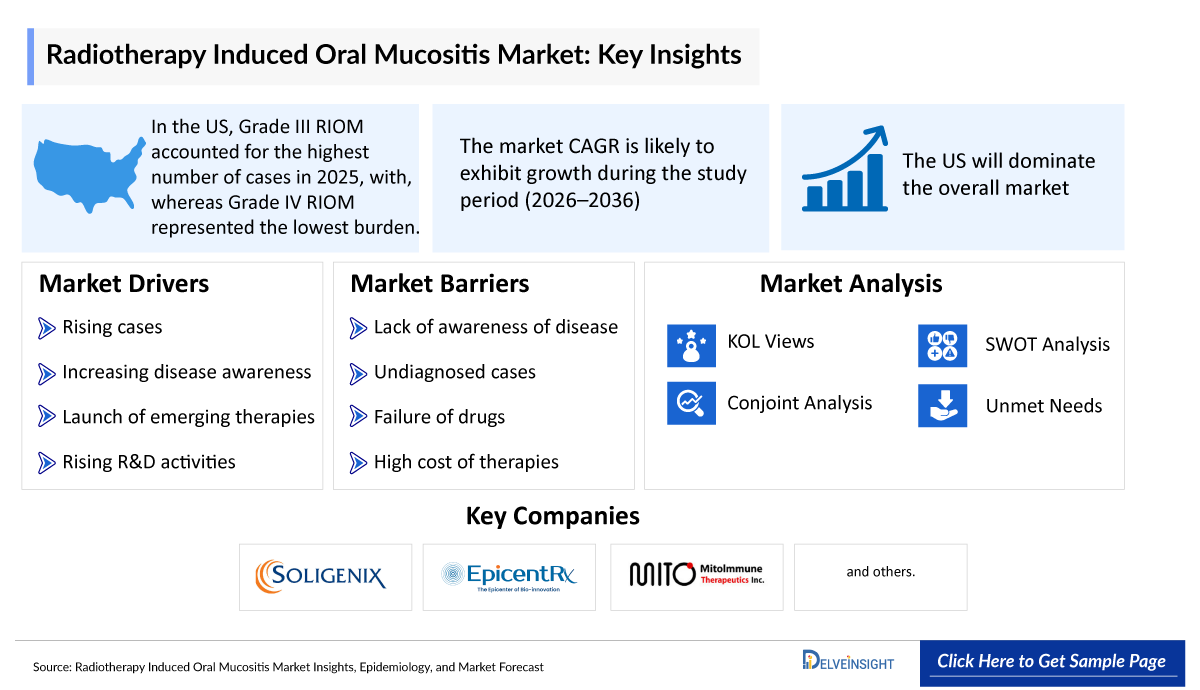
- The Radiotherapy-Induced Oral Mucositis Therapeutics Market is witnessing strong growth across the leading markets, including the United States, the EU4 (Germany, France, Italy, and Spain), the United Kingdom, and Japan, during the study period.
- The leading Radiotherapy-Induced Oral Mucositis Companies include Soligenix, EpicentRx, MitoImmune Therapeutics, and others.
Radiotherapy-Induced Oral Mucositis Market and Epidemiology Analysis
- A significant proportion of the Radiotherapy-Induced Oral Mucositis burden is associated with radiotherapy exposure, concurrent chemoradiotherapy, high radiation doses, poor oral health, tobacco and alcohol use, malnutrition, and advanced age, with patients receiving combined chemoradiotherapy experiencing the highest risk of severe mucositis, highlighting the need for preventive strategies, early intervention, and effective supportive care to reduce complications and treatment interruptions.
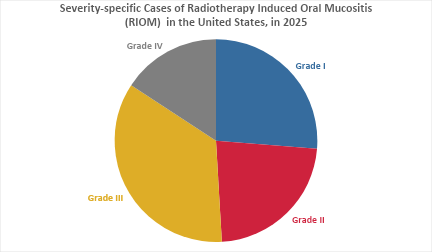
- In the United States, Grade III RIOM accounted for the largest share of cases in 2025, followed by Grade I and Grade II, while Grade IV represented the smallest proportion. This pattern reflects the higher occurrence of moderate-to-severe mucositis, while the most severe cases remain less common due to improved supportive care and treatment management.
- The treatment of Radiotherapy-Induced Oral Mucositis primarily includes supportive and symptom-management approaches such as oral hygiene protocols, saline and sodium bicarbonate rinses, benzydamine mouthwash, topical anesthetics, systemic analgesics, and nutritional support to reduce mucosal damage and improve patient comfort during cancer treatment. Currently, there are no approved drug therapies specifically indicated for RIOM, highlighting a significant unmet need and creating opportunities for emerging therapies targeting the underlying mechanisms of mucosal injury and repair.
- Major clinical consequences of Radiotherapy-Induced Oral Mucositis include hospitalization or prolonged hospital stays for nutritional support, intravenous analgesia, and antibiotic therapy. Severe cases can lead to significant impairment of oral intake, often necessitating feeding tube placement and intensive supportive care.
- Various grading and assessment systems for Radiotherapy-Induced Oral Mucositis include the World Health Organization Oral Toxicity Scale, the National Cancer Institute, the Radiation Therapy Oncology Group criteria, and the Oral Mucositis Assessment Scale. These tools support disease severity assessment, treatment monitoring, clinical trial evaluation, and standardized patient management across regions.
- The Radiotherapy-Induced Oral Mucositis Pipeline remains limited, with only a few investigational candidates, including Dusquetide (SGX942), RRx-001, and MIT-001. These emerging therapies aim to address the underlying inflammatory and tissue-damage mechanisms of RIOM, reflecting ongoing efforts to develop targeted treatment options.
Request for Unlocking the Sample Page of the "Radiotherapy-Induced Oral Mucositis Treatment Market"
Radiotherapy-induced Oral Mucositis Market Size and Forecast in the 7MM
| 2025 Radiotherapy-Induced Oral Mucositis Market Size |
~USD XX million |
| 2036 Radiotherapy-Induced Oral Mucositis Market Size |
~USD XX million |
|
Radiotherapy-Induced Oral Mucositis Growth Rate (2026–2036) | ~XX% CAGR |
Key Factors Driving the Radiotherapy-Induced Oral Mucositis Market
-
Rising Radiotherapy-Induced Oral Mucositis prevalence
The increasing prevalence of Radiotherapy-Induced Oral Mucositis, particularly among males, is a primary driver of RIOM market expansion.
-
Rising Opportunities in Targeted Therapies for Radiotherapy-Induced Oral Mucositis
Increasing understanding of radiation-induced inflammation, oxidative stress, and mucosal injury is driving the development of targeted therapies aimed at preventing tissue damage, promoting healing, and improving outcomes for patients with RIOM.
-
Emerging Radiotherapy-Induced Oral Mucositis Competitive Landscape
The RIOM treatment landscape remains largely reliant on supportive care, with few disease-modifying therapies available. Key pipeline candidates include Dusquetide (SGX942) (Soligenix), RRx-001 (EpicentRx), MIT-001 (MitoImmune Therapeutics), and other emerging therapies.
DelveInsight's ‘Radiotherapy-induced Oral Mucositis Market Insights, Epidemiology and Market Forecast – 2036’ report delivers an in-depth understanding of the APS, historical and forecasted epidemiology, as well as the RIOM market trends in the United States, EU4 (Germany, Spain, Italy, and France) and the United Kingdom, and Japan.
The Radiotherapy-Induced Oral Mucositis Treatment Market Report delivers a comprehensive analysis of the current treatment landscape, including standards of care, clinical practices, and evolving therapeutic algorithms. It evaluates, Radiotherapy-Induced Oral Mucositis patient burden trends, revenue & market share dynamics, peak patient share & therapy uptake analysis, and provides an in-depth market size assessment, and growth rate projections (Historical & Forecast 2022–2036) across global regions. The report highlights key unmet medical needs in Radiotherapy-Induced Oral Mucositis and RIOM the competitive and clinical landscape to uncover high‑value opportunities, providing a clear outlook on future market growth potential.
Scope of the Radiotherapy-Induced Oral Mucositis Market Report | |
|
Study Period |
2022–2036 |
|
Historical Year |
2022–2025 |
|
Forecast Period |
2026–2036 |
|
Base Year |
2026 |
|
Geographies Covered |
|
|
Radiotherapy-Induced Oral Mucositis Market CAGR |
~XX% (2026–2036) |
|
Radiotherapy-Induced Oral Mucositis Epidemiology Segmentation Analysis |
Patient Burden Assessment
|
|
Radiotherapy-Induced Oral Mucositis Companies |
|
|
Radiotherapy-Induced Oral Mucositis Therapies |
|
|
Radiotherapy-Induced Oral Mucositis Market |
Segmented by
|
|
Analysis |
|
Radiotherapy-Induced Oral Mucositis Understanding
Radiotherapy-Induced Oral Mucositis Overview
RIOM is a common adverse effect of radiation therapy, particularly in patients with head and neck cancers. It is characterized by inflammation and ulceration of the oral mucosa caused by radiation-induced damage to epithelial tissues, leading to pain, difficulty swallowing, and impaired oral function. RIOM primarily affects patients receiving high-dose radiotherapy to the head and neck region, with the risk further increased by concurrent chemotherapy, poor oral health, and nutritional deficiencies.
Radiotherapy-Induced Oral Mucositis Diagnosis
Radiotherapy Induced Oral Mucositis Diagnosis is diagnosed through clinical evaluation and assessment of oral mucosal changes in patients undergoing radiotherapy, particularly for head and neck cancers. Diagnosis is based on the presence of erythema, ulceration, pain, and functional impairment, with severity commonly graded using standardized tools such as the WHO Oral Toxicity Scale, NCI-CTCAE, and RTOG criteria. Additional assessments may be performed to evaluate nutritional status, swallowing function, pain severity, and secondary infections.
Note: Further details are provided in the report.
Radiotherapy-Induced Oral Mucositis Treatment
The primary goals of Radiotherapy-Induced Oral Mucositis treatment are to reduce mucosal injury, control pain, maintain oral intake, and prevent treatment interruptions during radiotherapy. Management is primarily supportive and includes comprehensive oral hygiene measures, saline or sodium bicarbonate mouth rinses, nutritional support, adequate hydration, and pain management with topical anesthetics and systemic analgesics.
In selected patients, agents such as benzydamine mouthwash and palifermin may be used to help reduce the severity of mucosal damage and support mucosal healing. Early intervention and multidisciplinary supportive care remain essential to minimizing complications and maintaining treatment adherence.
Note: Further details related to country-based variations are provided in the report.
Radiotherapy-Induced Oral Mucositis Unmet Needs
The section “unmet needs of Radiotherapy-Induced Oral Mucositis” outlines the critical RIOM between the current state of patient care, diagnosis, and the ideal & effective management of the disease. It highlights the obstacles experienced by patients, clinicians, and researchers and identifies potential solutions for future progress.
- Lack of effective preventive therapies
- Inadequate symptom control
- Impact on cancer treatment adherence
- Risk of secondary infections, and others…..
Note: Comprehensive unmet needs insights in Radiotherapy-Induced Oral Mucositis and their strategic implications are provided in the full report.
Radiotherapy-Induced Oral Mucositis Epidemiology
Key Findings from Radiotherapy-Induced Oral Mucositis Epidemiological Analysis and Forecast
- According to DelveInsight’s estimates, the prevalent cases of Radiotherapy-Induced Oral Mucositis are expected to increase during the forecast period, driven by the growing use of radiotherapy in cancer treatment, rising incidence of head and neck cancers, an aging population, and improved access to oncologic care.
- Among the EU4 &UK, Germany accounted for the highest number of incident cases of Radiotherapy-Induced Oral Mucositis, followed by France, whereas Spain accounted for the lowest number of cases in 2025.
- In the United States, Grade III RIOM accounted for the highest number of cases in 2025, with, whereas Grade IV RIOM represented the lowest burden.
- Among cancer-specific prevalent Radiotherapy-Induced Oral Mucositis cases, head and neck cancers represented the largest patient population. Oral cavity, oropharyngeal, and nasopharyngeal cancers contributed the majority of cases due to the close proximity of treatment fields to the oral mucosa, making RIOM one of the most common toxicities associated with radiotherapy in these patients.
- The observed male predominance and higher burden of RIOM among relatively younger patient populations highlight the need for early risk assessment, proactive oral care interventions, and timely supportive management to minimize treatment-related complications and optimize patient outcomes.
Radiotherapy-Induced Oral Mucositis Epidemiology Segmentation
- Cancer-specific Prevalent Cases Receiving Radiotherapy
- Cancer-specific Prevalent Cases of Radiotherapy-Induced Oral Mucositis
- Severity-specific Prevalent Cases of Radiotherapy-Induced Oral Mucositis
- Total Treated Cases of Radiotherapy-Induced Oral Mucositis
Radiotherapy-Induced Oral Mucositis Market Recent Breakthroughs and Developments
- In March 2026, Soligenix Inc. announced that its investigational candidate SGX942 (dusquetide) for oral mucositis in head and neck cancer patients receiving chemoradiation continued to advance in development, with the company expecting Phase III FLASH2 topline results in the second half of 2026.
Radiotherapy-Induced Oral Mucositis Drug Analysis & Competitive Analysis
The Radiotherapy-Induced Oral Mucositis drug chapter provides a detailed, market-focused review of approved therapies and the emerging Radiotherapy-Induced Oral Mucositis Pipeline across Phase I–III clinical trials. It covers the Radiotherapy-Induced Oral Mucositis mechanism of action, clinical trial data, regulatory approvals, patents, collaborations, and strategic partnerships for each therapy, along with their advantages, limitations, and recent developments.
This section offers critical insights into the Radiotherapy-Induced Oral Mucositis treatment landscape, supporting market assessment, competitive analysis, and growth forecasting for the Radiotherapy-Induced Oral Mucositis Therapeutics Market.
Note: Detailed marketed therapies assessment will be provided in the final report.
Radiotherapy-Induced Oral Mucositis Approved Therapies
Radiotherapy-Induced Oral Mucositis continues to represent a substantial unmet clinical need, as currently approved treatment options are largely limited to supportive and symptomatic care, with few therapies directly targeting the underlying pathophysiology. The significant burden on patient quality of life, treatment adherence, and clinical outcomes underscores the need for innovative therapeutic approaches and continued research to develop effective disease-modifying interventions.
Radiotherapy-Induced Oral Mucositis Pipeline Analysis
-
Dusquetide (SGX942): Soligenix
Dusquetide (SGX942), developed by Soligenix, is an investigational innate defense regulator (IDR) designed for the treatment of oral mucositis, including radiotherapy-induced oral mucositis in patients undergoing treatment for head and neck cancer. The therapy modulates the body’s innate immune response to reduce inflammation, promote tissue healing, and decrease the severity and duration of mucosal injury without interfering with the anti-tumor effects of cancer therapy. SGX942 is being evaluated as a novel therapeutic approach to improve patient quality of life, reduce treatment-related complications, and support uninterrupted cancer treatment.
-
RRx-001: EpicentRx
RRx-001, developed by EpicentRx, is an investigational small-molecule therapeutic being evaluated for the prevention and treatment of Radiotherapy-Induced Oral Mucositis in patients undergoing chemoradiotherapy for head and neck cancer. The drug is designed to modulate oxidative stress, inflammation, and tissue injury associated with radiation exposure, with the goal of reducing the severity and duration of oral mucositis. By protecting normal tissues while preserving the anti-tumor effects of radiotherapy, RRx-001 has the potential to improve patient quality of life, maintain treatment adherence, and address a significant unmet need in supportive cancer care.
Comparison of Emerging Drugs Under Development | |||||||
|
Drug Name |
Company |
Highest Phase |
Indication |
RoA |
MoA |
Molecule Type |
Anticipated Launch in the US |
|
Dusquetide (SGX942) |
Soligenix |
III |
Oral Mucositis |
IV |
Innate immune modulator |
Peptide |
Information is available in the full report |
|
RRx-001 |
EpicentRx |
II |
Oral Mucositis |
IV |
NLRP3 inflammasome inhibitor |
Small Molecule |
Information is available in the full report |
|
MIT-001 |
MitoImmune Therapeutics |
II |
Oral Mucositis |
IV |
Mitochondrial function modulator |
Small Molecule |
Information is available in the full report |
|
Note: Launch insights are provisional and may change with future report updates or the occurrence of major key catalysts. | |||||||
Note: A detailed emerging therapies assessment will be provided in the final report
Radiotherapy-Induced Oral Mucositis Market Outlook
Radiotherapy-Induced Oral Mucositis Market is undergoing a gradual transformation, moving beyond conventional supportive care approaches toward targeted therapies designed to prevent or mitigate mucosal injury. The growing development of novel agents such as innate immune modulators, anti-inflammatory therapies, tissue-protective agents, and mitochondrial function regulators reflects a shift toward addressing the underlying biological mechanisms of mucosal damage, including inflammation, oxidative stress, and impaired tissue regeneration.
These advancements validate innovative strategies aimed at reducing treatment-related toxicity, preserving treatment adherence, and improving patient quality of life, while increasing clinical and regulatory interest in next-generation RIOM therapies and reshaping the competitive landscape.
With the continued advancement of Radiotherapy-Induced Oral Mucositis Pipeline candidates such as Dusquetide (SGX942), RRx-001, MIT-001, and other emerging therapies targeting inflammation and mucosal healing, the RIOM treatment landscape is evolving similarly to other supportive oncology care markets where therapeutic innovation is addressing significant unmet needs.
Overall, the introduction of differentiated therapies, increasing research into radiation-induced tissue injury, improvements in cancer treatment protocols, and growing awareness of the clinical and economic burden of oral mucositis are expected to drive growth in the RIOM market during the forecast period, creating significant commercial opportunities for both approved products and emerging pipeline therapies.
Key Findings from Radiotherapy-Induced Oral Mucositis Market Forecast Report
- According to the estimates, the largest Radiotherapy-Induced Oral Mucositis Therapeutics Market Size was captured by the United States, in 2025.
- The RIOM market is shifting from supportive care toward targeted therapies that reduce inflammation, oxidative stress, and mucosal damage. Emerging candidates such as Dusquetide (SGX942), RRx-001, and MIT-001 are attracting attention for their potential to improve outcomes and maintain cancer treatment continuity.
- The United States represents the largest Radiotherapy-Induced Oral Mucositis research hub and market opportunity, driven by its high utilization of radiotherapy, substantial head and neck cancer burden, advanced oncology infrastructure, and active development of novel therapeutic approaches.
Radiotherapy-Induced Oral Mucositis Companies
- Soligenix
- EpicentRx
- MitoImmune Therapeutics, and others
Radiotherapy-Induced Oral Mucositis Drug Class/Insights into Leading Emerging and Marketed Therapies (2022–2036 Forecast)
The Radiotherapy-Induced Oral Mucositis Therapeutics Market comprises supportive care therapies, cytoprotective agents, innate immune modulators, anti-inflammatory therapies, antioxidant and tissue-protective agents, and regenerative approaches, each targeting distinct mechanisms involved in mucosal injury, inflammation, and tissue repair following radiotherapy.
- Supportive care therapies: Standard management strategies, including oral hygiene protocols, saline and bicarbonate rinses, analgesics, nutritional support, and topical anesthetics, remain the cornerstone of RIOM management, helping alleviate symptoms and maintain oral function but offering limited effects on the underlying disease process.
- Cytoprotective agents: Therapies such as palifermin (KEPIVANCE) are designed to stimulate epithelial cell growth and protect mucosal tissues from radiation-induced damage, reducing the severity and duration of oral mucositis in selected patient populations.
- Innate immune modulators: Emerging therapies such as Dusquetide (SGX942) aim to modulate the innate immune response, reduce excessive inflammation, enhance bacterial clearance, and promote tissue healing, thereby accelerating recovery from mucosal injury.
- Supportive care therapies currently dominate the Radiotherapy-Induced Oral Mucositis treatment landscape, while cytoprotective, immunomodulatory, anti-inflammatory, antioxidant, and regenerative therapies are driving pipeline innovation and shaping the future of disease-targeted treatment approaches for RIOM.
Note: Further details will be provided in the report….
Radiotherapy-Induced Oral Mucositis Drug Uptake
This section focuses on the uptake rate of potential Radiotherapy-Induced Oral Mucositis drugs expected to be launched in the market during the forecast period (2026–2036). The analysis covers the RIOM market's uptake by drugs, patient uptake by therapy, and sales of each drug.
Note: Further detailed analysis of emerging therapies' drug uptake in the report…
Radiotherapy-Induced Oral Mucositis Market Access and Reimbursement
Reimbursement is a crucial factor that affects the drug’s access to the market. Often, the decision to reimburse comes down to the price of the drug relative to the benefit it produces in treated patients. To reduce the healthcare burden of these high-cost therapies, many payment models are being considered by payers and other industry insiders.
Note: Further details are provided in the final report….
Radiotherapy-Induced Oral Mucositis Therapies Price Scenario & Trends
Pricing and analogue assessment of Radiotherapy-Induced Oral Mucositis Therapies highlights evolving price dynamics structures. This section summarizes the cost of approved treatments, closest and most appropriate analogue selection for emerging therapies, and understanding of how pricing influences market access, adherence, and long-term uptake.
Note: Further details are provided in the final report….
Radiotherapy-Induced Oral Mucositis Industry Experts and Physician Views
To keep up with Radiotherapy-Induced Oral Mucositis Therapeutics Market trends, we take Key Opinion Leaders (KOLs) and Subject Matter Experts (SMEs) opinions working in the domain through primary research to fill the data RIOM and validate our secondary research. Industry experts were contacted for insights on the Radiotherapy Induced Oral Mucositis Emerging therapies, evolving Radiotherapy Induced Oral Mucositis Treatment landscape, patient adherence to conventional therapies, therapy switching trends, drug adoption and uptake, accessibility challenges, and epidemiology and real-world prescription patterns in RIOM, including MD, PhD, Instructor, Postdoctoral Researcher, Professor, Researcher, and others.
DelveInsight’s analysts connected with 10+ KOLs to gather insights; however, interviews were conducted with 6+ KOLs in the 7MM. Centers such as the Harvard Medical School, University of Nottingham, and Japanese Red Cross Central Blood Institute, etc. were contacted. Their opinion helps understand and validate current and emerging RIOM therapies, highlight unmet medical needs, provide epidemiological context, and support strategic decisions for market access, therapy adoption, and pipeline prioritization in RIOM.
Region |
Key Opinion Leaders (KOLs) and Subject Matter Experts (SMEs) |
|
United States |
“Radiotherapy-induced oral mucositis remains one of the most debilitating toxicities experienced by patients receiving radiation therapy for head and neck cancers. Severe mucositis can lead to significant pain, impaired nutrition, increased opioid use, and treatment interruptions, underscoring the need for effective preventive and therapeutic interventions that preserve treatment intensity while improving patient quality of life.” |
|
Japan |
“RIOM is a multifactorial condition driven by radiation-induced epithelial injury, inflammatory cytokine release, oxidative stress, and impaired tissue repair. Despite advances in supportive care, many patients continue to experience substantial morbidity, highlighting the importance of developing therapies that not only alleviate symptoms but also target the underlying biological mechanisms of mucosal damage and healing.” |
Radiotherapy-Induced Oral Mucositis Report Qualitative Analysis: SWOT and Conjoint Analysis
We perform qualitative and Radiotherapy-Induced Oral Mucositis Therapeutics Market Intelligence analysis using various approaches, such as SWOT analysis and conjoint analysis. In the SWOT analysis of Radiotherapy-Induced Oral Mucositis, strengths, weaknesses, opportunities, and threats in terms of disease diagnosis, patient awareness, patient burden, competitive landscape, cost-effectiveness, and geographical accessibility of therapies are provided.
Conjoint analysis analyzes Radiotherapy-Induced Oral Mucositis Emerging Therapies based on relevant attributes such as safety, efficacy, frequency of administration, route of administration, and order of entry. Scoring is given based on these parameters to analyze the effectiveness of therapy.
The team of analysts analyzes promising Radiotherapy Induced Oral Mucositis Emerging Therapies based on relevant attributes such as safety, efficacy, frequency of administration, route of administration, and order of entry. In efficacy, the trial’s primary and secondary outcome measures are evaluated, whereas the therapies’ safety is evaluated, wherein the acceptability, tolerability, and adverse events are majorly observed.
In addition, the scoring is also based on the route of administration, order of entry, probability of success, and the addressable patient pool for each therapy. According to these parameters, the final weightage score and the ranking of the emerging therapies are decided.
Scope of the Radiotherapy-Induced Oral Mucositis Market Report
- The Radiotherapy-Induced Oral Mucositis Therapeutics Market Report covers a segment of key events, an executive summary, a descriptive overview, explaining its causes, signs and symptoms, pathogenesis, and currently available treatments.
- Comprehensive insight has been provided into the Radiotherapy-Induced Oral Mucositis epidemiology segments and forecasts, the future growth potential of the diagnosis rate, and disease progression along treatment guidelines.
- Additionally, an all-inclusive account of both the current and emerging treatments, along with the elaborative profiles of late-stage and prominent therapies, will have an impact on the current Radiotherapy-Induced Oral Mucositis Treatment landscape.
- A detailed review of the Radiotherapy-Induced Oral Mucositis Therapeutics Market, historical and forecasted market size, Radiotherapy-Induced Oral Mucositis Drugs Market Share by therapies, detailed assumptions, and rationale behind our approach is included in the report, covering the 7MM drug outreach.
- The Radiotherapy-Induced Oral Mucositis Therapeutics Market Report provides an edge while developing business strategies by understanding trends through SWOT analysis and expert insights/KOL views, patient journey, and treatment preferences that help in shaping and driving the 7MM Radiotherapy-Induced Oral Mucositis Drugs Market.
Radiotherapy-Induced Oral Mucositis Market Report Insights
- Patient-based Radiotherapy-Induced Oral Mucositis Market Forecasting
- Radiotherapy-Induced Oral Mucositis Therapeutics Market Size
- Radiotherapy-Induced Oral Mucositis Pipeline Analysis
- Radiotherapy-Induced Oral Mucositis Market Size and Trends
- Radiotherapy-Induced Oral Mucositis Market Opportunity (Current and forecasted)
Radiotherapy-Induced Oral Mucositis Market Report Key Strengths
- Epidemiology‑based (Epi‑based) Bottom‑up Forecasting
- Artificial Intelligence (AI)-enabled Market Research Report
- 11-year Forecast
- Radiotherapy-Induced Oral Mucositis Market Outlook (North America, Europe, Asia-Pacific)
- Patient Burden Trends (by geography)
- Radiotherapy-Induced Oral Mucositis Treatment Addressable Market (TAM)
- Radiotherapy-Induced Oral Mucositis Competitive Landscape
- Radiotherapy-Induced Oral Mucositis Major Companies Insights
- Radiotherapy-Induced Oral Mucositis Price Trends and Analogue Assessment
- Radiotherapy-Induced Oral Mucositis Therapies Drug Adoption/Uptake
- Radiotherapy-Induced Oral Mucositis Therapies Peak Patient Share Analysis
Radiotherapy-Induced Oral Mucositis Market Report Assessment
- Current Radiotherapy-Induced Oral Mucositis Treatment Practices
- Radiotherapy-Induced Oral Mucositis Unmet Needs
- Radiotherapy-Induced Oral Mucositis Clinical Development Analysis
- Radiotherapy-Induced Oral Mucositis Emerging Drugs Product Profiles
- Radiotherapy-Induced Oral Mucositis Market Attractiveness
- Radiotherapy-Induced Oral Mucositis Qualitative Analysis (SWOT and Conjoint Analysis)
Key Questions Answered in the Radiotherapy-Induced Oral Mucositis Therapeutics Market Report
Radiotherapy-Induced Oral Mucositis Market Insights
- What was the Radiotherapy-Induced Oral Mucositis market size, the market size by therapies, Radiotherapy-Induced Oral Mucositis Drugs Market Share (%) distribution in 2025, and what would it look like by 2036? What are the contributing factors for this growth?
- What are the anticipated pricing variations among different geographies for the emerging therapies in the future?
- What can be the future treatment paradigm of Radiotherapy-Induced Oral Mucositis?
- What are the disease risks, burdens, and unmet needs of Radiotherapy-Induced Oral Mucositis?
- What will be the growth opportunities across the 7MM concerning the patient population with Radiotherapy-Induced Oral Mucositis?
- Who is the major future competitor in the market, and how will the competitors affect their market share?
- What are the current options for the treatment of Radiotherapy-Induced Oral Mucositis?
- What are the current guidelines for treating Radiotherapy-Induced Oral Mucositis in the US, Europe, and Japan?
Reasons to Buy the Radiotherapy-Induced Oral Mucositis Therapeutics Market Report
- The Radiotherapy-Induced Oral Mucositis Therapeutics Market Report will help in developing business strategies by understanding the latest trends and changing treatment dynamics driving the Radiotherapy-Induced Oral Mucositis Drugs Market.
- Bottom-up forecasting builds from the affected population to product forecasts, delivering a robust, data-driven approach ideal for new therapies and novel classes.
- Insights on patient burden/disease: Radiotherapy-Induced Oral Mucositis Incidence, evolution in diagnosis, and factors contributing to the change in the epidemiology of the disease during the forecast years.
- Understand the existing Radiotherapy-Induced Oral Mucositis Drugs Market opportunities in varying geographies and the growth potential over the coming years.
- Identifying strong upcoming players in the Radiotherapy-Induced Oral Mucositis Drugs Market will help devise strategies to help get ahead of competitors.
- Detailed analysis and ranking of class-wise potential current and emerging therapies under the conjoint analysis section to provide visibility around leading classes.
- To understand KOLs’ perspectives on the accessibility, acceptability, and compliance-related challenges of existing treatment to overcome barriers in the future.
- Detailed insights on the unmet needs of the existing Radiotherapy-Induced Oral Mucositis Drugs Market so that the upcoming players can strengthen their development and launch strategy.
- This Artificial Intelligence (AI) - enabled report summarize and simplify complex datasets within the report into clear, actionable insights for stakeholders, investors, and healthcare providers, enabling faster, data-driven decisions.
Stay updated with us for Recent Articles @ New DelveInsight Blogs