Restless Legs Syndrome Market Summary
- The Restless Legs Syndrome Market has been growing due to better disease understanding, increased diagnosis, and evolving therapeutics.
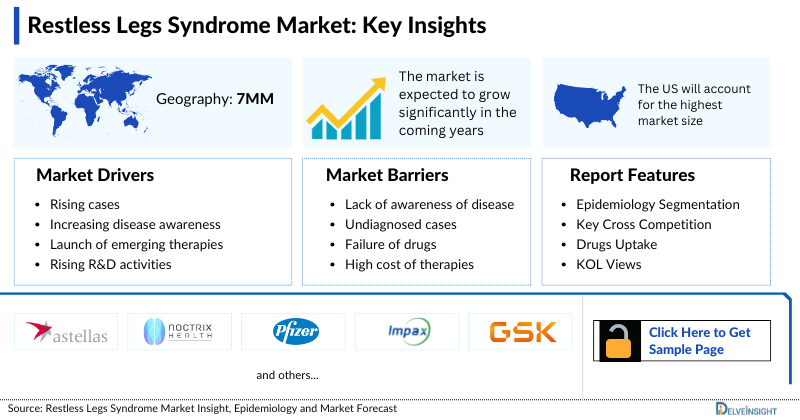
- The leading Restless Legs Syndrome Companies such as Astellas Pharma Inc., Noctrix Health Inc., Pfizer, Impax Laboratories LLC, GlaxoSmithKline, UCB Pharma, and others
Restless Legs Syndrome Market Insights & Epidemiology Forecast
- For Restless Legs Syndrome Patients, superficial heat-cold application could pave the way towards better sleep quality. This approach additionally represents a cost-effective, medication-free method for many patients.
- Recently in 2025, the new guidelines downgrade a previous strong recommendation for dopamine agonists and conditionally recommend against their use. This means that dopamine agonists can still be used to treat RLS; however, they no longer should be the first medicine used. If they are prescribed, there should be close monitoring for a worsening of symptoms over time known as augmentation.
- The launch of the first generic transdermal patch of NEUPRO (Rotigotine Luye) by Luye Pharma Group in April 2025 is expected to enhance accessibility to treatment for RLS.
- At the equivalent dosage strength, a Rotigotine Luye patch is 8% smaller in size and has a lower drug load compared to a NEUPRO patch. Furthermore, unlike NEUPRO patches, the adhesive substrate of Rotigotine Luye patches does not contain sodium metabisulfite, a known contact allergen that may cause allergic reactions.
- The emerging treatment pipeline for RLS remains scarce, with few companies actively pursuing therapeutic innovation in this area. Currently, only few companies has indicated plans to expand its portfolio to include RLS, highlighting a significant unmet medical need. This scarcity of development activity underscores the opportunity for novel, targeted therapies to address gaps in symptom management, long-term efficacy, and tolerability for patients affected by RLS.
Request for Unlocking the Sample Page of the "Restless Legs Syndrome Treatment Market"
Key Factors Driving Restless Legs Syndrome Market Growth
-
Growing Awareness and Diagnosis Rates
Increased clinical attention, patient education, and improved understanding among healthcare providers are leading to higher diagnosis rates, driving treatment demand.
-
Expanding Patient Pool
The rising number of individuals affected by RLS globally, especially among the elderly population, is fueling the need for effective therapy options.
-
Advancements in Diagnostic Criteria
Enhanced diagnostic guidelines and better screening techniques are improving early identification and therapeutic intervention, supporting market growth.
-
Increasing Focus on Drug Development
Pharmaceutical companies are actively investing in research for novel therapeutics, addressing unmet needs and expanding the treatment landscape.
-
Availability of Multiple Treatment Options
A growing arsenal of therapies—including dopamine agonists, anticonvulsants, and iron supplements—is broadening physicians’ ability to manage RLS symptoms.
-
Growing Awareness of Comorbidities
Recognition of the link between RLS and cardiovascular issues, diabetes, and chronic kidney disease is improving treatment approaches and driving a multidisciplinary focus.
-
Improved Patient Quality of Life Emphasis
Patients' preference for symptom relief and improved sleep quality encourages the adoption of advanced and effective therapies.
DelveInsight’s "Restless Legs Syndrome Treatment Market Insight, Epidemiology, and Market Forecast – 2034" report delivers an in-depth understanding of RLS, historical and forecasted epidemiology as well as the RLS market trends in the United States, EU4 (Germany, France, Italy, and Spain) and the United Kingdom, and Japan.
The Restless Legs Syndrome Treatment Market Report provides current treatment practices, emerging drugs, RLS share of individual therapies, and current and forecasted RLS market size from 2020 to 2034, segmented by seven major markets. The report also covers current RLS treatment practices/algorithms and unmet medical needs to curate the best of the opportunities and assess the underlying potential of the market.
Scope of the Restless Legs Syndrome Market | |
|
Study Period |
2020–2034 |
|
Forecast Period |
2025–2034 |
|
Geographies Covered |
US, EU4 (Germany, France, Italy, and Spain) and the UK, and Japan |
|
Restless Legs Syndrome Epidemiology |
Segmented by
|
|
Restless Legs Syndrome Companies |
|
|
Restless Legs Syndrome Drugs |
|
|
Restless Legs Syndrome Market |
Segmented by
|
|
Analysis |
|
Restless Legs Syndrome Disease Understanding and Treatment Algorithm
Restless Legs Syndrome Overview
RLS, also known as Willis-Ekbom Disease, is a neurological and sleep-related movement disorder characterized by an uncontrollable urge to move the legs, often accompanied by uncomfortable sensations such as aching, throbbing, itching, or crawling. These symptoms typically occur during periods of rest or inactivity—especially in the evening or at night—and are temporarily relieved by movement. RLS most commonly affects both legs but can occasionally involve the arms. The condition can severely disrupt sleep, leading to difficulties falling or staying asleep, and may result in daytime fatigue, trouble concentrating, mood disturbances, anxiety, or depression. While symptoms vary in intensity and frequency, ranging from occasional to daily occurrences, they tend to worsen over time. Some individuals may experience periods of remission during the early stages, but symptoms often return and become more persistent as the condition progresses.
Restless Legs Syndrome Diagnosis
RLS is diagnosed clinically, as there is no definitive test. Diagnosis involves assessing symptoms, medical and family history, and conducting physical and neurological exams. Blood tests are essential to rule out secondary causes such as iron deficiency, kidney disease, or sleep disorders. Comprehensive iron studies—including serum ferritin, serum iron, transferrin saturation, and total iron-binding capacity—should be performed in all patients; at a minimum, ferritin levels must be checked. If symptoms worsen or return (a condition known as augmentation), iron status should be reassessed. Augmentation is characterized by earlier onset of symptoms, increased intensity in the morning, or spread to upper body areas. Polysomnography may be used to evaluate sleep patterns and leg movement frequency. If radiculopathy or peripheral neuropathy is suspected, even with a normal neurological exam, nerve conduction studies and electromyography should be considered. Additional tests such as CBC, fasting glucose, BUN, creatinine, magnesium, vitamin B12, folate, and TSH may help rule out other potential causes contributing to RLS-like symptoms.
Further details related to diagnosis will be provided in the report…
Restless Legs Syndrome Treatment
Treatment is typically needed only for moderate to severe or persistent RLS. Mild or occasional symptoms may not require intervention. Management includes both non-pharmacologic and pharmacologic approaches, tailored to individual needs. Non-drug strategies include sleep hygiene, regular exercise, leg massage, hot or cold baths, limb stimulation, and avoiding caffeine, alcohol, and medications that may worsen symptoms (e.g., antidepressants, antipsychotics, sedating antihistamines). Iron supplementation is recommended for patients with ferritin levels below 50 ng/mL. Oral iron (ferrous sulfate with vitamin C) should be taken on an empty stomach; IV iron may be needed in some cases. First-line medications include dopamine agonists (pramipexole, ropinirole, rotigotine) and GABAB receptors agonist (gabapentin, pregabalin), particularly in patients with sleep disturbance, pain, or a history of impulse control disorders. Side effects like weight gain or behavioral changes may limit long-term use. An FDA-approved vibrating device may improve sleep in RLS patients. RLS during pregnancy often resolves after delivery, and non-drug measures are preferred. Long-term medication effectiveness varies, and drugs like pergolide and cabergoline are avoided due to safety concerns.
Further details related to treatment will be provided in the report…
Restless Legs Syndrome Epidemiology
The RLS epidemiology chapter in the report provides historical as well as forecasted epidemiology segmented by the total Restless Legs Syndrome Prevalent Cases, Restless Legs Syndrome Gender-specific cases, and Restless Legs Syndrome Age-specific Cases in the 7MM market covering the United States, EU4 (Germany, France, Italy, and Spain) and the United Kingdom, and Japan from 2020 to 2034.
Key findings from Restless Legs Syndrome Epidemiological Analysis
- There are more than 3 million cases in the US annually.
- The prevalence of RLS increases with age, although approximately one-third of patients with RLS first experience symptoms before 18 years of age.
- The prevalence of RLS in people aged 20–79 years was 7.12%, with a higher prevalence in females compared to males.
- Across Europe, the estimated prevalence of physician-diagnosed RLS was found to be 3.5-4.4% in adult patients. The prevalence was found to be 4.5% in a study of the general population.
- The prevalence increases slightly in middle adulthood, and during pregnancy, up to 80% of women may experience RLS symptoms. Later in life, around ages 55–60 and older, the prevalence can reach nearly 20%.
Restless Legs Syndrome Drug Analysis
Restless Legs Syndrome Marketed Drugs
-
NEUPRO (rotigotine transdermal system): UCB Pharma
NEUPRO is a non-ergoline dopamine agonist. The US Food and Drug Administration (FDA) approved NEUPRO for the treatment for moderate-to-severe primary RLS in 2012. NEUPRO has also been approved in Europe for the symptomatic treatment of moderate to severe idiopathic RLS in adults. NEUPRO’s efficacy in RLS was demonstrated in two randomized, double-blind, placebo-controlled trials, showing significant improvements in International RLS Rating Scale scores and Clinical Global Impression–Improvement assessments over six months.
-
HORIZANT (gabapentin enacarbil): Azurity Pharmaceuticals
HORIZANT is a prodrug of gabapentin and gamma-aminobutyric acid (GABA) receptor agonist. The US FDA has approved HORIZANT Extended-Release Tablets for the treatment of moderate-to-severe primary RLS in adults in 2012.
In June 2024, results from a study presented at the SLEEP 2024 meeting of the Associated Professional Sleep Societies showed that treatment with HORIZANT significantly reduced nighttime agitation and improved sleep in dementia patients with RLS.
|
Key Cross of Marketed Therapies in RLS | |||
|
Drug |
Company |
MoA |
Patient Segment |
|
NEUPRO |
UCB Pharma |
Non-ergoline dopamine agonist |
Treatment of moderate-to-severe primary RLS. |
|
HORIZANT |
Azurity Pharmaceuticals |
GABAB receptors agonist |
Treatment of moderate-to-severe primary RLS in adults. |
Restless Legs Syndrome Emerging Drugs
-
Ecopipam (EBS-101): Emalex Biosciences
Emalex Biosciences announced that it has entered into a license agreement with East Carolina University. Under the agreement, Emalex has licensed the patent rights of ecopipam (EBS-101), an investigational, first-in class dopamine-1 (D1) receptor antagonist, to potentially advance clinical studies for the treatment of RLS with augmentation.
Restless Legs Syndrome Drug Class Insight
Marketed therapeutic classes for RLS primarily include non-ergoline dopamine agonists (e.g., NEUPRO) and GABAB receptor agonists (e.g., HORIZANT), while emerging therapies encompass D1 receptor antagonists and other novel mechanisms.
- Non-ergoline dopamine agonists
Non-ergoline dopamine agonists used in RLS such as NEUPRO works by stimulating dopamine receptors in the brain, particularly the D2 and D3 receptors. Dopamine is a key neurotransmitter involved in regulating movement, and dysfunction in dopaminergic pathways is believed to play a central role in RLS. These medications mimic the action of dopamine, helping to normalize signaling in the brain regions that control limb movement and sensory processing. By enhancing dopaminergic activity, they reduce the uncomfortable sensations and urge to move associated with RLS, especially during periods of rest. Unlike older ergoline-based drugs, non-ergoline agonists have a more selective action on dopamine receptors and a lower risk of serious side effects, making them safer for long-term use.
Restless Legs Syndrome Market Outlook
The therapeutic landscape for RLS has advanced steadily, yet continues to rely on well-established treatment approach. Traditional management includes lifestyle modifications, iron supplementation in cases of deficiency, and pharmacologic therapies such as non-ergoline dopamine agonists (NEUPRO, MIRAPEX, and REQUIP) and GABA-B receptor agonists like HORIZANT. These agents aim to alleviate symptoms and improve sleep quality but are often limited by side effects such as augmentation, impulse control disorders, or sedation.
Recent developments are beginning to shift focus from symptomatic relief to targeting underlying neurochemical imbalances and neurotransmitter pathways implicated in RLS pathophysiology. Ongoing research explores novel agents acting on dopaminergic, glutamatergic, and adenosinergic systems, as well as neuroinflammation and iron homeostasis. Non-pharmacologic advancements, such as the FDA-approved TOMAC (tonic motor activation) device, provide innovative neuromodulatory solutions by delivering patterned leg stimulation to mimic voluntary movement, offering non-drug relief of symptoms.
As understanding of RLS deepens, the field is moving toward more personalized and mechanism-based strategies. Future therapies are expected to be tailored to individual symptom profiles, disease severity, and coexisting conditions, with the goal of improving long-term outcomes, minimizing adverse effects, and enhancing quality of life for those living with RLS.
Restless Legs Syndrome Drugs Uptake
This section focuses on the uptake rate of potential Restless Legs Syndrome drugs expected to be launched in the market during 2025–2034.
Restless Legs Syndrome Pipeline Development Activities
The report provides insights into different therapeutic candidates in early stage. It also analyzes key Restless Legs Syndrome Companies involved in developing targeted therapeutics. The Restless Legs Syndrome Therapeutics Market Report covers detailed information on collaborations, acquisitions and mergers, licensing, and patent details for RLS emerging therapies.
Latest KOL- Views on Restless Legs Syndrome
To keep up with current market trends, we take KOLs and SMEs' opinions working in the domain through primary research to fill the data gaps and validate our secondary research. Some of the leaders like MD, Professor and Vice Chair of the Department of Rheumatology and Director, PhD, and others. Their opinion helps to understand and validate current and emerging therapies and treatment patterns or RLS market trends. This will support the clients in potential upcoming novel treatments by identifying the overall scenario of the market and the unmet needs.
Delveinsight’s analysts connected with 15+ KOLs to gather insights; however, interviews were conducted with 5+ KOLs in the 7MM. Centers such as the Washington University School of Medicine, University Medical Center Hamburg-Eppendorf, and University Graduate School of Medicine etc. were contacted. Their opinion helps understand and validate RLS epidemiology and market trends.
|
KOL Views |
|
“RLS is common during pregnancy, particularly during the third trimester, and will likely resolve with delivery. Individuals with RLS secondary to chronic kidney disease who undergo kidney transplant may experience resolution of symptoms.” |
|
“Although following the WHO analgesic ladder can help treat most patients, some individuals may need additional interventional pain therapies for pain relief and improvement in their quality of life. Interventional techniques should be used in conjunction with pharmacologic management for treatment of cancer pain symptoms.” |
Restless Legs Syndrome Qualitative Analysis Report
We perform qualitative and market intelligence analysis using various approaches, such as SWOT and Conjoint analysis. In the SWOT analysis, strengths, weaknesses, opportunities, and threats in terms of disease diagnosis, patient awareness, patient burden, competitive landscape, cost-effectiveness, and geographical accessibility of therapies are provided. These pointers are based on the Analyst’s discretion and assessment of the patient burden, cost analysis, and existing and evolving treatment landscape.
Conjoint Analysis analyzes multiple approved and emerging therapies based on relevant attributes such as safety, efficacy, frequency of administration, designation, route of administration, and order of entry. Scoring is given based on these parameters to analyze the effectiveness of therapy. The analyst analyzes multiple emerging therapies based on relevant attributes such as safety, efficacy, frequency of administration, route of administration, and order of entry.
In efficacy, the trial’s primary and secondary outcome measures are evaluated. Further, the therapies’ safety is evaluated wherein the acceptability, tolerability, and adverse events are majorly observed, and it sets a clear understanding of the side effects posed by the drug in the trials.
Restless Legs Syndrome Market Access and Reimbursement
Reimbursement may be referred to as the negotiation of a price between a manufacturer and a payer that allows the manufacturer access to the market. It is provided to reduce the high costs and make the essential drugs affordable. Health technology assessment (HTA) plays an important role in reimbursement decision-making and recommending the use of a drug. These recommendations vary widely throughout the seven major markets, even for the same drug. In the US healthcare system, both Public and Private health insurance coverage are included. Also, Medicare and Medicaid are the largest government-funded programs in the US. The major healthcare programs, including Medicare, Medicaid, Health Insurance Program (CHIP), and the state and federal health insurance marketplaces, are overseen by the Centers for Medicare & Medicaid Services (CMS). Other than these, Pharmacy Benefit Managers (PBMs) and third-party organizations that provide services and educational programs to aid patients are also present.
The report further provides detailed insights on the country-wise accessibility and reimbursement scenarios, cost-effectiveness scenario of currently used therapies, programs making accessibility easier and out-of-pocket costs more affordable, insights on patients insured under federal or state government prescription drug programs, etc.
Restless Legs Syndrome Market Report Scope
- The Restless Legs Syndrome Market Report covers a descriptive overview, explaining its causes, signs and symptoms, pathogenesis, and currently available therapies.
- Comprehensive insight has been provided into Restless Legs Syndrome Epidemiology and treatment.
- Additionally, an all-inclusive account of both the current and emerging therapies for RLS is provided, along with the assessment of new therapies, which will have an impact on the current treatment landscape.
- A detailed review of the Restless Legs Syndrome Treatment Market; historical and forecasted is included in the report, covering the 7MM drug outreach.
- The Restless Legs Syndrome Market Report provides an edge while developing business strategies, by understanding trends shaping and driving the 7MM Restless Legs Syndrome Drugs Market.
Restless Legs Syndrome Market Report Insights
- Patient-Based Restless Legs Syndrome Market Forecasting
- Therapeutic Approaches
- Restless Legs Syndrome Pipeline Analysis
- Restless Legs Syndrome Market Size and Trends
- Restless Legs Syndrome Drugs Market Opportunities
- Impact of Upcoming Restless Legs Syndrome Therapies
Restless Legs Syndrome Market Report Key Strengths
- 10 Years Restless Legs Syndrome Market Forecast
- 7MM Coverage
- Restless Legs Syndrome Epidemiology Segmentation
- Key Cross Competition
- Highly Analyzed Restless Legs Syndrome Drugs Market
- Restless Legs Syndrome Drugs Uptake
Restless Legs Syndrome Market Report Assessment
- Current Restless Legs Syndrome Treatment Practices
- Restless Legs Syndrome Unmet Needs
- Restless Legs Syndrome Pipeline Drugs Profiles
- Restless Legs Syndrome Drugs Market Attractiveness
- Restless Legs Syndrome Qualitative Analysis (SWOT and Conjoint Analysis)
Key Questions Answered in the Restless Legs Syndrome Market Report
- What was the Restless Legs Syndrome Market Share (%) distribution in 2020 and what it would look like in 2034?
- What would be the RLS total market size as well as market size by therapies across the 7MM during the study period (2020–2034)?
- What are the key findings about the Restless Legs Syndrome Drugs Market across the 7MM and which country will have the largest RLS market size during the study period (2020–2034)?
- At what CAGR, the Restless Legs Syndrome Drugs Market is expected to grow at the 7MM level during the study period (2020–2034)?
- What would be the Restless Legs Syndrome Market growth till 2034?
- What are the disease risks, burdens, and Restless Legs Syndrome Unmet Needs?
- What is the historical Restless Legs Syndrome Patient Pool in the United States, EU4 (Germany, France, Italy, and Spain), and the UK, and Japan?
- What will be the growth opportunities across the 7MM concerning the patient population of RLS?
- Amon the 7MM which country would have the most prevalent cases of RLS?
- At what CAGR the population is expected to grow across the 7MM during the study period (2020–2034)?
- How many companies are developing therapies for the Restless Legs Syndrome Treatment?
- What are the key collaborations (industry–industry, industry-academia), mergers and acquisitions, and licensing activities related to RLS therapies?
- What are the recent novel therapies, targets, mechanisms of action, and technologies developed to overcome the limitations of existing therapies?
- What are the key designations that have been granted for the Restless Legs Syndrome Emerging Therapies?
- What are the 7MM historical and forecasted Restless Legs Syndrome Market?
Reasons to Buy the Restless Legs Syndrome Market Report
- The Restless Legs Syndrome Market Report will help in developing business strategies by understanding trends shaping and driving the Restless Legs Syndrome Drugs Market.
- To understand the future market competition in the Restless Legs Syndrome Drugs Market and insightful review of the SWOT analysis of RLS.
- Organize sales and marketing efforts by identifying the best opportunities for RLS in the US, EU4 (Germany, France, Italy, and Spain), the United Kingdom, and Japan.
- Identification of strong upcoming players in the Restless Legs Syndrome Drugs Market will help in devising strategies that will help in getting ahead of competitors.
- To understand the future market competition in the Restless Legs Syndrome.
Stay updated with us for Recent Articles @ New DelveInsight Blogs