
Staphylococcus aureus Bacteremia Market Summary
- The Staphylococcus aureus Bacteremia Market Size is anticiapted to grow with a significant CAGR during the study period (2020-2034).
- The Staphylococcus aureus Bacteremia Companies developing therapies include - Basilea Pharmaceutica, Armata Pharmaceuticals, ContraFect, Armata Pharmaceuticals, iNtRON Biotechnology, Basilea Pharmaceutica, Genentech, and others.
Staphylococcus aureus Bacteremia Market and Epidemiology Analysis
- The incidence of Staphylococcus aureus Bacteremia cases is rising due to various factors, including individuals with chronic conditions such as diabetes, cancer, vascular disease, eczema, and lung disease, among others.
- There are numerous unmet needs in the management of Staphylococcus aureus Bacteremia, including the urgent necessity for new antibiotics or innovative treatment strategies to address multidrug-resistant strains of Staphylococcus aureus Bacteremia.
- The Staphylococcus aureus Bacteremia market is anticipated to sustain a steady Compound Annual Growth Rate (CAGR) during the forecast period (2024-2034). This growth in market revenue is chiefly propelled by advancements in diagnostic techniques, heightened awareness of the condition, and a growing number of reported cases.
- To propel the Staphylococcus aureus Bacteremia market in the coming years, various companies including Armata Pharmaceuticals and others are advancing their assets into the mid-late stages of development. With the anticipated approval of these therapies during the forecast period (2024–2034), the overall therapeutic market for Staphylococcus aureus Bacteremia is expected to experience a substantial rise at a significant Compound Annual Growth Rate (CAGR).
- One of the emerging therapies, AP-SA02, developed by Armata Pharmaceuticals, is expected to be introduced to the market during the forecast period (2024-2034).
- It was observed that the estimated incidence rate of Staphylococcus aureus Bacteremia ranges from 20 to 50 cases per 100,000 population per year.
- It was noted that Staphylococcus aureus Bacteremia was the predominant cause of nosocomial bacteremia in North America, accounting for 26.0% of cases, and was the second most common cause of infections in Europe, with an incidence of 19.5%, a few years ago.
- During the analysis, it was found that Spain reported an incidence of 14 cases of Staphylococcus aureus Bacteremia per 100,000 inhabitants a few years ago.
Request for unlocking the Sample Page of the "Staphylococcus aureus Bacteremia Market Insights"
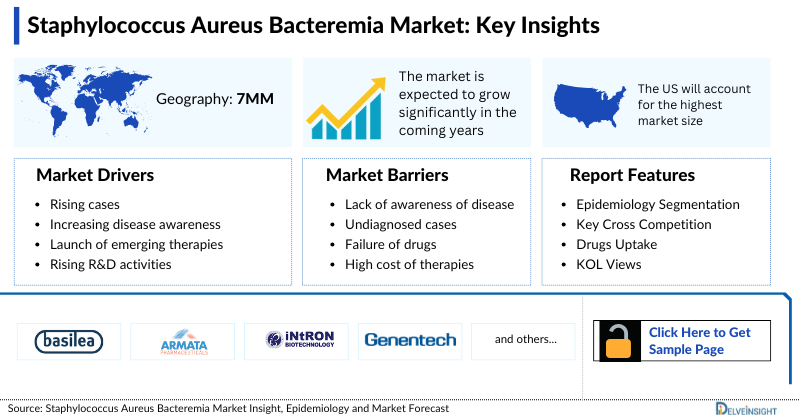
Key Factors Driving the Growth of the Staphylococcus aureus Bacteremia Market
- Rising incidence of S. aureus bacteremia cases: The overall number of Staphylococcus aureus bloodstream infections is increasing globally, driven in part by more invasive medical procedures and a growing population of immunocompromised patients, which expands the patient pool requiring treatment.
- Increasing prevalence of antibiotic-resistant strains: The spread of resistant forms such as MRSA has heightened the need for novel and effective therapeutic options, prompting greater clinical demand and research investment.
- Advancements in antimicrobial therapies and diagnostics: Improvements in diagnostic tools and the development of new antibiotics or targeted treatment strategies enhance early detection and more effective management of bacteremia, supporting market uptake.
- Heightened awareness and surveillance: Increased clinical awareness of S. aureus bacteremia and its serious complications leads to more routine screening, reporting, and treatment, contributing to market expansion.
- Focus on infection control and healthcare infrastructure improvements: Strengthened hospital infection control protocols and better access to advanced healthcare services in developed and emerging regions facilitate timely intervention and increase the use of therapeutic and diagnostic solutions
DelveInsight’s comprehensive report titled “Staphylococcus aureus Bacteremia Market Insights, Epidemiology, and Market Forecast – 2034” offers a detailed analysis of Staphylococcus aureus Bacteremia. The report presents historical and projected epidemiological data covering Total Incident Cases of Staphylococcus aureus Bacteremia further segmented by Type, Gender, Age, and Antibiotic-resistant. In addition to epidemiology, the market report encompasses various aspects related to the patient population. These aspects include the diagnosis process, prescription patterns, physician perspectives, market accessibility, treatment options, and prospective developments in the market across seven major markets: the United States, EU4 (Germany, France, Italy, and Spain), the United Kingdom, and Japan, spanning from 2020 to 2034.
The report analyzes the existing treatment practices and unmet medical requirements in Staphylococcus aureus Bacteremia. It evaluates the market potential and identifies potential business prospects for enhancing therapies or interventions. This valuable information enables stakeholders to make well-informed decisions regarding product development and strategic planning for the market.
Scope of the Staphylococcus aureus Bacteremia Market | |
|
Study Period |
2020 to 2034 |
|
Forecast Period |
2024-2034 |
|
Geographies Covered |
|
|
Staphylococcus aureus Bacteremia Market |
|
|
Staphylococcus aureus Bacteremia Market Size | |
|
Staphylococcus aureus Bacteremia Companies |
Basilea Pharmaceutica, Armata Pharmaceuticals, ContraFect, Armata Pharmaceuticals, iNtRON Biotechnology, Basilea Pharmaceutica, Genentech, and others |
|
Staphylococcus aureus Bacteremia Epidemiology Segmentation |
|
Staphylococcus aureus Bacteremia Disease Understanding
Staphylococcus aureus Bacteremia Overview
Staphylococcus aureus (Staphylococcus aureus Bacteremia) is a gram-positive bacterium and a causative agent of healthcare-associated infections from both community-acquired and hospital-acquired bacteremia. It causes a wide range of diseases from mild to a life-threatening condition, and is a leading cause of bacteremia and infective endocarditis (IE).
It can cause multiple infections, such as lung (pneumonia, influenza-associated), skin (moderately severe, rarely necrotizing fasciitis), bone (osteomyelitis), bloodstream (bacteremia), specific toxin-related diseases (toxic shock syndrome, foodborne illness), and others.
Staphylococcus aureus Bacteremia (SAB) is among the most incident and difficult-to-treat the condition with higher morbidity and mortality. Staphylococcus aureus Bacteremia most often spreads by contaminated hands. The breaching of the skin and mucous membranes may give access to Staphylococcus aureus Bacteremia to enter underlying tissues or the bloodstream.
In recent years, the incidence of Staphylococcus aureus Bacteremia and its complications has increased sharply due to the increased frequency of invasive procedures, immunocompromised patients, and increased resistance of Staphylococcus aureus Bacteremia strains to available antibiotics.
The emergence and spread of methicillin-resistant Staphylococcus aureus Bacteremia (MRSA) strains with multidrug-resistant in hospitals and subsequently in the community resulted in significant mortality and morbidity.
Staphylococcus aureus Bacteremia Diagnosis
The diagnosis of Staphylococcus aureus Bacteremia includes a combination of the patient’s history and physical examination, infectious disease consultation, and diagnostic evaluation including echocardiography and additional imaging as needed.
Staphylococcus aureus Bacteremia is a common and significant clinical problem in medical practice, and treatment often includes antibiotics. It is associated with a high mortality rate and imposes a substantial cost and resource burden on healthcare systems. The introduction of penicillin to treat SAB immediately reduced this high mortality rate over the past several decades. However, the history of Staphylococcus aureus Bacteremia treatment is marked by the development of resistance to each new class of anti-staphylococcal antimicrobial drugs, including penicillin, sulfonamides, tetracyclines, glycopeptides, and others. MRSA is common in hospitals and is emerging in the community.
Staphylococcus aureus Bacteremia Treatment Algorithm
First-generation cephalosporins (such as cefazolin, cephalothin, and cephalexin), clindamycin, lincomycin, and erythromycin have important therapeutic roles in less serious MSSA infections, or in patients with penicillin hypersensitivity, although cephalosporins are contraindicated. Most strains of Staphylococcus aureus Bacteremia are now resistant to penicillin. In Staphylococcus aureus Bacteremia caused by methicillin-susceptible Staphylococcus aureus Bacteremia (MSSA), β-lactams are still considered to be the best treatment, and current guidelines recommend penicillinase-stable penicillin, such as flucloxacillin, dicloxacillin, and oxacillin as standard antibiotics of choice.
All serious MRSA infections should be treated with parenteral vancomycin. If the patient is vancomycin allergic, teicoplanin is used. For patients who are refractory to this therapy, an alternative agent such as daptomycin is advisable. Vancomycin and daptomycin are the only FDA-approved agents for the treatment of MRSA bacteremia in the US.
β-lactam antibiotics are more effective than glycopeptides for the treatment of MSSA, and the emergence of GISA (glycopeptide intermediate susceptibility Staphylococcus aureus Bacteremia) threatens the role of glycopeptides in the treatment of MRSA bacteremia. Nosocomial strains of MRSA must always be treated with a combination of two oral antimicrobials, rifampicin and fusidic acid.
New antibiotics, such as linezolid and quinupristin/dalfopristin, have good anti-staphylococcal activity but are very expensive and should be reserved for patients who fail or are intolerant to conventional therapy or for highly resistant strains, such as hVISA (heterogeneous vancomycin-intermediate Staphylococcus aureus Bacteremia).
Staphylococcus aureus Bacteremia Epidemiology
The Staphylococcus aureus Bacteremia epidemiology section of the market report offers information on the patient populations, including historical and projected trends for each of the seven major markets. Examining key opinion leader views from physicians or clinical experts can assist in identifying the reasons behind historical and projected trends. The diagnosed patient pool, their trends, and the underlying assumptions are all included in this section of the report.
This section also presents the data with relevant tables and graphs, offering a clear and concise view of the incidence of Staphylococcus aureus Bacteremia. Additionally, the report discloses the assumptions made during the analysis, ensuring data interpretation and presentation transparency. This epidemiological data is valuable for understanding the disease burden and its impact on the patient population across various regions.
Staphylococcus aureus Bacteremia Epidemiology Key Findings
- During the analysis of Staphylococcus aureus Bacteremia, it was observed that Staphylococcus aureus Bacteremia is among the most dominant causes of nosocomial bacteremia, hospital-acquired pneumonia, and surgical site infections.
- It was observed that the estimated incidence rate of Staphylococcus aureus Bacteremia ranges from 20 to 50 cases per 100,000 population per year.
- It was noted that Staphylococcus aureus Bacteremia was the predominant cause of nosocomial bacteremia in North America, accounting for 26.0% of cases, and was the second most common cause of infections in Europe, with an incidence of 19.5%, a few years ago.
- During the analysis, it was found that Spain reported an incidence of 14 cases of Staphylococcus aureus Bacteremia per 100,000 inhabitants a few years ago.
- It was observed that among adult patients with Staphylococcus aureus Bacteremia, 58.7% were classified as healthcare-associated (HCA-SAB).
- The epidemiology of Staphylococcus aureus Bacteremia is expected to change during the forecast period (2024-2034).
Staphylococcus aureus Bacteremia Epidemiology Segmentation
- Total Incident Cases of Staphylococcus aureus Bacteremia
- Type-specific Cases of Staphylococcus aureus Bacteremia
- Antibiotic-resistant Cases of Staphylococcus aureus Bacteremia
- Gender-specific Cases of Staphylococcus aureus Bacteremia
- Age-specific Cases of Staphylococcus aureus Bacteremia
- Treatable Cases of Staphylococcus aureus Bacteremia
Staphylococcus aureus Bacteremia Drug Analysis
The drug chapter segment of the Staphylococcus aureus Bacteremia drugs market report encloses the detailed analysis of Staphylococcus aureus Bacteremia marketed drugs and late-stage (Phase-III and Phase-II) Staphylococcus aureus Bacteremia pipeline drugs. It also helps to understand the Staphylococcus aureus Bacteremia clinical trial details, expressive pharmacological action, agreements and collaborations, approval and patent details, advantages and disadvantages of each included drug, and the latest news and press releases.
Staphylococcus aureus Bacteremia Marketed Drugs
ZEVTERA: Basilea Pharmaceutica
Ceftobiprole, the active moiety of the prodrug ceftobiprole medocaril, is an advanced-generation cephalosporin antibiotic for intravenous administration. It exhibits rapid bactericidal activity against a wide range of Gram-positive bacteria, including Staphylococcus aureus, including methicillin-resistant strains (MRSA), and Gram-negative bacteria. ZEVTERA is indicated for the treatment of adult patients with Staphylococcus aureus bloodstream infections (bacteremia) (SAB). Basilea has entered into license and distribution agreements covering more than 80 countries.
Note: Detailed marketed therapies assessment will be provided in the final report...
Emerging Staphylococcus aureus Bacteremia Drugs
The Staphylococcus aureus Bacteremia market is expected to experience gradual changes, mainly due to the limited availability of emerging therapies in this area. Key market players, including Armata Pharmaceuticals, and others, have demonstrated a keen interest in this condition and are actively pursuing the development of potential treatments.
AP-SA02: Armata Pharmaceuticals
AP-SA02, developed by Armata Pharmaceuticals, is a novel biologic product candidate comprising natural lytic phages that target the problematic pathogen, Staphylococcus aureus, and offers robust therapeutic attributes. Armata has received FDA clearance for its Investigational New Drug (IND) application to initiate the “diSArm” study – a Phase Ib/IIa, randomized, double‐blind, placebo‐controlled, multiple ascending dose escalation study of the safety, tolerability, and efficacy of intravenous AP‐SA02 as an adjunct to best available antibiotic therapy compared to best available antibiotic therapy alone for the treatment of adults with bacteremia due to Staphylococcus aureus.
Note: Detailed emerging therapies assessment will be provided in the final report...
Staphylococcus aureus Bacteremia Market Outlook
The Staphylococcus aureus Bacteremia therapeutics market is further expected to increase by the major drivers, such as the rising incident population, technological advancements, and upcoming therapies in the forecast period [2024–2034].
In April 2024, the US FDA approved ZEVTERA (ceftobiprole medocaril sodium for injection) for the treatment of adults with Staphylococcus aureus bloodstream infections (bacteremia) (SAB).
With ongoing research and continued dedication, the future holds hope for even more effective treatments and, ultimately, a cure for this challenging condition. According to DelveInsight, the Staphylococcus aureus Bacteremia market in the 7MM is expected to change significantly during the study period 2020–2034.
Staphylococcus aureus Bacteremia Competitive Landscape
The competitive landscape of the Staphylococcus aureus bacteremia market is characterized by a mix of established antibiotic developers and emerging biotech firms focused on addressing both methicillin-susceptible and resistant strains. Traditional broad-spectrum and MRSA-active antibiotics such as vancomycin, daptomycin, and newer options like ceftobiprole (recently FDA-approved for S. aureus bloodstream infections) are central to current treatment practices, reflecting ongoing competition among major pharmaceutical players.
In addition to these marketed therapies, several companies and research groups are advancing novel agents and pipeline products, fostering dynamic competitive pressure. Reports indicate around 10+ companies actively developing therapeutics for SAB, with late-stage and earlier-stage candidates in development.
Beyond traditional antibiotics, the broader competitive field includes firms working on alternative modalities, such as bacteriophage-derived endolysins and other innovative antimicrobial approaches, highlighting diversification in strategic approaches to combat resistant S. aureus infections. This blend of entrenched antibiotic portfolios and burgeoning next-generation therapies shapes a moderately competitive yet evolving market landscape.
Key Staphylococcus aureus Bacteremia Companies
The key companies involved in the Staphylococcus aureus bacteremia market including those with marketed antibiotics and those progressing novel therapies:
- Basilea Pharmaceutica
- Armata Pharmaceuticals
- ContraFect
- Armata Pharmaceuticals
- iNtRON Biotechnology
- Basilea Pharmaceutica
- Genentech, and others
Staphylococcus aureus Bacteremia Market Segmentation
DelveInsight’s ‘Staphylococcus aureus Bacteremia Market Insights, Epidemiology, and Market Forecast – 2034’ report provides a detailed outlook of the current and future Staphylococcus aureus Bacteremia market, segmented within countries, by therapies, and by classes. Further, the market of each region is then segmented by each therapy to provide a detailed view of the current and future market share of all therapies.
Staphylococcus aureus Bacteremia Market Size by Countries
The Staphylococcus aureus Bacteremia market size is assessed separately for various countries, including the United States, EU4 (Germany, France, Italy, and Spain), the UK, and Japan. In 2023, the United States held a significant share of the overall 7MM (Seven Major Markets) Staphylococcus aureus Bacteremia market, primarily attributed to the country's higher incidence of the condition and the elevated cost of the available treatments. This dominance is projected to persist, especially with the potential early introduction of new products.
Staphylococcus aureus Bacteremia Market Size by Therapies
Staphylococcus aureus Bacteremia Market Size by Therapies is categorized into current and emerging markets for the study period 2020–2034.
Note: Detailed market segment assessment will be provided in the final report...
Staphylococcus aureus Bacteremia Drugs Uptake
This section focuses on the sales uptake of potential Staphylococcus aureus Bacteremia drugs that have recently been launched or are anticipated to be launched in the Staphylococcus aureus Bacteremia market between 2020 and 2034. It estimates the market penetration of Staphylococcus aureus Bacteremia drugs for a given country, examining their impact within and across classes and segments. It also touches upon the financial and regulatory decisions contributing to the probability of success (PoS) of the drugs in the Staphylococcus aureus Bacteremia market.
The emerging Staphylococcus aureus Bacteremia therapies are analyzed based on various attributes such as safety and efficacy in randomized clinical trials, order of entry and other market dynamics, and the unmet need they fulfill in the Staphylococcus aureus Bacteremia market.
Staphylococcus aureus Bacteremia Clinical Trials Activities
The Staphylococcus aureus Bacteremia pipeline report offers an analysis of Staphylococcus aureus Bacteremia clinical trials within Phase II and III stages and examines companies involved in developing targeted therapeutics for Staphylococcus aureus Bacteremia. It provides valuable insights into the advancements and progress of potential treatments in clinical development for this condition.
Staphylococcus aureus Bacteremia Pipeline Development Activities
The Staphylococcus aureus Bacteremia clinical trials analysis report covers information on collaborations, acquisition and merger, licensing, patent details, and other information for emerging Staphylococcus aureus Bacteremia therapies.
Note: Detailed assessment of drug uptake and attribute analysis will be provided in the full report on Staphylococcus aureus Bacteremia.
Staphylococcus aureus Bacteremia Market Access and Reimbursement
DelveInsight’s ‘Staphylococcus aureus Bacteremia Market Insights, Epidemiology, and Market Forecast – 2034’ report provides a descriptive overview of the market access and reimbursement scenario of Staphylococcus aureus Bacteremia.
This section includes a detailed analysis of the country-wise healthcare system for each therapy, enlightening the market access, reimbursement policies, and health technology assessments.
Latest KOL Views on Staphylococcus aureus Bacteremia Market Report
To keep up with current Staphylococcus aureus Bacteremia market trends and fill gaps in secondary findings, we interview KOLs and SMEs’ working in the Staphylococcus aureus Bacteremia domain. Their opinion helps understand and validate current and emerging therapies and treatment patterns or Staphylococcus aureus Bacteremia market trends. This will support the clients in potential upcoming novel treatments by identifying the overall scenario of the market and the Staphylococcus aureus Bacteremia unmet needs.
Staphylococcus aureus Bacteremia KOL Insights
DelveInsight’s analysts connected with 50+ KOLs to gather insights; however, interviews were conducted with 15+ KOLs in the 7MM. These KOLs were from organizations, institutes, and hospitals, such as Department of Immunology and Microbiology, University of Colorado School of Medicine, Department of Veterans Affairs, Eastern Colorado Health Care System in the US, Centre for Molecular Microbiology and Infection, Imperial College in the UK, Division of Infectious Diseases, Department of Medicine II, University Medical Center Freiburg, Faculty of Medicine, University of Freiburg in Germany, Institute for Medical Microbiology, Immunology and Hygiene, University of Cologne in Germany, among others.
“Transesophageal echocardiography is superior to transthoracic echocardiography in the diagnosis of perivalvular abscess, prosthetic valve involvement, and recognizing smaller vegetation.”
“Managing Staphylococcus aureus bacteremia requires a comprehensive approach, considering antibiotic resistance, complications, and optimal therapy duration. Collaboration among specialists is crucial for tailored treatment and optimal outcomes.”
“The challenges of Staphylococcus aureus bacteremia management lie in antibiotic resistance, persisting bacteremia, and complications. A coordinated effort among healthcare providers is essential for effective treatment and minimizing adverse outcomes.”
Note: Detailed assessment of KOL Views will be provided in the full report on Staphylococcus aureus Bacteremia...
Staphylococcus aureus Bacteremia Competitive Intelligence Analysis
We conduct a Competitive and Market Intelligence analysis of the Staphylococcus aureus Bacteremia Market, utilizing various Competitive Intelligence tools such as SWOT analysis and Market entry strategies. The inclusion of these analyses is contingent upon data availability, ensuring a comprehensive and well-informed assessment of the market landscape and competitive dynamics.
Scope of the Staphylococcus aureus Bacteremia Market Report
- The Staphylococcus aureus Bacteremia treatment market report covers the descriptive overview of Staphylococcus aureus Bacteremia, explaining its causes, signs and symptoms, pathophysiology, diagnosis and currently available Staphylococcus aureus Bacteremia therapies
- Comprehensive insight has been provided into the Staphylococcus aureus Bacteremia epidemiology and treatment in the 7MM
- Additionally, an all-inclusive account of both the current and emerging therapies for Staphylococcus aureus Bacteremia is provided, along with the assessment of new therapies, which will have an impact on the current treatment landscape
- A detailed review of the Staphylococcus aureus Bacteremia treatment market; historical and forecasted is included in the report, covering drug outreach in the 7MM
- The Staphylococcus aureus Bacteremia treatment market report provides an edge while developing business strategies, by understanding trends shaping and driving the global Staphylococcus aureus Bacteremia market
Staphylococcus aureus Bacteremia Market Report Insights
- Staphylococcus aureus Bacteremia Patient Population
- Staphylococcus aureus Bacteremia Therapeutic Approaches
- Staphylococcus aureus Bacteremia Pipeline Analysis
- Staphylococcus aureus Bacteremia Market Size and Trends
- Staphylococcus aureus Bacteremia Market Opportunities
- Impact of Upcoming Staphylococcus aureus Bacteremia Therapies
Staphylococcus aureus Bacteremia Market Report Key Strengths
- 11 Years Forecast
- The 7MM Coverage
- Staphylococcus aureus Bacteremia Epidemiology Segmentation
- Key Cross Competition
- Highly Analyzed Staphylococcus aureus Bacteremia Market
- Staphylococcus aureus Bacteremia Drugs Uptake
Staphylococcus aureus Bacteremia Market Report Assessment
- Staphylococcus aureus Bacteremia Current Treatment Practices
- Staphylococcus aureus Bacteremia Unmet Needs
- Staphylococcus aureus Bacteremia Pipeline Product Profiles
- Staphylococcus aureus Bacteremia Market Attractiveness
- Staphylococcus aureus Bacteremia Market Drivers
- Staphylococcus aureus Bacteremia Market Barriers
Key Questions Answered In The Staphylococcus aureus Bacteremia Market Report:
- How common is Staphylococcus aureus Bacteremia?
- What are the key findings of Staphylococcus aureus Bacteremia epidemiology across the 7MM, and which country will have the highest number of patients during the study period (2020–2034)?
- What are the currently available treatments for Staphylococcus aureus Bacteremia?
- What is the disease risk, burden, and unmet needs of Staphylococcus aureus Bacteremia?
- At what CAGR is the Staphylococcus aureus Bacteremia market and its epidemiology expected to grow in the 7MM during the forecast period (2024–2034)?
- How would the unmet needs impact the Staphylococcus aureus Bacteremia market dynamics and subsequently influence the analysis of the related trends?
- What would be the forecasted patient pool of Staphylococcus aureus Bacteremia in the 7MM covering the United States, EU4 (Germany, France, Italy, and Spain), the UK, and Japan?
- Among EU4 and the UK, which country will have the highest number of patients during the forecast period (2024–2034)?
- How many companies are currently developing therapies for the treatment of Staphylococcus aureus Bacteremia?
Reasons to buy Staphylococcus aureus Bacteremia Market Forecast Report
- The report will help in developing business strategies by understanding the latest trends and changing treatment dynamics driving the Staphylococcus aureus Bacteremia Market.
- Insights on patient burden/disease incidence, evolution in diagnosis, and factors contributing to the change in the epidemiology of the disease during the forecast years
- To understand the existing market opportunity in varying geographies and the growth potential over the coming years.
- Distribution of historical and current patient share based on real-world prescription data along with reported sales of current treatment in the US, EU4 (Germany, France, Italy, and Spain), the United Kingdom, and Japan.
- Identification of strong upcoming players in the market will help in devising strategies that will help in getting ahead of competitors.
- Detailed analysis and ranking of class-wise potential current and emerging therapies under the conjoint analysis section to provide visibility around leading classes.
- Highlights of Access and Reimbursement policies of approved therapies, barriers to accessibility of off-label expensive therapies, and patient assistance programs.
- To understand the perspective of Key Opinion Leaders’ around the accessibility, acceptability, and compliance-related challenges of existing treatment to overcome barriers in future.
- Detailed insights on the unmet need of the existing market so that the upcoming players can strengthen their development and launch strategy.