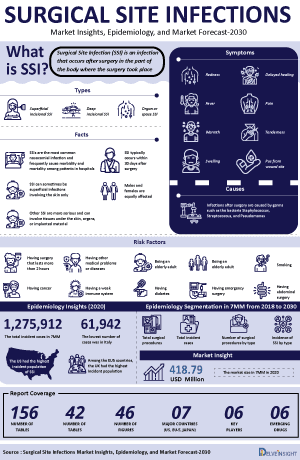
Surgical Site Infections Market Summary
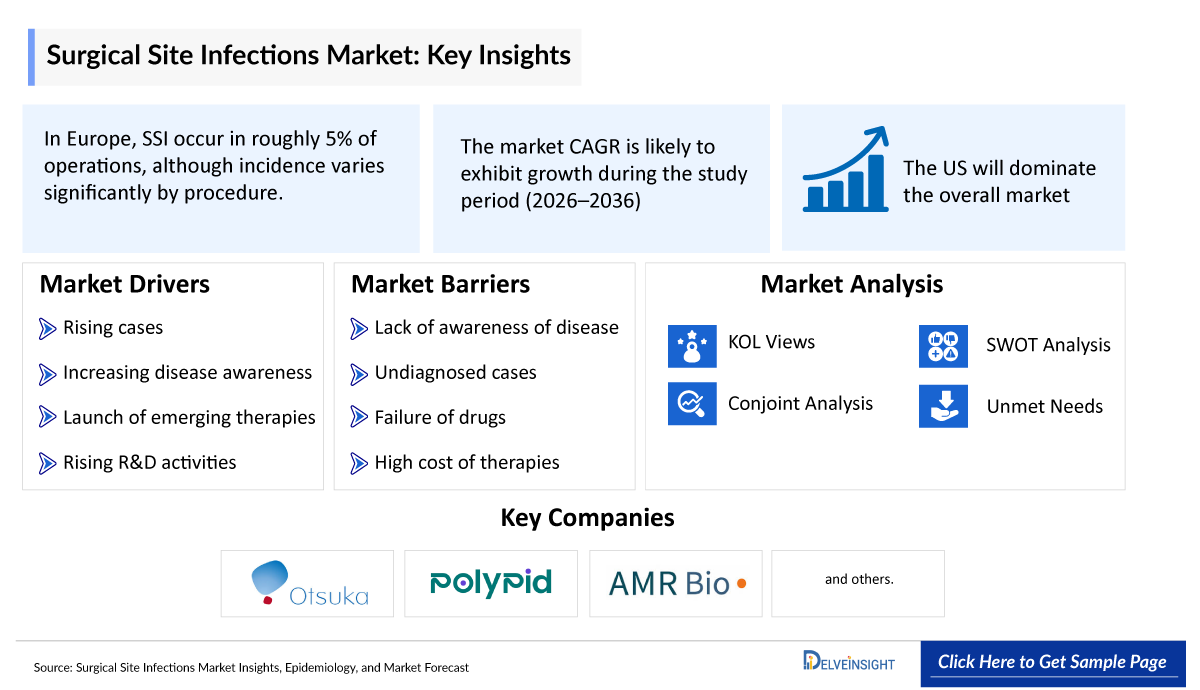
- The Surgical Site Infections market size is anticipated to grow with a significant CAGR during the study period (2022-2036).
- The leading Surgical Site Infections companies developing therapies in the treatment market include - Otsuka Pharmaceutical, Polypid, AMR Bio, and others.
Surgical Site Infections Market & Epidemiology Insights
- Surgical Site Infectionss are among the most common healthcare-associated infections, occurring within 30 days of surgery and resulting from microbial contamination of the surgical wound.
- The burden of Surgical Site Infections remains substantial despite advances in surgical techniques and infection-control practices. The incidence varies by procedure type and patient risk factors, accounting for approximately 20% of all healthcare-associated infections in many developed healthcare systems, making Surgical Site Infections prevention a major public health priority.
- The ASEPSIS score is a validated, objective clinical scoring system used to assess the severity of surgical wound infections. It integrates parameters such as wound appearance, antibiotic use, drainage of pus, isolation of pathogenic bacteria, and length of hospital stay.
- Incorporation of appropriate perioperative antibiotic prophylaxis, antiseptic surgical site preparation, and proper postoperative wound care has been shown to prevent up to 55% of Surgical Site Infections.
- Current standard of care is primarily preventive and relies on perioperative antibiotic prophylaxis, antiseptic skin preparation, sterile surgical techniques, and postoperative wound management. Commonly used antibiotics include cefazolin, vancomycin, clindamycin, and other procedure-specific prophylactic agents.
- The only approved drug for Surgical Site Infections is olanexidine gluconate (OLANEDINE), made by Otsuka Pharmaceutical, with regulatory approval limited in Japan. No Surgical Site Infections-specific therapies have been approved in the United States, Europe, or other major markets, highlighting a substantial unmet need for effective preventive interventions to reduce postoperative infections and associated healthcare burden worldwide.
- Surgical Site Infectionss remain a significant healthcare burden even in developed countries. In the United States, Surgical Site Infectionss contribute to over 400,000 additional hospitalization days each year, resulting in an estimated annual excess cost of USD 900 million.
- The pharmaceutical and biotechnology companies involved in the emerging Surgical Site Infections pipeline include PolyPid (D-PLEX100), AMR Bio (XF-73), among others, reflecting growing industry interest in differentiated infection-prevention technologies beyond conventional systemic antibiotics.
- Among emerging therapies, D-PLEX100 has demonstrated promising efficacy in reducing postoperative Surgical Site Infections rates through prolonged local doxycycline release at the surgical site.
- Despite ongoing innovation, significant challenges remain, including antimicrobial resistance, variability in Surgical Site Infections risk across surgical procedures, lack of dedicated Surgical Site Infections-specific approved products which is creating opportunitites in the Surgical Site Infections market for innovation & new drug approvals.
Surgical Site Infections Market Size and Forecast in the 7MM
- 2025 Surgical Site Infections Market Size: XX million
- 2036 Projected Surgical Site Infections Market Size: XX million
- Surgical Site Infections Growth Rate (2026–2036): XX% CAGR
Request for unlocking the sample page of the "Surgical Site Infections Market Forecast"
Key Factors Driving the Surgical Site Infections Market
- Growing Surgical Procedure Volume: The increasing number of surgical procedures worldwide, driven by aging populations, rising prevalence of chronic diseases, and expanding access to healthcare services, continues to increase the population at risk for Surgical Site Infectionss.
- Growing Concerns About Antimicrobial Resistance: The emergence of antibiotic-resistant pathogens, including methicillin-resistant staphylococcus aureus (MRSA) and multidrug-resistant organisms, is driving interest in innovative Surgical Site Infections prevention technologies that reduce reliance on conventional antibiotics.
- Increasing Regulatory and Quality Initiatives: Government agencies, healthcare organizations, and accreditation bodies are implementing stricter infection-control guidelines and quality metrics, encouraging healthcare providers to adopt advanced Surgical Site Infections prevention measures.
DelveInsight's "Surgical Site Infections Market Insights, Epidemiology and Market Forecast – 2036" report delivers an in-depth understanding of the Surgical Site Infections, historical and forecasted epidemiology, as well as the Surgical Site Infections therapeutics market trends in the United States, EU4 (Germany, Spain, Italy, and France) and the United Kingdom, and Japan.
The Surgical Site Infections market report delivers a comprehensive analysis of the current treatment landscape, including standards of care, clinical practices, and evolving therapeutic algorithms. It evaluates Surgical Site Infections patient burden trends, revenue & market share dynamics, peak patient share & therapy uptake analysis, and provides an in-depth market size assessment, and growth rate projections (Historical & Forecast 2022–2036) across global regions. The report highlights key unmet medical needs in Surgical Site Infections and maps the competitive and clinical landscape to uncover high value opportunities, providing a clear outlook on future market growth potential.
Scope of the Surgical Site Infections Market Report | |
|
Study Period |
2022–2036 |
|
Historical Year |
2022–2025 |
|
Forecast Period |
2026–2036 |
|
Base Year |
2026 |
|
Geographies Covered |
· North America: The US; · Europe: Germany, France, Italy, Spain and the UK; · Asia-Pacific: Japan |
|
Surgical Site Infections (Surgical Site Infections) Market CAGR (Forecast period) |
XX% (2026–2036) |
|
Surgical Site Infections (Surgical Site Infections) Epidemiology Segmentation Analysis |
Patient Burden Assessment
|
|
Surgical Site Infections (Surgical Site Infections) Companies |
|
|
Surgical Site Infections (Surgical Site Infections) Therapies |
|
|
Surgical Site Infections (Surgical Site Infections) Market |
Segmented by
|
|
Analysis |
|
Surgical Site Infections Disease Understanding
Surgical Site Infections Overview and Diagnosis
Surgical Site Infections are infections that occur at or near a surgical incision within 30 days of a procedure, or within one year if an implant is placed. Surgical Site Infections is among the most common healthcare-associated infections and can involve the skin, subcutaneous tissue, deep soft tissues, organs, or surgical spaces. Common causative pathogens include staphylococcus aureus, coagulase-negative staphylococci, enterococcus species, and gram-negative bacteria. Surgical Site Infections can lead to prolonged hospitalization, increased healthcare costs, reoperations, and higher morbidity and mortality.
The diagnosis of Surgical Site Infections is primarily based on clinical evaluation. Common signs and symptoms include redness, swelling, warmth, pain or tenderness at the surgical site, purulent drainage, wound dehiscence, and fever. Microbiological cultures obtained from wound exudates or tissue samples help identify the causative pathogen and guide antimicrobial therapy. Imaging modalities such as ultrasound, computed tomography (CT scans), or magnetic resonance imaging (MRI devices) may be utilized when deep incisional or organ/space infections are suspected.
Further details are provided in the report....
Current Surgical Site Infections Treatment Landscape
Treatment of Surgical Site Infections depends on the severity and extent of infection. Mild superficial infections may be managed with wound care and targeted antibiotic therapy, whereas deep or organ/space infections often require surgical drainage, debridement, or additional operative intervention. Empiric antibiotic therapy is typically initiated based on the likely pathogens and later adjusted according to culture results. Preventive strategies, including perioperative antibiotic prophylaxis, nasal decolonization, proper skin antisepsis, and emerging technologies such as localized antimicrobial delivery and photodisinfection therapies, play a critical role in reducing Surgical Site Infections incidence and improving surgical outcomes.
Further details related to country-based variations are provided in the report...
Surgical Site Infections Unmet Needs
The section “unmet needs of Surgical Site Infections” outlines the critical gaps between the current state of patient care, diagnosis, and the ideal & effective management of the disease. It highlights the obstacles experienced by patients, clinicians, and researchers and identifies potential solutions for future progress.
- Persistent Surgical Site Infections burden despite standard prophylaxis
- Antimicrobial resistance concerns
- Lack of targeted therapies specifically approved for Surgical Site Infections prevention
- Challenges in high-risk patient populations, and others…..
Note: Comprehensive unmet needs insights in Surgical Site Infections and their strategic implications are provided in the full report...
Surgical Site Infections Epidemiology
The Surgical Site Infections epidemiology section provides insights about the historical and current Surgical Site Infections patient pool and forecasted trends for individual seven major countries. It helps to recognize the causes of current and forecasted trends by exploring numerous studies and views of key opinion leaders. This part of the Surgical Site Infections market report also provides the diagnosed patient pool and their trends along with assumptions undertaken.
Key Findings from Surgical Site Infections Epidemiological Analysis and Forecast
- Recognized by the World Health Organization (WHO) as a significant global health issue, Surgical Site Infectionss dramatically worsen patient outcomes, individuals who develop an Surgical Site Infections are twice as likely to die, 60% more likely to require intensive care, and five times more likely to be readmitted to the hospital than patients without an Surgical Site Infections.
- In Europe, Surgical Site Infections occur in roughly 5% of operations, although incidence varies significantly by procedure.
- The incidence of Surgical Site Infectionss among surgical patients is estimated to range from 1–3%.
- Surgical Site Infectionss remain a significant clinical problem as they are associated with substantial mortality and morbidity and impose severe demands on healthcare resources. The incidence of Surgical Site Infectionss may be as high as 20%, depending on the surgical procedure, the surveillance criteria used, and the quality of data collection.
- The incidence rate of Surgical Site Infectionss vary from 2–15% depending on multiple factors, including the type of operation.
Surgical Site Infections Epidemiology Segmentation
- Total Incident Cases of Surgical Site Infections
- Type-specific Incident Cases of Surgical Site Infections
- Organ-specific Incident Cases of Surgical Site Infections
- Treatable Cases of Surgical Site Infections
Recent Developments in the Surgical Site Infections Drug Updates
- In June 2026, PolyPid announced the successful completion of its NDA submiSurgical Site Infectionson on a rolling review basis to the US FDA for D-PLEX100 for the prevention of Surgical Site Infectionss in patients undergoing colorectal surgery.
- In May 2026, PolyPid announced that it presented at the 45th Annual Meeting of the Surgical Infection Society. The presentation focused on a detailed analysis of the ASEPSIS (Additional treatment, Serous discharge, Erythema, Purulent exudate, Separation of deep tissues, Isolation of bacteria, and prolonged Stay as inpatient) score data from the company's Phase III SHIELD II trial of D-PLEX100.
- In May 2026, AMR Bio announced that they are advancing XF-73 towards Phase III development.
- In April 2026, PolyPid announced that the company presented new pharmacokinetic data from the Phase III SHIELD II trial evaluating D-PLEX100 at the Congress of the European Society of Clinical Microbiology and Infectious Diseases (ESCMID) Global 2026.
- In March 2026, Ondine has announced the North American phase III study has reached more than 93% enrolment, bringing the company closer to FDA submiSurgical Site Infectionson.
Surgical Site Infections Drug Analysis & Competitive Landscape
The Surgical Site Infections drug chapter provides a detailed, market-focused review of the emerging pipeline across Phase III/II-III Surgical Site Infections clinical trials and preclinical trials. It covers the mechanism of action, clinical trial data, regulatory approvals, patents, collaborations, and strategic partnerships for each therapy, along with their advantages, limitations, and recent developments. This section offers critical insights into the Surgical Site Infections treatment landscape, supporting market assessment, competitive analysis, and growth forecasting for the Surgical Site Infections therapeutics market.
Approved Therapies for Surgical Site Infections
Olanexidine gluconate (OLANEDINE): Otsuka Pharmaceutical
Olanexidine gluconate is a topical antiseptic agent approved in Japan for skin disinfection prior to surgery and invasive medical procedures, with the goal of reducing the risk of Surgical Site Infections. It exhibits broad-spectrum bactericidal activity against gram-positive and gram-negative pathogens. Since its approval in Japan in 2015, olanexidine gluconate has been incorporated into routine surgical antisepsis practices and is regarded as an important alternative to conventional skin disinfectants.
Competitive Landscape of Surgical Site Infections Marketed/Approved Therapies | ||||||
|
Drug/Therapy |
Company |
Indication |
Molecule Type |
MoA |
RoA |
Marketed Region |
|
Olanexidine gluconate (OLANEDINE) |
Otsuka Pharmaceutical |
SSI |
Small molecule (Biguanide) |
Destroys microbes by aggressively binding to their cell membranes |
Topical |
JP: 2015 |
Note: Detailed marketed therapies assessment will be provided in the final report...
Surgical Site Infections Pipeline Analysis
D-PLEX100: Polypid
D-PLEX100 is built on the company’s proprietary Kynatrix technology. In the SHIELD II study, D-PLEX100 demonstrated a statistically significant 60% reduction in incisional Surgical Site Infectionss compared with standard of care alone. The therapy works against both gram-positive and gram-negative bacteria. D-PLEX100 was granted FDA Fast Track Designation (FTD), Breakthrough Therapy Designation (BTD), and Qualified Infectious Disease Product (QIDP) designations. The company anticipates a potential FDA decision in the Q1 of 2027 under the Prescription Drug User Fee Act ("PDUFA") review timeline.
XF-73: AMR Bio
XF-73 is a first-in-class topical antimicrobial nasal gel designed for the prevention of Surgical Site Infectionss, particularly those caused by staphylococcus aureus, including MRSA. AMR Bio is advancing XF-73 toward Phase III development as a pre-surgical decolonization therapy. The candidate has received both QIDP designation and FTD from the US FDA, recognizing its potential to address a serious unmet need in the prevention of post-surgical bacterial infections and antimicrobial resistance.
Competitive Landscape of Surgical Site Infections Pipeline Drugs | ||||||
|
Drug Name |
Company |
Highest Phase |
Indication |
RoA |
MoA |
Anticipated Launch in the US |
|
D-PLEX100 |
Polypid |
III |
SSI |
Topical |
Protein 30S ribosomal subunit inhibitors |
Information is available in the full report |
|
XF-73 |
AMR Bio |
II/III |
SSI |
Intranasal |
Cell membrane permeability modulators |
Information is available in the full report |
|
Note: Launch insights are provisional and may change with future report updates or the occurrence of major key catalysts. | ||||||
Note: Detailed emerging therapies assessment will be provided in the final report...
Surgical Site Infections Key Players, Market Leaders and Emerging Companies
- Otsuka Pharmaceutical
- Polypid
- AMR Bio, and others
Surgical Site Infections Market Outlook
The treatment landscape for Surgical Site Infections is undergoing a gradual shift from reliance on conventional systemic antibiotic prophylaxis toward innovative infection-prevention technologies designed to improve efficacy while reducing antimicrobial resistance and healthcare costs.
Current Surgical Site Infections management remains largely dependent on perioperative antibiotics such as cefazolin, cefoxitin, and vancomycin, along with established infection-control practices. Olanexidine gluconate approved in Japan for preoperative skin antisepsis to reduce Surgical Site Infections risk, is currently the sole Surgical Site Infections-specific approved product. However, breakthrough infections continue to occur, particularly in high-risk surgical procedures. As a result, there is growing interest in targeted approaches that address infection risk at its source.
Among emerging therapies, D-PLEX100 is one of the most advanced pipeline assets and has demonstrated the ability to provide sustained local doxycycline release at the surgical site for up to 30 days, potentially reducing postoperative infections while limiting systemic antibiotic exposure. STERIWAVE represents a differentiated non-antibiotic approach that utilizes nasal photodisinfection technology to eradicate pathogens in the nasal cavity before surgery, thereby reducing the risk of postoperative infections associated with bacterial colonization. XF-73, is a first-in-class intranasal antimicrobial designed to rapidly decolonize staphylococcus aureus, including MRSA (a leading cause of Surgical Site Infectionss) prior to surgery.
The Surgical Site Infections market is expected to be driven by technologies that complement existing prophylactic antibiotics, improve patient outcomes, reduce hospital readmiSurgical Site Infectionsons, and support antimicrobial stewardship initiatives. Successful late-stage clinical outcomes and regulatory approvals for these emerging products could significantly reshape the Surgical Site Infections prevention landscape by establishing new standards of care in high-risk surgical settings.
Further details will be provided in the report...
Drug Class/Insights into Leading Emerging and Marketed Therapies in Surgical Site Infections (2022–2036 Forecast)
The Surgical Site Infections market (2022–2036 forecast) is evolving from a landscape dominated by conventional perioperative antibiotic prophylaxis toward innovative infection-prevention technologies.
- Biguanide-based Antimicrobial Agent: Olanexidine gluconate is a novel biguanide antiseptic developed for preoperative skin disinfection to prevent Surgical Site Infectionss. It exerts rapid and broad-spectrum bactericidal activity by disrupting bacterial cell membranes and is active against a wide range of pathogens.
- Localized Antibiotic Delivery Systems: D-PLEX100 belongs to the localized antibiotic delivery class. Utilizing the company's proprietary PLEX technology, D-PLEX100 provides sustained, controlled release of doxycycline directly at the surgical site for up to 30 days.
- Nasal Decolonization Antimicrobials: XF-73 is a first-in-class synthetic porphyrin-based antimicrobial administered intranasally before surgery to rapidly eradicate Staphylococcus aureus, including MRSA.
Surgical Site Infections innovation is increasingly being driven by a combination of localized antimicrobial delivery, non-antibiotic infection-control technologies, and targeted decolonization strategies. This diversification is expected to enhance surgical outcomes, reduce healthcare-associated infection burdens, support antimicrobial stewardship initiatives, and drive growth in the Surgical Site Infections prevention market throughout the forecast period.
Surgical Site Infections Drug Uptake
This section focuses on the uptake rate of potential Surgical Site Infections drugs expected to be launched in the market during the forecast period (2026–2036). The analysis covers the Surgical Site Infections drug’s uptake, performance at peak, factors affecting performance during prime years of growth, patient uptake by therapy, and anticipated sales generated by each drug.
Among emerging Surgical Site Infections therapies, D-PLEX100 is expected to achieve strong uptake in high-risk surgical settings, supported by positive Phase III SHIELD II results that demonstrated a 60% relative risk reduction in Surgical Site Infections compared with standard of care. Its ability to provide sustained local doxycycline release at the surgical site for up to 30 days offers a differentiated approach that addresses limitations of conventional perioperative antibiotics. XF-73 is expected to compete in the nasal decolonization segment due to its rapid activity against staphylococcus aureus. If ongoing clinical development confirms meaningful reductions in Surgical Site Infections incidence, XF-73 could emerge as a valuable preoperative intervention for patients at elevated risk of postoperative infections.
The uptake of emerging Surgical Site Infections therapies will be largely determined by their ability to demonstrate clinically meaningful reductions in postoperative infection rates while integrating seamlessly into existing surgical workflows.
Detailed insights of emerging therapies' drug uptake is included in the report...
Market Access and Reimbursement of Approved therapies in Surgical Site Infections
The report further provides detailed insights on the country-wise acceSurgical Site Infectionsbility and reimbursement scenarios, cost-effectiveness scenario of approved therapies, programs making acceSurgical Site Infectionsbility easier and out-of-pocket costs more affordable, insights on patients insured under federal or state government prescription drug programs, etc.
Reimbursement is a crucial factor that affects the drug’s access to the market. Often, the decision to reimburse comes down to the price of the drug relative to the benefit it produces in treated patients. To reduce the healthcare burden of these high-cost therapies, many payment models are being considered by payers and other industry insiders.
NOTE: Further Details are provided in the final report...
Surgical Site Infections Therapies Price Scenario & Trends
Pricing and analogue assessment of Surgical Site Infections therapies highlights evolving price dynamics structures. This section summarizes the cost of approved treatments, closest and most appropriate analogue selection for emerging therapies, and understanding of how pricing influences market access, adherence, and long-term uptake.
Industry Experts and Physician Views for Surgical Site Infections
To keep up with Surgical Site Infections market trends, we take Key Opinion Leaders (KOLs) and Subject Matter Experts (SMEs) opinions working in the domain through primary research to fill the data gaps and validate our secondary research. Industry experts were contacted for insights on the Surgical Site Infections emerging therapies, evolving treatment landscape, patient adherence to conventional therapies, therapy switching trends, drug adoption and uptake, acceSurgical Site Infectionsbility challenges, and epidemiology and real-world prescription patterns in Surgical Site Infections, including MD, PhD, Instructor, Postdoctoral Researcher, Professor, Researcher, and others.
DelveInsight’s analysts connected with 15+ KOLs to gather insights at the country level. Centers such as Duke University Medical Center, University Hospital Cologne, and University Hospital of Bordeaux etc. were contacted. Their opinion helps understand and validate current and emerging Surgical Site Infections therapies, highlight unmet medical needs, provide epidemiological context, and support strategic decisions for market access, therapy adoption, and pipeline prioritization in Surgical Site Infections.
|
Region |
Key Opinion Leaders (KOLs) and Subject Matter Experts (SMEs) |
|
United States |
“Future reductions in SSI rates will depend on comprehensive prevention bundles rather than broader antibiotic use alone. There is growing interest in technologies that provide prolonged local antimicrobial protection and support antimicrobial stewardship while reducing postoperative complications.” |
|
Germany |
“Antimicrobial resistance is increasingly complicating SSI management and prolonging hospital stays. Novel prevention strategies capable of reducing resistant infections and shortening recovery periods will become increasingly important in surgical practice.” |
Surgical Site Infections Report Qualitative Analysis: SWOT and Conjoint Analysis
We perform qualitative and market Intelligence analysis using various approaches, such as SWOT analysis and conjoint analysis.
In the SWOT analysis of Surgical Site Infections, strengths, weaknesses, opportunities, and threats in terms of disease diagnosis, patient awareness, patient burden, competitive landscape, cost-effectiveness, and geographical acceSurgical Site Infectionsbility of therapies are provided.
Conjoint analysis analyzes emerging therapies based on relevant attributes such as safety, efficacy, frequency of administration, route of administration, and order of entry. Scoring is given based on these parameters to analyze the effectiveness of therapy.
The team of analysts analyzes promising emerging therapies based on relevant attributes such as safety, efficacy, frequency of administration, route of administration, and order of entry. In efficacy, the trial’s primary and secondary outcome measures are evaluated, whereas the therapies’ safety is evaluated, wherein the acceptability, tolerability, and adverse events are majorly observed. In addition, the scoring is also based on the route of administration, order of entry, probability of success, and the addressable patient pool for each therapy. According to these parameters, the final weightage score and the ranking of the emerging therapies are decided.
Scope of the Surgical Site Infections Market Report
- The report covers a segment of key events, an executive summary, a descriptive overview of Surgical Site Infections, explaining their causes, signs and symptoms, pathogenesis, and currently available treatments.
- Comprehensive insight has been provided into the epidemiology segments and forecasts, the future growth potential of the diagnosis rate, and disease progreSurgical Site Infectionson along treatment guidelines.
- Additionally, an all-inclusive account of both the current and emerging treatments, along with the elaborative profiles of late-stage and prominent therapies, will have an impact on the current treatment landscape.
- A detailed review of the Surgical Site Infections market, historical and forecasted market size, market share by therapies, detailed assumptions, and rationale behind our approach is included in the report, covering the 7MM drug outreach.
- The report provides an edge while developing business strategies by understanding trends through SWOT analysis and expert insights/KOL views, patient journey, and treatment preferences that help in shaping and driving the 7MM Surgical Site Infections market.
Surgical Site Infections Market Report Insights
- Surgical Site Infections Patient Population Forecast
- Surgical Site Infections Therapeutics Market Size
- Surgical Site Infections Pipeline Analysis
- Surgical Site Infections Market Size and Trends
- Surgical Site Infections Market Opportunity (Current and Forecasted)
Surgical Site Infections Market Report Key Strengths
- Epidemiology based (Epi based) Bottom up Forecasting
- Artificial Intelligence (AI)-Enabled Market Research Report
- 11-Year Forecast
- Surgical Site Infections Market Outlook (North America, Europe, Asia-Pacific)
- Patient Burden Trends (By Geography)
- Surgical Site Infections Treatment Addressable Market (TAM)
- Surgical Site Infections Competitve Landscape
- Surgical Site Infections) Major Companies Insights
- Surgical Site Infections Price Trends and Analogue Assessment
- Surgical Site Infections Therapies Drug Adoption/Uptake
- Surgical Site Infections Therapies Peak Patient Share Analysis
Surgical Site Infections Market Report Assessment
- Surgical Site Infections Current Treatment Practices
- Surgical Site Infections Unmet Needs
- Surgical Site Infections Clinical Development Analysis
- Surgical Site Infections Emerging Drugs Product Profiles
- Surgical Site Infections Market attractiveness
- Surgical Site Infections Qualitative Analysis (SWOT and Conjoint Analysis)
- Surgical Site Infections Market Drivers
- Surgical Site Infections Market Barriers
FAQs Realted to the Surgical Site Infections Market Report:
Surgical Site Infections Market Insights
- What was the Surgical Site Infections market size, the market size by therapies, market share (%) distribution in 2025, and what would it look like by 2036? What are the contributing factors for this growth?
- What are the anticipated pricing variations among different geographies for the emerging therapies in the future?
- What can be the future treatment paradigm of Surgical Site Infections?
- What are the disease risks, burdens, and unmet needs of Surgical Site Infections? What will be the growth opportunities across the 7MM concerning the Surgical Site Infections patient population?
- Who is the major future competitor in the market, and how will the competitors affect their market share?
- What are the current options for the treatment of Surgical Site Infections? What are the current guidelines for treating Surgical Site Infections in the US, Europe, and Japan?
Reasons to Buy Surgical Site Infections Market Forecast Report
- The report will help in developing business strategies by understanding the latest trends and changing treatment dynamics driving the Surgical Site Infections market.
- Bottom-up forecasting builds from the affected population to product forecasts, delivering a robust, data-driven approach ideal for new therapies and novel classes.
- Insights on patient burden/disease incidence, evolution in diagnosis, and factors contributing to the change in the epidemiology of the disease during the forecast years.
- Understand the existing market opportunities in varying geographies and the growth potential over the coming years.
- Identifying strong upcoming players in the market will help devise strategies to help get ahead of competitors.
- Detailed analysis and ranking of class-wise potential emerging therapies under the conjoint analysis section to provide visibility around leading classes.
- To understand KOLs’ perspectives on the acceSurgical Site Infectionsbility, acceptability, and compliance-related challenges of existing treatment to overcome barriers in the future.
- Detailed insights on the unmet needs of the existing market so that the upcoming players can strengthen their development and launch strategy.
- This Artificial Intelligence (AI)-enabled report summarize and simplify complex datasets with in the report into clear, actionable insights for stakeholders, investors, and healthcare providers, enabling faster, data-driven decisions.

-pipeline.png&w=256&q=75)