
t cell malignancies pipeline insight
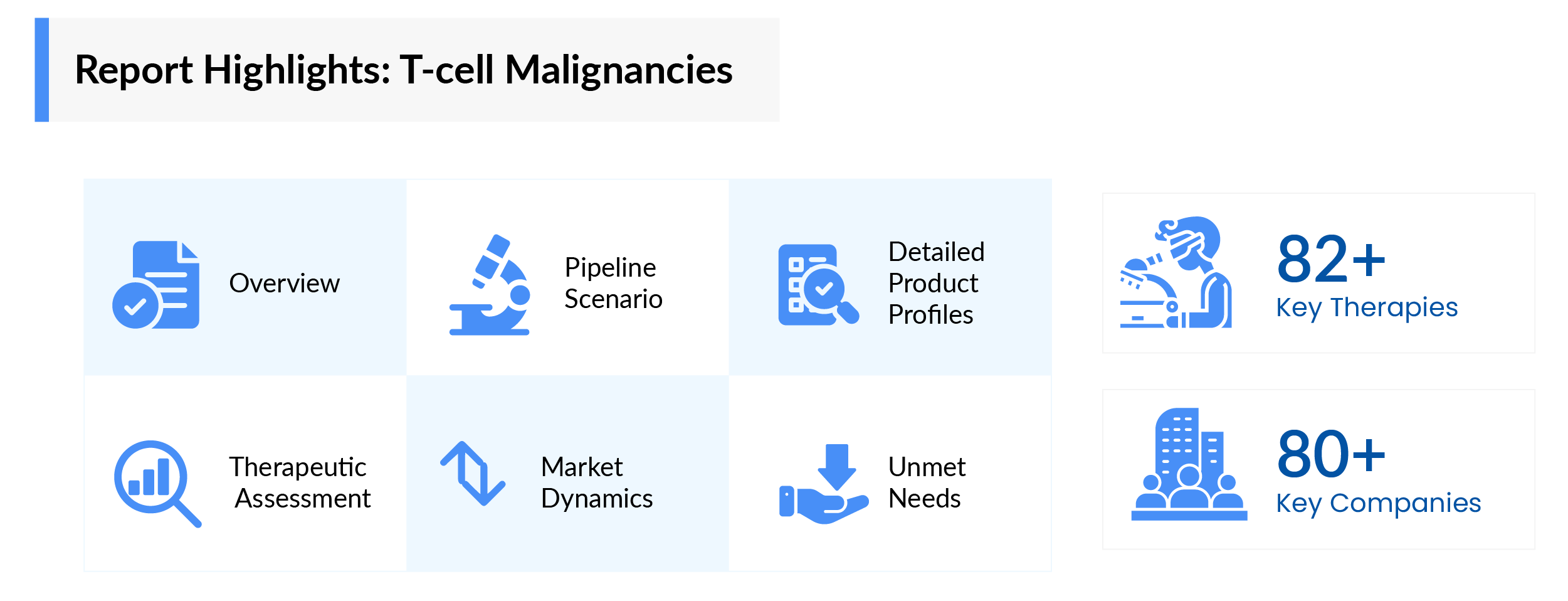
DelveInsight’s, “T-cell Malignancies Pipeline Insight, 2026” report provides comprehensive insights about 75+ companies and 80+ pipeline drugs in T-cell Malignancies pipeline landscape. It covers the pipeline drug profiles, including clinical and nonclinical stage products. It also covers the therapeutics assessment by product type, stage, route of administration, and molecule type. It further highlights the inactive pipeline products in this space.
Geography Covered
- Global coverage
T-cell Malignancies: Understanding
T-cell Malignancies: Overview
T-cell malignancies are a diverse and aggressive group of hematologic cancers resulting from the clonal expansion of T lymphocytes at various stages of development. This group includes peripheral T-cell lymphoma (PTCL), cutaneous T-cell lymphoma (CTCL), T-cell acute lymphoblastic leukemia/lymphoma (T-ALL/LBL), adult T-cell leukemia/lymphoma (ATLL), and natural killer/T-cell lymphoma (NKTCL). These malignancies are characterized by significant biological and clinical heterogeneity, geographic variation in prevalence, and generally poor prognoses, particularly in relapsed or refractory cases. Their pathogenesis involves complex genetic and epigenetic alterations, including mutations in genes such as TP53, IDH2, and DNMT3A, as well as dysregulated T-cell receptor signaling. Despite advances in chemotherapy and stem cell transplantation, outcomes remain limited, prompting growing interest in novel approaches such as targeted therapies, monoclonal antibodies, immune checkpoint inhibitors, and CAR T-cell therapies. However, progress is hindered by the rarity and heterogeneity of these cancers, highlighting the need for biomarker-driven strategies and collaborative research.
T-cell malignancies can manifest with a wide array of signs and symptoms that vary depending on the specific subtype and stage of the disease. Common systemic symptoms include painless swollen lymph nodes, unexplained weight loss, persistent fever, fatigue, and night sweats. Cutaneous T-cell lymphomas (CTCL) often present with skin-related issues such as rashes, patches of discoloration, nodules, or plaques, which may be itchy or painful. Additional symptoms may involve abdominal discomfort, bone pain, hair loss, or backache. Because these clinical features can resemble those of other conditions, early recognition and accurate diagnosis are critical for timely and effective treatment.
The pathophysiology of T-cell malignancies involves the clonal proliferation of abnormal T lymphocytes due to genetic and epigenetic alterations that disrupt normal T-cell development, differentiation, and apoptosis. These changes can lead to uncontrolled cell growth, immune evasion, and infiltration of lymphoid and non-lymphoid tissues. Oncogenic drivers often include mutations in signaling pathways (e.g., JAK/STAT, NOTCH1), chromosomal translocations, and viral infections such as HTLV-1 or EBV, depending on the subtype. The resulting malignant T cells contribute to immune dysregulation and tissue damage, underpinning the clinical variability and aggressive behavior of these cancers. Additionally, dysregulation of tumor suppressor genes and aberrant cytokine production further promote disease progression. The tumor microenvironment also plays a key role in supporting malignant cell survival and resistance to therapy. Understanding these complex molecular mechanisms is essential for developing targeted treatments and improving patient outcomes.
Treatment of T-cell malignancies varies by subtype and disease stage but often involves chemotherapy (e.g., CHOP), with stem cell transplantation for eligible patients. Early-stage cutaneous T-cell lymphomas may be treated with skin-directed therapies like topical steroids or phototherapy, while advanced stages require systemic treatments. Relapsed or refractory cases may benefit from targeted therapies such as brentuximab vedotin, HDAC inhibitors, or emerging options like CAR-T-cell therapy. Supportive care, including infection control and symptom management, is essential to improve outcomes and quality of life.
"T-cell Malignancies- Pipeline Insight, 2026" report by DelveInsight outlays comprehensive insights of present scenario and growth prospects across the indication. A detailed picture of the T-cell Malignancies pipeline landscape is provided which includes the disease overview and T-cell Malignancies treatment guidelines. The assessment part of the report embraces, in depth T-cell Malignancies commercial assessment and clinical assessment of the pipeline products under development. In the report, detailed description of the drug is given which includes mechanism of action of the drug, clinical studies, NDA approvals (if any), and product development activities comprising the technology, T-cell Malignancies collaborations, licensing, mergers and acquisition, funding, designations and other product related details.
Report Highlights
- The companies and academics are working to assess challenges and seek opportunities that could influence T-cell Malignancies R&D. The therapies under development are focused on novel approaches to treat/improve T-cell Malignancies.
T-cell Malignancies Emerging Drugs Chapters
This segment of the T-cell Malignancies report encloses its detailed analysis of various drugs in different stages of clinical development, including Phase III, II, I, Preclinical and Discovery. It also helps to understand clinical trial details, expressive pharmacological action, agreements and collaborations, and the latest news and press releases.
T-cell Malignancies Emerging Drugs
- HyBryte: Soligenix
HyBryte™ (research name SGX301) is a novel, first-in-class, photodynamic therapy utilizing safe, visible light for activation. The active ingredient in HyBryte™ is synthetic hypericin, a potent photosensitizer that is topically applied to skin lesions that is taken up by the malignant T-cells, and then activated by safe, visible light approximately 24 hours later. The use of visible light in the red-yellow spectrum has the advantage of penetrating more deeply into the skin (much more so than ultraviolet light) and therefore potentially treating deeper skin disease and thicker plaques and lesions. This treatment approach avoids the risk of secondary malignancies (including melanoma) inherent with the frequently employed DNA-damaging drugs and other phototherapy that are dependent on ultraviolet exposure. Combined with photoactivation, hypericin has demonstrated significant anti-proliferative effects on activated normal human lymphoid cells and inhibited growth of malignant T-cells isolated from CTCL patients. Currently, the drug is in Phase III stage of its development for the treatment of T-cell Malignancies.
- MB 105: March Biosciences Inc.
MB-105 is an orphan-drug designated, first-in-class autologous CD5-targeted CAR-T cell therapy in development for CD5-positive hematologic malignancies, including T-cell lymphoma (TCL), T-cell acute lymphoblastic leukemia (T-ALL), chronic lymphocytic leukemia (CLL), and mantle cell lymphoma (MCL), and other CD5+ B cell non-Hodgkin's Lymphoma (B-NHL) indications. The therapy employs a proprietary CAR design that enables selective targeting of malignant cells while preserving normal T-cell function. Early clinical results suggest safety, efficacy, and durability of the product. Currently, the drug is in the Phase II stage of its development for the treatment of T-cell Malignancies.
- HH2853: Haihe Biopharma Co., Ltd.
HH2853 is a potent and selective small molecule inhibitor targeting EZH1/2. In preclinical studies, HH2853 significantly reduced overall H3K27me3 level in cells, and exhibited potent anti-tumor activity against peripheral T-cell lymphoma (PTCL), diffuse large B-cell lymphoma (DLBCL) harboring EZH2 mutation, and various solid tumor models harboring mutations in the subunits of SWI/SNF complex both in vitro and in vivo. Clinical data has shown that HH2853 has good safety and pharmacokinetic characteristics, and has demonstrated preliminary efficacy in multiple doses of multiple tumor types. Currently, the drug is in Phase I/II stage of its development for the treatment of T-cell Malignancies.
- ONO-4685: Ono Pharmaceutical Co. Ltd
ONO-4685 is an investigational anti-PD-1/CD3 bispecific antibody, which binds specifically to human PD-1 and CD3 being developed as a potential treatment of both autoimmune diseases and hematologic malignancies. PD-1 is an inhibitory receptor specifically expressed and increased on activated T and B cells. In addition, PD-1 is expressed on malignant T-cells in some subtypes of Tcell lymphomas. CD3 is a component protein of the T-cell receptor. CD3-bispecific antibody therapy is one of cancer immunotherapy approaches and engages T-cells with malignant cells, consequently inducing anti-tumor activity. Based upon the non-clinical study data, ONO-4685 has the potential to be active against T-cell lymphomas. Currently, the drug is in Phase I stage of its development for the treatment of T-cell Malignancies.
Further product details are provided in the report……..
T-cell Malignancies: Therapeutic Assessment
This segment of the report provides insights about the different T-cell Malignancies drugs segregated based on following parameters that define the scope of the report, such as:
- Major Players in T-cell Malignancies
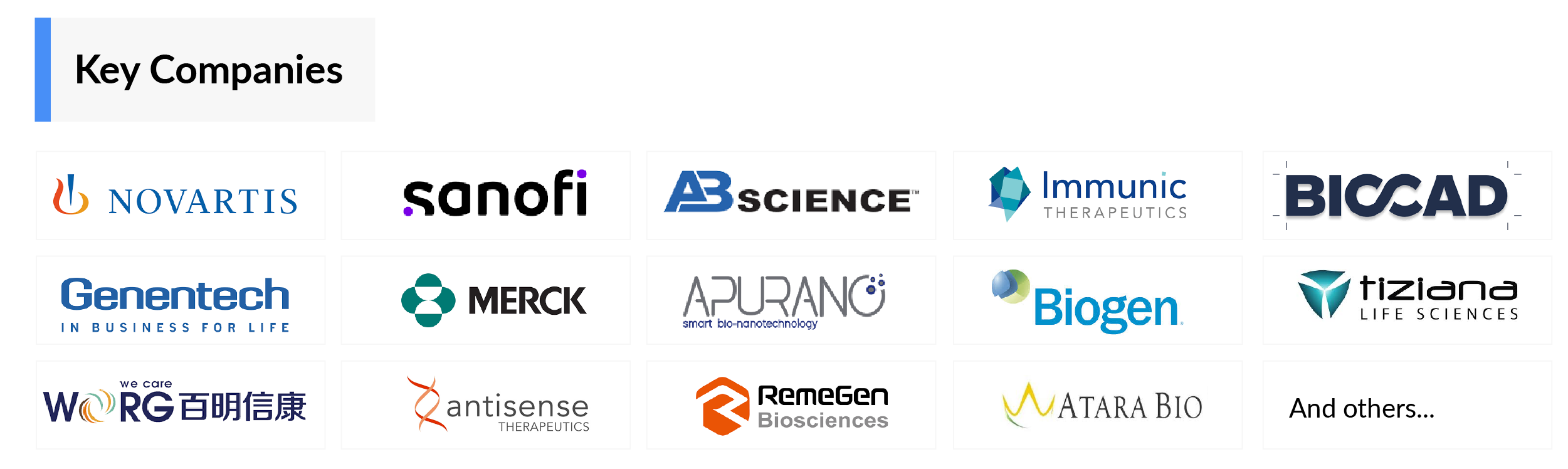
- There are approx. 75+ key companies which are developing the therapies for T-cell Malignancies. The companies which have their T-cell Malignancies drug candidates in the most advanced stage, i.e. Phase III include, Soligenix.
Phases
DelveInsight’s report covers around 80+ products under different phases of clinical development like
- Late stage products (Phase III)
- Mid-stage products (Phase II)
- Early-stage product (Phase I) along with the details of
- Pre-clinical and Discovery stage candidates
- Discontinued & Inactive candidates
Route of Administration
T-cell Malignancies pipeline report provides the therapeutic assessment of the pipeline drugs by the Route of Administration. Products have been categorized under various ROAs such as
- Oral
- Intravenous
- Subcutaneous
- Parenteral
- Topical
Molecule Type
Products have been categorized under various Molecule types such as
- Recombinant fusion proteins
- Small molecule
- Monoclonal antibody
- Peptide
- Polymer
- Gene therapy
Product Type
Drugs have been categorized under various product types like Mono, Combination and Mono/Combination.
Stay ahead of the evolving T-cell Malignancies Market Forecast landscape with actionable insights on pipeline developments, market opportunities, and future growth.
T-cell Malignancies: Pipeline Development Activities
The report provides insights into different therapeutic candidates in Phase III, II, I, preclinical and discovery stage. It also analyses T-cell Malignancies therapeutic drugs key players involved in developing key drugs.
Pipeline Development Activities
The report covers the detailed information of collaborations, acquisition and merger, licensing along with a thorough therapeutic assessment of emerging T-cell Malignancies drugs.
T-cell Malignancies Report Insights
- T-cell Malignancies Pipeline Analysis
- Therapeutic Assessment
- Unmet Needs
- Impact of Drugs
T-cell Malignancies Report Assessment
- Pipeline Product Profiles
- Therapeutic Assessment
- Pipeline Assessment
- Inactive drugs assessment
- Unmet Needs
Key Questions
Current Treatment Scenario and Emerging Therapies:
- How many companies are developing T-cell Malignancies drugs?
- How many T-cell Malignancies drugs are developed by each company?
- How many emerging drugs are in mid-stage, and late-stage of development for the treatment of T-cell Malignancies?
- What are the key collaborations (Industry–Industry, Industry–Academia), Mergers and acquisitions, licensing activities related to the T-cell Malignancies therapeutics?
- What are the recent trends, drug types and novel technologies developed to overcome the limitation of existing therapies?
- What are the clinical studies going on for T-cell Malignancies and their status?
- What are the key designations that have been granted to the emerging drugs?