
Ulcerative Colitis Epidemiology Summary
Ulcerative Colitis Insights and Trends
- In 2025, the US recorded the highest number of diagnosed prevalent ulcerative colitis cases, representing nearly half of the total cases across the 7MM.
- Among EU4 and the UK, the highest number of diagnosed prevalent cases of ulcerative colitis was in Germany, accounting for ~25% of the total diagnosed prevalent cases of ulcerative colitis in EU4 and the UK, in 2025.
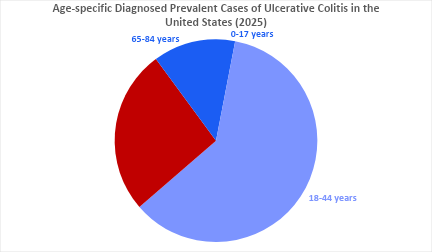
- The highest number of people affected by ulcerative colitis has been observed in the 18-44 age group in the 7MM in 2025. Nearly 1 million ulcerative colitis cases in the US were reported among individuals aged 18 to 44 years.
- As per the estimates, in 2025 approximately 60% of cases accounted for the moderate to severe cases of ulcerative colitis among the 7MM.
- In 2025, Japan accounted for an approximate 135,000 mild cases of ulcerative colitis.
Ulcerative Colitis Epidemiology Forecast in the United States
- 2025 Diagnosed Prevalent Cases of Ulcerative Colitis: ~1.6 million
- 2036 Diagnosed Prevalent Cases of Ulcerative Colitis: ~XX million
- Ulcerative Colitis Growth Rate (2026–2036): 3.5% CAGR
DelveInsight's ‘Ulcerative Colitis– Epidemiology Forecast – 2036’ report delivers an in-depth understanding of the Ulcerative Colitis, historical and forecasted epidemiology in the United States, EU4 (Germany, Spain, Italy, and France) and the United Kingdom, and Japan.
|
Study Period |
2022–2036 |
|
Historical Year |
2022–2025 |
|
Forecast Period |
2026–2036 |
|
Base Year |
2026 |
|
Geographies Covered |
|
|
Ulcerative Colitis Epidemiology CAGR (Study period/Forecast period) |
3.5% (2025-2036) |
|
Ulcerative Colitis Epidemiology Segmentation Analysis |
Patient Burden Assesment
|
Ulcerative Colitis Understanding and Diagnosis Algorithm
Ulcerative Colitis Overview
Ulcerative colitis is a chronic inflammatory bowel disease (IBD) characterized by persistent inflammation and ulceration of the inner lining of the colon and rectum. The disease typically begins in the rectum and may extend continuously through part or the entire colon. Common symptoms include diarrhea, rectal bleeding, abdominal pain, urgency to defecate, fatigue, and weight loss. Although the exact cause remains unclear, ulcerative colitis is believed to result from a combination of genetic predisposition, immune system dysfunction, environmental triggers, and alterations in gut microbiota. The disease follows a relapsing-remitting course and can significantly impact quality of life, with severe cases increasing the risk of complications such as colorectal cancer, toxic megacolon, and hospitalization.
Ulcerative Colitis Diagnosis
Diagnosis of ulcerative colitis involves a combination of clinical evaluation, laboratory testing, endoscopic assessment, and imaging techniques. Physicians typically assess patient history and symptoms, followed by blood tests to detect inflammation or anemia and stool tests to rule out infections. Colonoscopy with biopsy remains the gold standard for diagnosis, allowing direct visualization of continuous mucosal inflammation and confirmation through histopathological findings. Additional imaging techniques such as CT scans, MRI, and abdominal ultrasound may be used in complicated cases to assess disease extent and rule out other gastrointestinal disorders. Increasing use of biomarkers such as fecal calprotectin is also improving early diagnosis and disease monitoring in clinical practice.
Further details are provided in the report.
Ulcerative Colitis Epidemiology
Key Findings from Ulcerative Colitis Epidemiological Analysis and Forecast
- According to DelveInsight’s estimates, in 2025, there were nearly 3.3 million diagnosed prevalent cases of ulcerative colitis in the 7MM.
- The total diagnosed prevalent cases of ulcerative colitis in the United States were around 1.6 million in 2025.
- In the United States in 2025, age group 18-44 years contributed to highest number of diagnosed prevalent cases of ulcerative colitis (i.e. ~962,000), followed by 45-64 years (i.e. ~417,000).
- Among the EU4 countries, Germany reported the highest number of diagnosed prevalent cases of moderate to severe ulcerative colitis in 2025, with approximately 235,000 cases, whereas Italy had the lowest number of cases, totaling around 129,700 cases.
- In Japan, the number of moderate to severe diagnosed prevalent cases of ulcerative colitis was found to be 222,400 cases in 2025.
Scope of the Report
The report covers a segment of an executive summary, a descriptive overview of Ulcerative Colitis, explaining its causes, signs and symptoms, and pathogenesis.
- Comprehensive insight has been provided into the epidemiology segments and forecasts, the future growth potential of the diagnosis rate, and disease progression.
Report Insights
Ulcerative Colitis Patient Population Forecast
Report Key Strengths
- Epidemiology‑based (epi‑based) Bottom‑up Forecasting
- 11-year Forecast
- Patient Burden Trends (by geography)
FAQs
- What are the disease risks, burdens, and unmet needs of ulcerative colitis? What will be the growth opportunities across the 7MM concerning the patient population with ulcerative colitis?
- What is the historical and forecasted Ulcerative Colitis patient pool in the US, EU4 (Germany, France, Italy, and Spain), the UK, and Japan?
Reasons to Buy
- Insights on patient burden/disease prevalence, evolution in diagnosis, and factors contributing to the change in the epidemiology of the disease during the forecast years.
- To understand key opinion leaders’ perspectives around the diagnostic challenges to overcome barriers in the future.
- Detailed insights on various factors hampering disease diagnosis and other existing diagnostic challenges.
-market.png&w=256&q=75)

