-market.png&w=256&q=75)
Underactive Bladder Market
- The Underactive Bladder market size in the 7MM is anticipated to increase by 2034 at a significant CAGR during the study period (2020–2034).
- In the pharmacotherapy segment for Underactive Bladder management in 2023, catheterization emerged as the most prevalent treatment modality, with a market value of nearly USD 970 million.
- To substantiate a better understanding into the Underactive Bladder epidemiology outlook, the DelveInsight epidemiology forecast model has considered the LUT symptoms patient pool to considerably fetch the Underactive Bladder prevalence scenario.
- The higher cases of Underactive Bladder in males compared to females in the 7MM, may be due to anatomical differences, such as the longer and more complex male urethra, as well as the increased prevalence of conditions like benign prostatic hyperplasia (BPH) and neurological disorders, which are more common in males and can contribute to bladder dysfunction.
- Among pharmaceutical options, alpha antagonists were the second most utilized (with around USD 70 million), followed by muscarinic agents. Other pharmacological approaches, included acetylcholinesterase inhibitors, reflecting the diverse treatment landscape and the need for tailored therapeutic strategies in Underactive Bladder management.
- In October 2024, the FDA granted an Investigational Device Exemption (IDE) for an early feasibility study (EFS) to evaluate the safety and efficacy of an investigational implantable device for the treatment of underactive bladder. The device, developed by iota Biosciences, seeks to provide a new option for patients suffering from this condition, which affects bladder function and quality of life.
Key Factors Driving Underactive Bladder Market
Rising Underactive Bladder Cases and Male Predominance
The prevalence of underactive bladder (UAB) is steadily increasing across the 7MM, with the US reporting the highest number of diagnosed prevalent cases in 2023. These cases are anticipated to rise at a decent CAGR during 2024–2034. Notably, UAB is more common in males, primarily due to anatomical differences such as a longer and more complex urethra and the higher incidence of conditions like benign prostatic hyperplasia (BPH) and neurological disorders, which contribute to bladder dysfunction. Among EU4 and the UK, Germany accounted for nearly 0.2 million cases in 2023, a figure projected to grow further by 2034.
Current Treatment Approaches in UAB
In 2023, catheterization was the most prevalent treatment modality in UAB management, representing a market value of nearly USD 970 million. Among pharmacological interventions, alpha antagonists were the second most utilized therapy (~USD 70 million), followed by muscarinic agents. Other pharmacological approaches, including acetylcholinesterase inhibitors, are also employed, highlighting the need for tailored therapeutic strategies in managing UAB patients.
Emerging Therapies and Pipeline Outlook
The treatment landscape is expected to evolve with the entry of innovative drugs such as TAC-302 (Taiho Pharmaceutical), which holds potential to change management approaches for UAB. Several leading companies, including Taiho Pharmaceutical, Astellas Pharma, Pfizer, AbbVie (Allergan), Medtronic, Boston Scientific, UroGen Pharma, Merck, Johnson & Johnson, Novartis, GSK, AstraZeneca, Sanofi, Roche, Takeda, Eli Lilly, Boehringer Ingelheim, Gilead Sciences, Bayer, Medline Industries, and Coloplast, are actively contributing to advancements in the UAB therapeutic space.
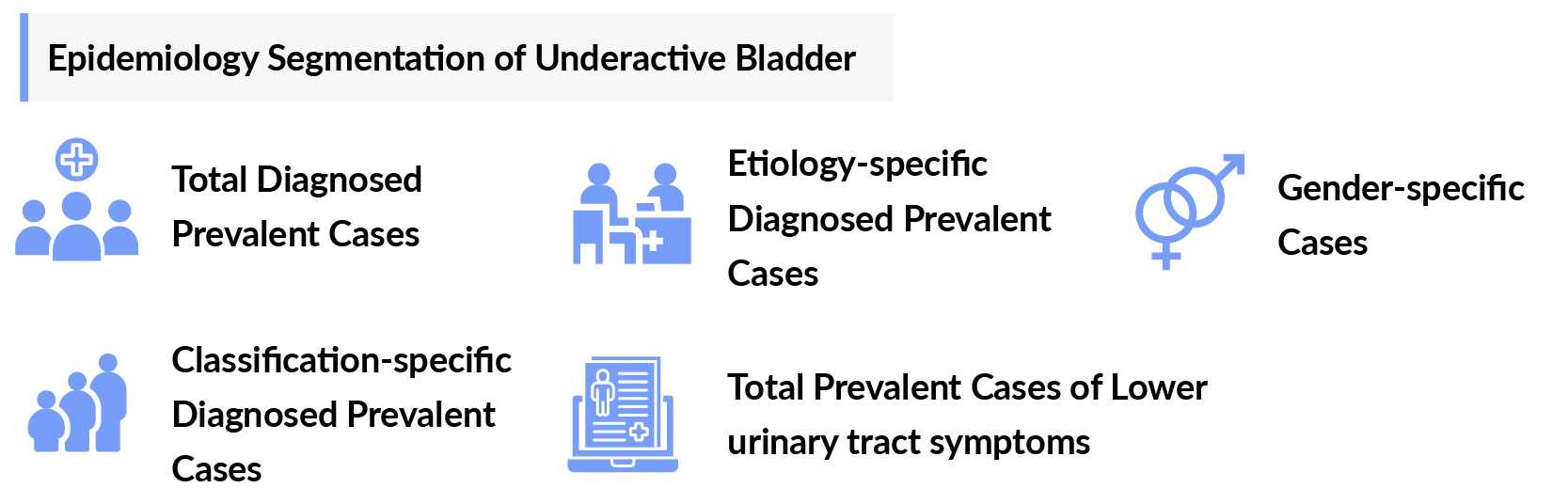
DelveInsight’s report titled “Underactive Bladder Market Insights, Epidemiology, and Market Forecast – 2034” comprehensively analyzes Underactive Bladder. The report provides a comprehensive analysis of historical and projected epidemiological data, covering Total Prevalent cases of Lower urinary tract symptoms (LUTS) - moderate to severe, Total Diagnosed Prevalent cases of Underactive Bladder, Gender-specific Diagnosed Prevalent cases of Underactive Bladder, Classification-specific Diagnosed Prevalent cases of Underactive Bladder, and Etiology-specific Diagnosed Prevalent cases of Underactive Bladder.
The Underactive Bladder market report provides a comprehensive insight into different facets concerning the patient population, encompassing diagnosis, prescribing trends, physician viewpoints, market accessibility, therapy, and forthcoming market advancements across seven major markets: the United States, EU4 (Germany, France, Italy, and Spain), the UK, and Japan spanning from 2020 to 2034.
The report examines current treatment methodologies and algorithms for Underactive Bladder, assessing the overall market potential, identifying business prospects, and addressing pertinent unmet medical requirements.
Underactive Bladder Treatment Market
Underactive Bladder Overview
Underactive Bladder, commonly referred to as detrusor underactivity, manifests as reduced strength or duration of bladder contractions, leading to prolonged bladder emptying or incomplete voiding within a normal timeframe. Interestingly, Underactive Bladder can coexist with Overactive Bladder (OAB), wherein the bladder contracts involuntarily, yet the contraction is insufficient to facilitate complete bladder emptying. This paradoxical combination of detrusor overactivity alongside impaired bladder contraction underscores the intricate interplay between bladder dysfunction patterns, complicating the clinical presentation and management of lower urinary tract symptoms.
Underactive Bladder Diagnosis
The clinical assessment of Underactive Bladder relies heavily on urodynamic studies (UDS) for accurate diagnosis, given its complex and often poorly understood nature. Underactive Bladder poses significant challenges due to its common occurrence and limited treatment options. Additionally, it is frequently misdiagnosed as Overactive Bladder (OAB) or Bladder Outlet Obstruction (BOO), leading to delays in appropriate management. Furthermore, there are several challenges and limitations associated with UDS, including invasiveness, discomfort for the patient, and the need for specialized equipment and expertise. Moreover, UDS may not always capture the full spectrum of Underactive Bladder symptoms, resulting in underreporting or misinterpretation of the condition. These factors collectively contribute to the complexity of diagnosing and managing Underactive Bladder effectively.
Underactive Bladder Treatment
There is currently no standardized protocol for treating Underactive Bladder that consistently enhances patients' quality of life (QoL) and effectively prevents complications. Treatment options typically focus on ensuring the bladder is adequately emptied, irrespective of the underlying cause. The primary objective is to enhance patient involvement and adherence to treatment regimens to minimize the risk of upper urinary tract damage. At this stage, there is a heightened risk of recurrent urinary tract infections (UTIs), bladder stone formation, overflow incontinence, urinary retention, compromised renal function, and chronic valsalva voiding.
To be continued in the report...
Underactive Bladder Epidemiology
The Underactive Bladder epidemiology chapter offers an analysis of past and present patient populations, along with projected trends across seven major countries (7MM). Drawing from multiple studies and expert opinions, it aims to elucidate the underlying factors driving current and anticipated trends. Additionally, this segment of the report presents data on the diagnosed patient population, highlighting trends and underlying assumptions.
Key Findings
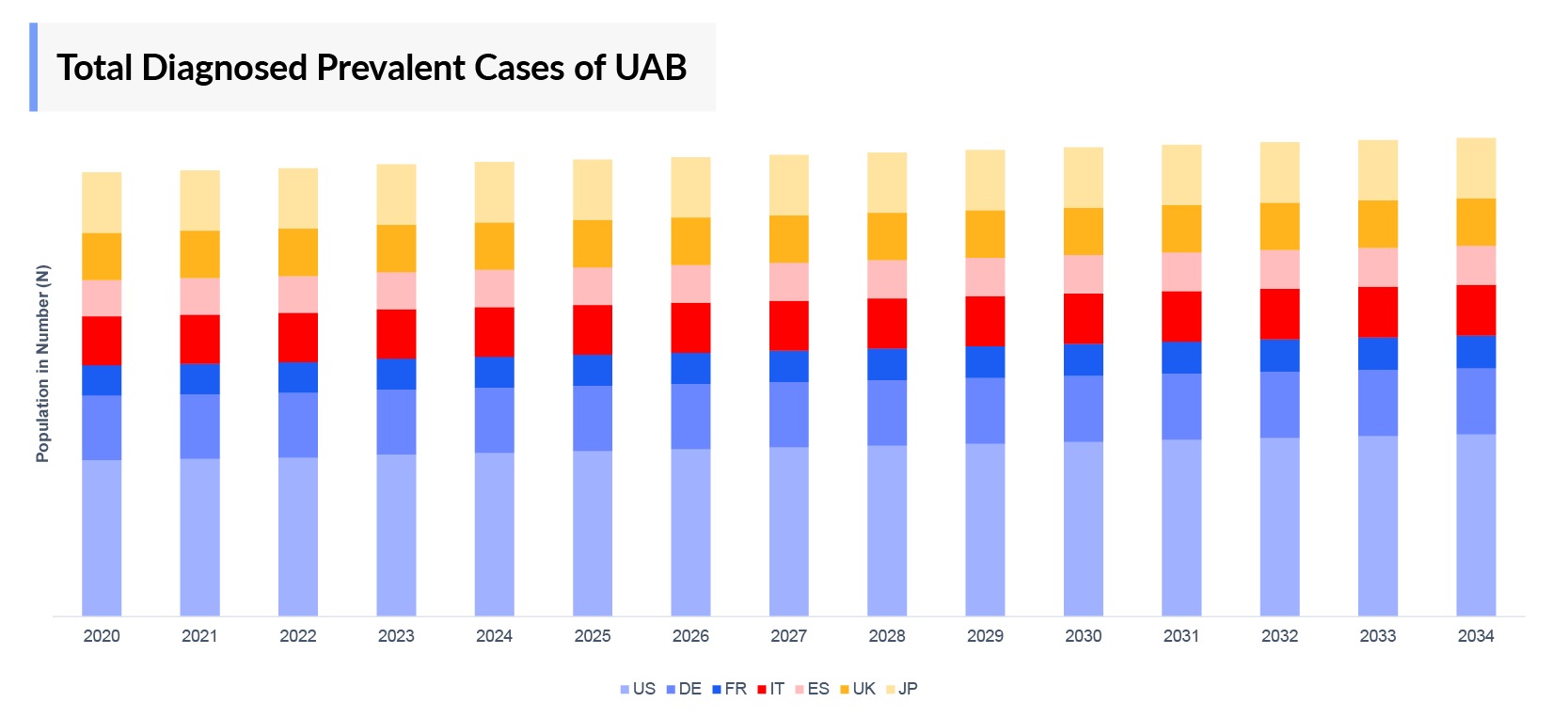
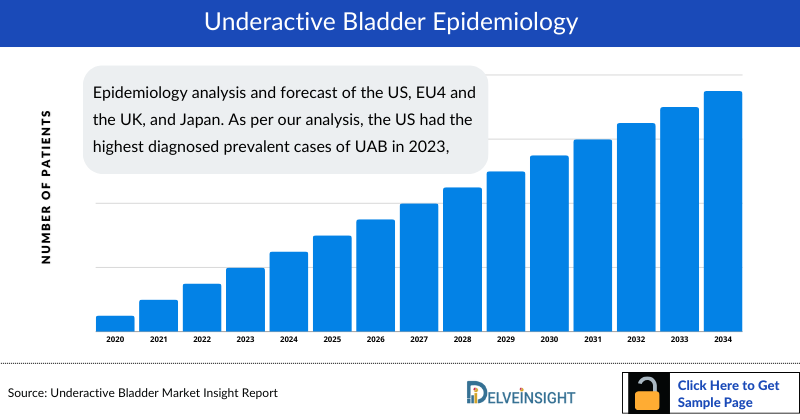
- DelveInsight’s forecasting report of Underactive Bladder includes the Epidemiology analysis and forecast of the US, EU4 and the UK, and Japan. As per our analysis, the US had the highest diagnosed prevalent cases of Underactive Bladder in 2023, which are expected to rise, at a decent CAGR during the forecasted period (2024–2034).
- In 2023, among EU4 (Germany, France, Italy, and Spain) and the United Kingdom, Germany accounted for the highest number of diagnosed prevalent cases of Underactive Bladder i.e. around 0.2 million cases which is expected to increase by 2034.
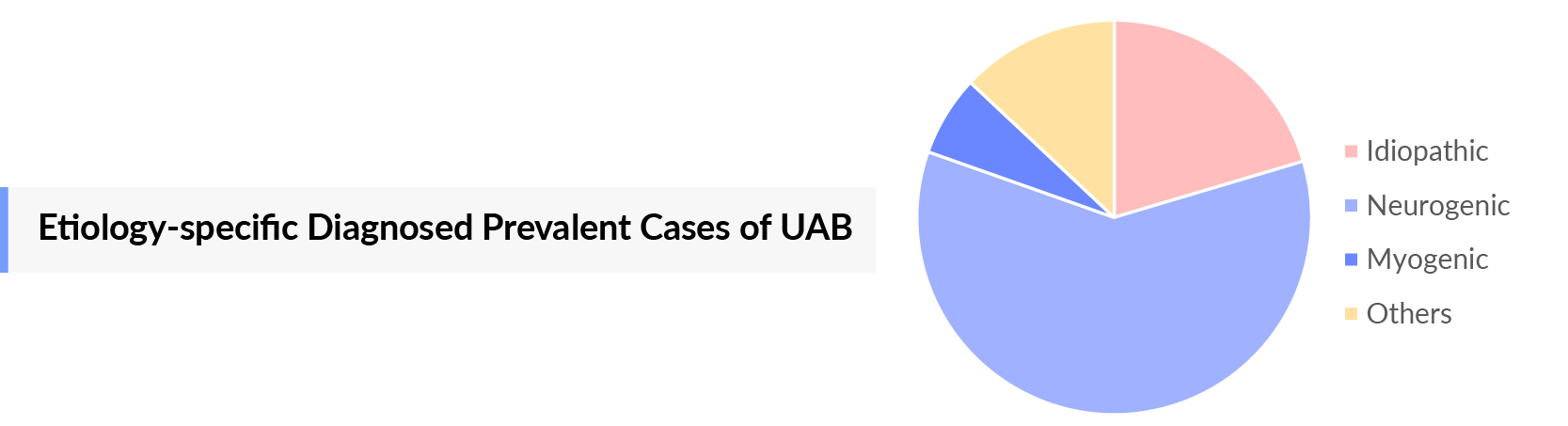
- Based on etiologic mechanisms, the major etiologies linked to Underactive Bladder are categorized as Idiopathic, Neurogenic, Myogenic, and Others. The most common type of Underactive Bladder are due to Neurogenic causes as compared to the other etiologies.
- In 2023, the prevalent cases of LUTS — moderate to severe in Japan were found to be 14 million and diagnosed prevalent Underactive Bladder cases were estimated to be around 0.18 million. These diagnose Underactive Bladder cases are anticipated to decrease during the forecast period (2024-2034).
- According to urodynamic findings, Underactive Bladder can be categorized into three main subtypes: Detrusor Underactivity (DU), Detrusor Hyperactivity with Impaired Contractility (DHIC), and Acontractile Detrusor (AcD). Based on evaluations conducted by DelveInsight analysts, the diagnosed prevalence of DU surpasses that of the other types of Underactive Bladder mentioned.
- According to our analysis, the prevalence of Underactive Bladder is higher among males compared to females.
Stay ahead with insights on Underactive Bladder prevalence and patient population projections.
Underactive Bladder Recent Developments
- In October 15, 2024, the FDA granted an Investigational Device Exemption (IDE) for an early feasibility study (EFS) to evaluate the safety and efficacy of an investigational implantable device for the treatment of underactive bladder. The device, developed by iota Biosciences, seeks to provide a new option for patients suffering from this condition, which affects bladder function and quality of life.
Underactive Bladder Drug Chapters
The drug chapter segment of the Underactive Bladder report encloses the detailed analysis of Underactive Bladder marketed drugs, mid-phase, and late-stage pipeline drugs. It also helps to understand the Underactive Bladder clinical trial details, expressive pharmacological action, agreements and collaborations, approval, and patent details of each included drug, and the latest news and press releases.
Marketed Therapies for Underactive Bladder
Despite significant advances in the overactive bladder landscape, the Underactive Bladder disease paradigm lacks effective treatments mainly including off-label drugs as the current management.
Emerging Therapies for Underactive Bladder
TAC-302: Taiho Pharmaceutical
Taiho Pharmaceutical investigational molecule TAC-302 is an orally bioavailable drug, which stimulates neurite outgrowth activity in cultured peripheral neurons and has beneficial effects on bladder denervation and storage/voiding dysfunctions which is primarily considered to be effective for Detrusor underactivity with Overactive bladder. The emerging drug has completed its phase II trial in small cohort of Japanese patients but next phase has not started as yet. This may impact its launch.
Note: Detailed emerging therapies assessment and list of products to be continued in the report...
Underactive Bladder Market Outlook
Preventing upper tract injury, avoiding bladder over distension, and minimizing residual urine are the primary objectives of effective management for Underactive Bladder. Traditional conservative treatment options, such as scheduled voiding, double voiding, alpha-blockers, and intermittent self-catheterization, aim to alleviate symptoms rather than cure the condition.
However, many patients find intermittent self-catheterization challenging and require extensive training, support, and follow-up care. Despite the limitations in Underactive Bladder management and the absence of validated, effective drugs, some treatments like alpha-1 adrenoceptor antagonists, including urapidil, indoramin, and doxazosin, have been utilized to relax the urethra and reduce resistance to urine flow, particularly in women. Additionally, botulinum toxin injections may be considered to relax the external sphincter in cases of functional bladder outlet obstruction resulting in detrusor underactivity (DU).
Off-label use of various medications, neuromodulation devices, surgical interventions, and supportive care are also explored as treatment options. Looking ahead, the anticipated emergence of approved treatments offers potential for significant benefits, including improved symptom relief and enhanced patient outcomes.
Taiho Pharmaceutical's TAC-302 is a notable candidate in the current pipeline, showing promise in addressing detrusor underactivity with overactive bladder (OAB). Despite facing challenges, TAC-302 stands out as a leading contender in the pipeline, presenting numerous market opportunities.
|
Drug |
MoA |
RoA |
Company |
Phase |
|
TAC-302 |
Nerve growth factor stimulants |
Oral |
Taiho Pharmaceutical |
II |
|
XXX |
Cell replacements |
XX |
XXX |
I/II |
Note: Detailed market outlook to be continued in the report...
Underactive Bladder Market Segmentation
DelveInsight’s ‘Underactive Bladder – Market Insights, Epidemiology, and Market Forecast – 2034’ report provides a detailed outlook of the current and future Underactive Bladder market, segmented within countries and by therapies. Further, the market of each region is then segmented by each therapy to provide a detailed view of the current and future market share of all therapies.
Underactive Bladder Market Size by Countries
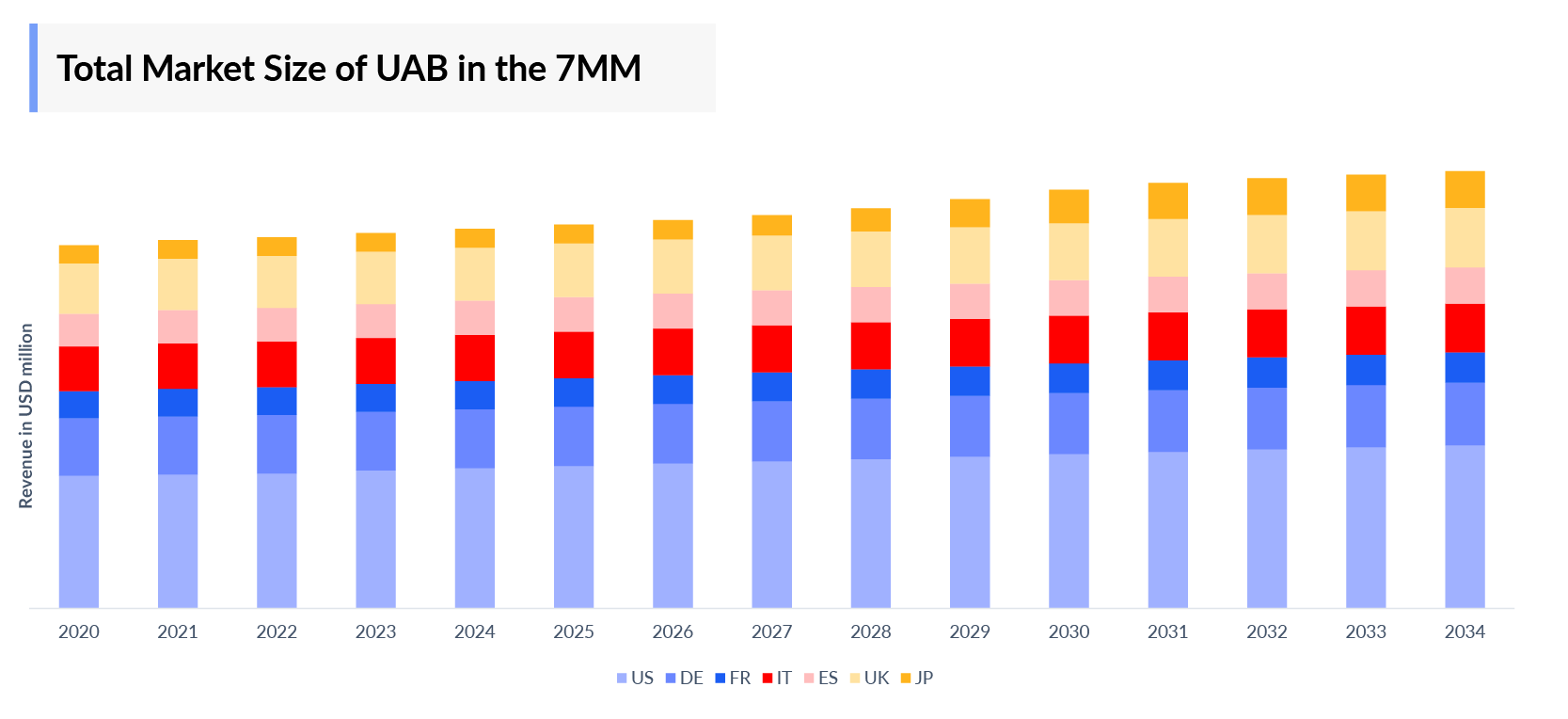
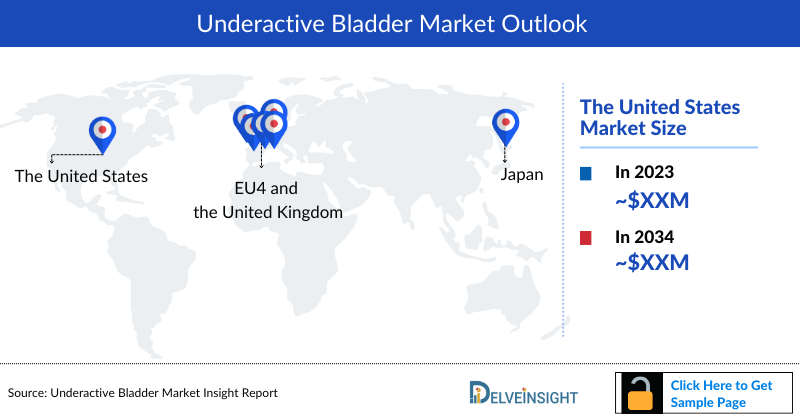
The total Underactive Bladder market size is analyzed for individual countries (the United States Market, EU4 (Germany, France, Italy, and Spain) and the UK market, and Japan). The United States accounted for a larger portion of the 7MM market for Underactive Bladder in 2023 due to the increasing prevalence of the condition and treatment demand. This dominance is predicted to continue with the potential early entry of new products.
Underactive Bladder Market Size by Therapies
The treatment market is limited of effective therapy and presents a vast opportunity for the key players to try their hands on the therapeutic development of the Underactive Bladder pipeline in the 7MM. The pharmacotherapy treatment paradigm of Underactive Bladder stays off-label as the history of the clinical trial in the Underactive Bladder treatment proves futile, with moieties being discontinued due to non-favorable results. The market size of 7MM for Underactive Bladder has been attributed to pharmacotherapy and catheterization, where pharmacotherapy has been vividly categorized into alpha antagonists, muscarinic agents, and others. Alpha antagonists refer to drugs like tamsulosin, while Muscarinic agents include bethanechol and carbachol.
The total market size of Underactive Bladder based on currently prescribed therapies as well as emerging therapies, in the US, is expected to grow by 2034. DelveInsight assessment of the emerging therapies indicates that the Underactive Bladder market will experience a slow steady shift in the market with the launch of several therapies during the forecast period (2024-2034).
Key Findings
- The market size of Underactive Bladder in the seven major markets was over further expected to increase by 2034 at a significant Compound Annual Growth Rate (CAGR) for the study period (2020–2034).
- The United States accounts for the largest market size for Underactive Bladder, in comparison to the EU4 (Germany, Italy, France, Spain) and the United Kingdom, and Japan, accounting for largest share in 2023.
- Germany boasted the largest market size among European countries, comprising with nearly USD 50 million of market in 2023. Projections suggest this lead will continue to grow, with Germany anticipated to dominate the market, followed closely by Italy and the UK, by the year 2034.
- The market size for Underactive Bladder in Japan was valued at around USD 120 million in 2023. It is expected that the market will increase mainly due to the launch of upcoming therapy during the forecast period (2024–2034).
- The launch of potential therapies, TAC-302, and others is expected to increase the market size in the coming years, assisted by the increase in the diagnosed prevalent population of Underactive Bladder.
Note: Detailed market segment assessment will be provided in the final report....
Underactive Bladder Drugs Uptake
This section focuses on the sales uptake of potential Underactive Bladder drugs that have recently launched or are anticipated to be launched in the Underactive Bladder market between 2020 and 2034. It estimates the market penetration of the Underactive Bladder drugs for a given country, examining their impact within and across classes and segments. It also touches upon the financial and regulatory decisions contributing to the drug’s probability of success (PoS) in the Underactive Bladder market.
For example, for TAC-302, we expect the drug uptake to be medium with a probability-adjusted peak share of nearly 10%, and years to the peak is expected to be 7 years from the year of launch in Japan.
Note: Detailed assessment of drug uptake will be provided in the full report on Underactive Bladder...
Underactive Bladder Pipeline Development Activities
The report provides insights into Underactive Bladder clinical trials within Phase II and III stages. It also analyzes Underactive Bladder Companies involved in developing targeted therapeutics.
Pipeline Development Activities
The report covers information on collaborations, acquisition and merger, licensing, patent details, and other information for emerging Underactive Bladder therapies.
KOL Views
To keep up with current Underactive Bladder market trends and fill gaps in secondary findings, we interview KOLs and SMEs working in the Underactive Bladder domain. Their opinion helps understand and validate current and emerging therapies and treatment patterns or Underactive Bladder market trends. This will support the clients in potential upcoming novel treatments by identifying the overall scenario of the market and the Underactive Bladder unmet needs.
Underactive Bladder: KOL Insights
DelveInsight’s analysts connected with 50+ KOLs to gather insights; however, interviews were conducted with 15+ KOLs in the 7MM. These KOLs were from organizations, institutes, and hospitals, such as Department of Medicine, University of Pittsburgh, Pittsburgh, PA, US; Department of Urology, Hannover Medical School, Hannover, Germany; Southmead Hospital, United Kingdom; Department of Urology, University of Bristol, Bristol, UK; Department of Urology, URI, IRCCS Ospedale San Raffaele, Milan, Italy; Department of Urology, La Fe University and Polytechnic Hospital, Valencia, Spain; Department of Urology, Sakurajyuji Hospital, Japan; and others.
“No medication is officially recommended for Underactive Bladder in the United Kingdom, however, there is observed utilization of off-label medications for managing the condition.”
Note: Detailed assessment of KOL Views will be provided in the full report of Underactive Bladder...
Qualitative Analysis
We perform Qualitative and market Intelligence analysis using various approaches, such as SWOT analysis, and Conjoint Analysis. In the SWOT analysis, strengths, weaknesses, opportunities, and threats in terms of disease diagnosis, patient awareness, patient burden, competitive landscape, cost-effectiveness, and geographical accessibility of therapies are provided. These pointers are based on the Analyst’s discretion and assessment of the patient burden, cost analysis, and existing and evolving treatment landscape.
Conjoint Analysis is done to analyze multiple approved and emerging therapies based on relevant attributes such as safety, efficacy, frequency of administration, route of administration, and order of entry. Scoring is given based on these parameters to analyze the effectiveness of therapy.
Further, the therapies’ safety is evaluated wherein the acceptability, tolerability, and adverse events are majorly observed, and it sets a clear understanding of the side effects posed by the drug in the trials. In addition, the scoring is also based on the route of administration, order of entry and designation, probability of success, and the addressable patient pool for each therapy. According to these parameters, the final weightage score and the ranking of the emerging therapies are decided.
Note: Detailed assessment of SWOT analysis and conjoint analysis will be provided in the full report of Underactive Bladder...
Underactive Bladder Market Access and Reimbursement
Reimbursement is a crucial point for any drug after its approval. Many drugs or therapies are not properly recognized by the reimbursement body and may fail to get reimbursed or their reimbursement process gets delayed.
DelveInsight’s ‘Underactive Bladder Market Insights, Epidemiology, and Market Forecast – 2034’ report provides a descriptive overview of the market access and reimbursement scenario of Underactive Bladder.
This section includes a detailed analysis of the country-wise healthcare system for each therapy, enlightening the market access, reimbursement policies, and health technology assessments. The report further provides detailed insights on the country-wise accessibility and reimbursement scenarios, cost-effectiveness scenario of approved therapies, programs making accessibility easier and out-of-pocket costs more affordable, insights on patients insured under federal or state government prescription drug programs, etc.
Note: Detailed assessment of Market Access and Reimbursement will be provided in the full report on Underactive Bladder...
Scope of the Underactive Bladder Market Report
- The report covers a segment of key events, an executive summary, descriptive overview of Underactive Bladder, explaining its causes, signs and symptoms, pathogenesis, and currently available therapies
- Comprehensive insight has been provided into the epidemiology segments and forecasts, the future growth potential of diagnosis rate, disease progression along with treatment guidelines
- Additionally, an all-inclusive account of both the current and emerging therapies along with the elaborative profiles of late-stage and prominent therapies will have an impact on the current treatment landscape
- A detailed review of the Underactive Bladder market; historical and forecasted market size, market share by therapies, detailed assumptions, and rationale behind our approach is included in the report, covering the 7MM drug outreach
- The report provides an edge while developing business strategies, by understanding trends, through SWOT analysis and expert insights/KOL views, patient journey, and treatment preference that help in shaping and driving the 7MM Underactive Bladder market
Underactive Bladder Report Insights
- Underactive Bladder Patient Population
- Underactive Bladder Therapeutic Approaches
- Underactive Bladder Pipeline Analysis
- Underactive Bladder Market Size and Trends
- Existing and future Market Opportunity
- Underactive Bladder Drugs Market
Underactive Bladder Report Key Strengths
- 11 Years Forecast
- 7MM Coverage
- Underactive Bladder Epidemiology Segmentation
- Key Cross Competition
- Conjoint analysis
- Underactive Bladder Drugs Uptake
- Key Underactive Bladder Market Forecast Assumptions
Underactive Bladder Report Assessment
- Current Underactive Bladder Treatment Practices
- Underactive Bladder Unmet Needs
- Underactive Bladder Pipeline Product Profiles
- Underactive Bladder Market Attractiveness
- Qualitative Analysis (SWOT and Conjoint Analysis)
- Underactive Bladder Market Drivers
- Underactive Bladder Market Barriers
Key Questions Answered In The Underactive Bladder Market Report:
Underactive Bladder Market Insights:
- What was the Underactive Bladder total market size, the market size by therapies, and market share (%) distribution in 2020, and how it would all look in 2034? What are the contributing factors for this growth?
- What are the unmet needs are associated with the current treatment market of Underactive Bladder?
- How are emerging therapies going to contribute to the market of Underactive Bladder after approval?
- Which drug is going to be the largest contributor in 2034?
- What are the pricing variations among different geographies for approved and off-label therapies?
- How would the market drivers, barriers, and future opportunities affect the market dynamics and subsequent analysis of the associated trends?
Underactive Bladder Epidemiology Insights:
- What are the disease risk, burden, and unmet needs of Underactive Bladder? What will be the growth opportunities across the 7MM concerning the patient population of Underactive Bladder?
- What is the historical and forecasted Underactive Bladder patient pool in the United States, EU4 (Germany, France, Italy, and Spain) the United Kingdom, and Japan?
- Why do only limited patients appear for diagnosis? Why is the current year diagnosis rate not high?
- What factors are affecting the diagnosis and treatment of the indication?
Current Underactive Bladder Treatment Scenario, Marketed Drugs, and Emerging Therapies:
- What are the current options for the treatment of Underactive Bladder?
- What are the current treatment guidelines for the treatment of Underactive Bladder in the US and Europe?
- How many companies are developing therapies for the treatment of Underactive Bladder?
- How many emerging therapies are in the mid-stage and late stage of development for the treatment of Underactive Bladder?
- What are the recent novel therapies, targets, mechanisms of action, and technologies developed to overcome the limitation of existing therapies?
- What are the key designations that have been granted for the emerging therapies for Underactive Bladder?
- Patient acceptability in terms of preferred treatment options as per real-world scenarios?
- What are the country-specific accessibility issues of expensive, recently approved therapies? Focus on reimbursement policies.
- What are the 7MM historical and forecasted market of Underactive Bladder?
Reasons to buy Underactive Bladder Market Forecast Report
- The report will help in developing business strategies by understanding the latest trends and changing treatment dynamics driving the Underactive Bladder Market
- Insights on patient burden/disease prevalence, evolution in diagnosis, and factors contributing to the change in the epidemiology of the disease during the forecast years
- To understand the existing market opportunity in varying geographies and the growth potential over the coming years.
- Distribution of historical and current patient share based on real-world prescription data along with reported sales of approved products in the US, EU4 (Germany, France, Italy, and Spain), the United Kingdom, and Japan.
- Identification of strong upcoming players in the market will help in devising strategies that will help in getting ahead of competitors.
- Detailed analysis and ranking of class-wise potential current and emerging therapies under the Conjoint analysis section to provide visibility around leading classes
- Highlights of Access and Reimbursement policies of approved therapies, barriers to accessibility of off-label expensive therapies, and patient assistance programs
- To understand the perspective of Key Opinion Leaders’ around the accessibility, acceptability, and compliance-related challenges of existing treatment to overcome barriers in future.
- Detailed insights on the unmet need of the existing market so that the upcoming players can strengthen their development and launch strategy
Frequently Asked Questions
1. What is the prognosis for individuals with Underactive Bladder?
The prognosis for Underactive Bladder depends on various factors, including the underlying cause, severity of symptoms, and response to treatment. While Underactive Bladder can significantly impact quality of life, appropriate management strategies can help improve bladder function and alleviate symptoms for many individuals.
2. What are the challenges in managing Underactive Bladder?
Managing Underactive Bladder presents challenges in accurate diagnosis due to overlapping symptoms, diverse patient populations, and limited treatment options. Medications commonly used for Underactive Bladder may have adverse effects and limited efficacy, while the condition's psychosocial impact adds complexity to management strategies. Tailoring treatment plans to individual needs and addressing psychosocial aspects are crucial for effective Underactive Bladder management.
3. Which region is expected to show the most lucrative growth in the Underactive Bladder treatment market?
DelveInsight projects that the United States will emerge as one of the most profitable regions for the growth of the Underactive Bladder treatment market.
4. How will the Underactive Bladder Market and Epidemiology Forecast Report benefit the clients?
The report will provide comprehensive insights into the current Underactive Bladder market landscape, emerging therapies, competitive dynamics, regulatory requirements, and market access considerations, enabling informed decision-making, strategic planning, and optimization of business strategies to capitalize on market opportunities and drive growth.