Uterine fibroids Market Summary
Uterine Fibroids Insights and Trends
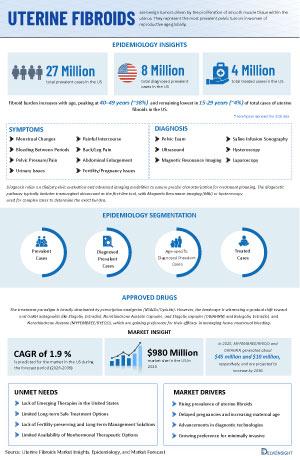
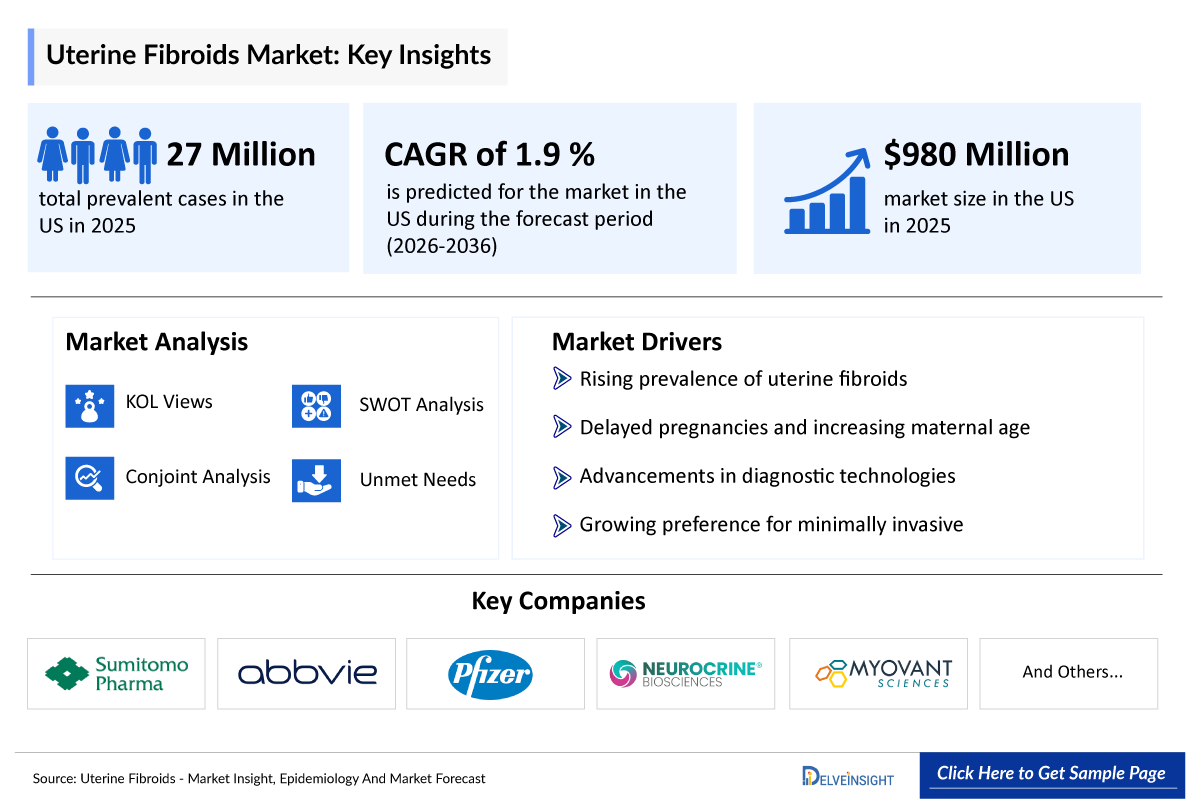
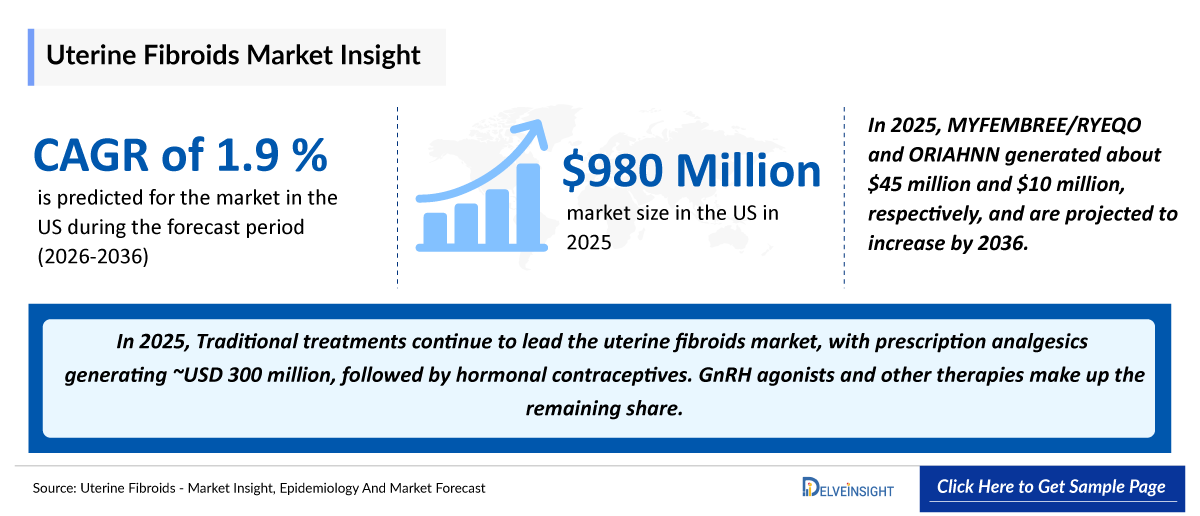
- According to Delveinsight analysis, the uterine fibroids market in the United States was valued at approximately USD 980 million in 2025, reflecting a steady CAGR of 1.9%.
- Uterine fibroids reported approximately 27 million prevalent cases and around 8 million diagnosed prevalent cases in the US.
- The treatment paradigm is heavily dominated by prescription analgesics (NSAIDs/Opioids). However, the landscape is witnessing a gradual shift toward oral GnRH antagonists like Elagolix, Estradiol, Norethindrone Acetate Capsules and Elagolix capsules (ORIAHNN) and Relugolix, Estradiol, and Norethindrone Acetate (MYFEMBREE/RYEQO) which are gaining preference for their efficacy in managing heavy menstrual bleeding.
- Significant gaps persist as current medical therapies focus on temporary symptom control rather than long-term disease management. There is an urgent unmet need for innovative, non-surgical, disease-modifying therapies that can safely manage symptoms without affecting fertility or requiring treatment interruption, especially as the current pipeline lacks transformative candidates.
- In 2025, in the US, the highest number of uterine fibroids cases was observed in the 40–49 age group (~3,000,000), while the lowest was reported in the 15–29 age group (~360,000).
- Approximately 50% of diagnosed women in the US are currently receiving treatment for uterine fibroids, reflecting a significant treated patient pool of 4 million cases reported in 2025. This expansion is supported by a shift toward oral combination therapies that incorporate "add-back" technology to improve patient tolerability and delay the need for invasive surgical procedures like hysterectomy.
- The lack of durable, fertility-preserving medical therapies and high recurrence rates after treatment limit long-term disease control and sustained treatment use.
- The invasive nature and fertility impact of surgical procedures, particularly hysterectomy, contribute to treatment hesitancy and delay intervention.
- The emergence of novel oral formulations is expected to improve patient compliance; however, the lack of late-stage pipeline candidates with novel mechanisms of action remains a challenge. While hormonal contraceptives and GnRH agonists maintain a presence, the therapeutic focus is transitioning toward high-efficacy, long-acting suppression technologies.
Uterine Fibroids Market size and forecast
- 2025 Uterine Fibroids Market Size in the US: USD 980 million
- 2036 Projected Uterine Fibroids Market Size in the US: USD 1,220 million
- Market Growth Rate (2026–2036) in the US:1.9% CAGR
DelveInsight’s ‘Uterine Fibroids – Market Insights, Epidemiology and Market Forecast – 2036’ report delivers an in-depth understanding of uterine fibroids, historical and forecasted epidemiology, as well as the market trends in the United States.
The Uterine Fibroids market report delivers a comprehensive analysis of the current treatment landscape, including standards of care, clinical practices, and evolving therapeutic algorithms. It evaluates, uterine fibroids patient burden trends, revenue & market share dynamics, peak patient share & therapy uptake analysis, and provides an in-depth market size assessment, and growth rate projections (Historical & Forecast 2026 –2036) across global regions. The report highlights key unmet medical needs in uterine fibroids and maps the competitive and clinical landscape to uncover high-value opportunities, providing a clear outlook on future market growth potential.
Geography Covered
- North America: The United States
- Europe: Germany, France, Italy, and Spain and the UK
- Asia-Pacific: Japan
|
Study Period |
2022–2036 |
|
Historical Year |
2022–2025 |
|
Forecast Period |
2026–2036 |
|
Base Year |
2026 |
|
Geographies Covered |
|
|
Uterine Fibroids Market CAGR (USA) (Forecast period) |
1.9% (2026-2036) |
|
Uterine Fibroids Epidemiology Segmentation Analysis |
Patient Burden Assesment
|
|
Uterine Fibroids Companies |
|
|
Uterine Fibroids Therapies |
and more |
|
Uterine Fibroids Epidemiology Segmentation Analysis |
Segmented by
|
|
Analysis |
|
Uterine Fibroids Understanding and Treatment Algorithm
Uterine Fibroids Overview and Diagnosis
Uterine fibroids, also known as leiomyomas or myomas, are benign tumors driven by the proliferation of smooth muscle tissue within the uterus. They represent the most prevalent pelvic tumors in women of reproductive age globally. The disease is characterized by extreme heterogeneity in size, number, and anatomical location, unfolding as a chronic condition that can range from completely asymptomatic to severe, life-altering symptomatic presentations. While estrogen and progesterone drive their growth, the clinical narrative is dominated by heavy menstrual bleeding, pelvic pressure, and reproductive complications such as infertility or pregnancy loss.
Diagnosis relies on clinical pelvic evaluation and advanced imaging modalities to ensure precise characterization for treatment planning. The diagnostic pathway typically includes transvaginal ultrasound as the first-line tool, with Magnetic Resonance Imaging (MRI) or hysteroscopy used for complex cases to determine the exact burden. Early recognition is essential to prevent secondary complications like iron-deficiency anemia and to manage bulk-related symptoms.
Further details are provided in the report.
Current Uterine Fibroids Treatment Landscape
The overall Uterine Fibroids treatment landscape in the United States is centered on managing symptoms through hormonal modulation and symptomatic relief, with a growing emphasis on oral non-surgical alternatives. Key standard innovations in current practice include Elagolix, Estradiol, Norethindrone Acetate Capsules, and Elagolix capsules (ORIAHNN) and Relugolix, Estradiol, and Norethindrone Acetate (MYFEMBREE/RYEQO), which represent the first generation of oral GnRH receptor antagonists approved to manage heavy menstrual bleeding (HMB).
In addition to these targeted therapies, the market relies heavily on prescription analgesics (NSAIDs/Opioids) for pain management and hormonal contraceptives for cycle regulation. Other therapeutic options such as GnRH agonists (e.g., LUPRON DEPOT) and antifibrinolytics like Tranexamic acid continue to play a role in the treatment algorithm.
Further details related to country-based variations are provided in the report.
Uterine Fibroids Unmet Needs
The section “unmet needs of uterine fibroids” outlines the critical gaps between the current state of patient care, diagnosis, and the ideal & effective management of the disease. It highlights the obstacles experienced by patients, clinicians, and researchers and identifies potential solutions for future progress.
- Lack of Emerging Therapies in the United States
- Limited Long-term Safe Treatment Options
- Lack of Fertility-preserving and Long-term Management Solutions
- Limited Availability of Nonhormonal Therapeutic Options
and others…..
Note: Comprehensive unmet needs insights in uterine fibroids and their strategic implications are provided in the full report.
Uterine Fibroids Epidemiology
Key Findings from Uterine Fibroids Epidemiological Analysis and Forecast
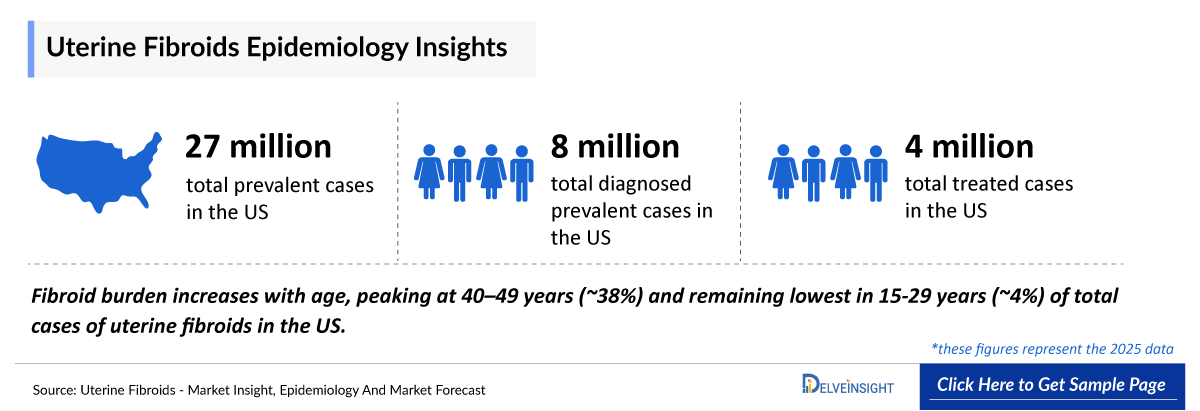
- The Uterine Fibroids prevalent population represents a massive disease burden in the United States, contributing approximately 27 million cases in 2025. This high volume underscores the widespread nature of the condition and its significant impact on the women's healthcare infrastructure.
- In 2025, the US reported approximately 8 million diagnosed prevalent cases. This reflects an increasing diagnosis rate attributed to improved clinical awareness and the wider use of advanced diagnostic modalities like high-resolution ultrasound and MRI during routine screenings.
- In 2025, Fibroid burden increases with age, peaking at 40–49 years (~38%) and remaining lowest in 15-29 years (~4%) of total cases of uterine fibroids in the US.
- Clinical segmentation reveals that the treated patient pool in the US reached approximately 4 million cases in 2025. This population predominantly seeks medical intervention for the management of heavy menstrual bleeding and associated pelvic pain, highlighting a critical need for effective long-term therapy options.
Uterine Fibroids Drug Analysis & Competitive Landscape
The Uterine Fibroids drug chapter provides a detailed, market-focused review of approved therapies. It covers mechanism of action, clinical trial data, regulatory approvals, patents, collaborations, strategic partnerships upcoming Key catalyst for each therapy, along with their advantages, limitations, and recent developments. This section offers critical insights into the uterine fibroids treatment landscape, supporting market assessment, competitive analysis, and growth forecasting for the uterine fibroids therapeutics market.
Approved Therapies for Uterine Fibroids
Elagolix, Estradiol, Norethindrone Acetate Capsules, and Elagolix capsules (ORIAHNN): AbbVie/Neurocrine Biosciences
ORIAHNN is a combination of elagolix, a GnRH receptor antagonist, estradiol, an estrogen, and norethindrone acetate, a progestin, indicated for the management of heavy menstrual bleeding associated with uterine leiomyomas (fibroids) in premenopausal women. ORIAHNN is an oral combination therapy of elagolix with estradiol and norethindrone acetate (E2/NETA), designed to reduce heavy menstrual bleeding while minimizing hypoestrogenic side effects.
ORIAHNN carries a boxed warning for an increased risk of thromboembolic and vascular events due to its estrogen and progestin components, which may limit its use in high-risk patients and influence treatment selection
In May 2020, AbbVie in collaboration with Neurocrine Biosciences received FDA approval for ORIAHNN (elagolix, estradiol, and norethindrone acetate) for up to 24 months of treatment. It is the first FDA-approved oral, nonsurgical therapy for managing heavy menstrual bleeding associated with uterine fibroids in premenopausal women.
|
Uterine Fibroids Marketed/Approved Therapies | ||||||
Drug/Therapy |
Company |
Indication |
Molecule Type |
MoA |
RoA |
Approval Year |
|
Elagolix, Estradiol, Norethindrone Acetate Capsules, and Elagolix capsules (ORIAHNN) |
AbbVie/ Neurocrine Biosciences |
Uterine fibroids |
Small molecule |
GnRH receptor antagonist |
Oral |
US: 2020 |
|
Relugolix, Estradiol, and Norethindrone Acetate (MYFEMBREE/ RYEQO) |
Sumitomo Pharma |
Heavy menstrual bleeding associated with uterine fibroids |
Small molecule |
GnRH receptor antagonist |
Oral |
US: 2021 EU: 2021 |
Uterine Fibroids Key Players, Market Leaders and Marketed Companies
- Sumitomo Pharma
- AbbVie
- Pfizer
- Neurocrine Biosciences
- Myovant Sciences
Uterine Fibroids Drug Updates
- In May 2021, Myovant Sciences and Pfizer announced that the US FDA approved MYFEMBREE (relugolix 40 mg, estradiol 1 mg, and norethindrone acetate 0.5 mg), the first once-daily oral treatment for heavy menstrual bleeding associated with uterine fibroids in premenopausal women, for up to 24 months. The approval was supported by Phase III LIBERTY 1 and LIBERTY 2 trial data published in the New England Journal of Medicine. Myovant and Pfizer jointly commercialize MYFEMBREE in the US, with commercial availability beginning in June 2021.
Uterine Fibroids Market Outlook
The current treatment landscape for uterine fibroids in the US is increasingly defined by the shift toward oral small-molecule GnRH receptor antagonists, which provide a critical non-surgical alternative for managing heavy menstrual bleeding. This segment is led by Elagolix, Estradiol, Norethindrone Acetate Capsules, and Elagolix capsules (ORIAHNN), developed by AbbVie and Neurocrine Biosciences (approved 2020), and Relugolix, Estradiol, and Norethindrone Acetate (MYFEMBREE/RYEQO) by Sumitomo Pharma and Pfizer (approved 2021). Both therapies utilize a targeted Mechanism of Action to suppress ovarian hormone production while incorporating "add-back" estrogen and progestin to maintain bone mineral density and improve patient tolerability. These advancements offer a more precise medical management approach compared to traditional symptomatic treatments, effectively reducing the reliance on invasive surgical procedures while addressing the specific needs of premenopausal women.
And more
- Overall, the launch of first-in-class therapies, improved genetic testing, and rising disease awareness are expected to drive steady growth in the US Uterine Fibroids market from 2022–2036, with strong commercial implications for marketed products and pipelines.
- The market size for uterine fibroids in the 7MM was valued at approximately USD 980 million in 2025.
- In 2025, MYFEMBREE/RYEQO and ORIAHNN generated about USD 45 million and USD 10 million, respectively, and are projected to increase by 2036.
- In 2025, Traditional treatments continue to lead the uterine fibroids market, with prescription analgesics generating ~USD 300 million, followed by hormonal contraceptives ~USD 260 million. GnRH agonists ~USD 180 million and other therapies ~USD 190 million make up the remaining share.
- There are currently no late-stage or emerging pipeline candidates, positioning the market as stable but "innovation-constrained." This underscores an urgent unmet need for novel, non-hormonal, or disease-modifying therapies.
Further details will be provided in the report.
Market Access and Reimbursement of Approved therapies in Uterine Fibroids
The report further provides detailed insights on the country-wise accessibility and reimbursement scenarios, cost-effectiveness scenario of approved therapies, programs making accessibility easier and out-of-pocket costs more affordable, insights on patients insured under federal or state government prescription drug programs, etc.
The United States
|
US Reimbursement of Therapies Approved for Uterine Fibroids | |
|
Drug/Therapy |
Access Program |
|
Relugolix, Estradiol, and Norethindrone Acetate (MYFEMBREE) |
Co-pay Assistance Program |
Reimbursement is a crucial factor that affects the drug’s access to the market. Often, the decision to reimburse comes down to the price of the drug relative to the benefit it produces in treated patients. To reduce the healthcare burden of these high-cost therapies, many payment models are being considered by payers and other industry insiders.
Drug Class/Insights into Leading Emerging and Marketed Therapies in Uterine Fibroids (2022–2036 Forecast)
The existing treatment landscape is dominated by conventional medical approaches, contributing to substantial healthcare utilization across diagnostics, procedures, and surgeries such as hysterectomy. However, pharmacologic options remain limited in scope, with only two approved oral hormonal combination therapies available. Furthermore, the absence of late-stage or emerging pipeline assets highlights a critical gap in innovation, underscoring the need for more effective and durable treatment strategies. .
The current SoC is symptom-driven and procedure-centric- Management of uterine fibroids in the US is individualized based on symptom burden, reproductive plans, fibroid characteristics, and patient preference. Approaches span watchful waiting, medical therapy, interventional radiology procedures, and surgery.
Asymptomatic or mildly symptomatic disease- For women with minimal symptoms, expectant management with periodic monitoring is common. Imaging surveillance and hemoglobin assessment are used when clinically indicated. No preventive pharmacologic strategy is routinely implemented.
Medical management of heavy menstrual bleeding- For symptomatic women—particularly those with heavy menstrual bleeding-the goal of medical therapy is bleeding reduction and anemia control rather than fibroid elimination.
Uterine Fibroids therapies Price Scenario & Trends
Pricing and analogue assessment of uterine fibroids therapies highlights evolving price dynamics structures. This section summarizes the cost of approved treatments, closest and most approproiate analogue selection for therapies, and understanding of how pricing influences market access, adherence, and long-term uptake.
Pricing of Uterine Fibroids Approved Drugs
Relugolix, Estradiol, and Norethindrone Acetate (MYFEMBREE)- For cost estimation, MYFEMBREE (relugolix 40 mg, estradiol 1 mg, norethindrone acetate 0.5 mg) was assessed using its 2022 WAC list price of USD 1,034.96 per 28-day pack (~USD 37 per tablet) in the US. It is administered once daily. While the label allows treatment up to 24 months, a conservative 12-month duration was assumed for modeling, reflecting payer budgeting practices and real-world adherence.
Industry Experts and Physician Views for Uterine Fibroids
To keep up with uterine fibroids market trends, we take Key Opinion Leaders (KOLs) and Subject Matter Experts (SMEs) opinions working in the domain through primary research to fill the data gaps and validate our secondary research. Industry Experts were contacted for insights on the uterine fibroids, evolving treatment landscape, patient adherence to conventional therapies, therapy switching trends, drug adoption and uptake, accessibility challenges, and epidemiology and real-world prescription patterns in uterine fibroids, including MD, PhD, Instructor, Postdoctoral Researcher, Professor, Researcher, and others.
DelveInsight’s analysts connected with 8+ KOLs to gather insights at country level. Centers such as the Memorial Sloan Kettering Cancer Center, University of California San Francisco, State University of New York Upstate Medical University, etc. were contacted.
Their opinion helps understand and validate current uterine fibroids therapies, highlight unmet medical needs, provide epidemiological context, and support strategic decisions for market access, therapy adoption, and pipeline prioritization in uterine fibroids.
|
Region |
Key Opinion Leaders (KOLs) and Subject Matter Experts (SMEs) |
|
United States |
“Several studies have reported a significant association between arterial hypertension and uterine fibroids. Elevated diastolic blood pressure has been linked to an increased risk of fibroid development, independent of antihypertensive medication use.” |
|
Germany |
“Hysterectomy remains the definitive treatment for uterine fibroids, providing permanent symptom resolution. It is typically recommended for women with symptomatic fibroids who do not wish to preserve fertility and have not responded adequately to conservative treatments.” |
Qualitative Analysis: SWOT and Conjoint Analysis
We perform qualitative and market Intelligence analysis using various approaches, such as SWOT analysis and conjoint analysis.
In the SWOT analysis of uterine fibroids, strengths, weaknesses, opportunities, and threats in terms of disease diagnosis, patient awareness, patient burden, competitive landscape, cost-effectiveness, and geographical accessibility of therapies are provided.
Conjoint analysis based on relevant attributes such as safety, efficacy, frequency of administration, route of administration, and order of entry. Scoring is given based on these parameters to analyze the effectiveness of therapy.
The team of analysts analyzes promising therapies based on relevant attributes such as safety, efficacy, frequency of administration, route of administration, and order of entry. In efficacy, the trial’s primary and secondary outcome measures are evaluated, whereas the therapies’ safety is evaluated, wherein the acceptability, tolerability, and adverse events are majorly observed. In addition, the scoring is also based on the route of administration, order of entry, probability of success, and the addressable patient pool for each therapy. According to these parameters, the final weightage score and the ranking of the therapies are decided.
Scope of the Report
- The report covers a segment of key events, an executive summary, a descriptive overview of uterine fibroids, explaining their causes, signs and symptoms, pathogenesis, and currently available treatments.
- Comprehensive insight has been provided into the epidemiology segments and forecasts, the future growth potential of the diagnosis rate, and disease progression along treatment guidelines.
- Additionally, an all-inclusive account of the current treatments, along with the elaborative profiles of late-stage and prominent therapies, will have an impact on the current treatment landscape.
- A detailed review of the uterine fibroids market, historical and forecasted market size, market share by therapies, detailed assumptions, and rationale behind our approach is included in the report, covering the 7MM drug outreach.
- The report provides an edge while developing business strategies by understanding trends through SWOT analysis and expert insights/KOL views, patient journey, and treatment preferences that help in shaping and driving the 7MM uterine fibroids market.
Report Insights
- Uterine Fibroids Patient Population Forecast
- Uterine Fibroids Therapeutics Market Size
- Uterine Fibroids Pipeline Analysis
- Uterine Fibroids Market Opportunity (Current and forecasted)
Report Key Strengths
- Epidemiology-Based (Epi-based) Bottom-up Forecasting
- Artificial Intelligence (AI)-enabled Market Research Report
- 11-year forecast
- Uterine Fibroids Market Outlook (North America, Europe, Asia-Pacific)
- Uterine Fibroids Burden Trends (by geography)
- Uterine Fibroids Treatment Addressable Market (TAM)
- Uterine Fibroids Competitive Landscape
- Uterine Fibroids Major Companies Insights
- Uterine Fibroids Price Trends and Analogue Assessment
- Uterine Fibroids Therapies Drug Adoption/Uptake
- Uterine Fibroids Therapies Peak Patient Share analysis
Report Assessment
- Uterine Fibroids Current Treatment Practices
- Uterine Fibroids Unmet Needs
- Uterine Fibroids Clinical Development Analysis
- Uterine Fibroids Emerging Drugs Product Profiles
- Uterine Fibroids Market Attractiveness
- Uterine Fibroids Qualitative Analysis (SWOT and conjoint analysis)
FAQs
Market Insights
- What was the uterine fibroids market size, the market size by therapies, market share (%) distribution in 2025, and what would it look like by 2036? What are the contributing factors for this growth?
- What can be the future treatment paradigm of uterine fibroids?
- What are the disease risks, burdens, and unmet needs of uterine fibroids? What will be the growth opportunities across the 7MM concerning the patient population with uterine fibroids?
- Who is the major future competitor in the market, and how will the competitors affect their market share?
- What are the current options for the treatment of uterine fibroids? What are the current guidelines for treating uterine fibroids in the US, Europe, and Japan?
Reasons to Buy
- The report will help in developing business strategies by understanding the latest trends and changing treatment dynamics driving the uterine fibroids market.
- Bottom up forecasting builds from the affected population to product forecasts, delivering a robust, data driven approach ideal for new therapies and novel classes.
- Insights on patient burden/disease prevalence, evolution in diagnosis, and factors contributing to the change in the epidemiology of the disease during the forecast years.
- Understand the existing market opportunities in varying geographies and the growth potential over the coming years.
- Identifying strong upcoming players in the market will help devise strategies to help get ahead of competitors.
- Detailed analysis and ranking of class-wise potential current therapies under the conjoint analysis section to provide visibility around leading classes.
- To understand KOLs’ perspectives on the accessibility, acceptability, and compliance-related challenges of existing treatment to overcome barriers in the future.
- Detailed insights on the unmet needs of the existing market so that the upcoming players can strengthen their development and launch strategy.
- This Artificial Intelligence (AI) enabled report summarize and simplify complex datasets within the report into clear, actionable insights for stakeholders, investors, and healthcare providers, enabling faster, data driven decisions.


.png&w=256&q=75)
-pipeline.png&w=256&q=75)