
Vaccines Market
Vaccine Market by Type (Inactivated Vaccines, Live-Attenuated Vaccines, Subunit Vaccines, Recombinant Vaccines, Messenger RNA Vaccines, Toxoid Vaccines, Viral Vector Vaccines, and Combination Vaccines), Indication (Oncological Disorders, Viral Disease, and Bacterial Disease), Age Group (Adults and Pediatrics), End-User (Hospitals, Clinics, and Vaccination Centers), and Geography (North America, Europe, Asia-Pacific, and Rest of the World) is expected to grow at a steady CAGR forecast till 2032 owing to the increasing prevalence of infectious diseases, increasing emergence of new diseases, growing government immunization programs and public awareness, and growing advancement in vaccine technology.
The vaccines market was valued at USD 77,637 million in 2024, growing at a CAGR of 9.22% during the forecast period from 2025 to 2032 to reach USD 156,931 million by 2032. The increasing prevalence of infectious diseases, coupled with the emergence of new pathogens such as COVID-19 and Zika virus, has significantly heightened the global demand for vaccines as a preventive healthcare measure. Additionally, government-led immunization programs, supported by international organizations like WHO and GAVI, ensure widespread vaccination coverage, particularly in developing nations, driving market growth. Moreover, advancements in vaccine technology, including mRNA platforms and multivalent formulations, alongside robust R&D activities, have accelerated the development of innovative vaccines, further boosting the market. Thus, all the factors mentioned above collectively contribute to the positive growth of the vaccine market during the forecast period from 2025 to 2032.
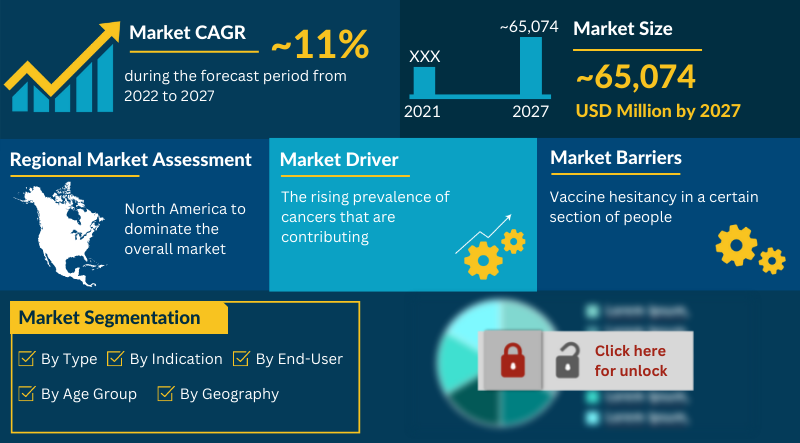
Vaccine Market Dynamics:
According to recent data from the World Health Organization (WHO, 2023), approximately one billion cases of seasonal influenza occur annually worldwide, including 3–5 million cases of severe illness. This persistent burden drives demand for influenza vaccines such as Fluzone® (inactivated influenza vaccine), FluMist® Quadrivalent (live attenuated influenza vaccine), Flublok® Quadrivalent (recombinant influenza vaccine), and others. Seasonal outbreaks, combined with the constant mutation of influenza viruses, reinforce the need for annual vaccinations to protect against evolving strains.
Additionally, WHO data from 2024 reports that cumulative global COVID-19 cases have reached 774 million. The rising number of cases has intensified efforts to vaccinate vulnerable populations, including older adults and individuals with underlying health conditions, to mitigate severe outcomes. The emergence of new variants, such as the JN.1 sub-variant of Omicron, highlights the need for updated vaccines to maintain efficacy against evolving strains. In response, several vaccines have been developed and authorized for emergency use worldwide, reflecting ongoing efforts to address this public health challenge. These factors collectively drive the vaccine market, sustaining demand for immunization programs, booster doses, and variant-specific formulations. Continuous innovation, large-scale government procurement, and growing public awareness further contribute to market expansion.
For instance, in August 2024, the U.S. Food and Drug Administration (FDA) approved and granted Emergency Use Authorization (EUA) for updated mRNA COVID-19 vaccines (2024-2025 formulation), incorporating a monovalent component targeting the Omicron variant KP.2 strain of SARS-CoV-2. These updated vaccines are designed to more effectively combat circulating variants, reducing the risk of severe illness, hospitalization, and death. The increased demand for these updated COVID-19 vaccines is expected to significantly boost the overall vaccine market.
Moreover, the emergence of new infectious diseases has further strengthened the vaccine market. For example, in May 2022, WHO reported a sudden outbreak of monkeypox in 12 member states where the virus is not endemic. Such outbreaks underscore the ongoing need for vaccine development and preparedness to address emerging public health threats.
The emergence and outbreak of new diseases such as Nipah virus, Hantavirus Pulmonary Syndrome, Monkeypox, COVID-19, and Oropouche virus often drive significant investments in research and development to create effective vaccines. These efforts spur innovation in vaccine platforms, including mRNA, viral vector, and protein subunit technologies. Governments, international health organizations, and pharmaceutical companies collaborate to accelerate vaccine approvals and expand manufacturing capacities to meet the growing global demand.
.png)
As a result, these factors are expected to drive the growth of the global vaccine market during the forecast period from 2025 to 2032. However, challenges such as the rising number of vaccine recalls and the high costs associated with production and development may pose slight obstacles to market expansion.
Vaccine Market Segment Analysis:
Vaccine Market by Type (Inactivated Vaccines, Live-Attenuated Vaccines, Subunit Vaccines, Recombinant Vaccines, Messenger RNA Vaccines, Toxoid Vaccines, Viral Vector Vaccines, and Combination Vaccines), Indication (Oncological Disorders, Viral Disease, and Bacterial Disease), Age Group (Adults and Pediatrics), End-User (Hospitals, Clinics, and Vaccination Centers), and Geography (North America, Europe, Asia-Pacific, and Rest of the World)
.png)
In the indication segment of the vaccine market, the viral disease category is estimated to grow at a CAGR of 9.05% during the forecast period from 2025 to 2032 to reach USD 67,140 million by 2030. Viral diseases are significantly driving the growth of the global vaccine market by increasing the demand for vaccines to prevent and control a wide range of infections. The rising incidence and emergence of viral diseases such as influenza, COVID-19, hepatitis, human papillomavirus (HPV), and measles necessitate continuous advancements in vaccination strategies. According to data from the World Health Organization (WHO), approximately 304 million people worldwide were living with hepatitis B and C in 2022.
As the global population remains exposed to various viral pathogens, vaccination continues to be one of the most cost-effective and efficient methods for preventing transmission and reducing disease burden. The rapid development and approval of vaccines, particularly in response to global health emergencies like the COVID-19 pandemic, have underscored the critical role of immunization in controlling viral outbreaks. For instance, in August 2024, the U.S. Food and Drug Administration (FDA) approved and granted Emergency Use Authorization (EUA) for updated mRNA COVID-19 vaccines (2024–2025 formulation), incorporating a monovalent component targeting the Omicron variant KP.2 strain of SARS-CoV-2. These updated vaccines are designed to more effectively combat circulating variants and provide better protection against severe outcomes.
This heightened focus on viral diseases has accelerated vaccine research and innovation, particularly in advanced platforms such as mRNA, viral vector, and protein subunit vaccines, which offer the flexibility to target a wide range of viral pathogens. Collaborative efforts between governments, pharmaceutical companies, and international organizations have further bolstered vaccine production capacities, ensuring that immunization remains a key tool in combating viral infections and driving market growth.
For example, in November 2023, the FDA approved Ixchiq, the first chikungunya vaccine for individuals aged 18 and older who are at increased risk of exposure to the virus. Such developments reinforce the expanding role of vaccines in addressing emerging infectious diseases.
Thus, these factors are expected to drive the growth of this segment, thereby boosting the overall global vaccine market.
North America is expected to dominate the overall vaccine market:
Among all the regions, North America is expected to dominate the vaccine market and is estimated to grow at a CAGR of 9.13% during the forecast period from 2025 to 2032 to reach USD 70,806 million by 2030. This growth can be attributed to the rising prevalence of cancers and the extensive vaccination programs conducted across the region, including those for influenza, COVID-19, and other viral diseases, which have driven robust demand for vaccines. Additionally, high awareness of vaccination benefits, coupled with strong government support and funding for vaccine research and public health initiatives, further strengthens market expansion.
According to recent data from the International Agency for Research on Cancer (IARC, 2024), the estimated number of new cancer cases in North America was 2.67 million in 2022, with projections expected to rise to 3.83 million by 2045. As cancer rates increase globally, particularly those linked to viral infections such as human papillomavirus (HPV)-related cervical cancer and hepatitis B-related liver cancer the demand for preventive vaccines is expected to grow. Vaccines like the HPV vaccine, which protects against high-risk virus strains known to cause cervical and other cancers, have proven effective in reducing cancer incidence, further driving vaccination campaigns across the region.
Additionally, high childhood vaccination coverage highlights the sustained demand for vaccines. According to recent data from the Centers for Disease Control and Prevention (CDC, 2024), vaccination rates in North America for children by 24 months of age were:
- 80.4% for Diphtheria, Tetanus, and Pertussis (DTP)
- 92.5% for Polio
- 90.8% for Measles, Mumps, and Rubella (MMR)
- 91.4% for Hepatitis B
- 90.3% for Chickenpox
These high immunization rates underscore the need for efficient, large-scale vaccine production to meet ongoing demand, further boosting the regional vaccine market.
Moreover, strategic initiatives by key industry players, such as business expansions, regulatory approvals, partnerships, and acquisitions, are expected to drive market growth. For instance, in April 2024, Bavarian Nordic A/S announced the availability of JYNNEOS®, the only FDA-approved mpox vaccine, in the U.S. JYNNEOS® is approved for the prevention of smallpox and mpox disease in adults aged 18 and older who are at high risk of infection.
Further reinforcing market expansion, regulatory approvals for new vaccines continue to accelerate growth. In August 2024, Emergent BioSolutions Inc. announced that the U.S. Food and Drug Administration (FDA) had approved a supplemental Biologics License Application (sBLA) to expand the indication for ACAM2000® (Smallpox and Mpox (Vaccinia) Vaccine, Live) to include the prevention of mpox disease in high-risk individuals.
Thus, these factors are expected to drive significant growth in the North American vaccine market.
Vaccine Market Key Players:
Some of the key market players operating in the vaccine market include GlaxoSmithKline, Bharat Biotech, AstraZeneca, Bavarian Nordic A/S, BioNTech, Sanofi, Merck & Co., Inc., Pfizer Inc., Moderna, Meiji Holdings Co., Ltd., EMERGENT, CSL Limited, Johnson & Johnson, VBI Vaccines Inc., Valneva SE., Novavax, CanSinoBIO, Biokangtai, Dynavax Technologies, Zhi Fei Biological, and others.
Recent Developmental Activities in the Vaccine Market:
- In July 2026, SK bioscience announced its leadership role in the Research Optimization & Trial Outcome Recommender (ROTOR) project, an AI-powered evidence synthesis initiative funded by the Gates Foundation. Collaborating with PATH, Slalom, and SK AX, the company will build a scalable platform that uses AI to analyze extensive clinical and immunogenicity datasets. The tool is designed to reduce uncertainty in R&D decision-making, optimize trial designs, and accelerate vaccine development. Initially focusing on next-generation injectable rotavirus vaccines, the platform aims to strengthen clinical capabilities and expand vaccine equity in low- and middle-income nations.
- In July 2026, clinical-stage vaccine company AdJane reported the first successful human clinical validation of its native Outer Membrane Vesicle (nOMV) platform, following the publication of Phase I data in the journal Vaccines. The randomized, placebo-controlled study of 40 healthy adults demonstrated that its intranasal nOMV vaccine candidate safely induced dose-dependent systemic immunity and crucial mucosal immune responses directly in the nasal tract. This proof-of-concept milestone bridges a critical gap left by traditional injectable vaccines and highlights the platform's potential for rapid scalability in pandemic preparedness and respiratory infectious disease control.
- In September 2024, AstraZeneca announced the approval of the FDA approval of FluMist, the only influenza vaccine approved for self- or caregiver-administration at home.
- In January 2023, Bharat Biotech successfully launched iNCOVA® (an indigenously developed nasal COVID-19 vaccine) for people aged above 18 years
|
Report Metrics |
Details |
|
Study Period |
2021 to 2030 |
|
Base Year |
2023 |
|
Forecast Period |
2024 to 2030 |
|
CAGR | |
|
Market Size | USD 65,074.86 million by 2030 |
|
Key Companies | GlaxoSmithKline, Bharat Biotech, AstraZeneca, Bavarian Nordic A/S, BioNTech, Sanofi, Merck & Co., Inc, Pfizer Inc, Moderna, Meiji Holdings Co., Ltd., EMERGENT, CSL Limited, Johnson & Johnson, VBI Vaccines Inc., Valneva SE., Novavax, CanSinoBIO, Biokangtai, Dynavax Technologies, Zhi Fei Biological |
Key takeaways from the Vaccine Market report study
- Market size analysis for current vaccine size (2024), and market forecast for 8 years (2025 to 2032)
- Top key product/technology developments, mergers, acquisitions, partnerships, and joint ventures happened over the last 3 years
- Key companies dominating the vaccine market.
- Various opportunities available for the other competitors in the vaccine market space.
- What are the top-performing segments in 2024? How these segments will perform in 2032?
- Which are the top-performing regions and countries in the current vaccine market scenario?
- Which are the regions and countries where companies should have concentrated on opportunities for vaccine market growth in the coming future?
Target audience who can be benefited from this Vaccine Market report study
- Vaccine product providers
- Research organizations and consulting companies
- Vaccine -related organizations, associations, forums, and other alliances
- Government and corporate offices
- Start-up companies, venture capitalists, and private equity firms
- Distributors and traders dealing in vaccine
- Various end-users who want to know more about the vaccine market and the latest technological developments in the vaccine market.
Frequently Asked Questions for the Vaccine Market:
1. What are vaccines?
- A vaccine is a biological preparation that provides immunity to a specific infectious disease by stimulating the body’s immune system to recognize and fight the pathogen, typically by introducing a harmless component of the pathogen, such as an inactivated virus or a piece of its genetic material.
2. What is the market for vaccines?
- The vaccines market was valued at USD 77,637 million in 2024, growing at a CAGR of 9.22% during the forecast period from 2025 to 2032 to reach USD 156,931 million by 2032.
3. What are the drivers for the global vaccine market?
- The increasing prevalence of infectious diseases, coupled with the emergence of new pathogens such as COVID-19 and Zika virus, has significantly heightened the global demand for vaccines as a preventive healthcare measure. Additionally, government-led immunization programs, supported by international organizations like WHO and GAVI, ensure widespread vaccination coverage, particularly in developing nations, driving market growth. Moreover, advancements in vaccine technology, including mRNA platforms and multivalent formulations, alongside robust R&D activities, have accelerated the development of innovative vaccines, further boosting the market. Thus, all the factors mentioned above collectively contribute to the positive growth of the vaccine market during the forecast period from 2025 to 2032.
4. Who are the key players operating in the global vaccine market?
- Some of the key market players operating in the vaccine are GlaxoSmithKline, Bharat Biotech, AstraZeneca, Bavarian Nordic A/S, BioNTech, Sanofi, Merck & Co., Inc., Pfizer Inc., Moderna, Meiji Holdings Co., Ltd., EMERGENT, CSL Limited, Johnson & Johnson, VBI Vaccines Inc., Valneva SE., Novavax, CanSinoBIO, Biokangtai, Dynavax Technologies, Zhi Fei Biological, and others.
5. Which region has the highest share in the global vaccine market?
- Among all the regions, North America is expected to dominate the vaccine market and is estimated to grow at a CAGR of 9.13% during the forecast period from 2025 to 2032 to reach USD 70,806 million by 2030. This growth can be attributed to the rising prevalence of cancers and the extensive vaccination programs conducted across the region, including those for influenza, COVID-19, and other viral diseases, which have driven robust demand for vaccines. Additionally, high awareness of vaccination benefits, coupled with strong government support and funding for vaccine research and public health initiatives, further strengthens market expansion.



%20Vaccines.png&w=256&q=75)

