Vascular Dementia Market Summary
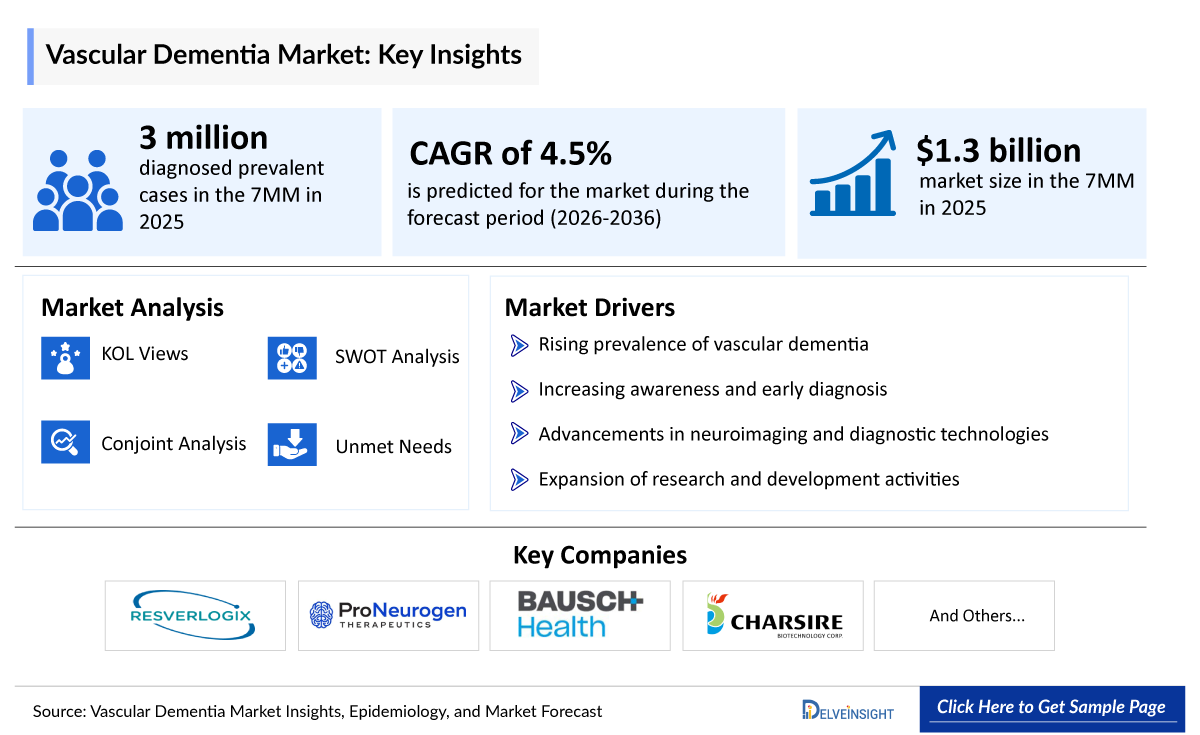
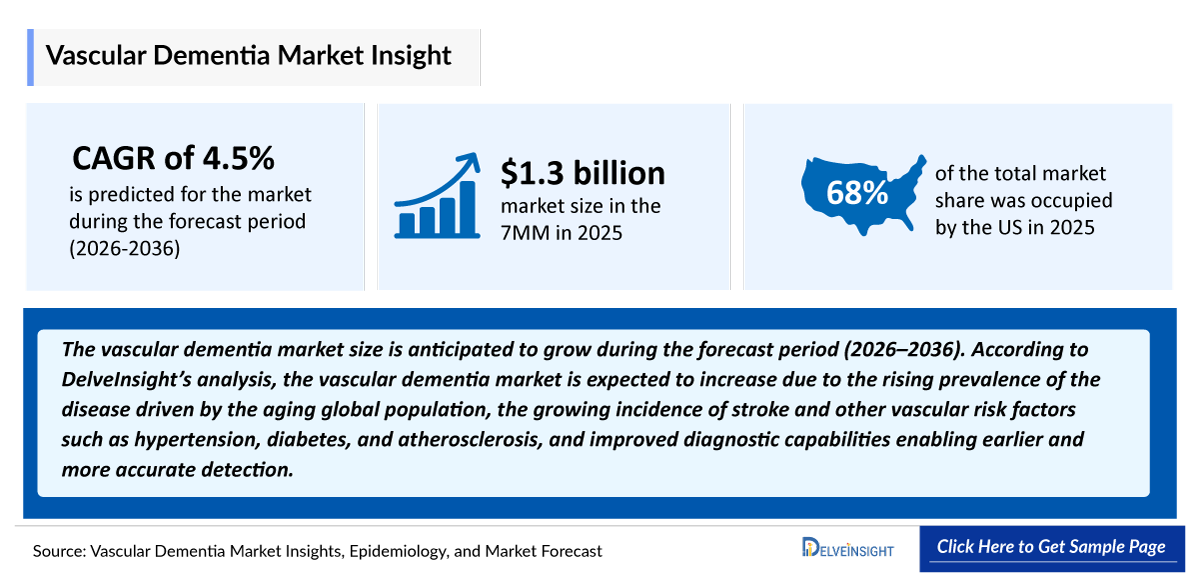
- The Vascular Dementia Treatment Market Size across the 7MM is USD 1,300 million in 2025 at a CAGR of ~4.5%, driven by increasing disease recognition, improved diagnostic practices, and growing research activity supporting the development of novel therapeutic approaches.
- The leading Vascular Dementia Companies include Resverlogix, ProNeurogen, Bausch Health, Charsire Biotechnology, and others.
Vascular Dementia Market and Epidemiology Insights
- Significant unmet needs in Vascular dementia stem from the absence of approved therapies specifically approved for this indication, with current management largely relying on symptomatic and off-label approaches.
- The Vascular dementia market is expected to evolve gradually, with an emerging, mechanism-oriented pipeline targeting vascular dysfunction, inflammation, and cardiometabolic pathways is gradually strengthening future innovation in this space.
- The emerging Vascular Dementia Pipeline remains limited but increasingly mechanism-oriented, including agents such as Apabetalone by Resverlogix, BAC by Charsire Biotechnology, Rifaximin SSD by Bausch Health, PNA1 by ProNeurogen, and others, reflecting a growing focus on vascular modulation, epigenetic regulation, and cardiometabolic pathways that may influence cerebrovascular integrity and cognitive function, potentially shaping future therapeutic advancements in this indication.
- Management of vascular dementia primarily focuses on prevention and control of modifiable vascular risk factors, as no curative pharmacological treatment is currently available.
- In 2022, Research Charsire Biotechnology announced the successful development of a novel drug, BAC, for the treatment of alzheimer’s disease and vascular dementia.
Vascular dementia Market Size and Forecast
| 2025 Vascular dementia Market Size in the 7MM | USD 1,300 million |
| Vascular dementia Growth Rate (2026–2036) in the 7MM | ~4.5% CAGR |
Key Factors Driving the Growth of the Vascular Dementia Market
-
Rising Global Burden of Vascular Dementia
Vascular dementia is the second leading cause of dementia, and the growing global burden of cerebrovascular disease is expected to increase the number of patients requiring diagnosis, management, and supportive care.
-
Aging Global Population
The rapidly expanding elderly population is contributing to the increasing prevalence of dementia and age-related vascular conditions. As populations age, the number of individuals at risk of cognitive impairment associated with cerebrovascular disease is expected to rise.
-
Increasing Prevalence of Stroke
Stroke is a major contributor to vascular cognitive impairment and dementia. The increasing incidence of ischemic and hemorrhagic strokes is therefore expanding the population at risk of developing post-stroke cognitive impairment and vascular dementia.
-
Growing Burden of Cardiovascular Risk Factors
The rising prevalence of hypertension, diabetes, hypercholesterolemia, obesity, and cardiovascular disease is increasing the risk of vascular damage and subsequent cognitive decline. Management of these modifiable risk factors is increasingly recognized as an important component of dementia prevention.
-
Increasing Recognition of Vascular Contributions to Dementia
Greater understanding of the relationship between cerebrovascular disease and cognitive decline is increasing clinical attention toward vascular dementia. Vascular pathology can also coexist with Alzheimer's disease and other neurodegenerative conditions, further expanding the relevance of vascular dementia research.
-
Advances in Diagnostic Technologies
Improvements in MRI, CT imaging, vascular assessment, cognitive testing, and biomarker research are supporting more accurate identification of cerebrovascular abnormalities and cognitive impairment. Better diagnosis can facilitate earlier intervention and patient management.
-
Significant Unmet Medical Needs
There are currently no approved medicines specifically for vascular cognitive impairment and dementia, creating a substantial unmet need for disease-modifying and symptom-focused treatments. This gap is encouraging pharmaceutical and biotechnology companies to expand research activities.
DelveInsight's ‘Vascular Dementia Market Insights, Epidemiology and Market Forecast – 2036’ report delivers an in-depth understanding of Vascular dementia, historical and forecasted epidemiology, as well as the vascular dementia market trends in the United States, EU4 (Germany, Spain, Italy, and France), the United Kingdom, and Japan.
The Vascular Dementia Treatment Market Report delivers a comprehensive analysis of the current treatment landscape, including standards of care, clinical practices, and evolving therapeutic algorithms. It evaluates, vascular dementia patient burden trends, revenue & market share dynamics, peak patient share & therapy uptake analysis, and provides an in-depth market size assessment, and growth rate projections (Historical & Forecast 2022–2036) across the 7MM regions. The report highlights key unmet medical needs in vascular dementia and maps the competitive and clinical landscape to uncover high-value opportunities, providing a clear outlook on future market growth potential.
Scope of the Vascular Dementia Market Report | |
|
Study Period |
2022–2036 |
|
Historical Year |
2022–2025 |
|
Forecast Period |
2026–2036 |
|
Base Year |
2025 |
|
Geographies Covered |
|
|
Vascular dementia Market CAGR (Forecast period) | |
|
Vascular dementia Epidemiology Segmentation Analysis |
Patient Burden Assessment
|
|
Vascular dementia Companies |
|
|
Vascular Dementia Therapies |
|
|
Vascular Dementia Market |
Segmented by
|
|
Analysis |
|
Vascular Dementia Understanding
Vascular Dementia Overview
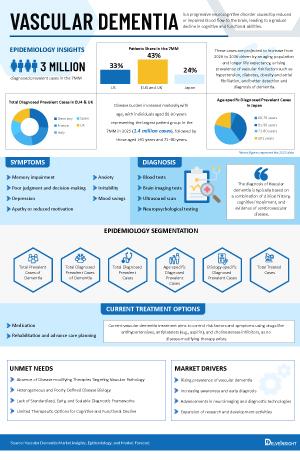
Vascular dementia is a progressive neurocognitive disorder caused by reduced or impaired blood flow to the brain, leading to a gradual decline in cognitive and functional abilities. It is recognized as the second most common form of dementia after Alzheimer’s disease, particularly among the elderly population. Despite its prevalence, Vascular dementia remains underdiagnosed and is often confused with Alzheimer’s disease due to overlapping clinical features; in many cases, both conditions may coexist.
Vascular Dementia Diagnosis
The diagnosis of Vascular dementia is typically based on a combination of clinical history, cognitive impairment, and evidence of cerebrovascular disease. A key feature supporting diagnosis is a history of stroke or multiple silent infarcts accompanied by a noticeable decline in cognitive function.
The disease often shows a characteristic “stepwise progression”, where sudden declines in cognition occur following vascular events, with periods of relative stability in between. In settings where advanced imaging is not available, clinical history, along with the presence of vascular risk factors and family history, may be sufficient for a probable diagnosis.
Further details are provided in the report.
Vascular dementia Treatment Landscape
Overall, the Vascular dementia treatment landscape remains highly fragmented, with no single therapy delivering consistent, long-term control of cognitive decline or disease burden across patients. Despite broad use of off-label cognitive agents and vascular risk pharmacotherapy, real-world experience indicates that many patients remain undertreated, cycle through multiple regimens, or discontinue due to limited efficacy, tolerability concerns, or symptom recurrence.
The complete absence of any FDA, EMA, PMDA, or MHRA-approved drug specifically for Vascular dementia sustains this fragmentation and continues to drive demand for simpler, more durable, and biologically targeted approaches that can move beyond cyclic symptomatic management. DelveInsight anticipates changes in the Vascular Dementia treatment landscape over the coming years, driven by emerging therapy Apabetalone from Resverlogix Corporation, which is projected to enter the market and has the potential to significantly influence future treatment strategies.
Further details related to country-based variations are provided in the report.
Vascular dementia Unmet Needs
The section “unmet needs of vascular dementia” outlines the critical gaps between the current state of patient care, diagnosis, and the ideal & effective management of the disease. It highlights the obstacles experienced by patients, clinicians, and researchers and identifies potential solutions for future progress.
- Absence of Disease-modifying Therapies Targeting Vascular Pathology
- Heterogeneous and Poorly Defined Disease Biology
- Lack of Standardized, Early, and Scalable Diagnostic Frameworks
- Limited Therapeutic Options for Cognitive and Functional Decline
- Inadequate Management of Neuropsychiatric and Behavioral Symptoms
- High Clinical Trial Failure Rates and Operational Complexity
and others…
Note: Comprehensive unmet needs insights in vascular dementia and their strategic implications are provided in the full report.
Vascular dementia Epidemiology
Key Findings from Vascular dementia Epidemiological Analysis and Forecast
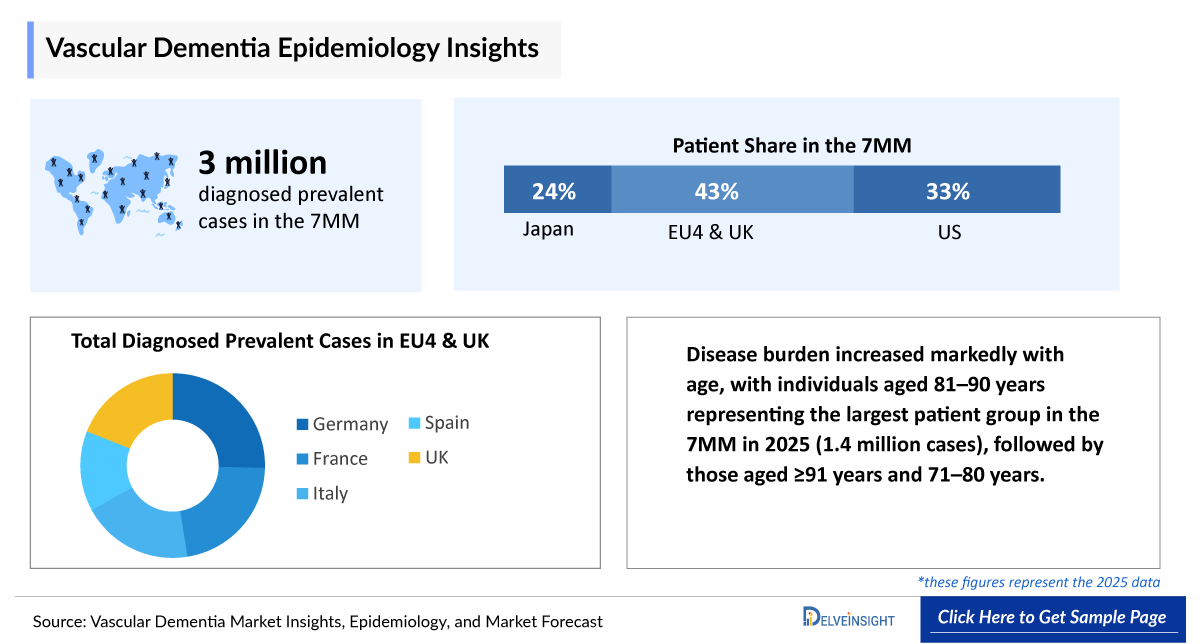
- The 7MM accounted for approximately 3 million diagnosed prevalent cases of vascular dementia in 2025, highlighting the substantial and growing burden of vascular cognitive impairment across major global healthcare markets.
- Disease burden increased markedly with age, with individuals aged 81–90 years representing the largest patient group in the 7MM in 2025 (1.4 million cases), followed by those aged =91 years (840,000 cases) and 71–80 years (660,000 cases). This trend underscores the strong association between advancing age and vascular dementia prevalence.
- According to DelveInsight’s estimates, there were 730,000 diagnosed prevalent cases of vascular dementia in Japan in 2025.
- Across the EU4 and the UK, small vessel disease (SVD) was the leading etiological contributor to vascular dementia in 2025, accounting for approximately 790,000 cases, substantially exceeding large vessel disease (LVD) and mixed etiologies. This finding highlights the dominant role of microvascular pathology in driving the overall disease burden.
Vascular Dementia Epidemiology Segmentation in the 7MM
- Total Prevalent Cases of Dementia
- Total Diagnosed Prevalent Cases of Dementia
- Total Diagnosed Prevalent Cases of Vascular dementia
- Age-specific Diagnosed Prevalent Cases of Vascular dementia
- Etiology-specific Diagnosed Prevalent Cases of Vascular dementia
- Total Treated Cases of Vascular dementia
Vascular Dementia Market Recent Breakthroughs and Developments
- In August 2026, a new study highlighted that avoiding smoking, hypertension, and diabetes in midlife was associated with nearly 13 additional years of life without dementia, reinforcing the importance of vascular risk-factor management in preventing vascular dementia.
- In August 2026, researchers at UCLA reported work investigating the cellular mechanisms involved in brain repair following vascular injury, with the study exploring intercellular interactions that could potentially identify new therapeutic targets for vascular dementia.
Vascular Dementia Drug Analysis & Competitive Landscape
The Vascular dementia drug chapter provides a detailed, market-focused review of approved therapies and the emerging Vascular Dementia pipeline across mid and late Phase clinical trials. It covers Vascular Dementia mechanism of action, clinical trial data, regulatory approvals, patents, collaborations, strategic partnerships upcoming Key catalyst for each therapy, along with their advantages, limitations, and recent developments.
This section offers critical insights into the vascular dementia treatment landscape, supporting market assessment, competitive analysis, and growth forecasting for the Vascular dementia therapeutics market.
Vascular Dementia Pipeline Analysis
-
Apabetalone: Resverlogix
Apabetalone is the world leader in a new class of drugs designed to regulate disease-associated proteins. Traditional therapeutics target a single, disease-causing factor with the intention of treating or curing complex and chronic illnesses. By inhibiting the action of BET proteins, apabetalone positively affects multiple disease-causing biological processes – leading to a new paradigm shift in the treatment of chronic disease.
Currently in Phase III shows significant reduction in cardiovascular events, including non-fatal MI, stroke, and death, with early and consistent benefit across MACE endpoints. As a selective inhibitor of the BET family of proteins, apabetalone has the ability to normalize dysregulated epigenetics that lie at the heart of many chronic diseases.
Competitive Landscape of Vascular Dementia Pipeline Drugs | ||||||
|
Drug Name |
Company |
Highest Phase |
Indication |
RoA |
MoA |
Anticipated Launch in the US |
|
Apabetalone |
Resverlogix |
Phase III |
Vascular dementia |
Oral |
BET inhibitor |
2032 |
|
BAC |
Charsire Biotechnology |
Phase II |
Vascular dementia |
Topical |
Undefined mechanism |
Information is available in the full report |
|
PNA1 |
ProNeurogen |
Phase II |
Vascular dementia |
SC |
Mas receptor agonist |
Information is available in the full report |
|
Rifaximin SSD |
Bausch Health |
Phase I/II |
Vascular dementia |
Oral |
PXR agonist |
Information is available in the full report |
|
Note: Launch insights are provisional and may change with future report updates or the occurrence of major key catalysts. To be continued in the final report. | ||||||
Vascular Dementia Market Outlook
The Vascular Dementia Market Outlook remains encouraging, driven by the rare disease designation, high unmet clinical need, and growing awareness leading to earlier diagnosis. Current care in vascular dementia is largely symptomatic and vascular risk-focused, aimed at slowing disease progression and preventing further cerebrovascular injury rather than reversing the underlying disease biology.
No drug is specifically approved for vascular dementia in the US (FDA), EU (EMA), UK (MHRA), or Japan (PMDA); pharmacological management relies entirely on off-label use of Alzheimer’s disease therapeutics, secondary stroke prevention agents, and regionally accepted neuroprotective compounds.
Overall, in vascular dementia, the launch of targeted Vascular Dementia Therapies, improved diagnosis through advanced neuroimaging and biomarker-based assessments, and increasing disease awareness are expected to drive steady growth in the 7MM Vascular Dementia Treatment Market from 2025–2036, with strong commercial implications for emerging pipelines.
Key findings from Vascular Dementia Market Forecast Report
- In 2025, the Vascular Dementia Treatment Market in the US was estimated at approximately USD 890 million, representing the dominant share of around 70% of the total 7MM market.
- In 2025, EU4 and the UK collectively contributed approximately USD 255 million to the Vascular Dementia Treatment Market, accounting for around 20% of the total 7MM revenues.
- In 2025, Japan accounted for approximately USD 165 million in Vascular Dementia Treatment Market revenues, representing a ~13% share of the total 7MM market.
- A notable recent shift in the Vascular Dementia Treatment Market Landscape is the gradual expansion of the pipeline, with emerging agents such as Apabetalone, Rifaximin SSD, SNP318, PNA5, and ACP-01. These investigational therapies are anticipated to play a pivotal role in transforming future management approaches by targeting underlying vascular and neurovascular pathways.
Vascular Dementia Companies
- Resverlogix
- ProNeurogen
- Bausch Health
- Charsire Biotechnology and others
Further details will be provided in the report….
Vascular Dementia Drug Class/Insights into Leading Emerging Therapies (2022–2036 Forecast)
The Vascular Dementia Treatment Landscape is rapidly evolving, with a diverse pipeline spanning small molecules, neuroprotective agents, anti-inflammatory therapies, cholinesterase inhibitors, and vascular risk-modifying approaches, collectively aiming to deliver more targeted, durable, and disease-modifying outcomes beyond conventional symptomatic management.
Cholinesterase inhibitors (commonly used in Alzheimer’s disease) may provide mild to moderate benefits in slowing cognitive decline, especially in mixed dementia cases. However, they can cause side effects such as gastrointestinal issues, bradycardia, sleep disturbances, and weight loss.
Memantine, an NMDA receptor antagonist, is also used off-label and may help improve symptoms in some patients, with common side effects including dizziness and headache. Newer therapies such as monoclonal antibodies (e.g., aducanumab, lecanemab) are approved for Alzheimer’s disease but are not recommended for Vascular dementia due to limited benefit and potential risks.
Vascular Dementia Drug Uptake
This section focuses on the uptake rate of potential Vascular Dementia drugs expected to be launched in the market during the forecast period (2026–2036).This section focuses on the uptake rate of potential drugs expected to be launched in the market during the forecast period (2026–2036). The analysis covers the vascular dementia drug's uptake, performance at peak, factors affecting performance during prime years of growth, patient uptake by therapy, and anticipated sales generated by each drug.
Apabetalone is expected to achieve a medium uptake following its anticipated launch in 2032. Peak market share is projected to vary across markets, reaching approximately 14% at its highest level, with uptake stabilizing over a 7-year period to peak adoption. The moderate uptake outlook reflects the potential clinical value of the therapy while accounting for competition from existing standards of care and other emerging therapies entering the Vascular Dementia Treatment Landscape
Detailed insights of emerging therapies' drug uptake is included in the report.
Industry Experts and Physician Views for Vascular Dementia
To keep up with Vascular Dementia Therapeutics Market Trends, we take Key Opinion Leaders (KOLs) and Subject Matter Experts (SMEs) opinions working in the domain through primary research to fill the data gaps and validate our secondary research. Industry Experts were contacted for insights on the Vascular dementia emerging therapies, evolving treatment landscape, patient adherence to conventional therapies, therapy switching trends, drug adoption and uptake, accessibility challenges, and epidemiology and real-world prescription patterns including MD, PhD, Instructor, Postdoctoral Researcher, Professor, Researcher, and others.
DelveInsight’s analysts engaged with 8+ key opinion leaders (KOLs) across major markets to capture country-level insights in vascular dementia Leading centers such as University of California and Royal College of Physicians, among others, were consulted to validate clinical practices, treatment patterns, and emerging therapeutic perspectives.
Their opinion helps understand and validate current and emerging Vascular dementia, therapies, highlight unmet medical needs, provide epidemiological context, and support strategic decisions for Market access, therapy adoption, and pipeline prioritization in Vascular dementia.
Region |
Key Opinion Leaders (KOLs) and Subject Matter Experts (SMEs) |
|
United States |
“Vascular dementia is often identified relatively late in its course, not because the pathology emerges abruptly, but because early clinical manifestations, such as slowed processing speed and subtle executive dysfunction are frequently attributed to normal aging or comorbid conditions, delaying formal diagnosis.” |
|
Italy |
“A substantial proportion of patients diagnosed with Vascular dementia actually have mixed pathology, where vascular lesions coexist with neurodegenerative changes such as Alzheimer’s disease. This overlap complicates both diagnosis and treatment, as targeting a single mechanism may not yield meaningful clinical benefit.” |
Vascular Dementia Report Qualitative Analysis: SWOT and Attribute Analysis
We perform qualitative and Vascular Dementia Therapeutics Market Intelligence analysis using various approaches, such as SWOT analysis and attribute analysis. In the SWOT analysis of vascular dementia, strengths, weaknesses, opportunities, and threats in terms of disease diagnosis, patient awareness, patient burden, competitive landscape, cost-effectiveness, and geographical accessibility of therapies are provided.
Attribute analysis analyzes Vascular Dementia Emerging Therapies based on relevant attributes such as safety, efficacy, frequency of administration, route of administration, and order of entry. Scoring is given based on these parameters to analyze the effectiveness of therapy.
The team of analysts analyzes promising emerging therapies based on relevant attributes such as safety, efficacy, frequency of administration, route of administration, and order of entry. In efficacy, the trial’s primary and secondary outcome measures are evaluated, whereas the therapies’ safety is evaluated, wherein the acceptability, tolerability, and adverse events are majorly observed.
In addition, the scoring is also based on the route of administration, order of entry, probability of success, and the addressable patient pool for each therapy. According to these parameters, the final weightage score and the ranking of the emerging therapies are decided.
Scope of the Vascular Dementia Market Report
- The Vascular Dementia Therapeutics Market Report covers a segment of key events, an executive summary, a descriptive overview, explaining their causes, signs and symptoms, pathogenesis, and currently available treatments.
- Comprehensive insight has been provided into the epidemiology segments and forecasts, the future growth potential of the diagnosis rate, and disease progression along Vascular Dementia Treatment guidelines.
- Additionally, an all-inclusive account of both the current and emerging treatments, along with the elaborative profiles of late-stage and prominent therapies, will have an impact on the current treatment landscape.
- A detailed review of the Vascular Dementia Therapeutics Market, historical and forecasted Vascular Dementia Treatment Market Size, Vascular Dementia Drugs Market Share by therapies, detailed assumptions, and rationale behind our approach is included in the report, covering the 7MM drug outreach.
- The Vascular Dementia Therapeutics Market Report provides an edge while developing business strategies by understanding trends through SWOT analysis and expert insights/KOL views, patient journey, and treatment preferences that help in shaping and driving the 7MM Vascular Dementia Drugs Market.
Vascular Dementia Market Report Insight
- Vascular dementia Patient Population Forecast
- Vascular dementia Therapeutics Market Size
- Vascular dementia Pipeline Drugs Analysis
- Vascular dementia Market Size and Trends
- Vascular dementia Market Opportunity (Current and forecasted)
Vascular Dementia Market Report Key Strengths
- Epidemiology-Based (Epi-based) Bottom-up Forecasting
- Artificial Intelligence (AI)-enabled Market Research Report
- 11-year forecast
- Vascular dementia Market Outlook (North America, Europe, Asia-Pacific)
- Patient Burden Trends (by geography)
- Vascular dementia Treatment Addressable Market (TAM)
- Vascular dementia Competitive Landscape
- Vascular dementia Major Companies Insights
- Vascular dementia Price Trends and Analogue Assessment
- Vascular dementia Therapies Drug Adoption/Uptake
- Vascular dementia Therapies Peak Patient Share Analysis
Vascular Dementia Market Report Assessment
- Current Vascular dementia Treatment Practices
- Vascular dementia Unmet Needs
- Vascular dementia Clinical Development Analysis
- Vascular dementia Emerging Drugs Product Profiles
- Vascular dementia Market Attractiveness
- Vascular dementia Qualitative Analysis (SWOT) and Attribute Analysis
Key Questions Answered in the Vascular Dementia Treatment Market Report
Vascular Dementia Therapeutics Market Insights
- What was the Vascular Dementia Treatment Market Size, the Vascular Dementia Market Size by therapies, Vascular Dementia Drugs Market Share (%) distribution in 2025, and what would it look like by 2036? What are the contributing factors for this growth?
- What are the anticipated pricing variations among different geographies for the emerging therapies in the future?
- What can be the future treatment paradigm of vascular dementia?
- What are the disease risks, burdens, and unmet needs of vascular dementia?
- What will be the growth opportunities across the 7MM concerning the patient population with vascular dementia?
- Who is the major future competitor in the market, and how will the competitors affect their market share?
- What are the current options for the treatment of vascular dementia?
- What are the current guidelines for treating vascular dementia in the US, Europe, and Japan?
Reasons to Buy the Vascular Dementia Therapeutics Market Report
- The Vascular Dementia Therapeutics Market Report will help in developing business strategies by understanding the latest trends and changing treatment dynamics driving the Vascular Dementia Drugs Market.
- Bottom up forecasting builds from the affected population to product forecasts, delivering a robust, data driven approach ideal for new therapies and novel classes.
- Insights on patient burden/Vascular Dementia Prevalence, evolution in diagnosis, and factors contributing to the change in the epidemiology of the disease during the forecast years.
- Understand the existing Vascular Dementia Drugs Market opportunities in varying geographies and the growth potential over the coming years.
- Identifying strong upcoming players in the Vascular Dementia Drugs Market will help devise strategies to help get ahead of competitors.
- Detailed analysis and ranking of class-wise potential current and Vascular Dementia Emerging Therapies under the attribute analysis section to provide visibility around leading classes.
- To understand KOLs’ perspectives on the accessibility, acceptability, and compliance-related challenges of existing treatment to overcome barriers in the future.
- Detailed insights on the unmet needs of the existing Vascular Dementia Drugs Market so that the upcoming players can strengthen their development and launch strategy.
- This Artificial Intelligence (AI) enabled report summarize and simplify complex datasets within the report into clear, actionable insights for stakeholders, investors, and healthcare providers, enabling faster, data driven decisions.
Stay updated with us for Recent Articles