-Market.png&w=256&q=75)
Vasomotor Symptoms Market Summary
- The Vasomotor Symptoms Therapeutics Market encompasses a range of therapeutic options developed to manage and alleviate vasomotor symptoms, including hot flashes and night sweats.
- The leading Vasomotor Symptoms Companies include Pfizer, Astellas, Bayer, Noema Pharma, Tioga Pharmaceuticals, and others.
Vasomotor Symptoms Market and Epidemiological Analysis
- Vasomotor symptoms represent a highly prevalent and clinically significant condition, affecting a large proportion of women in midlife and beyond, with prevalence estimates suggesting ~60% of women aged 40–64 years globally, and wide regional variability reported across Europe depending on population characteristics. The condition contributes substantially to impaired quality of life, sleep disruption, and reduced daily functioning.
- The current management paradigm includes a multi tiered treatment approach, comprising lifestyle modifications, over-the-counter remedies, hormonal therapies, and non-hormonal pharmacologic options. Hormone therapy (estrogen alone or in combination with progestogens) remains a highly effective option for eligible patients, while non-hormonal strategies are increasingly utilized in women with contraindications or preference to avoid hormones.
- Despite the availability of multiple therapeutic approaches, treatment gaps remain significant, particularly due to contraindications to hormone therapy, variable response rates, safety concerns, and patient preference for non-hormonal alternatives. This has created strong demand for novel non-hormonal mechanisms of action.
- The Vasomotor Symptoms Therapeutics Market Landscape has recently expanded with the emergence of targeted non-hormonal therapies, most notably Fezolinetant (VEOZAH, Astellas Pharma), Bazedoxifene Acetate/ conjugated estrogens (DUAVEE, Pfizer), and others.
- In addition to approved therapies, several investigational agents are in clinical development, reflecting continued innovation in non-hormonal and neuroendocrine pathways. These include compounds such as asimadoline (Tioga Pharmaceuticals) and cendifensine (Noema Pharma).
- Overall, the Vasomotor Symptoms Treatment Landscape is undergoing a clear shift toward non-hormonal, CNS-targeted therapies, driven by limitations of hormone-based treatment, high unmet need in symptomatic control, and increasing focus on hypothalamic thermoregulation pathways as a central therapeutic target.
Request to unlock the sample page of the “Vasomotor Symptoms Treatment Market”
Vasomotor Symptoms Market Size and Forecast in the 7MM
| 2025 Vasomotor Symptoms Market Size | ~USD XX million |
| 2036 Projected Vasomotor Symptoms Market Size | ~USD XX million |
| Vasomotor Symptoms Growth Rate (2026–2036) | XX% CAGR |
Key Factors Driving the Vasomotor Symptoms Market
-
High disease burden among menopausal women
Vasomotor symptoms are among the most common and impactful symptoms of menopause, with a substantial proportion of women experiencing hot flashes and night sweats during the menopausal transition.
-
Increasing awareness and diagnosis of menopause-related symptoms
Growing recognition of the impact of vasomotor symptoms on sleep quality, mood, daily functioning, and quality of life is encouraging more women to seek medical support and treatment, contributing to increased demand for therapeutic options.
-
Limitations of existing hormone-based therapies driving demand for alternatives
Although menopausal hormone therapy remains an effective treatment for vasomotor symptoms, concerns related to safety, contraindications, and patient preferences have increased interest in non-hormonal treatment options, including neurokinin pathway targeted therapies.
DelveInsight's ‘Vasomotor Symptoms Market Insights, Epidemiology and Market Forecast – 2036’ report delivers an in-depth understanding of vasomotor symptoms, historical and forecasted epidemiology, as well as the vasomotor symptoms market trends in the US, EU4 (Germany, Spain, Italy, and France), the United Kingdom, and Japan.
The Vasomotor Symptoms Treatment Market Report delivers a comprehensive analysis of the current treatment landscape, including standards of care, clinical practices, and evolving therapeutic algorithms. It evaluates, vasomotor symptoms patient burden trends, revenue & market share dynamics, peak patient share & therapy uptake analysis, and provides an in-depth market size assessment and growth rate projections (Historical & Forecast 2022–2036) across global regions. The Vasomotor Symptoms Therapeutics Market Report highlights key unmet medical needs in vasomotor symptoms and maps the competitive and clinical landscape to uncover high‑value opportunities, providing a clear outlook on future market growth potential.
Scope of the Vasomotor Symptoms Market Report | |
|
Study Period |
2022–2036 |
|
Historical Year |
2022–2025 |
|
Forecast Period |
2026–2036 |
|
Base Year |
2026 |
|
Geographies Covered |
|
|
Vasomotor Symptoms Market CAGR (Forecast period) |
XX% (2026–2036) |
|
Vasomotor Symptoms Epidemiology Segmentation Analysis |
Patient Burden Assessment
|
|
Vasomotor Symptoms Companies |
|
|
Vasomotor Symptoms Therapies |
|
|
Vasomotor Symptoms Market |
Segmented by
|
|
Analysis |
|
Vasomotor Symptoms Understanding
Vasomotor Symptoms Overview
Vasomotor symptoms are common manifestations of the menopausal transition, primarily presenting as hot flashes and night sweats associated with disruption of thermoregulatory regulation due to declining estrogen levels. These symptoms can significantly affect sleep quality, daily functioning, and overall quality of life, with severity and duration varying among women.
Vasomotor Symptoms Diagnosis
Diagnosis of vasomotor symptoms is primarily based on clinical evaluation and patient-reported symptoms, including assessment of hot flash frequency, severity, duration, and impact on quality of life. Evaluation generally includes medical history, menopausal status assessment, and review of associated symptoms. Laboratory testing is not routinely required for typical presentations but may be considered when menopausal status is unclear or symptoms are atypical and require evaluation of alternative causes.
Further details are provided in the report.
Vasomotor Symptoms Treatment
The treatment landscape for vasomotor symptoms associated with menopause includes hormonal and non-hormonal approaches. Menopausal hormone therapy remains one of the most effective options for reducing moderate-to-severe symptoms; however, treatment selection depends on patient risk factors, contraindications, and individual preferences. Bazedoxifene acetate/conjugated estrogens (DUAVEE) is an approved hormonal therapy that combines conjugated estrogens with bazedoxifene, a selective estrogen receptor modulator (SERM).
The therapy is designed to provide estrogen benefits while using bazedoxifene as an estrogen agonist/antagonist to reduce the risk of estrogen-induced endometrial hyperplasia in women with an intact uterus. Non-hormonal therapies, including fezolinetant (VEOZAH) and other centrally acting agents, provide alternative options for women who cannot or prefer not to use estrogen-based therapies.
Further details related to country-based variations are provided in the report.
Vasomotor Symptoms Unmet Needs
The section “unmet needs of vasomotor symptoms” outlines the critical gaps between the current state of patient care, diagnosis, and the ideal & effective management of the disease. It highlights the obstacles experienced by patients, clinicians, and researchers and identifies potential solutions for future progress.
- Limited treatment options for women unable to use menopausal hormone therapy
- Need for safer and better-tolerated non-hormonal therapies
- Incomplete symptom control and variability in treatment response
- Need for therapies with sustained symptom relief and rapid onset of action, and others…..
Note: Comprehensive unmet needs insights in vasomotor symptoms and their strategic implications are provided in the full report.
Vasomotor Symptoms Epidemiology Insights in the 7MM
Key Findings from Vasomotor Symptoms Epidemiological Analysis and Forecast
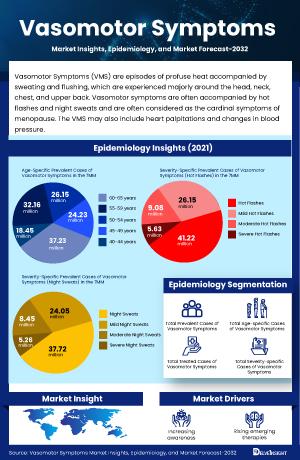
- In 2024, the prevalence of vasomotor symptoms among perimenopausal women ranged from 48.4–70.6%, while 13.0–63.1% reported severe or moderate-to-severe vasomotor symptoms.
- In the US, the estimated prevalence of vasomotor symptoms is ~46% during the early menopausal transition and increases to 60–80% across the menopausal transition and postmenopausal period.
- The prevalence of vasomotor symptoms varies between 46% and 51% in women aged 45–54 years.
- In the US, among women aged ≥65 years, 20.9-45.1% reported vasomotor symptoms; 2.0% reported severe symptoms, and 17.6% reported moderate symptoms.
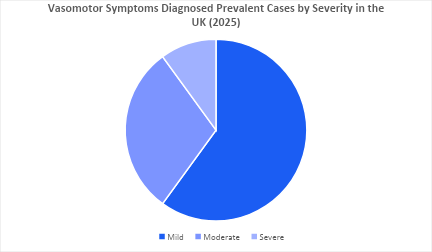
- In the UK, more than 75% of women experienced menopausal symptoms, with approximately 25% reporting severe symptoms. Around one-third experienced persistent symptoms lasting at least seven years, while vasomotor symptoms were the most common, affecting approximately 80% of women.
- In 2025, the mean age of menopause for German women was 47 ± 5.58 years. Among menopausal women, hot flash severity was distributed as 25.6% for asymptomatic, 30% for mild, 17.5% for moderate, 12.5% for severe, and 14.4% for very severe cases.
Vasomotor Symptoms Epidemiology Segmentation in the 7MM
- Vasomotor Symptoms Prevalent Cases
- Vasomotor Symptoms Diagnosed Prevalent Cases
- Vasomotor Symptoms Diagnosed Prevalent Cases by Age
- Vasomotor Symptoms Diagnosed Prevalent Cases by Severity
- Vasomotor Symptoms Treated Cases
Vasomotor Symptoms Market Recent Breakthroughs and Developments
- In February 2026, Astellas announced topline results from the STARLIGHT 2 Phase III pivotal trial for fezolinetant in Japan, an investigational oral, nonhormonal compound being studied for the treatment of vasomotor symptoms associated with menopause, which met the primary endpoint.
- In November 2025, Noema Pharma reported positive Phase IIa results from an open-label study evaluating cendifensine for vasomotor symptoms associated with menopause, demonstrating significant reductions in the frequency and severity of moderate-to-severe vasomotor symptoms compared with baseline.
- In June 2025, Tioga has initiated enrollment in Phase IIa clinical evaluation of its investigational non-hormonal therapy in women experiencing vasomotor symptoms associated with menopause and data anticipated in 2026.
- In November 2025, Bayer reported that the US FDA approved elinzanetant (LYNKUET) 60 mg capsules for the treatment of moderate-to-severe vasomotor symptoms (hot flashes) associated with menopause.
Vasomotor Symptoms Drug Analysis & Competitive Landscape
The vasomotor symptoms drug chapter provides a detailed, market-focused review of approved therapies and the emerging Vasomotor Symptoms Pipeline across Phase II clinical trials. It covers the Vasomotor Symptoms mechanism of action, clinical trial data, regulatory approvals, patents, collaborations, and strategic partnerships for each therapy, along with their advantages, limitations, and recent developments. This section offers critical insights into the vasomotor symptoms treatment landscape, supporting market assessment, competitive analysis, and growth forecasting for the vasomotor symptoms therapeutics market.
Vasomotor Symptoms Approved Therapies
-
Bazedoxifene acetate/conjugated estrogens (DUAVEE): Pfizer
Bazedoxifene acetate/conjugated estrogens (DUAVEE) is a Pfizer marketed, FDA approved hormonal therapy for moderate-to-severe vasomotor symptoms associated with menopause. It combines conjugated estrogens with bazedoxifene, a selective estrogen receptor modulator, to provide estrogenic benefit while helping protect the endometrium without the use of a progestin.
The product was approved by the US FDA in October 2013 and is positioned as a differentiated option for women with a uterus who are candidates for estrogen based therapy. Its clinical value lies in its progestin free design, although uptake is influenced by patient specific risk considerations and the growing adoption of non-hormonal treatment alternatives.
-
Fezolinetant (VEOZAH): Astellas
Fezolinetant (VEOZAH) is an Astellas Pharma marketed, FDA approved non-hormonal therapy for moderate-to-severe vasomotor symptoms associated with menopause. It is a selective neurokinin 3 receptor antagonist that targets the thermoregulatory pathway involved in hot flashes and night sweats, providing an alternative to estrogen-based therapies.
The product was approved by the US FDA in May 2023 and represents the first approved neurokinin 3 receptor antagonist for menopausal vasomotor symptoms. Its non-hormonal mechanism addresses an important unmet need for women who cannot or prefer not to use menopausal hormone therapy. Commercially, VEOZAH demonstrated strong market uptake, with FY2025 revenue of ~USD 310–320 million, representing 38% year-over-year growth. The product continues to expand the vasomotor symptom treatment landscape by offering a targeted, non-hormonal therapeutic option.
Note: Detailed marketed therapies assessment will be provided in the final report.
Table 1: Competitive Landscape of Vasomotor Symptoms Marketed/Approved Therapies | ||||||
|
Drug/Therapy |
Company |
Indication |
Molecule Type |
MoA |
RoA |
Marketed Region |
|
Bazedoxifene acetate/conjugated estrogens (DUAVEE) |
Pfizer |
Vasomotor Symptoms |
Small molecule |
Selective estrogen receptor modulator |
Oral |
US: 2013 EU: 2014 |
|
Fezolinetant (VEOZAH) |
Astellas |
Vasomotor Symptoms |
Small molecule |
Neurokinin 3 (NK3) receptor antagonist |
Oral |
US: 2023 EU: 2023 |
|
Elinzanetant (LYNKUET) |
Bayer |
Vasomotor Symptoms |
Small molecule |
NK1 and NK3 antagonist |
Oral |
US: 2025 EU: 2025 |
Vasomotor Symptoms Pipeline Analysis
-
Cendifensine (NOE-115): Noema Pharma
Cendifensine (NOE-115) is an investigational non-hormonal therapy developed by Noema Pharma for the treatment of vasomotor symptoms associated with menopause. It is an oral, once-daily broadspectrum monoamine modulator designed to influence monoaminergic pathways involved in thermoregulation and menopausal symptom control.
The asset is being evaluated in a Phase II clinical study for moderate-to-severe vasomotor symptoms, including hot flashes and night sweats. Cendifensine represents a novel non-hormonal approach with potential differentiation through its broader monoamine modulation mechanism compared with existing targeted therapies.
-
Asimadoline (TP0052): Tioga Pharmaceuticals
Asimadoline (TP0052) is an investigational non-hormonal therapy being developed by Tioga Pharmaceuticals for the treatment of vasomotor symptoms associated with menopause. It is a peripherally restricted selective kappa opioid receptor agonist designed to modulate peripheral sensory and autonomic pathways involved in thermoregulation and menopausal symptom control.
The asset is currently being evaluated in a Phase II clinical study assessing safety and efficacy in women with moderate-to-severe menopausal vasomotor symptoms. The ongoing study is designed to evaluate asimadoline (TP0052) as a potential non-hormonal treatment approach for women seeking alternatives to estrogen-based therapies, with the data anticipated in 2026.
Table 2: Competitive Landscape of Vasomotor Symptoms Emerging Drugs | ||||||
|
Drug Name |
Company |
Highest Phase |
Indication |
RoA |
MoA |
Anticipated Launch in the US |
|
Cendifensine (NOE-115) |
Asimadoline (TP0052) |
II |
Vasomotor symptoms |
Oral |
Monoamine Modulator |
Information is available in the full report |
|
Asimadoline (TP0052) |
Tioga pharmaceuticals |
II |
Vasomotor symptoms |
Oral |
Kappa Opioid Receptor Agonist |
Information is available in the full report |
|
Note: Launch insights are provisional and may change with future report updates or the occurrence of major key catalysts. | ||||||
Note: Detailed emerging therapies assessment will be provided in the final report.
Vasomotor Symptoms Market Outlook
The vasomotor symptoms associated with menopause treatment landscape is well established, with management primarily focused on lifestyle modifications, hormonal therapies, and non-hormonal pharmacological options. Treatment decisions are increasingly individualized based on symptom severity, patient preferences, and treatment-related risks, as many women experience improvement over time without intervention.
The Vasomotor Symptoms Therapeutics Market is gradually shifting toward non-hormonal targeted therapies, supported by increasing awareness of treatment limitations and the need for options with improved safety profiles. Recent innovation includes neurokinin 3 receptor pathway targeted therapies, such as fezolinetant (VEOZAH), which provide a novel mechanism-based approach for managing vasomotor symptoms without estrogen exposure.
Emerging assets such as cendifensine (NOE-115) and asimadoline (TP0052) are further expanding the pipeline by exploring alternative non-hormonal mechanisms, including monoamine modulation and opioid receptor pathways.
Key findings from Vasomotor Symptoms Market Forecast
- The United States accounts for the largest share of the vasomotor symptoms treatment market, driven by a large eligible patient pool, strong healthcare access, increasing menopause awareness, and growing uptake of prescription therapies.
- The vasomotor symptoms therapeutics market is shifting toward non-hormonal therapies, fueled by safety concerns with hormone therapy, expanding treatment eligibility, and rising demand for targeted alternatives.
- The vasomotor symptoms therapeutics market is being reshaped by the commercial uptake of non-hormonal therapies, led by NK3 receptor antagonists such as fezolinetant (VEOZAH), while the emerging pipeline is expected to further strengthen competition and expand market growth.
Further details will be provided in the report….
Vasomotor Symptoms Companies
- Pfizer
- Astellas
- Bayer
- Noema Pharma
- Tioga Pharmaceuticals, and others
Vasomotor Symptoms Drug Class/Insights into Leading Emerging and Marketed Therapies (2022–2036 Forecast)
- Estrogen receptor modulators: include bazedoxifene acetate/conjugated estrogens (DUAVEE), which combines conjugated estrogens with bazedoxifene, a selective estrogen receptor modulator, to provide estrogenic effects while helping reduce estrogen-mediated endometrial stimulation.
- Neurokinin pathway modulators: include fezolinetant (VEOZAH), a neurokinin 3 receptor antagonist that targets the hypothalamic thermoregulatory pathway involved in hot flashes and night sweats. This class represents a newer non-hormonal targeted approach for women seeking alternatives to estrogen-based therapies.
- Kappa opioid receptor agonist: Include asimadoline (TP0052), an investigational kappa opioid receptor agonist being evaluated as a non-hormonal approach for vasomotor symptoms by targeting opioid-mediated pathways involved in temperature regulation.
Vasomotor Symptoms Drug Uptake
This section focuses on the uptake rate of potential Vasomotor Symptoms of menopause drugs expected to be launched in the market during the forecast period (2026–2036). The analysis covers the vasomotor symptoms drug’s uptake, performance at peak, factors affecting performance during prime years of growth, patient uptake by therapy, and anticipated sales generated by each drug.
The uptake of therapies in the vasomotor symptoms associated with menopause market is expected to vary across hormonal therapies, established non-hormonal options, and emerging pipeline assets. Hormonal therapies such as bazedoxifene acetate/conjugated estrogens (DUAVEE) remain an established treatment option due to their efficacy, although use is influenced by patient-specific risk factors and preference for non-hormonal alternatives.
Fezolinetant (VEOZAH) has strengthened the non-hormonal treatment landscape as the first approved neurokinin 3 receptor antagonist for vasomotor symptoms associated with menopause. Commercial performance has been supported by continued market uptake, with 2025 revenue of approximately USD 310–320 million, reflecting 38% year-over-year growth according to Astellas financial results.
Emerging assets such as cendifensine (NOE-115) and asimadoline (TP0052) may expand future treatment options through novel mechanisms; however, their adoption will depend on clinical efficacy, safety, regulatory approval, and differentiation from currently available therapies.
Detailed insights of emerging therapies' drug uptake is included in the report.
Vasomotor Symptoms Market Access and Reimbursement
The United States
The US Reimbursement for Vasomotor Symptoms | |
|
Drug |
Access Program |
|
VEOZAH |
VEOZAH Support Solutions |
Reimbursement is a crucial factor that affects the drug’s access to the market. Often, the decision to reimburse comes down to the price of the drug relative to the benefit it produces in treated patients. To reduce the healthcare burden of these high-cost therapies, many payment models are being considered by payers and other industry insiders.
The Vasomotor Symptoms Therapeutics Market Report further provides detailed insights on the country-wise accessibility and reimbursement scenarios, cost-effectiveness scenario of approved therapies, programs making accessibility easier and out-of-pocket costs more affordable, insights on patients insured under federal or state government prescription drug programs, etc.
NOTE: Further Details are provided in the final report….
Vasomotor Symptoms Therapies Price Scenario & Trends
Pricing and analogue assessment of vasomotor symptoms therapies highlights evolving price dynamics structures. This section summarizes the cost of approved treatments, closest and most appropriate analogue selection for emerging therapies, and understanding of how pricing influences market access, adherence, and long-term uptake.
Further details are provided in the final report….
Vasomotor Symptoms Industry Experts and Physician Views
To keep up with vasomotor symptoms market trends, we take Key Opinion Leaders (KOLs) and Subject Matter Experts (SMEs) opinions working in the domain through primary research to fill the data gaps and validate our secondary research. Industry experts were contacted for insights on the vasomotor symptoms emerging therapies, evolving treatment landscape, patient adherence to conventional therapies, therapy switching trends, drug adoption and uptake, accessibility challenges, and epidemiology and real-world prescription patterns in vasomotor symptoms, including MD, PhD, Instructor, Postdoctoral Researcher, Professor, Researcher, and others.
DelveInsight’s analysts connected with 10+ KOLs to gather insights at country level. Centers such as the University of Colorado School of Medicine, Altus Research, and Brigham and Women’s Hospital, etc. were contacted.Their opinion helps understand and validate current and emerging vasomotor symptoms therapies, highlight unmet medical needs, provide epidemiological context, and support strategic decisions for market access, therapy adoption, and pipeline prioritization in vasomotor symptoms.
Region |
Key Opinion Leaders (KOLs) and Subject Matter Experts (SMEs) |
|
United States |
"The link between Vasomotor symptoms, mental health, and sleep disorders underscores the importance of holistic care strategies. Addressing these symptoms comprehensively through pharmacological solutions like targeted therapies, coupled with lifestyle modifications provides women with relief and improves their overall well-being during menopause." |
|
Japan |
"Hormonal fluctuations during menopause drive the occurrence of Vasomotor symptoms , but their implications extend to cognitive function, mood stability, and sleep quality. Emerging therapies—both hormonal and non-hormonal—enable us to address these multifaceted challenges, helping women regain control of their lives during this transitional phase." |
Vasomotor Symptoms Report Qualitative Analysis: SWOT and Conjoint Analysis
We perform qualitative and Vasomotor Symptoms Therapeutics Market Intelligence analysis using various approaches, such as SWOT analysis and conjoint analysis. In the SWOT analysis of vasomotor symptoms, strengths, weaknesses, opportunities, and threats in terms of disease diagnosis, patient awareness, patient burden, competitive landscape, cost-effectiveness, and geographical accessibility of therapies are provided.
Conjoint analysis analyzes emerging therapies based on relevant attributes such as safety, efficacy, frequency of administration, route of administration, and order of entry. Scoring is given based on these parameters to analyze the effectiveness of therapy.
The team of analysts analyzes promising emerging therapies for vasomotor symptoms of menopause based on relevant attributes such as safety, efficacy, frequency of administration, route of administration, and order of entry. In efficacy, the trial’s primary and secondary outcome measures are evaluated, whereas the therapies’ safety is evaluated, wherein acceptability, tolerability, and adverse events are majorly observed.
In addition, the scoring is also based on the route of administration, order of entry, probability of success, and the addressable patient pool for each therapy. According to these parameters, the final weightage score and the ranking of the emerging therapies are decided.
Scope of the Vasomotor Symptoms Market Report
- The Vasomotor Symptoms Therapeutics Market Report covers a segment of key events, an executive summary, a descriptive overview, explaining their causes, signs and symptoms, pathogenesis, and currently available treatments.
- Comprehensive insight has been provided into the epidemiology segments and forecasts, the future growth potential of the diagnosis rate, and disease progression along treatment guidelines.
- Additionally, an all-inclusive account of both the current and emerging treatments, along with the elaborative profiles of late-stage and prominent therapies, will have an impact on the current Vasomotor Symptoms Treatment landscape.
- A detailed review of the Vasomotor Symptoms Therapeutics Market, historical and forecasted Vasomotor Symptoms Market Size, Vasomotor Symptoms Drugs Market Share by therapies, detailed assumptions, and rationale behind our approach is included in the report, covering the 7MM drug outreach.
- The Vasomotor Symptoms Therapeutics Market Report provides an edge while developing business strategies by understanding trends through SWOT analysis and expert insights/KOL views, patient journey, and treatment preferences that help in shaping and driving the 7MM Vasomotor Symptoms Drugs Market.
Vasomotor Symptoms Market Report Insights
- Vasomotor Symptoms Patient Population Forecast
- Vasomotor Symptoms Therapeutics Market Size
- Vasomotor Symptoms Pipeline Analysis
- Vasomotor Symptoms Market Size and Trends
- Vasomotor Symptoms Market Opportunity (Current and forecasted)
Vasomotor Symptoms Market Report Key Strengths
- Epidemiology‑based (Epi‑based) Bottom‑up Forecasting
- Artificial Intelligence (AI)-Enabled Market Research Report
- 11-Year Forecast
- Vasomotor Symptoms Market Outlook (North America, Europe, Asia-Pacific)
- Patient Burden Trends (By Geography)
- Vasomotor Symptoms Treatment Addressable Market (TAM)
- Vasomotor Symptoms Competitve Landscape
- Vasomotor Symptoms Major Companies Insights
- Vasomotor Symptoms Price Trends and Analogue Assessment
- Vasomotor Symptoms Therapies Drug Adoption/Uptake
- Vasomotor Symptoms Therapies Peak Patient Share Analysis
Vasomotor Symptoms Market Report Assessment
- Current Vasomotor Symptoms Treatment Practices
- Vasomotor Symptoms Unmet Needs
- Vasomotor Symptoms Clinical Development Analysis
- Vasomotor Symptoms Emerging Drugs Product Profiles
- Vasomotor Symptoms Market Attractiveness
- Vasomotor Symptoms Qualitative Analysis (SWOT and conjoint analysis)
Key Questions Answered in the Vasomotor Symptoms Treatment Market Report
Vasomotor Symptoms Therapeutics Market Insights
- What was the vasomotor symptoms market size, the Vasomotor Symptoms treatment market size by therapies, Vasomotor Symptoms drugs market share (%) distribution in 2025, and what would it look like by 2036? What are the contributing factors for this growth?
- What are the anticipated pricing variations among different geographies for the emerging therapies in the future?
- What can be the future treatment paradigm of vasomotor symptoms?
- What are the disease risks, burdens, and unmet needs of vasomotor symptoms?
- What will be the growth opportunities across the 7MM concerning the patient population with vasomotor symptoms?
- Who is the major future competitor in the market, and how will the competitors affect their market share?
- What are the current options for the treatment of vasomotor symptoms?
- What are the current guidelines for treating vasomotor symptoms in the US, Europe, and Japan?
Reasons to Buy the Vasomotor Symptoms Market Report
- The Vasomotor Symptoms Therapeutics Market Report will help in developing business strategies by understanding the latest trends and changing treatment dynamics driving the vasomotor symptoms drugs market.
- Bottom-up forecasting builds from the affected population to product forecasts, delivering a robust, data-driven approach ideal for new therapies and novel classes.
- Insights on patient burden/disease, Vasomotor Symptoms Incidence, evolution in diagnosis, and factors contributing to the change in the epidemiology of the disease during the forecast years.
- Understand the existing market opportunities in varying geographies and the growth potential over the coming years.
- Identifying strong upcoming players in the Vasomotor Symptoms drugs market will help devise strategies to help get ahead of competitors.
- Detailed analysis and ranking of class-wise potential current and emerging therapies under the conjoint analysis section to provide visibility around leading classes.
- To understand KOLs’ perspectives on the accessibility, acceptability, and compliance-related challenges of existing treatment to overcome barriers in the future.
- Detailed insights on the unmet needs of the existing Vasomotor Symptoms drugs market so that the upcoming players can strengthen their development and launch strategy.
- This Artificial Intelligence (AI)-enabled report summarize and simplify complex datasets with in the report into clear, actionable insights for stakeholders, investors, and healthcare providers, enabling faster, data-driven decisions.
Stay updated with us for Recent Articles