
Von Willebrand disease Market Summary
- The VWD market is witnessing strong growth across the major markets, with the United States leading in market size and innovation, followed by the EU4 (Germany, France, Italy, and Spain), the United Kingdom, and Japan during the study period.
- A significant proportion of the VWD burden is observed in females, children, and patients with moderate-to-severe disease phenotypes, highlighting the need for improved diagnosis, broader access to prophylactic VWF replacement therapies, and targeted treatment strategies to reduce bleeding complications and enhance long-term disease management.
- The treatment of VWD includes approved VWF replacement therapies such as WILATE and VONVENDI/VEYVONDI (vonicog alfa), which restore von Willebrand factor levels, enhance platelet adhesion, stabilize factor VIII, and support effective hemostasis for on-demand, perioperative, and prophylactic management of bleeding episodes.
- Diagnostic and clinical assessment of VWD involves VWF antigen and activity testing, factor VIII measurement, platelet function analysis, VWF multimer analysis, and selective genetic testing. These evaluations enable accurate diagnosis, subtype classification, severity assessment, bleeding risk stratification, and treatment optimization.
- The emerging VWD pipeline is focused on long-acting VWF replacement therapies, monoclonal antibodies, and RNA-based approaches aimed at improving bleed protection, enhancing hemostatic control, and reducing treatment burden.
- Key candidates include HMB-002 (Hemab ApS), VGA039 (Vega Therapeutics), and ALN-6400 (PLG) (Alnylam Pharmaceuticals), which are being evaluated for prophylactic use and long-term disease management to improve patient outcomes and quality of life.
Von Willebrand Disease (VWD) Market Size and Forecast in the 7MM
- 2025 VWD Market Size: ~USD XXX million
- 2026 Projected VWD Market Size: ~USD XXX million
- VWD Growth Rate (2026–2036): ~XX% CAGR
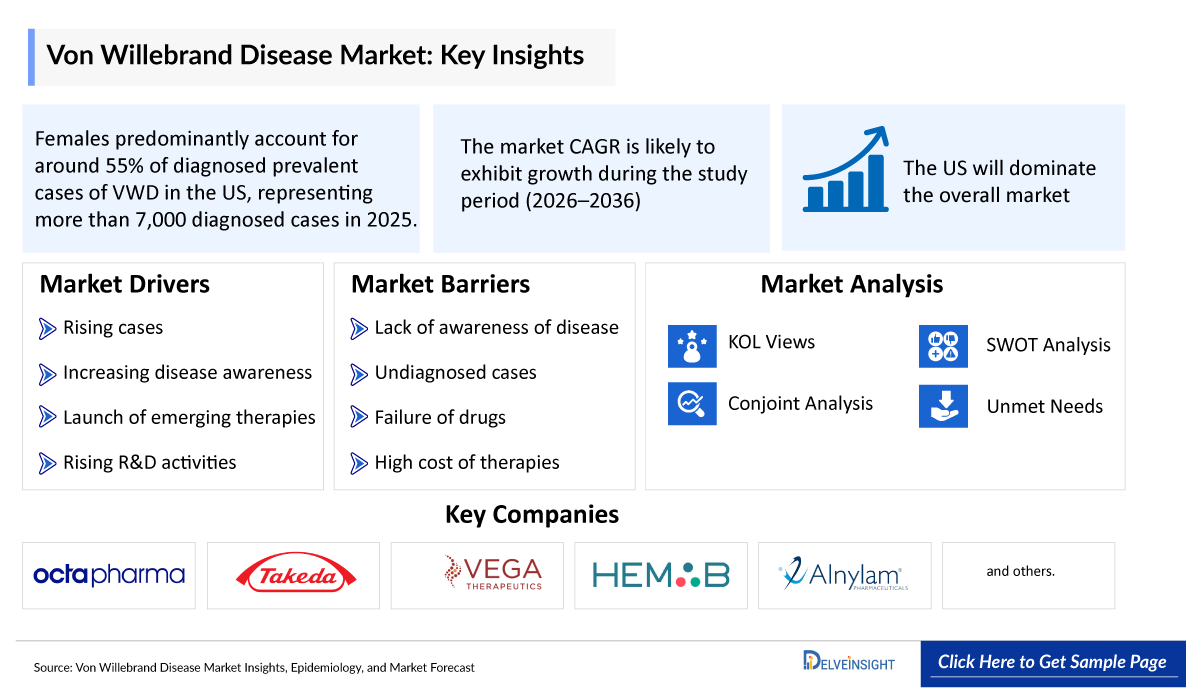
DelveInsight's ‘Von Willebrand Disease (VWD)– Market Insights, Epidemiology and Market Forecast – 2036’ report delivers an in-depth understanding of the VWD, historical and forecasted epidemiology, as well as the VWD market trends in the United States, EU4 (Germany, Spain, Italy, and France) and the United Kingdom, and Japan.
The VWD market report delivers a comprehensive analysis of the current treatment landscape, including standards of care, clinical practices, and evolving therapeutic algorithms. It evaluates VWD patient burden trends, revenue & market share dynamics, peak patient share & therapy uptake analysis, and provides an in-depth market size assessment, and growth rate projections (Historical & Forecast 2022–2036) across global regions. The report highlights key unmet medical needs in VWD and maps the competitive and clinical landscape to uncover high‑value opportunities, providing a clear outlook on future market growth potential.
|
Study Period |
2022–2036 |
|
Historical Year |
2022–2025 |
|
Forecast Period |
2026–2036 |
|
Base Year |
2026 |
|
Geographies Covered |
|
|
VWD Market CAGR (Forecast period) |
XX% (2026–2036) |
|
VWD Epidemiology Segmentation Analysis |
Patient Burden Assessment
|
|
VWD Companies |
|
|
VWD Therapies |
|
|
VWD Market |
Segmented by
|
|
Analysis |
|
Key Factors Driving the Von Willebrand Disease (VWD) Market
Rising Von Willebrand Disease (VWD) Prevalence
The increasing prevalence of VWD, particularly among females, is a primary driver of VWD market expansion, supported by improved disease awareness, advancements in diagnostic testing, greater recognition of bleeding disorders, and the growing adoption of prophylactic treatment strategies.
Rising Opportunities in Advanced Von Willebrand Disease (VWD) Therapeutic Development
The growing recognition of VWD, coupled with unmet needs in long-term bleed prevention and treatment convenience, is creating opportunities for the development of innovative therapies, including long-acting biologics and RNA-based approaches, aimed at improving hemostatic control, reducing treatment burden, and enhancing patient outcomes.
Emerging Von Willebrand Disease (VWD) Competitive Landscape
The VWD pipeline is evolving with innovative therapies such as VGA039, HMB-002, and ALN-6400, which aim to provide sustained bleed protection, improve hemostatic control, and reduce treatment burden through novel mechanisms of action.
Von Willebrand Disease (VWD) Understanding and Treatment Algorithm
Von Willebrand Disease (VWD) Overview and Diagnosis
VWD is the most common inherited bleeding disorder, caused by a deficiency or dysfunction of von Willebrand factor (VWF), a blood-clotting protein that helps platelets adhere to damaged blood vessels and stabilizes coagulation factor VIII. The disorder results in impaired blood clotting, leading to prolonged or excessive bleeding episodes. VWD can be inherited or, less commonly, acquired later in life due to underlying medical conditions. The disease affects individuals of all ages and both sexes, although women often experience a greater clinical burden due to heavy menstrual bleeding and pregnancy-related hemorrhagic complications. Common manifestations include frequent nosebleeds, easy bruising, prolonged bleeding after injury or surgery, and excessive menstrual bleeding, with severity varying according to the type and level of VWF deficiency.
VWD is diagnosed through clinical evaluation of bleeding symptoms, family history assessment, and specialized laboratory testing to identify quantitative or qualitative defects in VWF. Diagnostic evaluation includes measurement of VWF antigen levels, VWF activity assays, factor VIII activity testing, platelet function studies, VWF multimer analysis, and genetic testing when indicated. Additional laboratory investigations are performed to classify VWD subtype, assess disease severity, evaluate bleeding risk, and guide treatment decisions.
Note: Further details are provided in the report.
Von Willebrand Disease (VWD) Treatment
The primary goals of VWD treatment are to prevent bleeding episodes, restore hemostasis, and improve quality of life. Current management includes desmopressin (DDAVP), antifibrinolytic agents, and VWF replacement therapies such as WILATE and VONVENDI/VEYVONDI for on-demand, perioperative, and prophylactic use. Emerging therapies, including VGA039, HMB-002, and ALN-6400, aim to provide sustained bleed protection and reduce treatment burden through novel mechanisms.
Note: Further details related to country-based variations are provided in the report.
Von Willebrand Disease (VWD) Unmet Needs
The section “unmet needs of Von Willebrand Disease (VWD)” outlines the critical gaps between the current state of patient care, diagnosis, and the ideal & effective management of the disease. It highlights the obstacles experienced by patients, clinicians, and researchers and identifies potential solutions for future progress.
- Delayed and underdiagnosis of VWD
- Limited accuracy of current diagnostic tests
- Challenges in distinguishing VWD subtypes
- Persistent risk of breakthrough bleeding, and others…..
Note: Comprehensive unmet needs insights and their strategic implications are provided in the full report.
Von Willebrand Disease (VWD) Epidemiology
Key Findings from Von Willebrand Disease (VWD) Epidemiological Analysis and Forecast
- The diagnosed prevalence of VWD across the 7MM is expected to increase throughout the study period (2022–2036), driven by improved disease recognition, enhanced diagnostic capabilities, and greater awareness among healthcare providers and patients.
- Among the 7MM, in 2025, the United States accounts for the highest diagnosed prevalence of VWD compared with the EU4 & UK and Japan, and this burden is expected to increase over the forecast period.
- Females predominantly account for around 55% of diagnosed prevalent cases of VWD in the United States, representing more than 7,000 diagnosed cases in 2025.
- In the United States, the 5–13 years and 14–18 years age groups account for the largest share of diagnosed prevalent VWD cases, representing approximately 32% and 22%, respectively, in 2025. The 0–4 years, 19–44 years, and >45 years age groups contribute about 6%, 23%, and 17% of cases, respectively.
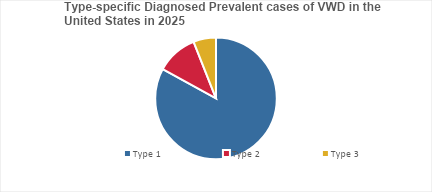
- In 2025, Type 1 VWD accounted for the majority of diagnosed prevalent VWD cases in the United States, representing approximately 83% of cases, while Type 2 and Type 3 VWD comprised about 11% and 6%, respectively.
Von Willebrand Disease (VWD) Drug Chapters & Competitive Analysis
The VWD drug chapter provides a detailed, market-focused review of approved therapies and the emerging pipeline across Phase I–III clinical trials. It covers the mechanism of action, clinical trial data, regulatory approvals, patents, collaborations, and strategic partnerships for each therapy, along with their advantages, limitations, and recent developments. This section offers critical insights into the VWD treatment landscape, supporting market assessment, competitive analysis, and growth forecasting for the VWD therapeutics market.
Approved Therapies for Von Willebrand Disease (VWD)
WILATE: OctaPharma
WILATE is a human plasma-derived von VWF/factor VIII (FVIII) concentrate administered via IV infusion. It acts as a replacement therapy, restoring deficient or dysfunctional VWF and FVIII to improve platelet adhesion and blood clotting in patients with VWD. WILATE received its first FDA approval in 2009 for the treatment of bleeding episodes and perioperative management in VWD, and was also approved for routine prophylaxis in 2023. It is typically used as an on-demand, perioperative, and prophylactic therapy, particularly in patients with severe disease or those who are unsuitable for or inadequately responsive to desmopressin.
In April 2024, Octapharma US announced that the FDA granted orphan drug exclusivity to WILATE for routine prophylaxis to reduce bleeding episodes in adults and children aged ≥6 years with VWD. The designation reinforces WILATE’s position as the first VWF concentrate approved for prophylactic treatment across all forms of VWD, marking an important advancement in the management of the most common inherited bleeding disorder in the United States.
In January 2024, Octapharma announced the presentation of new clinical and scientific data on WILATE at the 17th EAHAD Congress, including findings on the efficacy and safety of WILATE prophylaxis in patients with VWD, further supporting its role in VWD management.
VONVENDI/VEYVONDI (vonicog alfa): Takeda Pharmaceuticals
VONVENDI/VEYVONDI, developed by Takeda Pharmaceuticals, is a recombinant VWF replacement therapy administered via IV infusion. It works by replacing deficient or dysfunctional von Willebrand factor, thereby restoring platelet adhesion and stabilizing factor VIII to support normal blood clotting. VONVENDI received its first FDA approval in 2015 for the on-demand treatment and control of bleeding episodes in adults with VWD. It is used as an on-demand, perioperative, and prophylactic therapy, particularly in patients who are unresponsive to or unsuitable for desmopressin. The therapy expanded its approval in 2025 to include routine prophylaxis in adults with all VWD types (including Types 1 and 2) and on-demand treatment and perioperative management in pediatric patients.
|
Table 1: Von Willebrand Disease Marketed/Approved Therapies | ||||||
|
Drug/Therapy |
Company |
Indication |
Molecule Type |
RoA |
MoA |
Marketed Region |
|
WILATE |
OctaPharma |
VWD |
Coagulation Factors |
IV |
Replaces deficient VWF and FVIII to restore normal blood clotting |
US: 2009 Europe: 2005 |
|
VONVENDI/ VEYVONDI |
Takeda |
VWD |
Recombinant von Willebrand factor |
IV |
Replaces deficient VWF, enhancing platelet adhesion and stabilizing FVIII |
US: 2015 Europe: 2018 Japan: 2022 |
Note: Detailed marketed therapies assessment will be provided in the final report.
Von Willebrand Disease (VWD) Pipeline Analysis
VGA039: Vega Therapeutics
VGA039, being developed by Vega Therapeutics, is an investigational first-in-class monoclonal antibody for the treatment of VWD. The therapy works by targeting Protein S, a key regulator of coagulation, thereby enhancing thrombin generation and promoting effective clot formation. Administered as a subcutaneous injection, VGA039 is designed to reduce the treatment burden associated with frequent intravenous factor replacement therapies. The therapy is being evaluated as a prophylactic treatment across all VWD types and has demonstrated encouraging safety, pharmacokinetic, and bleeding-reduction data in clinical studies, with the potential to become a convenient long-acting treatment option for patients with VWD.
In May 2023, Vega Therapeutics announced that the FDA granted Orphan Drug Designation to VGA039 for the treatment of VWD, supporting the development of this investigational therapy for a rare bleeding disorder.
HMB-002: HemaBiologics (Hemab ApS)
HMB-002, being developed by Hemab ApS, is an investigational monoclonal antibody designed for the treatment and prevention of bleeding episodes in patients with VWD. The therapy targets and enhances the activity of endogenous VWF, aiming to improve platelet adhesion and promote effective hemostasis. HMB-002 is being developed as a potentially long-acting treatment option that may reduce bleeding frequency, decrease treatment burden, and provide sustained protection against bleeding complications in patients with VWD.
|
Table 2: Competitive Landscape of Emerging Therapies | |||||||
|
Drug Name |
Company |
Highest Phase |
Indication |
RoA |
MoA |
Molecule Type |
Anticipated Launch in the US |
|
VGA039 |
Vega Therapeutics |
III |
VWD |
IV |
Protein S inhibitors |
mAb |
Information is available in the full report |
|
HMB-002 |
Hemab ApS |
I/II |
VWD |
SC |
VWF modulators |
mAb |
Information is available in the full report |
|
ALN-6400 |
Alnylam Pharma |
II |
VWD |
SC |
RNA interference |
siRNA |
Information is available in the full report |
|
Note: Launch insights are provisional and may change with future report updates or the occurrence of major key catalysts. | |||||||
Note: A detailed emerging therapies assessment will be provided in the final report
Von Willebrand Disease (VWD) Key Players, Market Leaders and Emerging Companies
- OctaPharma
- Takeda Pharmaceuticals
- Vega Therapeutics
- Hemab ApS
- Alnylam Pharmaceuticals, and others
Von Willebrand Disease (VWD) Drug Updates
- In April 2026, Alnylam Pharmaceuticals reported its first-quarter 2026 financial results and provided an update on recent business and pipeline developments, highlighting progress across its RNAi therapeutics portfolio, including ongoing clinical programs.
- In September 2025, preliminary data from the VELORA Pioneer study presented at the BIC International Conference 2025 showed that HMB-002 achieved dose-dependent increases in VWF and FVIII levels with sustained activity for up to 8–10 days, supporting its development as a prophylactic therapy for VWD.
- In September 2025, the FDA approved a sBLA for VONVENDI, expanding its indication to include routine prophylaxis for adults with all major VWD types and on-demand and perioperative bleeding management in pediatric patients with VWD.
- In September 2025, Takeda submitted regulatory applications in Japan and the European Union to expand the indications of VONVENDI/VEYVONDI for the on-demand and perioperative management of bleeding in pediatric patients with VWD.
Von Willebrand Disease (VWD) Market Outlook
The VWD market is evolving with increasing disease awareness, improved diagnosis, and greater adoption of prophylactic treatment strategies aimed at reducing bleeding episodes and improving patient outcomes. The market is currently led by established VWF replacement therapies, including VONVENDI and WILATE, which are increasingly being used for routine prophylaxis alongside on-demand and perioperative management.
The treatment landscape is gradually shifting toward innovative, long-acting therapies designed to reduce treatment burden and provide sustained bleed protection. Emerging candidates such as HMB-002 and ALN-6400 reflect ongoing efforts to develop targeted biologic and RNA-based approaches that enhance hemostasis and improve convenience for patients.
Overall, increasing uptake of prophylactic therapies, expanding treatment indications, and continued pipeline innovation are expected to drive growth in the VWD market, creating opportunities for both established and emerging companies developing next-generation therapies.
- According to the estimates, the United States accounted for the largest share of the VWD market among the major markets during the study period.
- The VWD market is evolving as treatment strategies shift from predominantly on-demand management toward routine prophylaxis and targeted therapies, with emerging candidates such as monoclonal antibodies and RNA-based therapies driving efforts to provide sustained bleed protection, reduce treatment burden, and improve long-term disease control.
Note: Further details will be provided in the report….
Drug Class/Insights into Leading Emerging and Marketed Therapies in Von Willebrand Disease (VWD) (2022–2036 Forecast)
The VWD treatment landscape comprises VWF replacement therapies, desmopressin, antifibrinolytic agents, and emerging targeted biologics, each addressing different aspects of impaired hemostasis and bleeding risk associated with VWF deficiency or dysfunction.
VWF Replacement Therapies: Plasma-derived and recombinant VWF products such as WILATE and VONVENDI work by replacing deficient or dysfunctional VWF, restoring platelet adhesion, stabilizing factor VIII levels, and promoting effective blood clot formation to prevent or control bleeding episodes.
Targeted Biologics Therapies: Emerging therapies such as HMB-002 and ALN-6400 are designed to enhance endogenous hemostatic mechanisms. HMB-002 is a monoclonal antibody that increases circulating VWF and factor VIII levels by preventing VWF clearance, while ALN-6400 is a siRNA therapy targeting plasminogen to reduce fibrinolysis and improve clot stability.
Overall, VWF replacement therapies remain the cornerstone of VWD management, while next-generation biologics and RNAi-based therapies are expected to expand treatment options by offering prolonged hemostatic protection, reduced treatment burden, and improved prophylactic outcomes.
Note: Further details will be provided in the report….
Von Willebrand Disease (VWD) Drug Uptake
This section focuses on the uptake rate of potential drugs expected to be launched in the market during the forecast period (2026–2036). The analysis covers the VWD market's uptake by drugs, patient uptake by therapy, and sales of each drug.
Established therapies such as WILATE and VONVENDI are expected to maintain strong uptake due to their proven efficacy in on-demand and prophylactic management of VWD. VONVENDI is anticipated to achieve the highest uptake among newer therapies, driven by its recombinant formulation, expanded indications, and growing adoption of prophylactic treatment. Emerging candidates such as HMB-002 and ALN-6400 may gain future market share through improved convenience, sustained bleed protection, and reduced treatment burden.
Note: Further detailed analysis of emerging therapies' drug uptake in the report…
Market Access and Reimbursement of Von Willebrand Disease (VWD)
- US
|
Table 3: The US Reimbursement for VWD Therapies | |
|
Drug |
Access Program |
|
WILATE |
CoPay Program |
|
VONVENDI/VEYVONDI (vonicog alfa) |
CoPay Program |
Reimbursement is a crucial factor that affects the drug’s access to the market. Often, the decision to reimburse comes down to the price of the drug relative to the benefit it produces in treated patients. To reduce the healthcare burden of these high-cost therapies, many payment models are being considered by payers and other industry insiders.
Note: Further details are provided in the final report….
Recent Devlopment
- In July 2026, The FDA has granted expanded approval to Octapharma's wilate® (VWF/FVIII Complex) for routine prophylaxis to reduce bleeding episodes in children under 6 with severe Von Willebrand Disease (VWD). Supported by the Phase III WIL-33 trial, the 12-month regimen (30–50 IU/kg) demonstrated a low annualized bleeding rate (4.6), with 98.2% of bleeds staying minor. It marks the first VWF concentrate approved for prophylaxis across all ages and VWD types.
Von Willebrand Disease (VWD) Therapies Price Scenario & Trends
Pricing and analogue assessment of VWD therapies highlights evolving price dynamics structures. This section summarizes the cost of approved treatments, the closest and most appropriate analogue selection for emerging therapies, and the understanding of how pricing influences market access, adherence, and long-term uptake.
Note: Further details are provided in the final report….
Industry Experts and Physician Views for Von Willebrand Disease (VWD)
To keep up with VWD market trends, we take Key Opinion Leaders (KOLs) and Subject Matter Experts (SMEs) opinions working in the domain through primary research to fill the data gaps and validate our secondary research. Industry experts were contacted for insights on the VWD emerging therapies, evolving treatment landscape, patient adherence to conventional therapies, therapy switching trends, drug adoption and uptake, accessibility challenges, and epidemiology and real-world prescription patterns in VWD, including MD, PhD, Instructor, Postdoctoral Researcher, Professor, Researcher, and others.
DelveInsight’s analysts connected with 10+ KOLs to gather insights; however, interviews were conducted with 6+ KOLs in the 7MM. Centers such as the University of Mississippi Medical Center, University of Bologna, and Teikyo University School of Medicine, etc. were contacted. Their opinion helps understand and validate current and emerging VWD therapies, highlight unmet medical needs, provide epidemiological context, and support strategic decisions for market access, therapy adoption, and pipeline prioritization in VWD.
|
Region |
Key Opinion Leaders (KOLs) and Subject Matter Experts (SMEs) |
|
United States |
“VWD remains significantly underdiagnosed, particularly among patients with mild bleeding symptoms, highlighting the need for greater awareness and earlier diagnostic evaluation.” |
|
Japan |
“Advances in prophylactic VWF replacement therapies and emerging targeted treatments have the potential to reduce bleeding burden and improve long-term quality of life for patients with VWD.” |
Qualitative Analysis: SWOT and Conjoint Analysis
We perform qualitative and market Intelligence analysis using various approaches, such as SWOT analysis and conjoint analysis.
In the SWOT analysis of Von Willebrand Disease (VWD), strengths, weaknesses, opportunities, and threats in terms of disease diagnosis, patient awareness, patient burden, competitive landscape, cost-effectiveness, and geographical accessibility of therapies are provided.
Conjoint analysis analyzes emerging therapies based on relevant attributes such as safety, efficacy, frequency of administration, route of administration, and order of entry. Scoring is given based on these parameters to analyze the effectiveness of therapy.
The team of analysts analyzes promising emerging therapies based on relevant attributes such as safety, efficacy, frequency of administration, route of administration, and order of entry. In efficacy, the trial’s primary and secondary outcome measures are evaluated, whereas the therapies’ safety is evaluated, wherein the acceptability, tolerability, and adverse events are mainly observed. In addition, the scoring is also based on the route of administration, order of entry, probability of success, and the addressable patient pool for each therapy. According to these parameters, the final weightage score and the ranking of the emerging therapies are decided.
Scope of the Report
- The report covers a segment of key events, an executive summary, a descriptive overview of VWD, explaining its causes, signs and symptoms, pathogenesis, and currently available treatments.
- Comprehensive insight has been provided into the epidemiology segments and forecasts, the future growth potential of the diagnosis rate, and disease progression along treatment guidelines.
- Additionally, an all-inclusive account of both the current and emerging treatments, along with the elaborative profiles of late-stage and prominent therapies, will have an impact on the current treatment landscape.
- A detailed review of the VWD market, historical and forecasted market size, market share by therapies, detailed assumptions, and rationale behind our approach is included in the report, covering the 7MM drug outreach.
- The report provides an edge while developing business strategies by understanding trends through SWOT analysis and expert insights/KOL views, patient journey, and treatment preferences that help in shaping and driving the 7MM VWD market.
Report Insights
- Von Willebrand Disease (VWD) Patient Population Forecast
- Von Willebrand Disease (VWD) Therapeutics Market Size
- Von Willebrand Disease (VWD) Pipeline Analysis
- Von Willebrand Disease (VWD) Market Size and Trends
- Von Willebrand Disease (VWD) Market Opportunity (Current and forecasted)
Report Key Strengths
- Epidemiology‑based (Epi‑based) Bottom‑up Forecasting
- Artificial Intelligence (AI)-enabled Market Research Report
- 11-year Forecast
- Von Willebrand Disease (VWD) Market Outlook (North America, Europe, Asia-Pacific)
- Patient Burden Trends (by geography)
- Von Willebrand Disease (VWD) Treatment Addressable Market (TAM)
- Von Willebrand Disease (VWD) Competitive Landscape
- Von Willebrand Disease (VWD) Major Companies Insights
- Von Willebrand Disease (VWD) Price Trends and Analogue Assessment
- Von Willebrand Disease (VWD) Therapies Drug Adoption/Uptake
- Von Willebrand Disease (VWD) Therapies Peak Patient Share analysis
Report Assessment
- Von Willebrand Disease (VWD) Current Treatment Practices
- Von Willebrand Disease (VWD) Unmet Needs
- Von Willebrand Disease (VWD) Clinical Development Analysis
- Von Willebrand Disease (VWD) Emerging Drugs Product Profiles
- Von Willebrand Disease (VWD) Market Attractiveness
- Von Willebrand Disease (VWD) Qualitative Analysis (SWOT and Conjoint Analysis)
FAQs
Market Insights
- What was the VWD market size, the market size by therapies, the market share (%) distribution in 2025, and what would it look like by 2036? What are the contributing factors for this growth?
- What are the anticipated pricing variations among different geographies for the emerging therapies in the future?
- What can be the future treatment paradigm of VWD?
- What are the disease risks, burdens, and unmet needs of VWD? What will be the growth opportunities across the 7MM concerning the patient population with VWD?
- Who is the major future competitor in the market, and how will the competitors affect their market share?
- What are the current options for the treatment of VWD? What are the current guidelines for treating VWD in the US, Europe, and Japan?
Reasons to Buy
- The report will help in developing business strategies by understanding the latest trends and changing treatment dynamics driving the VWD market.
- Bottom-up forecasting builds from the affected population to product forecasts, delivering a robust, data-driven approach ideal for new therapies and novel classes.
- Insights on patient burden/disease incidence, evolution in diagnosis, and factors contributing to the change in the epidemiology of the disease during the forecast years.
- Understand the existing market opportunities in varying geographies and the growth potential over the coming years.
- Identifying strong upcoming players in the market will help devise strategies to help get ahead of competitors.
- Detailed analysis and ranking of class-wise potential current and emerging therapies under the conjoint analysis section to provide visibility around leading classes.
- To understand KOLs’ perspectives on the accessibility, acceptability, and compliance-related challenges of existing treatment to overcome barriers in the future.
- Detailed insights into the unmet needs of the existing market so that the upcoming players can strengthen their development and launch strategy.
- This Artificial Intelligence (AI) - enabled report summarizes and simplifies complex datasets within the report into clear, actionable insights for stakeholders, investors, and healthcare providers, enabling faster, data-driven decisions.


