
Waldenstrom Macroglobulinemia Epidemiology
Waldenstrom Macroglobulinemia Insights and Trends
- Waldenström macroglobulinemia is a very rare disorder affecting about 1 in 3.4 million American males and about half that number of American females.
- Waldenstrom macroglobulinemia is the most common subtype of lymphoplasmacytic lymphoma (LPL), a rare form of non-Hodgkin lymphoma characterized by malignant lymphoplasmacytic cells that exhibit features of both lymphocytes and plasma cells.
- Waldenström macroglobulinemia is typically an indolent, slow-growing lymphoma, and treatment is generally initiated only when patients develop clinically significant symptoms or disease-related complications.
- Waldenstrom macroglobulinemia is more common in men than it is in women.
Waldenstrom Macroglobulinemia Epidemiology Forecast in the 7MM
- 2025 Incident of Waldenstrom Macroglobulinemia: ~XX
- 2036 Projected Waldenstrom Macroglobulinemia Incident Cases: ~XX
- Waldenstrom Macroglobulinemia Growth Rate (2026–2036): ~XX% CAGR
DelveInsight's ‘Waldenstrom Macroglobulinemia Epidemiology Forecast – 2036’ report delivers an in-depth understanding of the Waldenstrom macroglobulinemia, historical and forecasted epidemiology, in the United States, EU4 (Germany, Spain, Italy, and France) and the United Kingdom, and Japan.
|
Study Period |
2022–2036 |
|
Historical Year |
2022–2025 |
|
Forecast Period |
2026–2036 |
|
Base Year |
2026 |
|
Geographies Covered |
|
|
Waldenstrom Macroglobulinemia Epidemiology CAGR (Forecast period) |
~XX% (2026–2036) |
|
Waldenstrom Macroglobulinemia Epidemiology Segmentation Analysis |
Patient Burden Assessment
|
Waldenstrom Macroglobulinemia Understanding and Diagnosis Algorithm
Waldenstrom Macroglobulinemia Overview
Waldenström macroglobulinemia is a rare, indolent B-cell non-Hodgkin lymphoma characterized by the accumulation of lymphoplasmacytic cells in the bone marrow and the excessive production of monoclonal immunoglobulin M (IgM) protein. The disease primarily affects older adults and can lead to a wide range of clinical manifestations, including anemia, fatigue, neuropathy, hyperviscosity syndrome, lymphadenopathy, and hepatosplenomegaly. Waldenstrom macroglobulinemia is closely associated with genetic alterations, particularly mutations in the MYD88 gene, which are present in the majority of patients and play a central role in disease pathogenesis.
Further details are provided in the report.
Waldenstrom Macroglobulinemia Diagnosis
The diagnosis of waldenström macroglobulinemia is based on the presence of bone marrow infiltration by lymphoplasmacytic lymphoma cells together with the detection of a monoclonal IgM protein in the serum. Diagnostic evaluation typically includes serum protein electrophoresis, immunofixation, quantitative immunoglobulin testing, complete blood count, and bone marrow biopsy. Molecular testing for MYD88 and CXCR4 mutations is increasingly utilized to support diagnosis, provide prognostic information, and guide treatment decisions. Additional assessments, including imaging studies and evaluation for hyperviscosity-related complications, may be performed to determine disease extent and symptom burden.
Further details are provided in the report.
For more information, see this report @ Waldenstrom Macroglobulinemia Treatment Market Size
Waldenstrom Macroglobulinemia Epidemiology
Key Findings from Waldenstrom Macroglobulinemia Epidemiological Analysis and Forecast
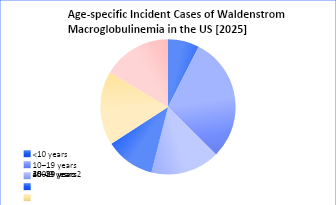
- The majority of age-specific cases occur in individuals under the age of 65.
- Waldenstrom macroglobulinemia has an incidence rate of approximately 3 cases per million annually in the US, with 1,000 to 1,500 new diagnoses each year.
- Waldenstrom macroglobulinemia is more common in men than it is in women.
- According to a US SEER surveillance study on Waldenstrom macroglobulinemia, the incidence in the US was 0.3 per 100,000 population, and the median age at diagnosis was 73.
- Next-generation sequencing has revealed recurring somatic mutations in Waldenstrom macroglobulinemia. Common mutations include MYD88 (95–97%), CXCR4 (30–40%), ARID1A (17%), and CD79B (8–15%).
- There are few cases of Waldenstrom macroglobulinemia in younger people, but the chance of developing this disease goes up as people get older. The average age of people when they are diagnosed with Waldenstrom macroglobulinemia is 70.
- According to the secondary analysis, there were 229 cases of Waldenstrom macroglobulinemia and 125 cases of lymphoplasmacytic lymphoma, comprising 1.97% of 17,957 mature lymphoid malignancies. The annual incidence of Waldenstrom macroglobulinemia/lymphoplasmacytic lymphomain Japan is 2.8 per million
Scope of the Report
- The report covers a segment of a descriptive overview of Waldenstrom macroglobulinemia, explaining their causes, signs and symptoms, and pathogenesis.
- Comprehensive insight has been provided into the epidemiology segments and forecasts, the future growth potential of the diagnosis rate, and disease progression.
Report Insights
Waldenstrom Macroglobulinemia Patient Population Forecast
Report Key Strengths
- Epidemiology‑based (Epi‑based) Bottom‑up Forecasting
- 11-year Forecast
- Patient Burden Trends (by geography)
Explore More Insights in the Report @ Waldenstrom Macroglobulinemia Pipeline Drugs
FAQs
- What are the disease risks, burdens, and unmet needs of Waldenstrom macroglobulinemia? What will be the growth opportunities across the 7MM concerning the patient population with Waldenstrom macroglobulinemia?
- What is the historical and forecasted Waldenstrom macroglobulinemia patient pool in the US, EU4 (Germany, France, Italy, and Spain), the UK, and Japan?
Reasons to Buy
- Insights on patient burden/disease prevalence, evolution in diagnosis, and factors contributing to the change in the epidemiology of the disease during the forecast years.
- To understand key opinion leaders’ perspectives around the diagnostic challenges to overcome barriers in the future.
- Detailed insights on various factors hampering disease diagnosis and other existing diagnostic challenges.
Stay updated with us for Recent Articles @ New DelveInsight Blogs