
Waldenstrom Macroglobulinemia Market Summary
- The Waldenstrom Macroglobulinemia Therapeutics Market is anticipated to grow steadily, driven by increasing disease awareness, improved diagnostic capabilities, ongoing research activities, and the development of novel targeted therapies.
- The leading Waldenstrom Macroglobulinemia Companies include Janssen, AbbVie, Takeda Pharmaceuticals, BeiGene, AstraZeneca, Millennium Pharmaceuticals, Cellectar Biosciences, TG Therapeutics, Gilead Sciences, X4 Pharmaceuticals, Regeneron Pharmaceuticals, and others.
Waldenstrom Macroglobulinemia Market & Epidemiology Insights
- Waldenstrom macroglobulinemia is a very rare disorder affecting about 1 in 3.4 million American males and about half that number of American females.
- Waldenstrom macroglobulinemia is the most common subtype of lymphoplasmacytic lymphoma (LPL), a rare form of non-Hodgkin lymphoma characterized by malignant lymphoplasmacytic cells that exhibit features of both lymphocytes and plasma cells.
- Waldenstrom macroglobulinemia is typically an indolent, slow-growing lymphoma, and treatment is generally initiated only when patients develop clinically significant symptoms or disease-related complications.
- The Waldenström macroglobulinemia treatment landscape has been transformed by the introduction of Bruton's tyrosine kinase inhibitors, which have become the cornerstone of therapy owing to their ability to provide durable disease control and favorable tolerability.
- The approved Waldenström Macroglobulinemia marketed therapies are limited to two therapies such as Zanubrutinib (BRUKINSA) (BeOne) and Ibrutinib (IMBRUVICA) (Johnson & Johnson/AbbVie), which indicates a significant market gap and pharmaceutical companies have an opportunity to enter the market and gain market share.
- Tirabrutinib (VELEXBRU) has emerged as an important treatment option for Waldenström macroglobulinemia in Japan, offering a highly selective BTKi approach with durable clinical responses and a manageable safety profile.
- Zanubrutinib and ibrutinib are the principal competitors in the waldenström macroglobulinemia therapeutics market, with zanubrutinib increasingly gaining market share due to its favorable efficacy and tolerability profile, while ibrutinib continues to maintain a significant presence as the first approved BTK inhibitor in waldenström macroglobulinemia.
- The Waldenström Macroglobulinemia Pipeline is robust and increasingly focused on next-generation targeted therapies, including non-covalent BTKi, BTK degraders, BCL-2 inhibitors, and targeted radiotherapeutics. Key emerging candidates such as Nemtabrutinib (MK-1026-003) (Merck & Co), Bexobrutideg (NX-5948) (Nurix Therapeutics), Sonrotoclax (BeOne), Iopofosine I-131 (Cellectar Biosciences), and TT-01488 (TransThera Biosciences) are being developed to overcome treatment resistance, improve response durability, and diversify the therapeutic landscape beyond conventional BTKi.
- Despite significant therapeutic advances, disease relapse, treatment resistance, and the need for continuous therapy remain major clinical challenges, highlighting the need for novel treatment approaches.
Request to unlock the Sample Page of the "Waldenstrom Macroglobulinemia Treatment Market"
Waldenstrom Macroglobulinemia Market Size and Forecast in the 7MM
| 2025 Waldenstrom Macroglobulinemia Market Size | Request for Market Size |
| 2036 Projected Waldenstrom Macroglobulinemia Market Size | Request for Market Size |
| Waldenstrom Macroglobulinemia Growth Rate (2026–2036) | Request for CAGR |
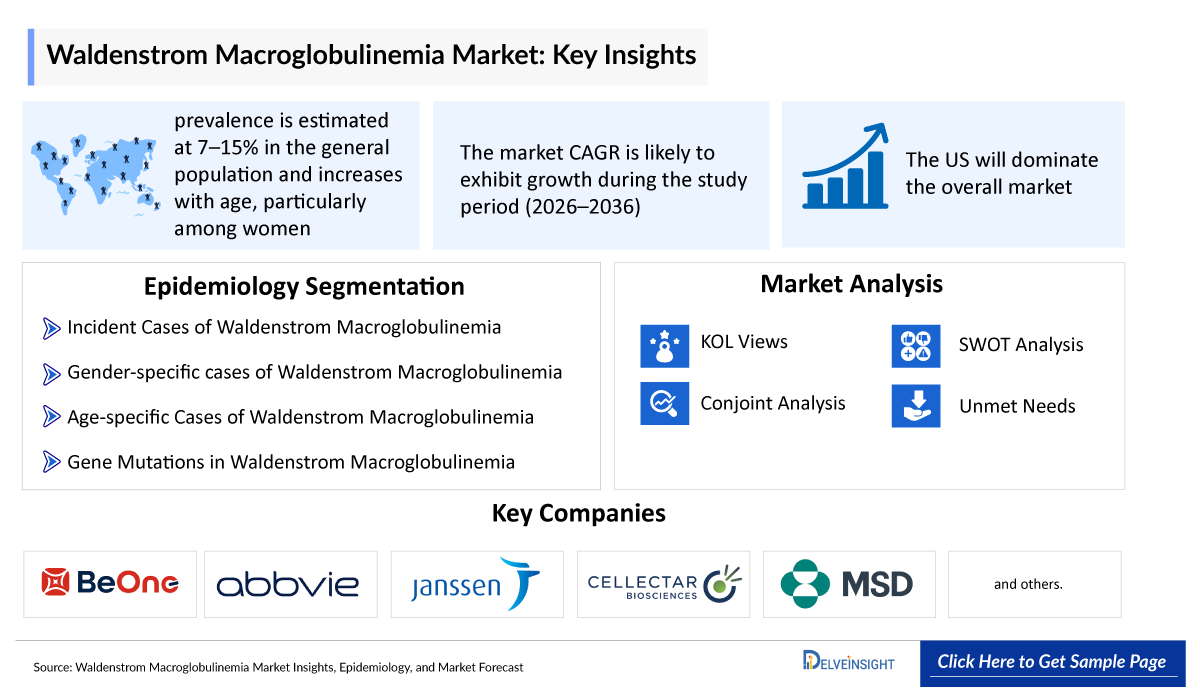
Key Factors Driving the Growth of the Waldenstrom Macroglobulinemia Market
-
Increasing Adoption of Targeted Therapies
The introduction of BTKi has significantly transformed the treatment landscape of Waldenstrom macroglobulinemia. Targeted therapies offer improved efficacy, durable responses, and a more favorable safety profile compared with traditional chemoimmunotherapy, driving increased treatment uptake and market growth.
-
Growing Diagnosis Rates and Improved Disease Awareness
Advancements in diagnostic techniques, wider availability of molecular testing, and increasing physician awareness are contributing to earlier and more accurate diagnosis of Waldenstrom macroglobulinemia. Improved recognition of disease symptoms is expected to expand the diagnosed patient population over time.
-
Robust Pipeline of Novel Targeted Agents
A growing pipeline of BTK degraders, non-covalent BTKi, BCL-2 inhibitors, and targeted radiotherapeutics is expected to diversify treatment options. These emerging therapies have the potential to address resistance mechanisms and improve outcomes in relapsed/refractory patients.
DelveInsight's ‘Waldenstrom Macroglobulinemia Market Insights, Epidemiology and Market Forecast – 2036’ report delivers an in-depth understanding of the Waldenstrom macroglobulinemia, historical and forecasted epidemiology, as well as the Waldenstrom macroglobulinemia market trends in the United States, EU4 (Germany, Spain, Italy, and France) and the United Kingdom, and Japan.
The Waldenstrom macroglobulinemia Treatment Market Report delivers a comprehensive analysis of the current treatment landscape, including standards of care, clinical practices, and evolving therapeutic algorithms. It evaluates Waldenstrom macroglobulinemia patient burden trends, revenue & market share dynamics, peak patient share & therapy uptake analysis, and provides an in-depth market size assessment, and growth rate projections (Historical & Forecast 2022–2036) across global regions. The report highlights key unmet medical needs in Waldenstrom macroglobulinemia and maps the competitive and clinical landscape to uncover high‑value opportunities, providing a clear outlook on future market growth potential.
Scope of the Waldenstrom Macroglobulinemia Market Report | |
|
Study Period |
2022–2036 |
|
Historical Year |
2022–2025 |
|
Forecast Period |
2026–2036 |
|
Base Year |
2026 |
|
Geographies Covered |
|
|
Waldenstrom Macroglobulinemia Market CAGR (Forecast period) |
XX% (2026–2036) |
|
Waldenstrom Macroglobulinemia Epidemiology Segmentation Analysis |
Patient Burden Assessment
|
|
Waldenstrom Macroglobulinemia Companies |
|
|
Waldenstrom Macroglobulinemia Therapies |
|
|
Waldenstrom Macroglobulinemia Market |
Segmented by
|
|
Analysis
|
|
Waldenstrom Macroglobulinemia Understanding
Waldenstrom Macroglobulinemia Overview
Waldenstrom macroglobulinemia is a rare, indolent B-cell non-Hodgkin lymphoma characterized by the accumulation of lymphoplasmacytic cells in the bone marrow and the excessive production of monoclonal immunoglobulin M (IgM) protein.
The disease primarily affects older adults and can lead to a wide range of clinical manifestations, including anemia, fatigue, neuropathy, hyperviscosity syndrome, lymphadenopathy, and hepatosplenomegaly. Waldenström macroglobulinemia is closely associated with genetic alterations, particularly mutations in the MYD88 gene, which are present in the majority of patients and play a central role in disease pathogenesis.
Waldenström Macroglobulinemia Diagnosis
The diagnosis of waldenström macroglobulinemia is based on the presence of bone marrow infiltration by lymphoplasmacytic lymphoma cells together with the detection of a monoclonal IgM protein in the serum. Diagnostic evaluation typically includes serum protein electrophoresis, immunofixation, quantitative immunoglobulin testing, complete blood count, and bone marrow biopsy.
Molecular testing for MYD88 and CXCR4 mutations is increasingly utilized to support diagnosis, provide prognostic information, and guide treatment decisions. Additional assessments, including imaging studies and evaluation for hyperviscosity-related complications, may be performed to determine disease extent and symptom burden.
Further details are provided in the report.
Current Waldenstrom Macroglobulinemia Treatment Landscape
Treatment is generally reserved for symptomatic patients, while those with asymptomatic disease may be managed through active surveillance. Current treatment options include anti-CD20 monoclonal antibody-based regimens, chemoimmunotherapy, proteasome inhibitors, and targeted therapies.
BTK inhibitors such as ibrutinib and zanubrutinib have become important treatment options due to their ability to achieve durable responses and prolonged disease control. Treatment selection is influenced by factors such as disease burden, genetic profile, comorbidities, and prior therapies. Ongoing research is focused on developing next-generation BTK inhibitors, BTK degraders, BCL-2 inhibitors, and targeted radiotherapeutics to improve outcomes and address resistance in relapsed or refractory waldenström macroglobulinemia.
Further details related to country-based variations are provided in the report.
Waldenström Macroglobulinemia Unmet Needs
The section “unmet needs of Waldenstrom macroglobulinemia” outlines the critical gaps between the current state of patient care, diagnosis, and the ideal & effective management of the disease. It highlights the obstacles experienced by patients, clinicians, and researchers and identifies potential solutions for future progress.
- High reliance on off-label therapies due to limited Waldenstrom macroglobulinemia-specific approved treatments
- No universally accepted standard of care, leading to treatment variability
- Resistance to BTK inhibitors
- Treatment-related toxicities, affecting patient quality of life and adherence, and others…..
Note: Comprehensive unmet needs insights in Waldenstrom Macroglobulinemia and their strategic implications are provided in the full report.
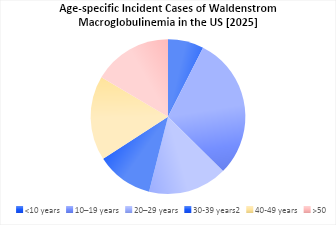
Waldenstrom Macroglobulinemia Epidemiology Insights
Key Findings from Waldenstrom Macroglobulinemia Epidemiological Analysis and Forecast
- The majority of age-specific cases occur in individuals under the age of 65.
- Waldenstrom macroglobulinemia has an incidence rate of Waldenstrom Macroglobulinemia ~3 cases per million annually in the US, with 1,000 to 1,500 new diagnoses each year.
- Waldenstrom macroglobulinemia is more common in men than it is in women.
- According to a US SEER surveillance study on Waldenstrom macroglobulinemia, the incidence in the US was 0.3 per 100,000 population, and the median age at diagnosis was 73.
- Next-generation sequencing has revealed recurring somatic mutations in Waldenstrom macroglobulinemia. Common mutations include MYD88 (95–97%), CXCR4 (30–40%), ARID1A (17%), and CD79B (8–15%).
- There are few cases of Waldenstrom macroglobulinemia in younger people, but the chance of developing this disease goes up as people get older. The average age of people when they are diagnosed with Waldenstrom macroglobulinemia is 70.
- According to the secondary analysis, there were 229 cases of Waldenstrom macroglobulinemia and 125 cases of lymphoplasmacytic lymphoma, comprising 1.97% of 17,957 mature lymphoid malignancies. The annual incidence of Waldenstrom macroglobulinemia/lymphoplasmacytic lymphoma in Japan is 2.8 per million.
Waldenstrom Macroglobulinemia Epidemiology Segmentation in the 7MM
- Total Waldenstrom Macroglobulinemia Incident Cases
- Waldenstrom Macroglobulinemia Age-specific Incident Cases
- Waldenstrom Macroglobulinemia Gender-specific Incident Cases
- Waldenstrom Macroglobulinemia Gene-mutation-specific Incident Cases
- Total Waldenstrom Macroglobulinemia Treated Cases
Waldenstrom Macroglobulinemia Market Recent Breakthroughs and Developments
- In June 2026, Cellectar Biosciences announced that efficacy results from a subset of patients treated with iopofosine I 131 immediately post-BTKi therapy in the company’s Phase II CLOVER WaM to treat R/R Waldenström macroglobulinemia are today in a poster presentation at the American Society of Clinical Oncology Annual Meeting (ASCO).
- As of June 2026, following FDA feedback received during the March 2025 End-of-Phase II meeting, Cellectar Biosciences plans to initiate a randomized Phase III confirmatory trial in Q4 2026 to support the accelerated and full approval pathway for iopofosine I 131.
- In May 2026, Cellectar Biosciences announced updated and mature 12-month follow-up data from its Phase IIb CLOVER WaM clinical trial evaluating iopofosine I 131 in patients with R/R Waldenström macroglobulinemia. 83.6% ORR and 61.8% MRR was achieved in heavily pretreated population with median duration of response of 17.8 months.
- In December 2025, Nurix Therapeutics presented new clinical data from patients with R/R Waldenström macroglobulinemia treated in the Phase I clinical trial of its bexobrutideg (NX-5948). The data showed an ORR of 75%, including VGPR in three patients (10.7%).
- In July 2025, Nurix Therapeutics announced that the EMA has granted ODD to bexobrutideg (NX-5948) for the treatment of lymphoplasmacytic lymphoma also known as Waldenström macroglobulinemia.
Waldenstrom Macroglobulinemia Drug Analysis & Competitive Landscape
The Waldenstrom macroglobulinemia drug chapter provides a detailed, market-focused review of the emerging Waldenstrom Macroglobulinemia Pipeline across Phase II/I clinical trials and preclinical trials. It covers the Waldenstrom Macroglobulinemia mechanism of action, clinical trial data, regulatory approvals, patents, collaborations, and strategic partnerships for each therapy, along with their advantages, limitations, and recent developments. This section offers critical insights into the Waldenstrom macroglobulinemia treatment landscape, supporting market assessment, competitive analysis, and growth forecasting for the Waldenstrom macroglobulinemia therapeutics market.
Waldenstrom Macroglobulinemia Approved Therapies
-
Zanubrutinib (BRUKINSA): BeOne
It is a next-generation BTKi designed for greater selectivity and fewer off-target effects than first-generation BTK inhibitors. It is US FDA approved for adults with Waldenstrom macroglobulinemia in 2021. In addition to this, zanubrutinib is also approved by EMA and other regulatory agencies worldwide for Waldenstrom macroglobulinemia and other B-cell malignancies.
It is approved in 77 markets. According to BeOne 2025 annual report, BRUKINSA generated revenue of USD 3.9 billion, primarily due to increased global sales, driven by significant growth in the US and Europe and it has seen a 38% growth in its market share in the US.
-
Ibrutinib (IMBRUVICA): AbbVie and Janssen (J&J)
It was the first FDA-approved treatment for adult patients with Waldenstrom macroglobulinemia in 2015. As a first-in-class BTK inhibitor, it revolutionized the treatment by targeting B-cell signaling pathways to inhibit malignant cell proliferation. The European Commission also approved IMBRUVICA in 2015. According to AbbVie annual report 2025, global IMBRUVICA net revenue was USD 2.8 billion across its approved hematologic malignancy indications, including Waldenstrom macroglobulinemia.
Competitive Landscape of Waldenstrom Macroglobulinemia Marketed/Approved Therapies | ||||||
|
Drug/Therapy |
Company |
Indication |
Molecule Type |
MoA |
RoA |
Marketed Region |
|
Zanubrutinib (BRUKINSA) |
BeOne |
Waldenstrom macroglobulinemia |
Small molecule |
BTK inhibitor |
Oral |
US: 2021 |
|
Tirabrutinib (VELEXBRU) |
Ono Pharmaceutical |
Waldenstrom macroglobulinemia |
Small molecule |
BTK inhibitor |
Oral |
JP: 2020 |
|
Ibrutinib (IMBRUVICA) |
AbbVie and Janssen (J&J) |
Waldenstrom macroglobulinemia |
Small molecule |
BTK inhibitor |
Oral |
US: 2015 |
Note: Detailed marketed therapies assessment will be provided in the final report.
Waldenstrom Macroglobulinemia Pipeline Analysis
-
Iopofosine I-131: Cellectar Biosciences
Iopofosine I-131 is Cellectar’s lead investigational Phospholipid Drug Conjugate (PDC) radiotherapeutic, designed to deliver iodine-131 directly to tumor cells while minimizing exposure to healthy tissue. Iopofosine I-131 has been evaluated in the completed CLOVER-WaM Phase II pivotal study for patients with R/R Waldenstrom macroglobulinemia.
It has received various regulatory designations in the US and EU in Waldenstrom macroglobulinemia. Orphan Drug Designation (ODD) in US and EU. Breakthrough Therapy Designation (BTD) and Fast Track Designation (FTD) in US and PRIME Designation in the EU.
-
Nemtabrutinib (MK-1026-003): Merck Sharp & Dohme
Nemtabrutinib (MK-1026, formerly ARQ 531) is an investigational, oral, non-covalent (reversible) BTKi being developed by Merck Sharp & Dohme for several B-cell malignancies, including R/R waldenström macroglobulinemia.
Competitive Landscape of Waldenstrom Macroglobulinemia Pipeline Drugs | ||||||
|
Drug Name |
Company |
Highest Phase |
Indication |
RoA |
MoA |
Anticipated Launch in the US |
|
Iopofosine I-131 |
Cellectar Biosciences |
II |
Waldenstrom macroglobulinemia |
IV infision |
PDC radiotherapeutic |
Information is available in the full report |
|
Nemtabrutinib (MK-1026-003) |
Merck Sharp & Dohme |
II |
R/R Waldenstrom macroglobulinemia |
Oral |
Reversible BTK inhibitor |
Information is available in the full report |
|
Sonrotoclax |
BeOne |
II |
R/R Waldenstrom macroglobulinemia |
Oral |
BCL-2 inhibitor |
Information is available in the full report |
|
TT-01488 |
TransThera Biosciences |
I/II |
R/R Waldenstrom macroglobulinemia |
Oral |
BTK inhibitor |
Information is available in the full report |
|
Bexobrutideg (NX-5948) |
NURIX |
I |
R/R Waldenstrom macroglobulinemia |
Oral |
BTK degrader |
Information is available in the full report |
|
Note: Launch insights are provisional and may change with future report updates or the occurrence of major key catalysts. | ||||||
Note: Detailed emerging therapies assessment will be provided in the final report.
Waldenstrom Macroglobulinemia Market Outlook
The treatment landscape for Waldenström Macroglobulinemia has undergone a significant transformation over the past decade, primarily driven by the introduction of BTKi. Prior to the availability of targeted therapies, treatment largely relied on rituximab-based immunochemotherapy regimens that were often associated with treatment-related toxicities.
The approval of ibrutinib (IMBRUVICA) in 2015 marked a major milestone as the first therapy specifically approved for Waldenstrom macroglobulinemia, establishing BTK inhibition as a cornerstone of disease management. More recently, zanubrutinib has emerged as a strong competitor, supported by favorable efficacy and tolerability data from the ASPEN trial. While IMBRUVICA continues to generate substantial global revenue, sales have declined compared with prior years due to increasing competition from next-generation BTKi such as zanubrutinib. Zanubrutinib, benefiting from expanding global adoption across B-cell malignancies, is expected to gain an increasing share of the Waldenstrom macroglobulinemia market during the forecast period.
Nemtabrutinib (MK-1026-003) has demonstrated encouraging activity in patients previously exposed to covalent BTK inhibitors and could become an important option for R/R disease. Bexobrutideg (NX-5948) represents a next-generation BTK degrader that offers a differentiated mechanism by eliminating both wild-type and mutant BTK proteins, potentially overcoming acquired resistance. Upon potential FDA approval, iopofosine may provide a meaningful treatment option for R/R patients, as there are ~11,500 R/R patients and ~1,000 patients exhausting treatment options by the 3rd-line in the US.
Key findings from Waldenstrom Macroglobulinemia Market Forecast
- Overall, the Waldenstrom macroglobulinemia Therapeutics Market is expected to witness steady growth across the 7MM, supported by increasing diagnosis rates, longer patient survival, expanding utilization of targeted therapies, and continued innovation in B-cell malignancies. The advancements are anticipated to create significant commercial opportunities for both established products and emerging pipeline therapies through 2036.
- Zanubrutinib is expected to emerge as a leading growth driver in the Waldenstrom macroglobulinemia market.
- The introduction of non-covalent BTK inhibitors, BTK degraders, BCL-2 inhibitors, and targeted radiotherapeutics could significantly reshape the competitive landscape by addressing resistance mechanisms and unmet needs in R/R Waldenstrom macroglobulinemia.
Further details will be provided in the report….
Waldenstrom Macroglobulinemia Companies
- BeOne
- AbbVie
- Janssen (J&J)
- Cellectar Biosciences
- Merck Sharp & Dohme
- TransThera Biosciences
- NURIX
- Ascentage Pharma
- Ono Pharmaceutical
- and others.
Waldenstrom Macroglobulinemia Drug Class/Insights into Leading Emerging and Marketed Therapies (2022–2036 Forecast)
The Waldenstrom macroglobulinemia therapeutics market (2022–2036 forecast) is increasingly centered on targeted therapies that inhibit key survival pathways in malignant B cells, particularly the BTK signaling pathway.
- BTK Inhibitors: This class includes ibrutinib, zanubrutinib, nemtabrutinib, and TT-01488. These therapies inhibit bruton's tyrosine kinase, a critical mediator of B-cell receptor signaling that promotes the growth and survival of malignant lymphoplasmacytic cells.
- BTK Degraders: Bexobrutideg (NX-5948) represents a novel class of targeted protein degraders designed to eliminate BTK proteins rather than simply inhibit their activity. This differentiated mechanism has the potential to overcome both wild-type and mutant BTK-driven resistance.
- BCL-2 Inhibitors: Sonrotoclax belong to the BCL-2 inhibitor class, which promotes apoptosis by blocking the anti-apoptotic BCL-2 protein that supports malignant cell survival.
Overall, innovation in Waldenström macroglobulinemia is increasingly focused on next-generation BTK-targeted therapies, apoptosis-inducing agents, and novel radiotherapeutic approaches. While BTK inhibitors currently dominate the market, emerging classes such as BTK degraders, BCL-2 inhibitors, and targeted radiopharmaceuticals are expected to expand therapeutic options and improve outcomes for patients with relapsed or refractory disease.
As these pipeline candidates progress, they are expected to expand the therapeutic landscape beyond Metoclopramide, addressing significant unmet needs and supporting steady market growth across major regions.
Waldenstrom Macroglobulinemia Drug Uptake
This section focuses on the uptake rate of potential Waldenstrom Macroglobulinemia drugs expected to be launched in the market during the forecast period (2026–2036). The analysis covers the Waldenström macroglobulinemia drug’s uptake, performance at peak, factors affecting performance during prime years of growth, patient uptake by therapy, and anticipated sales generated by each drug.
During the forecast period, in approved therapies, zanubrutinib is expected to strengthen its position in the waldenström macroglobulinemia market, supported by increasing physician preference for next-generation BTK inhibitors with favorable efficacy and tolerability profiles. As a result, it is well positioned to capture a growing share of both newly diagnosed and R/R patients.
In contrast, ibrutinib is expected to remain an important treatment option across multiple B-cell malignancies, including Waldenstrom Macroglobulinemia, particularly among established users. However, its relative revenue trajectory may gradually decline as newer BTK-targeted therapies gain traction.
The Waldenstrom Macroglobulinemia Competitive Landscape is expected to evolve further with the emergence of several novel targeted therapies that aim to address resistance mechanisms associated with existing BTK inhibitors. Nemtabrutinib is expected to achieve meaningful uptake following potential approval, particularly in R/R patients who have progressed on covalent BTK inhibitors.
Bexobrutinib may establish a differentiated position through its BTK degradation mechanism, which could help overcome resistance-associated mutations and support adoption in heavily pretreated patients. Iopofosine I-131 is likely to occupy a niche but important role in heavily pretreated Waldenstrom macroglobulinemia patients due to its targeted radiotherapeutic approach. While early uptake may be concentrated in specialized centers, positive long-term efficacy data could support broader utilization.
Detailed insights of emerging therapies' drug uptake is included in the report
Waldenstrom Macroglobulinemia Market Access and Reimbursement of Approved Therapies
Reimbursement is a crucial factor that affects the drug’s access to the market. Often, the decision to reimburse comes down to the price of the drug relative to the benefit it produces in treated patients. To reduce the healthcare burden of these high-cost therapies, many payment models are being considered by payers and other industry insiders.
The United States
|
US Reimbursement of Therapies Approved for Waldenstrom Macroglobulinemia | |
|
Drug/Therapy |
Access Program |
|
Zanubrutinib (BRUKINSA) |
myBeOne Support program |
NOTE: Further Details are provided in the final report….
Waldenstrom Macroglobulinemia Therapies Price Scenario & Trends
Pricing and analogue assessment of Waldenstrom macroglobulinemia therapies highlights evolving price dynamics structures. This section summarizes the cost of approved treatments, closest and most appropriate analogue selection for emerging therapies, and understanding of how pricing influences market access, adherence, and long-term uptake.
Waldenstrom Macroglobulinemia Industry Experts and Physician Views
To keep up with Waldenstrom macroglobulinemia Therapeutics Market Trends, we take Key Opinion Leaders (KOLs) and Subject Matter Experts (SMEs) opinions working in the domain through primary research to fill the data gaps and validate our secondary research. Industry experts were contacted for insights on the Waldenstrom macroglobulinemia emerging therapies, the evolving Waldenstrom Macroglobulinemia Treatment landscape, patient adherence to conventional therapies, therapy switching trends, drug adoption and uptake, accessibility challenges, and epidemiology and real-world prescription patterns in Waldenstrom macroglobulinemia, including MD, PhD, Instructor, Postdoctoral Researcher, Professor, Researcher, and others.
DelveInsight’s analysts connected with 15+ KOLs to gather insights at the country level. Centers such as Cancer Institute, Boston, Royal Waldenstrom Macroglobulinemia Society, and Fred Hutchinson Cancer Research Center, etc. were contacted. Their opinion helps understand and validate current and emerging Waldenstrom macroglobulinemia therapies, highlight unmet medical needs, provide epidemiological context, and support strategic decisions for market access, therapy adoption, and pipeline prioritization in Waldenstrom macroglobulinemia.
|
Region |
Key Opinion Leaders (KOLs) and Subject Matter Experts (SMEs) |
|
United States |
“One of the most significant challenges in Waldenstrom macroglobulinemia is its delayed diagnosis. Many patients present with symptoms that mimic other more common diseases, which can result in misdiagnosis. Early detection through genetic profiling and biomarkers will be key to better patient outcomes.” |
|
Germany |
“While chemotherapy has long been a cornerstone of treatment, we are seeing an increasing shift toward less toxic options like targeted therapies and immunotherapy. The goal is to manage the disease long term while maintaining the patient’s quality of life.” |
Waldenstrom Macroglobulinemia Report Qualitative Analysis: SWOT and Conjoint Analysis
We perform qualitative and Waldenström Macroglobulinemia Therapeutics Market Intelligence analysis using various approaches, such as SWOT analysis and conjoint analysis. In the SWOT analysis of Waldenström macroglobulinemia, strengths, weaknesses, opportunities, and threats in terms of disease diagnosis, patient awareness, patient burden, competitive landscape, cost-effectiveness, and geographical accessibility of therapies are provided.
Conjoint analysis analyzes Waldenstrom Macroglobulinemia Emerging Therapies based on relevant attributes such as safety, efficacy, frequency of administration, route of administration, and order of entry. Scoring is given based on these parameters to analyze the effectiveness of therapy.
The team of analysts analyzes promising Waldenstrom Macroglobulinemia emerging therapies based on relevant attributes such as safety, efficacy, frequency of administration, route of administration, and order of entry. In efficacy, the trial’s primary and secondary outcome measures are evaluated, whereas the therapies’ safety is evaluated, wherein acceptability, tolerability, and adverse events are majorly observed.
In addition, the scoring is also based on the route of administration, order of entry, probability of success, and the addressable patient pool for each therapy. According to these parameters, the final weightage score and the ranking of the emerging therapies are decided.
Scope of the Waldenstrom Macroglobulinemia Market Report
- The Waldenstrom Macroglobulinemia Therapeutics Market Report covers a segment of key events, an executive summary, and a descriptive overview, explaining their causes, signs and symptoms, pathogenesis, and currently available treatments.
- Comprehensive insight has been provided into the Waldenstrom Macroglobulinemia epidemiology segments and forecasts, the future growth potential of the diagnosis rate, and disease progression along treatment guidelines.
- Additionally, an all-inclusive account of both the current and emerging treatments, along with the elaborative profiles of late-stage and prominent therapies, will have an impact on the current treatment landscape.
- A detailed review of the Waldenstrom macroglobulinemia therapeutics market, historical and forecasted Waldenstrom Macroglobulinemia treatment market size, Waldenstrom Macroglobulinemia drugs market share by therapies, detailed assumptions, and rationale behind our approach is included in the report, covering the 7MM drug outreach.
- The Waldenstrom Macroglobulinemia therapeutics market report provides an edge while developing business strategies by understanding trends through SWOT analysis and expert insights/KOL views, patient journey, and treatment preferences that help in shaping and driving the 7MM Waldenstrom macroglobulinemia drugs market.
Waldenstrom Macroglobulinemia Market Report Insights
- Waldenstrom Macroglobulinemia Patient Population Forecast
- Waldenstrom Macroglobulinemia Therapeutics Market Size
- Waldenstrom Macroglobulinemia Pipeline Analysis
- Waldenstrom Macroglobulinemia Market Size and Trends
- Waldenstrom Macroglobulinemia Market Opportunity (Current and Forecasted)
Waldenstrom Macroglobulinemia Market Report Key Strengths
- Epidemiology‑based (Epi‑based) Bottom‑up Forecasting
- Artificial Intelligence (AI)-Enabled Market Research Report
- 11-Year Forecast
- Waldenstrom Macroglobulinemia Market Outlook (North America, Europe, Asia-Pacific)
- Patient Burden Trends (By Geography)
- Waldenstrom Macroglobulinemia Treatment Addressable Market (TAM)
- Waldenstrom Macroglobulinemia Competitive Landscape
- Waldenstrom Macroglobulinemia) Major Companies Insights
- Waldenstrom Macroglobulinemia Price Trends and Analogue Assessment
- Waldenstrom Macroglobulinemia Therapies Drug Adoption/Uptake
- Waldenstrom Macroglobulinemia Therapies Peak Patient Share Analysis
Waldenstrom Macroglobulinemia Market Report Assessment
- Waldenstrom Macroglobulinemia Current Treatment Practices
- Waldenstrom Macroglobulinemia Unmet Needs
- Waldenstrom Macroglobulinemia Clinical Development Analysis
- Waldenstrom Macroglobulinemia Emerging Drugs Product Profiles
- Waldenstrom Macroglobulinemia Market attractiveness
- Waldenstrom Macroglobulinemia Qualitative Analysis (SWOT and conjoint analysis)
Key Questions Answered in the Waldenstrom Macroglobulinemia Therapeutics Market Report
Waldenstrom Macroglobulinemia Treatment Market Insights
- What was the Waldenstrom macroglobulinemia market size, the Waldenstrom Macroglobulinemia treatment market size by therapies, Waldenstrom Macroglobulinemia drugs market share (%) distribution in 2025, and what would it look like by 2036? What are the contributing factors for this growth?
- What are the anticipated pricing variations among different geographies for the emerging therapies in the future?
- What can be the future treatment paradigm of Waldenstrom macroglobulinemia?
- What are the disease risks, burdens, and unmet needs of Waldenstrom macroglobulinemia?
- What will be the growth opportunities across the 7MM concerning the patient population with Waldenstrom macroglobulinemia?
- Who is the major future competitor in the market, and how will the competitors affect their market share?
- What are the current options for the treatment of Waldenstrom macroglobulinemia?
- What are the current guidelines for treating Waldenstrom macroglobulinemia in the US, Europe, and Japan?
Reasons to Buy the Waldenstrom Macroglobulinemia Market Report
- The Waldenstrom Macroglobulinemia Therapeutics Market Report will help in developing business strategies by understanding the latest trends and changing treatment dynamics driving the Waldenstrom macroglobulinemia drugs market.
- Bottom-up forecasting builds from the affected population to product forecasts, delivering a robust, data-driven approach ideal for new therapies and novel classes.
- Insights on patient burden/disease, Waldenstrom Macroglobulinemia Incidence, evolution in diagnosis, and factors contributing to the change in the epidemiology of the disease during the forecast years.
- Understand the existing market opportunities in varying geographies and the growth potential over the coming years.
- Identifying strong upcoming players in the Waldenstrom Macroglobulinemia drugs market will help devise strategies to help get ahead of competitors.
- Detailed analysis and ranking of class-wise potential Waldenstrom Macroglobulinemia emerging therapies under the conjoint analysis section to provide visibility around leading classes.
- To understand KOLs’ perspectives on the accessibility, acceptability, and compliance-related challenges of existing treatment to overcome barriers in the future.
- Detailed insights on the unmet needs of the existing market so that the upcoming players can strengthen their development and launch strategy.
- This Artificial Intelligence (AI)-enabled report summarize and simplify complex datasets with in the report into clear, actionable insights for stakeholders, investors, and healthcare providers, enabling faster, data-driven decisions.
Stay updated with us for Recent Articles @ New DelveInsight Blogs