Wet AMD Epidemiology Summary
Wet Age-related Macular Degeneration (Wet AMD) Insights and Trends
- Wet-AMD also referred to as neovascular AMD, accounts for roughly 10% of AMD cases, but almost 90% of AMD-related central vision loss. Although 80% of the patients have non-neovascular, or atrophic AMD, the neovascular form of the disease is responsible for nearly 90% of the severe, central visual acuity loss associated with AMD.
- According to DelveInsight’s analysis, the total prevalent cases of Wet AMD were ~ 4 million in the 7MM (the United States, the EU4 (Germany, France, Italy, and Spain), the United Kingdom, and Japan) in 2025.
- Wet AMD is more prevalent in Asian countries such as Japan due to due to a higher prevalence of polypoidal choroidal vasculopathy (PCV), along with genetic predisposition, environmental factors, and differences in retinal disease patterns compared to Western populations.
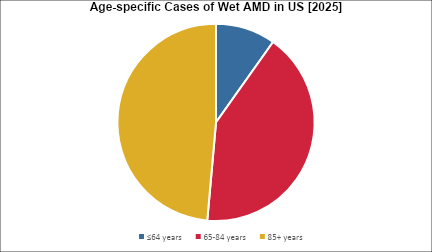
- Individuals aged 85 years and older face a markedly higher lifetime risk of developing Wet AMD and experience a greater disease burden, largely attributed to cumulative retinal aging, prolonged oxidative stress, increased prevalence of comorbidities, and progressive decline in retinal repair and vascular integrity mechanisms.
- Aging populations, increasing life expectancy, rising prevalence of risk factors (e.g., smoking, cardiovascular disease), and improved diagnostic capabilities are expected to drive the global burden of Wet AMD over the next decade. Enhancing early detection, ensuring timely access to anti-VEGF therapies, improving treatment adherence, and advancing longer-acting therapeutic options will remain key determinants of future disease outcomes.
Wet Age-related Macular Degeneration (Wet AMD) Epidemiology Forecast in 7MM
- 2025 Prevalent Cases of Wet AMD: ~4 million
- 2036 Prevalent Cases of Wet AMD: ~5 million
- Wet AMD Growth Rate (2026–2036): ~4.1% CAGR
DelveInsight's ‘Wet Age-related Macular Degeneration (Wet AMD) – Epidemiology Forecast – 2036’ report delivers an in-depth understanding of the WET AMD, historical and forecasted epidemiology in the United States, EU4 (Germany, Spain, Italy, and France) and the United Kingdom, and Japan.
|
Study Period |
2022–2036 |
|
Historical Year |
2022–2025 |
|
Forecast Period |
2026–2036 |
|
Base Year |
2026 |
|
Geographies Covered |
|
|
Wet AMD Epidemiology CAGR (Study period/Forecast period) |
~ 4.1% (2026-2036) |
|
Wet AMD Epidemiology Segmentation Analysis |
Patient Burden Assesment
|
Wet Age-related Macular Degeneration (Wet AMD) Understanding and Diagnosis Algorithm
WET AMD Overview
WET AMD is an advanced form of Age-related Macular Degeneration, occurring when abnormal blood vessels grow beneath the retina and leak fluid or blood, leading to rapid and severe vision loss. It can progress quickly, with symptoms such as blurred or distorted central vision, dark spots, and difficulty recognizing faces, especially in later stages. Wet AMD is mainly caused by abnormal vascular growth driven by factors like aging and oxidative stress. Diagnosis is based on eye examinations and imaging tests such as Optical Coherence Tomography (OCT) and fluorescein angiography.
WET AMD Diagnosis
Wet AMD is diagnosed through eye examination and specialized imaging tests, often identified during routine ophthalmic checkups or when patients report vision changes. A comprehensive dilated eye exam is the primary assessment, revealing abnormalities such as fluid leakage or abnormal blood vessels in the retina. Additional tests such as optical coherence tomography (OCT) and fluorescein angiography confirm the presence of choroidal neovascularization and retinal damage. If needed, further evaluations are performed to assess disease severity and guide treatment decisions.
Further details are provided in the report.
Wet Age-related Macular Degeneration (Wet AMD) Epidemiology
Key Findings from WET AMD Epidemiological Analysis and Forecast
- According to DelveInsight’s estimates, the total prevalent cases of Wet AMD in the 7MM were approximately 3 million in 2025.
- The age-specific distribution of Wet AMD in the US demonstrates a substantial increase with advancing age, with the highest prevalence observed among individuals aged ≥85 years, highlighting the growing epidemiological burden in the elderly population and the need for timely diagnosis and management to reduce vision-related complication.
- In 2025, early and intermediate AMD accounted for the majority of stage-specific AMD cases, whereas late-stage AMD (nAMD and geographic atrophy) represented a significantly smaller proportion, highlighting that most patients are diagnosed before progression to advanced disease stages, in Japan.
Scope of the Report
- The report covers a segment of an executive summary, a descriptive overview of Wet AMD, explaining its causes, signs and symptoms, and pathogenesis.
- Comprehensive insight has been provided into the epidemiology segments and forecasts, the future growth potential of the diagnosis rate, and disease progression.
Report Insights
Wet Age-related Macular Degeneration (WET AMD) Patient Population Forecast
Report Key Strengths
- Epidemiology‑based (epi‑based) Bottom‑up Forecasting
- 11-year Forecast
- Patient Burden Trends (by geography)
FAQs
- What are the disease risks, burdens, and unmet needs of Wet AMD? What will be the growth opportunities across the 7MM concerning the patient population with Wet AMD?
- What is the historical and forecasted Wet AMD patient pool in the US, EU4 (Germany, France, Italy, and Spain), the UK, and Japan?
Reasons to Buy
- Insights on patient burden/disease prevalence, evolution in diagnosis, and factors contributing to the change in the epidemiology of the disease during the forecast years.
- To understand key opinion leaders’ perspectives around the diagnostic challenges to overcome barriers in the future.
- Detailed insights on various factors hampering disease diagnosis and other existing diagnostic challenges.


