Wet AMD Market Summary
Wet Age-related Macular Degeneration (Wet AMD) Insights and Trends
- Age-related macular degeneration (AMD) is a leading cause of severe, irreversible blindness in developed countries worldwide, with a profound effect on the quality of life of affected individuals. With the increase in life expectancy bringing growth in the number of reported cases, it adds a significant burden on the health care systems with the expensive current standard of care.
- Wet AMD also referred to as neovascular AMD, accounts for roughly 10% of AMD cases, but almost 90% of AMD-related central vision loss. Although 80% of the patients have non-neovascular, or atrophic AMD, Wet AMD is a type of AMD which is characterized by abrupt central vision loss caused by abnormal blood vessels that bleed or leak fluid which may swell and damage the macula the neovascular form of the disease is responsible for nearly 90% of the severe, central visual acuity loss associated with AMD.
- According to DelveInsight’s analysis, Wet AMD market size was found to be ~USD XXXX million in the leading markets (the United States, the EU4 (Germany, France, Italy, and Spain), the United Kingdom, and Japan) in 2025.
- Aging is the greatest risk factor associated with AMD. Other risk factors include cortical cataracts, cataract surgery, hypertension, hyperlipidemia, and others.
- The Wet AMD therapeutic space includes a range of approved biologics and delivery innovations developed by leading pharmaceutical companies, including Regeneron/Bayer (EYLEA HD), and Genentech and marketed by Novartis (LUCENTIS)’ Roche/Genentech (VABYSMO), Novartis (BEOVU) reflecting ongoing innovation focused on durability, efficacy, and reduced injection frequency.
- In the Wet AMD market across the 7MM, anti-VEGF agents particularly aflibercept (EYLEA HD) and ranibizumab (LUCENTIS), account for the largest share, driven by their strong clinical efficacy, established safety profiles, and widespread adoption as first-line therapies.
- The current Wet AMD treatment landscape is characterized by the dominance of anti-VEGF therapies administered via intravitreal injections, alongside a gradual shift toward longer-acting and dual-pathway agents such as faricimab (VABYSMO), aimed at reducing treatment burden while maintaining or improving visual outcomes.
- While the Wet AMD pipeline remains moderately active, several novel therapies aimed at improving durability and reducing injection burden are in development. Key emerging assets include KSI-501 (Kodiak Sciences), RGX-314 (AbbVie/REGENXBIO), and CG-P5 peptide (Caregen), along with programs from NexThera, Roche, Bayer, and Opthea.
Wet Age-related Macular Degeneration (Wet AMD) Market Size and Forecast in the 7MM
- 2025 Wet AMD Market Size: ~USD XXXX million
- 2036 Wet AMD Market Size: ~USD XXXX million
- Wet AMD Growth Rate (2026–2036): ~XX% CAGR
-Market-Key-Insights.png)
DelveInsight's ‘Wet Age-related Macular Degeneration (Wet AMD) – Market Insights, Epidemiology and Market Forecast – 2036’ report delivers an in-depth understanding of the Wet AMD, historical and forecasted epidemiology, as well as the Wet AMD market trends in the United States, EU4 (Germany, Spain, Italy, and France) and the United Kingdom, and Japan.
The Wet AMD market report delivers a comprehensive analysis of the current treatment landscape, including standards of care, clinical practices, and evolving therapeutic algorithms. It evaluates, Wet AMD patient burden trends, revenue & market share dynamics, peak patient share & therapy uptake analysis, and provides an in-depth market size assessment, and growth rate projections (Historical & Forecast 2022–2036) across global regions. The report highlights key unmet medical needs in Wet AMD and maps the competitive and clinical landscape to uncover high‑value opportunities, providing a clear outlook on future market growth potential.
|
Study Period |
2022–2036 |
|
Historical Year |
2022–2025 |
|
Forecast Period |
2026–2036 |
|
Base Year |
2026 |
|
Geographies Covered |
|
|
Wet AMD Market CAGR (Study period/Forecast period) |
~XX% (2026–2036) |
|
Wet AMD Epidemiology Segmentation Analysis |
Patient Burden Assessment
|
|
Wet AMD Companies |
|
|
Wet AMD Therapies |
|
|
Wet AMD Market |
Segmented by
|
|
Analysis |
|
Key Factors Driving the Wet Age-related Macular Degeneration (Wet AMD) Market
Rising Wet AMD Prevalence
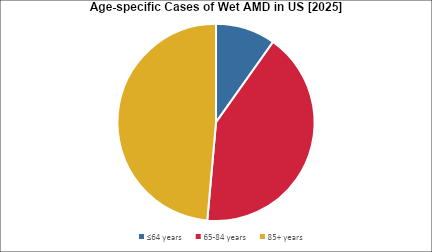
The increasing prevalence of Wet AMD, particularly 85+ years of population, is a primary driver of Wet AMD market expansion. In the US, in 2025, there were ~ 1.02 million prevalent cases of Wet AMD.
Rising Opportunities in Targeted and Long-Acting Therapies
Targeted approaches in Wet AMD are shifting beyond conventional anti-VEGF therapy toward longer-acting and mechanism-based options, including dual-pathway inhibition (e.g., Ang-2/VEGF) and sustained delivery systems. These innovations offer the potential for extended dosing intervals, reduced injection burden, and more consistent visual outcomes.
Emerging Wet AMD Competitive Landscape
The pipeline for Wet AMD is evolving such as RGX-314, CG-P5 peptide, NG101, and others. These aim to address unmet needs like frequent dosing and variable response, supporting a shift toward durable, long-term disease control.
Wet Age-related Macular Degeneration (Wet AMD) Understanding and Treatment Algorithm
Wet Age-related Macular Degeneration (Wet AMD) Overview and Diagnosis
WET AMD is an advanced form of Age-related Macular Degeneration, occurring when abnormal blood vessels grow beneath the retina and leak fluid or blood, leading to rapid and severe vision loss. It can progress quickly, with symptoms such as blurred or distorted central vision, dark spots, and difficulty recognizing faces, especially in later stages. Wet AMD is mainly caused by abnormal vascular growth driven by factors like aging and oxidative stress. Diagnosis is based on eye examinations and imaging tests such as Optical Coherence Tomography (OCT) and fluorescein angiography.
Wet Age-related Macular Degeneration (Wet AMD) Diagnosis
Wet AMD is diagnosed through eye examination and specialized imaging tests, often identified during routine ophthalmic checkups or when patients report vision changes. A comprehensive dilated eye exam is the primary assessment, revealing abnormalities such as fluid leakage or abnormal blood vessels in the retina. Additional tests such as optical coherence tomography (OCT) and fluorescein angiography confirm the presence of choroidal neovascularization and retinal damage. If needed, further evaluations are performed to assess disease severity and guide treatment decisions.
Further details are provided in the report.
Wet Age-related Macular Degeneration (Wet AMD) Treatment
The primary goals of Wet AMD treatment are to preserve and improve vision, suppress abnormal choroidal neovascularization, reduce retinal fluid, and prevent irreversible vision loss. Management is centered on long-term intravitreal anti-VEGF therapy (e.g., ranibizumab, aflibercept), administered via fixed, PRN, or treat-and-extend regimens to balance efficacy and treatment burden.
For patients with suboptimal response or high injection burden, newer options such as faricimab and sustained delivery systems (e.g., Port Delivery System with ranibizumab) help extend dosing intervals. Photodynamic therapy with verteporfin may be used in select cases like polypoidal choroidal vasculopathy.
Regular monitoring with OCT, along with lifestyle measures (e.g., smoking cessation) and appropriate nutritional support, remains essential. Early diagnosis and strict treatment adherence are critical for maintaining long-term visual outcomes and preventing severe vision loss.
Further details related to country-based variations are provided in the report.
Wet Age-related Macular Degeneration (Wet AMD) Unmet Needs
The section “unmet needs of Wet AMD” outlines the critical gaps between the current state of patient care, diagnosis, and the ideal & effective management of the disease. It highlights the obstacles experienced by patients, clinicians, and researchers and identifies potential solutions for future progress.
- Delayed diagnosis due to subtle early symptoms and lack of routine screening
- High treatment burden with frequent intra-vitreal injections
- Variable patient response and risk of disease progression despite therapy
- Limited long-term durability of current anti-VEGF treatments, and others…..
Comprehensive unmet needs insights in Wet Age-related Macular Degeneration (Wet AMD) and their strategic implications are provided in the full report.
Wet Age-related Macular Degeneration (Wet AMD) Epidemiology
Key Findings from Wet Age-related Macular Degeneration (Wet AMD) Epidemiological Analysis and Forecast
- According to DelveInsight’s estimates, the total prevalent cases of Wet AMD in the 7MM were approximately 3 million in 2025.
- The age-specific distribution of Wet AMD in the US demonstrates a substantial increase with advancing age, with the highest prevalence observed among individuals aged ≥85 years, highlighting the growing epidemiological burden in the elderly population and the need for timely diagnosis and management to reduce vision-related complication.
- In 2025, early and intermediate AMD accounted for the majority of stage-specific AMD cases, whereas late-stage AMD (nAMD and geographic atrophy) represented a significantly smaller proportion, highlighting that most patients are diagnosed before progression to advanced disease stages, in Japan.
Wet Age-related Macular Degeneration (Wet AMD) Drug Chapters & Competitive Analysis
The Wet AMD drug chapter provides a detailed, market-focused review of approved therapies and the emerging pipeline across Phase I–III clinical trials. It covers the mechanism of action, clinical trial data, regulatory approvals, patents, collaborations, and strategic partnerships for each therapy, along with their advantages, limitations, and recent developments. This section offers critical insights into the Wet AMD treatment landscape, supporting market assessment, competitive analysis, and growth forecasting for the Wet AMD therapeutics market.
Approved Therapies for Wet Age-related Macular Degeneration (Wet AMD)
Aflibercept (EYLEA HD): Regeneron Pharmaceuticals/Bayer
Aflibercept (EYLEA HD), jointly developed by Regeneron Pharmaceuticals and Bayer, is an 8 mg high-dose formulation of Aflibercept designed to provide extended durability in retinal diseases such as wet age-related macular degeneration (AMD) and diabetic macular edema (DME). By inhibiting Vascular Endothelial Growth Factor (VEGF)-driven abnormal blood vessel growth and leakage, it helps maintain vision while allowing longer dosing intervals of up to 12–16 weeks, reducing treatment burden. Approved by the US FDA in 2023, EYLEA HD represents an advancement over standard anti-VEGF therapies by improving convenience without compromising efficacy. The formulation of EYLEA is protected in Europe by a patent granted by the European Patent Office until June 2027.
Ranibizumab (LUCENTIS): Genentech
Ranibizumab (Susvimo), developed by Genentech, is a refillable, implantable ocular drug delivery system designed for the treatment of Wet AMD. It utilizes a port delivery system (PDS) surgically implanted into the eye, continuously releasing a customized formulation of ranibizumab, a VEGF inhibitor, over an extended period. This approach maintains therapeutic drug levels in the retina, reducing the need for frequent intravitreal injections typically required with standard anti-VEGF therapies. By enabling refill intervals of up to six months or longer, LUCENTIS improves treatment adherence and reduces patient burden while providing sustained vision outcomes, addressing a significant unmet need in the long-term management of wet AMD.
|
Wet AMD Marketed/Approved Therapies | ||||||
|
Drug/Therapy |
Company |
Indication |
Molecule Type |
RoA |
MoA |
Marketed Region |
|
Aflibercept (EYLEA HD) |
Regeneron Pharmaceuticals/ Bayer |
Wet AMD |
Recombinant fusion protein |
Intravitreal injection |
VEGF inhibitor (binds VEGF-A, VEGF-B, PlGF) |
US: 2023 Europe: 2024 Japan: 2024 |
|
Ranibizumab (LUCENTIS) |
Genentech |
Wet AMD |
Monoclonal antibody fragment (ranibizumab) via implant |
Intravitreal injection |
VEGF-A inhibitor |
US: 2021 |
|
Faricimab (VABYSMO) |
Genentech |
Wet AMD |
Bispecific monoclonal antibody (BsMAb) |
Intravitreal injection |
Dual inhibition of VEGF-A and Ang-2 |
US: 2022 Europe: 2022 Japan: 2022 |
Note: Detailed marketed therapies assessment will be provided in the final report.
Wet Age-related Macular Degeneration (Wet AMD) Pipeline Analysis
KSI-501: Kodiak Sciences
KSI-501, developed by Kodiak Sciences, is an investigational anti-VEGF antibody biopolymer conjugate being developed for the treatment of Wet AMD. The therapy is based on Kodiak’s Antibody Biopolymer Conjugate (ABC) platform, which is designed to enhance durability and prolong retinal drug exposure following intravitreal administration. By enabling sustained VEGF inhibition, KSI-501 aims to reduce injection frequency and lower the overall treatment burden for patients with Wet AMD. Clinical studies have demonstrated encouraging durability, retinal bioavailability, and sustained therapeutic activity, supporting its development as a long-acting retinal vascular disease therapy. Currently, the drug is being evaluated in Phase III clinical trials for Wet AMD.
ABBV-RGX-314: AbbVie/Regenxbio
RGX-314, developed by AbbVie in collaboration with REGENXBIO, is a gene therapy designed for the treatment of Wet AMD. It utilizes an Adeno-Associated Virus (AAV) vector to deliver a gene encoding a monoclonal antibody fragment that inhibits VEGF, enabling sustained intraocular anti-VEGF protein production. This approach aims to reduce or eliminate the need for frequent intravitreal injections, providing long-term disease control. RGX-314 has demonstrated promising durability and efficacy in clinical studies, with ongoing trials evaluating both subretinal and suprachoroidal delivery methods to improve patient outcomes and treatment convenience. Currently, RGX-314 for Wet AMD via subretinal delivery is being evaluated in Phase III clinical trials, while the suprachoroidal delivery approach is in Phase II development.
|
Comparison of Emerging Drugs Under Development | |||||||
|
Drug Name |
Company |
Highest Phase |
Indication |
RoA |
MoA |
Molecule Type |
Anticipated Launch in the US |
|
KSI-501 |
Kodiak Sciences |
III |
Wet AMD |
Intravitreal injection |
VEGF inhibitor |
Antibody biopolymer conjugate |
Information is available in the full report |
|
RGX-314 |
AbbVie/ Regenxbio |
III |
Wet AMD |
Subretinal / Suprachoroidal injection |
AAV-mediated gene therapy delivering anti-VEGF antibody fragment |
Gene therapy (AAV vector) |
Information is available in the full report |
|
CG-P5 peptide |
Caregen |
I |
Wet AMD |
Intravitreal injection |
Anti-angiogenic peptide inhibiting abnormal retinal neovascularization |
Peptide |
Information is available in the full report |
|
NT-101 |
NexThera |
I/IIa |
Wet AMD |
Topical ophthalmic solution (eye drops) |
PEDF modulator / anti-angiogenic and neuroprotective activity |
Protein/ Peptide |
Information is available in the full report |
|
Note: Launch insights are provisional and may change with future report updates or the occurrence of major key catalysts. | |||||||
Note: A detailed emerging therapies assessment will be provided in the final report
Wet Age-related Macular Degeneration (Wet AMD) Key Players, Market Leaders and Emerging Companies
- Regeneron Pharmaceuticals
- Bayer
- Genentech
- Kodiak Sciences
- AbbVie
- Regenxbio
- Caregen
- NexThera, and others
Wet Age-related Macular Degeneration (Wet AMD) Drug Updates
- In April 2026, Regeneron Pharmaceuticals, Inc. announced that the US FDA approved extending dosing intervals for EYLEA HD (aflibercept) up to every 20 weeks in wet AMD and Diabetic Macular Edema (DME) patients after one year of response, supported by 2-year data from the PULSAR and PHOTON trials showing sustained efficacy and safety.
- In November 2025, Kodiak Sciences announced completion of enrollment (~690 patients) in the Phase III DAYBREAK study evaluating tarcocimab and KSI-501 in treatment-naive Wet AMD, with the 48-week primary endpoint expected in August 2026 and topline data anticipated in Q3 2026.
- In October 2025, REGENXBIO announced the completion of enrollment in the pivotal ATMOSPHERE and ASCENT studies evaluating surabgene lomparvovec (ABBV-RGX-314) for wet AMD using subretinal delivery.
Drug Class Insights
Wet Age-related Macular Degeneration (Wet AMD) Market Outlook
The Wet AMD market is undergoing a significant shift from frequent intravitreal anti-VEGF injections toward more durable and innovative therapeutic approaches aimed at reducing treatment burden and improving long-term outcomes. While established therapies such as Aflibercept (EYLEA) and Ranibizumab (LUCENTIS) continue to dominate, recent advancements including high-dose formulations, extended dosing regimens, and sustained delivery systems are reshaping the standard of care. Technologies such as port delivery systems and gene therapies (e.g., LUCENTIS and RGX-314) highlight the shift toward long-acting solutions that maintain efficacy while minimizing injection frequency, thereby enhancing patient adherence and quality of life.
With a robust pipeline of emerging therapies, including bispecific antibodies, ocular gene therapies, and novel peptides targeting angiogenesis and inflammation, the treatment landscape is rapidly evolving. These innovations aim to address key unmet needs such as durability, suboptimal responders to anti-VEGF therapy, and real-world treatment burden. The United States continues to represent the largest market, driven by high disease prevalence, strong reimbursement frameworks, and rapid uptake of advanced therapies, followed by EU4 and the United Kingdom and Japan.
Overall, increasing prevalence due to aging populations, improved diagnostic rates, and the launch of differentiated long-acting therapies are expected to drive steady growth in the 7MM Wet AMD market from 2026–2036, creating substantial commercial opportunities for both approved treatments and pipeline candidates.
- According to the estimates, the largest market size of Wet AMD was captured by the United States, i.e., ~USD XXXX in 2025.
- The Wet AMD market is evolving as treatment focus shifts from conventional anti-VEGF therapies (e.g., ranibizumab, aflibercept, and bevacizumab) toward longer-acting and innovative approaches, with high-dose formulations such as EYLEA HD (aflibercept), sustained delivery systems like ranibizumab (LUCENTIS) , and emerging gene therapies driving adoption due to improved durability, reduced treatment burden, and better patient compliance.
- Regional market dynamics show the United States leading in revenue, while Japan and European Union markets demonstrate steady growth, supported by increasing disease awareness, aging populations, and rising uptake of advanced and long-acting treatment options.
Further details will be provided in the report….
Drug Class/Insights into Leading Emerging and Marketed Therapies in Wet Age-related Macular Degeneration (Wet AMD) (2022–2036 Forecast)
The Wet AMD market comprises anti-VEGF biologics, longer-acting and sustained delivery therapies, emerging novel mechanism agents, and supportive/non-drug approaches, each addressing disease progression, vision preservation, treatment burden, and patient quality of life.
- Anti-VEGF therapies (standard of care): Agents such as Aflibercept (EYLEA) and Ranibizumab (LUCENTIS) remain first-line treatments, effectively inhibiting VEGF to control neovascularization and reduce retinal fluid; however, they are limited by the need for frequent intravitreal injections and associated treatment burden.
- Extended-duration and sustained delivery therapies: Innovations such as Faricimab (VABYSMO) and the ranibizumab (LUCENTIS port delivery system) aim to extend dosing intervals and maintain durable efficacy, improving adherence and reducing clinic visit frequency, though device-related complications and long-term safety remain considerations.
- Emerging novel mechanism agents: Pipeline therapies, including gene therapies (e.g., RGX-314) and complement pathway inhibitors, represent next-generation approaches targeting underlying disease biology and enabling sustained intraocular drug expression, reflecting a shift toward potentially one-time or infrequent treatments.
Recent Development
- In July 2026, REGENXBIO Inc. announced the pricing of an underwritten public offering of common stock and pre-funded warrants, aiming for gross proceeds of approximately $100 million. The capital raised will fund the clinical development of its gene therapy candidates, including treatments for wet AMD and Hurler syndrome, alongside general corporate purposes.
Emerging long-acting biologics and gene therapies define the core innovation landscape in Wet AMD, with anti-VEGF agents well established, while sustained delivery systems and novel mechanism therapies are expected to drive the next phase of market evolution by reducing treatment burden and improving long-term visual outcomes.
Further details will be provided in the report….
Wet Age-related Macular Degeneration (Wet AMD) Drug Uptake
This section focuses on the uptake rate of potential drugs expected to be launched in the market during the forecast period (2026–2036). The analysis covers the Wet AMD market's uptake by drugs, patient uptake by therapy, and sales of each drug.
The uptake of therapies in Wet AMD is expected to vary across anti-VEGF agents and emerging therapies. Established treatments such as Eylea, Lucentis, and Avastin show high uptake, while newer agents like Vabysmo and Eylea HD are gaining traction due to extended dosing intervals and reduced treatment burden. Emerging options, including the Port Delivery System with ranibizumab and gene therapies (NG101), are expected to see gradual uptake as they address frequent injection burden and improve long-term management.
Further detailed analysis of emerging therapies' drug uptake in the report…
Market Access and Reimbursement of Wet AMD
Reimbursement is a crucial factor that affects the drug’s access to the market. Often, the decision to reimburse comes down to the price of the drug relative to the benefit it produces in treated patients. To reduce the healthcare burden of these high-cost therapies, many payment models are being considered by payers and other industry insiders.
Further details are provided in the final report….
Wet Age-related Macular Degeneration (Wet AMD) Therapies Price Scenario & Trends
Pricing and analogue assessment of Wet AMD therapies highlights evolving price dynamics structures. This section summarizes the cost of approved treatments, closest and most appropriate analogue selection for emerging therapies, and understanding of how pricing influences market access, adherence, and long-term uptake.
Further details are provided in the final report….
Industry Experts and Physician Views for Wet Age-related Macular Degeneration (Wet AMD)
To keep up with Wet AMD market trends, we take Key Opinion Leaders (KOLs) and Subject Matter Experts (SMEs) opinions working in the domain through primary research to fill the data gaps and validate our secondary research. Industry experts were contacted for insights on the Wet AMD emerging therapies, evolving treatment landscape, patient adherence to conventional therapies, therapy switching trends, drug adoption and uptake, accessibility challenges, and epidemiology and real-world prescription patterns in Wet AMD, including MD, PhD, Instructor, Postdoctoral Researcher, Professor, Researcher, and others.
DelveInsight’s analysts connected with 10+ KOLs to gather insights; however, interviews were conducted with 6+ KOLs in the 7MM. Centers such as the Harvard Medical School, University of Nottingham, and Japanese Red Cross Central Blood Institute, etc. were contacted. Their opinion helps understand and validate current and emerging Wet AMD therapies, highlight unmet medical needs, provide epidemiological context, and support strategic decisions for market access, therapy adoption, and pipeline prioritization in Wet AMD.
|
Region |
Key Opinion Leaders (KOLs) and Subject Matter Experts (SMEs) |
|
United Kingdom |
“Despite significant advances in anti-VEGF therapies, a substantial proportion of patients with Wet Age-related Macular Degeneration continue to experience suboptimal visual outcomes due to treatment burden and variable response. There remains a critical need for longer-acting therapies and novel mechanisms to reduce injection frequency while maintaining efficacy.” |
|
United State |
“Real-world adherence to intra-vitreal injections remains a major challenge in Wet Age-related Macular Degeneration management. Frequent clinic visits and treatment fatigue often lead to under treatment, ultimately impacting long-term visual acuity outcomes.” |
Qualitative Analysis: SWOT and Conjoint Analysis
We perform qualitative and market Intelligence analysis using various approaches, such as SWOT analysis and conjoint analysis.
In the SWOT analysis of Wet Age-related Macular Degeneration (Wet AMD), strengths, weaknesses, opportunities, and threats in terms of disease diagnosis, patient awareness, patient burden, competitive landscape, cost-effectiveness, and geographical accessibility of therapies are provided.
Conjoint analysis analyzes emerging therapies based on relevant attributes such as safety, efficacy, frequency of administration, route of administration, and order of entry. Scoring is given based on these parameters to analyze the effectiveness of therapy.
The team of analysts analyzes promising emerging therapies based on relevant attributes such as safety, efficacy, frequency of administration, route of administration, and order of entry. In efficacy, the trial’s primary and secondary outcome measures are evaluated, whereas the therapies’ safety is evaluated, wherein the acceptability, tolerability, and adverse events are majorly observed. In addition, the scoring is also based on the route of administration, order of entry, probability of success, and the addressable patient pool for each therapy. According to these parameters, the final weightage score and the ranking of the emerging therapies are decided.
Scope of the Report
- The report covers a segment of key events, an executive summary, a descriptive overview of Wet AMD, explaining its causes, signs and symptoms, pathogenesis, and currently available treatments.
- Comprehensive insight has been provided into the epidemiology segments and forecasts, the future growth potential of the diagnosis rate, and disease progression along treatment guidelines.
- Additionally, an all-inclusive account of both the current and emerging treatments, along with the elaborative profiles of late-stage and prominent therapies, will have an impact on the current treatment landscape.
- A detailed review of the Wet AMD market, historical and forecasted market size, market share by therapies, detailed assumptions, and rationale behind our approach is included in the report, covering the 7MM drug outreach.
- The report provides an edge while developing business strategies by understanding trends through SWOT analysis and expert insights/KOL views, patient journey, and treatment preferences that help in shaping and driving the 7MM WET AMD market.
Report Insights
- Wet Age-related Macular Degeneration (WET AMD) Patient Population Forecast
- Wet Age-related Macular Degeneration (WET AMD) Therapeutics Market Size
- Wet Age-related Macular Degeneration (WET AMD) Pipeline Analysis
- Wet Age-related Macular Degeneration (WET AMD) Market Size and Trends
- Wet Age-related Macular Degeneration (WET AMD) Market Opportunity (Current and forecasted)
Report Key Strengths
- Epidemiology‑based (Epi‑based) Bottom‑up Forecasting
- Artificial Intelligence (AI)-enabled Market Research Report
- 11-year Forecast
- Wet Age-related Macular Degeneration (WET AMD) Market Outlook (North America, Europe, Asia-Pacific)
- Patient Burden Trends (by geography)
- Wet Age-related Macular Degeneration (WET AMD) Treatment Addressable Market (TAM)
- Wet Age-related Macular Degeneration (WET AMD) Competitive Landscape
- Wet Age-related Macular Degeneration (WET AMD) Major Companies Insights
- Wet Age-related Macular Degeneration (WET AMD) Price Trends and Analogue Assessment
- Wet Age-related Macular Degeneration (WET AMD) Therapies Drug Adoption/Uptake
- Wet Age-related Macular Degeneration (WET AMD) Therapies Peak Patient Share analysis
Report Assessment
- Wet Age-related Macular Degeneration (WET AMD) Current Treatment Practices
- Wet Age-related Macular Degeneration (WET AMD) Unmet Needs
- Wet Age-related Macular Degeneration (WET AMD) Clinical Development Analysis
- Wet Age-related Macular Degeneration (WET AMD) Emerging Drugs Product Profiles
- Wet Age-related Macular Degeneration (WET AMD) Market Attractiveness
- Wet Age-related Macular Degeneration (WET AMD) Qualitative Analysis (SWOT and Conjoint Analysis)
FAQs
Market Insights
- What was the Wet Age-related Macular Degeneration (Wet AMD) market size, the market size by therapies, market share (%) distribution in 2025, and what would it look like by 2036? What are the contributing factors for this growth?
- What are the anticipated pricing variations among different geographies for the emerging therapies in the future?
- What can be the future treatment paradigm of Wet Age-related Macular Degeneration (Wet AMD)?
- What are the disease risks, burdens, and unmet needs of Wet Age-related Macular Degeneration (Wet AMD)? What will be the growth opportunities across the 7MM concerning the patient population with Wet Age-related Macular Degeneration (Wet AMD)?
- Who is the major future competitor in the market, and how will the competitors affect their market share?
- What are the current options for the treatment of Wet Age-related Macular Degeneration (Wet AMD)? What are the current guidelines for treating Wet Age-related Macular Degeneration (Wet AMD) in the US, Europe, and Japan?
Reasons to Buy
- The report will help in developing business strategies by understanding the latest trends and changing treatment dynamics driving the Wet Age-related Macular Degeneration (Wet AMD) market.
- Bottom-up forecasting builds from the affected population to product forecasts, delivering a robust, data-driven approach ideal for new therapies and novel classes.
- Insights on patient burden/disease incidence, evolution in diagnosis, and factors contributing to the change in the epidemiology of the disease during the forecast years.
- Understand the existing market opportunities in varying geographies and the growth potential over the coming years.
- Identifying strong upcoming players in the market will help devise strategies to help get ahead of competitors.
- Detailed analysis and ranking of class-wise potential current and emerging therapies under the conjoint analysis section to provide visibility around leading classes.
- To understand KOLs’ perspectives on the accessibility, acceptability, and compliance-related challenges of existing treatment to overcome barriers in the future.
- Detailed insights on the unmet needs of the existing market so that the upcoming players can strengthen their development and launch strategy.
- This Artificial Intelligence (AI) - enabled report summarize and simplify complex datasets within the report into clear, actionable insights for stakeholders, investors, and healthcare providers, enabling faster, data-driven decisions.