Bronchiectasis Market to Reach USD 1,581.2M in 2023, Projected CAGR 13.7% Through 2034
Get a Sneak Peek at the Latest bronchiectasis market size and forecast Report
The Bronchiectasis market size was valued ~USD 1,581.2 million in 2023 and is anticipated to grow with a significant CAGR of 13.7% during the study period (2020-2034). DelveInsight’s comprehensive market research provides critical insights into such market trends, enabling stakeholders to understand growth drivers, emerging opportunities, and potential challenges within the Bronchiectasis landscape.
In 2023, the US bronchiectasis market was valued at approximately USD 740.9 million, accounting for about 47% of total revenue across the 7MM. During the same year, the EU4 and UK bronchiectasis market reached an estimated USD 772.5 million. Within this region, the UK emerged as the largest market at around USD 310.5 million, followed by Spain with nearly USD 199.4 million and Italy with approximately USD 126.3 million. Japan’s bronchiectasis market was valued at about USD 67.9 million in 2023.
In 2023, bronchodilators dominated the bronchiectasis market across the 7MM, generating revenues of approximately USD 1,096.8 million.
According to DelveInsight’s epidemiology model, the total number of diagnosed prevalent NCFB cases across the 7MM was approximately 1,028,651 in 2023 and is expected to increase over the forecast period (2024–2034), supported by greater disease awareness, expanded screening, and improved diagnostic capabilities. In 2023, the US reported the highest number of diagnosed prevalent cases at around 380,711, whereas France recorded the lowest with approximately 37,576 cases. Within the EU4 and UK, the UK had the largest diagnosed population at about 224,976 cases, followed by Spain with nearly 149,236 cases and Italy with approximately 89,584 cases.
In 2023, severity-based diagnosed prevalent cases of NCFB in the EU4 and UK included approximately 235,481 moderate cases, 163,649 severe cases, and 152,230 mild cases. In the UK, gender-specific prevalence showed about 130,486 cases among females and roughly 94,490 cases among males. In Japan, most etiology-specific diagnosed NCFB cases in 2023 were linked to other pathogens, totaling around 46,600 cases. Across the 7MM, Japan reported approximately 96,580 diagnosed prevalent NCFB cases in 2023. During the same year, the US recorded the highest number of diagnosed prevalent cystic fibrosis–associated bronchiectasis cases at about 41,566, whereas Japan reported the lowest, with only 59 cases.
In 2023, gender-based estimates for cystic fibrosis–associated bronchiectasis in the EU4 and UK indicated approximately 17,081 cases among females and about 18,738 cases among males. In Japan, age-specific data showed around 24 pediatric cases and nearly 36 adult cases during the same year. Additionally, most etiology-specific diagnosed prevalent cases of cystic fibrosis bronchiectasis in Japan in 2023 were linked to Staphylococcus aureus, totaling approximately 36 cases.
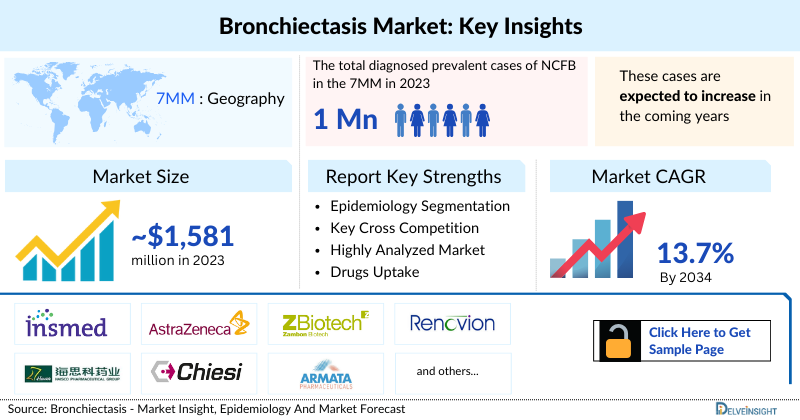
DelveInsight’s report “Bronchiectasis Market Insights, Epidemiology, and Market Forecast-2034” provides a comprehensive analysis of the Bronchiectasis landscape. The report delivers detailed insights into the disease, including historical and projected epidemiology, helping stakeholders understand the prevalence, incidence, and patient demographics across key regions.
Additionally, it examines Bronchiectasis market dynamics, offering a thorough assessment of current and emerging market trends, treatment patterns, and therapeutic developments. The analysis spans major markets, including the United States, EU4 (Germany, Spain, Italy, France, and the United Kingdom), and Japan, equipping decision-makers with actionable intelligence for strategic planning, investment, and research initiatives.
To Know in detail about the Bronchiectasis market outlook, drug uptake, treatment scenario and epidemiology trends, Click here; Bronchiectasis Market Forecast
Some of the key facts of the Bronchiectasis Market Report:
- Key Bronchiectasis Companies: Insmed, Zambon, Chiesi Farmaceutici, Sanofi, Boehringer Ingelheim, Gilead Sciences, Syntara, and others
- Key Bronchiectasis Therapies: Brensocatib, Inhaled Colistimethate Sodium (CMS I-neb), FASENRA (benralizumab), CHF6333, Itepekimab (SAR440340), BI 1291583, AZLI, mannitol, and others
- The Bronchiectasis market is expected to surge due to the disease's increasing prevalence and awareness during the forecast period. Furthermore, launching various multiple-stage Bronchiectasis pipeline products will significantly revolutionize the Bronchiectasis market dynamics.
Bronchiectasis Overview
Bronchiectasis is a chronic lung condition in which the bronchial tubes become permanently widened, thickened, and damaged, making it difficult for the lungs to clear mucus effectively. This buildup of mucus leads to recurrent infections, inflammation, persistent cough, and breathing difficulties.
It can develop due to repeated lung infections, underlying immune disorders, genetic conditions like cystic fibrosis, or unknown causes (idiopathic). Early diagnosis and treatment help manage symptoms and prevent disease progression.
Get a Free sample for the Bronchiectasis Market Forecast, Size & Share Analysis Report:
https://www.delveinsight.com/report-store/bronchiectasis-market
Key Trends in Bronchiectasis Therapeutics Market:
- Emergence of First-in-Class and Targeted Therapies: Novel treatments like Insmed’s brensocatib (Brinsupri), the first FDA-approved therapy specifically for non-CF bronchiectasis, are entering the market, addressing unmet needs and transforming the therapeutic landscape.
- Growing R&D and Pipeline Expansion: Continued investment in clinical development has expanded the pipeline, including inhaled antibiotics (e.g., CMS I-neb), biologics (e.g., FASENRA), and other mechanism-based agents targeting inflammation and infection.
- Increased Patient Diagnosis and Market Demand: Rising prevalence of bronchiectasis, better diagnostic capabilities, and greater awareness are increasing the diagnosed patient pool, driving demand for more effective long-term therapeutics.
- Shift Toward Precision and Digital Health: Technological advances, such as AI-driven diagnostics, digital monitoring tools, and personalized treatment strategies, are improving disease management and supporting tailored therapy approaches.
- Focus on Unmet Clinical Needs and Combination Strategies: There’s heightened focus on addressing persistent symptoms and reducing exacerbations through combination regimens that integrate antibiotics, anti-inflammatories, and airway clearance therapies.
Bronchiectasis Epidemiology
The Bronchiectasis epidemiology section provides insights into the historical, current, and forecasted epidemiology trends in the seven major countries (7MM) from 2020 to 2034. It helps to recognize the causes of current and forecasted trends by exploring numerous studies and views of key opinion leaders. The epidemiology section also provides a detailed analysis of the diagnosed patient pool and future trends.
Bronchiectasis Epidemiology Segmentation:
The Bronchiectasis market report proffers epidemiological analysis for the study period 2020–2034 in the 7MM segmented into:
- Total Prevalence of Bronchiectasis
- Prevalent Cases of Bronchiectasis by severity
- Gender-specific Prevalence of Bronchiectasis
- Diagnosed Cases of Episodic and Chronic Bronchiectasis
Download the report to understand which factors are driving Bronchiectasis epidemiology trends @ Bronchiectasis Epidemiology Forecast
Recent Development In The Bronchiectasis Treatment Landscape:
- In November 2025, Insmed Incorporated (Nasdaq: INSM), a global biopharmaceutical company focused on patient-centric innovation, announced that the European Commission has approved BRINSUPRI (brensocatib 25 mg tablets) for treating non-cystic fibrosis bronchiectasis (NCFB) in patients aged 12 years and older who have experienced two or more exacerbations within the previous 12 months. BRINSUPRI is a first-in-class therapy and represents the first and only approved treatment specifically indicated for NCFB in the European Union. The medication underwent accelerated assessment by the European Medicines Agency (EMA), reflecting its significant public health importance.
- In August 2025, The FDA has approved brensocatib (Brinsupri; Insmed) for the treatment of non-cystic fibrosis bronchiectasis, marking it as the first approved therapy for this patient group and the first dipeptidyl peptidase 1 (DPP1) inhibitor authorized for a neutrophil-driven disease. Brensocatib is an oral, small-molecule, reversible DPP1 inhibitor that blocks DPP1, reducing the activation of neutrophil serine proteases, which play a central role in inflammation and tissue damage in chronic lung diseases such as bronchiectasis.
- In May 2025, At the American Thoracic Society (ATS) International Conference in San Francisco, AstraZeneca presented data from a Phase II proof-of-concept study assessing its bispecific monoclonal antibody, gremubamab, in bronchiectasis patients with Pseudomonas aeruginosa infection. The results showed that gremubamab effectively reduced pseudomonas bacterial burden and led to improvements in patients’ quality of life. These findings underscore gremubamab’s potential as a targeted antibacterial therapy and suggest it may help decrease dependence on traditional antibiotics in the management of bronchiectasis.
- In April 2025, Results from the Phase III ASPEN trial (NCT04594369), published in The New England Journal of Medicine (NEJM), showed that brensocatib significantly reduced the annualized frequency of pulmonary exacerbations and slowed lung function decline compared with placebo in patients with non-cystic fibrosis bronchiectasis. This progressive disease is associated with a substantial burden of recurrent exacerbations, diminished lung function, impaired quality of life, and an increased risk of premature mortality. Based on the ASPEN trial findings, the US FDA granted Priority Review to the New Drug Application (NDA) for brensocatib for this patient population in February.
- In April 2025, Insmed Incorporated (Nasdaq: INSM), a global biopharmaceutical company focused on developing first- and best-in-class treatments for serious diseases, announced that positive findings from the pivotal Phase III ASPEN trial evaluating brensocatib in patients with non-cystic fibrosis bronchiectasis have been published in The New England Journal of Medicine (NEJM). The ASPEN trial represents the largest clinical study ever conducted in bronchiectasis, a severe, chronic, and progressive inflammatory lung disease for which no approved therapies currently exist.
- In March 2025, The Lancet Respiratory Medicine published results from a Phase II clinical study on China’s first DPP-1 inhibitor, HSK31858, led by Academician Nan-shan Zhong and Professor Wei-jie Guan from the First Affiliated Hospital of Guangzhou Medical University and the Guangzhou National Laboratory. Titled “Effects of the DPP-1 Inhibitor HSK31858 in Adults with Bronchiectasis in China (SAVE-BE): A Phase 2, Multicentre, Double-Blind, Randomised, Placebo-Controlled Trial,” the study focuses on patients with non-cystic fibrosis bronchiectasis and represents a major advancement in bronchiectasis treatment in China. The publication highlights the efficacy and safety profile of HSK31858, introducing a promising new therapeutic approach for Chinese patients with bronchiectasis.
Bronchiectasis Drugs Uptake and Pipeline Development Activities
The drugs uptake section focuses on the rate of uptake of the potential drugs recently launched in the Bronchiectasis market or expected to get launched during the study period. The analysis covers Bronchiectasis market uptake by drugs, patient uptake by therapies, and sales of each drug.
Moreover, the therapeutics assessment section helps understand the drugs with the most rapid uptake and the reasons behind the maximal use of the drugs. Additionally, it compares the drugs based on market share.
The report also covers the Bronchiectasis Pipeline Development Activities. It provides valuable insights about different therapeutic candidates in various stages and the key companies involved in developing targeted therapeutics. It also analyzes recent developments such as collaborations, acquisitions, mergers, licensing patent details, and other information for emerging therapies.
Bronchiectasis Therapies and Key Companies
- Brensocatib: Insmed/AstraZeneca
- Inhaled Colistimethate Sodium (CMS I-neb): Zambon
- FASENRA (benralizumab): AstraZeneca
- CHF6333: Chiesi Farmaceutici
- Itepekimab (SAR440340): Sanofi
- BI 1291583: Boehringer Ingelheim
- AZLI: Gilead Sciences
- mannitol: Syntara
Discover more about therapies set to grab major Bronchiectasis market share @ Bronchiectasis Treatment Landscape
Bronchiectasis Market Drivers
- Rising prevalence of chronic respiratory diseases and increasing awareness of bronchiectasis.
- Advancements in diagnostic techniques, enabling earlier and more accurate detection.
- Growth in treatment options, including inhaled therapies and biologics.
- Increasing geriatric population, who are more prone to chronic lung conditions.
- Rising investments by pharmaceutical companies in research and development for novel therapies
Bronchiectasis Market Barriers
- High treatment costs and limited reimbursement in some regions.
- Low disease awareness among general physicians, leading to underdiagnosis or misdiagnosis.
- Limited availability of advanced therapies in emerging markets.
- Variability in patient response to current treatments.
- Stringent regulatory requirements for the approval of new drugs and biologics.
Scope of the Bronchiectasis Market Report
- Study Period: 2020–2034
- Coverage: 7MM [The United States, EU5 (Germany, France, Italy, Spain, and the United Kingdom), and Japan]
- Key Bronchiectasis Companies: Insmed, Zambon, Chiesi Farmaceutici, Sanofi, Boehringer Ingelheim, Gilead Sciences, Syntara, and others
- Key Bronchiectasis Therapies: Brensocatib, Inhaled Colistimethate Sodium (CMS I-neb), FASENRA (benralizumab), CHF6333, Itepekimab (SAR440340), BI 1291583, AZLI, mannitol, and others
- Bronchiectasis Therapeutic Assessment: Bronchiectasis current marketed and Bronchiectasis emerging therapies
- Bronchiectasis Market Dynamics: Bronchiectasis market drivers and Bronchiectasis market barriers
- Bronchiectasis Competitive Intelligence Analysis: SWOT analysis, PESTLE analysis, Porter’s five forces, BCG Matrix, Market entry strategies
- Bronchiectasis Unmet Needs, KOL’s views, Analyst’s views, Bronchiectasis Market Access and Reimbursement
To know more about Bronchiectasis companies working in the treatment market, visit @ Bronchiectasis Clinical Trials and Therapeutic Assessment
About DelveInsight
DelveInsight is a leading Healthcare Business Consultant, and Market Research firm focused exclusively on life sciences. It supports Pharma companies by providing comprehensive end-to-end solutions to improve their performance.
It also offers Healthcare Consulting Services, which benefits in market analysis to accelerate the business growth and overcome challenges with a practical approach.
Need more?
- ✅ Connect with our analyst to learn how this research was developed
- ✅ Expand the scope with additional segments or countries through free customization
- ✅ Discover how this report can directly influence your business growth
Related Reports

Bronchiectasis - Epidemiology Forecast to 2034
DelveInsight's Bronchiectasis - Epidemiology Forecast 2034 report delivers an in-depth understanding of the disease, historical, and forecasted epidemiology of Bronchiectasis..

Bronchiectasis - Pipeline Insight, 2025
Bronchiectasis Pipeline Insights, 2025 report by DelveInsight outlays comprehensive insights of present clinical development scenario and growth prospects across the Bronchiectasis market.
