
Bronchiectasis Market Summary
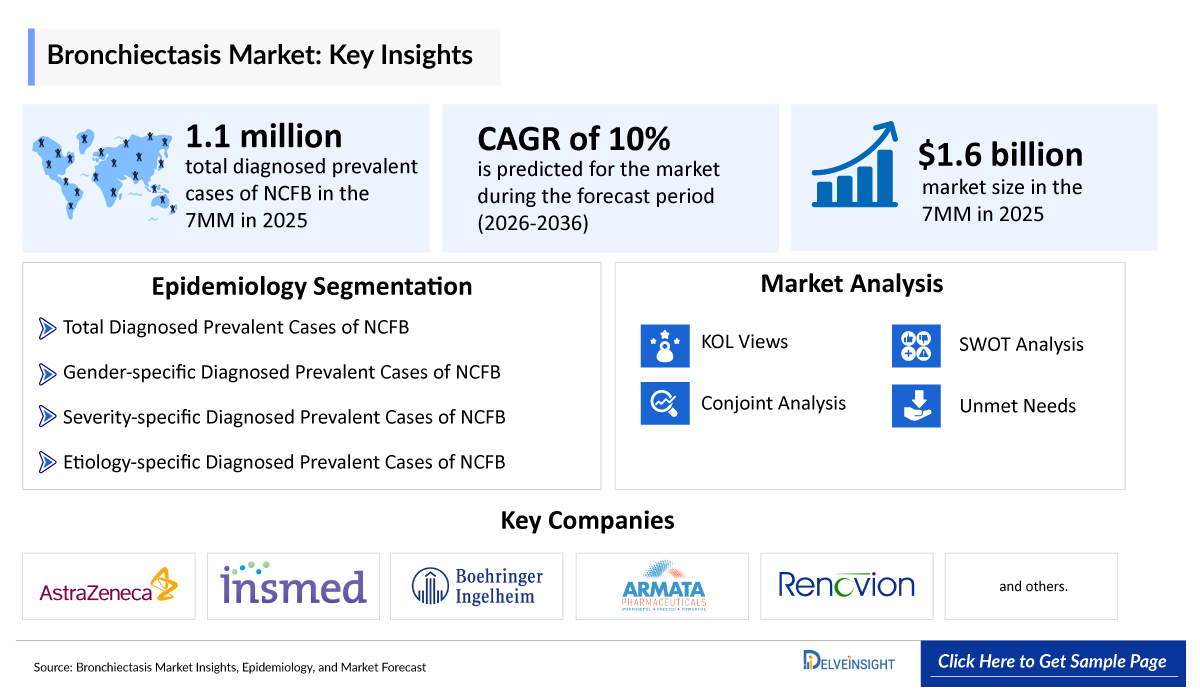
- According to DelveInsight’s analysis, the Bronchiectasis Therapeutics Market across the 7MM was valued at approximately USD 1,600 in 2025 and is projected to expand at a CAGR of 15%, reflecting steady growth driven by the anticipated entry of advanced therapies and improved clinical management.
- The leading Bronchiectasis Companies include AstraZeneca, Insmed, Boehringer Ingelheim, Armata Pharmaceuticals, Renovion, and others.
Bronchiectasis Market and Epidemiology Analysis
- Bronchiectasis management is challenging due to its progressive and heterogeneous nature. Bronchiectasis treatment focuses on infection control, mucus clearance, and symptom relief using antibiotics, airway clearance techniques, and bronchodilators. However, antibiotic resistance and limited long-term mucus regulation options underscore the need for more effective therapies. While inhaled medications and physical therapy provide supportive benefits, surgical intervention may be required in severe cases where standard treatments are inadequate.
- In 2025, the United States accounted for approximately 430,000 diagnosed prevalent cases of Bronchiectasis.
- Brensocatib (BRINSUPRI) became the first FDA-approved Non-Cystic Fibrosis Bronchiectasis Treatment, with additional UK approval and an anticipated Japan regulatory decision in 2026.
- The ongoing research on bronchiectasis aims to develop treatments with greater efficacy than current off-label therapies, including Boehringer Ingelheim’s Verducatib (BI 1291583) and Renovion’s ARINA-1 (RVN-301), among others.
- Current management primarily focuses on symptom control, airway clearance, and treatment of infections, but there are no widely approved disease-modifying therapies that can halt or reverse the underlying airway damage. Patients often experience recurrent exacerbations, chronic bacterial infections, progressive lung function decline, and reduced quality of life despite standard care.
Request for Unlocking the Sample Page of the Report "Bronchiectasis Treatment Market"
Bronchiectasis Market Size and Forecast
| 2025 Bronchiectasis Market Size in the 7MM | USD 1600 million |
|
Bronchiectasis Growth Rate (2026–2036) in the 7MM | 15% CAGR |
Key Factors Driving the Bronchiectasis Market Growth by DelveInsight
-
Rising Prevalence of Bronchiectasis
The increasing prevalence of bronchiectasis worldwide is one of the primary factors fueling market growth. Improved disease recognition, enhanced diagnostic capabilities, and greater awareness among healthcare professionals are contributing to a growing diagnosed patient population, creating significant demand for effective treatment options.
-
Advancements in Diagnostic Technologies
The widespread adoption of high-resolution Computed Tomography (HRCT), advanced pulmonary function testing, and biomarker-based diagnostics has enabled earlier and more accurate diagnosis of bronchiectasis. Early detection supports timely intervention and expands the addressable patient population for therapeutic products.
-
Robust Pipeline of Novel Therapies
A strong clinical pipeline featuring innovative anti-inflammatory agents, inhaled antibiotics, mucolytics, biologics, and host-directed therapies is expected to transform the bronchiectasis treatment landscape. Continued investment in research and development by pharmaceutical and biotechnology companies is accelerating the introduction of targeted therapies.
-
Increasing Focus on Precision Medicine
Growing understanding of the heterogeneous nature of bronchiectasis has encouraged the development of personalized treatment approaches. Precision medicine strategies based on disease etiology, microbiological profile, and inflammatory biomarkers are expected to improve clinical outcomes and support market expansion.
-
Rising Healthcare Expenditure and Improved Access to Care
Increasing healthcare spending, expansion of specialized respiratory care centers, and improved access to advanced diagnostic and treatment services are supporting the adoption of bronchiectasis therapies across major healthcare markets.
DelveInsight's ‘Bronchiectasis Market Insights, Epidemiology and Market Forecast – 2036’ report delivers an in-depth understanding of Bronchiectasis, historical and forecasted epidemiology, as well as the bronchiectasis market trends in the United States, EU4 (Germany, Spain, Italy, and France), the United Kingdom, and Japan.
The Bronchiectasis Treatment market report delivers a comprehensive analysis of the current treatment landscape, including standards of care, clinical practices, and evolving therapeutic algorithms. It evaluates, Bronchiectasis patient burden trends, revenue & market share dynamics, peak patient share & therapy uptake analysis, and provides an in-depth market size assessment, and growth rate projections (Historical & Forecast 2022–2036) across the 7MM regions. The report highlights key unmet medical needs in bronchiectasis and maps the competitive and clinical landscape to uncover high‑value opportunities, providing a clear outlook on future market growth potential.
Scope of the Bronchiectasis Market Report | |
|
Study Period |
2022–2036 |
|
Historical Year |
2022–2025 |
|
Forecast Period |
2026–2036 |
|
Base Year |
2025 |
|
Geographies Covered |
|
|
Bronchiectasis Market CAGR (Forecast period) | |
|
Bronchiectasis Epidemiology Segmentation Analysis |
Patient Burden Assessment
|
|
Bronchiectasis Companies |
|
|
Bronchiectasis Therapies |
|
|
Bronchiectasis Market |
Segmented by
|
|
Analysis |
|
Bronchiectasis Understanding
Bronchiectasis Overview
Bronchiectasis is a chronic lung disease characterized by permanent dilation and damage of the bronchial tubes, leading to impaired mucus clearance, chronic cough, and recurrent lung infections. The condition involves irreversible structural damage, creating a cycle of inflammation and infection that affects lung function and quality of life. Risk factors include prior respiratory infections such as pneumonia and Tuberculosis, chronic lung diseases, Cystic Fibrosis, autoimmune disorders, and immune deficiencies, among others.
Bronchiectasis is primarily diagnosed using high-resolution Computed Tomography of the chest, which is the gold-standard imaging technique for identifying permanent bronchial dilatation and airway wall thickening. The diagnostic workup also includes a detailed clinical history, physical examination, pulmonary function tests (PFTs), and sputum culture to assess lung function and detect chronic airway infections.
Additional laboratory tests, such as immunoglobulin levels, autoimmune screening, and evaluation for underlying conditions like cystic fibrosis or allergic bronchopulmonary aspergillosis, may be performed to determine the cause and guide management.
Further details are provided in the report.
Bronchiectasis Treatment Landscape
Bronchiectasis treatment involves both pharmacological and non-pharmacological interventions, with the goal of managing symptoms, preventing exacerbations, and improving the quality of life for affected individuals. The treatment approach is highly individualized, depending on the severity of the disease, the underlying cause, and the presence of any comorbid conditions. The primary goal of pharmacological treatment is to prevent and control respiratory infections, which are common and recurrent in patients with bronchiectasis due to the damaged and obstructed airways.
Antibiotics are central to the treatment regimen, with inhaled antibiotics like tobramycin and aztreonam commonly prescribed to target pathogens such as Pseudomonas aeruginosa that frequently colonize the airways. Inhaled therapies are preferred over systemic antibiotics because they deliver targeted action directly to the lungs, minimizing systemic side effects.
However, due to the recurrent nature of infections, long-term or intermittent antibiotic therapy is often required. In severe cases or during acute exacerbations, systemic antibiotics may be used to manage infection more effectively.
Further details related to country-based variations are provided in the report.
Bronchiectasis Unmet Needs
The section “unmet needs of Bronchiectasis” outlines the critical gaps between the current state of patient care, diagnosis, and the ideal & effective management of the disease. It highlights the obstacles experienced by patients, clinicians, and researchers and identifies potential solutions for future progress.
- Bronchiectasis is often diagnosed late, allowing disease progression before treatment begins.
- Recurrent exacerbations and chronic infections remain common despite current therapies.
- There are no established disease-modifying treatments available.
- Lack of reliable biomarkers limits patient stratification and prediction of outcomes.
- Symptoms like cough and sputum production continue to impact quality of life.
Note: Comprehensive unmet needs insights in Bronchiectasis and their strategic implications are provided in the full report.
Bronchiectasis Epidemiology
Key Findings from Bronchiectasis Epidemiological Analysis and Forecast
- As of 2025, the total diagnosed prevalent cases of NCFB across the 7MM are estimated at approximately 1 million cases, reflecting the substantial burden of NCFB and the variability in diagnostic practices across geographies.
- The gender-specific diagnosed prevalent cases of CFB across the 7MM were estimated at approximately 38,000 cases in males and 34,000 cases in females in 2025, consistent with the broadly comparable gender distribution observed in CF populations.
- In 2025, the microbiology-specific diagnosed prevalent cases of Pseudomonas aeruginosa in CFB patients across the 7MM were estimated at approximately 17,500 cases.
Bronchiectasis Epidemiology Segmentation
- Total Diagnosed Prevalent Cases of CFB
- Gender-specific Diagnosed Prevalent Cases of CFB
- Age-specific Diagnosed Prevalent Cases of CFB
- Microbiology of CFB Patients
- Total Diagnosed Prevalent Cases of NCFB
- Gender-specific Diagnosed Prevalent Cases of NCFB
- Severity-specific Diagnosed Prevalent Cases of NCFB
- Etiology-specific Diagnosed Prevalent Cases of NCFB
- Microbiology of NCFB Patients
- Total Bronchiectasis Treated Cases
Bronchiectasis Market Recent Breakthroughs and Developments
- In July 2025, Boehringer Ingelheim reported the launch of a Phase III trial for Verducatib (BI 1291583) to evaluate its potential in treating bronchiectasis.
- In December 2024, Armata Pharmaceuticals announced encouraging topline results from the completed Tailwind study a Phase II, multicenter, double-blind, randomized, placebo-controlled study evaluating the safety, phage kinetics, and efficacy of inhaled AP-PA02 in subjects with NCFB.
- In April 2024, Renovion reported topline results from the Phase II CLIMB study of ARINA-1 (RVN-301) in individuals with NCFB, demonstrating its potential for continued development.
- Renovion plans to further analyze the CLIMB study data, consult with regulatory authorities, and advance ARINA-1 into a Phase III program for NCFB treatment, with patient enrollment scheduled to initiate in Q3 2026.
- Emerging preclinical therapies for bronchiectasis, including candidates from VG2D Pharma, are focused on improving mucus clearance, controlling infection, and reducing inflammation to enhance respiratory outcomes and decrease exacerbation frequency.
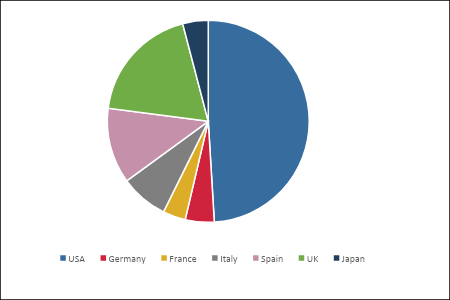
Market Share (%) Distribution of Bronchiectasis by Countries in 2025
Bronchiectasis Drug Analysis & Competitive Landscape
The Bronchiectasis drug chapter provides a detailed, market-focused review of approved therapies and the emerging Bronchiectasis Pipeline across mid and late Phase clinical trials. It covers Bronchiectasis Mechanism of Action, clinical trial data, regulatory approvals, patents, collaborations, strategic partnerships upcoming Key catalyst for each therapy, along with their advantages, limitations, and recent developments. This section offers critical insights into the Bronchiectasis treatment landscape, supporting market assessment, competitive analysis, and growth forecasting for the Bronchiectasis therapeutics market.
Bronchiectasis Approved Therapies
-
Brensocatib (BRINSUPRI): AstraZeneca/ Insmed
BRINSUPRI is a Dipeptidyl Peptidase 1 Inhibitor indicated for the treatment of NCFB in adult and pediatric patients 12 years of age and older. Brensocatib is a competitive, reversible inhibitor of DPP1. DPP1 activates pro-inflammatory neutrophil serine proteases (NSPs) during neutrophil maturation in the bone marrow. Activated NSPs are implicated in the pathogenesis of neutrophil-mediated NCFB inflammation.
-
- In February 2026, the Medicines and Healthcare products Regulatory Agency (MHRA) granted marketing authorization in the UK for BRINSUPRI (brensocatib 25 mg tablets) for the treatment of NCFB in patients 12 years of age and older with two or more flare-ups or worsening of symptoms in the past 12 months.
- Insmed also reported that it anticipates a regulatory decision for brensocatib for the treatment of NCFB in Japan in 2026.
- In August 2025, the US Food and Drug Administration approved BRINSUPRI for NCFB. It is the first and only FDA-approved treatment for NCFB.
Note: Detailed marketed therapies assessment will be provided in the final report.
|
Bronchiectasis Marketed/Approved Therapies | ||||||
|
Drug/Therapy |
Company |
Indication |
Molecule Type |
MoA |
RoA |
Marketed Region |
|
BRINSUPRI (brensocatib) |
Astra Zeneca/Insmed |
NCFB |
Small Molecule |
Dipeptidyl Peptidase 1 (DPP1) Inhibitor |
Oral |
US: 2025 JP: 2026 |
|
Note: To be continued in the final report | ||||||
Bronchiectasis Pipeline Analysis
-
Verducatib (BI 1291583): Boehringer Ingelheim
It is a novel DPP1/Cathepsin C (CatC) inhibitor with the potential to improve symptoms and quality of life for patients with bronchiectasis. Inhibition of DPP1 can reduce the level of neutrophilic inflammation that plays a key role in the pathogenesis of bronchiectasis. This may allow verducatib to prevent airway destruction, improve pathogen clearance, restore mucus composition, and reduce aberrant lung inflammation. Verducatib received FDA breakthrough therapy designation in 2024.
-
- In July 2025, Boehringer Ingelheim reported that they launched a Phase III trial for verducatib (BI 1291583) to evaluate its potential in treating bronchiectasis.
Note: A detailed emerging therapies assessment will be provided in the final report.
Competitive Landscape of Bronchiectasis Pipeline Drugs | ||||||
|
Drug Name |
Company |
Highest Phase |
Indication |
RoA |
MoA |
Anticipated Launch in the US |
|
Verducatib (BI 1291583) |
Boehringer Ingelheim |
Phase III |
Bronchiectasis |
Oral |
DPP1/Cathepsin C (CatC) Inhibitor |
Information is available in the full report |
|
AP-PA02 |
Armata Pharmaceuticals |
Phase II |
NCFB |
Inhalation |
Therapeutic Phage Cocktail |
Information is available in the full report |
|
ARINA-1 (RVN-301 |
Renovion |
Phase III |
NCFB |
Inhalation |
Mucus Clearance, Anti-inflammatory, Antibacterial Agent |
Information is available in the full report |
|
Note: Launch insights are provisional and may change with future report updates or the occurrence of major key catalysts. To be continued in the final report | ||||||
Bronchiectasis Market Outlook
The Bronchiectasis market outlook remains positive, driven by increasing disease awareness, improved diagnostic capabilities, and a substantial unmet need for effective long-term therapies. Current management strategies, including airway clearance techniques, antibiotics, and anti-inflammatory treatments, primarily focus on symptom control and reducing exacerbations.
However, a growing Bronchiectasis Pipeline of novel therapies targeting underlying inflammatory pathways, chronic infections, and mucus dysfunction is expected to transform the Bronchiectasis Treatment landscape. Continued advancements in precision medicine, greater physician recognition, and expanding research efforts are anticipated to improve patient outcomes, reduce disease burden, and support market growth across both adult and pediatric populations.
Key Findings from the Bronchiectasis Market Forecast Report
- BRINSUPRI is a DPP1 Inhibitor indicated for the treatment of NCFB in adult and pediatric patients 12 years of age and older. Brensocatib is a competitive, reversible inhibitor of DPP1. DPP1 activates pro-inflammatory neutrophil serine proteases (NSPs) during neutrophil maturation in the bone marrow. Activated NSPs are implicated in the pathogenesis of neutrophil-mediated NCFB inflammation.
- Overall, in Bronchiectasis, the launch targeted biologics, improved diagnosis through autoantibody testing (e.g., Anti-AChR), and increasing disease awareness are expected to drive steady growth in the 7MM Bronchiectasis market from 2022–2036, with strong commercial implications for both marketed products and emerging pipelines.
- Among the 7MM, the United States accounted for the largest Bronchiectasis Treatment Market Size, valued at approximately USD 800 million in 2025, reflecting its dominant position driven by advanced healthcare infrastructure and higher treatment uptake.
- Among the EU4 countries UK accounted for the largest Bronchiectasis Market Size at approximately USD 300 million in 2025 and France accounted for the smallest market size approximately USD 60 million in 2025.
Bronchiectasis Companies
- Astra Zeneca
- Insmed
- Boehringer Ingelheim
- Armata Pharmaceuticals
Bronchiectasis Drug Class/Insights into Leading Emerging and Marketed Therapies (2022–2036 Forecast)
The Bronchiectasis Treatment Market Landscape is rapidly evolving, with a diverse pipeline spanning DPP1/CatC inhibitors, therapeutic phage cocktails, nebulized mucoactive agents, and other novel mechanisms, collectively aiming to deliver more targeted, durable, and potentially disease-modifying outcomes beyond conventional symptom management.
- Therapeutic Phage Cocktails: This approach employs bacteriophages to selectively target specific pathogens implicated in bronchiectasis exacerbations. AP-PA02, comprising a cocktail of natural P. aeruginosa-targeting phages from distinct families and subfamilies, is designed to address chronic pulmonary infections in NCFB patients through broad host-range coverage and high potency, offering a precision antimicrobial strategy with reduced risk of off-target effects.
Bronchiectasis Drug Uptake
Following its US launch in 2025, Brensocatib is anticipated to experience a medium-to-fast market uptake, supported by its first-in-class positioning and the substantial unmet need in bronchiectasis management
Detailed insights into emerging therapies' drug uptake are included in the report.
Bronchiectasis Market Access and Reimbursement of Approved Therapies
The Bronchiectasis Therapeutics Market Report further provides detailed insights on the country-wise accessibility and reimbursement scenarios, cost-effectiveness scenario of approved therapies, programs making accessibility easier and out-of-pocket costs more affordable, insights on patients insured under federal or state government prescription drug programs, etc.
United State
The U.S. health care system includes both private and public health insurance coverage. Whether a drug product is covered, and at what price, is determined by each payer’s coverage, coding, and payment criteria for health insurance plans. The largest government-funded programs are Medicare and Medicaid. Private plans, which cover far more Americans than public plans, have more flexibility to make coverage and reimbursement determinations.
Reimbursement is a crucial factor that affects the drug’s access to the market. Often, the decision to reimburse comes down to the price of the drug relative to the benefit it produces in treated patients. To reduce the healthcare burden of these high-cost therapies, many payment models are being considered by payers and other industry insiders.
NOTE: Further Details are provided in the final report…
Bronchiectasis Therapies Price Scenario & Trends
Pricing and analogue assessment of Bronchiectasis Therapies highlights evolving price dynamics structures. This section summarizes the cost of approved treatments, closest and most appropriate analogue selection for emerging therapies, and understanding of how pricing influences market access, adherence, and long-term uptake.
Bronchiectasis Industry Experts and Physician Views
To keep up with Bronchiectasis market trends, we take Key Opinion Leaders (KOLs) and Subject Matter Experts (SMEs) opinions working in the domain through primary research to fill the data gaps and validate our secondary research. Industry Experts were contacted for insights on the Bronchiectasis emerging therapies, evolving Bronchiectasis Treatment landscape, patient adherence to conventional therapies, therapy switching trends, drug adoption and uptake, accessibility challenges, and epidemiology and real-world prescription patterns including MD, PhD, Instructor, Postdoctoral Researcher, Professor, Researcher, and others.
DelveInsight’s analysts engaged with 8+ key opinion leaders (KOLs) across major markets to capture country-level insights in Bronchiectasis Leading centers such as University of California and Royal College of Physicians, among others, were consulted to validate clinical practices, treatment patterns, and emerging therapeutic perspectives.
Their opinion helps understand and validate current and emerging Bronchiectasis, therapies, highlight unmet medical needs, provide epidemiological context, and support strategic decisions for Market access, therapy adoption, and pipeline prioritization in Bronchiectasis.
Region |
Key Opinion Leaders (KOLs) and Subject Matter Experts (SMEs) |
|
United States |
“Exacerbations are critical events in the course of bronchiectasis, often triggered by bacterial or viral infections. Beyond worsening symptoms, they can significantly reduce quality of life, impair lung function, and increase the risk of hospitalization and mortality.” |
|
Japan |
“Patients with persistent cough with varied purulent sputum output, with or without recurring hemoptysis, and frequent respiratory infections that tend to recover slowly or partly with or without an underlying illness such as COPD should be investigated. Chest radiographs may indicate bronchiectasis in rare cases. This constellation of signs and symptoms should prompt the primary care practitioner to consider assessing the patient for bronchiectasis.” |
Bronchiectasis Report Qualitative Analysis: SWOT and Attribute Analysis
We perform qualitative and Bronchiectasis Therapeutics Market Intelligence analysis using various approaches, such as SWOT analysis and attribute analysis.
In the SWOT analysis of Bronchiectasis, strengths, weaknesses, opportunities, and threats in terms of disease diagnosis, patient awareness, patient burden, competitive landscape, cost-effectiveness, and geographical accessibility of therapies are provided. Attribute analysis analyzes emerging therapies based on relevant attributes such as safety, efficacy, frequency of administration, route of administration, and order of entry.
Scoring is given based on these parameters to analyze the effectiveness of therapy.
The team of analysts analyzes promising Bronchiectasis Emerging Therapies based on relevant attributes such as safety, efficacy, frequency of administration, route of administration, and order of entry. In efficacy, the trial’s primary and secondary outcome measures are evaluated, whereas the therapies’ safety is evaluated, wherein the acceptability, tolerability, and adverse events are mainly observed.
In addition, the scoring is also based on the route of administration, order of entry, probability of success, and the addressable patient pool for each therapy. According to these parameters, the final weightage score and the ranking of the emerging therapies are decided.
Scope of the Bronchiectasis Market Report
- The Bronchiectasis Therapeutics Market Report covers a segment of key events, an executive summary, a descriptive overview, explaining their causes, signs and symptoms, pathogenesis, and currently available treatments.
- Comprehensive insight has been provided into the Bronchiectasis Epidemiology segments and forecasts, the future growth potential of the diagnosis rate, and disease progression along Bronchiectasis Treatment guidelines.
- Additionally, an all-inclusive account of both the current and emerging treatments, along with the elaborative profiles of late-stage and prominent therapies, will have an impact on the current Bronchiectasis Treatment landscape.
- A detailed review of the Bronchiectasis Therapeutics Market, historical and forecasted Bronchiectasis Treatment Market Size, Bronchiectasis Drugs Market Share by therapies, detailed assumptions, and rationale behind our approach is included in the report, covering the 7MM drug outreach.
- The Bronchiectasis Therapeutics Market Report provides an edge while developing business strategies by understanding trends through SWOT analysis and expert insights/KOL views, patient journey, and treatment preferences that help in shaping and driving the 7MM Bronchiectasis Drugs Market.
Bronchiectasis Market Report Insights
- Bronchiectasis Patient Population Forecast
- Bronchiectasis Therapeutics Market Size
- Bronchiectasis Pipeline Analysis
- Bronchiectasis Treatment Market Size and Trends
- Bronchiectasis Therapeutics Market Opportunity (Current and forecasted)
Bronchiectasis Market Report Key Strengths
- Epidemiology‑Based (Epi‑based) Bottom‑up Forecasting
- Artificial Intelligence (AI)-enabled Market Research Report
- 11-year forecast
- Bronchiectasis Market Outlook (North America, Europe, Asia-Pacific)
- Patient Burden Trends (by geography)
- Bronchiectasis Treatment Addressable Market (TAM)
- Bronchiectasis Competitive Landscape
- Bronchiectasis Major Companies Insights
- Bronchiectasis Price trends and Analogue Assessment
- Bronchiectasis Therapies Drug Adoption/Uptake
- Bronchiectasis Therapies Peak Patient Share analysis
Bronchiectasis Market Report Assessment
- Current Bronchiectasis Treatment Practices
- Bronchiectasis Unmet Needs
- Bronchiectasis Clinical Development Analysis
- Bronchiectasis Emerging Drugs Product Profiles
- Bronchiectasis) Market Attractiveness
- Bronchiectasis Qualitative Analysis (SWOT and Attribute analysis)
Key Questions Answered in the Bronchiectasis Treatment Market Report
Bronchiectasis Treatment Market Insights
- What was the Bronchiectasis Treatment Market Size, the Bronchiectasis Market Size by therapies, the Bronchiectasis Drugs Market Share (%) distribution in 2025, and what would it look like by 2036?
- What are the contributing factors for this growth?
- What are the anticipated pricing variations among different geographies for the emerging therapies in the future?
- What can be the future treatment paradigm of Bronchiectasis?
- What are the disease risks, burdens, and unmet needs of Bronchiectasis?
- What will be the growth opportunities across the 7MM concerning the patient population with Bronchiectasis?
- Who is the major future competitor in the market, and how will the competitors affect their market share?
- What are the current options for the treatment of Bronchiectasis?
- What are the current guidelines for treating Bronchiectasis in the US, Europe, and Japan?
Reasons to Buy the Bronchiectasis Market Report
- The Bronchiectasis Therapeutics Market Report will help in developing business strategies by understanding the latest trends and changing treatment dynamics driving the Bronchiectasis Drugs Market.
- Bottom-up forecasting builds from the affected population to product forecasts, delivering a robust, data-driven approach ideal for new therapies and novel classes.
- Insights on patient burden/Bronchiectasis Prevalence, evolution in diagnosis, and factors contributing to the change in the epidemiology of the disease during the forecast years.
- Understand the existing Bronchiectasis Drugs Market opportunities in varying geographies and the growth potential over the coming years.
- Identifying strong upcoming players in the Bronchiectasis Drugs Market will help devise strategies to help get ahead of competitors.
- Detailed analysis and ranking of class-wise potential current and emerging therapies under the attribute analysis section to provide visibility around leading classes.
- To understand KOLs’ perspectives on the accessibility, acceptability, and compliance-related challenges of existing treatment to overcome barriers in the future.
- Detailed insights on the unmet needs of the existing Bronchiectasis Drugs Market so that the upcoming players can strengthen their development and launch strategy.
- This Artificial Intelligence (AI) -enabled report summarize and simplify complex datasets within the report into clear, actionable insights for stakeholders, investors, and healthcare providers, enabling faster, data-driven decisions.
Stay updated with us for Recent Articles


-epidemiology.png&w=256&q=75)



