Netherton Syndrome Market Positioned for Growth Through 2034, DelveInsight Finds
Get a Sneak Peek at the Latest netherton syndrome market insights Report
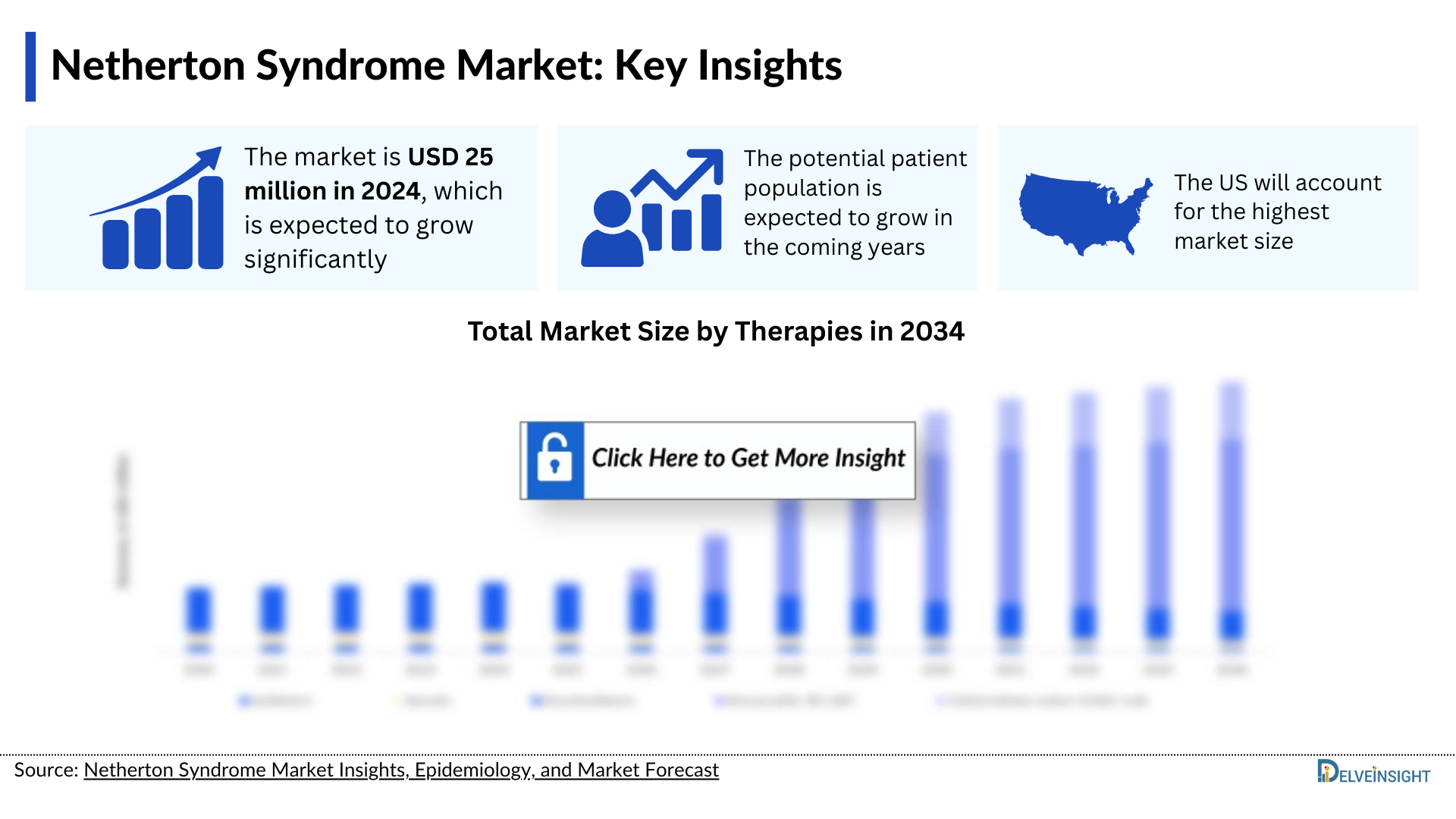
The Netherton Syndrome market in the 7MM (The United States, EU4—Germany, France, Italy, and Spain, the United Kingdom, and Japan) was valued at approximately USD 25 million in 2024 and is projected to grow at a CAGR of 7% during the forecast period (2025–2034). DelveInsight's comprehensive market research provides critical insights into such market trends, enabling stakeholders to understand growth drivers, emerging opportunities, and potential challenges within the Netherton Syndrome landscape.
By analyzing historical data, current market dynamics, and future projections, DelveInsight equips pharmaceutical companies, investors, and healthcare professionals with actionable intelligence to make informed strategic decisions, identify investment opportunities, optimize product positioning, and plan research and development initiatives effectively.
The Netherton Syndrome market is increasingly driven by the development of targeted, disease-modifying therapies addressing the underlying SPINK5 gene deficiency. ATR-12, developed by Azitra, represents a breakthrough approach utilizing bioengineered Staphylococcus epidermidis to deliver LEKTI protein directly to the skin. Currently, no FDA-approved therapies exist specifically for Netherton Syndrome, representing a significant unmet medical need and positioning the first approved therapy to capture substantial market opportunity.
DelveInsight's report, "Netherton Syndrome Market Insights, Epidemiology, and Market Forecast–2034," provides a comprehensive analysis of the Netherton Syndrome (NS) landscape. The report delivers detailed insights into the disease, including historical and projected epidemiology, helping stakeholders understand the prevalence, incidence, and patient demographics across key regions.
Additionally, it examines Netherton Syndrome market dynamics, offering a thorough assessment of current and emerging market trends, treatment patterns, and therapeutic developments. The analysis spans major markets, including the United States, EU4 (Germany, France, Italy, Spain, and the United Kingdom), and Japan, equipping decision-makers with actionable intelligence for strategic planning, investment, and research initiatives.
To know in detail about the Netherton Syndrome market outlook, drug uptake, treatment scenario and epidemiology trends, visit Netherton Syndrome Market Forecast
Some of the key facts of the Netherton Syndrome Market Report:
- Key Netherton Syndrome Companies: Azitra, Quoin Pharmaceuticals, Boehringer Ingelheim, Daiichi Sankyo, and others
- Key Netherton Syndrome Therapies: ATR-12 (LEKTI replacement), QRX003, DS-2325 (KLK5 inhibitor), SPEVIGO (spesolimab; IL-36R antagonist), emollients, keratolytics, topical corticosteroids, and others
- The Netherton Syndrome market is expected to surge due to the complete absence of approved targeted therapies, high unmet medical need, and launching of disease-modifying emerging therapies during the forecast period. Furthermore, launching multiple mechanism-based therapies including LEKTI replacement, KLK5 inhibitors, and IL-36 receptor antagonists will significantly revolutionize the Netherton Syndrome market dynamics and patient outcomes.
Netherton Syndrome Overview
Netherton Syndrome is a rare and severe autosomal recessive genetic disorder classified under ichthyosis. It is an inherited skin condition that typically appears at birth or within the first few weeks of life, characterized by red, inflamed skin covered with fine, dry scales. Although lifelong, the severity of the condition can vary significantly between individuals. Also known as Comèl-Netherton Syndrome, it is clinically defined by a triad of features: Ichthyosis Linearis Circumflexa (ILC), trichorrhexis invaginata (commonly referred to as bamboo hair), and atopic manifestations, along with multisystemic complications. Bamboo hair reflects abnormalities in the hair shaft, while atopic diathesis is associated with frequent allergic conditions such as asthma and eczema. The ichthyosiform erythroderma leads to widespread red and scaly skin. Affected individuals may suffer from recurrent infections, delayed growth, and significantly impacted quality of life. Risk factors stem from mutations in the SPINK5 gene encoding the lymphoepithelial Kazal-type-related inhibitor (LEKTI) protein, essential for maintaining skin barrier integrity and controlling serine protease activity.
Key Trends in Netherton Syndrome Treatment Landscape:
- Shift from Symptomatic to Disease-Modifying Therapies: Transition from off-label emollients and corticosteroids toward targeted treatments addressing SPINK5 gene deficiency and underlying pathophysiology
- LEKTI Protein Replacement Strategy: Development of bioengineered topical therapies like ATR-12 delivering LEKTI directly to affected skin
- Serine Protease Inhibitor Development: Emergence of KLK5 inhibitors (DS-2325) targeting hyperactive serine protease activity caused by LEKTI deficiency
- IL-36 Receptor Antagonism: Clinical development of monoclonal antibodies (SPEVIGO) targeting IL-36-mediated inflammation independent of lipid abnormalities
- Multimodal Treatment Approaches: Recognition of need for combination therapies addressing inflammation, barrier function, and protease dysregulation simultaneously
- Enhanced Diagnostic Capabilities: Improved molecular genetic testing for SPINK5 mutations enabling earlier diagnosis and intervention
- Pediatric Focus and Regulatory Designations: Multiple rare pediatric disease designations accelerating development timelines for emerging therapies
Netherton Syndrome Epidemiology
The report on Netherton Syndrome (NS) epidemiology provides a comprehensive analysis of the disease's prevalence, incidence, and patient demographics. It includes gender-specific distribution, regional and global trends, and disease burden across key markets. The report highlights the rarity of the condition, treatment patterns, and projections for future epidemiological trends, helping stakeholders understand the scope of Netherton Syndrome and plan targeted interventions, research, and treatment strategies.
There were approximately 3,500 diagnosed prevalent cases of Netherton Syndrome across the 7MM in 2024. In EU4 and the United Kingdom, females constituted a higher proportion of affected individuals, accounting for approximately 58% of cases compared to 42% in males, highlighting a notable gender disparity in disease burden. In 2024, Germany recorded the highest number of gender-specific diagnosed prevalent cases among EU4 and the United Kingdom.
Netherton Syndrome Epidemiology Segmentation:
The Netherton Syndrome market report provides epidemiological analysis for the study period 2020–2034 in the 7MM segmented into:
- Total diagnosed prevalent cases of Netherton Syndrome
- Gender-specific diagnosed prevalent cases of Netherton Syndrome
- Treated cases of Netherton Syndrome
Download the report to understand which factors are driving Netherton Syndrome epidemiology trends @ Netherton Syndrome Epidemiology Forecast
Recent Developments in the Netherton Syndrome Treatment Landscape:
- In September 2025, ResVita Bio announced a successful Pre-IND meeting with the FDA for RVB-003, its lead investigational therapy for Netherton Syndrome, a rare, life-threatening genetic skin disease caused by SPINK5 gene mutations. The condition involves severe skin inflammation and barrier defects, with currently no FDA-approved treatments available.
- In August 2025, Azitra reported initial safety findings and 50% enrollment in its Phase Ib trial of ATR-12 for Netherton Syndrome, showing a favorable safety profile, with topline results anticipated in the first quarter of 2026 to guide further clinical development.
- In June 2025, Quoin Pharmaceuticals reported positive pediatric study results for QRX003 in Netherton Syndrome, followed by the US FDA granting Rare Pediatric Disease Designation (RPDD), enabling potential Priority Review Voucher eligibility upon approval.
- In May 2024, Azitra shared encouraging preclinical results for ATR-12 and unveiled its clinical development strategy for Netherton Syndrome during a presentation at the American Society of Gene and Cell Therapy (ASGCT) Annual Meeting, marking a key step forward in advancing this investigational therapy.
Netherton Syndrome Drugs Uptake and Pipeline Development Activities
The drugs uptake section focuses on the rate of uptake of potential drugs expected to be launched in the Netherton Syndrome market during the study period. The analysis covers Netherton Syndrome market uptake by drugs and patient uptake by therapies. Currently, there are no FDA-approved pharmaceutical therapies specifically indicated for Netherton Syndrome. Management relies on off-label and symptomatic treatments including emollients, keratolytics, topical corticosteroids, topical vitamin D analogs, and calcineurin inhibitors, none of which address the underlying SPINK5 gene deficiency.
Moreover, the therapeutics assessment section helps understand the drugs with the most rapid uptake potential and the reasons behind their anticipated maximal use. The report also covers the Netherton Syndrome Pipeline Development Activities, providing valuable insights about different therapeutic candidates in various stages and the key companies involved in developing disease-modifying therapeutics. The majority of pipeline candidates are in Phase I/II stages, with several key programs advancing toward pivotal trials.
Netherton Syndrome Therapies and Key Companies
- Emollients and Moisturizers: Multiple developers
- Topical Corticosteroids: Multiple developers
- Topical Calcineurin Inhibitors (Pimecrolimus, Tacrolimus): Multiple developers
- Topical Vitamin D Analogs (Calcipotriol): Multiple developers
- Retinoids: Multiple developers
- ATR-12 (LEKTI Replacement): Azitra
- QRX003: Quoin Pharmaceuticals
- DS-2325 (KLK5 Inhibitor): Daiichi Sankyo
- SPEVIGO (Spesolimab; IL-36R Antagonist): Boehringer Ingelheim
- RVB-003: ResVita Bio
To know more about Netherton Syndrome companies working in the treatment market, visit @ Netherton Syndrome Clinical Trials and Therapeutic Assessment
Netherton Syndrome Market Drivers
- Complete absence of FDA-approved therapies specifically for Netherton Syndrome, creating urgent unmet medical needs
- High disease burden and significant morbidity in affected infants and children, driving demand for effective treatments
- Multiple regulatory designations (Orphan Drug Designation, Rare Pediatric Disease Designation, Fast Track Designation) accelerating development timelines
- Rising awareness among dermatologists and pediatricians regarding disease pathophysiology and treatment opportunities
- Strong pipeline development by multiple biopharmaceutical companies targeting different mechanisms of action
- Growing understanding of SPINK5 gene mutations and LEKTI protein deficiency, enabling rational drug design
- Increased funding and investment in rare genetic skin disorder research and development
- Enhanced diagnostic capabilities through molecular genetic testing enabling earlier identification and intervention
Netherton Syndrome Market Barriers
- Extremely limited patient population (approximately 3,500 diagnosed cases across 7MM) restricting market size and commercial viability
- High cost of development for rare genetic disorders and lengthy clinical trial timelines for small populations
- Limited long-term safety data for emerging therapies in pediatric populations
- Challenges in conducting clinical trials in rare diseases due to patient recruitment and retention difficulties
- Lack of standardized diagnostic criteria and treatment guidelines across geographies
- Limited healthcare provider awareness regarding emerging therapeutic options and treatment algorithms
- Reimbursement challenges and variable coverage policies across regions due to rarity and limited evidence base
- Safety concerns associated with prolonged use of current symptomatic therapies (corticosteroids, calcineurin inhibitors)
- Variable disease severity and clinical presentation complicating patient stratification and treatment response assessment
- Infrastructure requirements for implementing specialized treatment protocols in resource-limited settings
Scope of the Netherton Syndrome Market Report
- Study Period: 2020–2034
- Coverage: 7MM [The United States, EU4 (Germany, France, Italy, Spain, and the United Kingdom), and Japan]
- Key Netherton Syndrome Companies: Azitra, Quoin Pharmaceuticals, Boehringer Ingelheim, Daiichi Sankyo, ResVita Bio, and others
- Key Netherton Syndrome Therapies: ATR-12, QRX003, DS-2325, SPEVIGO (spesolimab), RVB-003, emollients, keratolytics, topical corticosteroids, calcineurin inhibitors, and others
- Netherton Syndrome Therapeutic Assessment: Current symptomatic and Netherton Syndrome emerging disease-modifying therapies
- Netherton Syndrome Market Dynamics: Netherton Syndrome market drivers and Netherton Syndrome market barriers
- Competitive Intelligence Analysis: SWOT analysis, PESTLE analysis, Porter's five forces, BCG Matrix, Market entry strategies
- Netherton Syndrome Unmet Needs, KOL's views, Analyst's views, Netherton Syndrome Market Access and Reimbursement
Discover more about therapies set to grab major Netherton Syndrome market share @ Netherton Syndrome Treatment Market
Need more?
- ✅ Connect with our analyst to learn how this research was developed
- ✅ Expand the scope with additional segments or countries through free customization
- ✅ Discover how this report can directly influence your business growth
Related Reports

Netherton Syndrome Market Insight, Epidemiology And Market Forecast - 2034
DelveInsight's Netherton Syndrome Market Insights, Epidemiology, and Market Forecast-2034" report delivers an in-depth understanding of the Netherton Syndrome epidemiology segmentation

Netherton Syndrome Pipeline Insight, 2025
Netherton Syndrome Pipeline Insights, 2025 report by DelveInsight outlays comprehensive insights of present clinical development scenario and growth prospects across the Netherton Syndrome...

Netherton Syndrome - Epidemiology Forecast - 2034
DelveInsight's Netherton Syndrome - Epidemiology Forecast 2034 report delivers an in-depth understanding of the disease, historical, and forecasted epidemiology of Netherton Syndrome..
