-market.png&w=256&q=75)
Acute Respiratory Distress Syndrome Market Summary
- The Acute Respiratory Distress Syndrome Market Size was valued at approximately USD 1,700 million in 2025 and is projected to reach nearly USD 3,200 million by 2036, growing at a CAGR of 3.8% during the 2026–2036 forecast period.
- The leading Acute Respiratory Distress Syndrome Companies include Healios K.K, Direct Biologics, Athersys, Edesa Biotech, Herald Therapeutics, BioAegis Therapeutics, and others.
Acute Respiratory Distress Syndrome Market & Epidemiology Analysis
- Among the 7MM, the US accounted for the largest Acute Respiratory Distress Syndrome Market Size i.e., USD ~1,300 million in 2025.
- ARDS is generally characterized by three stages such as exudative stage, the fibroproliferative (or proliferative) stage, resolution, and recovery stage.
- Early recognition of ARDS is important for the timely initiation of lung-protective ventilation strategies. Even after attempts to improve the definition of the disease, ARDS remains under-recognized by clinicians.
- There are currently no FDA-approved drugs that treat impaired lung function. Corticosteroids and nitric oxide are sometimes used to address the inflammatory component of ARDS, but these therapies have not consistently achieved good outcomes for most patients.
- The Acute Respiratory Distress Syndrome Therapeutics Market Landscape is evolving with the emergence of new interventions and growing clinical evidence that continue to refine treatment strategies. Improvements in supportive care, particularly lung-protective ventilation and prone positioning, have enhanced patient outcomes; however, ARDS remains associated with significant morbidity and mortality, especially in cases complicated by extra-pulmonary organ dysfunction.
Request for Unlocking the Sample Page of the Report @ ARDS Treatment Market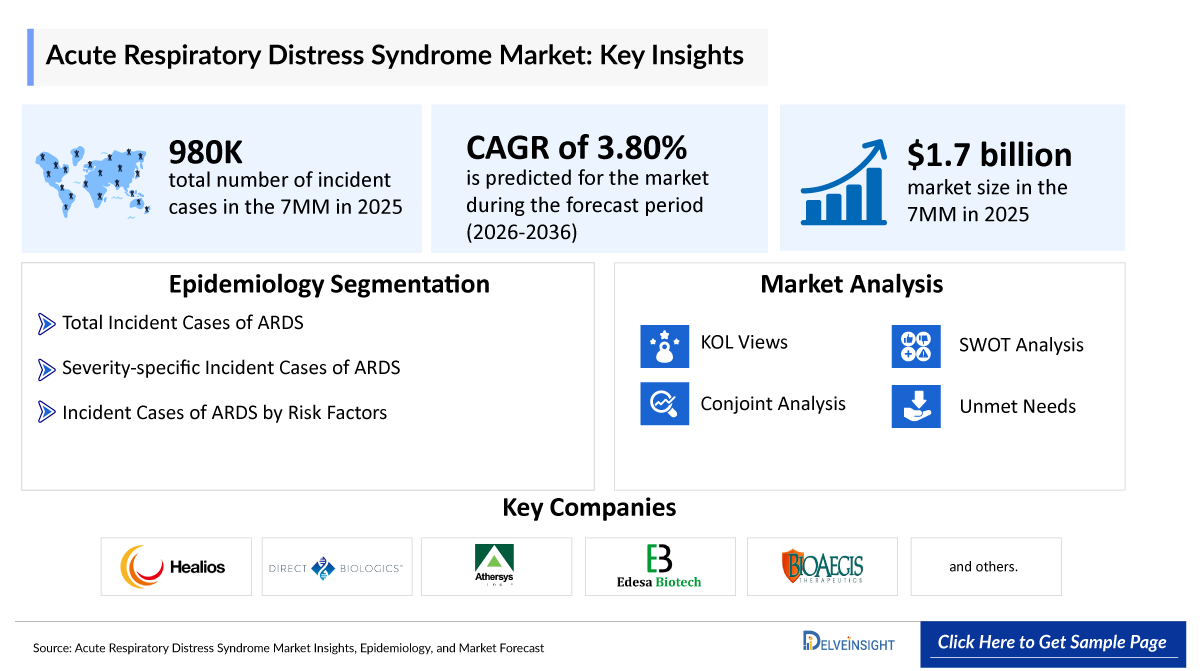
Key Factors Driving the Acute Respiratory Distress Syndrome (ARDS) Market Growth
-
Rising incidence of ARDS and Respiratory Diseases
The increasing global burden of conditions such as pneumonia, sepsis, trauma, and viral infections (including COVID-19)is a major driver, leading to a growing number of ARDS cases.
-
High Unmet Medical Need and Lack of Targeted Therapies
ARDS still has limited effective, disease-specific treatments, with current management largely supportive (ventilation, ICU care), creating a strong unmet need that drives research, innovation, and market growth as companies attempt to develop targeted therapies. Increased Access to Healthcare Services.
-
Increase in Emerging Therapies
There is a significant rise in clinical trials and pipeline development, including biologics, stem cell therapies, and immunomodulators, which is accelerating innovation and attracting investment into the ARDS market.
-
Advancements in Diagnostic Technologies
Improved diagnostic tools and monitoring systems are enabling earlier detection and intervention, supporting better patient outcomes and market growth.
-
Growing Research and Development Activities
Pharmaceutical and biotechnology companies are investing heavily in the development of novel therapies, biologics, and regenerative medicine approaches for ARDS.
-
Expanding Clinical Pipeline
A robust pipeline of emerging therapies targeting inflammation, immune modulation, and lung tissue repair is contributing to optimism in the ARDS treatment landscape.
-
Increasing Adoption of Advanced Ventilation Strategies
The widespread use of lung-protective ventilation, ECMO, and other critical care technologies is improving disease management and supporting market expansion.
-
Greater Awareness among Healthcare Professionals
Enhanced understanding of ARDS pathophysiology and treatment protocols is leading to improved diagnosis, management, and patient outcomes.
-
Impact of Emerging Infectious Diseases
Respiratory outbreaks and viral infections continue to highlight the need for effective ARDS therapies, accelerating research and market interest.
DelveInsight's ‘Acute Respiratory Distress Syndrome Market Insights, Epidemiology and Market Forecast – 2036’ report delivers an in-depth understanding of the Acute Respiratory Distress Syndrome, historical and forecasted epidemiology, as well as the Acute Respiratory Distress Syndrome therapeutics market trends in the United States, EU4 (Germany, Spain, Italy, and France) and the United Kingdom, and Japan.
The ARDS Treatment Market Report delivers a comprehensive analysis of the current treatment landscape, including standards of care, clinical practices, and evolving therapeutic algorithms. It evaluates Acute Respiratory Distress Syndrome patient burden trends, revenue & market share dynamics, peak patient share & therapy uptake analysis, and provides an in-depth market size assessment, and growth rate projections (Historical & Forecast 2022–2036) across global regions. The report highlights key unmet medical needs in ARDS and maps the competitive and clinical landscape to uncover high‑value opportunities, providing a clear outlook on future market growth potential.
Scope of the Acute Respiratory Distress Syndrome Market Report | |
| Study Period | 2022–2036 |
| Historical Year | 2022–2025 |
| Forecast Period | 2026–2036 |
| Base Year | 2026 |
| Geographies Covered |
|
| Acute Respiratory Distress Syndrome Market CAGR | ~3.8% (2026 ̶ 2036) |
| Acute Respiratory Distress Syndrome Epidemiology Segmentation Analysis |
Patient Burden Assessment
|
| Acute Respiratory Distress Syndrome Companies |
|
| Acute Respiratory Distress Syndrome Therapies |
|
| Acute Respiratory Distress Syndrome Market |
Segmented by
|
| Analysis |
|
Acute Respiratory Distress Syndrome Disease Understanding
Acute Respiratory Distress Syndrome Overview
ARDS is a severe, life-threatening form of acute respiratory failure characterized by rapid onset of widespread inflammation in the lungs, leading to increased permeability of the alveolar-capillary membrane, pulmonary edema, and impaired gas exchange. It commonly occurs secondary to conditions such as Sepsis, Pneumonia, Trauma, or aspiration, and is defined clinically by lung infiltrates not fully explained by cardiac failure, as outlined in the Berlin Definition of ARDS, with disease severity categorized based on the degree of oxygenation impairment.
Acute Respiratory Distress Syndrome Diagnosis
ARDS Diagnosis is primarily clinical and based on established criteria such as the Berlin Definition of ARDS, which includes acute onset within one week of a known insult, bilateral opacities on chest imaging (chest X-ray or CT scan), respiratory failure not explained by cardiac causes or fluid overload, and impaired oxygenation measured by the PaO₂/FiO₂ ratio; additional investigations such as arterial blood gas analysis, echocardiography (to exclude cardiogenic pulmonary edema), and laboratory tests are used to support diagnosis and identify the underlying cause.
Acute Respiratory Distress Syndrome Treatment
Management of ARDS is mainly supportive and focuses on optimizing oxygenation and treating the underlying cause. Key strategies include lung-protective mechanical ventilation with low tidal volumes, appropriate levels of positive end-expiratory pressure (PEEP), prone positioning in moderate to severe cases, and supportive intensive care measures such as fluid management and monitoring, while advanced options like extracorporeal membrane oxygenation (ECMO) may be considered in refractory cases to maintain adequate oxygenation. Several investigational therapies are currently under clinical trials, reflecting ongoing efforts to develop targeted pharmacological treatments for ARDS.
Acute Respiratory Distress Syndrome Epidemiology
The ARDS epidemiology section provides insights about the historical and current ARDS patient pool and forecasted trends for individual seven major countries. It helps to recognize the causes of current and forecasted trends by exploring numerous studies and views of key opinion leaders. This part of the ARDS Therapeutics Market Report also provides the diagnosed patient pool and their trends along with assumptions undertaken.
Key Findings from Acute Respiratory Distress Syndrome Epidemiological Analyses and Forecast
- According to DelveInsight’s estimates, in 2025, the total number of Acute Respiratory Distress Syndrome Incident Cases in the 7MM was ~980,000.
- Based on severity, moderate ARDS accounts for a higher proportion of cases compared to mild and severe ARDS.
- Pneumonia is the leading risk factor for ARDS, accounting for a significant proportion of cases, followed by sepsis.
Acute Respiratory Distress Syndrome Epidemiology Segmentation
- Total Acute Respiratory Distress Syndrome Incident Cases
- Acute Respiratory Distress Syndrome Severity-specific Incident Cases
- Acute Respiratory Distress Syndrome Incident Cases by Risk Factors
Acute Respiratory Distress Syndrome Market Recent Developments and Breakthroughs
- In January 2026, Healios submitted a clinical trial plan notification to the Pharmaceuticals and Medical Devices Agency (PMDA) for a clinical trial to be conducted in Japan as part of the Global Phase III trial (REVIVE-ARDS) for HLCM051 for the treatment of ARDS.
- In February 2026, Edesa Biotech, in its SEC filing (8K), reported that it is evaluating subgroup data for additional efficacy signals among subjects with certain comorbidities following positive results from a Phase III study of its monoclonal antibody, paridiprubart, in patients with ARDS.
- In April 2026, Edesa Biotech, in its corporate presentation, announced that the US allocated USD 117 million to evaluate three novel therapeutics for general ARDS, including Edesa’s paridiprubart.
- In September 2024, HEALIOS K.K announced that they held an End-of-Phase II consultation with the FDA regarding the launch of a pivotal, global Phase III study to demonstrate and confirm the efficacy and safety of MultiStem for ARDS caused by pneumonia, primarily in the United States.
- In April 2023, Direct Biologics announced favorable safety and efficacy data from its ExoFlo expanded access program in hospitalized adult COVID-19 patients with moderate-to-severe ARDS.
- In July 2023, Direct Biologics announced favorable safety data and significant efficacy results from its Phase II clinical trial of ExoFlo in hospitalized adult COVID-19 patients with moderate-to-severe ARDS.
Acute Respiratory Distress Syndrome Drug Analysis
The Acute Respiratory Distress Syndrome (ARDS) Market Drug chapter provides a detailed, market-focused review of the emerging pipeline across Phase III/II ARDS clinical trials. It covers the mechanism of action, Acute Respiratory Distress Syndrome clinical trial data, regulatory approvals, patents, collaborations, and strategic partnerships, as well as upcoming key catalysts for each therapy, along with their advantages, limitations, and recent developments. This section offers critical insights into the ARDS treatment landscape, supporting market assessment, competitive analysis, and growth forecasting for the ARDS therapeutics market.
Acute Respiratory Distress Syndrome Emerging Drugs
-
MultiStem (HLCM051): Healios K.K
MultiStem (HLCM051) is an allogeneic, off-the-shelf somatic stem cell therapy developed by Healios K.K. (Japan) in collaboration with Athersys (US). This regenerative cell therapy is being developed for ARDS, acting through anti-inflammatory signaling, immune modulation, and tissue repair. The therapy has received US FDA Fast Track Designation (FTD) and Regenerative Medicine Advanced Therapy (RMAT) designations, and ODD in Japan. The RMAT designation was received in April 2022. Although it has shown promising safety and biological activity in studies, it remains in the clinical development stage and has not yet received full regulatory approval as a marketed therapy.
-
ExoFlo (DB-2Q): Direct Biologics
ExoFlo, developed by Direct Biologics, is an extracellular signal product derived from human bone marrow mesenchymal stem or stromal cells that delivers bioactive signals to reduce inflammation, support intercellular communication, and promote tissue repair. The therapy showed favorable safety and meaningful efficacy in a Phase II study in hospitalized adults with COVID-19-related moderate-to-severe ARDS, supported further by positive outcomes from an expanded access program.
Competitive Landscape of ARDS Pipeline Drugs | ||||||
|
Drug Name |
Company |
Highest Phase |
Indication |
RoA |
MoA |
Anticipated Launch in the US |
|
MultiStem (HLCM051) |
Healios K.K |
III |
ARDS |
IV |
Immune modulation |
Information is available in the full report |
|
ExoFlo (DB-2Q) |
Direct Biologics |
III |
ARDS |
IV |
Immune regulation |
Information is available in the full report |
|
EB05 (paridiprubart) |
Edesa Biotech |
II |
ARDS |
IV |
Toll-like receptor 4 (TLR4) antagonist |
Information is available in the full report |
|
Note: Launch insights are provisional and may change with future report updates or the occurrence of major key catalysts. | ||||||
Acute Respiratory Distress Syndrome Market Outlook
The Acute Respiratory Distress Syndrome market remains largely centered on supportive care. Beyond supportive care, the ARDS pipeline is evolving toward immunomodulatory and regenerative approaches, aiming to address the underlying pathophysiology of inflammation, endothelial injury, and immune dysregulation.
Investigational therapies such as MultiStem (HLCM051), ExoFlo (DB-2Q), and EB05 (paridiprubart) are being developed to modulate immune responses, reduce inflammation, and promote tissue repair, with several candidates progressing through Phase II and Phase III clinical trials, reflecting a shift from purely supportive management to targeted biological therapies.
Key Findings from Acute Respiratory Distress Syndrome Market Forecast Report
- Among the 7MM, the US accounted for the largest Acute Respiratory Distress Syndrome Market Size i.e., USD ~1,300 million in 2025.
- The entry of late-stage candidates such as HLCM051 and ExoFlo (DB-2Q) is expected to intensify competition in the ARDS treatment market landscape during the latter half of the forecast period.
Acute Respiratory Distress Syndrome Companies, Market Leaders and Emerging Companies
- Healios K.K
- Direct Biologics
- Athersys
- Edesa Biotech
- Herald Therapeutics
- BioAegis Therapeutics, and others
Acute Respiratory Distress Syndrome Drug Uptake
This section focuses on the uptake rate of potential Acute Respiratory Distress Syndrome drugs expected to be launched in the market during the forecast period (2026–2036). The analysis covers the ARDS drug’s uptake, performance at peak, factors affecting performance during prime years of growth, patient uptake by therapy, and anticipated sales generated by each drug.
The uptake of therapies in ARDS is expected to vary based on clinical positioning, Acute Respiratory Distress Syndrome mechanism of action, and stage of development. Acute Respiratory Distress Syndrome Pipeline candidates such as HLCM051, ExoFlo (DB-2Q), and EB05 (paridiprubart) are expected to follow a cautious to moderate uptake trajectory, driven by encouraging early- to mid-stage clinical signals in critically ill patients with hyperinflammatory lung injury. Phase I/II and early Phase III studies have shown signals of improved oxygenation, reduced inflammatory markers, and acceptable safety profiles, particularly in subsets of patients with severe or COVID-19-associated ARDS. However, broader clinical adoption is expected to remain dependent on the successful completion of ongoing Phase III trials.
Acute Respiratory Distress Syndrome Market Access and Reimbursement
Reimbursement may be referred to as the negotiation of a price between a manufacturer and a payer that allows the manufacturer access to the market. It is provided to reduce the high costs and make the essential drugs affordable. Health technology assessment (HTA) plays an important role in reimbursement decision-making and recommending the use of a drug. These recommendations vary widely throughout the seven major markets, even for the same drug.
In the US healthcare system, both Public and Private health insurance coverage are included. Also, Medicare and Medicaid are the largest government-funded programs in the US. The major healthcare programs, including Medicare, Medicaid, Health Insurance Program (CHIP), and the state and federal health insurance marketplaces, are overseen by the Centres for Medicare & Medicaid Services (CMS). Other than these, Pharmacy Benefit Managers (PBMs) and third-party organisations that provide services and educational programs to aid patients are also present.
The Acute Respiratory Distress Syndrome Therapeutics Market Report further provides detailed insights on the country-wise accessibility and reimbursement scenarios, cost-effectiveness scenario of currently used therapies, programs making accessibility easier and out-of-pocket costs more affordable, insights on patients insured under federal or state government prescription drug programs, etc.
Industry Experts and Physician Views for Acute Respiratory Distress Syndrome
To keep up with ARDS market trends, we take Key Opinion Leaders (KOLs) and Subject Matter Experts (SMEs) opinions working in the domain through primary research to fill the data gaps and validate our secondary research. Industry experts were contacted for insights on the ARDS emerging therapies, evolving treatment landscape, patient adherence to conventional therapies, therapy switching trends, drug adoption and uptake, accessibility challenges, and epidemiology and real-world prescription patterns in ARDS, including MD, PhD, Instructor, Postdoctoral Researcher, Professor, Researcher, and others.
DelveInsight’s analysts connected with 15+ KOLs to gather insights at the country level. Centers such as the Yale School of Medicine, Upstate Medical University, and Osaka University Graduate School of Medicine, etc. were contacted. Their opinion helps understand and validate current and emerging ARDS therapies, highlight unmet medical needs, provide epidemiological context, and support strategic decisions for market access, therapy adoption, and pipeline prioritization in ARDS.
|
Region |
Key Opinion Leaders (KOLs) and Subject Matter Experts (SMEs) |
|
United States |
“While the mortality rate for ARDS is significant, recent advances in treatment have significantly increased the chances of survival and recovery. Patients who survive ARDS typically require some form of physical therapy to rebuild muscle tone.” |
|
Germany |
“ARDS remains a leading cause of death. To improve ARDS therapeutic options, epidemiology should be studied on a regular basis. In Japan, glucocorticoids are used often for the treatment of ARDS, which is linked to a higher fatality rate.” |
Acute Respiratory Distress Syndrome Report Qualitative Analysis SWOT and Conjoint Analysis
We perform qualitative and market Intelligence analysis using various approaches, such as SWOT analysis and conjoint analysis. In the SWOT analysis of ARDS, strengths, weaknesses, opportunities, and threats in terms of disease diagnosis, patient awareness, patient burden, competitive landscape, cost-effectiveness, and geographical accessibility of therapies are provided.
Conjoint analysis analyzes emerging therapies based on relevant attributes such as safety, efficacy, frequency of administration, route of administration, and order of entry. Scoring is given based on these parameters to analyze the effectiveness of therapy.
The team of analysts analyzes promising emerging therapies based on relevant attributes such as safety, efficacy, frequency of administration, route of administration, and order of entry. In efficacy, the trial’s primary and secondary outcome measures are evaluated, whereas the therapies’ safety is evaluated, wherein the acceptability, tolerability, and adverse events are majorly observed. In addition, the scoring is also based on the route of administration, order of entry, probability of success, and the addressable patient pool for each therapy. According to these parameters, the final weightage score and the ranking of the emerging therapies are decided.
Scope of the Acute Respiratory Distress Syndrome Market Report
- The Acute Respiratory Distress Syndrome Therapeutics Market report covers a segment of key events, an executive summary, a descriptive overview, explaining their causes, signs and symptoms, pathogenesis, and currently available treatments.
- Comprehensive insight has been provided into the Acute Respiratory Distress Syndrome Epidemiology segments and forecasts, the future growth potential of the diagnosis rate, and disease progression along treatment guidelines.
- Additionally, an all-inclusive account of both the current and emerging treatments, along with the elaborative profiles of late-stage and prominent therapies, will have an impact on the current treatment landscape.
- A detailed review of the Acute Respiratory Distress Syndrome Therapeutics Market, historical and forecasted Acute Respiratory Distress Syndrome Treatment Market Size, Acute Respiratory Distress Syndrome Drugs Market Share by therapies, detailed assumptions, and rationale behind our approach is included in the report, covering the 7MM drug outreach.
- The Acute Respiratory Distress Syndrome Therapeutics Market report provides an edge while developing business strategies by understanding trends through SWOT analysis and expert insights/KOL views, patient journey, and treatment preferences that help in shaping and driving the 7MM ARDS market.
Acute Respiratory Distress Syndrome Market Report Insights
- Acute Respiratory Distress Syndrome Patient Population Forecast
- Acute Respiratory Distress Syndrome Therapeutics Market Size
- Acute Respiratory Distress Syndrome Pipeline Analysis
- Acute Respiratory Distress Syndrome Market Size and Trends
- Acute Respiratory Distress Syndrome Drugs Market Opportunity (Current and forecasted)
Acute Respiratory Distress Syndrome Market Report Key Strengths
- ARDS Epidemiology‑based (Epi‑based) Bottom‑up Forecasting
- Artificial Intelligence (AI)-Enabled Market Research Report
- 11-Year Forecast
- Acute Respiratory Distress Syndrome Market Outlook (North America, Europe, Asia-Pacific)
- ARDS Patient Burden Trends (By Geography)
- ARDS Treatment Addressable Market (TAM)
- ARDS Competitive Landscape
- ARDS Major Companies Insights
- ARDS Price Trends and Analogue Assessment
- ARDS Therapies Drug Adoption/Uptake
- ARDS Therapies Peak Patient Share Analysis
Acute Respiratory Distress Syndrome Market Report Assessment
- Current ARDS Treatment Practices
- ARDS Unmet Needs
- ARDS Clinical Development Analysis
- ARDS Emerging Drugs Product Profiles
- ARDS Market Attractiveness
- ARDS Qualitative Analysis (SWOT and conjoint analysis)
- ARDS Market Drivers
- ARDS Market Barriers
Key Questions Answered in the Acute Respiratory Distress Syndrome Market Report
Acute Respiratory Distress Syndrome Market Insights
- What was the acute respiratory distress syndrome (ards) market size, the market size by therapies, Acute Respiratory Distress Syndrome drugs market share (%) distribution in 2025, and what would it look like by 2036? What are the contributing factors for this growth?
- What are the anticipated pricing variations among different geographies for the emerging therapies in the future?
- What can be the future treatment paradigm of ARDS?
- What are the disease risks, burdens, and unmet needs of ARDS? What will be the growth opportunities across the 7MM concerning the ARDS patient population?
- Who is the major future competitor in the market, and how will the competitors affect their market share?
- What are the current options for the treatment of ARDS? What are the current guidelines for treating ARDS in the US, Europe, and Japan?
Reasons to Buy Acute Respiratory Distress Syndrome Market Report
- The Acute Respiratory Distress Syndrome Therapeutics Market report will help in developing business strategies by understanding the latest trends and changing treatment dynamics driving the ARDS market.
- Bottom up forecasting builds from the affected population to product forecasts, delivering a robust, data driven approach ideal for new therapies and novel classes.
- Insights on patient burden/disease: Acute Respiratory Distress Syndrome Incidence, evolution in diagnosis, and factors contributing to the change in the epidemiology of the disease during the forecast years.
- Understand the existing market opportunities in varying geographies and the growth potential over the coming years.
- Identifying strong upcoming players in the Acute Respiratory Distress Syndrome Drugs Market will help devise strategies to help get ahead of competitors.
- Detailed analysis and ranking of class-wise potential emerging therapies under the conjoint analysis section to provide visibility around leading classes.
- To understand KOLs’ perspectives on the accessibility, acceptability, and compliance-related challenges of existing treatment to overcome barriers in the future.
- Detailed insights on the unmet needs of the existing Acute Respiratory Distress Syndrome Drugs Market so that the upcoming players can strengthen their development and launch strategy.
- This Artificial Intelligence (AI) enabled report summarize and simplify complex datasets with in the report into clear, actionable insights for stakeholders, investors, and healthcare providers, enabling faster, data driven decisions.
Stay updated with us for Recent Articles
- Rising Acute Respiratory Distress Syndrome (ARDS) Prevalence Posing a Major Public Health Concern
- Unmet Needs and Emerging Trends in the Acute Respiratory Distress Syndrome Market Landscape
- Acute Respiratory Distress Syndrome Market Infographics
- Acute Respiratory Distress Syndrome Newsletter
- New DelveInsight Blogs
.png&w=48&q=75)

.png&w=3840&q=75)
