
Blood Brain Barrier Market Summary
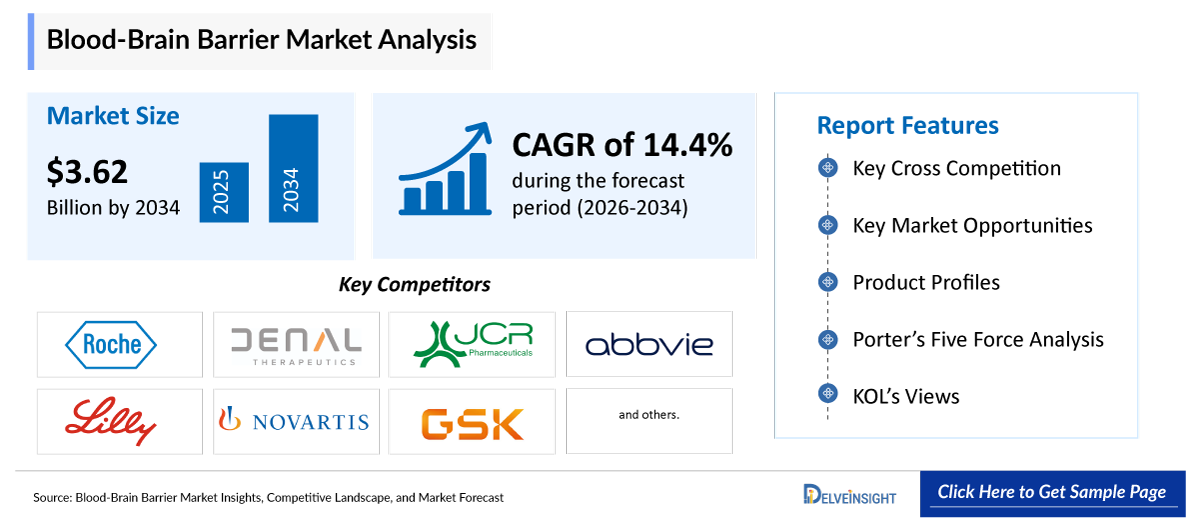
- The Blood-Brain Barrier market size is estimated at USD 1.08 billion in 2025 and is projected to reach USD 3.62 billion by 2034. Growth is anchored in the rising global burden of neurological disease, the validation of receptor-mediated transcytosis through the first approvals of brain-shuttle therapeutics, and a wave of multi-billion-dollar pharmaceutical investment in blood-brain barrier delivery platforms.
- The global Blood-Brain Barrier market is growing at a CAGR of 14.4% during the forecast period from 2026 to 2034.
- By delivery technology, the receptor-mediated transcytosis segment dominated the Blood-Brain Barrier market with a 46% share in 2025.
- By molecule type, the antibodies segment dominated the Blood-Brain Barrier market with a 38% share in 2025.
- By application, the neurodegenerative diseases segment dominated the Blood-Brain Barrier market with a 39% share in 2025.
- By end user, the pharmaceutical and biotechnology companies segment dominated the Blood-Brain Barrier market with a 58% share in 2025.
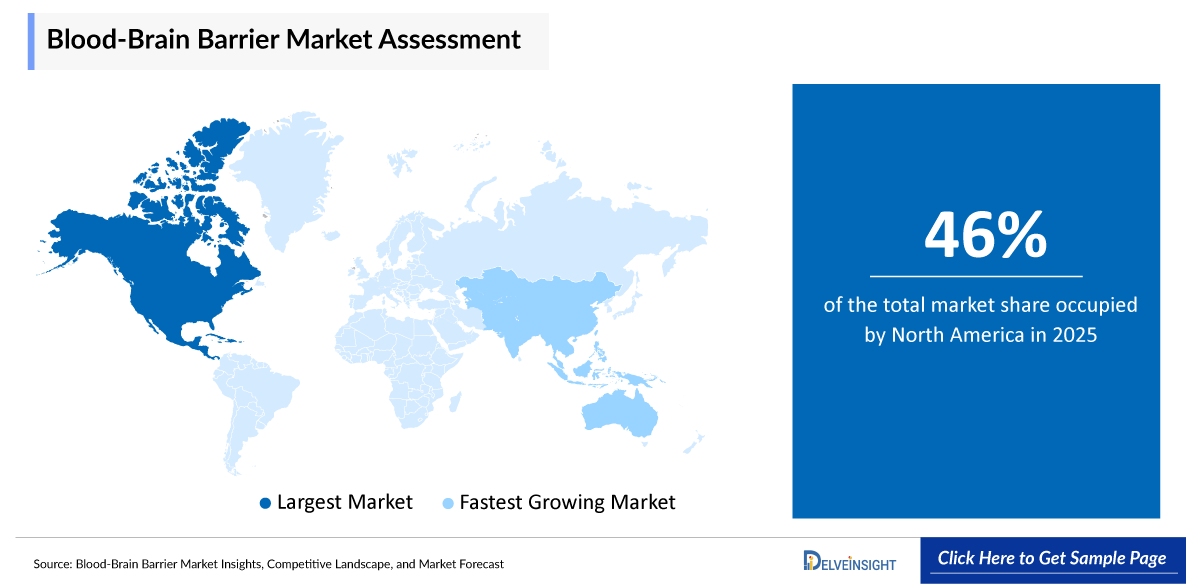
- North America dominated the global Blood-Brain Barrier market revenue with a 46% share in 2025, representing the highest regional market share globally.
The blood-brain barrier (BBB) is a highly selective, semipermeable interface formed by brain capillary endothelial cells joined by tight junctions and supported by pericytes, astrocytes, and neurons that together constitute the neurovascular unit. While it protects the central nervous system from circulating toxins and pathogens, it also excludes an estimated 98% of small-molecule drugs and the large majority of large-molecule biologics, making it the central bottleneck of neurological drug development. The Blood-Brain Barrier market comprises the technologies, platforms, and therapeutics engineered to transport medicines across this interface, spanning receptor-mediated transcytosis and brain shuttles, focused ultrasound, nanoparticle carriers, blood-brain-barrier-penetrant viral capsids for gene therapy, and intranasal delivery.
These approaches are applied across antibodies, enzymes, oligonucleotides, proteins and peptides, gene therapies, and small molecules, and are deployed by pharmaceutical and biotechnology companies, hospitals and specialty clinics, and academic and research institutes. The field has evolved from decades of preclinical receptor-targeting research into a commercially validated modality, marked by Japan’s approval of JCR Pharmaceuticals’ Izcargo, the United States accelerated approval of Denali’s AVLAYAH in March 2026, and Roche’s trontinemab entering Phase III. Anchored by clinical proof of concept, multi-billion-dollar licensing by AbbVie, Eli Lilly, GSK, and Novartis, and expanding platform diversity, blood-brain barrier delivery has become a strategic, high-growth enabling technology within central nervous system medicine.
Blood-Brain Barrier Market Key Growth Drivers
- The rising global burden of neurological disease, with the World Health Organization reporting over 55 million people living with dementia in 2022 and projecting 139 million by 2050, is expanding the population that requires brain-penetrant therapeutics.
- The blood-brain barrier excludes an estimated 98% of small-molecule drugs and the large majority of biologics, creating a durable, high-value bottleneck that delivery platforms are engineered to solve.
- Clinical and regulatory validation of receptor-mediated transcytosis, including the March 2026 United States accelerated approval of Denali’s AVLAYAH and trontinemab’s 91% amyloid PET negativity at 28 weeks, has converted brain-shuttle delivery into a commercial reality.
- A surge of pharmaceutical investment and licensing, including AbbVie’s USD 1.4 billion acquisition of Aliada Therapeutics and GSK’s commitment of up to USD 2.5 billion to ABL Bio’s Grabody-B platform, is funding and de-risking platform development.
- Platform diversification across transferrin-receptor, CD98hc, and insulin-like growth factor 1 receptor shuttles, AAV capsids, focused ultrasound, and intranasal delivery is broadening addressable applications and reducing single-technology dependence.
- Blood-brain-barrier-penetrant gene therapy, advanced through Sangamo’s STAC-BBB capsid and Voyager’s engineered capsids, is opening intravenous delivery routes for inherited central nervous system disease.
- AI-guided shuttle discovery, exemplified by Roche’s collaboration with Manifold Bio, is accelerating design cycles and expanding the cargo space for brain delivery, sustaining double-digit market growth through 2034.
Key Companies in Blood-Brain Barrier Market
The competitive landscape is led by the following active developers, platform owners, and therapeutic companies:
- F. Hoffmann-La Roche Ltd
- Denali Therapeutics Inc.
- JCR Pharmaceuticals Co., Ltd.
- AbbVie Inc.
- Eli Lilly and Company
- Biogen Inc.
- BioArctic AB
- Novartis AG
- GSK plc
- Sanofi S.A., and others
For illustrative purposes, only the top 10 companies are listed in the Table of Contents. The report may include analysis and references to additional companies relevant to the market assessment.
Blood-Brain Barrier Market Size
The following snapshot summarizes the principal report metrics for the Blood-Brain Barrier market.
|
Report Metrics |
Details |
|
2025 Market Size |
USD 1.08 billion |
|
2034 Projected Market Size |
USD 3.62 billion |
|
Growth Rate (2026-2034) |
14.4% CAGR |
|
Largest Market |
North America |
|
Fastest Growing Market |
Asia-Pacific |
|
Market Structure |
Consolidated |
All market values are expressed in USD and represent DelveInsight estimates synthesized from primary and secondary research.
Factors Contributing to the Growth of the Blood-Brain Barrier Market
Blood-Brain Barrier Market Drivers
- Rising Global Burden of Neurological and Neurodegenerative Disease: The most powerful driver of the Blood-Brain Barrier market is the escalating global burden of neurological disease, which creates vast unmet demand for therapies that can reach the brain. According to the World Health Organization, over 55 million people were living with dementia in 2022, with over 10 million new cases each year, and this number is projected to reach 78 million by 2030 and 139 million by 2050, of which 35 million are attributable to Alzheimer’s disease. Dementia already imposes an estimated annual economic cost above USD 1.3 trillion and ranks among the leading causes of death and disability worldwide. Parkinson’s disease, brain and central nervous system tumors, lysosomal storage disorders, epilepsy, and multiple sclerosis add substantial further demand, while population aging across North America, Europe, and Asia-Pacific steadily enlarges the at-risk cohort. Industry analyses indicate that central nervous system clinical trials rose by 15% in 2024, making CNS one of the fastest-growing research areas. Because most of these conditions require large-molecule or genetic medicines that cannot cross the barrier unaided, the expanding patient population translates directly into demand for engineered delivery platforms rather than conventional formulations. This demographic and clinical pressure enlarges the addressable market for blood-brain barrier delivery technologies, sustains payer and policymaker attention on neurology, and anchors double-digit market growth through 2034.
- The Blood-Brain Barrier Bottleneck as a Commercial Opportunity: The barrier itself is the defining commercial opportunity of the market. Published analyses indicate that the blood-brain barrier blocks an estimated 98% of small-molecule drugs and the large majority of large-molecule biologics, and even approved antibody therapies achieve very low brain exposure, with some studies suggesting that under 0.1% of an intravenous anti-amyloid antibody dose reaches the brain. This physiological gatekeeping explains the historically high failure rate of central nervous system drug development, where otherwise potent molecules fail not on target biology but on tissue access. As a result, delivery has shifted from a formulation afterthought to the rate-limiting step and the primary source of differentiation in neurology pipelines. Companies that solve transport gain the ability to revive previously abandoned targets, reposition existing biologics at lower systemic doses, and extend franchises into indications that were commercially inaccessible. The economic logic is compelling: a validated shuttle can be applied across antibodies, enzymes, oligonucleotides, and gene therapies, converting a single platform investment into a portfolio of assets. This platform leverage underpins the licensing multiples now observed across the sector and explains why delivery capability, rather than target novelty, increasingly determines competitive position. The persistence and universality of the bottleneck ensure durable demand for blood-brain barrier technologies across the forecast period.
- Clinical Validation and First Approvals of Receptor-Mediated Transcytosis: Receptor-mediated transcytosis has crossed decisively from concept to clinic, converting decades of research into regulatory and commercial proof. In March 2026, the United States Food and Drug Administration granted accelerated approval to Denali Therapeutics’ AVLAYAH (tividenofusp alfa-eknm) for the neurologic manifestations of Hunter syndrome, built on the modular TransportVehicle platform and representing the first broadly commercialized receptor-mediated transcytosis biologic in the West. It follows Japan’s earlier approval of JCR Pharmaceuticals’ Izcargo (pabinafusp alfa), the first approved receptor-mediated transcytosis enzyme therapy, which established the regulatory precedent for transferrin-receptor-enabled enzyme replacement. In Alzheimer’s disease, Roche’s Brainshuttle antibody trontinemab achieved 91% amyloid PET negativity at 28 weeks in its 3.6 mg/kg cohort with a favorable early safety profile, advancing into the Phase III TRONTIER program and demonstrating that shuttle-enabled antibodies can deliver deep target engagement at substantially lower doses. These milestones materially de-risk the mechanism for regulators, clinicians, investors, and payers, and they pull additional candidates into development across enzymes, antibodies, and oligonucleotides. Validation also compresses development timelines for followers, because the receptor biology, safety monitoring, and manufacturing precedents are now established. Clinical and regulatory proof of concept is therefore among the most consequential accelerants of adoption and revenue across the forecast period.
- Surge in Pharmaceutical Investment and Licensing of Delivery Platforms: Large pharmaceutical companies now treat blood-brain barrier delivery as a must-have capability, producing a wave of high-value transactions that fund and de-risk the market. In October 2024, AbbVie acquired Aliada Therapeutics for USD 1.4 billion to obtain its Modular Delivery (MODEL) platform and the Alzheimer’s candidate ALIA-1758. In April 2025, Eli Lilly signed a licensing agreement worth up to USD 1.4 billion with Sangamo Therapeutics for the STAC-BBB adeno-associated virus capsid, while GSK committed up to USD 2.5 billion to access ABL Bio’s Grabody-B shuttle targeting the insulin-like growth factor 1 receptor. In August 2025, Novartis agreed to a partnership worth up to USD 772 million for BioArctic’s BrainTransporter platform, and in November 2025 Roche partnered with Manifold Bio on AI-guided brain shuttles for USD 55 million upfront and over USD 2 billion in potential milestones. Biogen’s acquisition of Alcyone Therapeutics extended the same logic to oligonucleotide delivery. This capital inflow is complemented by venture formation, including Korsana Biosciences’ USD 175 million and Aerska Therapeutics’ USD 60 million in total funding. The effect is threefold: platform owners obtain non-dilutive capital and validation, acquirers secure durable competitive moats, and the overall pipeline expands faster than internal budgets alone would allow, sustaining market expansion across the forecast period.
- Platform Diversification across Shuttles, Capsids, and Ultrasound: Technological breadth is expanding the market well beyond a single mechanism and reducing concentration risk. Beyond transferrin-receptor antibody shuttles, developers are engineering molecules against CD98hc and the insulin-like growth factor 1 receptor, exemplified by ABL Bio’s Grabody-B platform, while nanobody and VNAR single-domain formats such as Ossianix’s TXP1 pursue deeper tissue penetration and simpler manufacturing. Adeno-associated virus capsid engineering is enabling blood-brain-barrier-penetrant gene therapy through programs including Sangamo’s STAC-BBB and Voyager Therapeutics’ engineered capsids, extending delivery from proteins to nucleic acids. Focused ultrasound, advanced by Insightec, offers a device-based route to transiently and reversibly open the barrier, and is being paired with chemotherapy and antibody administration for brain and central nervous system tumors. Nanoparticle carriers, peptide vectors such as those developed by Vect-Horus, and intranasal administration provide non-invasive or lower-cost alternatives suited to specific cargoes and indications. Each modality carries distinct advantages across cargo size, dosing frequency, invasiveness, and cost, allowing developers to match technology to indication rather than force a single approach. This diversification broadens addressable applications, opens multiple parallel commercialization paths, and insulates the market from setbacks in any one mechanism, supporting resilient growth through 2034.
- Emergence of Blood-Brain-Barrier-Penetrant Gene Therapy: Gene therapy delivered across an intact blood-brain barrier represents one of the market’s most consequential growth vectors. Conventional central nervous system gene therapy has depended on intrathecal, intracisternal, or direct intraparenchymal administration, procedures that are invasive, capacity-constrained, and difficult to scale across large indications. Engineered capsids that cross the barrier after intravenous infusion remove this constraint, converting a neurosurgical procedure into an outpatient infusion and enabling broad, distributed transduction of the brain. Eli Lilly’s licensing of Sangamo’s STAC-BBB capsid for up to USD 1.4 billion in April 2025 established the commercial benchmark for this approach, while Voyager Therapeutics advanced its own blood-brain-barrier-penetrant capsids and JCR Pharmaceuticals partnered with Alexion on the JUST-AAV platform to extend transferrin-receptor expertise into gene-based modalities. The addressable population expands accordingly, from ultra-rare monogenic disorders toward larger genetically defined neurodegenerative and neuromuscular indications. Because capsid platforms are cargo-agnostic, a single validated capsid can support multiple programs and partnerships, replicating the platform economics already visible in antibody shuttles. As capsid engineering, manufacturing scale, and immunogenicity management mature, blood-brain-barrier-penetrant gene therapy is positioned to contribute disproportionately to incremental market value in the later years of the forecast period.
- AI-Guided Shuttle Design and Next-Generation Discovery Platforms: Artificial intelligence is compressing the discovery cycle for brain-penetrant molecules and expanding the design space beyond what empirical screening can reach. Shuttle engineering requires simultaneous optimization of receptor affinity, epitope selection, avidity, cargo compatibility, manufacturability, and safety, a combinatorial problem poorly suited to sequential laboratory iteration. Machine-learning models trained on large protein-design and transport datasets can propose and rank candidate shuttles before synthesis, narrowing experimental workloads and surfacing formats that human-led campaigns would overlook. In November 2025, Roche entered a strategic collaboration with Manifold Bio to apply the mDesign AI-guided discovery engine to next-generation brain shuttles, for USD 55 million upfront and over USD 2 billion in potential milestones, signaling that the largest incumbent regards computational design as core rather than adjacent. The same tooling supports high-throughput in vivo screening of capsid and shuttle libraries, allowing hundreds of variants to be evaluated in parallel. Downstream, AI methods are also improving patient selection, biomarker interpretation, and imaging analysis in central nervous system trials, which lowers the cost of demonstrating brain exposure and efficacy. By reducing time to candidate and raising the probability of technical success, AI-guided design strengthens pipeline throughput and sustains platform valuations across the forecast period.
Blood-Brain Barrier Market Restraints
Despite strong momentum, the Blood-Brain Barrier market faces material constraints that temper the pace of adoption. Safety remains a central challenge: anti-amyloid antibodies carry the risk of amyloid-related imaging abnormalities requiring intensive magnetic resonance imaging surveillance, and transferrin-receptor targeting can affect reticulocytes and other receptor-bearing peripheral cells, demanding careful engineering of affinity, valency, and epitope selection to preserve a therapeutic window.
Regulatory pathways for delivery platforms are still forming, since agencies evaluate each shuttle and cargo combination as a distinct product rather than approving the platform itself, which limits the regulatory leverage that platform economics assume. Clinical translation is difficult, as species differences in barrier receptor expression and transport kinetics complicate preclinical modeling, and central nervous system trials carry long durations, large sample sizes, and historically high failure rates. Manufacturing complex bispecific antibodies, enzyme fusions, and viral capsids at commercial scale is technically demanding and capital intensive, with specialized fill-finish, viral-vector suites, and analytical characterization constraining capacity and elevating cost of goods. Supply chains for plasmids, cell-culture media, and single-use consumables remain concentrated among a few qualified suppliers, exposing programs to lead-time and quality risk.
Reimbursement is uncertain for high-priced therapies aimed at ultra-rare indications, where payers scrutinize durability of benefit and outcomes evidence, and coverage varies markedly across the United States, Europe, and Asia-Pacific. Workforce constraints compound these pressures, as neurology, neurosurgery, infusion, and vector-manufacturing expertise is scarce and concentrated in a limited number of academic and specialty centers. Data-management demands are rising with imaging-intensive endpoints, longitudinal biomarker collection, and registry commitments attached to accelerated approvals. Some delivery routes, including intrathecal administration and focused-ultrasound procedures, remain invasive or capacity-limited, restricting throughput. Finally, the field is early in commercialization, with a small number of approved products, leaving revenue concentrated among a few assets and dependent on pipeline success. Together these factors moderate near-term revenue conversion even as long-term demand expands.
Blood-Brain Barrier Market Segment Analysis
The Blood-Brain Barrier Market by Delivery Technology (Receptor-Mediated Transcytosis, Focused Ultrasound, Nanoparticle-Based Delivery, AAV Capsid and Gene-Therapy-Based Delivery, Intranasal Delivery, Others), Molecule Type (Antibodies, Enzymes, Oligonucleotides, Proteins and Peptides, Gene Therapies, Small Molecules), Application (Neurodegenerative Diseases, Lysosomal Storage Disorders, Brain and CNS Tumors, Multiple Sclerosis, Epilepsy, Others), End User (Pharmaceutical and Biotechnology Companies, Hospitals and Specialty Clinics, Academic and Research Institutes, Others), and Geography (North America, Europe, Asia-Pacific, Rest of World).
By Delivery Technology
Dominant Subsegment: Receptor-Mediated Transcytosis (RMT). The receptor-mediated transcytosis category is expected to dominate the market.
Dominant: Receptor-Mediated Transcytosis ~ 46%
The receptor-mediated transcytosis segment accounted for a 46% share of the Blood-Brain Barrier market in 2025. Receptor-mediated transcytosis is the most clinically and commercially advanced BBB-crossing approach. By engineering molecules that bind receptors such as the transferrin receptor, CD98hc, and the insulin-like growth factor 1 receptor on brain endothelial cells, RMT shuttles carry antibodies, enzymes, and oligonucleotides into the brain through the cells' natural transport machinery. Its dominance is reinforced by the first approvals built on the approach, including Denali's AVLAYAH and JCR's Izcargo, and by the most advanced clinical asset, Roche's trontinemab. Continued innovation sustains the segment, including dual-receptor targeting, modular platforms that carry multiple cargo types, and AI-guided shuttle design. Adjacent technologies are advancing quickly: AAV capsid engineering enables blood-brain-barrier-penetrant gene therapy, nanoparticle carriers and focused ultrasound offer alternative routes, and intranasal delivery provides a non-invasive option. While these alternatives expand the landscape and grow from smaller bases, receptor-mediated transcytosis retains leadership through its clinical validation, versatility, and concentration of partnering value across the forecast period.
By Molecule Type
Dominant Subsegment: Antibodies. The antibodies category is expected to dominate the market.
Dominant: Antibodies ~ 38%
The antibodies segment accounted for a 38% share of the Blood-Brain Barrier market in 2025. Antibodies, including bispecific brain-shuttle and antibody-fusion formats, are the leading molecule type because they combine high target specificity with the longer systemic persistence conferred by the Fc region, and they integrate naturally with receptor-mediated transcytosis shuttles. The most visible programs in the field are antibody-based, from Roche's trontinemab for Alzheimer's to AbbVie's MODEL-enabled candidates and Korsana's THETA-enabled KRSA-028. Enzymes form the next-largest segment, anchored by approved enzyme-replacement fusions for lysosomal storage disorders such as AVLAYAH and Izcargo, while oligonucleotides are advancing rapidly as antibody-oligonucleotide conjugates and shuttle-enabled antisense and RNA-interference therapies enter development. Proteins and peptides, gene therapies delivered by blood-brain-barrier-penetrant capsids, and a smaller small-molecule segment complete the landscape. Antibodies retain leadership in 2025 on the strength of clinical maturity and partnering activity.
By Application
Dominant Subsegment: Neurodegenerative Diseases. The neurodegenerative diseases category is expected to dominate the market.
Dominant: Neurodegenerative Diseases ~ 39%
The neurodegenerative diseases segment accounted for a 39% share of the Blood-Brain Barrier market in 2025. Neurodegenerative diseases, led by Alzheimer's and Parkinson's disease, are the leading application because they combine an enormous and growing patient population with a deep pipeline of brain-penetrant candidates. The World Health Organization estimates over 55 million people live with dementia, rising toward 139 million by 2050, and effective disease-modifying therapy depends on delivering antibodies, oligonucleotides, and other large molecules into the brain. Brain-shuttle anti-amyloid antibodies such as trontinemab, MODEL-enabled candidates from AbbVie, and Korsana's KRSA-028 target this segment directly, while RNA-interference shuttles from companies such as Aerska address genetically defined forms of Alzheimer's and Parkinson's. Lysosomal storage disorders form the next major segment and currently anchor approved-product revenue through enzyme-replacement fusions, followed by brain and central nervous system tumors, multiple sclerosis, and epilepsy. The scale of neurodegenerative disease secures the segment's leadership across the forecast period.
By End User
Dominant Subsegment: Pharmaceutical and Biotechnology Companies. The pharmaceutical and biotechnology companies category is expected to dominate the market.
Dominant: Pharmaceutical & Biotechnology Companies ~ 58%
The pharmaceutical and biotechnology companies segment accounted for a 58% share of the Blood-Brain Barrier market in 2025. Pharmaceutical and biotechnology companies are by far the largest end users because the Blood-Brain Barrier market is driven by therapeutic development rather than routine service delivery. Large pharmaceutical companies and specialized biotechs design, license, manufacture, and commercialize brain-shuttle platforms and the therapeutics built on them, and they account for the overwhelming majority of spending through internal research, platform licensing, and acquisitions. The wave of transactions led by AbbVie, Eli Lilly, GSK, Novartis, and Roche illustrates how value concentrates among these companies. Hospitals and specialty clinics form the next segment as approved brain-shuttle therapies such as AVLAYAH enter clinical use, and academic and research institutes contribute foundational discovery of new receptors and shuttle formats, supported by public neuroscience funding. While clinical end users will expand as more products reach the market, pharmaceutical and biotechnology companies retain clear leadership in 2025.
Blood-Brain Barrier Market Region Analysis
Dominant Region: North America
Dominant: North America ~ 46% (Largest)
North America accounted for a 46% share of the global Blood-Brain Barrier market revenue in 2025, representing the highest regional market share globally. The region's dominance reflects the concentration of leading brain-shuttle developers in the United States, including Denali Therapeutics, AbbVie, Eli Lilly, and Biogen, together with the most active CNS licensing and acquisition environment. Market-size influence is amplified by the high prevalence of Alzheimer's and related dementias and by early regulatory acceptance, evidenced by the FDA accelerated approval of Denali's AVLAYAH for Hunter syndrome in March 2026. Healthcare infrastructure is mature, with comprehensive neurology centers and specialty clinics able to administer complex biologics. The investment landscape is the strongest globally, sustained by the National Institutes of Health and National Institute of Neurological Disorders and Stroke funding alongside deep private capital concentrated in Boston and California.
Fastest Growing Region: Asia-Pacific
Asia-Pacific is the fastest-growing region in the Blood-Brain Barrier market. The region's elevated CAGR is driven by rising healthcare investment, a large and aging patient population, and growing clinical and manufacturing capability across Japan, China, South Korea, and India. Japan holds an early leadership position through JCR Pharmaceuticals, whose Izcargo was the first approved receptor-mediated transcytosis enzyme therapy, and South Korea contributes ABL Bio's Grabody-B platform, which underpinned a multi-billion-dollar partnership with GSK. Government precision-medicine and neuroscience programs, expanding biopharmaceutical capacity, and increasing cross-border collaborations support rapid growth, positioning the region as the principal source of incremental demand over the forecast period.
Blood-Brain Barrier Regional Commentary
North America
North America accounted for a 46% share of the global Blood-Brain Barrier market revenue in 2025. The United States dominates on the strength of its developer base, deal-making activity, and regulatory leadership, while Canada contributes through neuroscience research programs and clinical-trial participation.
Europe
Europe represents the second-largest regional market, led by Switzerland, Sweden, France, the United Kingdom, and Germany. Roche anchors the region with its Brainshuttle platform and trontinemab, BioArctic in Sweden supplies the BrainTransporter technology behind multiple big-pharma deals, and Vect-Horus in France advances peptide-vector shuttles. Strong academic neuroscience and public research funding reinforce European leadership in platform innovation.
Asia-Pacific
Asia-Pacific is the fastest-growing region, propelled by Japan's early approval of Izcargo, South Korea's ABL Bio platform, and expanding investment across China and India. Domestic biopharmaceutical capacity and government neuroscience initiatives are broadening access and accelerating local development.
Rest of World
The Rest of World region, spanning the Middle East, Africa, and South America, is an emerging frontier. Rising neurological disease burden, improving clinical infrastructure, and participation in multinational trials are gradually expanding access to brain-penetrant therapies as approved products become available.
Blood-Brain Barrier Market Competitive Landscape
The Blood-Brain Barrier market is classified as Consolidated. Leadership is concentrated among a small group of companies that hold the only approved or most advanced brain-shuttle therapeutics, with F. Hoffmann-La Roche leading in Alzheimer's through its Brainshuttle platform, Denali Therapeutics commercializing the first Western receptor-mediated transcytosis biologic, and JCR Pharmaceuticals holding the earliest approval in Japan. Large pharmaceutical companies, including AbbVie, Eli Lilly, GSK, and Novartis, have consolidated access to delivery platforms through multi-billion-dollar acquisitions and licensing deals, while a broad field of biotech innovators competes with differentiated shuttle formats.
The competitive landscape can be evaluated across the following dimensions:
- Market concentration: Consolidated, with approved products and the most advanced pipeline concentrated among a few leaders, and high barriers to entry from proprietary platforms and clinical validation.
- Leading players: Roche, Denali Therapeutics, JCR Pharmaceuticals, AbbVie, Eli Lilly, and Biogen anchor the top tier.
- Geographic reach: Leaders operate global development and commercial networks across North America, Europe, and Asia-Pacific, with Japan and South Korea hosting key platform owners.
- Platform portfolio strength: Top players hold modular platforms spanning antibodies, enzymes, oligonucleotides, proteins, and gene therapies.
- Pipeline strength: Active pipelines in Alzheimer's disease, lysosomal storage disorders, and rare neurodegenerative conditions, including the Phase III trontinemab program.
- Strategic partnerships: Extensive licensing and collaboration, including Roche-Manifold, Lilly-Sangamo, GSK-ABL Bio, and Novartis-BioArctic.
- M&A activity: Big-pharma consolidation of delivery technology, exemplified by AbbVie's USD 1.4 billion acquisition of Aliada Therapeutics and Biogen's purchase of Alcyone Therapeutics.
- Manufacturing capabilities: Scale production of bispecific antibodies, enzyme fusions, and viral capsids is a key competitive moat and a technical challenge.
- Innovation focus: Multi-receptor shuttles, blood-brain-barrier-penetrant gene-therapy capsids, focused ultrasound, and AI-guided shuttle design.
Blood-Brain Barrier Market Recent Developmental Activities
- In August 2026, the Foundation for Angelman Syndrome Therapeutics (FAST) secured an agreement with Apertura Gene Therapy to access Apertura's TfR1 CapX™ technology for gene therapy research targeting Angelman syndrome. TfR1 CapX™ is an engineered AAV capsid designed to target human transferrin receptor 1, enabling genetic medicines to cross the blood-brain barrier via intravenous administration to achieve broad CNS distribution for rare neurogenetic diseases.
- In March 2026, Denali Therapeutics Inc. received United States FDA accelerated approval for AVLAYAH (tividenofusp alfa-eknm) for the neurologic manifestations of Hunter syndrome (MPS II), the first broadly commercialized receptor-mediated transcytosis biologic in the West, built on the modular TransportVehicle platform. Strategic significance: Provides the first commercial validation of brain-shuttle delivery and establishes a template for transporting enzymes, antibodies, and oligonucleotides across the barrier.
- In April 2026, Denali Therapeutics Inc. regained full rights to its investigational therapy DNL593 (PTV: PGRN) for GRN-related frontotemporal dementia. Strategic significance: Consolidates control of its protein-transport-vehicle pipeline ahead of broader neurodegeneration expansion.
- In February 2026, Aerska Therapeutics raised USD 39 million in Series A financing, bringing total funding to USD 60 million, to advance antibody-RNA-interference brain shuttles for Alzheimer's and Parkinson's disease. Strategic significance: Signals strong investor conviction in combining RNA interference with receptor-mediated shuttling for the central nervous system.
- In November 2025, F. Hoffmann-La Roche Ltd (with Manifold Bio, Inc.) entered a strategic collaboration to develop next-generation brain shuttles using Manifold's mDesign AI-guided discovery engine, for USD 55 million upfront and over USD 2 billion in potential milestones. Strategic significance: Adds AI-driven shuttle design to Roche's Brainshuttle leadership and expands the cargo space for brain delivery.
- In September 2025, Korsana Biosciences emerged from stealth with USD 175 million in total funding, including a USD 150 million Series A, to advance KRSA-028 for Alzheimer's disease using its THETA transferrin-receptor shuttle platform. Strategic significance: Establishes a well-capitalized challenger to Roche, AbbVie, and Denali in brain-penetrant Alzheimer's antibodies.
- In August 2025, Novartis AG (with BioArctic AB) agreed to a partnership worth up to USD 772 million to apply BioArctic's BrainTransporter platform to a Novartis therapeutic antibody. Strategic significance: Extends big-pharma validation of brain-shuttle platforms and deepens BioArctic's multi-partner strategy.
- In July 2025, F. Hoffmann-La Roche Ltd (Genentech) reported interim Phase Ib/IIa biomarker results for trontinemab showing 91% amyloid PET negativity at 28 weeks in the 3.6 mg/kg cohort with a favorable early safety profile, advancing the program into the Phase III TRONTIER studies. Strategic significance: Provides clinical proof of concept for brain-shuttle anti-amyloid therapy in Alzheimer's disease.
- In April 2025, Eli Lilly and Company (with Sangamo Therapeutics, Inc.) signed a licensing agreement worth up to USD 1.4 billion to develop central nervous system therapies using the STAC-BBB adeno-associated virus capsid platform. Strategic significance: Extends blood-brain barrier delivery into gene therapy and broadens Lilly's neuroscience pipeline.
- In April 2025, GSK plc (with ABL Bio Inc.) committed up to USD 2.5 billion to access the Grabody-B shuttle platform, which targets the insulin-like growth factor 1 receptor for neurodegenerative disorders. Strategic significance: Validates non-transferrin-receptor approaches and intensifies competition across delivery mechanisms.
- In October 2024, AbbVie Inc. completed its USD 1.4 billion acquisition of Aliada Therapeutics, gaining the Modular Delivery (MODEL) blood-brain-barrier-crossing platform and the Alzheimer's candidate ALIA-1758. Strategic significance: Marks a landmark big-pharma consolidation of brain delivery technology and strengthens AbbVie's neuroscience pipeline.
- In 2025, JCR Pharmaceuticals Co., Ltd. (with Alexion), partnered on the JUST-AAV gene-therapy platform to extend its J-Brain Cargo transferrin-receptor expertise into central nervous system gene therapy, building on Izcargo, approved in Japan for Hunter syndrome. Strategic significance: Expands the first approved RMT enzyme franchise toward gene-based modalities.
- In 2025, Biogen Inc. acquired Alcyone Therapeutics to obtain technology for delivering antisense oligonucleotides to the brain, complementing its central nervous system portfolio. Strategic significance: Reinforces Biogen's commitment to improved central nervous system drug delivery.
Blood-Brain Barrier Market Segmentation
- Blood-Brain Barrier Market by Delivery Technology
- Receptor-Mediated Transcytosis
- Focused Ultrasound
- Nanoparticle-Based Delivery
- AAV Capsid and Gene-Therapy-Based Delivery
- Intranasal Delivery
- Others
- Blood-Brain Barrier Market by Molecule Type
- Antibodies
- Enzymes
- Oligonucleotides
- Proteins and Peptides
- Gene Therapies
- Small Molecules
- Blood-Brain Barrier Market by Application
- Neurodegenerative Diseases
- Lysosomal Storage Disorders
- Brain and CNS Tumors
- Multiple Sclerosis
- Epilepsy
- Others
- Blood-Brain Barrier Market by End User
- Pharmaceutical and Biotechnology Companies
- Hospitals and Specialty Clinics
- Academic and Research Institutes
- Others
Blood-Brain Barrier Market by Geography
- North America Blood-Brain Barrier Market
- United States Blood-Brain Barrier Market Size in USD million (2023-2034)
- Canada Blood-Brain Barrier Market Size in USD million (2023-2034)
- Mexico Blood-Brain Barrier Market Size in USD million (2023-2034)
- Europe Blood-Brain Barrier Market
- Germany Blood-Brain Barrier Market Size in USD million (2023-2034)
- United Kingdom Blood-Brain Barrier Market Size in USD million (2023-2034)
- France Blood-Brain Barrier Market Size in USD million (2023-2034)
- Italy Blood-Brain Barrier Market Size in USD million (2023-2034)
- Spain Blood-Brain Barrier Market Size in USD million (2023-2034)
- Rest of Europe Blood-Brain Barrier Market Size in USD million (2023-2034)
- Asia-Pacific Blood-Brain Barrier Market
- China Blood-Brain Barrier Market Size in USD million (2023-2034)
- Japan Blood-Brain Barrier Market Size in USD million (2023-2034)
- India Blood-Brain Barrier Market Size in USD million (2023-2034)
- Australia Blood-Brain Barrier Market Size in USD million (2023-2034)
- South Korea Blood-Brain Barrier Market Size in USD million (2023-2034)
- Rest of Asia-Pacific Blood-Brain Barrier Market Size in USD million (2023-2034)
- Rest of the World (RoW) Blood-Brain Barrier Market
- Middle East Blood-Brain Barrier Market Size in USD million (2023-2034)
- Africa Blood-Brain Barrier Market Size in USD million (2023-2034)
- South America Blood-Brain Barrier Market Size in USD million (2023-2034)
Blood-Brain Barrier Market Recent Industry Trends and Milestones (2023-2026):
|
Category |
Key Developments |
|
Product Approval |
Denali Therapeutics received FDA accelerated approval for AVLAYAH (tividenofusp alfa-eknm) for Hunter syndrome, the first Western receptor-mediated transcytosis biologic (March 2026); JCR Pharmaceuticals' Izcargo (pabinafusp alfa) remained the first approved RMT enzyme therapy, cleared in Japan for MPS II; the anti-amyloid antibody lecanemab (Leqembi), developed with BioArctic's BrainTransporter technology, gained FDA approval (2023). |
|
Product Expansion |
Roche advanced trontinemab into the Phase III TRONTIER program after 91% amyloid PET negativity at 28 weeks (2025); Denali expanded its modular TransportVehicle pipeline across enzymes, antibodies, and oligonucleotides and regained DNL593 rights (2026); Korsana Biosciences advanced KRSA-028 toward the clinic; Aerska progressed antibody-RNA-interference candidates for Alzheimer's and Parkinson's disease. |
|
Product Investment |
AbbVie acquired Aliada Therapeutics for USD 1.4 billion (2024); Eli Lilly licensed Sangamo's STAC-BBB capsid for up to USD 1.4 billion, and GSK accessed ABL Bio's Grabody-B for up to USD 2.5 billion (2025); Novartis partnered with BioArctic for up to USD 772 million (2025); Roche partnered with Manifold Bio for USD 55 million upfront and over USD 2 billion in milestones (2025); Korsana raised USD 175 million, and Aerska USD 60 million. |
|
Company Strategy |
F. Hoffmann-La Roche Ltd: Brainshuttle leadership in Alzheimer's, augmented by AI-guided shuttle design with Manifold Bio. Denali Therapeutics Inc.: First Western RMT approval and a modular platform spanning multiple cargo types. JCR Pharmaceuticals Co., Ltd.: First approved RMT enzyme therapy and expansion into gene therapy via a JUST-AAV partnership with Alexion. AbbVie Inc., Eli Lilly and Company, GSK plc, and Novartis AG: Consolidation of delivery platforms through multi-billion-dollar acquisitions and licensing. |
|
Emerging Technologies |
Receptor-mediated transcytosis shuttles targeting the transferrin receptor, CD98hc, and the insulin-like growth factor 1 receptor; blood-brain-barrier-penetrant AAV capsids for central nervous system gene therapy, such as STAC-BBB and TRACER; focused ultrasound for transient barrier opening; AI-guided shuttle discovery, such as Manifold's mDesign engine; antibody-oligonucleotide conjugates and RNA-interference brain shuttles; nanobody and VNAR single-domain shuttle formats for deeper tissue penetration. |
Blood-Brain Barrier Market Startup Funding and Investment Trends
Investment in the Blood-Brain Barrier ecosystem has concentrated on receptor-mediated transcytosis shuttles, RNA-interference brain delivery, and AI-guided platform design. The following companies illustrate recent funding activity and technology focus.
|
Company |
Total Funding |
Funding Stage |
Main Product |
Core Technology |
|
Korsana Biosciences |
USD 175 million |
Series A |
KRSA-028 (Alzheimer's) |
THETA transferrin-receptor antibody shuttle |
|
Aerska Therapeutics |
USD 60 million |
Series A |
RNAi CNS pipeline |
Antibody-RNA-interference brain shuttle |
|
Request for unlocking the report of the @ Blood-Brain Barrier Market Insights | ||||
Korsana Biosciences and Aerska Therapeutics reflect strong venture conviction in next-generation brain shuttles for Alzheimer's and other neurodegenerative diseases, while Aliada's USD 1.4 billion acquisition by AbbVie demonstrates the strategic value large pharmaceutical companies place on delivery platforms. Manifold Bio illustrates the rise of AI-guided shuttle design, and Ossianix advances differentiated single-domain shuttle formats. Collectively, these investments signal conviction that blood-brain barrier delivery has become a core enabling technology for central nervous system medicine.
Key Takeaways from the Blood-Brain Barrier Market Report Study
- Market size analysis for the current blood-brain barrier market size (2025), and market forecast for 9 years (2026 to 2034).
- Top key product/technology developments, mergers, acquisitions, partnerships, and joint ventures that happened over the last 3 years.
- Key companies dominating the global blood-brain barrier market.
- Various opportunities available for competitors in the blood-brain barrier market space.
- What are the top-performing segments in 2025? How will these segments perform in 2034?
- Which are the top-performing regions and countries in the current blood-brain barrier market scenario?
- Which are the regions and countries where companies should concentrate their opportunities for blood-brain barrier market growth in the future?
Target audience who can benefit from this blood-brain barrier market report study
- Blood-Brain Barrier product providers
- Research organizations and consulting companies
- Blood-Brain Barrier-related organizations, associations, forums, and other alliances
- Government and corporate offices
- Start-up companies, venture capitalists, and private equity firms
- Distributors and traders dealing in blood-brain barrier
- Various end-users who want to know more about the blood-brain barrier market and the latest technological developments in the blood-brain barrier market
Frequently Asked Questions
Q1. What is the growth rate of the Blood-Brain Barrier market?
The Blood-Brain Barrier market is projected to expand at a CAGR of 14.4% during the forecast period of 2026-2034.
Q2. What is the market size of the Blood-Brain Barrier market?
The Blood-Brain Barrier market size is estimated at USD 1.08 billion in 2025 and is projected to reach USD 3.62 billion by 2034.
Q3. Which region dominates the Blood-Brain Barrier market?
North America dominated the Blood-Brain Barrier market with a 46% share of global revenue in 2025, supported by a dense base of brain-shuttle developers, the most active CNS deal-making environment, supportive FDA pathways, including the accelerated approval of AVLAYAH, and sustained federal neuroscience funding. Asia-Pacific is the fastest-growing region over the forecast period.
Q4. What are the key drivers of the Blood-Brain Barrier market?
The principal drivers are the rising global burden of neurological disease, with dementia projected by the World Health Organization to increase from 55 million cases in 2022 to 139 million by 2050; the clinical and regulatory validation of receptor-mediated transcytosis through the 2026 approval of AVLAYAH and the Phase III progression of trontinemab; and a wave of pharmaceutical investment and licensing of blood-brain barrier delivery platforms.
Q5. Who are the major players in the Blood-Brain Barrier market?
The major Blood-Brain Barrier companies in the market include - F. Hoffmann-La Roche Ltd, Denali Therapeutics Inc., JCR Pharmaceuticals Co., Ltd., AbbVie Inc., Eli Lilly and Company, Biogen Inc., BioArctic AB, Novartis AG, GSK plc, and ABL Bio Inc., among other companies profiled in the Competitive Landscape section. Roche leads in Alzheimer's through its Brainshuttle platform, while Denali and JCR Pharmaceuticals hold the first approved receptor-mediated transcytosis therapeutics.


