Parkinson's Disease Market Summary
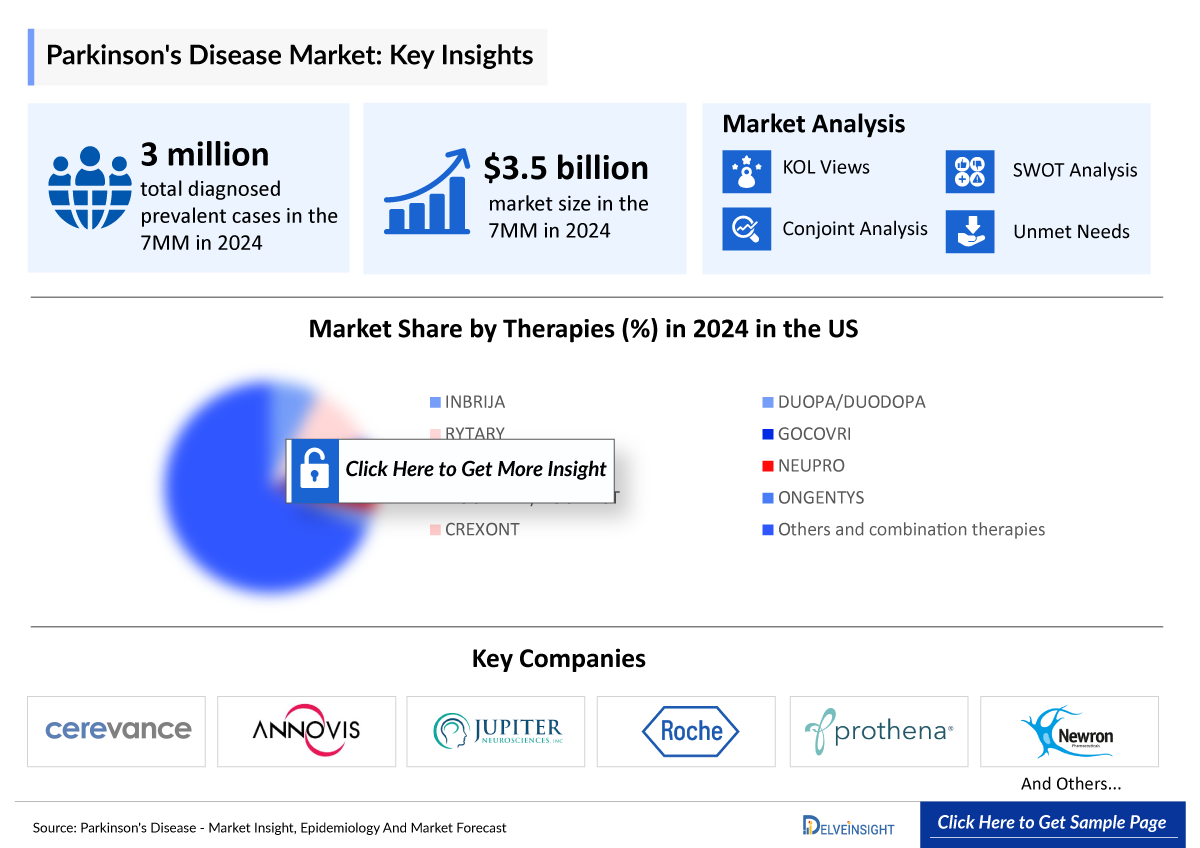
- The Parkinson’s Disease Market Size was valued USD 3,539 Million in 2025, and is anticipated to grow with a significant CAGR during the forecast period (2024-2034). This growth will be driven primarily by advancements in diagnostic techniques, increased awareness of the condition, and a rising number of reported cases.
- The Parkinson's Disease Market Size in the US was approximately USD 1,883 million in 2023, which is anticipated to increase due to the increasing awareness of the disease and the launch of the emerging therapy.
The total Parkinson's Disease Market Size of EU4 and the UK was calculated to be approximately USD 988 million in 2023, which was nearly 31% of the total market revenue for the 7MM. - The key Parkinson’s Disease companies actively involved in the Neuroleptic Malignant Syndrome Treatment include - Amneal Pharmaceuticals, AbbVie, Newron Pharmaceuticals, Supernus Pharmaceutical, Britannia Pharmaceuticals, Pharma Two B, UCB Biopharma SRL, Novartis, Annovis Bio, Supernus Pharmaceuticals, Inc., Mitsubishi Tanabe Pharma (NeuroDerm), Cerevel Therapeutics, LLC, and others.
Parkinson’s Disease Market and Epidemiology Analysis
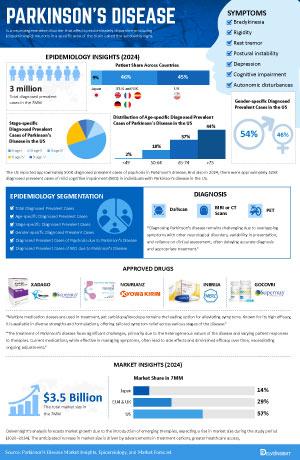
- According to DelveInsight’s estimates, in 2023, there were approximately 2,718 thousand diagnosed prevalent cases of Parkinson’s disease in the 7MM. Of these, the United States accounted for 45% of the cases, while Japan and Germany represented 9% and 18% of the cases, respectively.
- DelveInsight’s epidemiology model projects that Parkinson’s disease cases in the US included nearly 695 thousand males and 517 thousand females in 2023. The model anticipates an increase throughout the study period, with male cases outpacing female cases by 2034, reflecting a higher prevalence among men.
- In 2023, among EU4 and UK, the highest Parkinson’s disease cases in Stage III, totaling nearly 409 thousand followed by approximately 406 thousand cases in Stage II. The Stage V had the least cases accounting for 53 thousand cases.
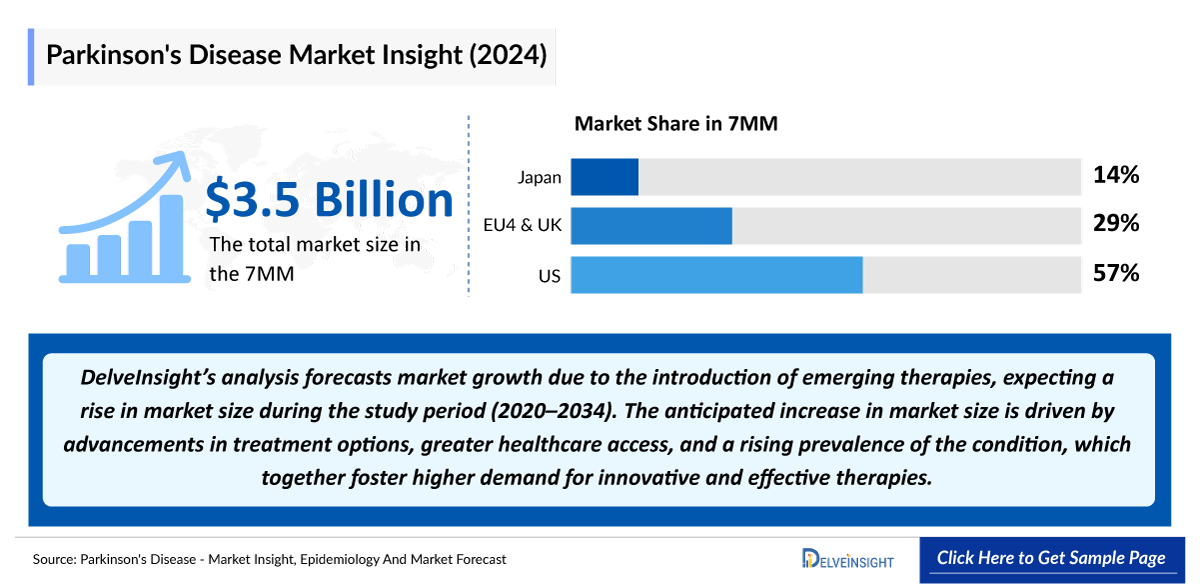
- According to DelveInsight’s analysis, the Parkinson’s Disease Market in the 7MM was valued at approximately USD 3,218 million in 2023. Over the forecast period from 2024 to 2034, this market is projected to grow at a significant CAGR.
- Current treatments, such as levodopa and dopamine agonists, primarily manage symptoms but do not address the underlying cause of neuronal loss. This leads to progressively diminished efficacy over time and significant challenges like motor fluctuations, dyskinesias, and non-motor symptoms, which profoundly impact patients' quality of life.
- Several approved Parkinson’s disease therapies are available primarily aimed at reducing motor symptoms and improving movement in individuals with Parkinson's disease. Recently, in August 2024, the US FDA approved CREXONT extended-release capsules for the treatment of Parkinson's disease.
- Pharma giants are actively working on better treatment options. Late-stage Parkinson’s disease therapies include Supernus Pharmaceutical and Britannia Pharmaceutical’s SPN-830 (apomorphine infusion pump), AbbVie’s Tavapadon FDA approval, Pharma Two B’s P2B001 (extended-release pramipexole and rasagiline), Mitsubishi Tanabe Pharma Corporation/NeuroDerm’s ND0612 (levodopa/carbidopa), and Annovis Bio’s Buntanetap Parkinson's/ANVS402/ANVS401, among others.
Request for Unlocking the Sample Page of the "Parkinson's Disease Treatment Market"
Key Factors Driving Parkinson’s Disease Market
- Rising Prevalence of Parkinson’s Disease: Increasing aging population and higher diagnosis rates are contributing to a growing patient pool globally, driving market demand.
- Advancement in Drug Development and Therapies: Continuous innovation in neuroprotective agents, gene therapies, and symptomatic treatments is expanding therapeutic options.
- Growing Adoption of Advanced Delivery Systems: Technologies such as extended-release formulations, infusion pumps, and device-assisted therapies are improving patient outcomes and boosting market growth.
- Increased Research Funding & Clinical Trials: Strong pipeline activity supported by government bodies, pharma companies, and research organizations accelerates drug discovery and commercialization.
- Rising Awareness & Early Diagnosis Programs: Better screening, patient education, and advocacy initiatives are enabling earlier intervention, leading to wider treatment uptake.
DelveInsight’s “Parkinson's Disease Market Insights, Epidemiology, and Market Forecast – 2034” report delivers an in-depth understanding of the Parkinson’s disease, historical and forecasted epidemiology as well as the Parkinson's disease therapeutics market trends in the United States, EU4 and the UK (Germany, France, Italy, Spain) and the United Kingdom, and Japan.
The Parkinson's Disease Treatment Market report provides current treatment practices, emerging drugs, and market share of the individual therapies, current and forecasted 7MM Parkinson's disease market size from 2020 to 2034. The Parkinson’s disease market report also covers current Parkinson's disease treatment practice, market drivers, market barriers, SWOT analysis, reimbursement and market access, and unmet medical needs to curate the best of the opportunities and assess the underlying potential of the Parkinson’s disease market.
|
Study Period |
2020 to 2034 |
|
Forecast Period |
2024-2034 |
|
Geographies Covered |
|
|
Parkinson’s Disease Market |
|
|
Parkinson’s Diseases Market Size | |
|
Parkinson’s Disease Companies |
Amneal Pharmaceuticals, AbbVie, Newron Pharmaceuticals, Supernus Pharmaceutical, Britannia Pharmaceuticals, Pharma Two B, UCB Biopharma SRL, Novartis, Annovis Bio, Supernus Pharmaceuticals, Inc., Mitsubishi Tanabe Pharma (NeuroDerm), Cerevel Therapeutics, LLC, and others |
|
Parkinson’s Disease Epidemiology Segmentation |
|
Parkinson's Disease Understanding
According to the Parkinson’s Foundation, Parkinson’s disease is a neurodegenerative disorder that affects predominately dopamine-producing (dopaminergic) neurons in a specific area of the brain called the substantia nigra. Because Parkinson’s disease develops over time, various stages help identify how symptoms have progressed and what should be expected next. Generally, there are five stages of Parkinson’s disease: Stage I, Stage II, Stage III, Stage IV, and Stage V.
According to the National Health Service (NHS), there are many different symptoms associated with Parkinson’s disease. However, the order in which these develop and their severity differ for individuals. It is unlikely that a person with Parkinson's disease would experience all or most of these. The main symptoms referred to by doctors as parkinsonism include tremors, slowness of movement (bradykinesia), and muscle stiffness (rigidity), which are classified as motor symptoms while non-motor symptoms include cognitive changes, autonomic dysfunctioning, mood and sleep disorders, and others.
While the exact cause of Parkinson’s disease is not known, a combination of genetic and environmental factors is believed to contribute to its development. Other risk factors include age, gender, head trauma, and use of certain medications.
Parkinson’s disease Diagnosis
Diagnosing Parkinson's disease can be challenging, as there is no definitive test for the condition. Instead, the diagnosis is typically based on a combination of medical history, symptoms, physical and neurological examinations, and sometimes additional tests. MRI may be used only to exclude other causes. DaTscan, an imaging test, can assist in confirming the diagnosis by assessing dopamine levels in the brain. Additionally, advancements in neuroimaging studies, including transcranial Doppler ultrasonography, PET, single-photon emission computed tomography (SPECT), morphometric MRI studies, tractography, functional MRI, and perfusion imaging, are being used to differentiate idiopathic Parkinson's disease from other parkinsonian disorders. Radionuclide imaging modalities like PET and SPECT, using a dopamine transporter ligand, have become the best approach to assess dopamine metabolism and deficiency.
Diagnosing Parkinson's disease presents significant challenges due to its gradual onset and symptom overlap with other neurodegenerative disorders. Early symptoms are often subtle and vary widely among individuals, complicating detection. Moreover, there is no definitive biomarker or diagnostic test, relying instead on clinical evaluations and symptom history, which can lead to misdiagnoses and delays in treatment initiation and care planning.
Further details related to diagnosis are provided in the report…
Parkinson’s disease Treatment
Parkinson’s disease Treatment involves pharmacologic approaches, typically with levodopa preparations prescribed with or without other medications, MAO-B inhibitors, COMT inhibitors, amantadine, and anticholinergics, and non-pharmacologic approaches (such as exercise, physical, occupational, and speech therapies). Approaches such as deep brain stimulation and treatment with levodopa-carbidopa enteral suspension can help individuals with medication-resistant tremors, worsening symptoms when the medication wears off, and dyskinesia.
The management of Parkinson’s disease aims at improving the quality of life for individuals affected by the condition with symptomatic relief. There are several medications approved by the US FDA such as, XADAGO, DUOPA/DUODOPA, INBRIJA, ONGENTYS, and others are also being used to treat motor and non-motor symptoms associated with Parkinson’s disease.
.png)
Parkinson’s Disease Epidemiology
As the market is derived using a patient-based model, the Parkinson’s disease epidemiology chapter in the report provides historical as well as forecasted epidemiology segmented by, Total Diagnosed Prevalent Cases of Parkinson’s Disease, Gender-specific Diagnosed Prevalent Cases of Parkinson’s Disease, Age-specific Diagnosed Prevalent Cases of Parkinson’s Disease, Stage-specific Diagnosed Prevalent Cases of Parkinson’s Disease, Diagnosed Prevalent Cases of Psychosis due to Parkinson's Disease, and Diagnosed Prevalent Cases of MCI due to Parkinson's Disease in the 7MM covering, the United States, EU4 countries (Germany, France, Italy, and Spain), United Kingdom, and Japan from 2020 to 2034.
Key Findings in the Parkinson’s Disease Epidemiology Analysis
- According to DelveInsight’s epidemiology model, the total diagnosed prevalent cases of Parkinson’s disease were approximately 1,210 thousand in the US in 2023 which is expected to increase during the forecast period (2024–2034) due to increasing awareness, aging population, and advancement of diagnostic procedures.
- In the 7MM, Japan accounted for approximately 258 thousand cases diagnosed prevalent cases of Parkinson’s disease in 2023.
- Among the EU4 and the UK, Germany accounted for the highest diagnosed prevalent cases of Parkinson’s disease with nearly 495 thousand cases in 2023 followed by France accounting for approximately 277 thousand cases. On the other hand, Spain accounted for the least with nearly 149 thousand cases.
- In 2023, Japan accounted for approximately 135 thousand cases in males and 123 thousand cases in females, based on gender-specific diagnosed prevalent cases of Parkinson’s disease. These cases are expected to increase during the forecast period.
- In the US, nearly 19 thousand cases were diagnosed with Parkinson’s disease in the age group =49 years, 215 thousand cases in 50–64 years, 449 thousand cases in 65–74 years, and 527 thousand cases in =75 years in 2023.
- Among the stage-specific diagnosed prevalent cases of Parkinson’s disease in Japan, there were approximately 9 thousand cases for Stage I, 40 thousand cases for Stage II, 107 thousand cases for Stage III, 70 thousand cases for Stage IV, and 31 thousand cases for Stage V in 2023.
- In Japan, there were approximately 73 thousand cases of psychosis associated with Parkinson’s disease in 2023.
- In the assessment done by DelveInsight, the estimated Diagnosed Prevalent Cases of Mild Cognitive Impairment due to Parkinson's Disease in the US were nearly 508 thousand in 2023
Parkinson’s Disease Epidemiology Segmentation
- Total Parkinson's Disease Diagnosed Prevalent Cases
- Parkinson's Disease Age-specific Diagnosed Prevalent Cases
- Parkinson's Disease Stage-specific Diagnosed Prevalent Cases
- Parkinson's Disease Gender-specific Diagnosed Prevalent Cases
Recent Developmental Activities in the Parkinson's Disease Treatment Market
- In August 2026, Lunai Bioworks (NASDAQ: LNAI) finalized a definitive collaboration agreement with BrainStorm Cell Therapeutics to co-develop innovative therapies targeting Parkinson's disease. The partnership combines Lunai’s computational bioworks platform with BrainStorm's expertise in neurodegenerative cellular therapies. The companies outlined an ambitious timeline for their clinical pipeline, setting an initial data readout target for the first half of 2027 to demonstrate preliminary therapeutic efficacy and safety in Parkinson's patients.
- In June 2026, Aspen Neuroscience announced the successful completion of dosing across Cohort 3 and Cohort 4 in its Phase 1/2a ASPIRO clinical trial evaluating sasineprocel for Parkinson's disease. As a highly advanced, personalized autologous iPSC-derived cell therapy, sasineprocel replaces damaged neural circuitry by implanting dopaminergic neuron precursor cells tailored specifically to each patient. The study utilizes a convenient cryopreserved "thaw-and-inject" formulation that maximizes immediate procedural efficiency at clinical sites without requiring systemic patient immunosuppression.
- In August 2025, Serina Therapeutics announced FDA support to advance SER-252 (POZ-apomorphine) into a registrational study for advanced Parkinson’s via the 505(b)(2) NDA pathway.
- In July 2025, NKGen Biotech received FDA authorization for an Expanded Access Program (EAP) to use its NK cell therapy, troculeucel, in multiple neurodegenerative diseases—including Alzheimer’s, Parkinson’s, ALS, MSA, PSP, FTD, CBD, MS, and Lewy Body Dementia—beyond its current Phase 2a trial in moderate-stage Alzheimer’s disease.
- In July 2025, the FDA cleared the new Magstim Rapid TMS system for research, clinical use, and treatment of pain. This next-generation non-invasive neuromodulation device supports studies and therapy for conditions including depression, OCD, Alzheimer’s, Parkinson’s, autism, and stroke, featuring upgraded touchscreen, user-friendly software, and improved data management.
- In June 2025, Capsida Biotherapeutics announced FDA clearance of its IND application for CAP-003, an IV-administered gene therapy for Parkinson’s disease with GBA mutations (PD-GBA). This marks Capsida’s second wholly owned clinical program using its proprietary BBB-crossing capsid and detargeted gene cargo, manufactured in its GMP facility.
- In May 2025, AskBio Inc., a Bayer subsidiary, announced the publication of full Phase 1b trial results for AB-1005, a GDNF gene therapy for Parkinson’s disease, in the journal Movement Disorders.
- In March 2025, MedRhythms announced that MR-005, its neurorehabilitation system designed to support gait rehabilitation and motor function in adults with Parkinson's disease (PD), has been classified as a Class II, Rx-only medical device by the U.S. Food and Drug Administration (FDA). The system will be marketed under the brand name Movive.
- In March 2025, Medtronic plc, a global leader in healthcare technology, announced the FDA approval of BrainSense™ Adaptive deep brain stimulation (aDBS) and BrainSense™ Electrode Identifier (EI). While there is no cure for debilitating neurological conditions like Parkinson's, deep brain stimulation (DBS) has been transforming the lives of patients with Parkinson's and other neurological disorders for over 30 years.
- In Feb 2025, Medtronic received FDA approval for its BrainSense™ Adaptive deep brain stimulation (aDBS) for Parkinson's disease, marking a significant advancement in neuromodulation therapy.
- In February 2025, AB-1005, AskBio’s investigational gene therapy for Parkinson’s disease, received Regenerative Medicine Advanced Therapy (RMAT) designation from the U.S. FDA to accelerate its development and review for treating serious or life-threatening conditions.
- In February 2025, the U.S. FDA approved Ctexli (chenodiol) for treating cerebrotendinous xanthomatosis (CTX) in adults, making it the first FDA-approved drug for this rare lipid storage disease.
- In February 2025, Newronika received FDA Investigational Device Exemption (IDE) clearance to begin a pivotal U.S. clinical trial. The trial will assess the safety and efficacy of its adaptive deep brain stimulation system for patients with movement disorders, including Parkinson's disease.
- In February 2025, Supernus Pharmaceuticals, Inc. announced that the U.S. FDA approved ONAPGO (apomorphine hydrochloride) injection, formerly known as SPN-830, as the first and only subcutaneous apomorphine infusion device for treating motor fluctuations in adults with advanced Parkinson’s disease.
- In November, 2024, Sunbird Bio released new data showing that its diagnostic technology successfully classified blood samples from Parkinson's disease-positive patients with 86% accuracy by directly detecting aggregated alpha-synuclein proteins.
- In October 2024, AbbVie announced that it has received FDA approval for VYALEV (foscarbidopa/foslevodopa), a treatment for motor fluctuations in adults with advanced Parkinson's disease. This marks the first 24-hour continuous subcutaneous infusion of a levodopa-based therapy.
Parkinson’s Disease Drug Analysis
The drug chapter segment of the Parkinson’s disease therapeutics market report encloses a detailed analysis of Parkinson’s disease off-label drugs and late-stage (Phase-III and Phase-II) Parkinson's Disease pipeline drugs analysis. It also helps to understand the Parkinson’s disease clinical trials details, expressive pharmacological action, agreements and collaborations, approval and patent details, advantages and disadvantages of each included drug, and the latest Parkinson's Disease news and press releases.
Marketed Parkinson’s disease Drugs
CREXONT (carbidopa and levodopa) ER capsules: Amneal Pharmaceuticals
CREXONT is a novel oral formulation of carbidopa/levodopa (CD/LD) that combines immediate-release (IR) granules and extended-release (ER) pellets. This prescription medication is used to treat Parkinson’s disease, Parkinson’s disease caused by brain infection or inflammation, and Parkinson’s disease-like symptoms resulting from carbon monoxide or manganese poisoning in adults. The ER beads in CREXONT consist of levodopa (LD), coated with a sustained-release polymer for slow drug release, a mucoadhesive polymer to ensure the granules remain at the absorption site longer, and an enteric coating to prevent premature disintegration in the stomach. This formulation is distinct from RYTARY (carbidopa/levodopa) extended-release capsules, Amneal’s extended-release CD/LD treatment for Parkinson’s disease approved by the US FDA in 2015.
- In February 2024, Amneal Pharmaceuticals entered into an exclusive licensing agreement with Zambon Biotech for IPX203 (CREXONT) in the European Union.
- In August 2024, the US FDA approved CREXONT extended-release capsules for the treatment of Parkinson’s disease.
PRODUODOPA (foslevodopa/foscarbidopa): AbbVie
PRODUODOPA is the first and only subcutaneous 24-hour infusion of levodopa-based therapy for treating severe motor fluctuations in advanced Parkinson's disease patients whose symptoms are inadequately controlled by other therapies. The continuous delivery of PRODUODOPA provides levodopa 24 hours a day, potentially extending the period of well-controlled symptoms, often referred to as "On" time. AbbVie received marketing authorization for PRODUODOPA through the decentralized procedure in the third quarter of 2022.
- In January 2024, AbbVie launched PRODUODOPA in the European Union for patients with advanced Parkinson's disease who experience severe motor fluctuations and have not achieved satisfactory results with existing Parkinson's medications.
- In June 2024, AbbVie received a CRL from the US FDA regarding the new drug application (NDA) for ABBV-951 (PRODUODOPA) for the treatment of motor fluctuations in adults with advanced Parkinson's disease.
XADAGO/EQUFINA (safinamide): Newron Pharmaceuticals/ Zambon/ Supernus Pharmaceuticals/ Eisai
XADAGO is an inhibitor of monoamine oxidase B (MAO-B) indicated as an adjunctive treatment to levodopa/carbidopa in patients with Parkinson’s disease experiencing “off” episodes. The precise mechanism by which XADAGO exerts its effect on Parkinson’s disease is unknown. However, it is believed that by inhibiting MAO-B activity and blocking the catabolism of dopamine, there is an increase in dopamine levels and subsequent dopaminergic activity in the brain. XADAGO tablets contain safinamide as the mesylate salt and are available as 50 mg and 100 mg film-coated tablets for oral administration. Each tablet contains 65.88 mg or 131.76 mg of safinamide mesylate, equivalent to 50 mg or 100 mg of the safinamide-free base, respectively.
The drug is approved under the brand name XADAGO in the US and Europe and as EQUFINA in Japan.
|
Drug |
MoA |
RoA |
Company |
Logo |
|
CREXONT (carbidopa and levodopa) ER capsules |
Decarboxylase inhibitors and dopamine receptor agonists |
Oral |
Amneal Pharmaceuticals | |
|
PRODUODOPA (foslevodopa/foscarbidopa) |
Decarboxylase inhibitor and dopamine receptor agonist |
SC |
AbbVie | |
|
XADAGO/EQUFINA (safinamide) |
Monoamine oxidase type B inhibitor |
Oral |
Newron Pharmaceuticals/Zambon/Supernus Pharmaceuticals/Eisai | |
|
NOURIANZ/NOURIAST (istradefylline) |
Oral |
Kyowa Kirin | ||
|
XX |
XX |
X |
XXX |
Emerging Parkinson’s disease Drugs
SPN-830 (apomorphine infusion device): Supernus Pharmaceutical/Britannia Pharmaceuticals
SPN-830 (apomorphine infusion device) is an investigational apomorphine infusion device under review for the continuous treatment of motor fluctuations (OFF episodes) in Parkinson’s disease patients that are not adequately controlled with oral levodopa and one or more adjunct Parkinson's disease medications. SPN-830 is an SC formulation of apomorphine delivered continuously through a portable electronic infusion pump under the skin for 14–18 h. The target infusion rate ranged between 3 mg and 8 mg per h. The thin, small needle applied underneath the skin is usually placed on the abdomen or upper thigh. Such administration has the potential to be less invasive, with fewer injection sites, and is more convenient than Supernus Pharmaceutical's already approved product APOKYN, which mimics the action of dopamine in the brain, is intended to reduce off periods on demand, and is administered under the skin.
In April 2024, the US FDA issued a complete response letter (CRL) for Supernus Pharmaceuticals' NDA for SPN-830. Additionally, in August 2024, Supernus Pharmaceuticals resubmitted its NDA for the apomorphine infusion device (SPN-830) to provide continuous treatment for motor fluctuations (OFF episodes) in Parkinson's disease.
Tavapadon: AbbVie (Cerevel Therapeutics)
Cerevel Therapeutics is developing tavapadon FDA approval to treat both early and late-stage Parkinson’s disease. Tavapadon FDA approval was rationally designed as an orally bioavailable, once-daily partial agonist that selectively targets dopamine D1 receptor and dopamine D5 receptor subtypes to balance meaningful motor activity with a favourable safety profile.
Tavapadon FDA approval differentially activates the direct motor pathway, potentially driving motor benefit while minimizing side effects typical of drugs that non-selectively stimulate dopamine, such as daytime sedation or somnolence, compromised impulse control, and risk of psychotic symptoms, including hallucinations. The Parkinson’s disease drug is also designed to activate the D1/D5 receptor subtypes at levels that maximize motor benefit while reducing the prolonged receptor over excitation and desensitization caused by full agonists, leading to dyskinesia and exacerbation of “off” time.
It has the potential to be used as both a monotherapy for early-stage Parkinson’s disease and as adjunctive therapy for late-stage Parkinson’s disease.
- In April 2024, Cerevel Therapeutics reported positive topline results from the pivotal Phase III TEMPO-3 trial for Tavapadon FDA approval, a once-daily treatment for Parkinson’s disease. Recently, in August 2024, AbbVie completed its acquisition of Cerevel Therapeutics. Now, Cerevel Therapeutics is a part of AbbVie.
P2B001 (extended-release pramipexole and rasagiline): Pharma Two B
P2B001, being developed by Pharma Two B, is a novel, once-daily combination of extended-release pramipexole, a low-dose dopamine agonist, and rasagiline, a low-dose MAO-B inhibitor for the treatment of Parkinson’s disease. Pramipexole mimics the effects of dopamine while minimizing the breakdown of dopamine.
The two drugs work in two different mechanisms that help each other, which gives combined activity better than each drug. Lower doses can be used without losing the therapeutic effect. Thus, the development of P2B001 is intended to provide a combination of low doses of these two drugs in an improved formulation that is hoped to be more effective in controlling Parkinson’s disease symptoms and with fewer side effects than each of the drugs taken alone or the currently available commercial drugs taken together.
- In November 2023, Pharma Two B published data in the journal Movement Disorders from a Phase III study evaluating P2B001. The study found that P2B001 was generally well tolerated and showed fewer sleep-related and dopaminergic adverse events compared to commercially used doses of pramipexole ER. An NDA submission to the US FDA is currently being prepared.
|
Drug |
MoA |
RoA |
Company |
Logo |
Phase |
|
SPN-830 (apomorphine infusion device) |
Dopamine receptor agonists |
SC |
Supernus Pharmaceutical/ Britannia Pharmaceuticals |
NDA Submitted | |
|
Tavapadon |
D1/D5 selective partial agonist |
Oral |
AbbVie (Cerevel Therapeutics) |
III | |
|
P2B001 (extended-release pramipexole and rasagiline) |
Dopamine receptor agonist and MAO-B inhibitor |
Oral |
Pharma Two B |
III | |
|
XX |
XX |
X |
XXX |
X |
Parkinson’s Disease Market Outlook
Parkinson’s disease is a progressively worsening neurodegenerative disorder with an unclear cause and pathogenesis. Its global burden is increasing, driven by aging populations and environmental factors. Classic Parkinson’s disease symptoms include motor issues like bradykinesia, rigidity, tremors, and postural instability, along with non-motor symptoms such as depression, cognitive impairment, and autonomic disturbances, which significantly affect quality of life. Diagnosing Parkinson’s is challenging due to symptom overlap with other movement disorders, with imaging like PET scans aiding in diagnosis.
While no curative therapy exists, various pharmacological and non-pharmacological treatments are used to manage symptoms. Carbidopa/levodopa remains the most effective treatment, with new formulations like CREXONT (approved in August 2024) and RYTARY (approved in 2015) offering symptom relief. DUOPA, a carbidopa/levodopa enteral suspension, and HARUROPI TAPE (ropinirole HCL), a transdermal patch, provide additional options, though innovations have been limited.
The Parkinson’s disease treatment market landscape faces significant unmet needs, particularly for curative and disease-modifying therapies. Better motor symptom control, especially for tremors, gait, balance, and psychosis treatment, remains a critical challenge. Nevertheless, a plethora of medications is under development. These include drugs that specifically target a-synuclein pathology, widely considered to be the driver of neurodegeneration in Parkinson’s disease. These drugs offer hope for disease-modifying agents in the short- to medium-term future. In combination with several regenerative approaches, including stem cells and gene therapies, therapeutics for Parkinson’s disease are likely to see significant advances over the coming years, with several novel, effective options likely to become available in the foreseeable future.
The current Parkinson's Disease pipeline is robust, late-stage drugs expected to enter the Parkinson’s disease market during the forecast period include Supernus Pharmaceuticals/Britannia Pharmaceuticals’ SPN-830 (apomorphine infusion pump), AbbVie’s Tavapadon FDA approval, Pharma Two B’s P2B001 (extended-release pramipexole and rasagiline), and Mitsubishi Tanabe Pharma Corporation (NeuroDerm)’s ND0612 (levodopa/carbidopa), among others. The approval of these therapies could significantly impact market dynamics, although their success rates remain uncertain.
- The Parkinson's Disease Market Size in the US was approximately USD 1,883 million in 2023, which is anticipated to increase due to the increasing awareness of the disease and the launch of the emerging therapy.
- The total Parkinson's Disease Market Size of EU4 and the UK was calculated to be approximately USD 988 million in 2023, which was nearly 31% of the total market revenue for the 7MM.
- According to DelveInsight’s estimates, among EU4 and the UK, Germany accounted for the highest market with approximately USD 390 million in 2023, followed by France with approximately USD 218 million in the respective year, and the UK with USD 130 million in 2023. These numbers are projected to increase during the forecast period (2024–2034).
- In 2023, the total Parkinson's Disease Treatment Market Size was approximately USD 348 million in Japan which is anticipated to increase during the forecast period.
- According to DelveInsight’s analysis, among the currently approved therapies, the majority of the market share was of others and combination therapies, with a revenue of approximately USD 2,210 million in 2023.
- With the expected launch of upcoming therapies, such as SPN-830, Tavapadon FDA Approval, P2B001, ND0612, among others, the total Parkinson's Disease treatment market size is expected to show change in the upcoming years.
Parkinson’s Disease Drugs Uptake
This section focuses on the uptake rate of potential Parkinson's Disease drugs expected to launch in the market during 2020–2034. For example, SPN-830 in the US is expected to be launched by 2025 with a peak share of 2.50%. Tavapadon FDA Approval is anticipated to take 7 years to peak with a medium uptake.
Further detailed analysis of emerging therapies drug uptake in the report…
Parkinson’s Disease Pipeline Development Activities
The Parkinson's Disease therapeutics pipeline report provides insights into different Parkinson’s Disease clinical trials within Phase III, Phase II, and Phase I stage. It also analyzes key Parkinson's Disease Companies involved in developing targeted therapeutics.
Parkinson’s disease Clinical Trials Activities
The Parkinson's Disease therapeutics clinical trials within report covers information on collaborations, acquisitions and mergers, licensing, and patent details for emerging Parkinson’s disease therapies.
KOL Views on Parkinson’s disease
To keep up with current Parkinson’s disease market trends, we take KOLs and SMEs’ opinions working in the domain through primary research to fill the data gaps and validate the secondary research. Industry Experts were contacted for insights on Parkinson’s disease evolving treatment landscape, patient reliance on conventional therapies, patient therapy switching acceptability, and drug uptake along with challenges related to accessibility, including KOL from Parkinson’s Foundation, Miami, US; Stanford University, US; Pacific Health Research and Education Institute, Honolulu, HI US; Department of Neurology, St. Josef-Hospital, Ruhr University Bochum, Germany; Santé publique France, French Public Health Agency, Saint-Maurice, France; Santé publique France, French Public Health Agency, Saint-Maurice, France; Universitario Central de Asturias, Spain; and Department of Neurology, The Jikei University Katsushika Medical Center, Tokyo, Japan.
Delveinsight’s analysts connected with 50+ KOLs to gather insights; however, interviews were conducted with 15+ KOLs in the 7MM. Their opinion helps understand and validate current and emerging therapies, treatment patterns, or Parkinson’s disease market trends. This will support the clients in potential upcoming novel treatments by identifying the overall scenario of the Parkinson’s disease market and the unmet needs.
Parkinson’s Disease Report Qualitative Analysis
We perform Qualitative and market Intelligence analysis using various approaches, such as SWOT and Conjoint Analysis. In the SWOT analysis, strengths, weaknesses, opportunities, and threats in terms of disease diagnosis, patient awareness, patient burden, competitive landscape, cost-effectiveness, and geographical accessibility of therapies are provided. These pointers are based on the Analyst’s discretion and assessment of the patient burden, cost analysis, and existing and evolving Parkinson's Disease treatment market landscape.
Conjoint Analysis analyzes multiple approved and emerging therapies based on relevant attributes such as safety, efficacy, frequency of administration, route of administration, and order of entry. Scoring is given based on these parameters to analyze the effectiveness of therapy. Further, the therapies’ safety is evaluated wherein the acceptability, tolerability, and adverse events are majorly observed, and it sets a clear understanding of the side effects posed by the drug in the trials. In addition, the scoring is also based on the route of administration, order of entry and designation, probability of success, and the addressable patient pool for each therapy. According to these parameters, the final weightage score and the ranking of the emerging therapies are decided.
Parkinson's Disease Market Access and Reimbursement
The high cost of therapies for the treatment is a major factor restraining the growth of the global Parkinson’s disease drug market. Because of the high cost, the economic burden is increasing, leading the patient to escape from proper treatment. The Parkinson's Disease therapeutics market report further provides detailed insights on the country-wise accessibility and reimbursement scenarios, cost-effectiveness scenario of approved therapies, programs making accessibility easier and out-of-pocket costs more affordable, insights on patients insured under federal or state government prescription drug programs, etc.
Scope of the Parkinson's Disease Therapeutics Market Report
- The Parkinson's Disease Therapeutics Market Report covers a segment of key events, an executive summary, descriptive overview, explaining its causes, signs and symptoms, and currently available therapies.
- Comprehensive insight has been provided into the epidemiology segments and forecasts, the future growth potential of diagnosis rate, disease progression, and treatment guidelines.
- Additionally, an all-inclusive account of the current and emerging therapies and the elaborative profiles of late-stage and prominent therapies will impact the current Parkinson's Disease Treatment Market Landscape.
- A detailed review of the Parkinson’s Disease Drugs Market, historical and forecasted Parkinson's Disease treatment market size, Parkinson's Disease drugs market share by therapies, detailed assumptions, and rationale behind the approach is included in the report covering the 7MM drug outreach.
- The Parkinson’s disease market report provides an edge while developing business strategies, by understanding trends, through SWOT analysis and expert insights/KOL views, patient journey, and treatment preferences that help shape and drive the 7MM Parkinson’s disease drugs market.
Parkinson’s Disease Market Report Insights
- Patient-based Parkinson's Disease Market Forecasting
- Parkinson’s Disease Therapeutic Approaches
- Parkinson’s Disease Pipeline Drugs Analysis
- Parkinson’s Disease Market Size and Trends
- Existing and Future Parkinson's Disease Drugs Market Opportunity
Parkinson’s Disease Therapeutics Market Report Key Strengths
- 11 years Parkinson's Disease Market Forecast
- The 7MM Coverage
- Parkinson’s Disease Epidemiology Segmentation
- Key Cross Competition
- Conjoint Analysis
- Parkinson's Disease Drugs Uptake
- Key Parkinson's Disease Market Forecast Assumptions
Parkinson’s Disease Market Report Assessment
- Current Parkinson's Disease Treatment Market Practices
- Parkinson's Disease Unmet Needs
- Parkinson's Disease Pipeline Drugs Analysis Profiles
- Parkinson's Disease Drugs Market Attractiveness
- Qualitative Analysis (SWOT and Conjoint Analysis)
- Parkinson’s Disease Market Drivers
- Parkinson’s Disease Market Barriers
Key Questions Answered In The Parkinson’s Disease Market Report:
Parkinson's Disease Therapeutics Market Insights
- What was the Parkinson’s Disease drugs market share (%) distribution in 2020 and how it would look like in 2034?
- What would be the Parkinson’s Disease treatment market size as well as market size by therapies across the 7MM during the forecast period (2024–2034)?
- What are the key findings pertaining to the market across the 7MM and which country will have the largest Parkinson’s Disease market size during the forecast period (2024–2034)?
- At what CAGR, the Parkinson’s Disease drugs market is expected to grow at the 7MM level during the forecast period (2024–2034)?
- What would be the Parkinson’s Disease market outlook across the 7MM during the forecast period (2024–2034)?
- What would be the Parkinson’s Disease market growth till 2034 and what will be the resultant market size in the year 2034?
- How would the Parkinson's Disease market drivers, barriers, and future opportunities affect the market dynamics and subsequent analysis of the associated trends?
Parkinson's Disease Epidemiology Insights
- What is the disease risk, burden, and Parkinson's Disease Unmet Needs?
- What is the historical Parkinson’s Disease patient population in the United States, EU5 (Germany, France, Italy, Spain, and the UK), and Japan?
- What would be the forecasted patient population of Parkinson’s disease at the 7MM level?
- What will be the growth opportunities across the 7MM with respect to the patient population pertaining to Parkinson’s Disease?
- Out of the above-mentioned countries, which country would have the highest Parkinson's Disease prevalent population during the forecast period (2024–2034)?
- At what CAGR the population is expected to grow across the 7MM during the forecast period (2024–2034)?
Current Parkinson's Disease Treatment Market Scenario, Marketed Drugs, and Emerging Therapies
- What are the current options for the treatment of Parkinson’s Disease along with the approved therapy?
- What are the current treatment guidelines for the treatment of Parkinson’s Disease in the US, Europe, And Japan?
- What are the Parkinson’s Disease marketed drugs and their Parkinson's Disease MOA, regulatory milestones, product development activities, advantages, disadvantages, safety, and efficacy, etc.?
- How many Parkinson's Disease companies are developing therapies for the treatment of Parkinson’s Disease?
- How many emerging therapies are in the mid-stage and late stages of development for the treatment of Parkinson’s Disease?
- What are the key collaborations (Industry–Industry, Industry-Academia), Mergers and acquisitions, licensing activities related to the Parkinson’s Disease therapies?
- What are the recent therapies, targets, Parkinson's Disease Mechanisms of Action and technologies developed to overcome the limitation of existing Parkinson’s disease therapies?
- What are the Parkinson's Disease clinical trials going on and their status?
- What are the key designations that have been granted for the Parkinson's Disease therapies?
- What are the 7MM historical and forecasted Parkinson’s Disease Drugs Market?
Reasons to Buy Parkinson’s Disease Market Forecast Report
- The Parkinson's Disease Therapeutics Market Report will help in developing business strategies by understanding the latest trends and changing treatment dynamics driving the Parkinson’s Disease Drugs Market.
- Insights on patient burden/disease Parkinson's Disease Incidence, evolution in diagnosis, and factors contributing to the change in the epidemiology of the disease during the forecast years.
- To understand the existing Parkinson's Disease drugs market opportunity in varying geographies and the growth potential over the coming years.
- Distribution of historical and current Parkinson’s disease patient share based on real-world prescription data along with reported sales of approved products in the US, EU4 (Germany, France, Italy, and Spain), the United Kingdom, and Japan.
- Identification of strong upcoming Parkinson’s disease companies in the Parkinson's Disease drugs market will help in devising strategies that will help in getting ahead of competitors.
- Detailed analysis and potential of current and emerging Parkinson’s disease therapies under the conjoint analysis section to provide visibility around leading emerging Parkinson’s disease drugs.
- Highlights of Access and Reimbursement policies of approved therapies, barriers to accessibility of off-label expensive therapies, and patient assistance programs.
- To understand the perspective of Key Opinion Leaders around the accessibility, acceptability, and compliance-related challenges of existing treatment to overcome barriers in future.
- Detailed insights on the unmet need of the existing Parkinson's Disease drugs market so that the upcoming Parkinson’s disease companies can strengthen their development and launch strategy.
Stay Updated with us for Recent Articles
- The Future of Parkinson’s Disease Treatment: Unlocking the Potential of Cell and Gene Therapy
- Analyzing the Potential of AAV2-GDNF Gene Therapy in Parkinson's Disease Treatment: Insights from Phase Ib Trial Data
- Analyzing ABBV-951 for Parkinson’s Disease: A Promise in Addressing Motor Fluctuations and Enhancing Quality of Life
- Risvodetinib: A Promising Breakthrough in Parkinson’s Disease Treatment
- Target Engagement of UB-312 in Parkinson's Disease Patients: Insights from CSF Analysis
- Advancing Parkinson's Disease Treatment: P2B001 Offers Promising Safety Profile in Early PD Patients
- What Lies Ahead For Parkinson’s Disease Psychosis Treatment Market?
- Most Promising Therapies in the Parkinson’s Disease Treatment Market
- Evaluation of Rapidly Evolving Parkinson’s Disease Therapeutic Market
- Parkinson's Disease Market: Infographics
- Latest DelveInsight Blogs