
Cancer Vaccines Market Summary
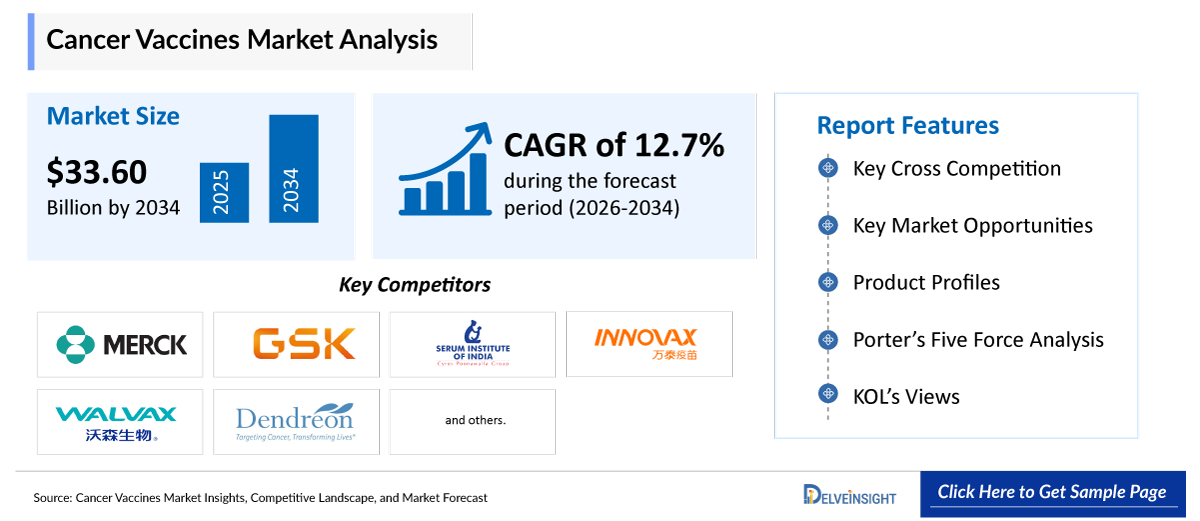
- The Cancer Vaccines market is estimated at USD 11.40 billion in 2025 and is projected to reach USD 33.60 billion by 2034. Growth is anchored in the rising global cancer burden, the expanding clinical and commercial success of therapeutic neoantigen and mRNA-based candidates, and sustained public-health investment in preventive HPV and hepatitis B vaccination programs.
- The global Cancer Vaccines market is growing at a CAGR of 12.7% during the forecast period from 2026 to 2034.
- By vaccine type, the preventive cancer vaccines segment dominated the Cancer Vaccines market with a 55% share in 2025.
- By technology/platform, the protein/recombinant antigen-based cancer vaccines segment dominated the Cancer Vaccines market with a 56% share in 2025.
- By indication, the cervical cancer segment dominated the Cancer Vaccines market with a 31% share in 2025.
- By route of administration, the intramuscular segment dominated the Cancer Vaccines market with a 61% share in 2025.
- By distribution channel, the hospital pharmacies segment dominated the Cancer Vaccines market with a 47% share in 2025.
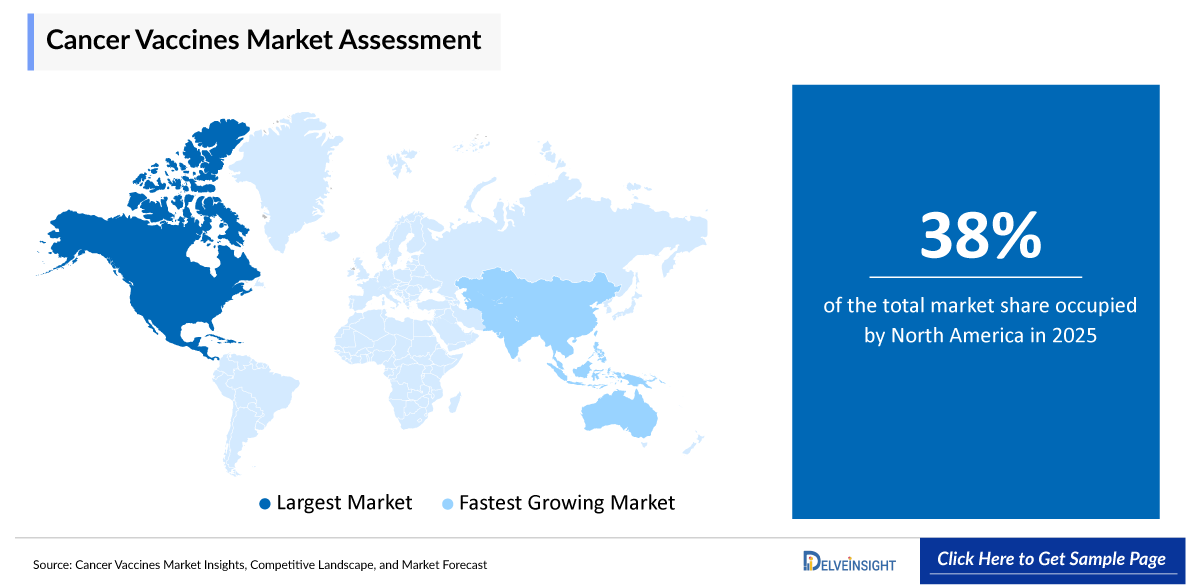
- North America dominated the global Cancer Vaccines market revenue with a 38% share in 2025, representing the highest regional market share globally.
A cancer vaccine is a biologic product designed either to prevent cancers caused by oncogenic infectious agents such as human papillomavirus (HPV) and hepatitis B virus (HBV), or to treat existing malignancies by stimulating the immune system to recognize and destroy tumor cells. Preventive cancer vaccines, led by HPV vaccines targeting cervical, anal, and oropharyngeal cancers, have achieved broad public-health adoption through national immunization programs, while therapeutic cancer vaccines, spanning peptide-based, protein/recombinant antigen-based, dendritic cell-based, DNA, and mRNA platforms, are advancing rapidly as personalized neoantigen approaches combined with checkpoint inhibitors demonstrate clinical benefit in melanoma, non-small cell lung cancer, and other solid tumors. The market is organized by vaccine type across therapeutic and preventive cancer vaccines; by technology/platform, including peptide-based, protein/recombinant antigen-based, dendritic cell-based, DNA, mRNA, HPV-based, HBV-based, and other platforms; by indication, led by cervical cancer, prostate cancer, melanoma, breast cancer, colorectal cancer, lung cancer, pancreatic cancer, and others; by route of administration, spanning intramuscular, subcutaneous, intradermal, intravenous, and other routes; and by distribution channel, across hospital pharmacies, specialty pharmacies, retail pharmacies, and others. Driven by rising global cancer incidence, expanding public immunization coverage for HPV and hepatitis B, and breakthroughs in personalized mRNA and neoantigen vaccine technology, cancer vaccines have become a central pillar of both preventive public health and precision immuno-oncology.
Cancer Vaccines Market Key Growth Drivers
- The rapid clinical advancement of personalized mRNA and neoantigen cancer vaccines is driving demand, with Merck and Moderna's intismeran autogene (mRNA-4157/V940) combined with KEYTRUDA reporting positive Phase 3 melanoma recurrence data in 2026.
- The rising global cancer burden is expanding demand for both preventive and therapeutic vaccination, with the International Agency for Research on Cancer projecting cancer cases to rise from 20 million in 2022 to 35 million by 2050.
- Expanding national HPV immunization programs across low- and middle-income countries is increasing demand for affordable, WHO-prequalified preventive vaccines such as Cecolin, Walrinvax, and Cervavac.
- Accelerating regulatory approvals and next-generation product launches, including the 2025 NMPA approval of Xiamen Innovax's nine-valent Cecolin 9, are broadening the addressable preventive vaccine market.
- Heavy investment by large pharmaceutical companies and biotechnology innovators in personalized neoantigen platforms and checkpoint-inhibitor combination regimens is expanding the therapeutic cancer vaccine pipeline.
- Growing public and private funding for cancer immunotherapy research, together with government-backed immunization drives such as India's national cervical cancer vaccination push with Cervavac, is sustaining demand.
- The convergence of rising cancer incidence, expanding preventive immunization coverage, and maturing personalized therapeutic platforms is expected to sustain strong double-digit growth in the market through 2034.
Key Companies in Cancer Vaccines Market
The competitive landscape is led by the following active manufacturers:
- Merck & Co., Inc.
- GSK plc
- Serum Institute of India Pvt. Ltd.
- Xiamen Innovax Biotech Co., Ltd.
- Walvax Biotechnology Co., Ltd.
- Dendreon Pharmaceuticals LLC
Factors Contributing to the Growth of the Cancer Vaccines Market
Cancer Vaccines Market Drivers
- Rapid Advancement of Personalized mRNA and Neoantigen Cancer Vaccines: The most powerful driver of the Cancer Vaccines market is the rapid clinical rise of personalized mRNA and neoantigen therapeutic vaccines. These candidates are designed using a patient's own tumor mutation profile to elicit a highly targeted immune response, and their clinical momentum is now substantial: Merck and Moderna's intismeran autogene (mRNA-4157/V940), combined with the checkpoint inhibitor KEYTRUDA, reported in 2026 that it slowed melanoma recurrence and spread in a late-stage trial, with five-year combination data presented earlier in the year. Other developers, including BioNTech and Transgene, are advancing neoantigen and viral-vector mRNA candidates in lung cancer, pancreatic cancer, and glioblastoma. Because these therapies require individualized manufacturing and close integration with immunotherapy regimens, sponsors increasingly rely on specialized development and manufacturing partners. As personalized vaccine programs progress toward regulatory filing, demand for cancer vaccine development, manufacturing, and companion-diagnostic capacity expands directly, anchoring market growth through 2034.
- Rising Global Cancer Burden and Precision Immuno-Oncology: The growing global cancer burden is expanding demand for both preventive and therapeutic vaccination. The International Agency for Research on Cancer recorded 20 million new cancer cases in 2022 and projects 35 million by 2050, with cervical, prostate, breast, colorectal, and lung cancers accounting for a large share of the disease burden. Cancer vaccines are central to precision immuno-oncology, supporting both prophylactic prevention of virally-associated cancers through HPV and hepatitis B vaccination and targeted treatment through therapeutic peptide, dendritic cell, DNA, and mRNA platforms. As cancer prevalence increases and personalized neoantigen approaches gain adoption alongside checkpoint inhibitors, the volume and sophistication of cancer vaccine development rise in step, translating into sustained requirements for clinical development, manufacturing, and distribution across the forecast period.
Cancer Vaccines Market Restraints
Despite strong momentum, the Cancer Vaccines market faces material constraints. The limited clinical success of some therapeutic vaccine candidates to date has tempered historical investor confidence, and demonstrating durable survival benefit beyond established products such as PROVENGE remains a high bar for newer candidates. The high manufacturing complexity and cost of personalized, patient-specific therapeutic vaccines constrain scalability and limit access relative to standardized preventive vaccines. Preventive vaccine uptake remains uneven across geographies due to vaccine hesitancy, affordability constraints, and inconsistent public immunization infrastructure in lower-income regions. Stringent and evolving regulatory requirements across biologics licensing, WHO prequalification, and multi-country registration lengthen development and market-entry timelines. Cold-chain and distribution logistics for temperature-sensitive biologic vaccines add cost and complexity, particularly in remote or resource-limited settings. Reimbursement and health-system prioritization for cancer vaccination, especially for adult and therapeutic indications, remain inconsistent across markets. Together, these clinical, manufacturing, regulatory, and access-related barriers temper the pace of growth, even as the underlying drivers of rising cancer burden, expanding immunization coverage, and personalized-medicine innovation remain firmly intact.
Cancer Vaccines Market Segment Analysis
The cancer vaccines market vaccine type (therapeutic cancer vaccines, preventive cancer vaccines), technology/platform (peptide-based cancer vaccines, protein/recombinant antigen-based cancer vaccines, dendritic cell-based cancer vaccines, dna cancer vaccines, mrna cancer vaccines, hpv-based, hbv-based, others), indication (cervical cancer, prostate cancer, melanoma, breast cancer, colorectal cancer, lung cancer, pancreatic cancer, others), route of administration (intramuscular, subcutaneous, intradermal, intravenous, others), distribution channel (hospital pharmacies, specialty pharmacies, retail pharmacies, others), and geography (North America, Europe, Asia-Pacific, and Rest of World).
By Vaccine Type
Dominant Subsegment: Preventive Cancer Vaccines.
The preventive cancer vaccines segment accounted for 55% of the Cancer Vaccines market in 2025. Preventive cancer vaccines are the leading vaccine type because HPV and hepatitis B vaccines have achieved broad, recurring uptake through decades-long national immunization schedules across developed and developing markets alike, generating high, dependable procedure volumes among adolescents and young adults. The established clinical role of HPV vaccination in preventing cervical, anal, and oropharyngeal cancers, combined with an expanding roster of affordable, WHO-prequalified vaccines such as Cecolin, Walrinvax, and Cervavac, sustains large-scale demand for preventive manufacturing and distribution. While therapeutic cancer vaccines are the fastest-growing vaccine type, propelled by personalized mRNA and neoantigen platforms, the sheer scale, recurrence, and public-health mandate behind preventive immunization secure the preventive segment's leadership across the forecast period.
By Technology/Platform
Dominant Subsegment: Protein/Recombinant Antigen-Based Cancer Vaccines.
The protein/recombinant antigen-based cancer vaccines segment accounted for 56% of the Cancer Vaccines market in 2025. This platform leads because it underpins the majority of commercially approved preventive HPV and hepatitis B vaccines, including Gardasil 9, Cervarix, Cecolin, and Cervavac, which use recombinant virus-like particle or antigen technology to generate a well-characterized, scalable, and cost-effective immune response. Its established manufacturing processes, favorable safety profile, and decades of regulatory precedent make it the platform of choice for large-scale, population-level immunization programs. At the same time, next-generation platforms are growing rapidly: mRNA cancer vaccines are advancing quickly on the strength of personalized therapeutic candidates such as intismeran autogene, and dendritic cell and peptide-based platforms continue to progress in prostate cancer and solid-tumor immunotherapy. While mRNA and DNA platforms post the fastest growth, the scale and ubiquity of protein/recombinant antigen-based preventive vaccines secure their leadership across the forecast period.
Cancer Vaccines Market Region Analysis
Dominant Region: North America
North America accounted for 38% of the global Cancer Vaccines market revenue in 2025, representing the highest regional market share globally. The region's dominance reflects broad, well-established HPV immunization coverage, a mature biopharmaceutical research base, and a deep clinical pipeline of personalized mRNA and neoantigen therapeutic candidates, particularly in the United States. North America hosts the commercial leadership of Merck's Gardasil 9 franchise and the clinical advancement of Merck and Moderna's intismeran autogene, alongside Dendreon's established PROVENGE therapeutic vaccine for prostate cancer. Strong reimbursement structures, robust FDA regulatory pathways, and sustained private and public investment in immuno-oncology research anchor the region's continued leadership across the forecast period.
Fastest Growing Region: Asia-Pacific
Asia-Pacific is the fastest-growing region in the Cancer Vaccines market. The region's elevated CAGR is driven by rising cervical and other cancer incidence, expanding national HPV immunization programs, and growing domestic vaccine manufacturing capacity across China, India, Japan, and South Korea. China's Xiamen Innovax and Walvax Biotechnology are scaling production of affordable, WHO-prequalified HPV vaccines including Cecolin, Cecolin 9, and Walrinvax, while India's Serum Institute of India is expanding distribution of Cervavac under the country's national cervical cancer immunization drive. Government healthcare investment, growing public awareness of cancer prevention, and the emergence of regionally developed multivalent vaccines are accelerating adoption, positioning Asia-Pacific as the principal source of incremental growth over the forecast period.
Cancer Vaccines Market Regional Commentary
North America
North America accounted for 38% of the global Cancer Vaccines market revenue in 2025. The United States dominates on the strength of established preventive HPV immunization coverage, FDA regulatory clarity, and a deep clinical pipeline of personalized therapeutic vaccines, while continued investment by Merck, Moderna, and Dendreon in next-generation and lifecycle vaccine programs reinforces the region's leadership.
Europe
Europe is a large and advanced regional market, supported by established EMA regulatory frameworks, high HPV immunization coverage across national health systems, and GSK's continued development of nonavalent HPV vaccine candidates to extend its Cervarix franchise. Coordinated cervical cancer elimination initiatives across Germany, France, the United Kingdom, Italy, and Spain reinforce steady preventive vaccine demand.
Asia-Pacific
Asia-Pacific is the fastest-growing region, propelled by rising cancer incidence, expanding national HPV immunization programs, and growing domestic manufacturing capacity across China, India, Japan, and South Korea. China's Cecolin and Cecolin 9 rollout, Walvax's Walrinvax expansion, and India's Cervavac-led national immunization drive are accelerating regional adoption and manufacturing scale-up.
Rest of World
The Rest of World region, spanning Latin America, the Middle East, and Africa, is an emerging growth frontier. Expanding public-health infrastructure, rising demand for affordable preventive vaccination, and international partnerships supporting Gavi-funded HPV immunization access are gradually broadening coverage, while global health organizations support the build-out of regional distribution capacity.
Cancer Vaccines Market Competitive Landscape
The Cancer Vaccines market is classified as Moderately Concentrated. A group of established, multinational vaccine manufacturers with broad preventive portfolios and deep R&D pipelines, including Merck & Co. and GSK, secures large government and institutional contracts and anchors the top tier, while regionally focused and fast-scaling providers such as Serum Institute of India, Xiamen Innovax Biotech, Walvax Biotechnology, and Dendreon compete through affordable multivalent vaccines, WHO prequalification, and specialized therapeutic platforms, increasing competition in the fastest-growing preventive and personalized therapeutic segments.
The competitive landscape can be evaluated across the following dimensions:
- Market concentration: Moderately concentrated, with established multinational vaccine leaders and a fast-growing field of regionally focused, affordable preventive vaccine providers.
- Leading players: Merck & Co. and GSK anchor the top tier through globally distributed HPV vaccine franchises and broad clinical pipelines.
- Geographic reach: Leaders operate global distribution networks essential for national immunization programs; Serum Institute of India's Cervavac supports large-scale domestic and international HPV vaccination drives.
- Product portfolio strength: Top players offer multivalent preventive vaccines alongside advancing personalized mRNA and cellular therapeutic vaccine pipelines.
- WHO prequalification and access: Prequalification of vaccines such as Cecolin, Cecolin 9, and Walrinvax is a decisive advantage for participation in UN and Gavi-funded procurement.
- Strategic partnerships: Collaborations spanning personalized mRNA vaccine development, such as Merck and Moderna's intismeran autogene program, and academic co-development, such as Xiamen Innovax's partnership with Xiamen University, extend innovation reach.
- Clinical and regulatory activity: Active late-stage trials and approvals, including Cecolin 9's 2025 NMPA approval and ongoing Phase 3 melanoma data for intismeran autogene, reflect sustained innovation momentum.
- Manufacturing capabilities: Recombinant antigen production, virus-like particle expression platforms, and personalized mRNA manufacturing are key competitive moats.
- Innovation focus: Personalized neoantigen and mRNA vaccine scale-up, next-generation multivalent HPV vaccines, and lifecycle expansion of established therapeutic vaccines such as PROVENGE.
Cancer Vaccines Market Recent Developmental Activities
- In August 2026, Merck & Co. and Moderna announced that their personalized mRNA cancer vaccine intismeran autogene (mRNA-4157/V940), combined with KEYTRUDA, slowed melanoma recurrence and spread in a late-stage clinical trial. Strategic significance: Advances a leading personalized therapeutic cancer vaccine candidate toward potential regulatory filing.
- In June 2026, Xiamen Innovax Biotech Co., Ltd., submitted its nine-valent HPV vaccine Cecolin 9 for World Health Organization prequalification following publication of positive Phase 3 efficacy data in The Lancet Infectious Diseases. Strategic significance: Advances a China-developed high-valency HPV vaccine toward broader global public-health access.
Cancer Vaccines Market Segmentation
Cancer Vaccines Market by Vaccine Type
- Therapeutic Cancer Vaccines
- Preventive Cancer Vaccines
Cancer Vaccines Market by Technology/Platform
- Peptide-Based Cancer Vaccines
- Protein/Recombinant Antigen-Based Cancer Vaccines
- Dendritic Cell-Based Cancer Vaccines
- DNA Cancer Vaccines
- mRNA Cancer Vaccines
- HPV-Based
- HBV-Based
- Others
Cancer Vaccines Market by Route of Administration
- Intramuscular
- Subcutaneous
- Intradermal
- Intravenous
- Others
Cancer Vaccines Market by Indication
- Cervical Cancer
- Prostate Cancer
- Melanoma
- Breast Cancer
- Colorectal Cancer
- Lung Cancer
- Pancreatic Cancer
- Others
Cancer Vaccines Market by Distribution Channel
- Hospital Pharmacies
- Specialty Pharmacies
- Retail Pharmacies
- Others
Cancer Vaccines Market by Geography
- North America Cancer Vaccines Market
- United States Cancer Vaccines Market Size in USD million (2023-2034)
- Canada Cancer Vaccines Market Size in USD million (2023-2034)
- Mexico Cancer Vaccines Market Size in USD million (2023-2034)
- Europe Cancer Vaccines Market
- Germany Cancer Vaccines Market Size in USD million (2023-2034)
- United Kingdom Cancer Vaccines Market Size in USD million (2023-2034)
- France Cancer Vaccines Market Size in USD million (2023-2034)
- Italy Cancer Vaccines Market Size in USD million (2023-2034)
- Spain Cancer Vaccines Market Size in USD million (2023-2034)
- Rest of Europe Cancer Vaccines Market Size in USD million (2023-2034)
- Asia-Pacific Cancer Vaccines Market
- China Cancer Vaccines Market Size in USD million (2023-2034)
- Japan Cancer Vaccines Market Size in USD million (2023-2034)
- India Cancer Vaccines Market Size in USD million (2023-2034)
- Australia Cancer Vaccines Market Size in USD million (2023-2034)
- South Korea Cancer Vaccines Market Size in USD million (2023-2034)
- Rest of Asia-Pacific Cancer Vaccines Market Size in USD million (2023-2034)
- Rest of the World (RoW) Cancer Vaccines Market
- Middle East Cancer Vaccines Market Size in USD million (2023-2034)
- Africa Cancer Vaccines Market Size in USD million (2023-2034)
- South America Cancer Vaccines Market Size in USD million (2023-2034)
Key Takeaways from the Cancer Vaccines Market Report Study
- Market size analysis for the current Cancer Vaccines market size (2025), and market forecast for 9 years (2026 to 2034).
- Top key product/technology developments, mergers, acquisitions, partnerships, and joint ventures that happened over the last 3 years.
- Key companies dominating the global Cancer Vaccines market.
- Various opportunities available for competitors in the Cancer Vaccines market space.
- What are the top-performing segments in 2025? How will these segments perform in 2034?
- Which are the top-performing regions and countries in the current Cancer Vaccines market scenario?
- Which are the regions and countries where companies should concentrate their opportunities for Cancer Vaccines market growth in the future?
Target audience who can benefit from this Cancer Vaccines market report study
- Cancer Vaccines product providers
- Research organizations and consulting companies
- Cancer Vaccines -related organizations, associations, forums, and other alliances
- Government and corporate offices
- Start-up companies, venture capitalists, and private equity firms
- Distributors and traders dealing in Cancer Vaccines
- Various end-users who want to know more about the Cancer Vaccines market and the latest technological developments in the Cancer Vaccines market.