Cancer Vaccines Market Summary
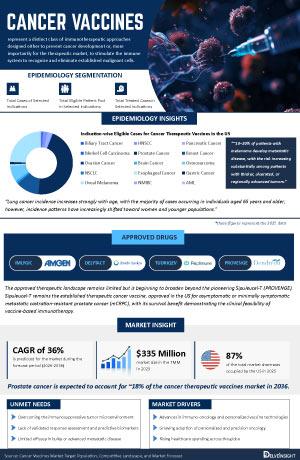
- According to DelveInsight’s analysis, the Cancer Vaccines Therapeutics Market Size was found to be ~USD 335 million in the leading markets (the United States, the EU4 (Germany, France, Italy, and Spain), the United Kingdom, and Japan) in 2025.
- The Cancer Vaccines Pipeline is highly diversified, with multiple late-stage and innovative candidates under development by leading companies, including OSE2101, Intismeran autogene, IO102-IO103 (CYLEMBIO), GLSI-100, OST-HER2, DCVax, Aglatimagene besadenovec (CAN-2409), Cretostimogene grenadenorepvec, Olvi-Vec, Seviprotimut L, Oregovomab, S-588410, Galinpepimut S, BNT113, OSE2101, AST-301, AST-201, among others.
Cancer Vaccines Market Trends & Insights
- Cancer vaccines are transitioning from an experimental immunotherapy concept toward a more credible clinical opportunity, supported by advances in tumor sequencing, neoantigen identification, mRNA platforms, and computational antigen prediction. However, the field continues to face a significant gap between promising immune responses and consistent late-stage clinical benefit.
- Melanoma has emerged as a leading benchmark for immune-based therapeutic development, supported by high immunogenicity, established checkpoint inhibitor use, and multiple validated oncolytic/immunotherapy approaches. Development is nevertheless expanding across NSCLC, Pancreatic Cancer, Ovarian Cancer, Prostate Cancer, and other difficult-to-treat solid tumors, increasing the potential addressable market.
- The approved Cancer Vaccines Therapeutics Market landscape remains limited but is beginning to broaden beyond the pioneering Sipuleucel-T (PROVENGE). Sipuleucel-T remains the established therapeutic cancer vaccine, approved in the US for asymptomatic or minimally symptomatic metastatic castration-resistant prostate cancer (mCRPC), with its survival benefit demonstrating the clinical feasibility of vaccine-based immunotherapy.
- The broader therapeutic immunotherapy landscape is gaining regulatory validation through oncolytic viral therapies. Talimogene laherparepvec (IMLYGIC) and Teserpaturev/G47 (DELYTACT) established commercial precedents in melanoma and malignant glioma, respectively, while Telomelysin (OBP-301/suratadenoturev) received full approval in Japan in 2026 for esophageal cancer. Most recently, Vusolimogene oderparepvec (TUDRIQEV) received FDA accelerated approval in August 2026 with nivolumab for PD-1-refractory advanced melanoma, highlighting the potential of localized immune activation and combination approaches.
- The field is increasingly shifting toward personalized neoantigen vaccines, enabled by advances in tumor sequencing, AI-driven antigen prediction, mRNA platforms, and computational tools that allow vaccine designs to be tailored to the unique mutational profile of individual tumors.
- Combination therapy has become the preferred development strategy, with cancer vaccines increasingly paired with PD-1/PD-L1 inhibitors and other immune-modulating therapies to enhance vaccine-induced T-cell responses and overcome the immunosuppressive tumor microenvironment. This positions vaccines more as immune-priming backbones than standalone therapies.
- Earlier-stage and minimal residual disease settings represent an important opportunity, as lower tumor burden may provide a more favorable environment for vaccine-induced immune control. Consequently, adjuvant, perioperative, and Measurable Residual Disease (MRD)-directed approaches could offer greater potential for demonstrating recurrence-free and overall survival benefits than treatment of heavily pretreated advanced disease.
Request for Unlocking the Sample Page of the "Cancer Vaccines Market"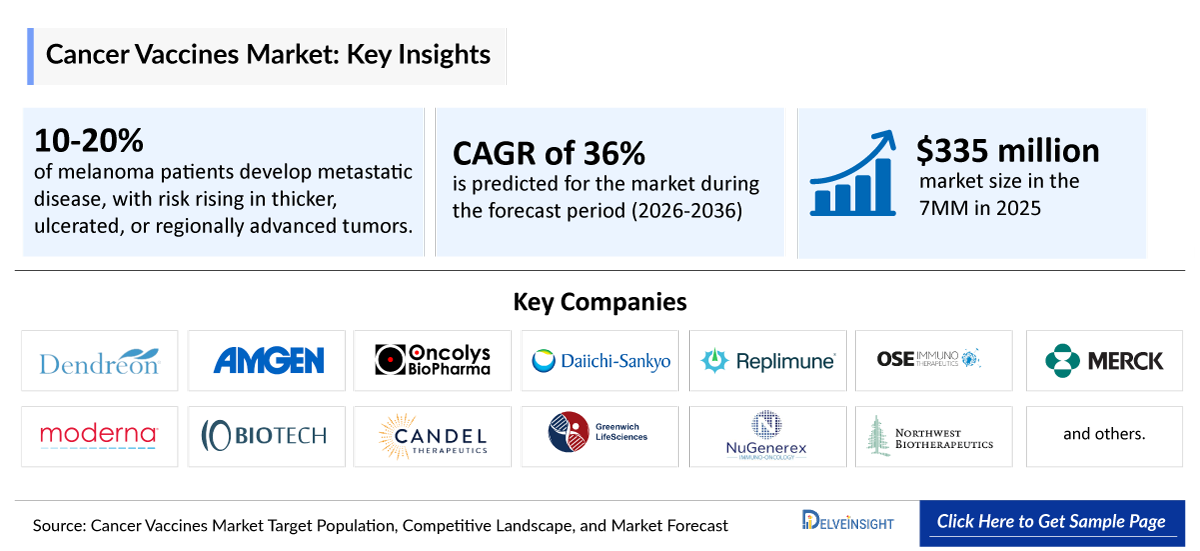
Cancer Vaccines Market Size and Forecast in the 7MM
| 2025 Cancer Vaccines Market Size | ~USD 335 million |
| 2036 Projected Cancer Vaccines Market Size | ~USD 9,726 million |
| Cancer Vaccines Growth Rate (2026–2036) | ~36% CAGR |
Key Factors Driving the Growth of the Cancer Vaccines Market
-
Increasing cancer incidence and growing unmet need for effective therapies
The rising global burden of cancer, particularly in high-risk and difficult-to-treat tumors, is increasing the demand for innovative therapeutic approaches and expanding the addressable patient population for cancer vaccines.
-
Advances in immuno-oncology and personalized vaccine technologies
Rapid advances in neoantigen identification, mRNA platforms, dendritic cell vaccines, viral vectors, and immune checkpoint inhibitors are strengthening the therapeutic cancer vaccine pipeline. The ability to combine cancer vaccines with checkpoint blockade and other immunotherapies may enhance tumor-specific immune responses and improve the durability of clinical benefit.
-
Growing adoption of personalized and precision oncology
The increasing use of tumor genomic profiling, next-generation sequencing, artificial intelligence, and computational antigen prediction is enabling the development of patient-specific vaccines targeting unique tumor neoantigens. This shift toward personalized treatment may improve antigen selection, patient stratification, and the potential efficacy of therapeutic cancer vaccines.
DelveInsight's ‘Cancer Vaccines Market Size, Target Population, Competitive Landscape & Market Forecast – 2036’ report delivers an in-depth understanding of Cancer Vaccines, historical and forecasted epidemiology, as well as the Cancer Vaccines market trends in the United States, EU4 (Germany, Spain, Italy, and France), the United Kingdom, and Japan.
The Cancer Vaccines Market Report delivers a comprehensive analysis of the current treatment landscape, including standards of care, clinical practices, and evolving therapeutic algorithms. It evaluates Cancer Vaccines patient burden trends, revenue & market share dynamics, peak patient share & therapy uptake analysis. It provides an in-depth market size assessment and growth rate projections (historical & forecast 2022–2036) across global regions. The report highlights key unmet medical needs in Cancer Vaccines and maps the competitive and clinical landscape to uncover high-value opportunities, providing a clear outlook on future market growth potential.
Scope of the Cancer Vaccines Market Report | |
|
Study Period |
2022–2036 |
|
Historical Year |
2022–2025 |
|
Forecast Period |
2026–2036 |
|
Base Year |
2026 |
|
Geographies Covered |
|
|
Cancer Vaccines Market CAGR (Forecast period) | |
|
Cancer Vaccines Epidemiology Segmentation Analysis |
Patient Burden Assessment
|
|
Cancer Vaccines Companies |
|
|
Cancer Vaccines |
|
|
Cancer Vaccines Market |
Segmented by
|
|
Analysis |
|
Cancer Vaccines Understanding
Cancer Vaccines Overview
Cancer is a diverse disease, as the signs, symptoms, and treatment vary among the various cancer types, making it essential to develop a specific therapy for patients. Currently available cancer treatment options include immunotherapy, radiotherapy, chemotherapy, targeted drug therapy, and others. Although these therapies have improved the OS and outcomes of patients, they possess some limitations and cannot benefit all patients.
Cancer Vaccines Diagnosis
Cancer vaccines represent a distinct class of immunotherapeutic approaches designed either to prevent cancer development or, more importantly for the therapeutic market, to stimulate the immune system to recognize and eliminate established malignant cells. Unlike conventional vaccines, which are primarily administered before disease exposure to generate protective immunity, therapeutic cancer vaccines are generally administered after cancer has developed and aim to generate or amplify tumor-specific immune responses.
The field has evolved considerably from early approaches based on whole tumor cells and shared tumor-associated antigens toward neoantigen-based, personalized, mRNA, DNA, peptide, dendritic-cell, viral-vector, and oncolytic virus platforms. Recent advances in next-generation sequencing, computational antigen prediction, mRNA delivery, and combination immunotherapy have renewed interest in cancer vaccines after decades of limited clinical success.
Further details related to country-based variations are provided in the report.
Cancer Vaccines Unmet Needs
The section “unmet needs of Cancer Vaccines” outlines critical gaps between the current state of patient care and diagnosis and the ideal & effective management of the disease. It highlights the obstacles experienced by patients, clinicians, and researchers and identifies potential solutions for future progress.
- Overcoming the immunosuppressive tumor microenvironment
- Manufacturing complexity and turnaround time for personalized vaccines
- Lack of validated response assessment and predictive biomarkers
- Limited efficacy in bulky or advanced metastatic disease
- Limited late-stage clinical evidence and Phase III setbacks, and others…..
Note: Comprehensive unmet needs insights in Cancer Vaccines and their strategic implications are provided in the full report.
 Cancer Vaccines Epidemiology Insights
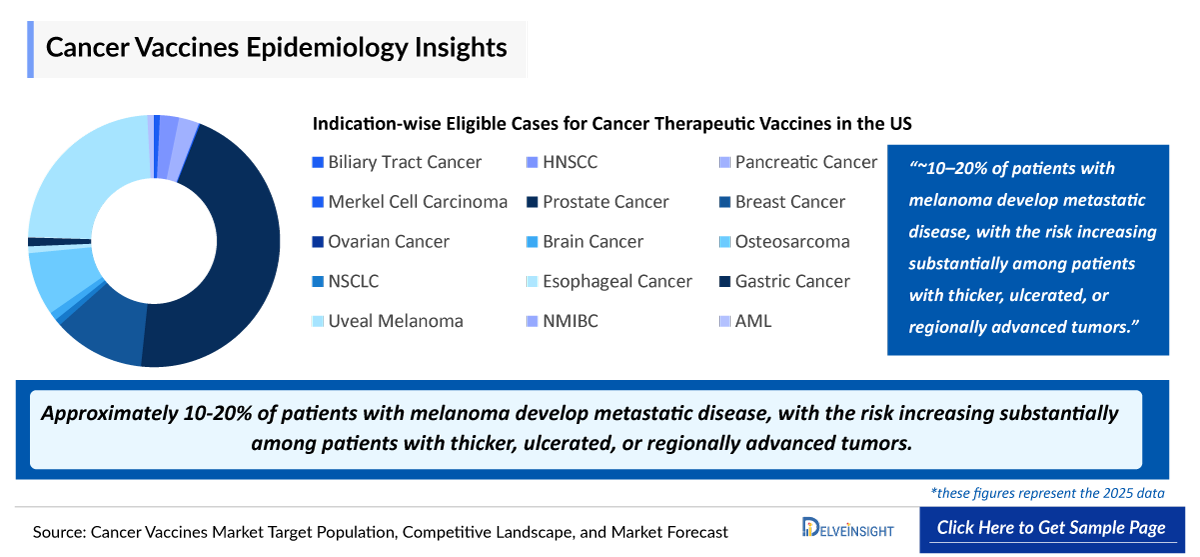
The Cancer Vaccines epidemiology chapter in the report provides historical as well as forecasted epidemiology segmented by Total cases of selected indications in the 7MM, Indication-wise target patient pool of Cancer Vaccines in the 7MM, and Indication-wise treated cases of Cancer Vaccines in the 7MM covering the United States, EU4 (Germany, France, Italy, and Spain) and the United Kingdom, and Japan from 2022 to 2036.
Key Findings from Cancer Vaccines Epidemiological Analysis and Forecast
- In the 7MM, total cases across selected indications for Cancer Vaccines were highest for prostate cancer, at approximately 2.8 million cases in 2025, and are projected to increase by 2036. In contrast, osteosarcoma accounted for the lowest number of cases, at approximately 2,200 in 2025, with cases expected to increase over the forecast period (2026–2036).
- In 2025, melanoma sits mid-pack by incidence (~104,960 US cases) but carries outsized pipeline weight, reflecting that cancer vaccine development is influenced by tumor accessibility and clinical precedent, in addition to patient volume
- In 2025, Japan diverges from the US-led pattern in select indications, recording its highest case volumes for NMIBC (149,919 cases), NSCLC (106,427), breast cancer (92,192), and prostate cancer (451,617), while also representing a particularly significant market for gastric cancer (46,791) and pancreatic cancer (42,083).
Cancer Vaccines Epidemiology Segmentation in the 7MM
- Total Cancer Vaccines Cases
- Cancer Vaccines Eligible Cases
- Cancer Vaccines Treated Cases
Cancer Vaccines Market Recent Breakthroughs and Developments
- On August 6, 2026, for drug SCIB, the MHRA has granted a Clinical Trial Authorization (CTA) for the Phase III registrational trial in patients with advanced melanoma
- In August 2026, The US FDA granted accelerated approval to vusolimogene oderparepvec (TUDRIQEV) in combination with nivolumab for adults with unresectable advanced cutaneous melanoma.
- In August 2026, Positive Phase III INTerpath-001 results in completely resected Stage IIB-IV melanoma were presented for Intismeran autogene.
- In July 2026, VCN-01 has FDA/EMA Orphan Drug and FDA Rare Pediatric Disease designations for retinoblastoma, with potential Priority Review Voucher eligibility if FDA approval is obtained by September 30, 2029.
- In May 2026, The US FDA had granted Fast Track designation for the treatment of unresectable or metastatic cutaneous melanoma to DOC1021.
- In January 2026, The FDA granted Fast Track Designation (FTD) for HPV16-positive head and neck cancer to BNT113.
- In March 2026, Candel Therapeutics is in an ongoing dialogue with the FDA in preparation for the anticipated submission of a BLA for aglatimagene besadenovec in prostate cancer in Q4 2026.
Cancer Vaccines Drug Analysis & Competitive Landscape
The Cancer Vaccines drug chapter provides a detailed, market-focused review of approved therapies and the emerging Cancer Vaccines pipeline across Phase I–III clinical trials. It covers the mechanism of action, clinical trial data, patents, collaborations, and strategic partnerships, key upcoming catalysts for each therapy, and their advantages, limitations, and recent developments. This section offers critical insights into the Cancer Vaccines treatment landscape, supporting market assessment, competitive analysis, and growth forecasting for the Cancer Vaccines therapeutics market.
Cancer Vaccines Approved Therapies
-
Talimogene laherparepvec (IMLYGIC): Amgen
Talimogene laherparepvec is a genetically modified herpes simplex virus type-1 (HSV-1) designed to replicate within tumors and produce an immunostimulatory protein called GM-CSF. Talimogene laherparepvec causes cell lysis, or death, which ruptures tumors, releasing tumor-derived antigens, which, along with GM-CSF, may promote an anti-tumor immune response.
In October 2015, Amgen announced that the US FDA approved the BLA for talimogene laherparepvec for the local treatment of unresectable cutaneous, subcutaneous, and nodal lesions in patients with recurrent melanoma after initial surgery. Talimogene laherparepvec is the first oncolytic viral therapy approved by the FDA based on therapeutic benefits demonstrated in a pivotal study.
-
Teserpaturev/G47? (DELYTACT): Daiichi Sankyo
Teserpaturev, jointly developed by Daiichi Sankyo and the University of Tokyo’s Institute of Medical Science, is a genetically engineered oncolytic herpes simplex virus type 1 (HSV-1). DELYTACT has triple mutations within the viral genome that cause augmented and selective replication in cancer cells and enhanced induction of antitumor immune response while retaining high safety features. DELYTACT is currently the first third-generation oncolytic HSV-1 to be evaluated in humans.
In June 2021, Daiichi Sankyo received conditional and time-limited approval from MHLW Japan for teserpaturev/G47 for treating patients with malignant glioma.
Competitive Landscape of Marketed Therapies Related to Cancer Vaccines | |||||
|
Product |
Company |
Indication |
Molecule Type |
MoA |
Marketed Region |
|
Talimogene laherparepvec (IMLYGIC) |
Amgen |
Metastatic melanoma |
Attenuated herpes simplex virus type-1 |
Replicates inside tumor cells and produces GM-CSF |
US: 2015 EU: 2015 |
|
Teserpaturev/ G47∆ (DELYTACT) |
Daiichi Sankyo |
Brain cancer (Malignant glioma) |
Genetically engineered oncolytic herpes simplex virus type 1 |
Selective replication in cancer cells and enhanced induction of anti-tumor immune response |
JP: 2021 |
|
Telomelysin (OBP-301/ Suratadenoturev) |
Oncolys BioPharma |
Esophageal cancer |
Oncolytic adenovirus |
Human telomerase reverse transcriptase (hTERT)-mediated viral replication |
JP: 2026 |
|
Vusolimogene oderparepvec (TUDRIQEV) |
Replimune |
Unresectable advanced cutaneous melanoma |
XX |
XX |
US: 20XX |
|
Sipuleucel-T (PROVENGE) |
Dendreon Pharmaceuticals |
Metastatic castrate resistant (hormone refractory) prostate cancer (CRPC) |
XX |
XX |
US: 20XX |
Cancer Vaccines Emerging Therapies
-
OSE-2101 (TEDOPI): OSE Immunotherapeutic
OSE-2101 is a novel T-cell epitope-based cancer vaccine targeting five tumor-associated antigens, activating and differentiating off-the-shelf immunotherapy, expanding tumor-specific T lymphocytes in HLA-A2 cancer patients. As per Clinicaltrials.gov, the Phase III ATALANTE-1 trial in advanced/metastatic NSCLC was terminated early due to the COVID-19 pandemic; however, promising overall survival results in patients with secondary resistance to ICIs supported further development.
The drug is now being evaluated in ARTEMIA, a new registrational Phase III trial comparing OSE-2101 with docetaxel in HLA-A2-positive metastatic NSCLC patients with secondary ICI resistance. Additional Phase II programs include CombiTED in NSCLC with nivolumab (OPDIVO), TEDOPaM in pancreatic cancer with FOLFIRI, and TEDOVA in ovarian cancer, evaluating OSE-2101 alone or in combination with pembrolizumab (KEYTRUDA). The US FDA granted ODD to OSE-2101 for the treatment of NSCLC.
-
Intismeran autogene (mRNA-4157/V940): Moderna Therapeutics and Merck
Intismeran autogene is an investigational, personalized mRNA-based Individualized Neoantigen Therapy (INT) comprising a synthetic mRNA encoding up to 34 patient-specific neoantigens identified from an individual’s tumor. The therapy is designed to stimulate a targeted antitumor immune response by inducing and expanding neoantigen-specific T-cell responses based on the unique mutational profile of each patient’s tumor. Merck and Moderna are advancing intismeran autogene clinical development program across multiple tumor types and treatment settings, including ongoing Phase III evaluation in melanoma and NSCLC and additional studies in other solid tumors and earlier-stage disease settings.
In February 2023, intismeran autogene plus Pembrolizumab received FDA Breakthrough Therapy Designation for the adjuvant treatment of patients with high-risk melanoma following complete resection. In April 2023, intismeran autogene received PRIME Scheme Designation from the EMA for adjuvant treatment of patients with high-risk Stage III/IV melanoma following complete resection.
Cancer Vaccines Emerging Drugs Competitive Landscape | |||||
|
Product |
Company |
Indication |
Phase |
ROA |
Type of Vaccine |
|
OSE2101 |
OSE Immunotherapeutic |
NSCLC |
III |
SC |
Peptide |
|
Intismeran autogene |
Merck/Moderna Therapeutics |
Malignant melanoma; NSCLC |
III |
IM |
mRNA |
|
CYLEMBIO (IO102-IO103)* |
IO Biotech |
Advanced melanoma |
III |
SC |
Peptide |
|
Galinpepimut S |
SELLAS Life Sciences |
Acute myeloid leukaemia |
III |
Subcutaneous |
Peptide |
|
BNT113 |
BioNTech |
Head and neck cancer |
II/III |
IV injection |
mRNA |
|
RP2 |
Replimune |
Metastatic Uveal Melanoma |
II/III |
IT |
Oncolytic virus |
|
OSE2101 |
OSE Immunotherapeutic |
Ovarian cancer; PDAC |
II |
SC |
Peptide |
Note: Detailed emerging therapies assessment will be provided in the final report.
 Cancer Vaccines Market Outlook
Cancer remains a major global healthcare burden, with rising incidence driven by population aging, lifestyle factors, environmental exposures, and improved diagnosis. Solid tumors such as melanoma, NSCLC, breast, HNSCC, pancreatic, hepatocellular, colorectal, and soft tissue sarcomas account for a substantial share of cancer morbidity and mortality. Despite advances in early detection and treatment, metastatic and recurrent cancers remain difficult to control, creating a need for therapies that provide durable tumor control while preserving quality of life.
The oncology treatment paradigm has increasingly shifted from conventional chemotherapy and radiotherapy toward precision medicine and immuno-oncology, including therapeutic cancer vaccines. However, treatment resistance, systemic toxicities, and limited drug penetration into the tumor microenvironment continue to restrict outcomes. These challenges are driving interest in approaches that combine localized tumor control with systemic and durable antitumor immunity. Despite a rapidly expanding pipeline, the cancer vaccine market remains at an early commercial stage, with only a small number of therapies achieving regulatory approval across distinct vaccine and oncolytic-virus platforms.
The field has gained important regulatory validation with sipuleucel-T (PROVENGE), talimogene laherparepvec (IMLYGIC), teserpaturev (DELYTACT), Telomelysin, and vusolimogene oderparepvec (TUDRIQEV/RP1). Sipuleucel-T established proof of concept for autologous cellular vaccines, while talimogene laherparepvec demonstrated the potential of intratumoral oncolytic viral therapy in melanoma. Teserpaturev and Telomelysin expanded the application of oncolytic viruses into glioma and esophageal cancer, respectively, while TUDRIQEV, approved by the FDA in August 2026 with nivolumab for post-PD-1 advanced cutaneous melanoma, represents a newer-generation approach supported by systemic immune activity.
Commercial performance has nevertheless been mixed. Sipuleucel-T highlighted the challenges associated with personalized manufacturing, high treatment costs, reimbursement, and physician adoption, while talimogene laherparepvec faced a narrow addressable population and competition from systemic checkpoint inhibitors. Teserpaturev's conditional pathway and limited initial hospital availability further illustrate the challenges of translating regulatory approval into broad commercial adoption. More recently, TUDRIQEV provides a potentially broader post-PD-1 opportunity, although continued commercial expansion will depend on confirmatory clinical benefit.
The Cancer Vaccines Pipeline continues to expand across melanoma, NSCLC, prostate, pancreatic, ovarian, breast, HNSCC, glioblastoma, bladder, and other solid tumors, spanning mRNA, peptide, DNA, dendritic-cell, bacterial-vector, and oncolytic-virus platforms. Programs such as intismeran autogene (mRNA-4157/V940), CAN-2409, OSE2101 (TEDOPI), IO102-IO103, DCVax-L, BNT113, GLSI-100, and Olvi-Vec illustrate the increasing diversification of the landscape.
Key findings from the Cancer Vaccines Market Forecast Report
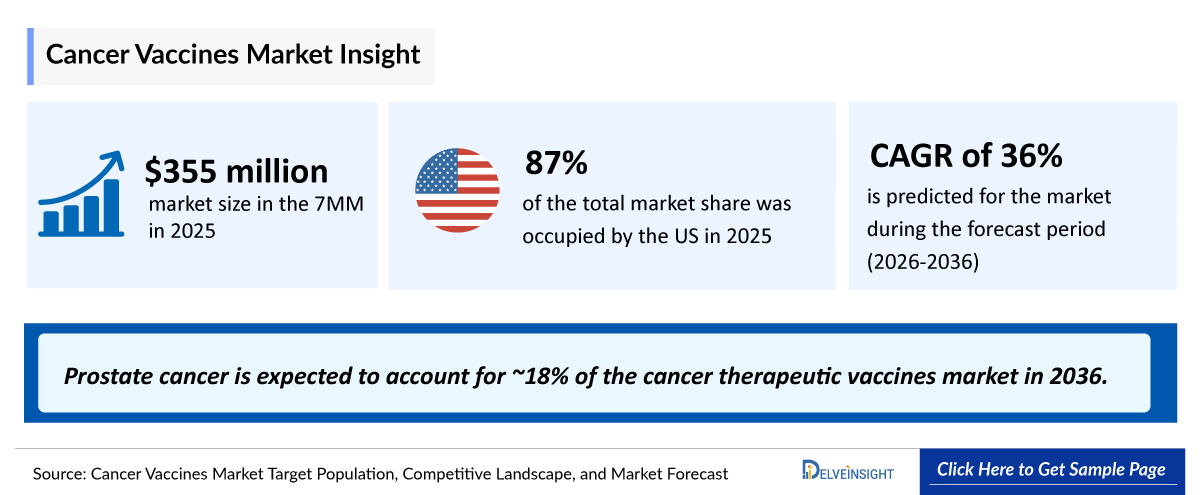
- The Cancer Vaccines Therapeutics Market in the 7MM is expected to witness substantial growth through 2036, reaching approximately USD 9,726 million by 2036 from USD 335 million in 2025, at a CAGR of 36% during 2025–2036. Market expansion will be supported by increasing penetration of newly launched therapeutic cancer vaccines and broader adoption across major oncology indications.
- The United States is expected to capture 87% of the Cancer Vaccines Therapeutics Market in 2025. Japan is projected to grow with an estimated 32% CAGR during 2025-2036.
- Prostate cancer is expected to account for ~18% of the Cancer Vaccines Therapeutics Market in 2036. Melanoma, breast cancer, NSCLC, and NMIBC are among the fastest-growing segments during 2031–2036.
- The emerging cancer vaccine pipeline is increasingly diversified, spanning personalized mRNA/neoantigen, peptide, dendritic cell, DNA, and multi-antigen platforms, with key candidates including intismeran autogene, TEDOPI, BNT113, olvimulogene nanivacirepvec (Olvi-Vec), OST-HER2, and others.
Cancer Vaccines Companies
- Dendreon Pharmaceuticals
- Amgen
- Oncolys BioPharma
- Daiichi Sankyo
- Replimune
- OSE Immunotherapeutic
- Merck
- Moderna Therapeutics
- IO Biotech
- Candel Therapeutics
- Greenwich LifeSciences
- NuGenerex Immuno-Oncology
- Northwest Biotherapeutics
- BriaCell Therapeutics
- TransCode Therapeutics
- CanariaBio
- OncoTherapy Science; Shionogi
- SELLAS Life Sciences
- BioNTech
- Aston Science
- Elicio Therapeutics, and others
Further details will be provided in the report….
Cancer Vaccines Drug Class/Insights into Leading Emerging and Marketed Therapies (2022-2036)
The Cancer Vaccines pipeline includes therapies designed to stimulate tumor-specific immune responses, induce direct tumor-cell killing, generate systemic antitumor immunity, and enhance the activity of immune checkpoint inhibitors. Leading modalities include peptide vaccines, mRNA vaccines, dendritic-cell vaccines, DNA vaccines, bacterial-vector vaccines, and oncolytic viruses, with approaches ranging from personalized products to off-the-shelf platforms. The broader goal is to achieve durable disease control and recurrence prevention while overcoming tumor immune evasion and resistance to existing therapies.
- Peptide-based cancer vaccines: Use defined tumor-associated or tumor-specific antigens to activate antigen-specific T-cell responses. OSE2101 (TEDOPI) is a leading off-the-shelf multi-epitope peptide vaccine being evaluated across NSCLC and other solid tumors, while IO102-IO103 (CYLEMBIO) targets IDO and PD-L1 and is being developed in combination with immune checkpoint inhibition. GLSI-100 represents another peptide-based approach targeting HER2 for recurrence prevention in high-risk breast cancer.
- Personalized mRNA vaccines: Encode multiple patient-specific neoantigens identified through tumor sequencing to generate individualized T-cell responses. Intismeran autogene (mRNA-4157/V940) from Merck/Moderna is the leading emerging personalized mRNA vaccine, with development focused on combination with pembrolizumab in earlier-stage and adjuvant settings.
- Dendritic-cell vaccines: Use patient-derived dendritic cells or tumor material to present multiple tumor antigens and stimulate broad T-cell immunity. DCVax-L is a leading personalized dendritic-cell vaccine using autologous tumor lysate and is being developed primarily in glioblastoma, while DCVax-Direct is being explored for direct intratumoral administration in solid tumors.
- DNA and bacterial-vector vaccines: Deliver tumor-antigen or immune-stimulatory genetic material to generate antigen-specific immunity. AST-201/AST-201p is a defined-antigen DNA vaccine targeting IGFBP2, while BNT113 represents an HPV16-targeted mRNA approach in HNSCC. Bacterial-vector approaches are also being investigated to enhance antigen presentation and overcome immunosuppressive tumor environments.
- Oncolytic viral vaccines/immunotherapies: Use genetically engineered viruses to selectively infect and lyse tumor cells while releasing tumor antigens and stimulating systemic immunity. Talimogene laherparepvec (IMLYGIC) and TUDRIQEV (RP1) are leading marketed examples in melanoma, while teserpaturev (DELYTACT) and Telomelysin demonstrate expansion of the modality into glioma and esophageal cancer. Emerging programs such as CAN-2409 and Olvi-Vec are extending oncolytic approaches across prostate, NSCLC, ovarian, and other solid tumors.
Cancer Vaccines Drug Uptake
This section focuses on the uptake of potential Cancer Vaccines drugs expected to launch during 2026–2036, including their uptake trajectory, peak performance, patient adoption, and sales potential. Uptake is expected to vary based on clinical efficacy, durability, safety, tumor type, treatment setting, administration, combination potential, physician familiarity, and reimbursement. Intismeran autogene (mRNA-4157/V940), CAN-2409, and BNT113 may achieve faster adoption if late-stage studies demonstrate meaningful clinical benefit, particularly in combination with checkpoint inhibitors. OSE2101, GLSI-100, DCVax-L, and Bria-IMT are expected to see more gradual uptake as efficacy and long-term outcomes mature. Existing therapies such as IMLYGIC, DELYTACT, and TUDRIQEV are expected to retain adoption in their established indications.
Overall, uptake is expected to build gradually, driven by durable clinical benefit, systemic immune activation, combination potential, convenient administration, scalable manufacturing, and favorable reimbursement.
Further detailed analysis of emerging therapies' drug uptake in the report…
Cancer Vaccines Market Access and Reimbursement of Approved Therapies
The report also provides detailed insights on country-wise accessibility and reimbursement scenarios, cost-effectiveness scenarios for approved therapies, programs that make access easier and out-of-pocket costs more affordable, and insights on patients insured under federal or state government prescription drug programs.
- The United States
The US Reimbursement for Cancer Vaccines | |
|
Drug |
Access Program |
|
Talimogene laherparepvec (IMLYGIC) |
Amgen SupportPlus Co-pay Program |
Reimbursement is a crucial factor that affects the drug’s access to the market. Often, the decision to reimburse comes down to the price of the drug relative to the benefit it produces in treated patients. To reduce the healthcare burden of these high-cost therapies, many payment models are being considered by payers and other industry insiders.
Cancer Vaccines Price Scenario & Trends
Pricing and analogue assessment of Cancer Vaccines highlights evolving price dynamics structures. This section summarizes the cost of approved treatments, the closest and most appropriate analogue selection for emerging therapies, and the understanding of how pricing influences market access, adherence, and long-term uptake.
Pricing of Cancer Vaccines Approved Drugs
Amgen launched Talimogene Laherparepvec (IMLYGIC) in the US with a Wholesale Acquisition Cost (WAC) of USD 4,400 for a 100 million PFU/mL single-use vial, resulting in an annual treatment cost of approximately USD 65,000 in 2015.
Cancer Vaccines Industry Experts and Physician Views
To keep up with Cancer Vaccines Therapeutics Market Trends, we take Key Opinion Leaders (KOLs) and Subject Matter Experts (SMEs) opinions working in the domain through primary research to fill the data gaps and validate our secondary research. Industry Experts were contacted for insights on Cancer Vaccines emerging therapies, the evolving Cancer Vaccines Treatment landscape, patient adherence to conventional therapies, therapy switching trends, drug adoption and uptake, accessibility challenges, and epidemiology and real-world prescription patterns in Cancer Vaccines, including MD, PhD, Instructor, Postdoctoral Researcher, Professor, Researcher, and others.
DelveInsight’s analysts connected with 20+ KOLs to gather insights; however, interviews were conducted with 10+ KOLs in the 7MM. Centers such as the University of Illinois, National Institute for Health and Care Research, University of Oxford, University of Würzburg, etc., were contacted. Their opinion helps understand and validate current and emerging Cancer Vaccines, highlight unmet medical needs, provide epidemiological context, and support strategic decisions for market access, therapy adoption, and pipeline prioritization in Cancer Vaccines.
|
Region |
Key Opinion Leaders (KOLs) and Subject Matter Experts (SMEs) |
|
United States |
“TUDRIQEV represents a meaningful addition to the treatment landscape for anti-PD-1-refractory advanced melanoma, addressing a substantial unmet need in patients who progress following PD-1-based therapy. Its combination with nivolumab is particularly noteworthy given RP1’s potential to induce a systemic antitumor immune response, including activity against uninjected and visceral lesions, which may contribute to durable disease control.” |
|
Germany |
“Dendritic cell vaccines could be particularly valuable as part of combination regimens, where they may complement checkpoint inhibitors and other immune-based therapies by enhancing tumor-specific immune priming. Rather than relying on a single mechanism, these combinations could potentially generate deeper and more durable antitumor responses.” |
Cancer Vaccines Report Qualitative Analysis: SWOT and Conjoint Analysis
We perform qualitative and Cancer Vaccines Therapeutics Market Intelligence analysis using various approaches, such as SWOT analysis and conjoint analysis. In the SWOT analysis of Cancer Vaccines, strengths, weaknesses, opportunities, and threats in terms of disease diagnosis, patient awareness, patient burden, competitive landscape, cost-effectiveness, and geographical accessibility of therapies are provided.
Conjoint analysis analyzes Cancer Vaccines Emerging Therapies based on relevant attributes such as safety, efficacy, frequency of administration, route of administration, and order of entry. Scoring is given based on these parameters to analyze the effectiveness of therapy.
The team of analysts analyzes promising cancer vaccine emerging therapies based on relevant attributes such as safety, efficacy, frequency of administration, route of administration, and order of entry. For efficacy, the trial’s primary and secondary outcome measures are evaluated, whereas the therapies’ safety is evaluated, wherein acceptability, tolerability, and adverse events are mainly observed.
In addition, the scoring is also based on the route of administration, order of entry, probability of success, and the addressable patient pool for each therapy. According to these parameters, the final weightage score and the ranking of the emerging therapies are decided.
Scope of the Cancer Vaccines Market Report
- The Cancer Vaccines Market Report covers a segment of key events, an executive summary, and a descriptive overview, explaining its causes, signs and symptoms, pathogenesis, and currently available therapies.
- Comprehensive insight has been provided into the epidemiology segments and forecasts, the future growth potential of diagnosis rate, disease progression, and treatment guidelines.
- Additionally, an all-inclusive account of the current and emerging therapies and the elaborative profiles of late-stage and prominent therapies will impact the current treatment landscape.
- A detailed review of the Cancer Vaccines Market, historical and forecasted Cancer Vaccines Market Size, and Cancer Vaccines Market Share by therapies, detailed assumptions, and rationale behind our approach is included in the report, covering the 7MM drug outreach.
- The Cancer Vaccines Market Report provides an edge while developing business strategies by understanding trends through SWOT analysis and expert insights/KOL views, patient journey, and treatment preferences that help in shaping and driving the 7MM Cancer Vaccines Market.
Cancer Vaccines Market Report Insights
- Cancer Vaccines Patient Population Forecast
- Cancer Vaccines Therapeutics Market Size
- Cancer Vaccines Pipeline Analysis
- Cancer Vaccines Market Size and Trends
- Cancer Vaccines Market Opportunity (Current and Forecasted)
Cancer Vaccines Market Report Key Strengths
- Epidemiology based (Epi based) Bottom up Forecasting
- Artificial Intelligence (AI)-Enabled Market Research Report
- 11-Year Forecast
- Cancer Vaccines Market Outlook (North America, Europe, Asia-Pacific)
- Patient Burden Trends (By Geography)
- Cancer Vaccines Treatment Addressable Market (TAM)
- Cancer Vaccines Competitive Landscape
- Cancer Vaccines Major Companies Insights
- Cancer Vaccines Price Trends and Analogue Assessment
- Cancer Vaccines Drug Adoption/Uptake
- Cancer Vaccines Peak Patient Share Analysis
Cancer Vaccines Market Report Assessment
- Cancer Vaccines Current Treatment Practices
- Cancer Vaccines Unmet Needs
- Cancer Vaccines Clinical Development Analysis
- Cancer Vaccines Emerging Drugs Product Profiles
- Cancer Vaccines Market Attractiveness
- Cancer Vaccines Qualitative Analysis (SWOT and Conjoint analysis)
Key Questions Answered in the Cancer Vaccines Market Report
- What is the historical and forecasted Cancer Vaccines patient pool in the United States, EU4 (Germany, France, Italy, and Spain), the United Kingdom, and Japan?
- What was the Cancer Vaccines total market size, the market size by therapy, and the market share (%) distribution in 2025, and what would it look like by 2036? What are the contributing factors for this growth?
- Which therapy is going to be the largest contributor by 2036?
- What are the pricing variations among different geographies for approved and off-label therapies?
- What are the recent novel therapies, targets, mechanisms of action, and technologies developed to overcome the limitations of existing therapies?
- Patient acceptability in terms of preferred treatment options as per real-world scenarios?
- What are the country-specific accessibility issues of expensive, recently approved therapies?
Reasons to Buy the Cancer Vaccines Market Report
- The Cancer Vaccines Market Report will help in developing business strategies by understanding the latest trends and changing treatment dynamics driving the Cancer Vaccines Market.
- Insights on patient burden/disease cases, evolution in diagnosis, and factors contributing to the change in the epidemiology of the disease during the forecast years.
- Understand the existing Cancer Vaccines market opportunities in varying geographies and the growth potential over the coming years.
- Distribution of historical and current patient share based on real-world prescription data along with reported sales of approved products in the US, EU4 (Germany, France, Italy, and Spain), the United Kingdom, and Japan.
- Identifying strong upcoming players in the Cancer Vaccines market will help devise strategies to help get ahead of competitors.
- Highlights of access and reimbursement policies of approved therapies, barriers to accessibility of expensive off-label therapies, and patient assistance programs.
- To understand Key Opinion Leaders’ perspectives around the accessibility, acceptability, and compliance-related challenges of existing treatment to overcome barriers in the future.
- Detailed insights on the unmet needs of the existing Cancer Vaccines Market so that the upcoming players can strengthen their development and launch strategy.
Stay updated with us for Recent Articles